Warhol’s Marilyn Monroe Portfolio Generated £39.87M In Public Sales in a Decade

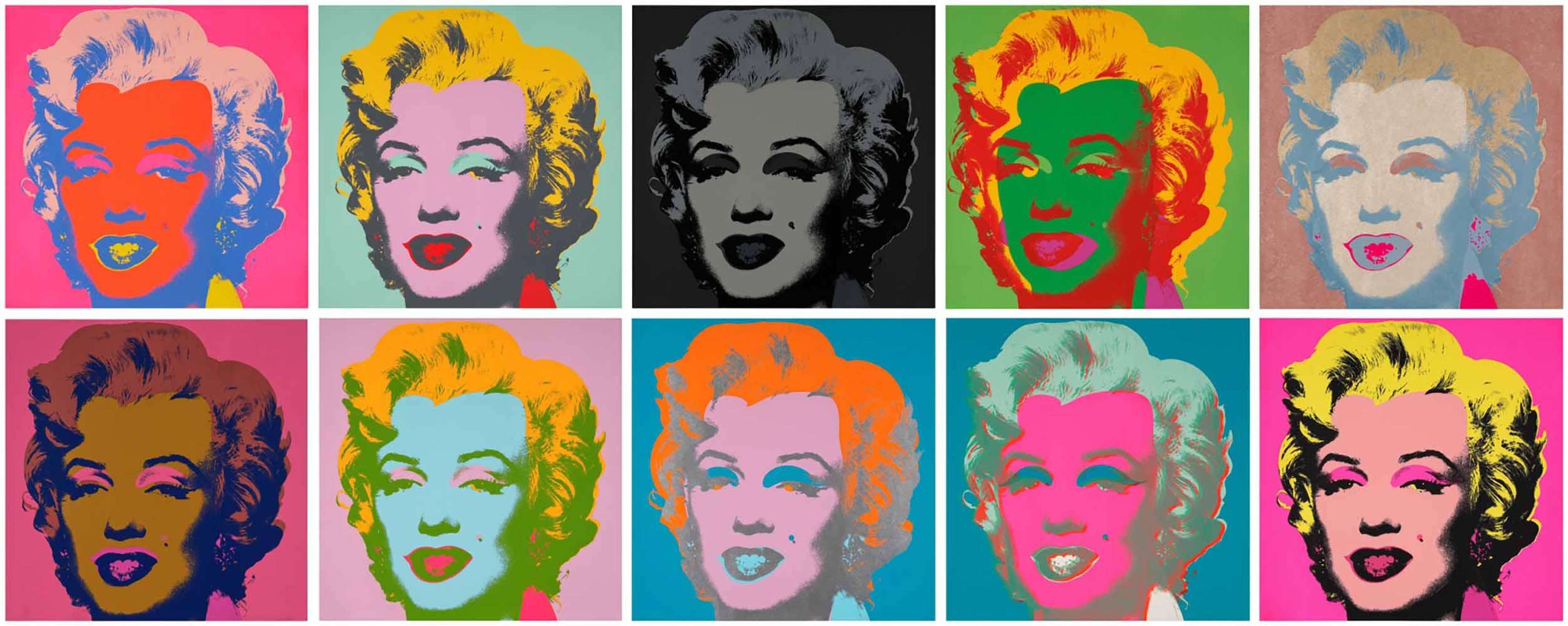 Marilyn (complete set) © Andy Warhol 1967
Interested in buying or selling a print?

Andy Warhol
495 works
Few images in Post-War art are as instantly recognisable as Andy Warhol’s Marilyn Monroe. Created in 1967, this 10-part screenprint portfolio immortalises the film star’s portrait in vivid colour. Through this body of work, Warhol solidified the visual language of Pop Art – flat colour, mechanical reproduction, and seriality – while exploring the fragile interplay between fame and mortality that defined both Monroe’s life and his own career.
About Andy Warhol’s Marilyn Monroe Portfolio
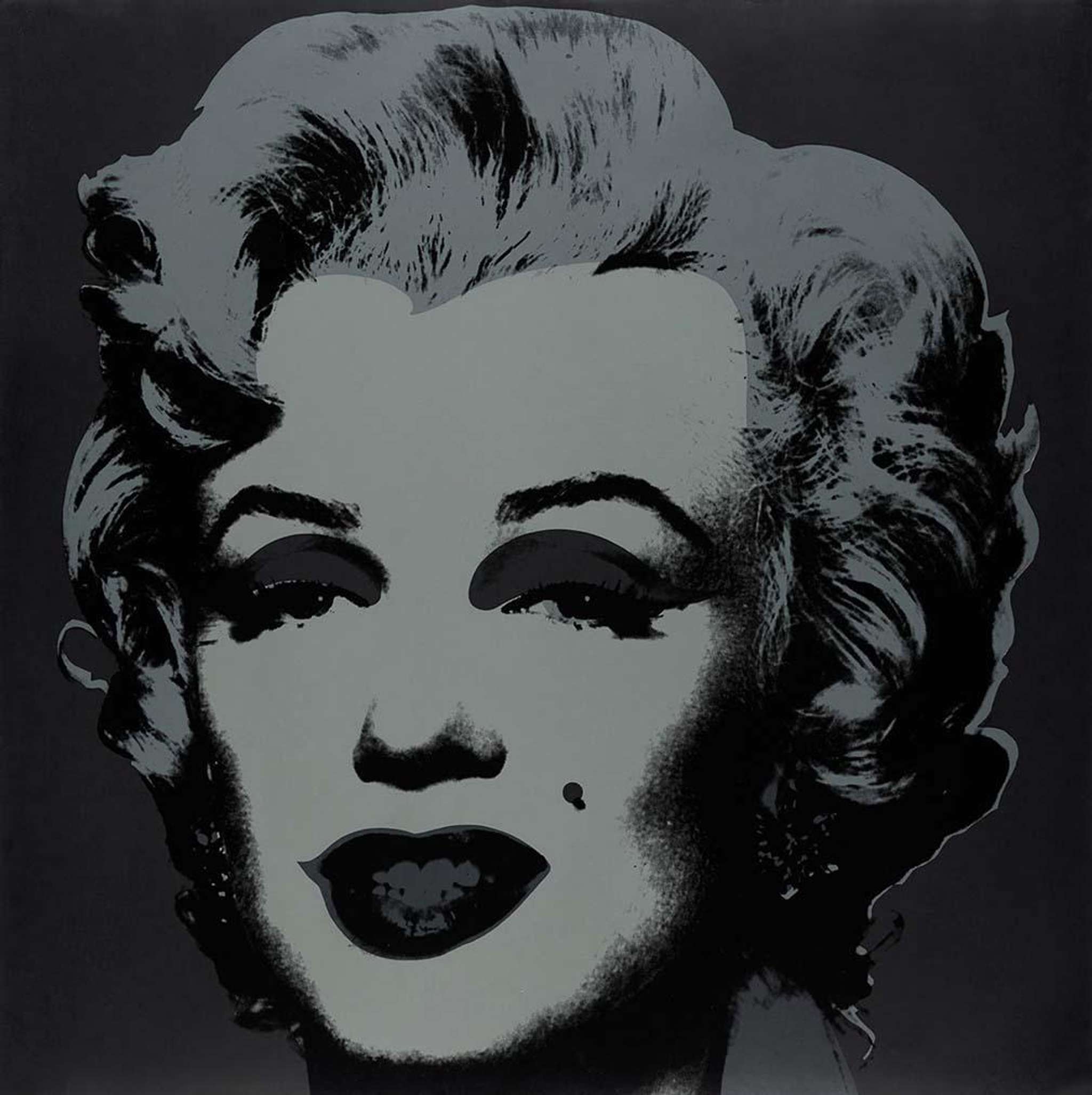
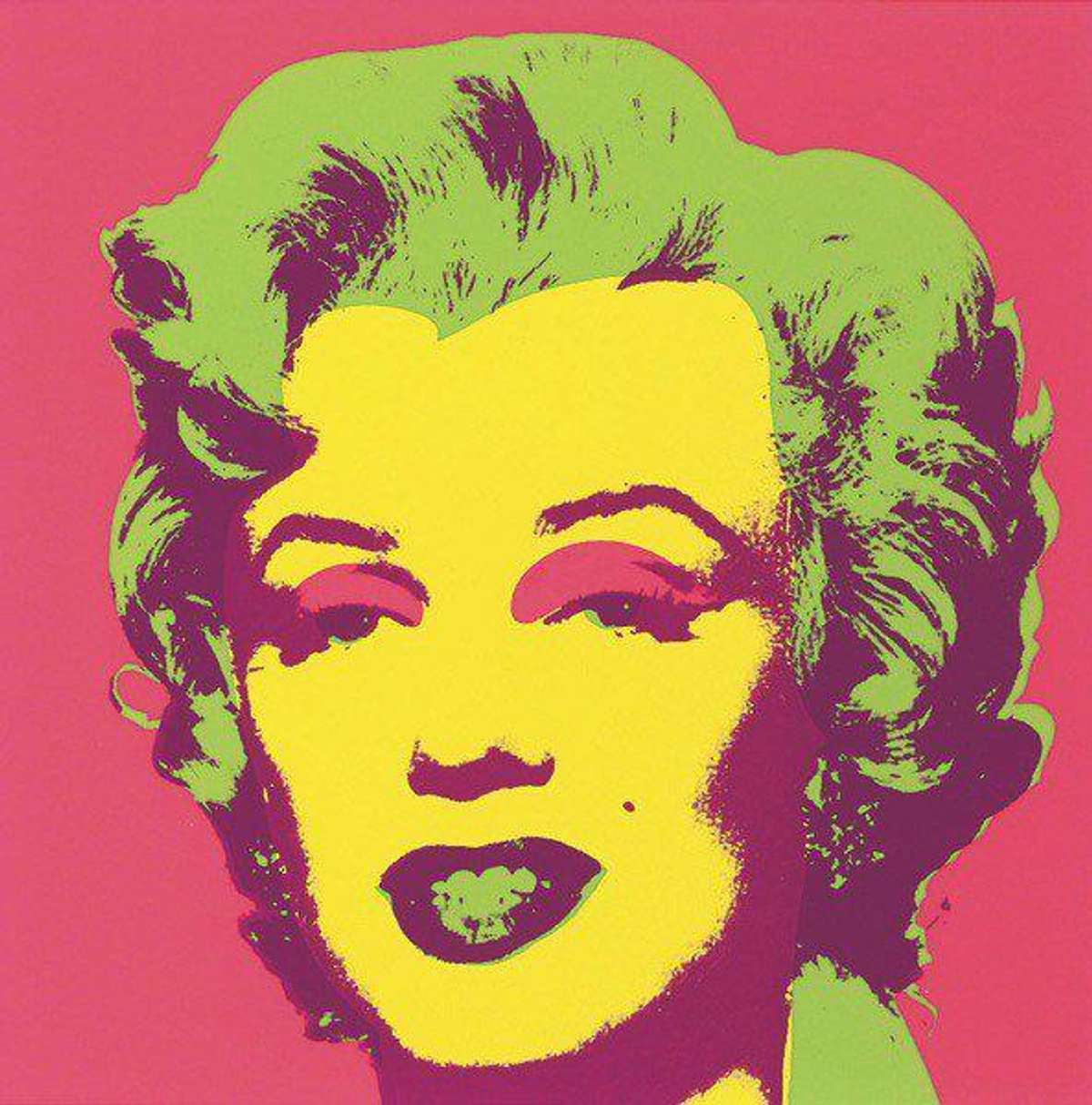
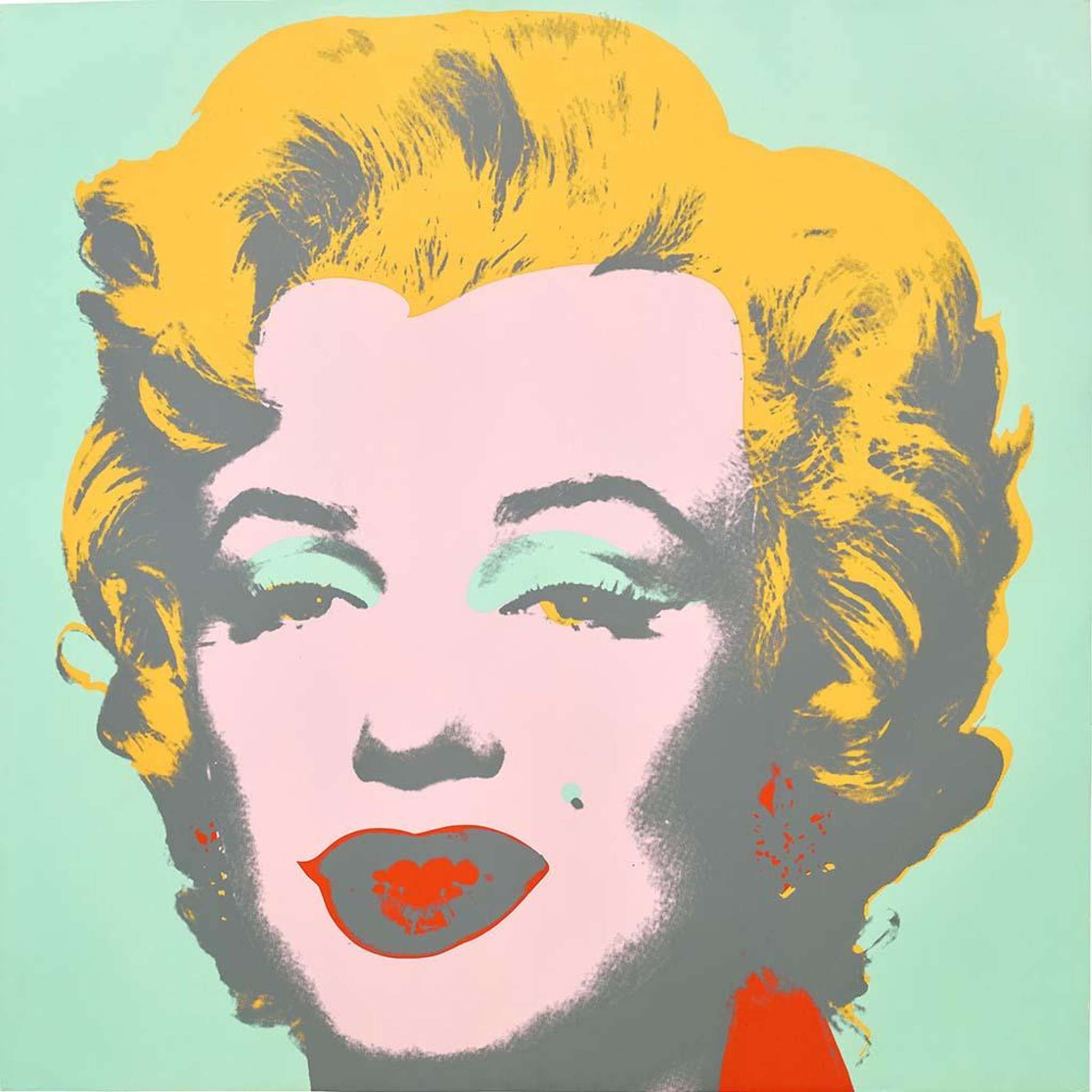
Warhol’s Marilyn Monroe portfolio (F. & S. II.22-31) encapsulates his fascination with the commodification of image. Each print isolates Monroe’s face against a vibrant ground – pink, turquoise, sage, green, black – resulting in 10 unique colourways that reimagine the starlet’s portrait. Together, the series transforms a single publicity still from Monroe’s film Niagara (1953) into a study of celebrity and commodity fetishism. Published by Factory Additions in 1967, the series was created five years after Monroe’s death, at a moment when Warhol had ascended from commercial illustrator to cult icon in the art world.
The portfolio’s enduring appeal lies in its tension between glamour and tragedy. By repeating Monroe’s image to the point of abstraction, Warhol transforms her into a symbol of mass adoration and loss. This duality has ensured its status as one of the most important and investable portfolios in modern art history – a body of work that continues to define the Pop Art canon more than half a century later.
How Much Are Andy Warhol Marilyn Monroe Prints Worth?
Between 2017 and 2025, 164 individual Marilyn prints and 12 complete sets sold at public auction, generating a combined market value of £42.56 million. That figure is concentrated in fewer than 180 transactions – an average of just 20 per year – which speaks to the portfolio’s genuine scarcity. Opportunities to acquire these works at auction are infrequent, and when they arise, competitive bidding consistently reflects that constraint.
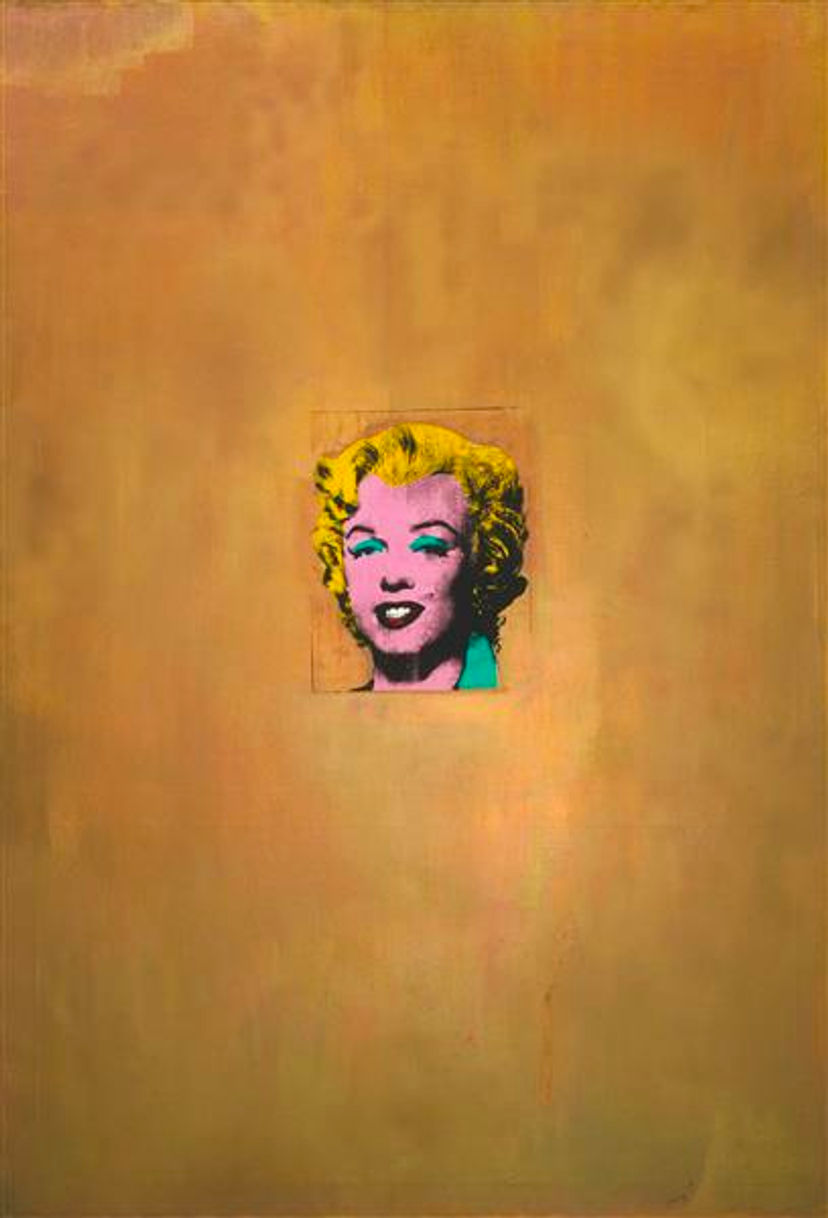
The market’s defining inflection point came in May 2022, when Christie’s New York sold the Shot Sage Blue Marilyn painting for $195 million – the most expensive contemporary artwork ever sold at auction. The ripple effect was immediate and measurable: total realised value across Marilyn prints and sets surged 298% year-on-year, with 29 individual prints and three complete sets selling in 2022 alone. More importantly, the market did not retreat once the headlines faded. Average hammers dipped modestly in 2023 (£104,200) before recovering to £117,000 in 2024, establishing a pricing corridor between £104,000 and £133,000 (2026 YTD) that has held for four consecutive years. Rather than producing a temporary spike, the 2022 sale permanently reset the market’s pricing structure – and that higher floor has not meaningfully been tested since.
In 2026, the market has moved beyond consolidation and back into active price acceleration. Through April, 12 prints have sold at an average hammer of £134,000 – the highest annual average of the past decade – as renewed cultural attention builds ahead of what would have been Marilyn Monroe’s 100th birthday on 1 June 2026. Since September 2025, 26 lots (excluding sets) have traded in an eight-month window at an average of £126,000, comfortably above the 2017–2025 average of £103,700. The pattern increasingly resembles the post-2022 environment: heightened cultural visibility is not simply supporting demand, but helping establish a new tier of pricing comparables.
Seasonality reinforces the timing dimension. Historically, 39% of Marilyn lots sell in Q4 and 33% in Q2, with Q1 accounting for just 13%. The concentration of 2026 activity in Q2 – including a six-lot consignment at Christie’s New York on 15 April and two further lots at Sotheby’s New York the previous day – shows sellers and auction houses positioning ahead of the centenary rather than waiting for the traditional autumn season. In a market with comparatively limited annual supply, timing around cultural moments can materially influence realised prices.
Which Marilyn Monroe Colourway Is the Most Valuable?
Colourway has become one of the primary pricing determinants within the Marilyn portfolio. Across public sales between 2017 and 2026, the top four colourways by total realised value – II.23 (sage blue), II.31 (magenta), II.24 (grey), and II.28 (orange) – account for approximately 57% of all value generated at auction. Across these four colourways, average hammers range from £105,300 to £185,800, a spread of over 75%.
Marilyn Monroe II.23 (Sage Blue)
II.23 (Sage Blue) is the highest-grossing Marilyn colourway, with £3.03 million realised across 20 public sales and an average hammer of £151,400. Its trajectory is inseparable from the Shot Sage Blue Marilyn event: nine prints traded in 2022 alone – up from zero the previous year – as the painting’s record sale drew global attention to this specific colourway. Sotheby’s London achieved the individual record of £260,000 in October 2022, and a further four sold in 2023 before supply dried up entirely. No examples have appeared at public auction since late 2023.
That two-year absence is notable. In a market with only 20 recorded sales, extended gaps between transactions compress the available pricing data and increase the importance of each new comparable. When a II.23 next appears at auction, it will be the first test of whether the post-2022 floor – around £129,000 on a post-peak average – still holds. The longer the gap, the greater the likelihood that pent-up demand drives the result above the last comparable. Conversely, the absence of recent benchmarks makes the private market the more natural venue for sellers who want certainty over price discovery.
Marilyn Monroe II.31 (Magenta)
II.31 (Magenta) carries the highest average hammer of any Marilyn colourway at £185,800, across 15 public sales. That premium is not an artefact of a single outlier – it reflects consistent strength. In September 2025, Sotheby’s London achieved £300,000, setting a new colourway record and the second-highest result for any individual Marilyn print. The following month, Sotheby’s New York sold another at £209,400, confirming the repricing was not a one-off.
What distinguishes II.31 is the combination of premium positioning with genuine liquidity. Sales appear in most years, which means there is a robust trail of comparables to support valuations – something that cannot be said for several other colourways. In a market where comparable sales data directly informs both auction estimates and private negotiation, that track record is itself an asset.
Marilyn Monroe II.24 (Grey)
II.24 (Grey) now holds the outright record for any individual Marilyn print at auction. In April 2026, a main edition realised £333,346 at Doyle Auctioneers & Appraisers (28 April), while a printer’s proof achieved £235,833 at Christie’s New York (15 April). Both surpassed the previous colourway record of £230,604 set at Phillips New York in April 2022, representing a 44.5% increase over the prior high in just four years.
Across 16 public sales since 2017, II.24 has averaged £169,600 – placing it between II.23 and II.31 in the colourway hierarchy. But the momentum trajectory is the steepest in the portfolio. Two record-breaking results in a single month, from different auction houses, signals broad market confidence rather than an isolated bidding war. The more muted grey-toned palette may also broaden the work’s appeal among collectors favouring more restrained or monochromatic interiors, potentially contributing to its recent outperformance relative to some of the more vivid colourways.
Marilyn Monroe II.28 (Orange)
II.28 (Orange) is the bellwether of the Marilyn market. With 20 public sales across the period – the joint-highest frequency alongside II.23 and II.30 – and an average hammer of £105,300, it sits at the centre of the portfolio’s pricing distribution. Its trajectory tells the market’s broader story in miniature: prices climbed steadily from £57,300 in 2018 to a peak of £187,000 at Sotheby’s New York in October 2025, reflecting the same step-change and centenary acceleration visible in the aggregate data.
The consistent trading volume is itself the signal. In a portfolio where most colourways have gaps of one or more years between sales, II.28’s regular appearance at auction provides a continuous pricing benchmark. That makes it a natural reference point when valuing colourways with less consistent trading histories – and a relatively lower-risk entry point at the upper end of the market, where the depth of comparables reduces the uncertainty inherent in buying works with fewer data points.
Marilyn Monroe II.21
Marilyn (F. & S. II.21) sits outside the main portfolio of 10 colourways – it is a separate, smaller-scale edition with a distinct colour treatment, though it shares the same compositional framing as II.22–31. With an average hammer of £30,500 across 16 lots – materially below the portfolio average by 71% – it has traded consistently throughout the period, with no year recording fewer than one sale. The colourway tracks the broader portfolio’s trajectory at a far more accessible price point, making it the most attainable routes into one of the most iconic images in post-war art. In a market where the core Marilyn colourways now routinely clear six figures, that accessibility has become increasingly significant.
Marilyn Monroe Complete Set Value and Auction Performance
Complete sets of the Marilyn Monroe portfolio are among the most sought-after and highest-valued holdings in Warhol’s print market. Only 12 sets have sold publicly between 2017 and 2025, averaging roughly one transaction per year. That scarcity has been matched by a sharp upward repricing over the ten-year period: a complete set that achieved £704,000 at Sotheby’s New York in April 2017 would, by 2024, command £2.41 million at Christie’s New York – equivalent to a compound annual growth rate of approximately 19%.
The record for a complete set stands at £3.58 million, achieved at Christie’s New York in May 2022. Two further sets sold later that year at £3.11 million and £2.43 million, confirming that the result reflected a broader repricing rather than a single outlier transaction. In December 2025, Ketterer Kunst Hamburg achieved £3.21 million – the second-highest result recorded for a Marilyn complete set – demonstrating that demand at the top of the market has been sustained three years beyond the 2022 repricing cycle.
Should You Sell a Complete Marilyn Monroe Portfolio or Individual Prints?
Auction houses will sometimes break up complete sets, offering matching-edition prints as individual lots – a calculated bet that the aggregate value of separate works will exceed the price of an intact offering.
The most recent test of that strategy came at Christie’s New York on 15 April 2026, when six Marilyn prints from the collection of Dr. Giuseppe Rossi were sold individually, all carrying the same edition number. Importantly, the works offered did not constitute a complete portfolio – it remains unknown whether the remaining colourways were retained, sold privately, or intended for future placement. The sale nonetheless highlights the pricing difference between individual matching-number works and intact Marilyn portfolios.
The six lots – spanning II.22, II.24, II.27, II.29, II.30, and II.31 – realised a combined £803,306. Even using conservative estimates for the four absent colourways at current market levels brings the implied total to approximately £1.24 million. By comparison, complete Marilyn portfolios have consistently traded above £2 million since 2022. While no direct comparison is possible without the remaining works, the gap still reinforces the premium the market places on intact portfolios.
For collectors holding complete or near-complete sets, the sale highlights the importance of timing and route to market. While a break-up strategy is one option available to sellers, the pricing gap between individual works and intact portfolios suggests that completeness continues to command a significant premium. As complete Marilyn sets become increasingly scarce at auction, decisions around whether to retain, fragment, or privately place a portfolio become increasingly strategic.
Marilyn Monroe Artist’s Proofs, Printer’s Proofs and Edition Types
Artist’s Proofs (APs) accounted for approximately 9% of public sales between 2017 and 2025 (14 of 164 lots), achieving an average hammer of £72,500 – below the main edition average of £105,300. This inverts the typical Warhol proof premium, where APs routinely command higher prices than standard editions. In the Marilyn market, that inversion appears less reflective of weaker demand for proofs themselves and more indicative of the specific works that have come to market. Timing of sale, condition, provenance, and colourway selection all continue to shape pricing outcomes, though sales patterns suggest that image hierarchy within the portfolio exerts a stronger influence on value than proof designation alone.
Printer’s proofs (marked ‘P’) have emerged as a notable category in 2026, with eight of 12 lots sold year-to-date carrying this designation, including the six Rossi collection prints at Christie’s. Across all years, printer’s proofs have achieved an average hammer of £135,900 – higher than both APs and main editions – though the category remains defined by a relatively small number of transactions, most of which occurred in 2026. What the results suggest is that proof premiums within the Marilyn market remain closely tied to the characteristics of the individual work itself. Timing of sale, provenance, condition, and colourway all continue to shape pricing outcomes, with printer’s proofs in highly sought-after colourways such as II.24 or II.31 achieving the strongest results. By contrast, proof designation alone does not appear sufficient to generate a premium in lower-demand colourways.
Marilyn Monroe 100th Birthday: Impact on Market Prices
Since September 2025, the Marilyn market has entered a new phase of repricing ahead of what would have been Monroe’s 100th birthday on 1 June 2026. Across 26 lots sold between Q3 2025 and April 2026, the average hammer reached £126,000 – materially above the £104,000–£117,000 range recorded across 2023–2024. Cultural milestones have historically acted as catalysts within the Marilyn market, most notably following the 2022 sale of Shot Sage Blue Marilyn, and the centenary appears to be generating a similar, though more gradual, pricing effect.
Momentum accelerated during Sotheby’s London’s September 2025 print sales, where five Marilyn prints sold on a single day – led by II.31 (magenta) at £300,000, establishing a new colourway record. The following month, Sotheby’s New York offered a further five prints, all performing strongly, with II.28 peaking at £187,000. Together, these two sales established an early pricing benchmark for the centenary period.
The April 2026 sales then pushed beyond that level. Christie’s six Rossi collection prints on 15 April, Sotheby’s two lots on 14 April, and Doyle’s record-breaking II.24 on 28 April together produced £1.34 million across nine lots within a single month. The II.24 result at Doyle – £333,346 for a main edition – is now the highest hammer achieved by any individual Marilyn print, indicating that the centenary period is supporting existing prices and actively driving new records.
The comparison with 2022 remains significant. Following the Shot Sage Blue Marilyn sale, average Marilyn prices stabilised at materially higher levels rather than returning to pre-event norms. The current centenary cycle appears to be operating in a similar way: heightened cultural visibility drives competitive bidding, those results establish new comparables, and the comparables then shape subsequent pricing expectations across the market. While the centenary itself is time-bound, the valuation benchmarks established during this period are likely to extend beyond the event window itself.
METHODOLOGY STATEMENT
All prices referenced in this report reflect public auction results and are presented in GBP unless otherwise stated. Performance calculations are based on hammer prices, which are also used in the accompanying graphs unless noted otherwise. This report draws on data from MyArtBroker’s proprietary print market database, which tracks auction results from over 400 auction houses worldwide. It is intended as a research tool, providing data-driven insights to support informed decision-making around buying and selling in the art market.
The analysis window covers 2017–2026 YTD (through April 2026). 2026 figures reflect partial-year data and are noted with an asterisk (*) in all charts. The analysis includes auction histories for Marilyn (F. & S. II.21) which, while sitting outside of the main edition of 10 prints, was created as part of Warhol’s 1967 Marilyn series.
Please note that while every effort has been made to ensure accuracy, this report does not constitute financial advice, and MyArtBroker is not liable for any investment decisions made based on its contents.