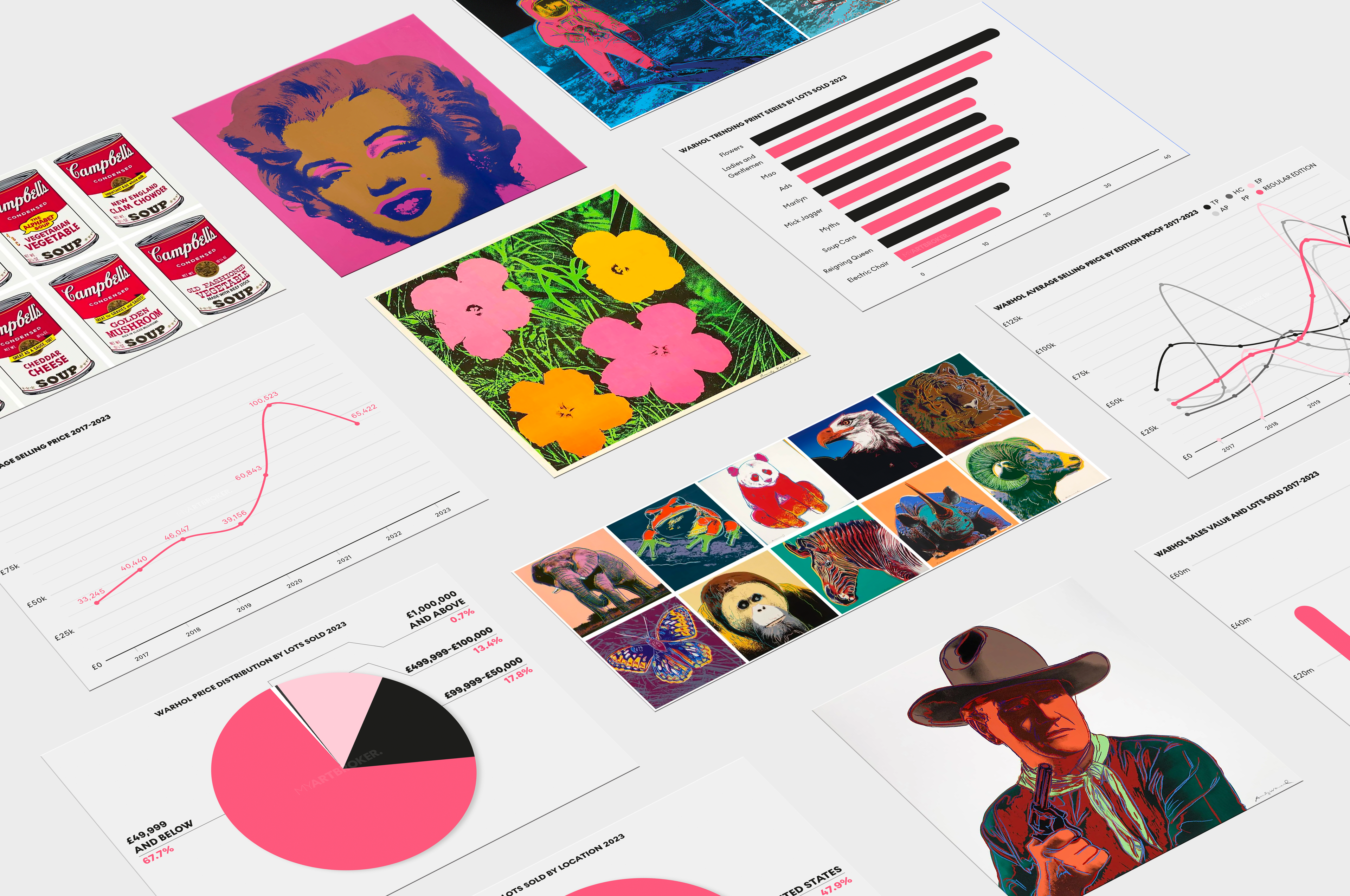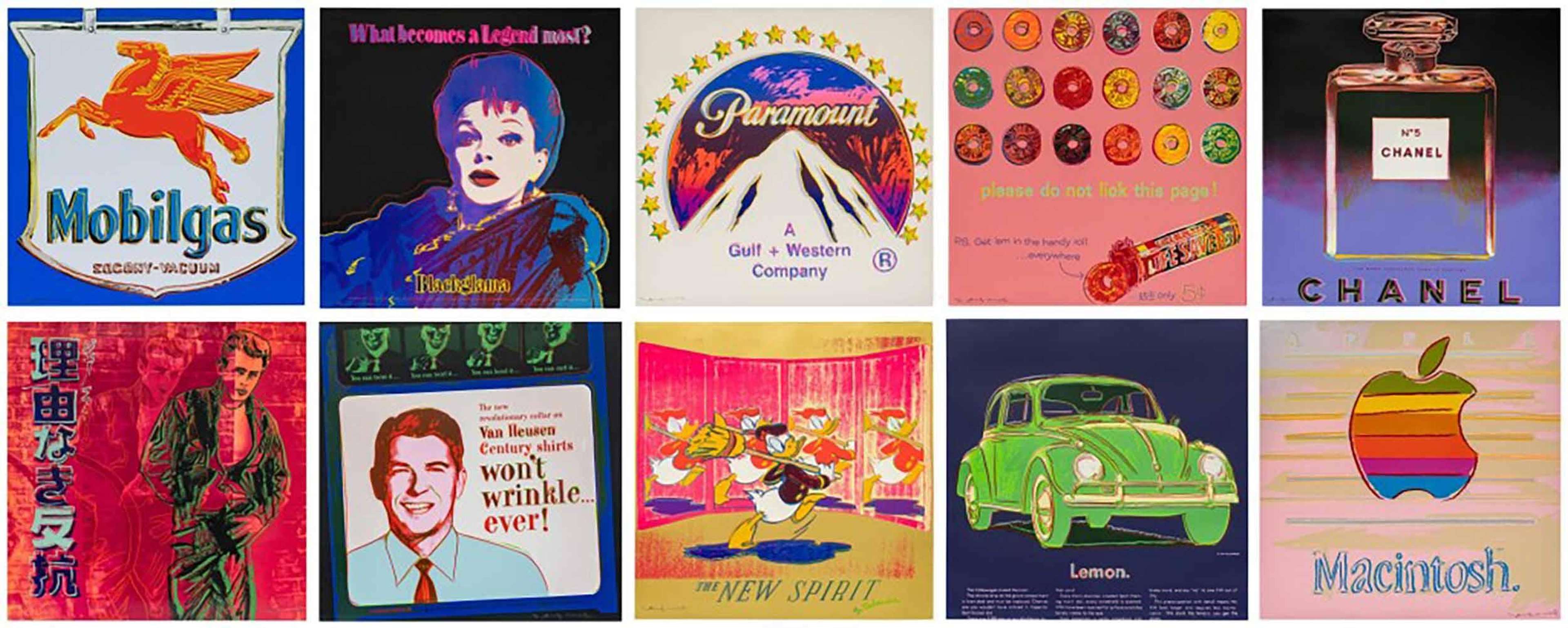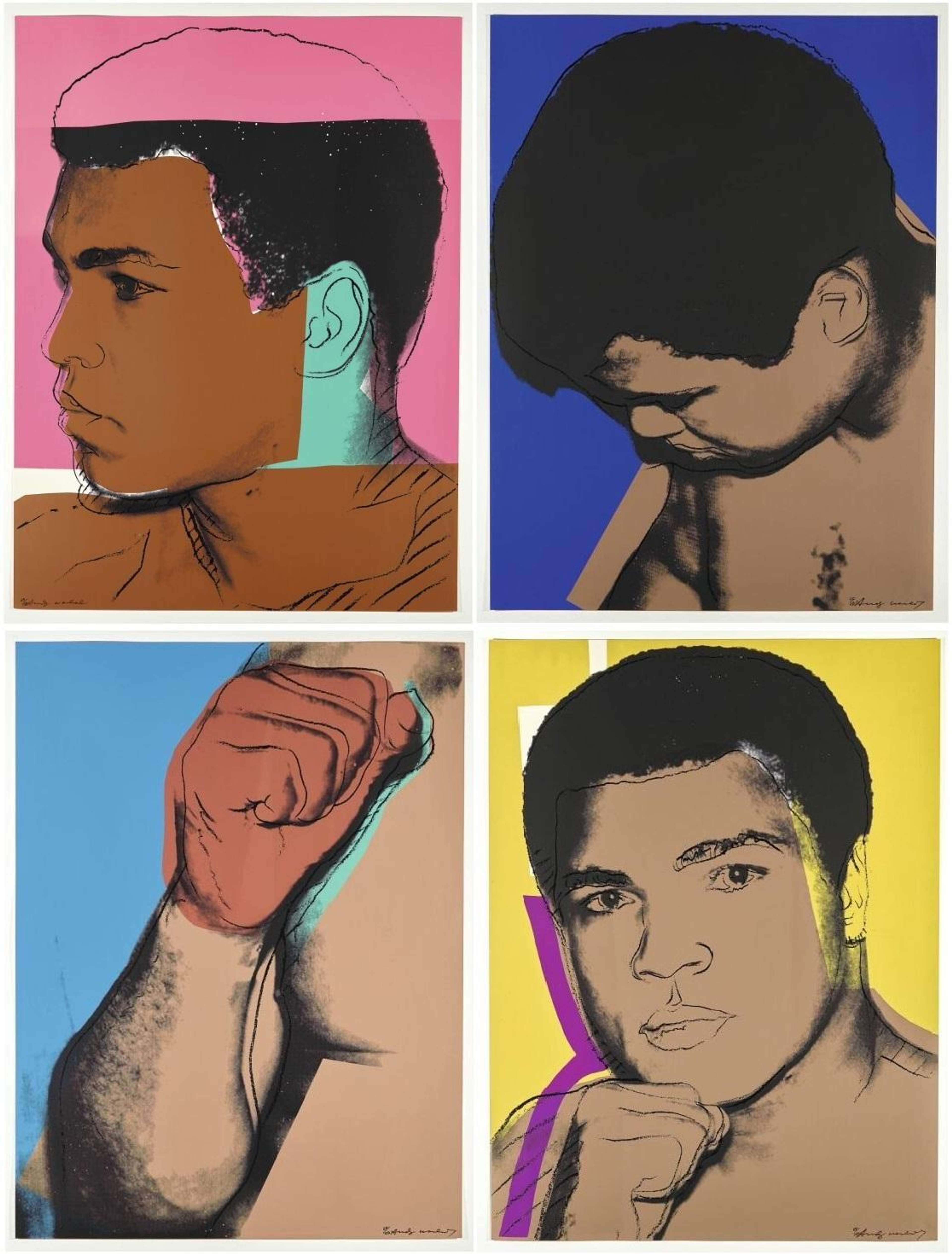


In a recent conversation, specialists Louisa Earl and Jess Bromovsky unpacked why this single portfolio still dominates collector behaviour, value growth and imagination to such a degree.
Marilyn: The Photograph & The Portrait
Warhol did not discover Marilyn Monroe. By the time he turned to her, she was already one of the most photographed women on the planet. The source image – a publicity still from Niagara (1953) – was familiar to cinema audiences long before it became the foundation of Warhol’s most famous portrait.
What Warhol’s Marilyn represents is not an origin in the biographical sense, but a crystallisation of several threads already present in Warhol’s practice:
- his decade in commercial illustration, honing an eye for mass media imagery
- his growing obsession with fame as subject matter
- his adoption of screenprinting as a vehicle for repetition and mechanical distance
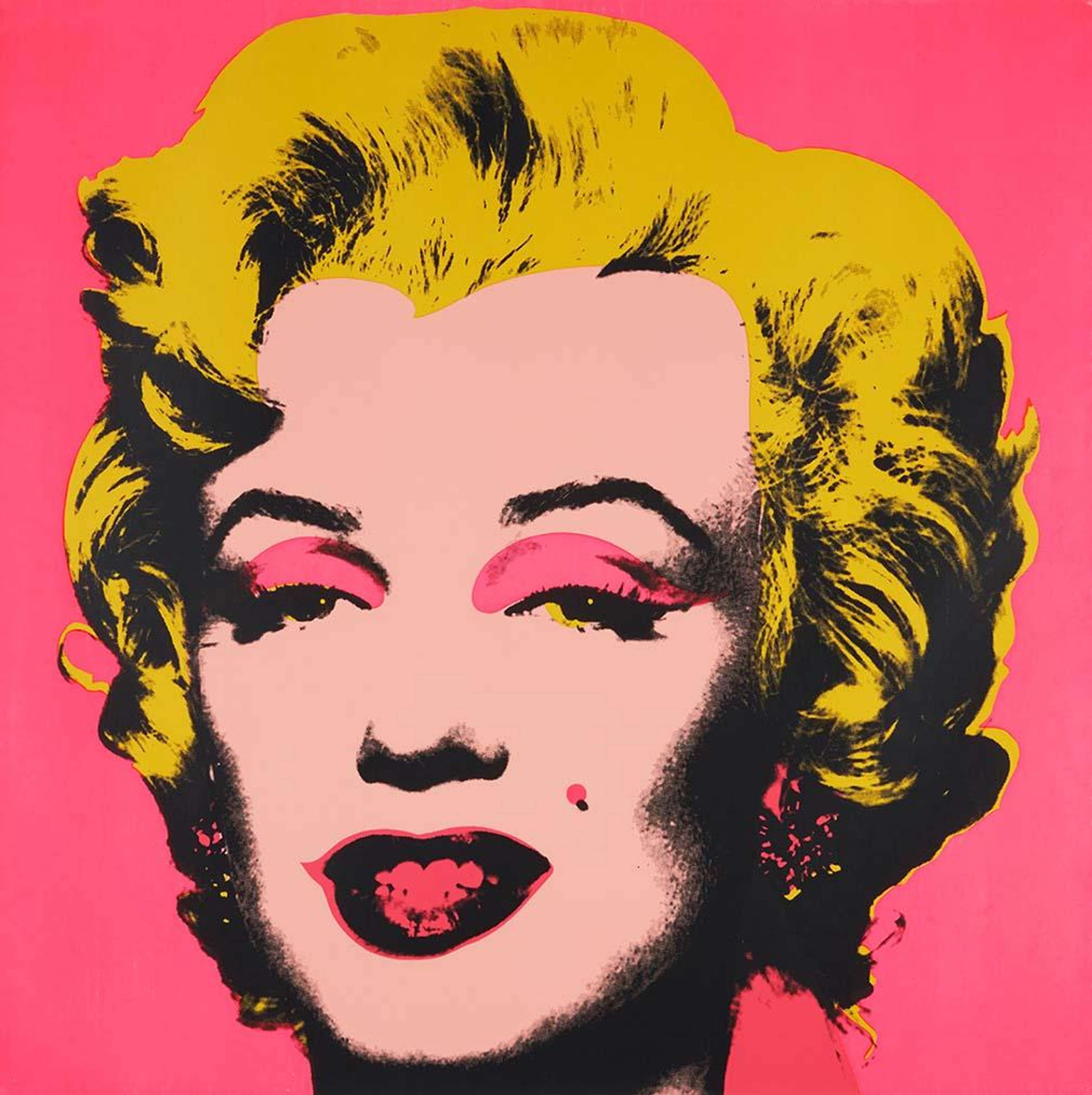
Crucially, the 1967 portfolio is his first fully realised suite of ten prints in ten colourways. That structure – a subject fractured into variations – becomes the template for later series, from Mao to Endangered Species and the Reigning Queens. In that sense, Marilyn is less a one-off and more a blueprint.
Celebrity, Death and the Erasure of Context in Marilyn Prints
By the time Warhol reworked the Niagara still, Monroe was already dead. The media frenzy around her death in 1962 created exactly the kind of saturation that fascinated him: an image repeated to the point of abstraction.
In the Marilyn prints, the woman is stripped of context: no background, no narrative, just a floating head against flat colour fields. The effect is closer to a religious icon than a Hollywood portrait. Identity is reduced to a mask – bright lips, heavy-lidded eyes, a graphic silhouette.
As Earl and Bromovsky point out, this is the opposite of traditional portraiture, which tends to supply clues to character and biography. Warhol removes all that. The sitter becomes pure surface – a vehicle for thinking about:
- fame detached from the individual
- whether someone is “important” because of who they are, or because the image circulates
- how repetition drains or amplifies emotional content
The fact that Marilyn died at 36 matters. Her story is unfinished, her image frozen at the point of tragedy. Where Elizabeth Taylor or Elvis Presley carry the messier arc of long celebrity lives, Marilyn remains permanently suspended in youth, scandal and speculation. That unresolvable mystery, combined with Warhol’s flattening, is a large part of why her image has outpaced his other portrait subjects in value and velocity.
The Marilyn Effect: From Cold War Media to Personal Brand
When Warhol was working through Marilyn and the early portrait series, he was doing so in a world of newspapers, radio and limited television. Advertising was just beginning its post-war boom; image saturation was new, not a background condition.
Seen from today’s perspective, Marilyn looks almost prophetic. The repeated face, the stripped-back persona, the transformation of a person into a reproducible logo – all echo the logic of contemporary “personal brand”.
The specialists observe that this is one reason the prints still speak so forcefully to younger collectors who may never have seen a Marilyn Monroe film. They recognise the dynamics, if not the original star. Warhol’s framework – the human as endlessly recirculated image – has become the default setting of social media.
In 2022, the market was reminded just how powerful this image still is when Shot Sage Blue Marilyn – an original work on canvas, not a print – sold at Christie’s for $195 million. It briefly became the most expensive 20th-century artwork and the priciest work by an American artist ever sold at auction.
Events at that level do not transform the print market permanently, but they do create a spike:
- renewed media coverage
- a fresh round of collectors “checking” their own works
- a general re-rating of the Warhol–Marilyn axis
As Earl notes, what has changed more structurally over the past 10–15 years is not just Warhol, but the status of editions themselves. Where original works once dominated, a growing cohort of collectors has turned to prints as originals have moved beyond reach. That shift has dragged the entire editions category up: a single Marilyn print that might have sold for £10,000–£20,000 in 2010 now trades with an extra zero.
Marilyn is the sharp end of that move. Warhol as a whole has proved remarkably steady over decades – a mature market, with incremental appreciation rather than speculative spikes – but within that, the Marilyn portfolio has shown some of the steepest long-term growth.
Scarcity, Condition and the Reality of a 1960s Print
On paper, the 1967 Marilyn set is not scarce: just 10 colourways, an edition of 250 each
In theory, that’s 2,500 prints. In practice, “good Marilyns” are hard to find. The reasons are straightforward and unglamorous:
- People don’t want to sell them. Owners understand both the emotional charge and the financial security they hold.
- They are fragile objects. Early factory-era paper and ink were far from archival. Exposure to light, heat, poor framing and everyday living has taken its toll over six decades.
Condition is therefore a central price driver. Certain vulnerabilities recur:
- full-bleed printing to the sheet edge means scuffs and frame rub are common
- darker grounds, especially the black Marilyn, show scuffing more harshly
- some “plasticky” ink passages are prone to cracking
- earlier periods saw aggressive interventions such as re-screening, which are now considered unacceptable restorations
Today’s conservators can achieve remarkable results with tears, cockling and even some water damage, and sympathetic treatment is widely accepted. But an “immaculate” Marilyn in 2025 is usually a red flag rather than a miracle; the absence of any age is more suspicious than reassuring.
Prevention – sensible hanging, UV glazing, decent framing – is now treated as central to stewardship.
Marilyn Print Colourways: Taste, Theory and Market Gravity
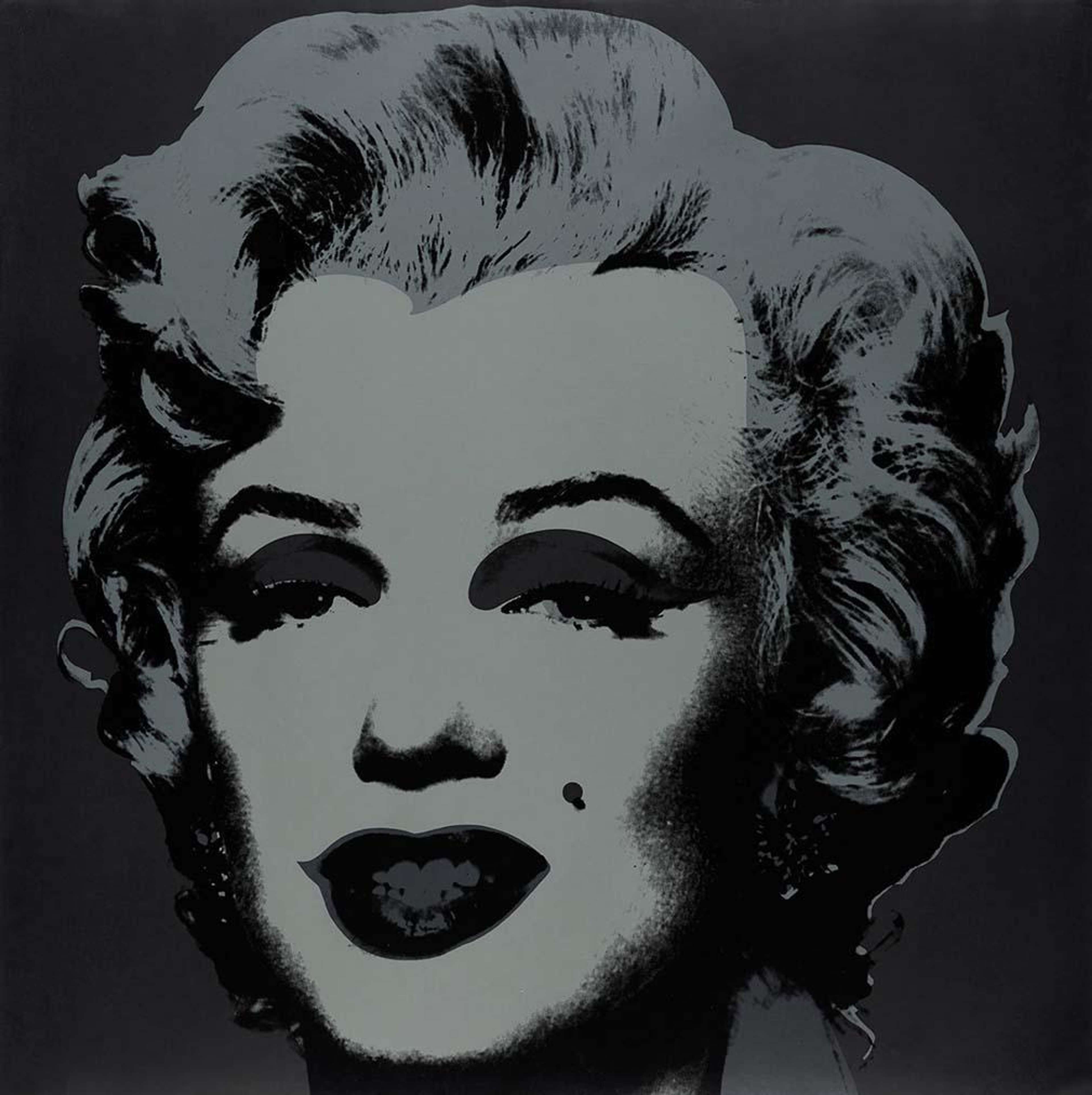
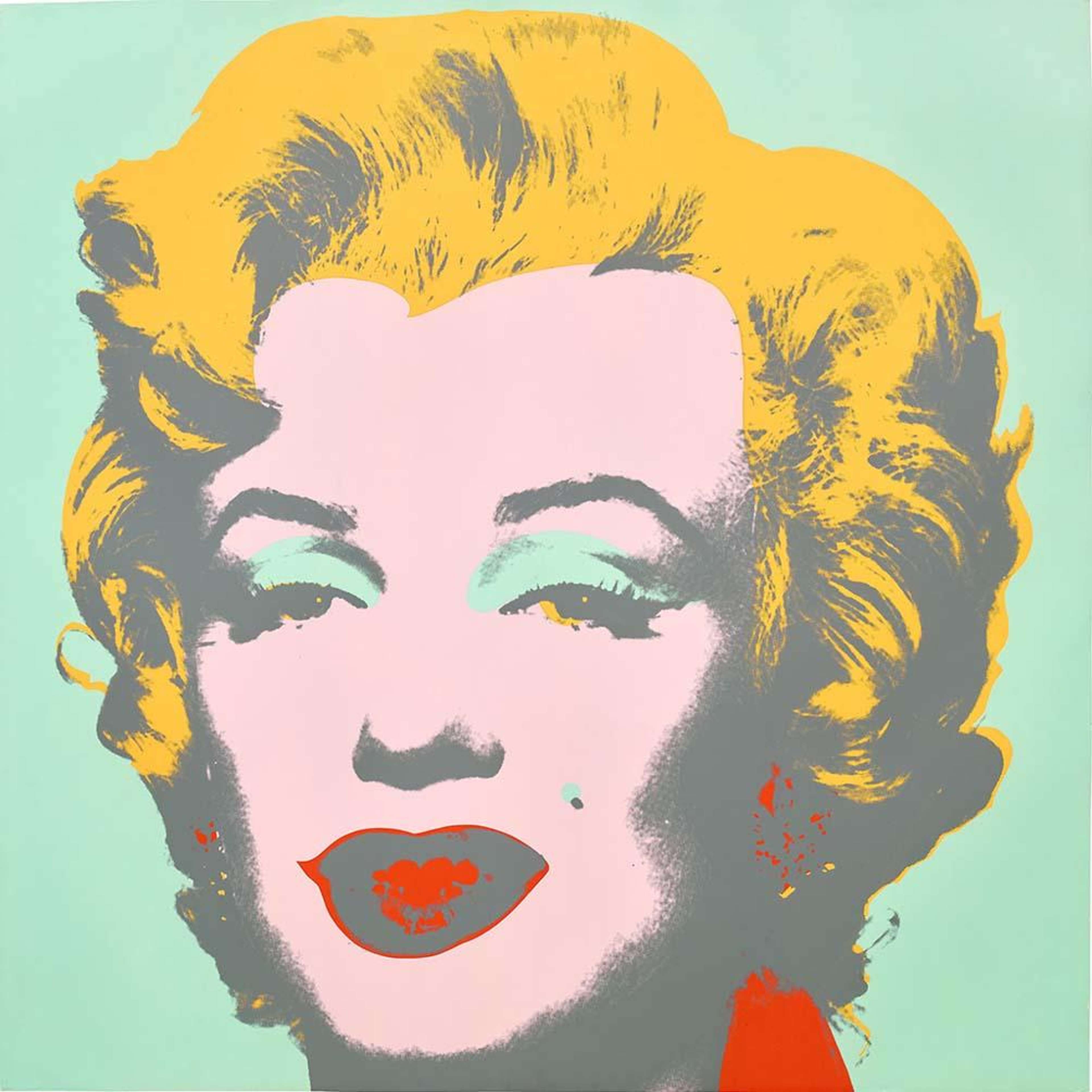
Although all ten colourways were produced in identical edition sizes, the market does not treat them equally. Over the last 15 years, three versions – catalogue numbers 23, 24 and 31 – account for more than half of the realised auction value for the series.
Those are:
- F. & S. II.23 – Teal (a colour theory favourite: cool ground, harmonious contrasts)
- F. & S. II.24 – Black (the outlier, as well as darkest and most graphically stark of the set)
- F. & S. II.31 – Pink (the archetypal “pop” Marilyn, arguably most famous colourway)
Why these? Some of it is simple colour theory. These combinations are clean, bold and easy on the eye. Others in the set are more jarring or acidic; they have their admirers, but they don’t command the same consensus.
Importantly, dominance here isn’t only about frequency at auction. The black Marilyn, for example, appears relatively rarely. When it does, it tends to prove its status again. That balance – scarce enough to feel special, visible enough to build a track record – keeps these three colourways at the top of the hierarchy.
There are no obvious “bargains” hiding in the series. Even the more challenging colourways encounter strong demand when they appear, simply because opportunities are limited. Some versions – such as a shimmery taupe–metallic ground mentioned by the specialists – are barely seen at all, their whereabouts a matter of conjecture.
Marilyn Print Sets, Matching Numbers and the Psychology of Completion
Originally, the portfolio was sold as sets: ten colourways, identical edition number across all ten sheets. Over the decades, many of these were broken up – split by dealers for stock or by collectors who didn’t have the walls or appetite to hang ten large heads of the same woman.
This history makes surviving matching-number sets rare and highly prized. They appeal to a particular type of collector, someone who values the series as a conceptual whole, not just as individual images and someone who appreciates the provenance implied by continuity – one owner (or line of owners) keeping the set together, rather than fragmenting it
Matching sets command a clear premium. A mixed-number “set” is more often handled as single prints; bundling them adds less value, simply because buyers at that level tend to be exacting. One non-matching sheet can dent the perceived integrity of the whole.
In market terms, complete sets now occupy an awkward but powerful middle ground:
- financially, they sit between major original works and single prints
- psychologically, they represent a “final stage” for serious print collectors or cross-over buyers used to the original works market
Provenance and Marilyn Prints
At today’s price levels, provenance is more than a footnote. It affects both value and comfort.
Several strands matter:
- Freshness to market – works emerging from long-term private ownership, especially those acquired in the 1960s–70s and never resold, are particularly attractive.
- Celebrity or collection provenance – inclusion in a known single-owner sale or a well-publicised collection can move the needle, if only modestly, by adding narrative glamour.
- Lineage from the Factory or early dealers – direct or near-direct purchase from Warhol’s circle still carries weight, even if it lacks the headline appeal of a famous collector’s name.
On the other side of the ledger sit incomplete or murky histories. Inheritors who discover a Marilyn without paperwork, or vague tales of works “found in a skip/bathroom/neighbour’s bin”, present a challenge. At this level, buyers want a clear chain of title and a high level of trust; colourful stories without documentation tend to undermine rather than enhance that.
Where are all the Marilyns Now? Geography and Generations
Supply still skews towards the United States, particularly New York and other centres where Warhol’s work circulated at relatively modest prices in the 1960s–80s. Many of those first-wave buyers are now thinking about retirement, estate planning or rationalising collections, which naturally releases works back to market.
Demand, however, is more evenly spread:
- New York and the wider US remain strong due to proximity to the artist’s story
- London has become a major hub for trading and collecting Warhol editions
- Interest from Asia has expanded steadily, as global blue-chip names have embedded themselves in regional collections
Demographically, Marilyn has not become a “boomer-only” image. Younger collectors may know Monroe more as a symbol than as an actress, but they recognise the Warhol–Marilyn pairing instantly. The image is reinforced by the way subsequent artists have quoted and reworked it – Banksy’s Kate Moss series being the most overt example – continuing the art-historical dialogue that keeps the motif alive.
Why Marilyn Still Leads
Within Warhol’s portrait canon, there are many strong images: Liz, Jackie, Elvis, Mao, the Queens, the Endangered Species. Markets for each move with shifts in taste and geopolitics. Some series have enjoyed recent surges; others are more cyclical or sensitive to subject matter.
Marilyn, by contrast, has been remarkably consistent:
- the image is instantly legible across geographies and generations
- the story carries tragedy, glamour and ambiguity in a compressed form
- the portfolio established a structural template for Warhol’s later edition practice
- the market is broad, deep and well-understood; volatility tends to be short-lived
Put simply, Marilyn is both the symbol and the engine of Warhol’s print market. It embodies his clearest thinking about fame, reproduction and surface, while offering collectors something that feels emotionally charged, historically important and commercially reliable.
For an artist obsessed with turning people into brands, it is fitting that his most enduring work is not just a portrait of Marilyn Monroe, but the definitive logo of Marilyn-as-myth – and of Warhol himself.