Margaret Barratt: Marilyn Monroe & The Business of Memory

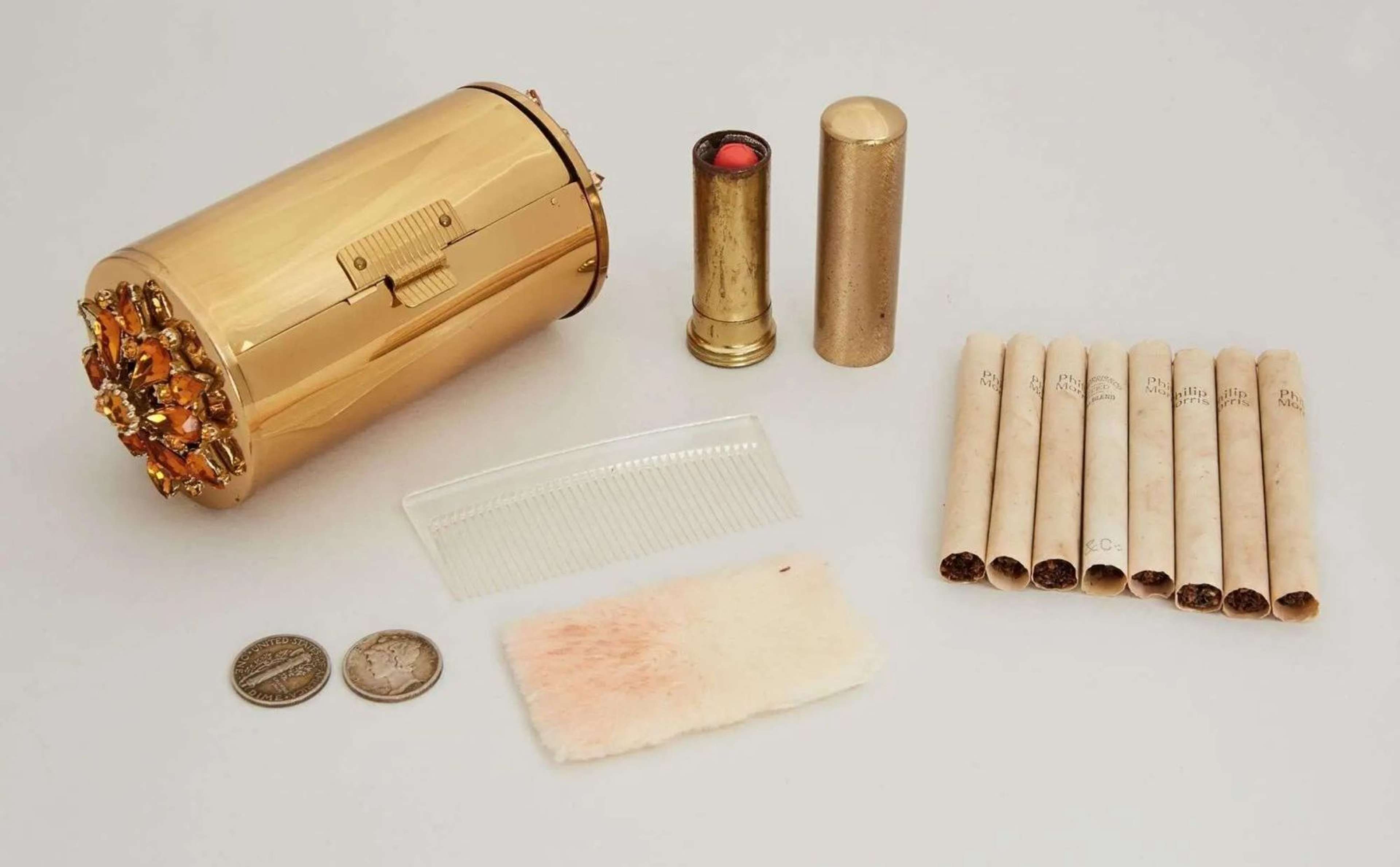 Image © Julien’s Auctions / Marilyn Monroe 1950s Minaudiere Evening Purse (Lot #21)
Market Reports
There is a particular kind of fame that outlives the body. It stops belonging to the person who made it and becomes something stranger: an image, a market, a mythology, a room full of objects that people still want to touch.
Marilyn Monroe is perhaps the clearest example we have. More than 60 years after her death, she remains commercially alive in a way few figures do. Her face is still shorthand for glamour, fragility, sex, tragedy, Hollywood, America, beauty, self-invention. She exists at once as woman, image, artwork, commodity and ghost.
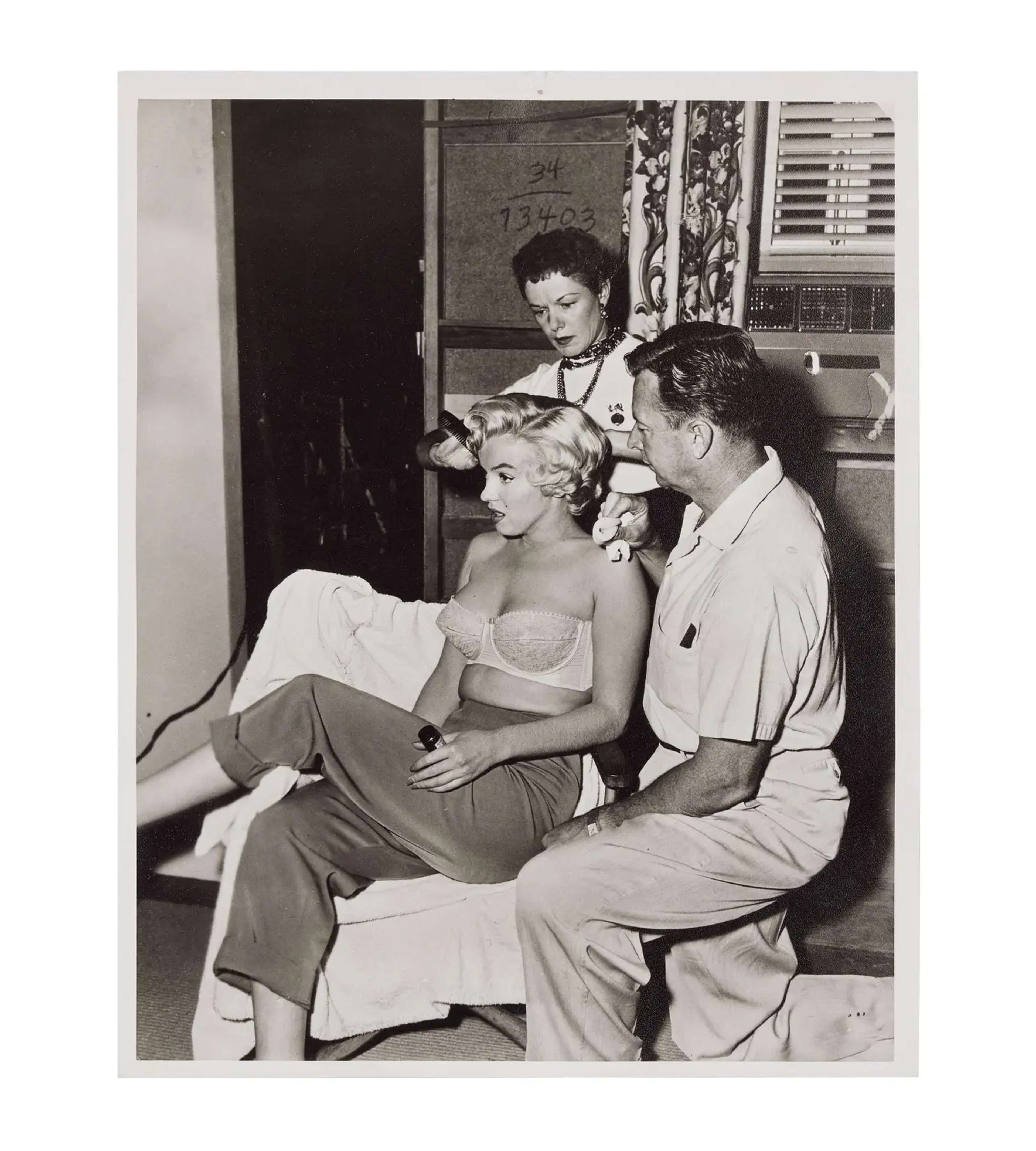
Speaking to Margaret Barrett for No Reserve, what became clear was that Marilyn’s afterlife is held together by objects. Lipstick. Address books. Letters. Eyeliner. Photographs taken by strangers. A bra. A pair of weights. The relics are intimate, sometimes absurdly so, yet they carry the force of evidence.
Margaret has spent 30 years in entertainment memorabilia, moving through Butterfield and Butterfield, Christie’s, Bonhams, Heritage and now Julien’s. She talks about Marilyn with the care of a specialist and the feeling of a friend, which is exactly why this conversation was so special. The best specialists in this kind of market are part historian, part detective, part custodian of belief.
Her own route into Marilyn began with a pair of 1980s earrings. A school friend saw them and assumed Margaret was a fan. She brought her Anthony Summers’ biography Goddess. The book opened the door. Margaret has kept the earrings ever since.
That is how these things often begin. Not with scholarship, but with an image. A face on a poster, a T-shirt, a bedroom wall, a dorm room, a cheap piece of merchandise. Marilyn comes to people first as surface. Only later does the surface begin to split.
For Margaret, the early Marilyn was almost unreal: the face, the figure, the gowns, the rhinestones, the perfect 1950s blonde. Over time, and with deeper reading, handling and research, she became more human. More ambitious. More strategic. More lonely. More intelligent. More modern than the culture that trapped her.
Why Is Marilyn Monroe Still So Collectible in 2026?
One of Margaret’s strongest points when I question her on the changing market of memorabilia - from someone that has seen this collector base transform though analogue to the digital era - is remarkably not just access but that scholarship has changed. The Marilyn of older biographies was often passive: victim, bombshell, tragic girl. The Marilyn now being recovered is more complicated. She built a persona, fought studios, educated herself, lifted weights when most women were not being encouraged to be physically strong, sought serious acting training, and tried to wrestle control over the image that made her famous.
The voice alone tells a story. Margaret points out that in Marilyn’s early films she speaks like a ‘normal adult woman’. The breathy voice came later, became famous, and then became a cage. In the unfinished Something’s Got to Give, she is speaking again in a more natural register. A glimpse, perhaps, of what might have come next.
That unfinished future is part of the obsession. Marilyn died at 36. She never became old. She never had to survive the indignities of later celebrity, the physical decline, the potential career collapse, the public revision. Much like James Dean, JFK, Sharon Tate and Princess Diana, she remains suspended at the point of maximum projection. We can keep asking what she might have done because she never had to answer.
The Most Expensive Marilyn Monroe Items Ever Sold
Margaret’s chosen single word for Marilyn was “eternal”.
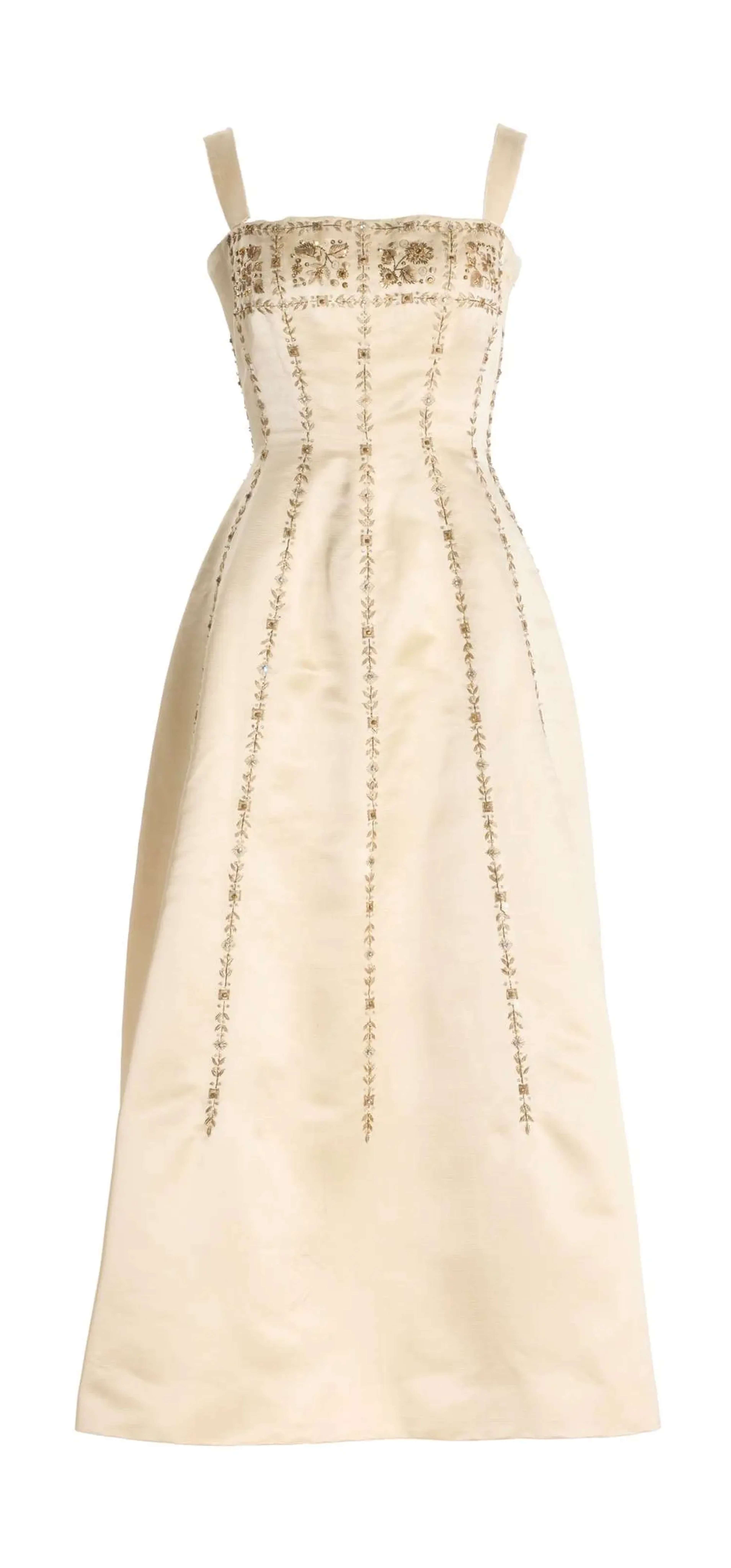
The market understands that. Screen-worn costumes sit at the top because they offer the closest possible contact with the public Marilyn: the woman seen, filmed, desired, remembered. The Happy Birthday, Mr President dress sold at Julien’s for millions - and remains the most expensive Marilyn collectable sold at auction - because it is more than clothing. It is theatre, politics, sex, performance and American myth stitched into fabric.
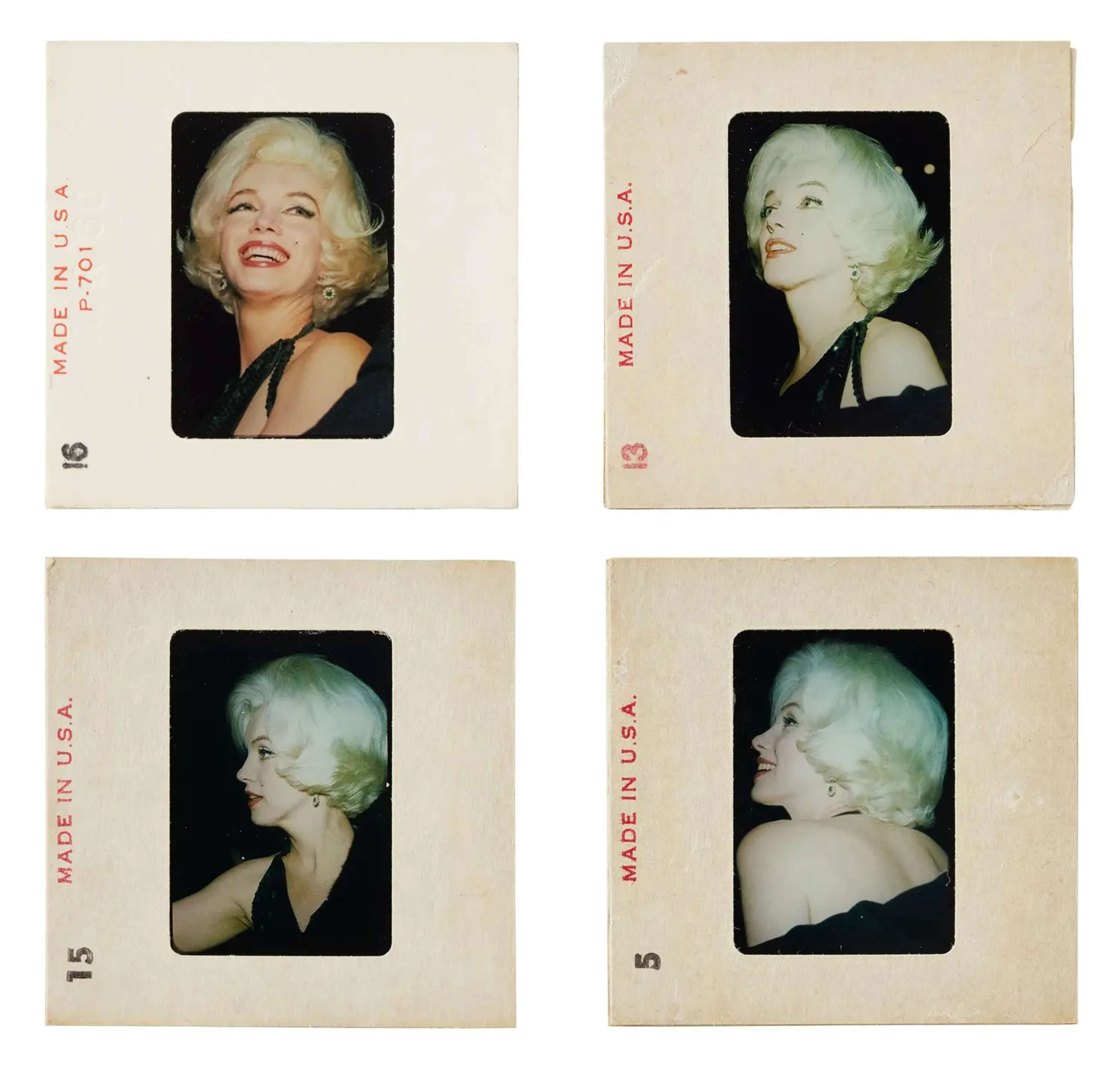
But the smaller things may be more revealing. Margaret is drawn less to the most expensive objects than to those that add one new piece of information. A letter sent to an address on Stanley Avenue, where Marilyn was not previously known to have lived. An address book with typed entries and occasional handwriting. A birthday-card draft written on scrap paper before the final message was committed to the card. These are not glamorous in the obvious sense. They are fragments of a life being reconstructed under glass.
How Do Auction Houses Authenticate Marilyn Monroe Memorabilia?
When asked about authenticity Margaret explains that the address books are especially powerful. They tell us who was really there. Not who later claimed to have known her, loved her, advised her, rescued her. The names in the book create a more disciplined record. Just like in our prints and editions market, a market built on story, the paper trail matters.
It also exposes the fragility of memory. Margaret spoke about how often she has to refuse objects: signed photographs with forged signatures, vintage handbags said to be Marilyn’s, jewellery with nothing behind it but a family story and a wish. Provenance is everything. A plausible story may be published as such, with the responsibility passed honestly to the bidder. I love this facet of this unique memorabilia market - its one forged more on a sort of detective inspector process that as custodians and collectors can either buy into or not. A weak story, as with far too much art, cannot carry the object.
That distinction is central to the entertainment memorabilia market. You have to believe, but belief has to be tested. The serious specialist is not there to drain the romance from the object. She is there to protect it from fantasy.
This is where the market has changed most. 30 years ago, entertainment memorabilia was often treated as light, fun, secondary to “serious” art. I remember that being true in my years spent at Christie’s South Kensington back in 2012 when the ‘Out of the Ordinary Sale’, one of our most successful sales - full of the humorous, notable and weird and wonderful objects and ephemera - was celebrated, but not ‘respected’ in the same vein as fine art. Now it is one of the most revealing collecting categories we have, precisely because it sits so close to how modern culture actually works. As Margaret put it, movie stars and rock stars are our modern opera and ballet stars now. Popular culture is not peripheral to cultural history. It is the archive most people recognise.
The internet made the field wider, faster and noisier. It gave collectors access to images, records, forums, old photographs, film stills and comparative material. It also gave bad stories and misinformation more room to travel. A 1950s stole becomes “Marilyn’s stole”. A pair of earrings becomes “worn by Marilyn”. A signature becomes almost convincing.
So the specialist matters again. Perhaps more than ever. In a world where everything can be searched, the valuable skill is knowing what the search result does not prove - another remarkable parallel to the prints market.
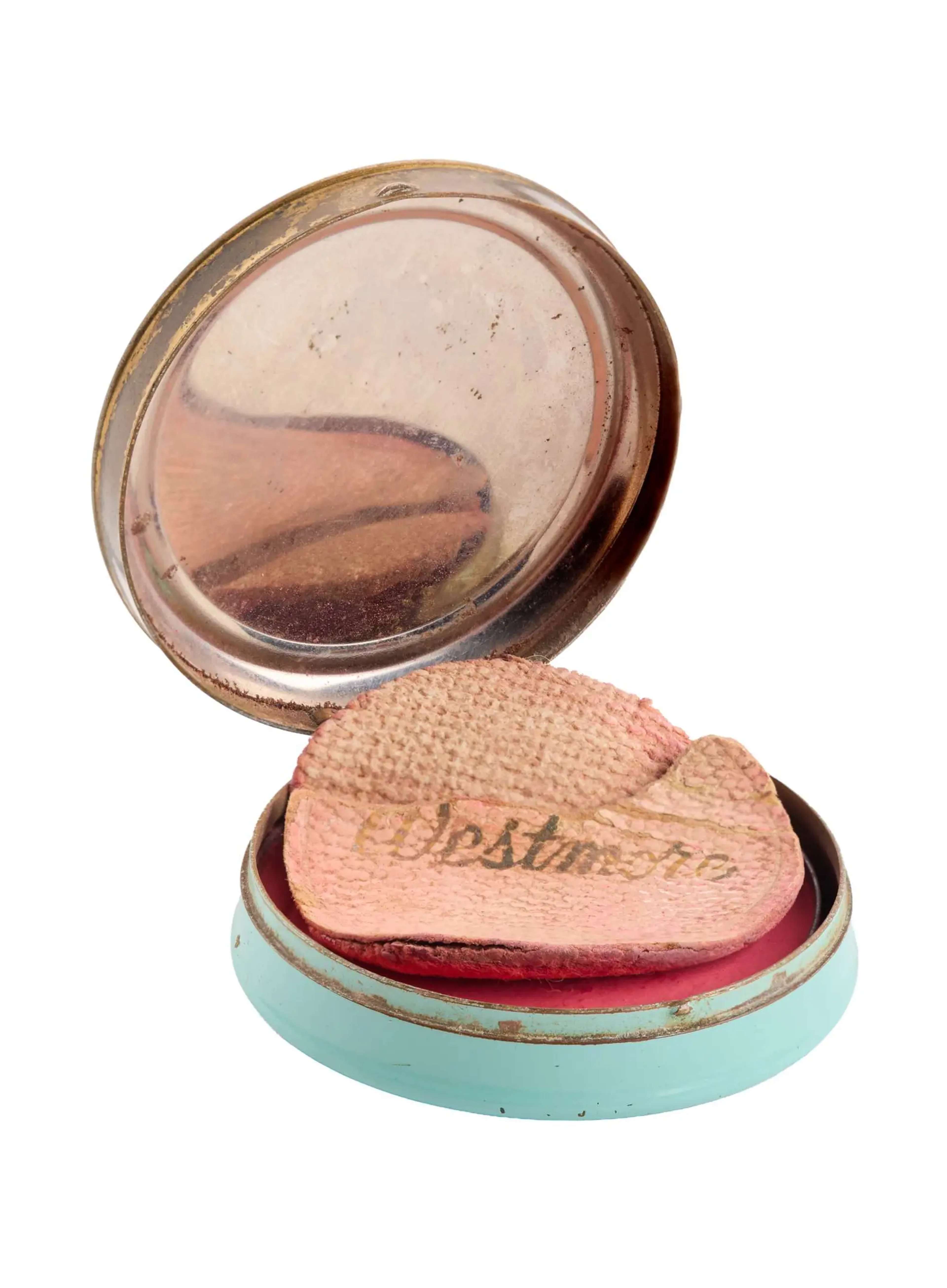
There is also something unusually intimate about this market. A collector bidding on Marilyn’s eyeliner is not simply buying cosmetic residue. He is buying the eyes. The look. The means by which she projected herself into the world. Someone else wants the used lipstick. Someone else wants the photographs no one has seen before. Someone else wants the address book, because it gets closer to the real person than any studio portrait ever could.
That is perhaps what separates memorabilia from many other markets. It is openly emotional. It does not pretend to be cleanly rational, nor highbrow. Its value comes from contact, association, survival and, this is the truest part - longing.
Margaret said that by handling what people owned, touched, wore and wrote, you begin to know them. It sounds sentimental until you think about your own life. The contents of a wardrobe, the notes in a drawer, the names in a phone book, the lipstick left in a handbag. These things would tell the truth about us in ways we might not choose.
With Marilyn, the objects do something else too. They push back against the myth. They show a woman working, rehearsing, reading, trying, worrying, moving apartments, writing cheques, drafting birthday cards, lifting weights, keeping addresses, losing friends, searching for a family where one did not exist.
Margaret’s most moving theory is also the simplest: Marilyn needed a good girlfriend. Someone not on the payroll. Someone not in love with her. Someone who could take the call, hear the complaint, pour the drink, tell the truth.
It is almost painfully ordinary. After all the biographies, conspiracies, market records and Warhol images, perhaps one of the saddest things about Marilyn Monroe is that she may not have had that.
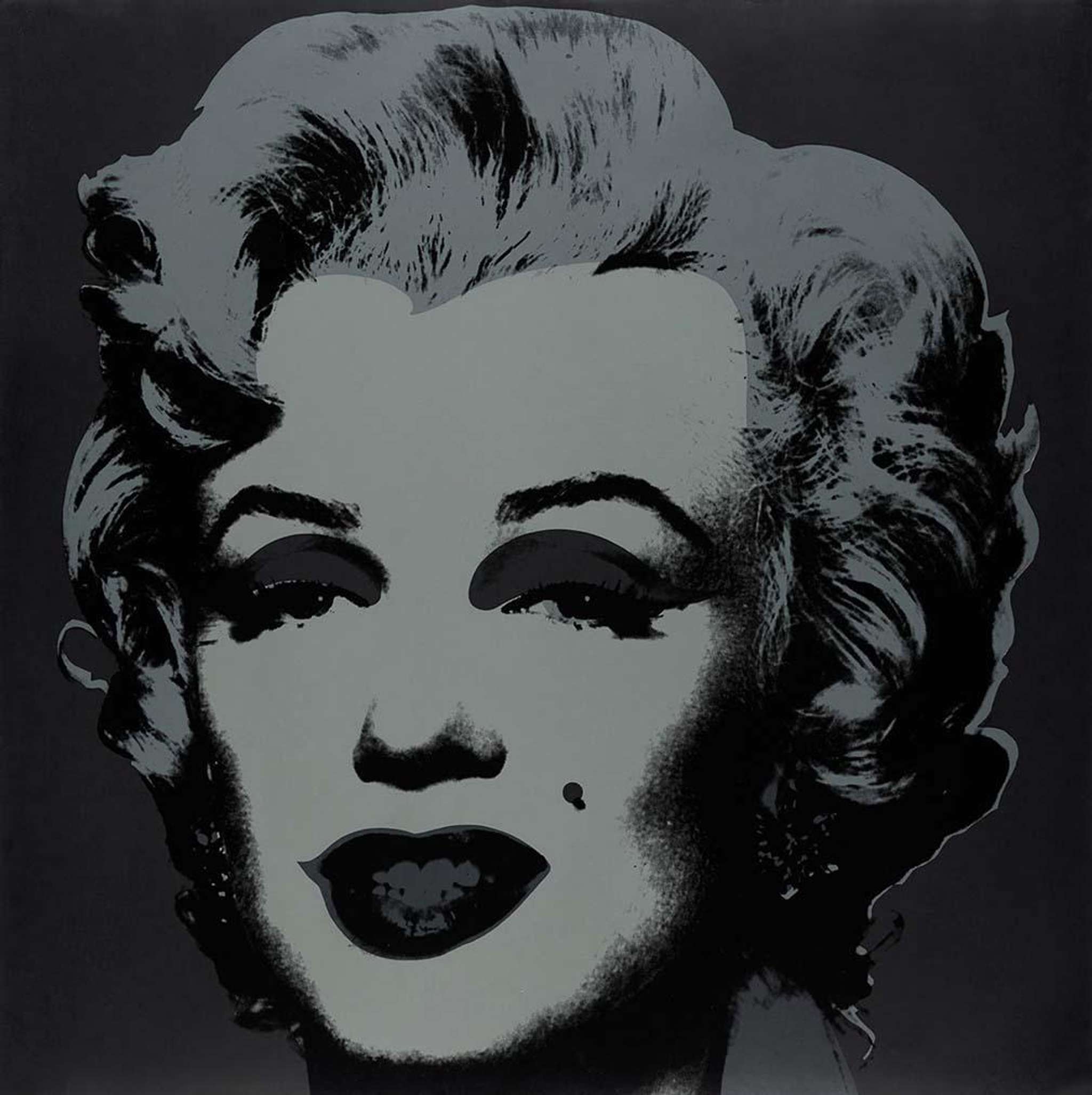
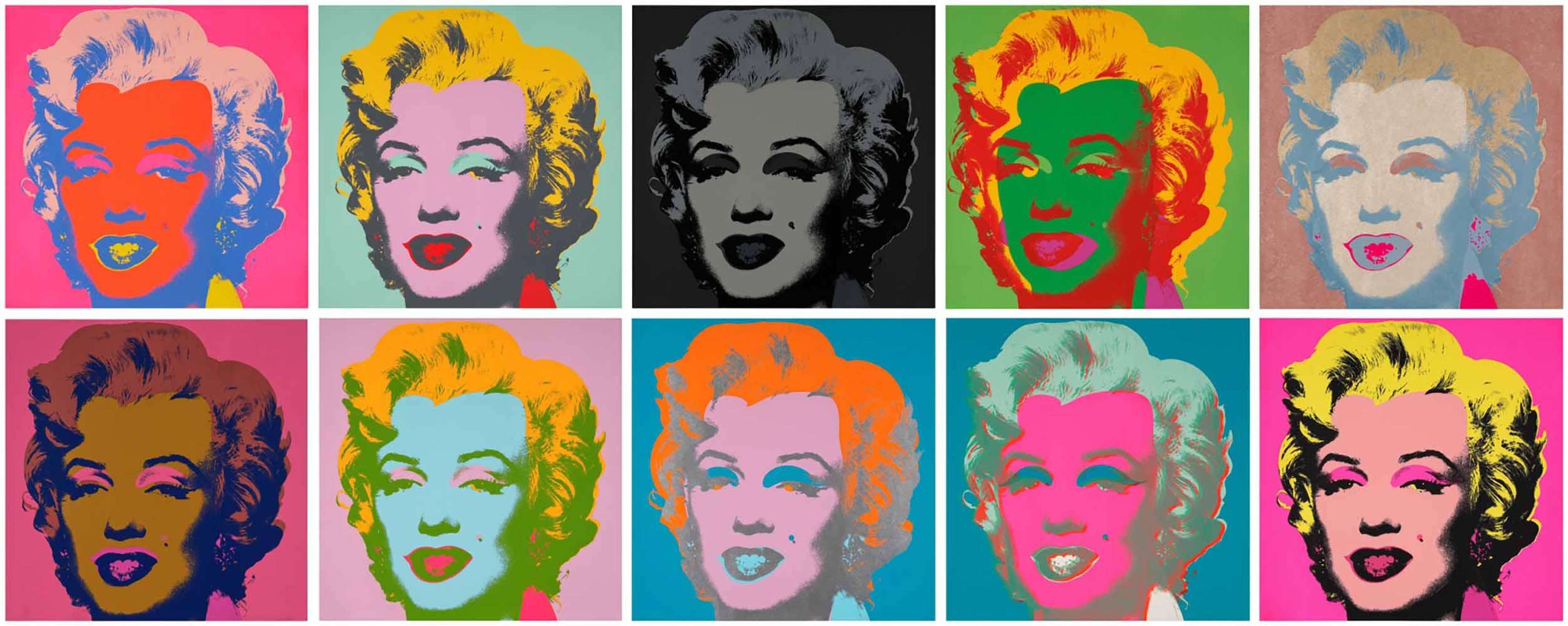
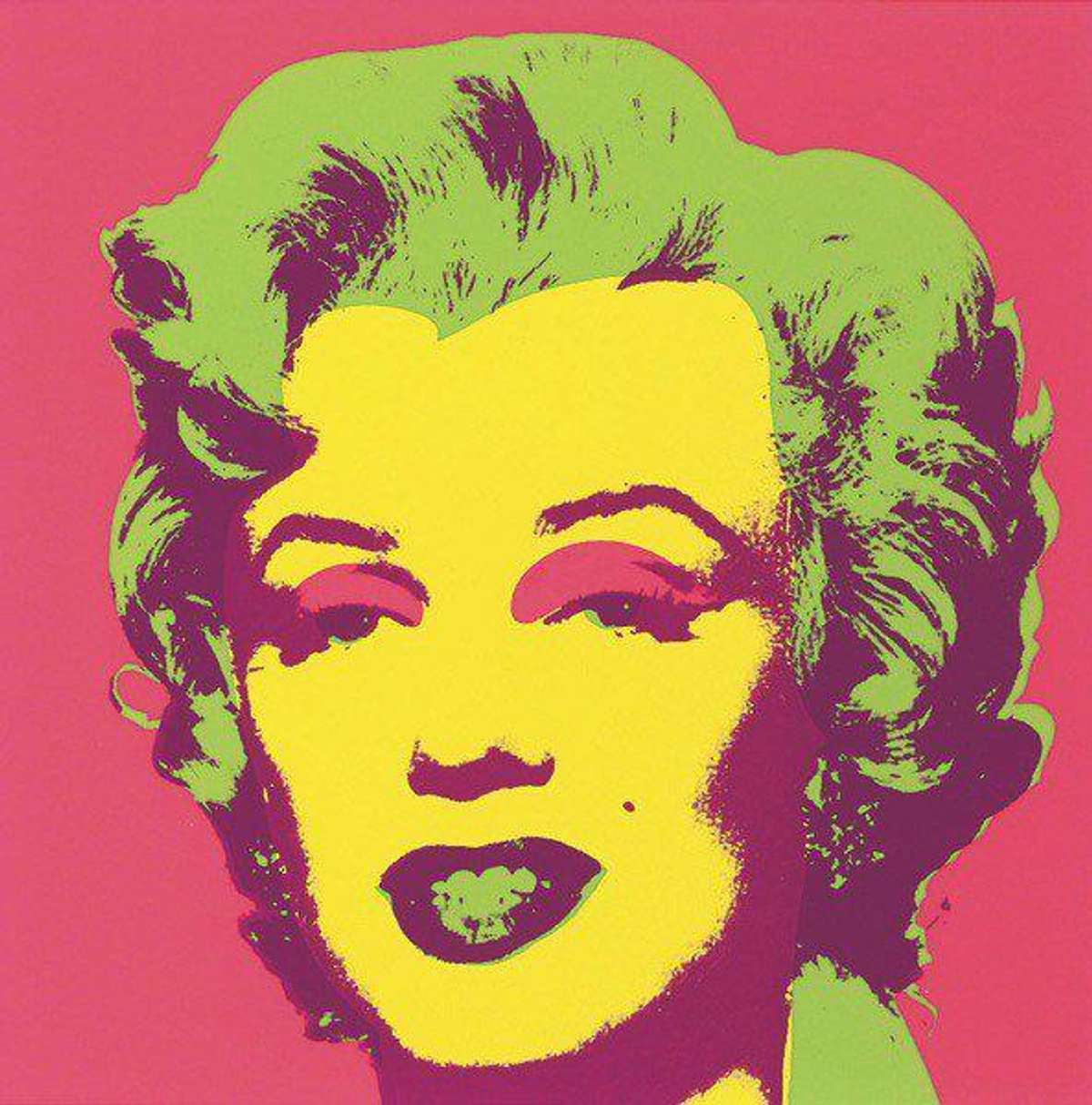
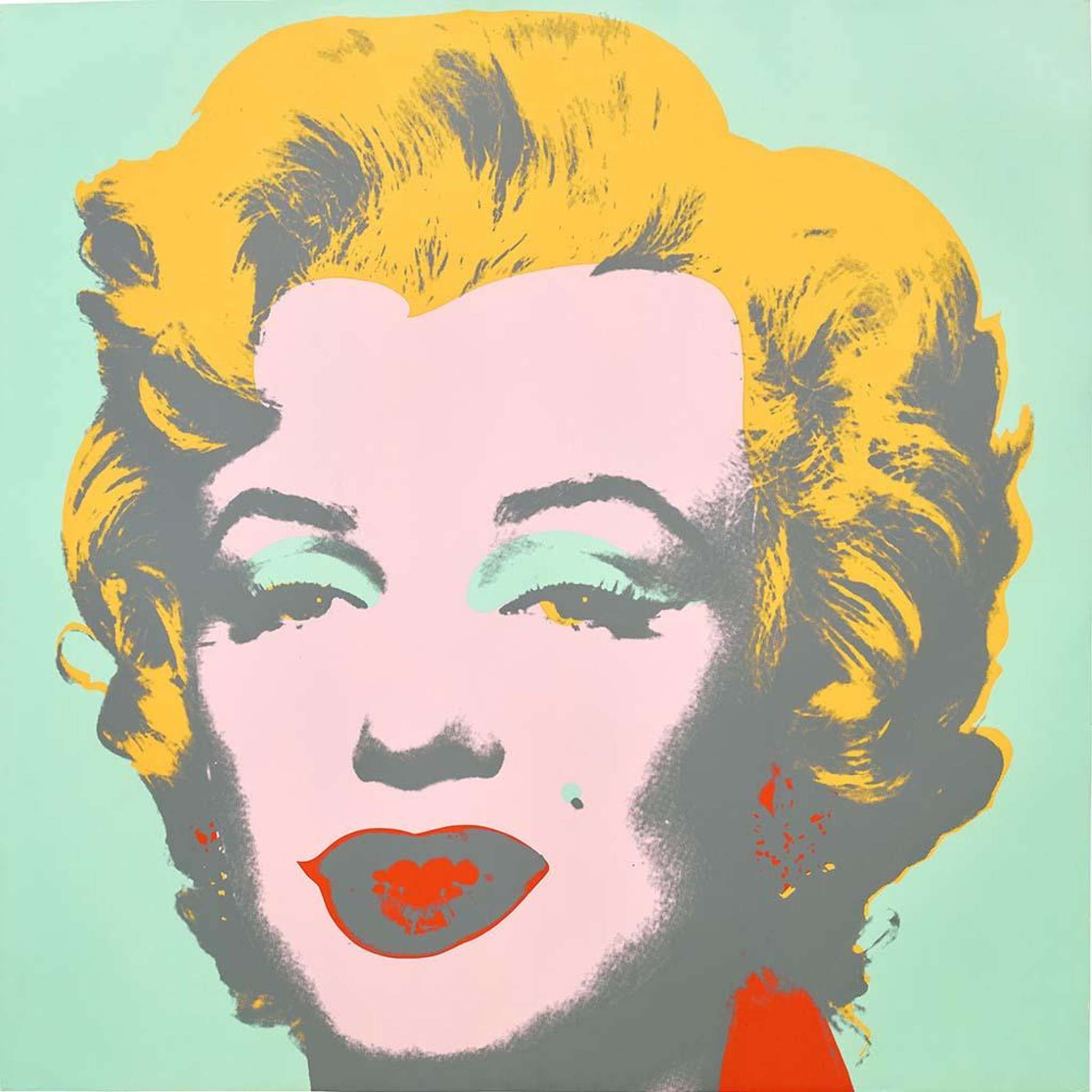
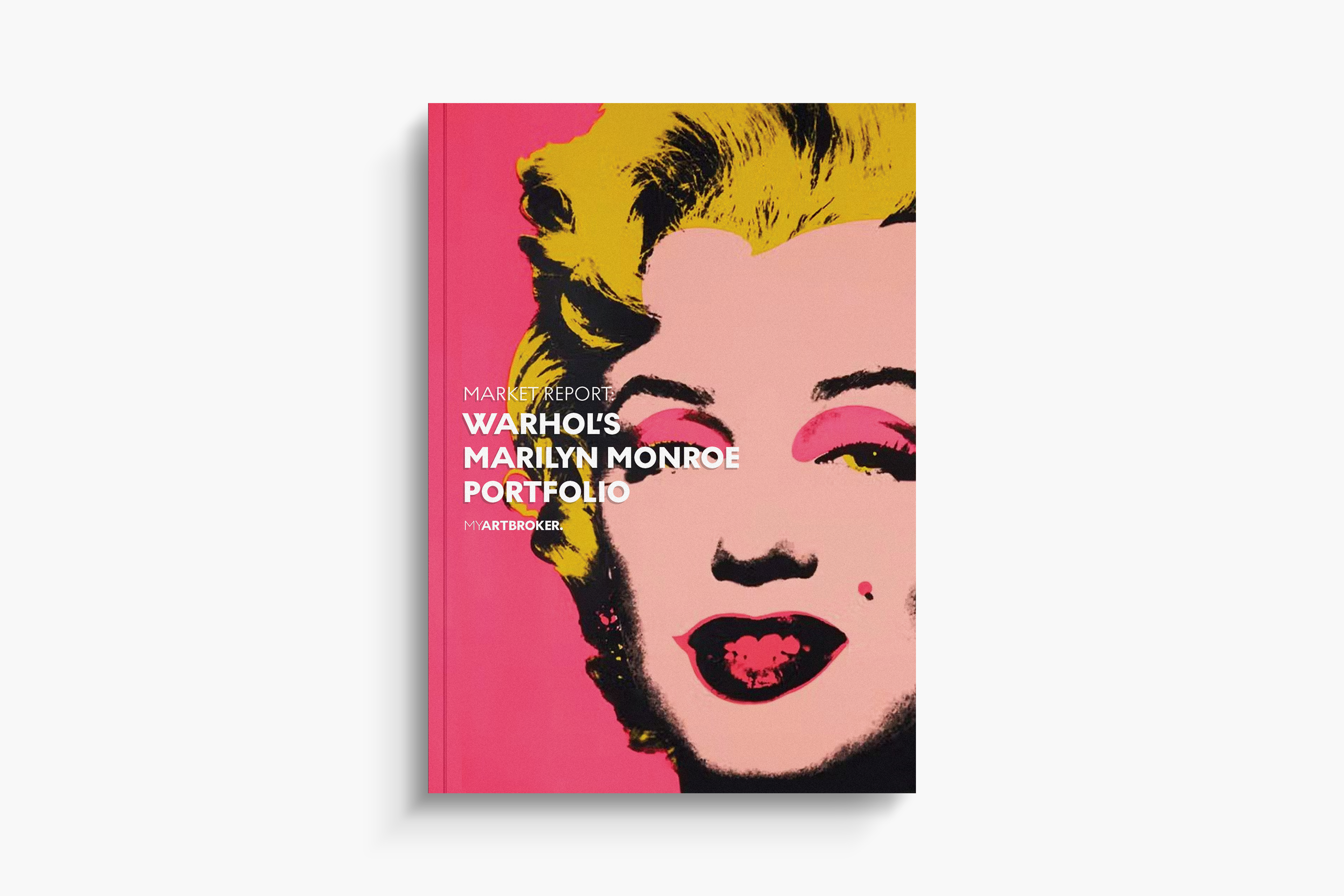
And still, the world keeps looking. At the photographs. At the dresses. At the lipstick. At Warhol’s silkscreened face, made the year after she died, which fixed her forever as both woman and image. The market around Marilyn is not just a market in celebrity. It is a market in unfinished life.
That is why she remains. Not because we have solved her, but because we have not.
‘100 Years of Marilyn’ the auction takes place in Beverly Hills on the 4 June 2026. View the sale here.