New England Depot (2019)
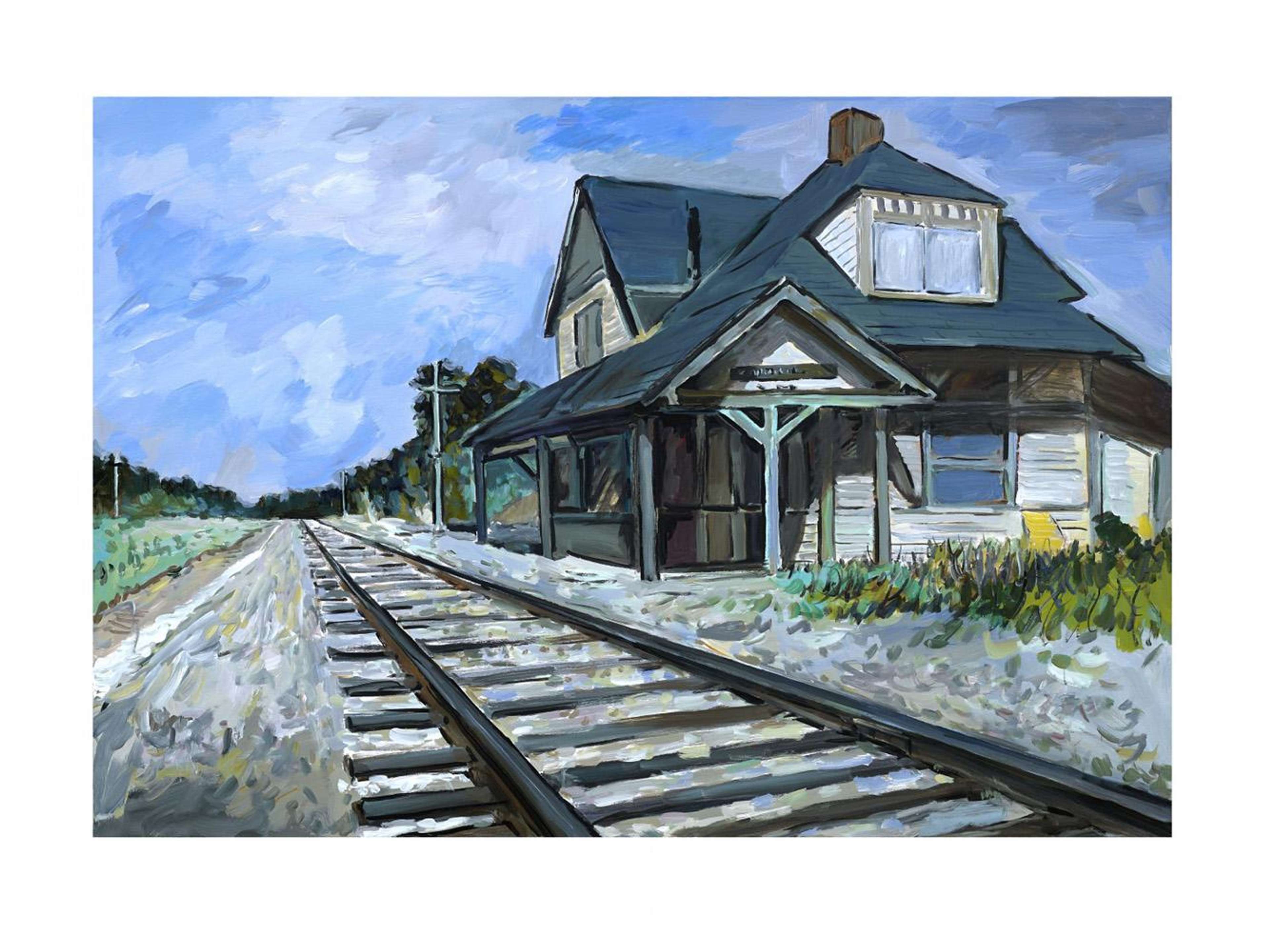
New England Depot (2019)
Signed Print
Bob Dylan
60 x 86cm, Edition of 295, Giclée print, 2019
£500-£700
$950-$1,300 Market Value Indicator
$950-$1,300 Market Value Indicator
¥4,550-¥6,500 Market Value Indicator
€600-€800 Market Value Indicator
$5,500-$7,500 Market Value Indicator
¥100,000-¥150,000 Market Value Indicator
$700-$950 Market Value Indicator
There aren't enough data points on this work for a comprehensive result. Please speak to a specialist by making an enquiry.
Track auction value trend
Meaning & Analysis
Railway heritage finds quiet expression in Dylan's 2019 New England Depot, a signed print from an edition of 295, presenting a tranquil station reminiscent of the Richardsonian Romanesque architectural style that defined America's railroad expansion era and often became the heart of small communities. This work captures the essence of stations like the featured abandoned Sewell station in New Jersey.
The meaning of New England Depot emerges from Dylan's meditation on infrastructure as community anchor and symbol of American connectivity. Railway stations like the Waterbury Railroad Depot, built in 1875 by the Central Vermont Railroad, represented more than transportation - they embodied the promise that small communities could participate in national progress and economic opportunity. Dylan transforms this simple station into a metaphor for journeys both literal and metaphorical, where the tracks stretching into the distance suggest infinite possibility.
The Richardsonian Romanesque architectural influence reflects Henry Hobson Richardson's vision of substantial, permanent civic structures that would dignify American small towns and connect them to broader cultural movements. The work captures the era when railway expansion bound communities together, creating networks of commerce and communication that enabled local prosperity. Dylan's technique suggests that these depots served as gateways between the intimate scale of community life and the vast scope of national identity, celebrating the infrastructure that made the American dream accessible to ordinary citizens in ordinary places throughout the country's railroad expansion era.