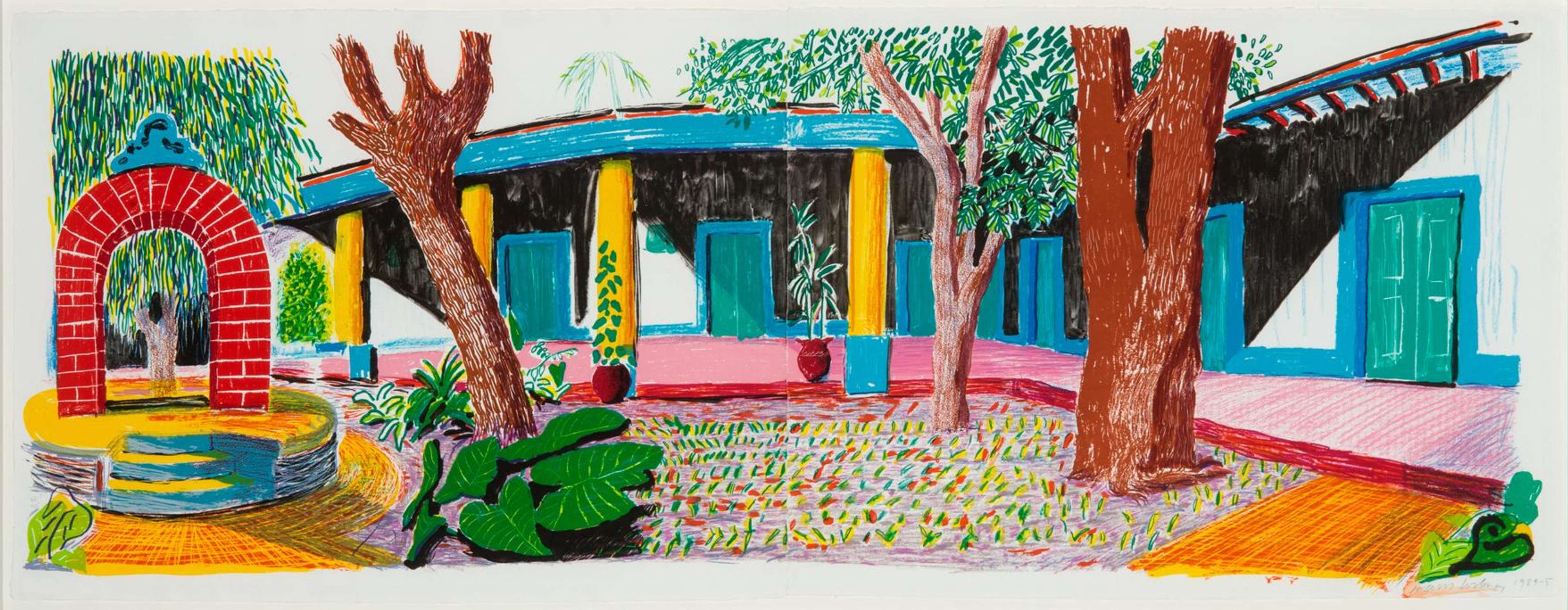

The headline numbers are easy to repeat, but the more important story is structural. As the Art Basel & UBS Global Art Market Report 2025 states - global art market sales at an estimated $57.5bn in 2024, down 12% year-on-year, while the number of transactions rose 3%. Dealer sales fell 6%, and public auction sales fell 25%. Private sales by auction houses rose 14%.
Translation: less value at the very top, more activity lower down, and - crucially - a continuing drift away from the fully visible market.
Prints sit right in the segment the report effectively describes as “still moving”. They’re liquid, internationally legible, comparable, and repeat-traded. Which means, if you treat them properly, you can build something close to a transparent valuation layer in an otherwise opaque market.
That’s the opportunity. But it comes with a trap: most valuations are still done as if auction results are the market. They’re not as much as they used to be. They’re a slice of it.
Why do you need to know the value of your print?
In practice, a vendor is usually asking one of three different questions, and each requires a different method:
Insurance Valuations
Insurance values are defensive. They’re about replacement cost: what it would take to source a comparable example again in today’s retail environment, often including a dealer margin and a premium for immediacy. That can be a perfectly legitimate number, but it’s not the number you should anchor to if you’re thinking about selling.
In a rising market, insurance valuations can lag. Something we aim to help with by adding works you own to MyPortfolio and keeping a literally digital track of your works value. In a correcting market, insurance valuations can remain strangely high. That’s not because it's wrong to, it’s because the purpose is different and markets can move swiftly when demand peaks, or supply creeps up.
Sales Valuations
A sale valuation is about liquidity. It asks what this specific work could realistically transact for right now, in today’s cycle, given its condition, proof status, provenance, and the route to market you’re actually going to use.
This is where the 2026 market shift bites. A sale valuation must hold public signals and private absorption at the same time. It must be understood that a public record can understate outcomes when strong works are being placed quietly, and it can also overstate outcomes when the only public sales are in the minority of works traded in any given period. A valuation given by a specialist that trades your work frequently is really the only reality to trust. Auction consignment windows can also create confusion, a work consigned for sale months ahead of a public auction can change its stars rapidly either way by market movement between the valuation and the sale. One of the many reasons for higher ticket works private sale has become the chosen route. It creates certainty for a vendor that can not be paralleled at auction.
Asset & Wealth Management Valuations
This is the one that has grown up fast. Collectors are increasingly valuing prints as part of a wider asset picture: reporting, wealth transfer planning, lending conversations, portfolio review, or simply wanting a credible, defensible sense of their collection’s current value as part of their wealth management.
These valuations sit between insurance and sale. They need to be conservative enough to stand up to scrutiny, but live enough to be meaningful. You can’t just point at a 2021 peak and call it an asset value, sadly. And you can’t treat auction as the whole market when private sales are doing more of the work.
You can hear more about how the market is now navigating art as an asset class in a podcast between me and Harco van den Oever, CEO of Overstone here.
What Drives Value in Editions & Prints, and What Changed in 2026?
The fundamentals still matter. Signature. Edition size. Proof status. Condition. Provenance. Image desirability. Series recognition. But the market dynamics around them have changed. That’s what most generic content misses.
Public auction data is still useful, but it’s incomplete. The UBS/Art Basel reporting makes clear that public auction values fell sharply while private sales activity grew. So a valuation that only references public comparables is increasingly a valuation of the visible market, not the market.
In practice, this means two things can be true at once:
- a print can look “flat” on the public record while trading strongly in private;
- a print can look “strong” publicly because the only examples that surface publicly are exceptional, have speciality provenance, are in better condition, had a hidden an auction guarantee against it, not because the entire edition has moved.
Supply Discipline is More Pronounced
In the 2020–21 market cycle, owners tested the market constantly. In 2026, many don’t. The best examples are often absorbed quietly because sellers want control and buyers want discretion. That makes “freshness” a pricing factor. A clean, first-time-to-market work behaves differently from one that has circulated three times in two years. And that can be the same edition, not just the individual numbered print. There is both the macro market and the individual micro level print’s journey.
Repeated auction appearances are now read more harshly. The market fatigues faster. A valuation has to incorporate frequency and history, not just the last result.
Proof Categories are Under Sharper Scrutiny
Artist’s proofs, printer’s proofs and trial proofs can command premiums - but the market is stricter about what those proofs actually represent. “Proof” isn’t a magic word anymore. It’s a claim that needs to be supported by documentation and context. The premium exists when the scarcity is real and the buyer believes it matters.
Traditionally, there was no significant difference in value between APs and numbered prints unless the AP had unique features (e.g., additional hand-colouring or extra notes/factors).
While APs have historically held the same intrinsic value as numbered prints - being virtually identical in quality and origin- the current market is perhaps correctly depending on who you speak to, treating APs as more exclusive and thus more valuable. Any specialist will treat them more scarce – as we respond to the market and demand from our collectors. This shift seems driven by marketing strategies and dealer promotion rather than any substantive difference between APs and numbered editions.
Some collectors are now willing to pay a premium for APs due to their perceived rarity. It comes down to how the market treats scarcity and the demand for it as the prints market has grown. It also comes down to how auction houses and dealers promote them.
It's important to critically assess this trend and understand that the heightened value placed on APs may be more a product of market dynamic than actual artistic scarcity or uniqueness. This nuance can help navigate the market more effectively, recognising that while APs are being sold at higher prices, but it doesn't necessarily reflect a difference in artistic value or ‘quality’ compared to numbered prints.
Is the trend here to stay? Yes, I think so, with markets that are limited, i.e., artists are deceased, supply has ended, people will always prize scarcity over everything.
If you want to understand more about different proofs you can find out more here in our guide to Understanding Prints & Editions.
A Print's Condition is Actually the Largest But Quieter Differentiator
Condition reporting, digital photography and buyer literacy have matured. The margin issues people used to ignore, mount burn, adhesive residue, slight handling creases, light fade, now materially affect liquidity.
And over-restoration is increasingly toxic, with earlier Modern works which traded earlier in their markets at 10% of the value they do now, (by the way conservators didn’t do a botch job back then, rather they just restored works to a level that was appropriate for a lesser valuable work). However, now works that have moved in value, demand museum quality, conservator craftsmanship - crucial for these fundamentally fragile works on paper, and any ‘over work’ prior to sale - however long ago - can affect value. The market would often rather buy an honest work with an honest flaw than a cosmetically “improved” work with compromised margins and undocumented intervention. The only way to know what you’re dealing with is a specialist with an experienced eye. You can ask our specialists for free anytime on any works we frequently trade.
Substitution Effects Are Stronger
This one is a market dynamic that is almost impossible to predict and comes from knowing a good dealer - and it matters. In certain markets, for example: Lovely examples of Hockney's pools motifs, Warhol’s celebrity portraits, or Banksy benchmark images, collectors will substitute within a motif or series when pricing feels misaligned. They’ll trade laterally. That elasticity means a valuation isn’t just “what did the last one make”; it’s “what else could a buyer choose at that price today?”
How to Prepare a Print For Valuation
A specialist can price a work quickly when the work is legible. The more uncertainty you leave in the room, the more conservative (or speculative) the valuation has to be.
What helps, in plain terms:
- Clear photos of the work in even light, plus close-ups of signature, edition number, blind stamps, and margins.
- Confirmation of edition type (standard, AP, PP, TP) and the total edition size.
- Publisher and workshop details where relevant (Gemini G.E.L., Petersburg Press, Tyler Graphics, Editions Alecto, etc. for Hockney; workshop and paper details in others).
- A provenance trail: invoice, gallery correspondence, auction invoice, shipping records, exhibition paperwork, anything that anchors ownership history.
- Condition truth: if you know there’s foxing or fading, say it. If you don’t know, don’t guess, photograph the margins and let the specialist advise.
If the artist has a certification structure, that becomes part of preparation, not an afterthought. In Banksy’s market, certification - a COA from Pest Control - is tradability.
Algorithmic Valuations Versus Specialist Appraisals: Where Each is Powerful, Where Each Fails
In 2026, you can’t build trust in valuation without transparency about method.
A data model is valuable because it does not get emotionally attached to a number. It reads behaviour: dispersion within an edition, sell-through, velocity, repeat appearances, and how price bands compress or widen through cycles. It anchors your work inside the current market reality rather than the story you want to tell yourself. Uniquely, we amalgamate public auction data with our own private sales and valuations, allowing for something as close to transparency as possible in this market.
But a model can’t see what a human sees.
It can’t assess the condition from a single photograph with confidence. It can’t interpret why a work hasn’t appeared publicly (private absorption versus vanished demand). It can’t judge whether a proof designation is meaningful in context. It can’t read the difference between “good provenance” and “provenance that removes doubt at the top end”. That’s the human layer.
A credible valuation process in 2026 is layered: benchmark first, interpretation second, strategy third. Anything else is guesswork with a spreadsheet accent. That is why we provide our Value Indicator, that's the analyst, but our specialist team, where all trained from years of experience in the four big auction houses - the only place where you see first hand thousands of examples every day.
When you request a sales valuation from one of our team this is at micro level, specific for your print and taking every last thing above into account.
To aid further explanation it’s worth discussing eight key print markets that trade regularly on both the private and public market and have some key factors that any vendor should be aware of:
Urban & Contemporary Fine Art Print Valuations
Banksy Value: Built on Hierarchy & Certification
Banksy is still the most emotionally reactive prints market, but it’s also one of the most structured, because the market has agreed to its rules.
The last five years have been a full cycle: a speculative peak, a correction, and then consolidation. In the newer phase, demand has concentrated around certified, recognisable works rather than broad momentum.
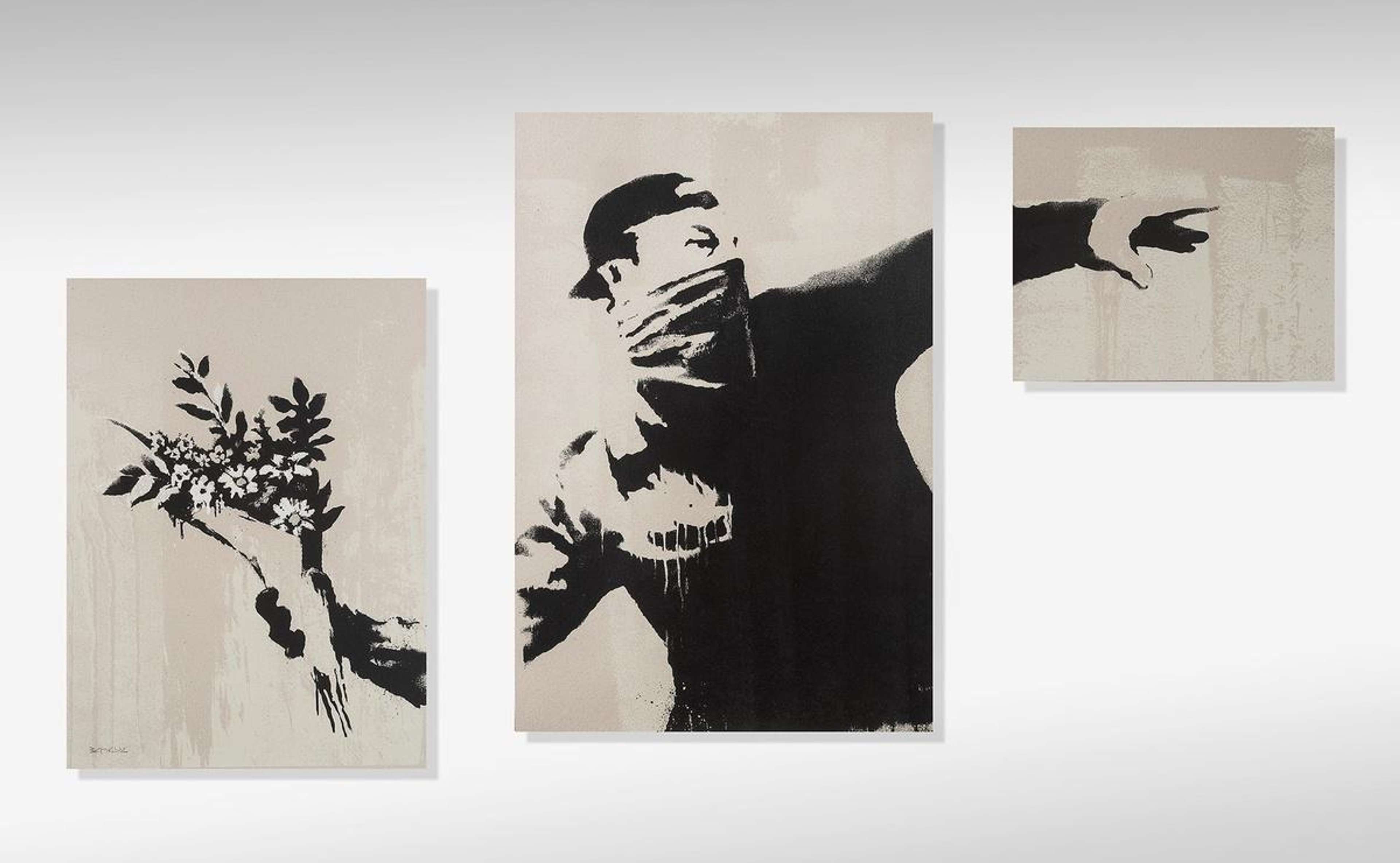
Certain images, Girl With Balloon, Kate Moss, Flower Thrower, function as pricing anchors because they’re globally legible and frequently traded. They are the barometers. But valuation in 2026 has to be disciplined about what those barometers are actually reading.
Cultural mythology still matters. Love Is In The Bin, the shredded Girl With Balloon, sold for £18.582m at Sotheby’s in October 2021. That sale didn’t “set the price” for prints, but it did reinforce the image as an icon, and icons remain liquid even when markets tighten.
What drives valuation now is not the story, but the structure:
- signed and unsigned operate like parallel markets, with different buyer profiles and different elasticity;
- colourways (especially in editions like Choose Your Weapon) create real pricing variation, but only where buyers recognise and want the rarity;
- first-time-to-market works can generate energy, but that does not automatically justify peak-era pricing.
And then there’s certification. In Banksy’s market, it isn’t a detail. It’s infrastructure. Without it, the work is deeply commercially impaired.
If you’re thinking of selling a Banksy, you can read our Seller’s Guide to Banksy here.

Yayoi Kusama: Motif, Global Demand & The Premium on Trust
Yayoi Kusama is one of the few contemporary print markets where demand feels genuinely international in a way that isn’t seasonal. It’s not just that her work is recognisable; it’s that it’s portable across cultures and collecting tastes. In valuation terms, that matters because it creates depth. You’re not relying on one geography, one buyer type, or one auction cycle to find liquidity.
But like Warhol, Kusama is not “Kusama” as one thing. Her print market is motif-led and portfolio-sensitive, and that makes it unusually legible if you know what to look for.
At the accessible end, monochromatic or more abstract works can function as entry points, often trading in the lower five figures or below, whereas her most iconic motifs, especially Pumpkins, behave like benchmarks. They’re the works that carry the market’s confidence, and they’re the ones where buyers will stretch when the right example appears.
What’s interesting is that Kusama’s strongest results in the last five years don’t just show “high prices”; they reveal how complete sets and tightly defined series create their own tier. A complete Amour Pour Toujours portfolio setting a record price at a major sale in 2021 wasn’t simply a headline moment; it reinforced a structural point: portfolios concentrate scarcity and give buyers the feeling of owning something whole, not just participating in a motif.
Valuation also depends heavily on how the work sits within the “familiarity spectrum.” Some Kusama prints are instantly legible to a broad buyer base: Pumpkins, Infinity Nets, Flowers, and certain bright, pattern-heavy compositions. Others are quieter. The market still buys them, but it buys them more selectively, and pricing becomes more sensitive to condition, scale, and provenance clarity.
There’s also a quiet 2026 reality here: with more of the mid-market moving privately, buyers want fewer unknowns. A Kusama print that is well-photographed, well-documented, and straightforward to verify is simply more liquid than an equivalent work surrounded by ambiguity.
If you’re looking to understand the value of your Kusama print, you can read out Seller's Guide to Yayoi Kusama here & you can check Value Indicators and explore the artist's portfolio here.
Damien Hirst: Supply Discipline & Demand Elasticity
Damien Hirst’s print market is the clearest example of why valuation isn’t about scarcity alone. His editions don’t behave like a finite historical residue; they operate as a layered ecosystem shaped by structured portfolios, recurring releases, and an unusually visible production model.
He has re-entered his own market repeatedly - and remains comparatively in control, from the 2008 Sotheby’s sale Beautiful Inside My Head Forever to later demand-led releases and HENI editions. That approach has expanded liquidity, but it has also created tiers. Which means the useful question is not “is it a Hirst?” but which Hirst market is this?
At the top sit the controlled, legacy-feeling portfolios that have developed genuine secondary depth. The Virtues is the clearest anchor, consistently traded and strongest when intact as a set. Love Poems and The Last Supper behave similarly when complete. These are the editions where disciplined initial release has allowed the secondary market to establish confidence and comparables.
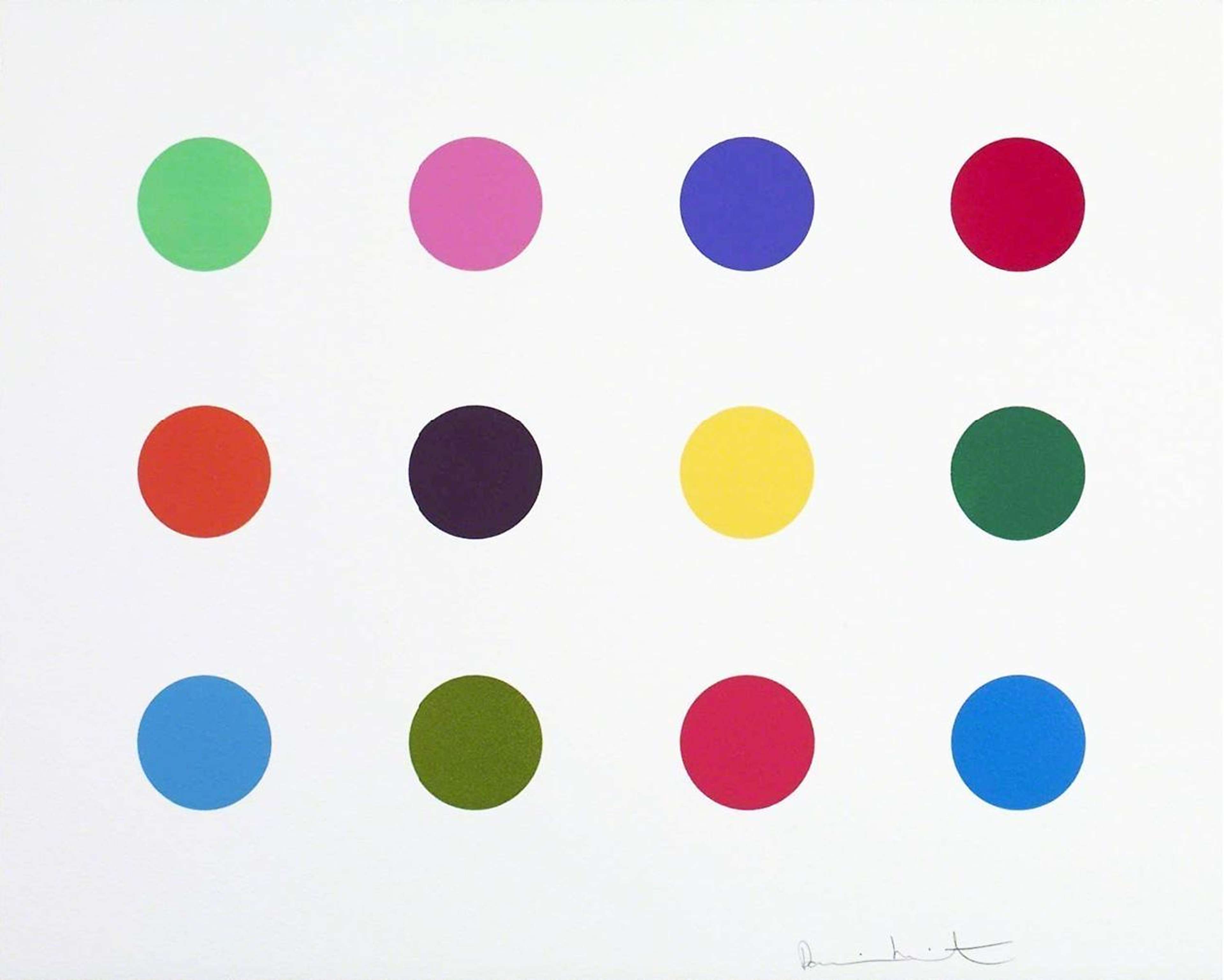
Below that are highly liquid series that require nuance. Spot prints are perennial, but not interchangeable. Scale, colourway, and variation matter. Over-generalising “Spots” as one market is where sellers mis-price; treating each variation as its own micro-market is where transactions happen.
Then there are demand-released bodies of work, where supply visibility is higher and pricing is more variable. The Empresses illustrates this dynamic: frequent appearances create liquidity, but also greater price sensitivity.
Hirst value is elastic. Buyers substitute within his catalogue when pricing feels misaligned. If a complete set feels ambitious, they pivot to a single recognisable image. If auction supply is heavy, they wait or move privately. A valuation that ignores substitution will rarely land cleanly.
Documentation and condition sit inside this structure. Confidence is built through publisher records, the impressive Paragon Press, Other Criteria and HENI; and of course through clarity around edition details. And materially, these works can be fragile: glitter, gloss, and dense colour fields make surface condition immediately visible.
Now the Hirst market rewards sellers who understand the system. Value sits in series identity, supply visibility, and positioning, not simply in the name at the bottom of the sheet.
If you’re thinking of selling a Damien Hirst, you can read our Seller’s Guide to Damien Hirst here.
American Pop Fine Art Print Valuations
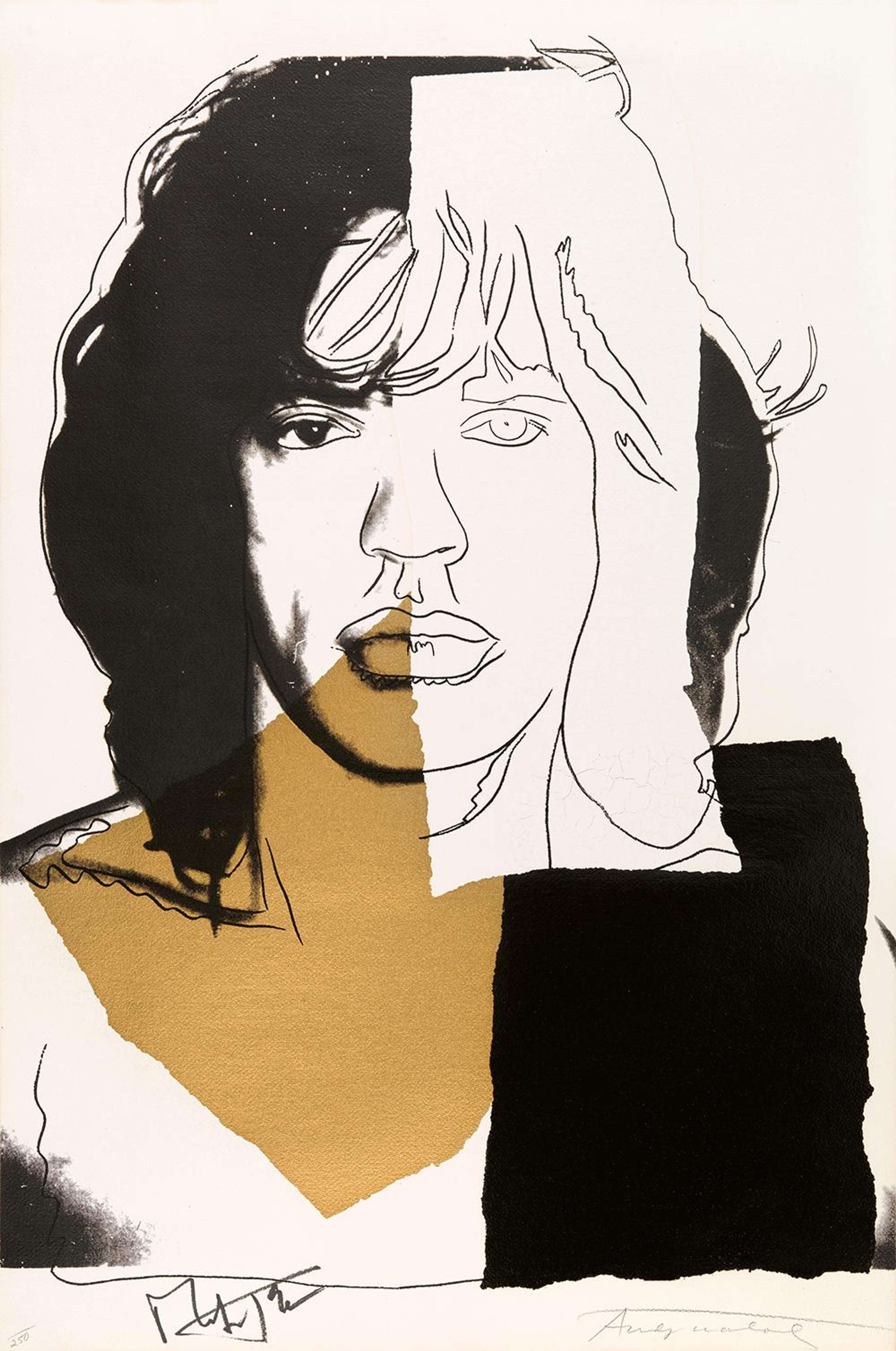
Andy Warhol: A Print Market Inside a Trophy Print Market
People talk about “Andy Warhol prints” as if they’re one category. They aren’t. Warhol is a collection of markets that trade under one name.
Series hierarchy matters more than almost anything. A Marilyn buyer is not always an Endangered Species buyer. A Mick Jagger portfolio behaves differently from a single sheet. Certain sets surface rarely and create their own demand events because completeness is genuinely scarce.
When Christie’s sold a complete Endangered Species set for £2.8m in public auction, it doesn’t “lift all Warhol.” It strengthens confidence in series-level scarcity and reinforces how complete portfolios behave at the top end.
Warhol valuation is also unforgiving on condition: colour stability, surface wear, handling, and provenance clarity are central. The buyers are sophisticated. They compare. They remember.
The most common failure mode in Warhol valuations is misclassification, anchoring your work to the wrong series, the wrong impression type, or the wrong quality band, and then being surprised when the market doesn’t follow your anchor.
If you’re looking to value your Warhol print, do read our Warhol Seller’s Guide.
Keith Haring Value: Why Condition & Edition Structure Drive Value
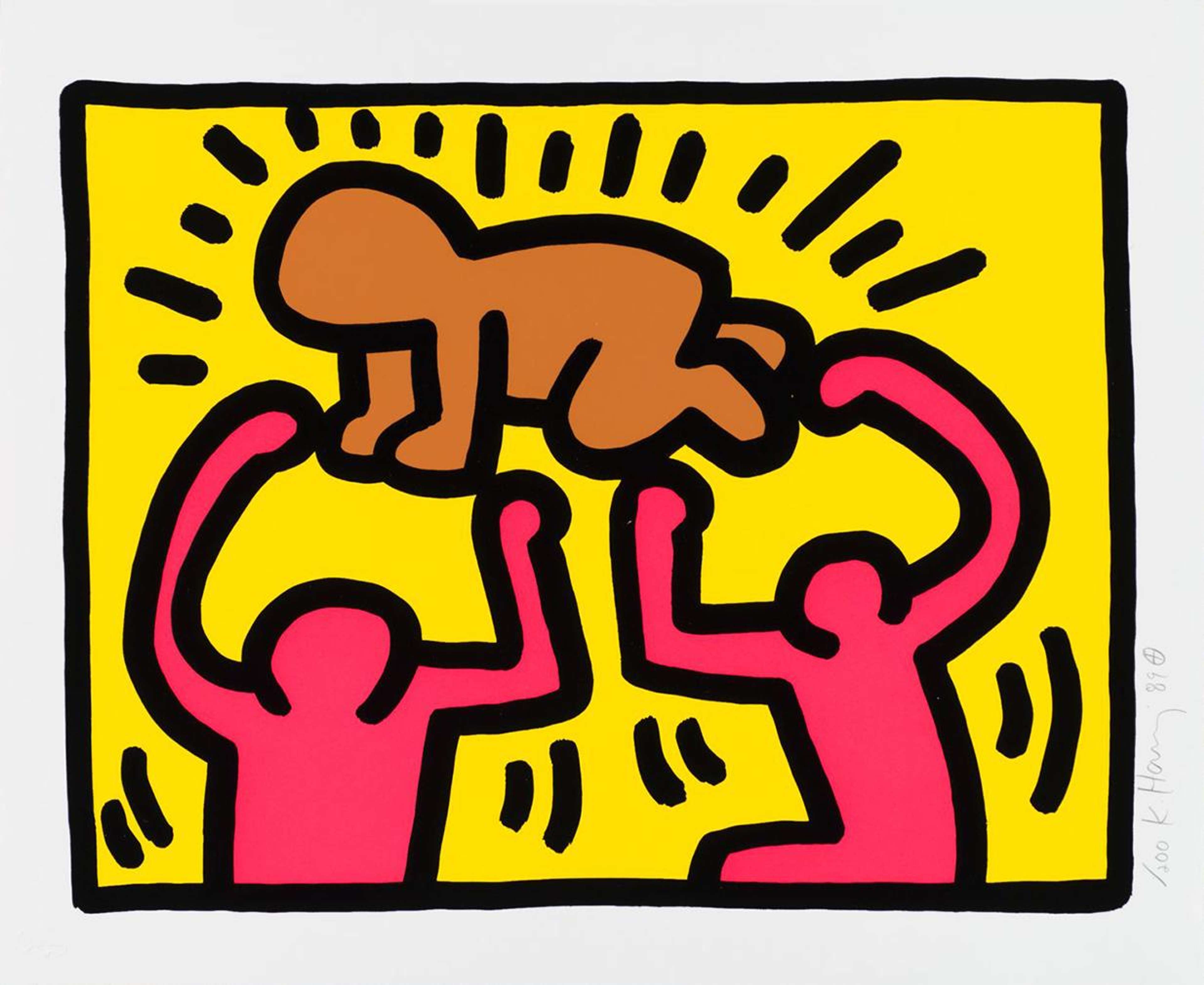
Keith Haring’s print market has done something quietly impressive over the last few years. You don’t see the same headline spikes that pull other blue-chip artists' markets around by the collar. Instead, you see a firmer floor being laid; recognisable imagery, steady international demand, and a trading rhythm that keeps moving even when the wider market is distracted.
That stability is precisely why Haring valuations can feel deceptively simple from the outside. The image reads instantly, the market is familiar, the buyer base is confident. But the surface is unforgiving, and that is where the value decision gets made.
Haring’s graphic language was built for visibility: flat colour, hard edges, a line that either sings or it doesn’t. Condition issues don’t hide in painterly texture. They announce themselves - just as his works intended. Fading in the reds and yellows, abrasion on the black keyline, handling marks across a solid field, even small margin problems, they register immediately, even in a quick phone photo.
Structurally, it helps to think of Haring’s market in two gears. The Pop Shop works form the liquidity engine: lots of familiarity, plenty of comparables, consistent demand, and enough trading volume to keep pricing honest. Alongside that, there’s a scarcity tier, lower-edition portfolios, special proofs, sculptural editions like the Dog works, and culturally loaded images such as Silence Equals Death. These behave differently: supply is tighter, buyer scrutiny is higher, and configuration (a complete set vs separated plates) can materially change the outcome.
Haring buyers tend to be confident, but not careless. They’ll pay for clarity: correct catalogue alignment, clean provenance, proper edition details, and a sheet that still has its impact.
If you’re considering selling a Haring print, explore our in-depth Seller’s Guide to Keith Haring here.
Roy Lichtenstein Prints: Pricing Precision, Not Value Drama
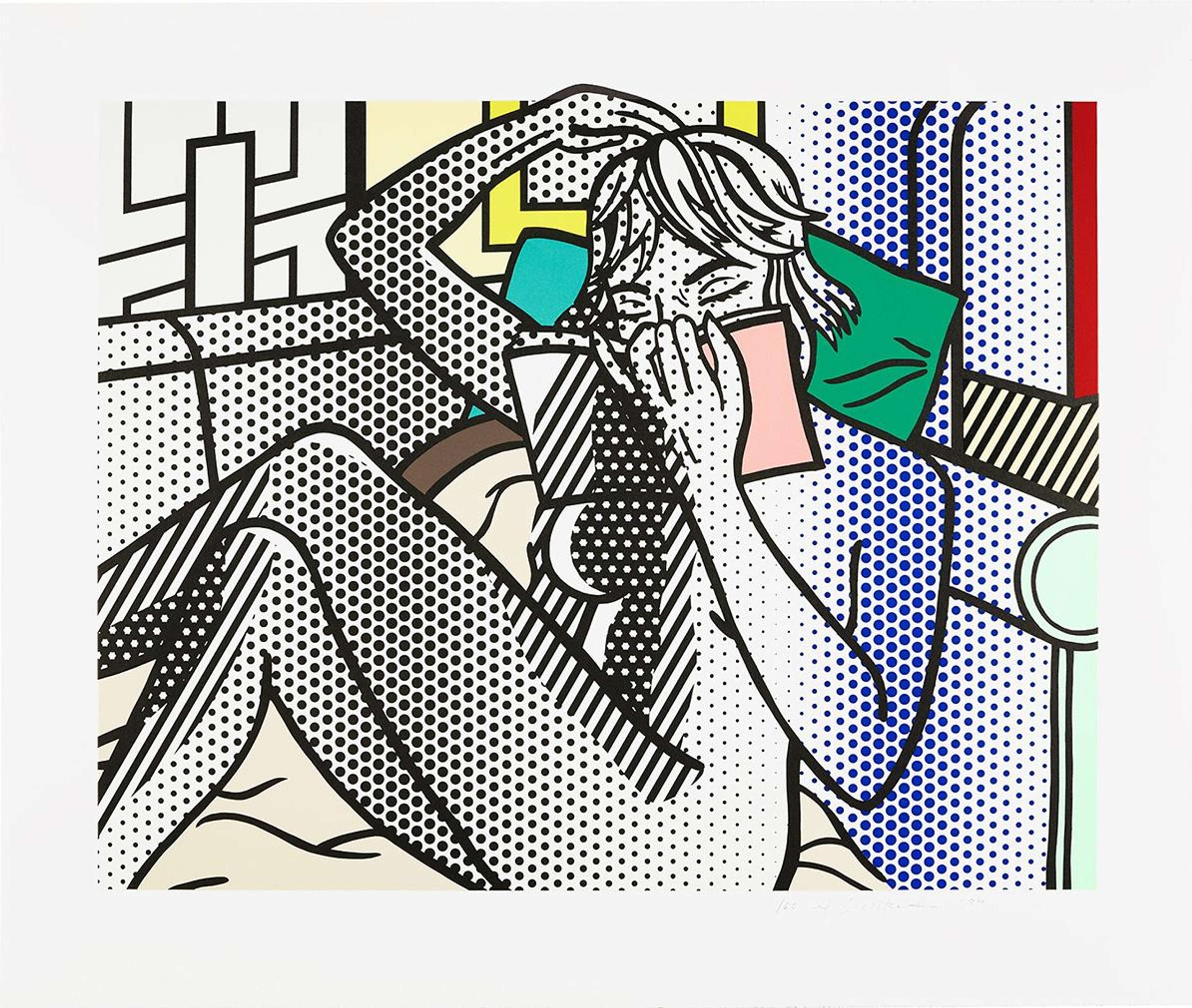
Roy Lichtenstein's is a precision market. It rarely moves with theatrics, but it punishes vagueness. Buyers aren’t just paying for “a Lichtenstein”, they’re paying for a specific series, a specific medium, a specific state, in a specific condition, with a provenance trail that doesn’t wobble. This is why valuation works best when it becomes highly specific, very quickly. What series are we in: early Pop imagery, Reflections, Interiors, Landscapes, Water Lilies, the late Nudes, or the enamel-on-steel works that sit in a category of their own? Is the print a standard edition, an artist’s proof, a printer’s proof, or a known early state? Was it published by Gemini G.E.L., Tyler Graphics, or issued through the Leo Castelli ecosystem where documentation can vary and “signed but unnumbered” impressions require real care? In Lichtenstein’s market, these details are the valuation.
Condition is equally decisive because the work is optically unforgiving. Lichtenstein’s flat colour, clean registration and sharp edges mean small issues read as big issues: a soft corner, a crease in a margin, a change in paper tone, abrasion to a solid field, even subtle undulation can feel like a fault in the image’s machinery. On the strongest examples, the sheet still looks as crisp as the idea. Those transact smoothly. The compromised ones stall, even when the image is desirable.
Over the last few years, the market has also become more differentiated, not simply “up” or “down”. Estate-backed moments and institutional visibility have helped validate the top end, but they’ve also raised the bar: collectors have seen what “best in class” looks like. For sellers, the opportunity lies in disciplined positioning, correct catalogue alignment, a clear view of the work’s physical state, and comparables that match your work properly rather than loosely.
Our Lichtenstein Seller’s Guide and key series works such as Brushstrokes, Reflections and Nudes can provide more guidance to valuation.

Modern British Fine Art Print Valuations
David Hockney Prints: Digital Series, Classic Portfolios & Proof Categories
David Hockney’s print market does not move as one. It moves as a set of related ecosystems: digital series, classic portfolios, motifs (pools), and proof categories that behave differently and attract different buyers.
2025 is a useful illustration, because it produced a visible market moment: Sotheby’s dedicated live auction, The David Hockney Sale: The Arrival of Spring, held 17 October 2025, which achieved a £6.2m white-glove result. Those results were exceptional, and also context-specific. They were driven by timing, consignment coherence, and the energy created when a concentrated group of works appears together.
The lesson for valuation is not “Arrival of Spring is worth X now.” The lesson is that benchmark events create ceilings that are not automatically repeatable without similar context.
That’s why series segmentation matters so much: The Arrival of Spring has become a benchmark digital series, with visible demand and public comparability. But individual sheets must be valued against recent comparables and current trading frequency, not against the emotional peak of an event sale. My Window behaves differently: more continuous, more domestic, often valued through condition and presentation as much as series status. Moving Focus is its own engine. It contains works that can set records when rarer impressions surface, and it contains works that trade as part of the liquidity base. The Weather Series holds a stable mid-tier position with consistent demand, especially for strong examples with clean provenance. Swimming Pools remain iconographically central, but they are also where substitution effects show up: buyers trade between variations if pricing becomes misaligned.
Proofs and complete sets are where Hockney valuation becomes genuinely specialist. Comparable data can be thin. Buyers become stricter. Documentation quality and publisher signals take on more weight.
Hockney also carries a specific authentication reality: there isn’t a single certificate authority doing what Pest Control does for Banksy. Confidence is built through recognised market standards, publisher and workshop signals, provenance (especially from established representatives), and the internal consistency of the work.
Our Seller’s Guide to David Hockney and our series pages for the Hockney print portfolio will tell you more.

Bridget Riley: Optical Integrity & Institutional Confidence
Bridget Riley’s print market is one of the most structurally disciplined in the contemporary sector. It does not move on speculation, and it rarely reacts to noise. It responds to period, optical clarity, and preservation.
The first valuation question is always chronological. Early black-and-white works from the 1960s sit in a different tier from the later colour systems that followed her Egyptian travels. The monochrome compositions established her critical reputation and historically set price benchmarks, but they are also intensely condition-sensitive. Even minor toning or margin disturbance can interrupt the visual snap that underpins their value.
By contrast, mid-career and later colour works – particularly stripes, lozenges, waves and zig/rhomboid compositions – align closely with Riley’s most recognisable visual language. These have demonstrated steadier performance in recent cycles, especially when colour remains saturated and registration crisp. Buyers in this segment are often institutionally literate and focused on optical coherence rather than short-term price movement.
Edition size plays a meaningful role. Riley’s editions are typically smaller than many of her peers, and early works can be exceptionally scarce. Fragment prints on Perspex form their own micro-category: technically distinctive, visually powerful, and unforgiving if scratched or clouded. Two impressions from the same edition can trade at materially different levels depending on preservation.
Riley also carries a specific authentication reality. There is no centralised certificate authority. Confidence is built through publisher signals – Kelpra, Curwen, Petersburg Press and later workshops – clean signature alignment, catalogue raisonné confirmation, and documented provenance.
Riley’s market rewards exactness. When the sheet retains its optical precision and sits clearly within her recognised visual systems, valuation is supported by structural scarcity and institutional weight. When clarity falters, so does pricing confidence.
Our Seller’s Guide to Bridget Riley and key collection pages Stripes, Lozenges, Fragment, Waves will give you more information ahead of a valuation.
The New Triggers The Move Print Valuation in 2026
There are triggers in the market that always mattered but are now recognised as serious valuation variables in the prints market.
- Freshness to market: A work that hasn’t circulated publicly for years can create real demand energy. Buyers like clean stories and clean supply.
- Institutional reinforcement: A museum show, a major acquisition, a serious publication, these aren’t “marketing moments.” They affect collector confidence and, in some markets, the willingness to pay at the top of range.
- Macro compression at the very top: When $10m+ works thin out, capital often rotates downward into more liquid categories. The UBS report describes a market that cooled at the high end while activity increased in lower price tiers. Prints are a natural beneficiary of that rotation.
- Private sale preference as a behavioural shift: More collectors now prefer controlled placement over public exposure. That changes the meaning of auction data. It’s not just “what sold.” It’s “what was left to sell publicly.”
- Documentation literacy: Buyers are more demanding about documentation. Not because they’re difficult, but because they’re more experienced, and because private-sale growth has increased the premium on trust.
A proper valuation process is not a form. It’s a sequence of narrowing uncertainty until the work becomes legible to the market.
It starts with identification: exactly what is this work, in the language the market recognises?
Then the work is anchored inside its edition’s behaviour: where does this edition sit in its current cycle? What does dispersion look like? What does sell-through look like? What does recent frequency tell us?
Then comes the specialist overlay: condition, provenance, confidence, proof nuance, workshop and publisher details, and the lived reality of buyer behaviour: who is buying, what they are substituting with, how they are reacting to supply. Only then does a range become defendable. And the range is the honest output. Not a single number designed to flatter you into selling.