
If you are looking to sell a Banksy print, understanding authentication requirements and current collector demand is essential. Banksy's print market operates differently from almost any other blue chip artist. Every edition requires verification through Pest Control, while his body of editioned works is broader than many collectors realise. Some prints appear regularly at auction, while others remain largely unseen in private collections, creating very different levels of scarcity across his market.
Is Now a Good Time to Sell a Banksy Print in 2026?
For many owners, 2026 presents a favourable time to sell a Banksy print. The rapid price growth seen during the 2020–21 market boom has given way to a more considered collecting environment, where buyers are increasingly focused on quality, rarity and authenticity rather than short-term speculation. While that has made the market more selective, it has also made pricing more sustainable.
Banksy remains one of the most actively traded artists in the contemporary print market, with demand extending across both signed and unsigned editions. At the same time, fewer works are coming to market than during the post-pandemic surge, meaning well-presented prints with Pest Control certification continue to attract strong competition when they become available.
Perhaps the biggest shift has been in how collectors evaluate Banksy's editions. Buyers are looking beyond headline images and considering factors such as colourway, edition structure, condition and scarcity. Many editions remain tightly held in private collections, while others rarely appear on the public market, creating opportunities for sellers of less frequently seen works.
For sellers, this means success is less about trying to replicate the record prices of 2021 and more about understanding where a print sits within today's market. Realistic pricing, complete documentation and choosing the right route to market remain the strongest drivers of a successful sale.
How to Maximise the Value of Your Banksy Print
Several factors influence the value of a Banksy print, but none are more important than authentication and condition. A valid Pest Control certificate is essential for almost every resale. While uncertified works can sometimes be sold, they attract a much smaller pool of buyers and typically achieve significantly lower prices. Most major auction houses and reputable private dealers will also be unwilling to offer a Banksy print without Pest Control certification, making it one of the first considerations before bringing a work to market.
Condition is equally important. Many of Banksy's early editions were originally sold for just a few hundred pounds through exhibitions and publishers – Pictures On Wall and Gross Domestic Product – long before anyone anticipated the level of demand they would eventually achieve. As a result, many prints were handled, stored or framed without the level of care expected today. Earlier editions were also produced on papers that have not always aged consistently over time, making issues such as creasing, handling marks, staining, fading and mount burn relatively common. Even minor condition issues can affect buyer confidence and value, particularly for sought-after editions, so obtaining a professional condition assessment before selling is often worthwhile.
Beyond authentication and condition, value is shaped by the image itself. Banksy's most recognisable works consistently attract the strongest demand because they represent the imagery most closely associated with his practice.
Which Banksy Prints Are Worth The Most?
Banksy's highest-value prints are typically those that combine cultural significance with sustained collector demand. Girl With Balloon remains the defining image of his print market, while Flower Thrower, Choose Your Weapon and NOLA continue to command some of the strongest prices because they represent the early social commentary and visual language most closely associated with his practice.
Does Rarity Matter More Than Edition Size In Banksy's Print Market?
One of the biggest misconceptions among collectors is that edition size alone determines rarity. While Banksy's print market is closely followed by specialists, not every edition – or every variation within an edition – has appeared on the public market. Some prints change hands regularly, while others remain tightly held in private collections. Specialists are also aware of artist's proofs and colourways that exist but have yet to surface publicly.
This was demonstrated in June 2026 by two exceptional artist's proofs making their first appearance in the open market. A dual-signed artist's proof of Kate Moss – signed by both Banksy and Kate – from an edition of just 12 sold for £179,200 against a £70,000 high estimate. Gangsta Rat (Dark Grey), a colourway never before seen publicly, achieved £116,100 at Phillips against a £50,000–£100,000 estimate.
For sellers, this means scarcity is determined not only by how many impressions were produced, but also by how often collectors are willing to sell. Recent auction results demonstrate that works with exceptional rarity, long-held provenance or previously unseen characteristics can significantly outperform expectations when they finally come to market.
Does Cultural Attention Affect Banksy Print Prices?
Banksy's market often experiences heightened interest following major auction results, new public artworks or periods of wider media attention. These moments can introduce new buyers to the market and increase engagement with some of his best-known images.
However, cultural visibility alone rarely determines the outcome of an individual sale. Buyers remain highly selective, with value continuing to depend on Pest Control certification, condition, image, provenance and realistic pricing. Increased attention can create favourable selling conditions, but the strongest results are still achieved by matching the right print with the right buyer at the right time.
What Makes One Banksy Print Worth More Than Another?
No two Banksy prints are valued in exactly the same way. Beyond the image itself, factors such as signed status, colourway and proof type can all influence value. Understanding how these characteristics affect collector demand is key to arriving at an accurate valuation, as separates depending on its rarity and market history.
Signed vs Unsigned Banksy Prints: Which Is Worth More?
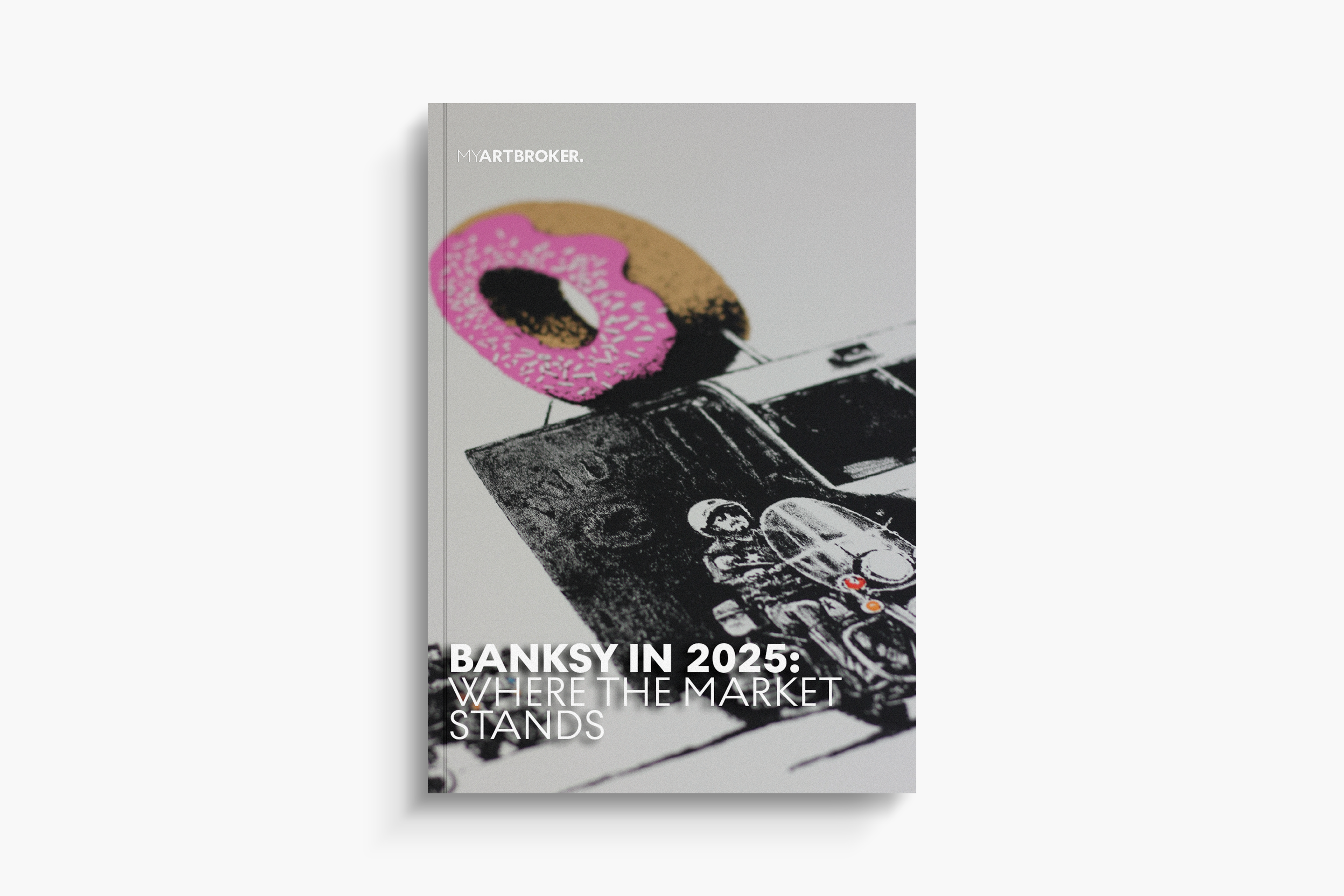
Signed editions consistently achieve higher prices than unsigned examples due to their greater scarcity. In 2025, signed Banksy prints averaged approximately £35,000 at auction, compared with around £12,000 for unsigned editions. While unsigned prints remain highly sought after, the two markets often behave differently, with each attracting distinct groups of collectors. As explored in our latest Banksy Market Report, signed and unsigned editions effectively operate as parallel markets.
In both cases, Pest Control certification remains essential. Without it, most major auction houses and reputable private dealers will be unwilling to offer the work, significantly limiting both demand and value.
Colourways and Collector Demand
Colour variation can have a significant impact on value. Some colourways appear regularly at auction, providing a steady stream of comparable sales, while others surface only rarely. For collectors, scarcity is often balanced against recognisability, with the strongest prices typically achieved by colourways that combine rarity with established demand. For a detailed breakdown of how individual variants have performed, see our Choose Your Weapon Market Report.
Artist's Proofs and Special Editions
Artist's proofs occupy a unique place within Banksy's print market. Produced outside the standard numbered editions, they are often among the rarest versions of a print and frequently feature characteristics not found in the main edition. In many cases, this includes unique colourways, such as the pink Flying Copper and Jack & Jill artist's proofs, the coloured balloon variants in Girl With Balloon, or the distinctive dual-colour rain seen in NOLA artist's proofs. Artist's proofs also exist across many of Banksy's best-known series, including Choose Your Weapon, Morons, Bomb Love and Soup Cans.
The current auction record for a Banksy print remains the gold artist's proof of Girl With Balloon, which sold for £1.1 million in 2021. More recently, previously unseen artist's proofs – including NOLA (grey rain) in 2026 – have demonstrated the continued appetite for exceptional examples.
However, an artist's proof does not automatically command a premium. As with any Banksy print, value depends on certification, condition, provenance, collector demand and timing. Bringing a rare artist's proof to market through the right sales channel, at the right moment, can make a significant difference to the final outcome.
How To Authenticate a Banksy Print Before Selling
Authentication is one of the most important steps when selling a Banksy print. Unlike almost any other blue chip artist, Banksy does not rely on a catalogue raisonné to establish authenticity. Instead, Pest Control was established as the sole body authorised to authenticate his works. Without a valid Pest Control certificate, most major auction houses, dealers and private market platforms will be unable to offer the print for sale.
Banksy Pest Control Authentication Explained
Since 2009, Pest Control has been the only organisation authorised to authenticate Banksy's works. Every certificate is issued for a specific print and the details must correspond exactly with the physical work, making it essential that the certificate remains with the print throughout its ownership.
If you are preparing to sell, it is also worth gathering any original purchase documentation, invoices or provenance records, as these can help support the authentication process and provide additional confidence for prospective buyers.
For a detailed guide to the process, including application requirements, timelines and common pitfalls, see our guide to Pest Control authentication.
What If My Banksy Print Doesn't Have Pest Control Certification?
If your Banksy print does not have a Pest Control certificate, it will usually need to be authenticated before it can be sold through reputable secondary-market channels. Applications must be made directly to Pest Control and require photographs of the work together with supporting documentation.
The process can take several weeks or months, depending on demand, so sellers should begin it well before they intend to bring a work to market. Until certification is issued, selling options are significantly more limited and resale values are often affected because many buyers and intermediaries will only purchase fully authenticated works.
How To Protect the Value of a Banksy Print
Once you have decided to sell, protecting the condition of the print becomes just as important as obtaining authentication. Even relatively minor handling damage can influence buyer confidence and ultimately affect the final sale price.
Store and Handle Your Banksy Print Carefully
Many of Banksy's early editions have now been in collectors' hands for more than twenty years. During that time, issues such as creasing, handling marks, staining, fading, mount burn and discolouration have become relatively common, particularly where prints were framed using older materials or exposed to prolonged light. Until your print is sold, it should be handled as little as possible and stored or displayed in stable conditions away from direct sunlight and humidity.
Avoid Unauthorised Restoration
If your print has condition issues, resist the temptation to repair them yourself. Over-cleaning, trimming, amateur restoration or undocumented conservation can permanently affect both authenticity and value. Any conservation work should be carried out by an accredited paper conservator, with full documentation retained for future buyers.
Where Can I Sell My Banksy Print?
If you've decided to sell your Banksy print, choosing the right sales channel is just as important as understanding its value. Most sellers choose between public auction and private sale, but the best option depends on the print itself, current demand and your priorities as a seller. For a full comparison of both routes, see our guide to auction vs private sale.
Selling a Banksy Print at Auction
Auction can be an effective route for exceptionally rare or highly competitive works, particularly those with the potential to establish new market benchmarks. However, auctions also carry risk. Estimates, bidding activity and unsold lots become part of the public record, and a disappointing result can influence future perceptions of value. Sellers also have limited control over the timing of the sale and the final outcome.
Selling a Banksy Print Through Private Sale
Private sale offers greater flexibility and discretion. Pricing can be agreed without public estimates, works can be introduced directly to interested collectors, and sellers are not constrained by an auction calendar. This route is often well suited to established Banksy editions where demand already exists and achieving the right placement is more important than creating public competition.
Why Sell Your Banksy Print with MyArtBroker
Selling a Banksy print successfully requires more than simply listing it for sale. At MyArtBroker, every work is assessed individually using live market data, recent comparable sales and real-time collector demand through our Trading Floor. Sellers can begin with an Instant Valuation to understand how their print sits within today's market before deciding on the most appropriate sales strategy.
Unlike traditional auction houses, we charge sellers 0% commission, allowing you to retain the full agreed sale price. Our specialists then introduce works directly to a global network of more than 30,000 active collectors across the UK, Europe, the US and Asia, helping match each print with buyers already seeking Banksy editions.
Where we believe auction is genuinely the best route, we'll tell you. Our priority is achieving the strongest possible outcome for your print, whether that's through a private sale or the public market.