

Yayoi Kusama’s polka-dotted Fruit series reimagines everyday fruit through her unique combination of psychedelic hues, symbolic patterns and whimsy. The series began in the mid-1980s and continued through to the late 1990s, showcasing Kusama’s evolving style and deepening themes. Each print transforms ordinary fruits into surreal symbols, introducing personal symbolism, cultural tradition, and contemporary innovation into the still life genre.
Kusama uses colour and pattern to reinvent the still life genre
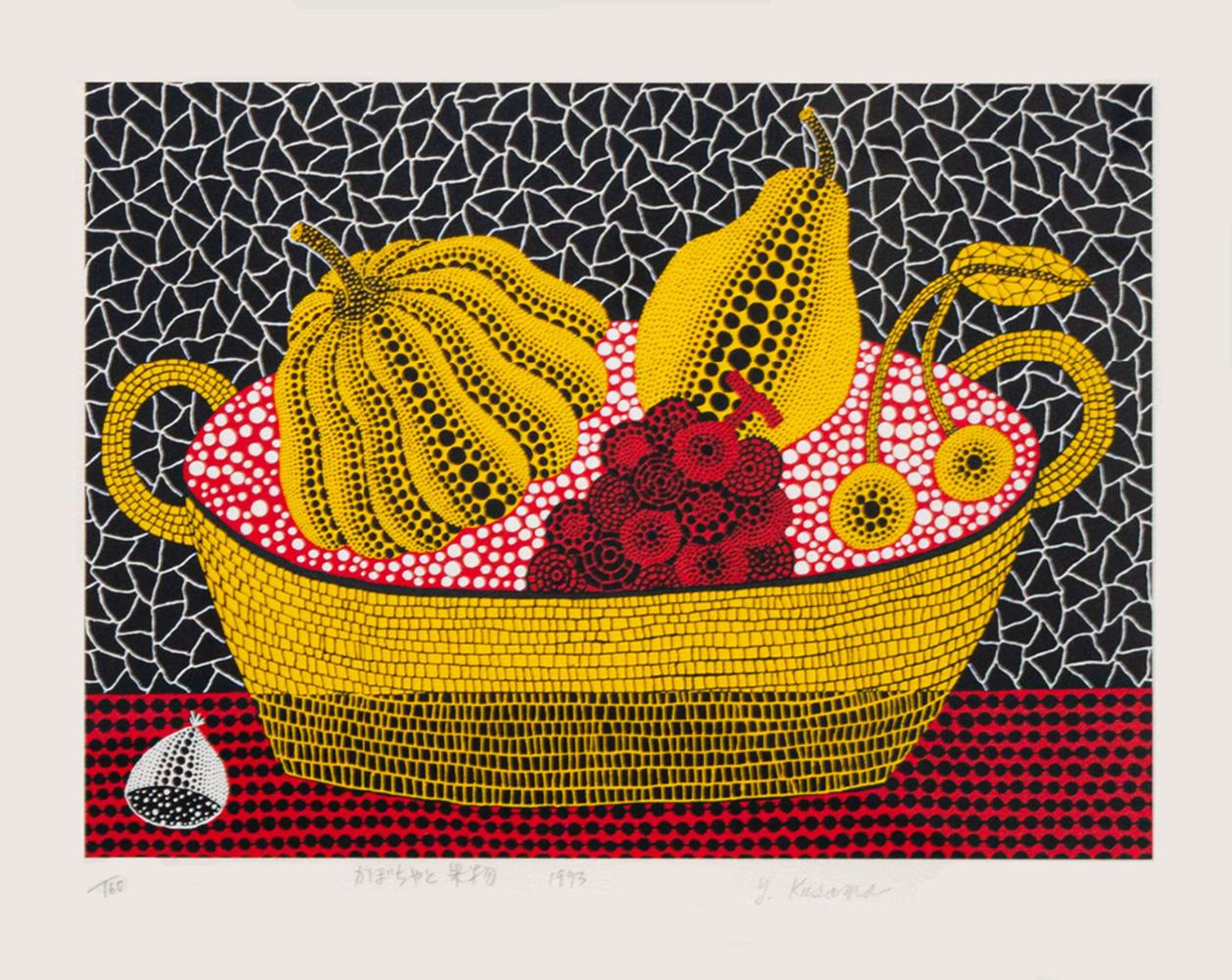
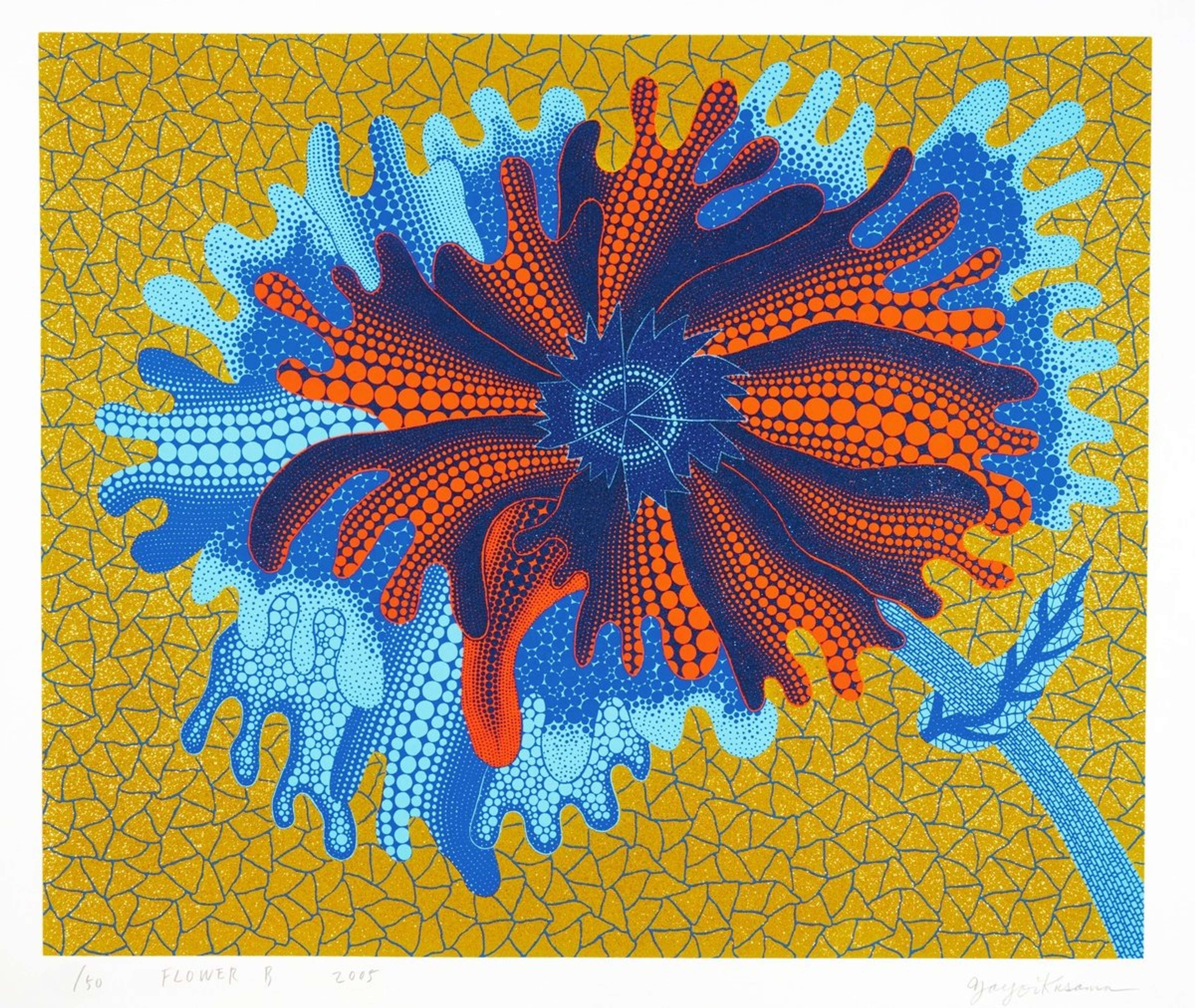
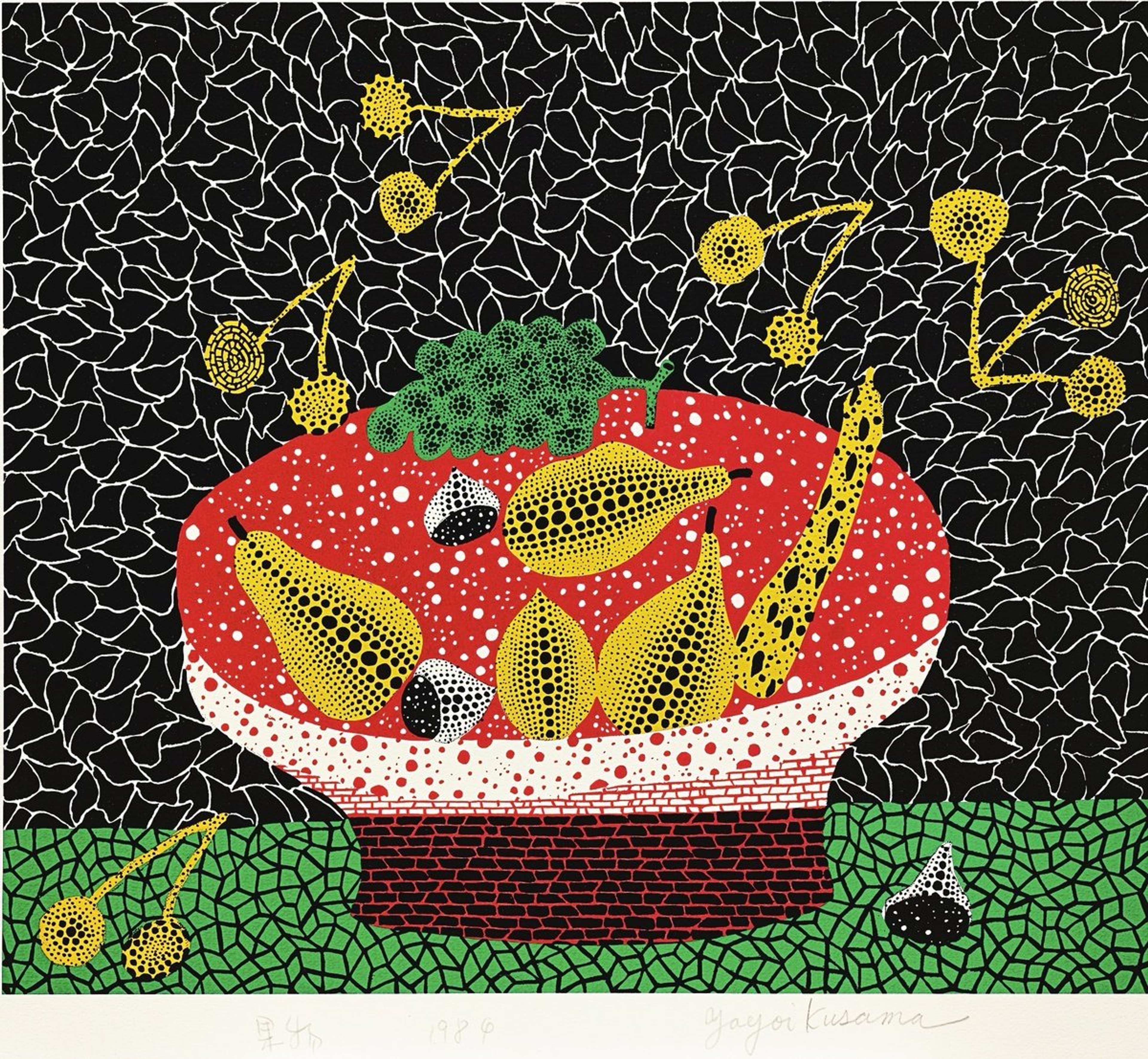
Kusama’s Fruit prints explode with electrifying colour and pattern, often using bold primary tones instead of naturalistic hues to make each fruit stand out. Her signature polka dots and Infinity Net patterns cover the surfaces, creating images with immediate visual impact. This approach sets Fruit apart from traditional still life, drawing viewers into Kusama’s whimsical and unique vision.
Kusama embedded symbols of abundance and vitality in her Fruit
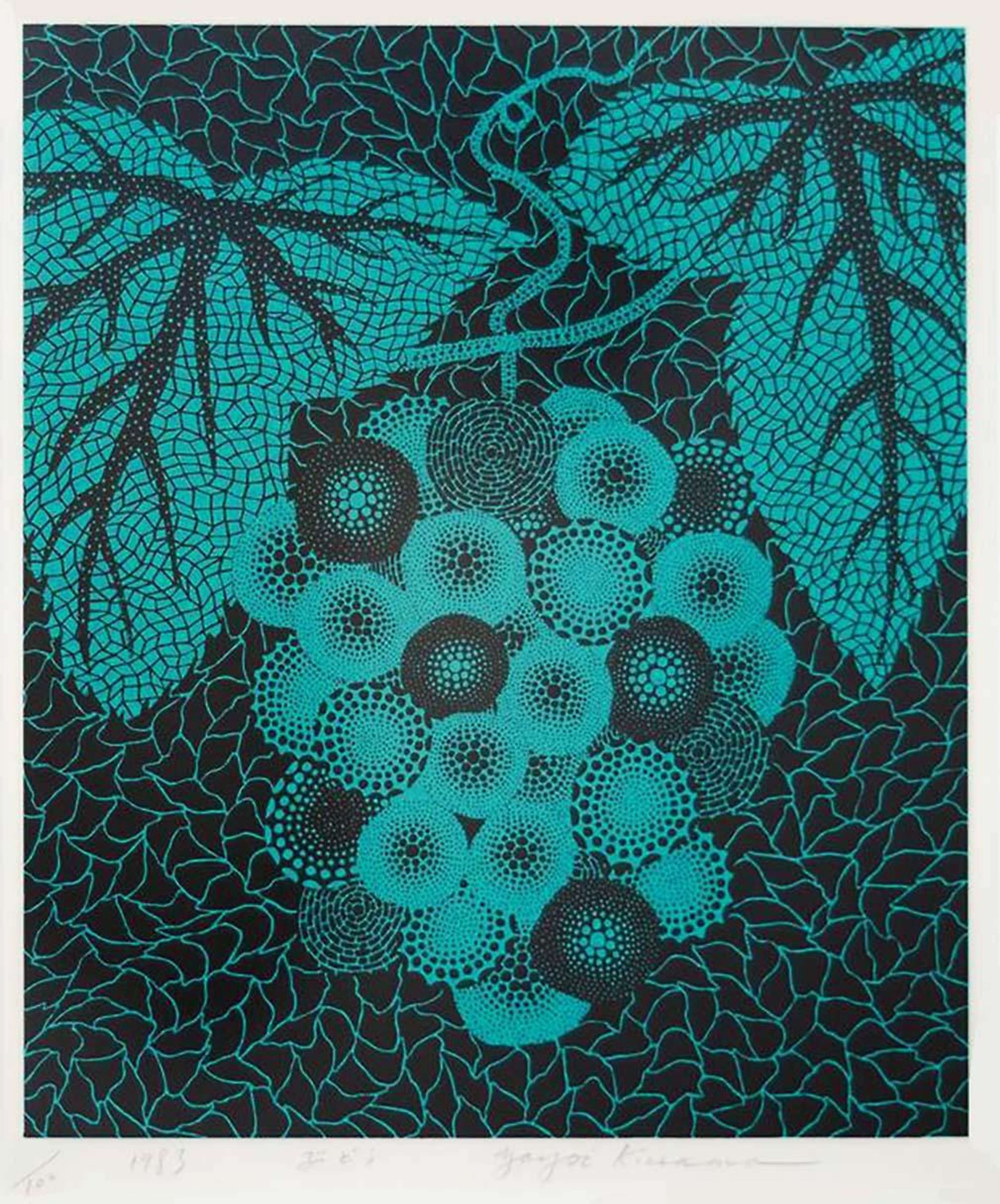
Kusama’s portrayal of fruit carries rich symbolism of abundance and prosperity. In art history, ripe fruit often represents wealth, vitality, and the bounty of nature. Kusama embraces these connotations wholeheartedly, and her prints depict fruit that is sumptuous and full of life. Unlike classical still life that sometimes include decaying fruit as a reminder of mortality, Kusama’s Fruit evokes a celebratory mood, suggesting gratitude for nature’s gifts and the vibrancy of life.
Kusama used polka dots to express infinity and interconnection in nature
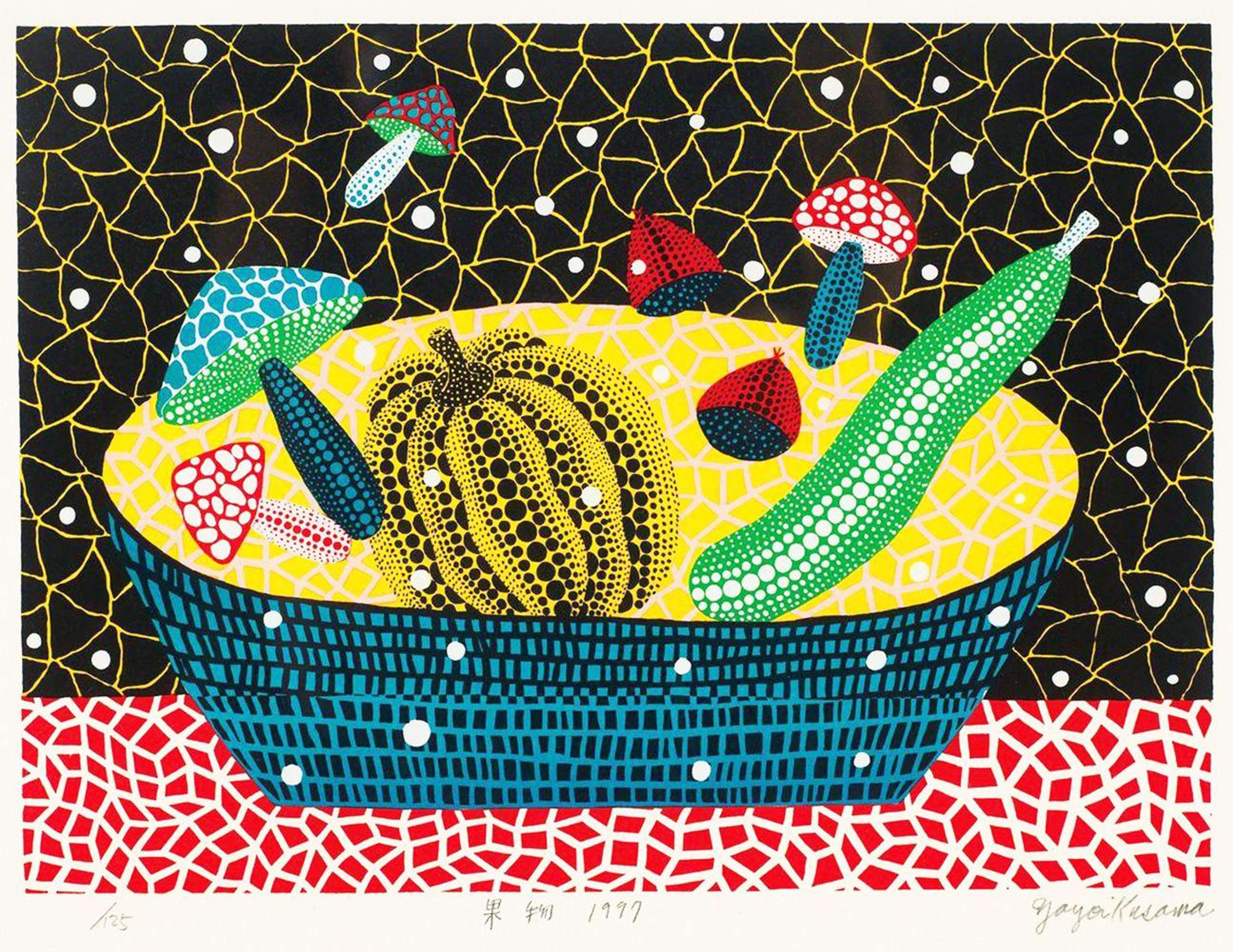
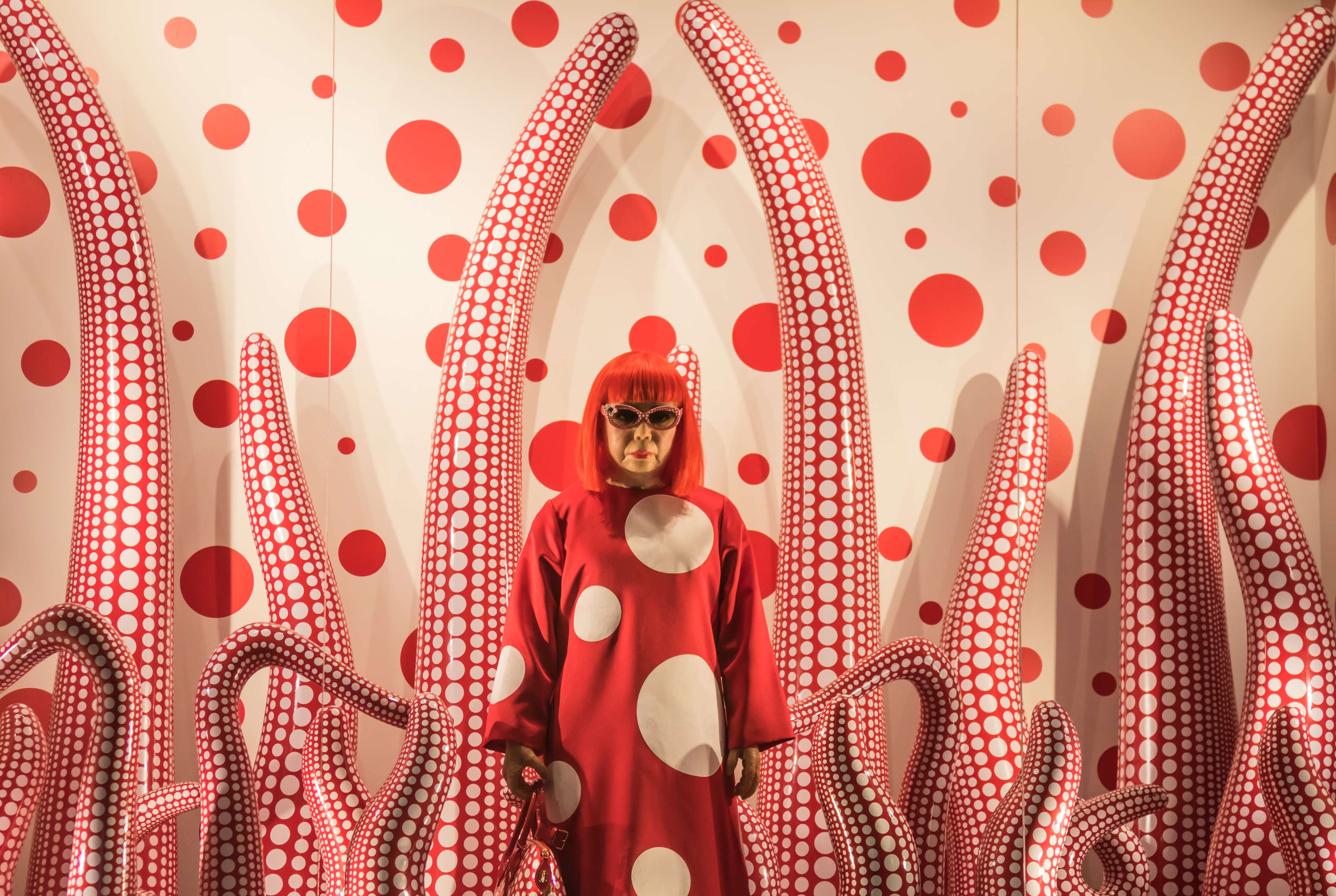
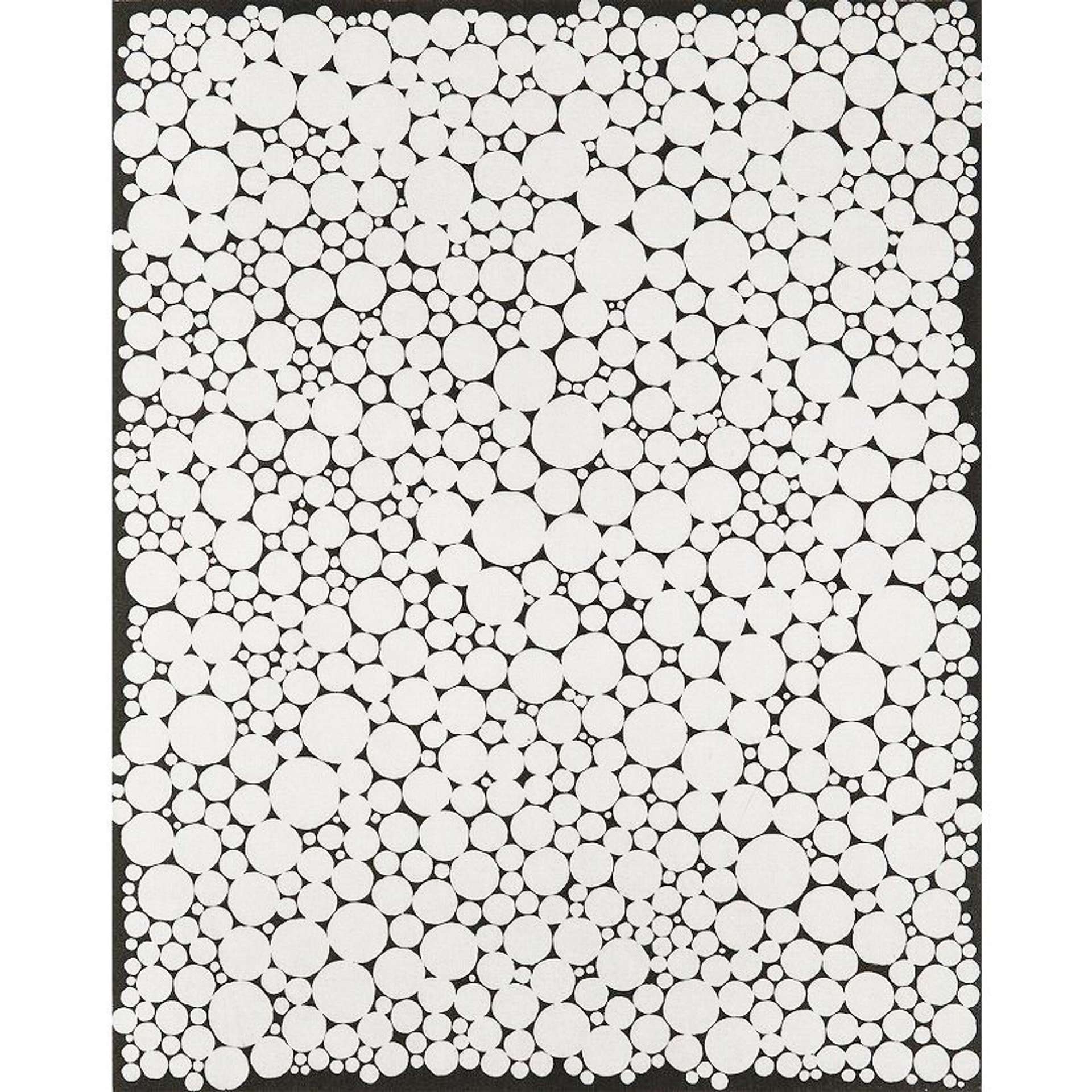
Kusama’s iconic polka dots represent her vision of an infinite universe. In Fruit, she covers apples, grapes, pumpkins and other fruit in fields of polka dots and net patterns, dissolving the boundaries of each object. This approach transforms a simple piece of fruit into a cosmic entity, as if each dot is a star in an endless sky. Kusama has described her polka dots as symbols of the universe, so covering fruit with these patterns imbues them with a sense of infinity, obsession, and self-obliteration.
Kusama introduced surreal elements into traditional fruit compositions
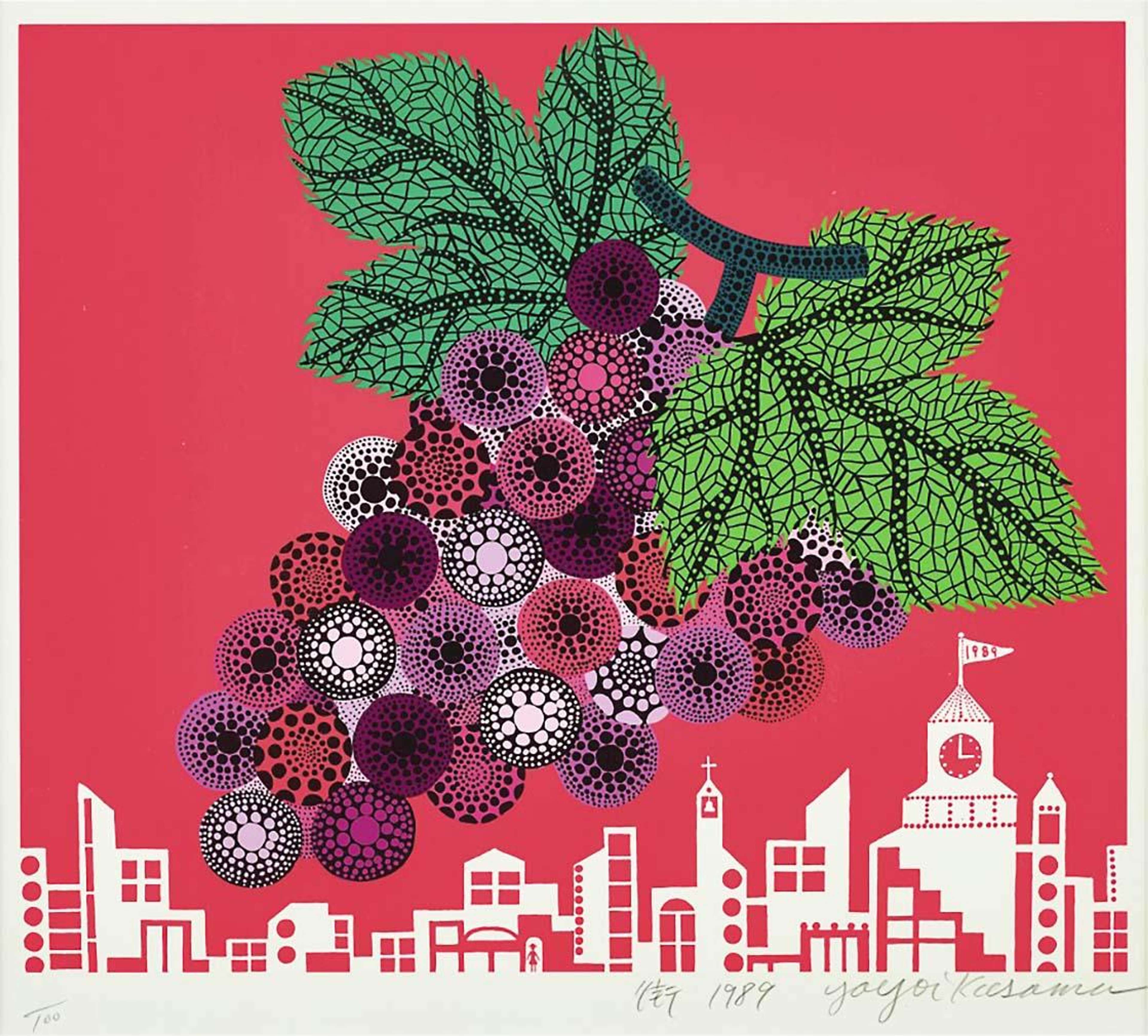
For centuries, artists painted fruit bowls in the style of realism, but Kusama’s fruits introduce surreal, dreamlike elements to the still life tradition. Some works place fruit in fantastical settings, like Grapes In The City, merging produce with unexpected environments. By infusing the ordinary subject of fruit with this surreal energy, Kusama invites viewers to reconsider what a still life can be.
Kusama’s agricultural roots informed the symbolic depth of her fruit imagery
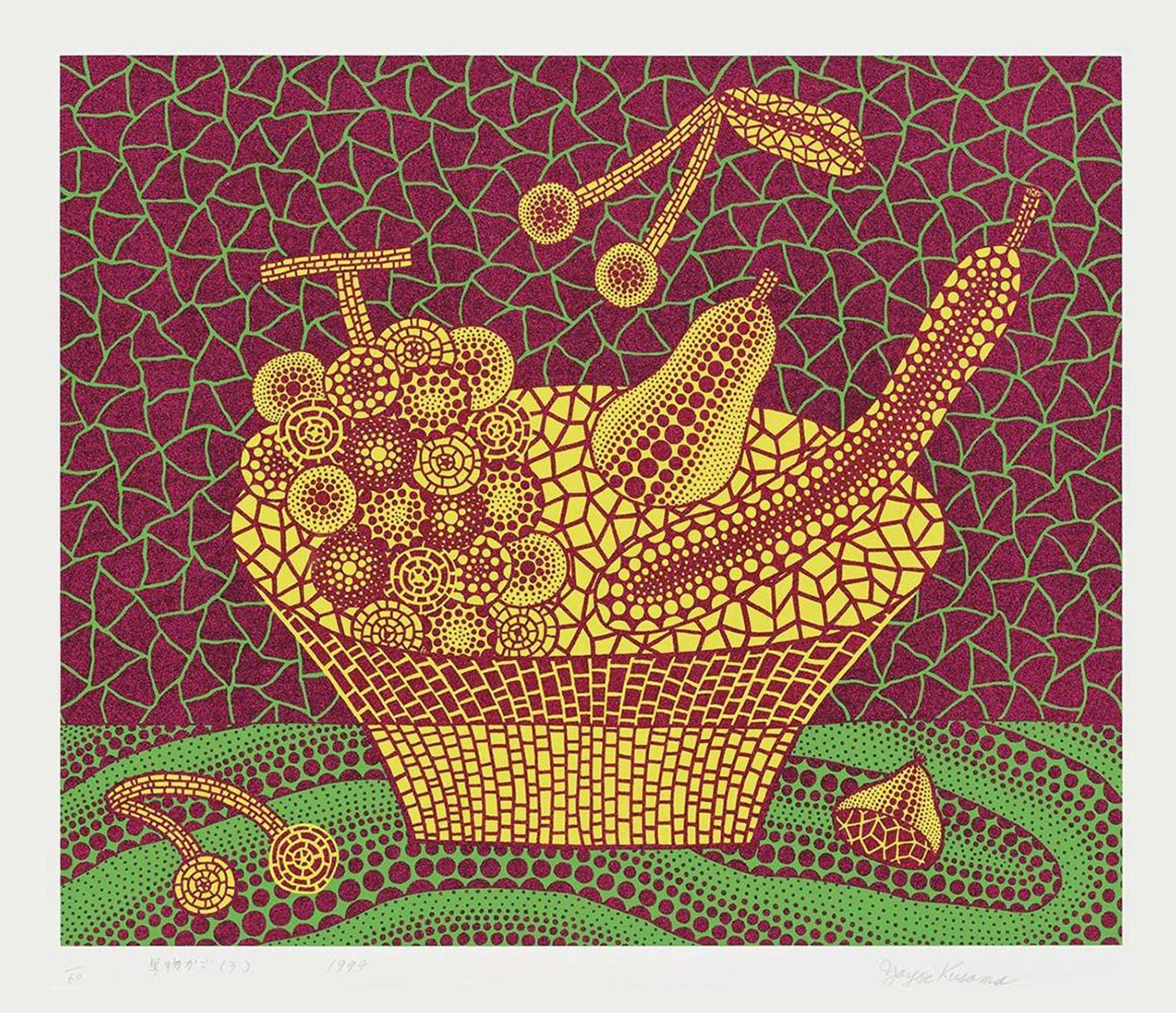
Kusama’s familiarity with fruit and vegetables stems from her childhood in rural Japan, where her family ran a seed nursery. This agricultural upbringing gave her a nuanced understanding of plant life and its cultural significance. The fruits in her prints reflect both personal memory and a broader recognition of humanity’s reliance on nature. In elevating these everyday objects through obsessive patterning and vibrant design, Kusama honours the life-giving role of plants while connecting her own past to a visual language of infinity and transformation.
Kusama’s Fruit reflected her growing recognition
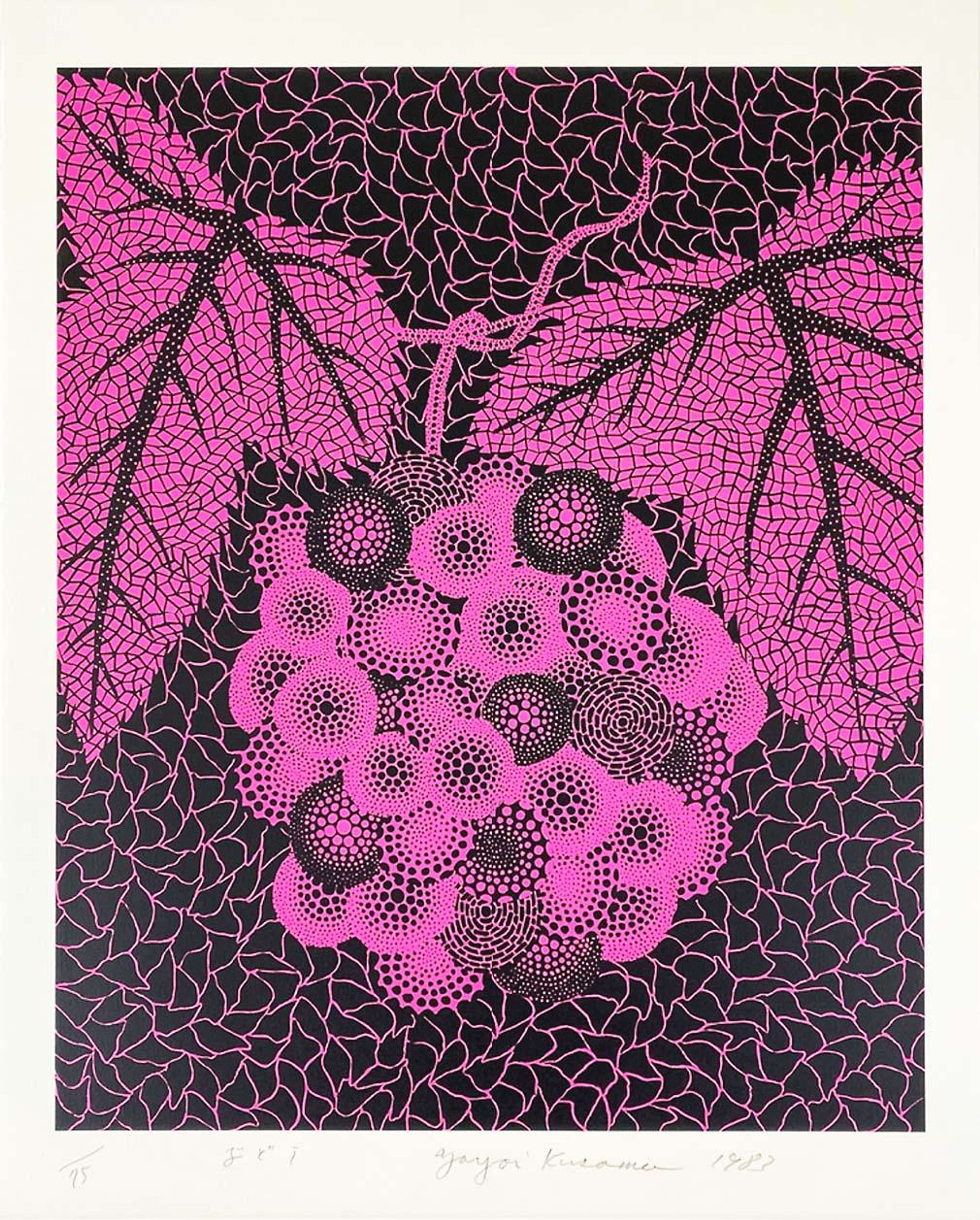
Spanning from 1984 to 1997, the Fruit series coincides with an important chapter in Kusama’s career. In the 1980s, Kusama’s work was gaining renewed recognition, especially in Japan, leading to major exhibitions and public acclaim. The energy of that successful era is mirrored in Fruit’s boldness and confidence, capturing Kusama’s flourishing creativity during a period when her art was receiving increasing momentum.
Kusama elevated familiar produce through personal and cultural memory
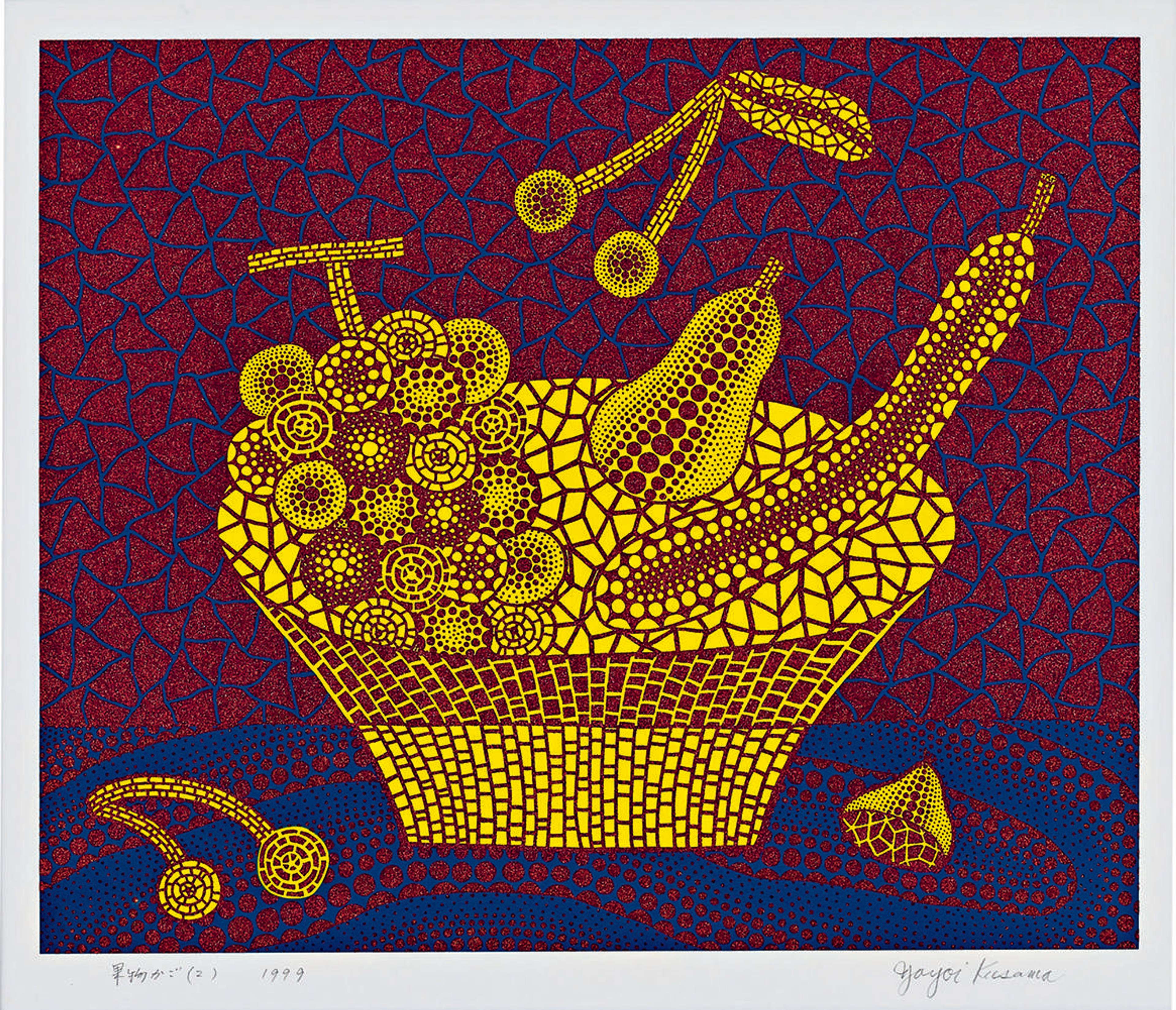
Kusama is known for transforming everyday objects into extraordinary art, and her fruit prints are no exception. Through her eyes, fruits shed their mundane identity and become vehicles for colour, pattern, and emotion, reflecting Kusama’s artistic drive to uncover the remarkable within the ordinary.
Kusama created psychedelic visual rhythms in her Fruit
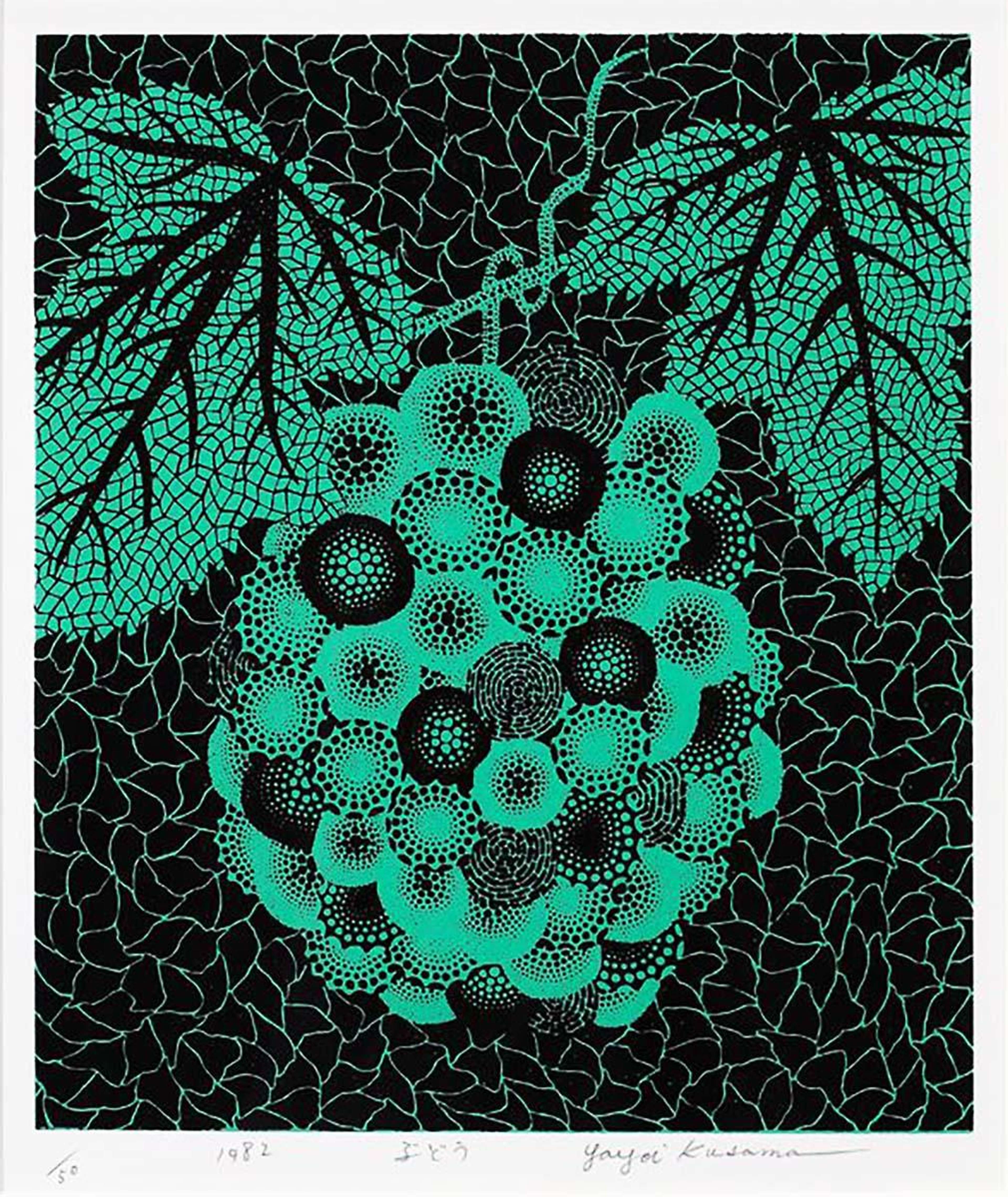
Kusama’s Fruit creates a psychedelic visual experience for the viewer. The intense contrasts of alternating colours make the compositions vibrate with energy. Combined with the swirling polka dot patterns, the effect is almost hypnotic, echoing the sensory impact of Kusama’s larger installations.
Kusama connected her Fruit series to her wider exploration of infinity
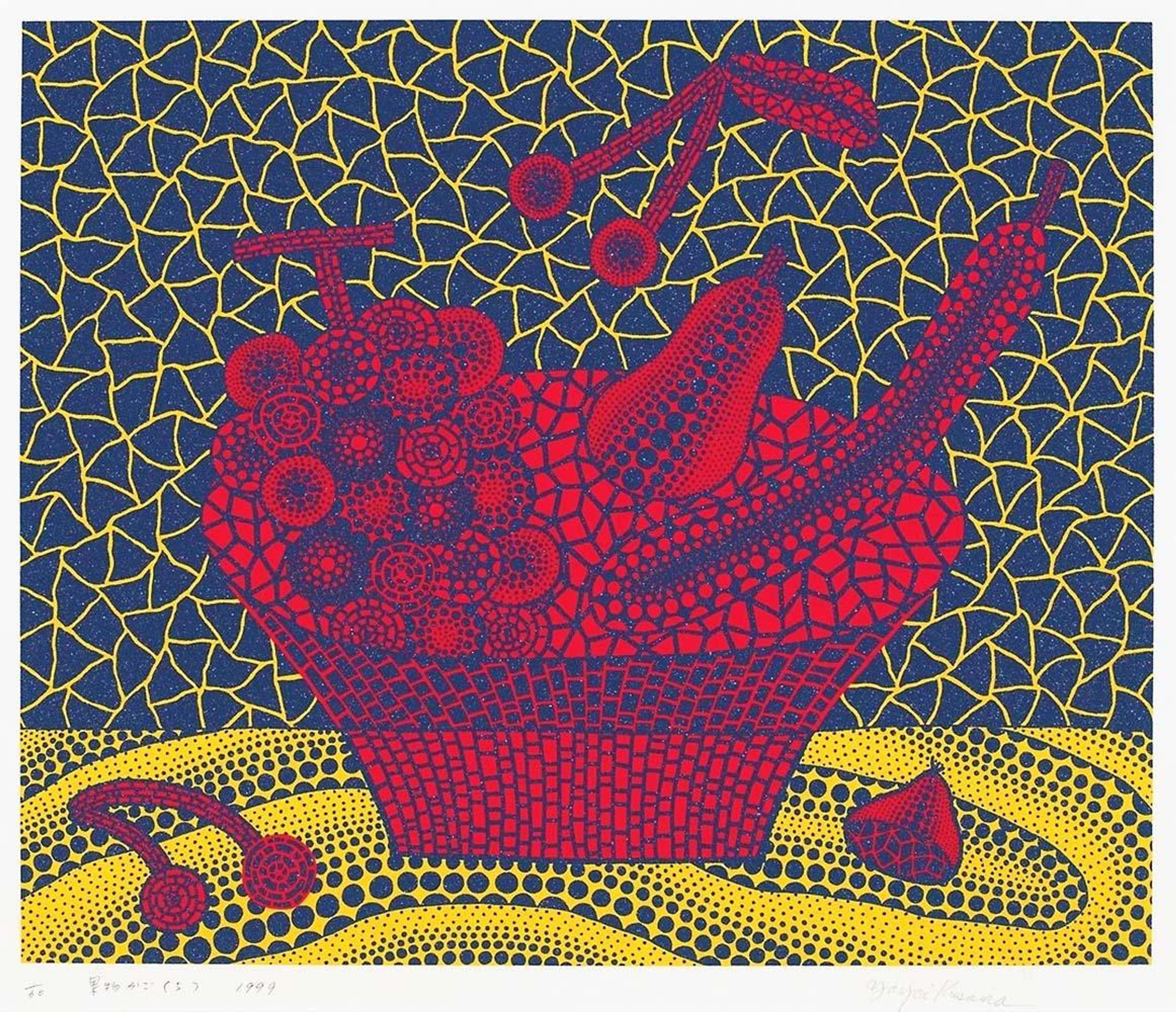
Kusama’s series is deeply connected to the rest of her artistic oeuvre. Just like her famous Pumpkins and Flowers, these prints reflect recurring themes that define her work. The obsession with repetition, the idea of self-obliteration through all-consuming patterns, and the celebration of nature’s forms are all present. When viewed alongside her other series, Fruit shows how Kusama consistently uses organic subjects as a canvas for exploring both the infinite and the deeply personal.
Kusama used screenprinting to create her Fruit series
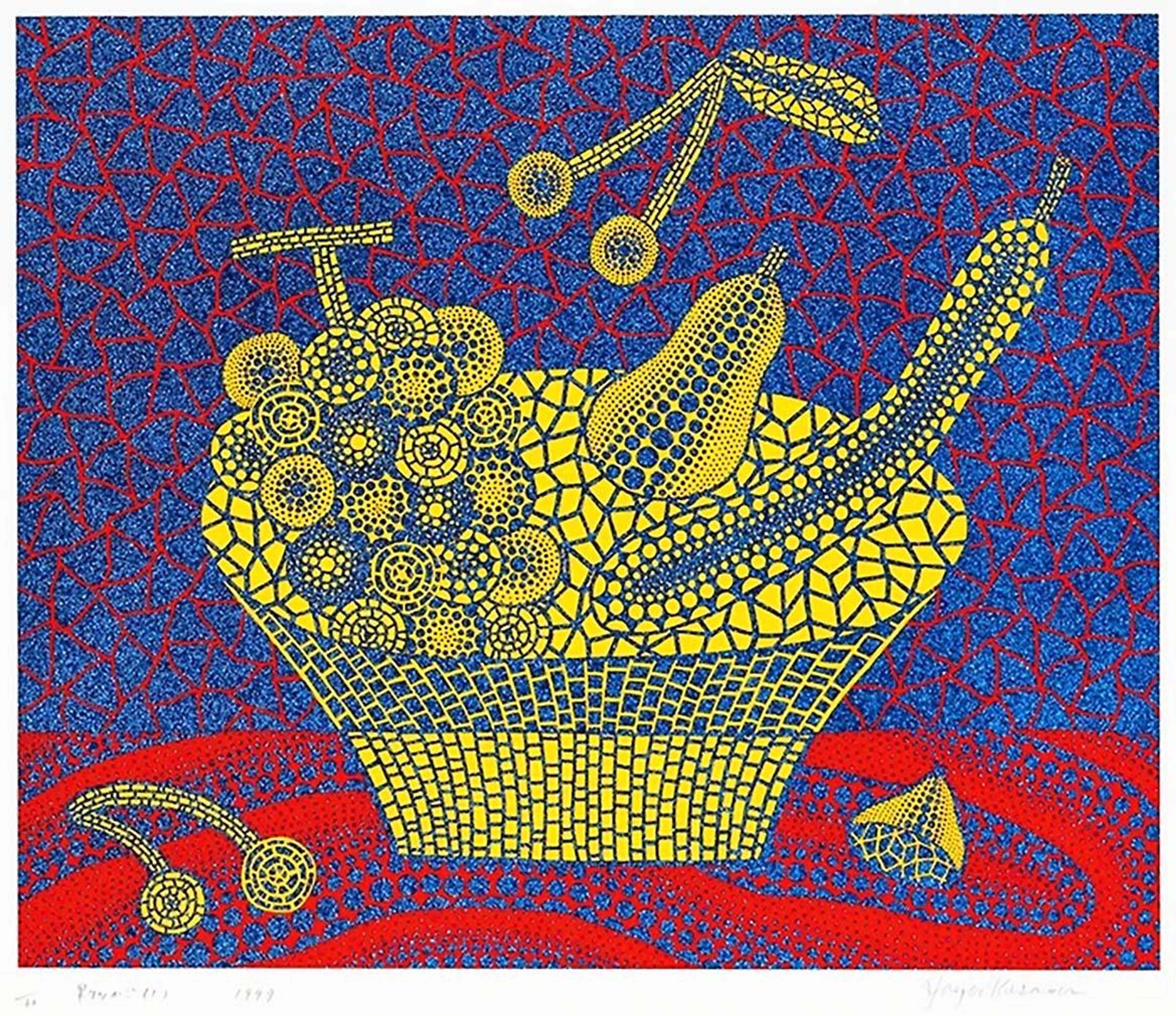
Kusama used screenprinting as a medium suited to her artistic goals. Its mechanical precision supported her signature repetition of forms and patterns, while the fusion of the industrial and the intimate reflects her ongoing negotiation between control and chaos.