Art & Technology: The Next Steps in Investment Strategies
 © Art Market 2050
Market Reports
The art market’s relationship with technology is at a turning point. While nearly every other asset class has embraced data-driven transformation, art still moves to a slower rhythm – fragmented by legacy systems, under-investment, and a culture built on discretion rather than transparency.
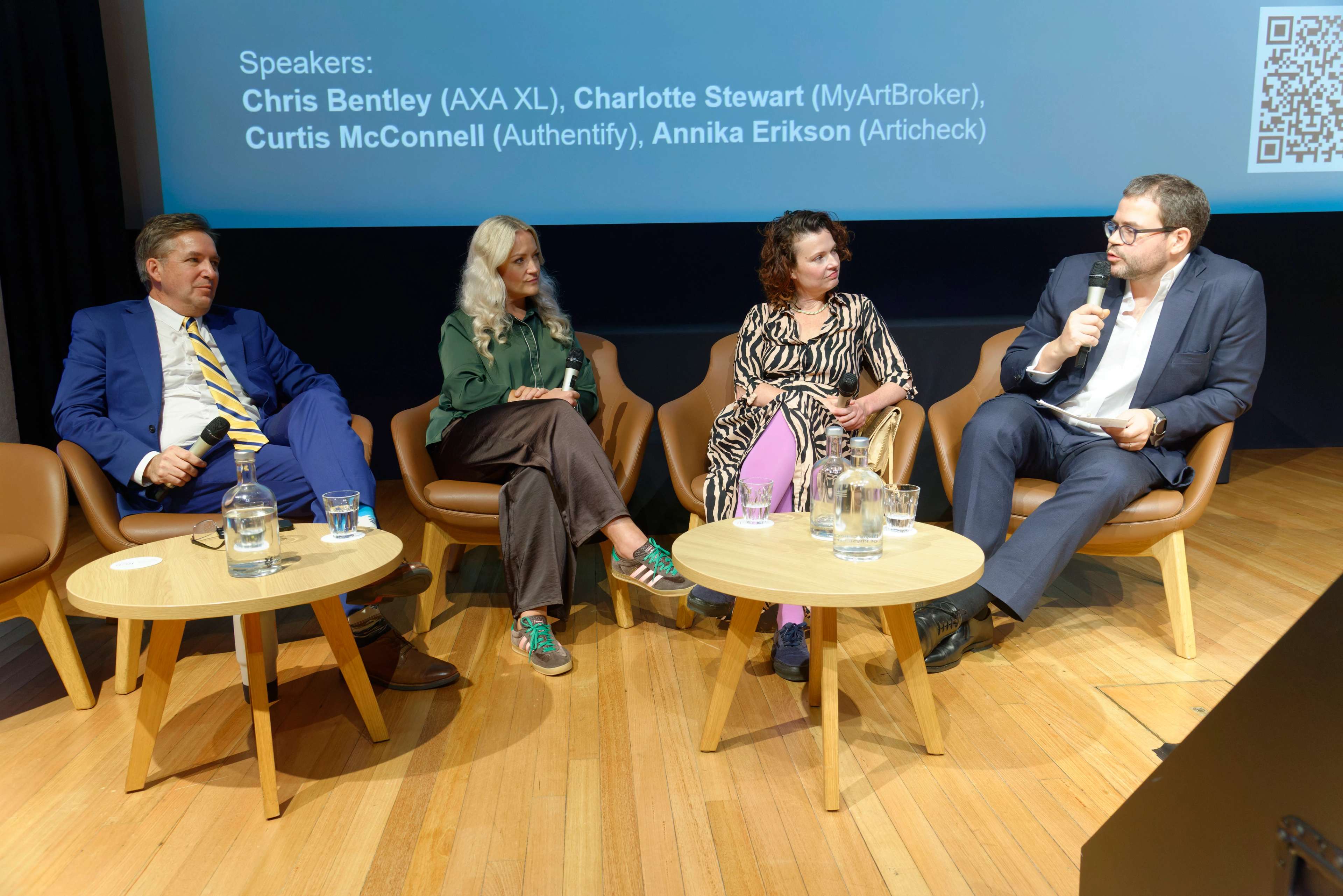
That reality framed Art & Technology: The Next Steps in Investment Strategies, a panel at The Art Market 2050 Conference featuring Chris Bentley (AXA XL), Charlotte Stewart (MyArtBroker), Curtis McConnell (Authentify) and Annika Erikson (Articheck). The conversation examined what investors misunderstand about the sector, why start-up logic rarely fits the art ecosystem, and how collaboration – not competition – could unlock scalable progress.
The Problem With “Start-Up Logic” in the Art World
For all its creativity, the art market has never moved fast. Relationships, provenance, and education evolve over years, not quarters – a rhythm that is inherently incompatible with short-term venture capital cycles.
As Annika Erikson noted, building Articheck — now a global standard for digital condition reporting — was a marathon, not a sprint. “Until five years ago, it was really hard,” she reflected. “Now, after multiple rounds of funding, we have one of the best databases on the condition of art. The next step is figuring out how to leverage that data.”
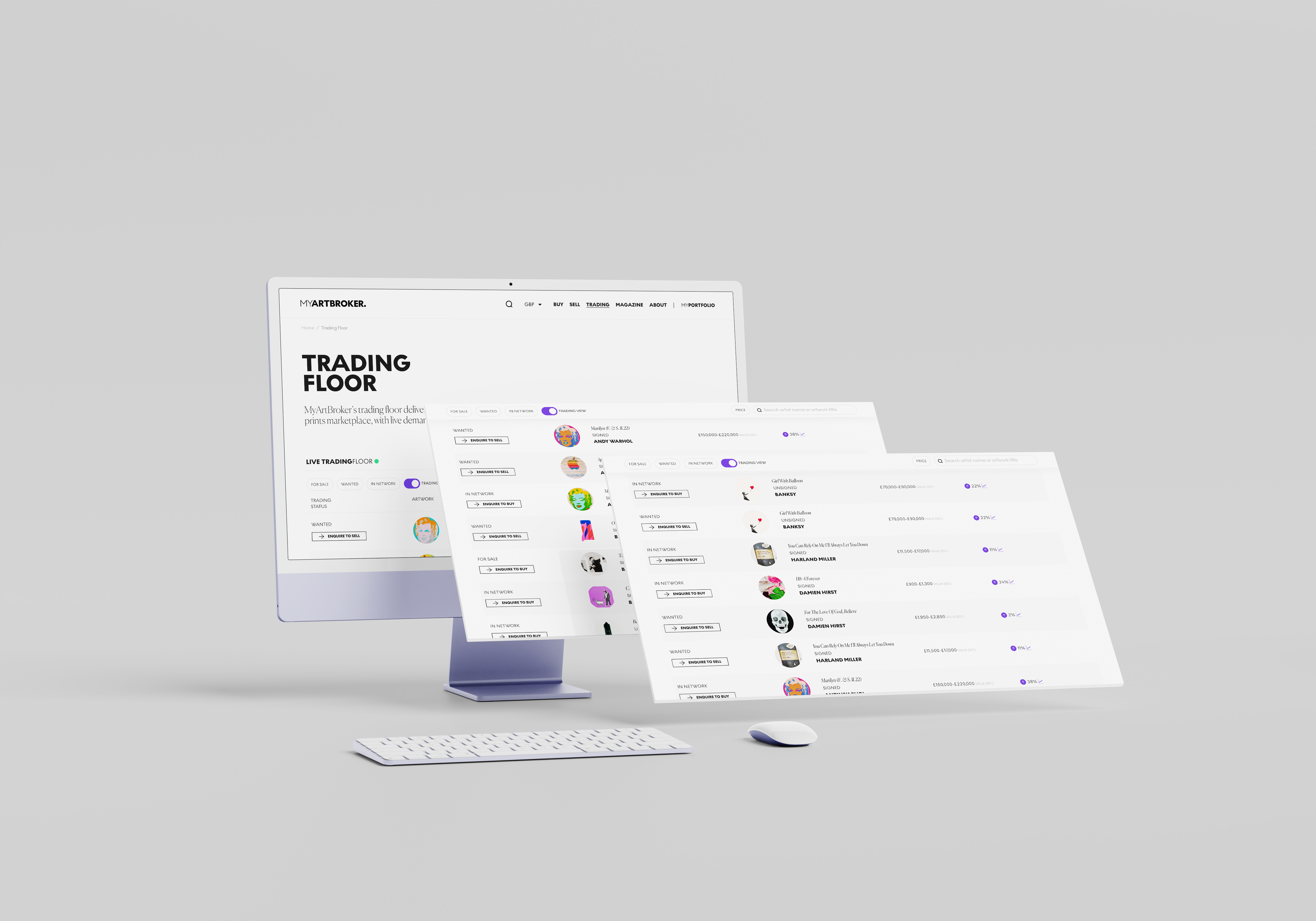
That long-view approach resonated across the panel. As Charlotte Stewart explained, “Our strategy has always been to develop incrementally against profit. And it’s really challenging, but what’s really enjoyable is we are able to build it ourselves. We invest in ourselves, there is something in our DNA of being quite hustle.” At MyArtBroker, we've evolved over the past five years into a network marketplace underpinned by valuation technology, live data, and transparent pricing tools.
For Stewart, art-tech growth can’t be forced. “Some things in this market move fast – they spike and drop – but meaningful innovation takes time. Investment has to match that rhythm.”
From Conservation Data to Market Infrastructure
Articheck’s story offered a glimpse into what patient capital can achieve. What began as a digital solution to museum condition reports has become a global dataset spanning millions of entries, used by insurers, lenders, and conservators.
As Erikson outlined, most reports are created during transit or loan – precisely when risk is highest – meaning this data is not just administrative, but predictive. Over time, such infrastructure could inform valuation models, underwriting, and provenance tracking – the very systems that the art market has long lacked.
In a conference so focused on digital innovation, the clearest takeaway was that real value lies not in the technology itself, but in the data it generates.
What Investors Get Wrong About ArtTech
For Curtis McConnell, founder of Authentify, the problem isn’t the absence of opportunity – it’s the lack of understanding. “Investors from outside the art world underestimate both the complexity and the potential of fixing its inefficiencies,” he said.
Family offices and private investors, often collectors themselves, are proving more receptive to those nuances than traditional VC funds. They see that the market’s opacity is precisely what makes it ripe for innovation – if the right kind of investor steps in.
Erikson added that the art world needs shareholders with longer horizons: “We need investors with vision beyond a three-to-five-year exit. The sector can’t build infrastructure on short-term expectations.”

Building Trust Through Technology
Stewart brought the marketplace perspective full circle. “We have technology people in the art market,” she said, “but we still have a trust problem.”
Trust, she argued, remains the currency of the secondary market – and any technology that ignores that will fail. For MyArtBroker, the solution has been to use technology to enhance, not replace, trust. Tools that MyArtBroker has built and invested in, like MyPortfolio and the newly launched Instant Valuation show collectors that transparency and precision can co-exist with expertise.
“Our success comes from aligning with the market’s realities,” Stewart said. “Rapid scaling might look attractive, but adoption in this industry takes time. Progress happens through credible partnerships and shared objectives.”
Her comments distilled the mood and overarching theme of the conference in that ArtTech doesn’t need disruption; it needs better alignment.
Collaboration Over Competition
If one word captured the panel’s consensus, it was collaboration. The sector’s fragmentation – dozens of platforms building similar systems in parallel – has slowed momentum and confused users.
Several panellists called for a neutral data infrastructure: an interoperable layer allowing platforms to share information securely. Other industries have done this for decades, from fintech to logistics. The art world, they argued, doesn’t need to reinvent the wheel – only to adopt the same standards of interoperability and governance.
“Fairs already serve as the connective tissue of the market,” Erikson noted. “Now it’s time to build the digital equivalent.”



Towards a Shared Foundation
Looking ahead, consolidation and standardisation will be inevitable. As in early software markets, a few core platforms will eventually form the sector’s backbone – not to create monopolies, but to ensure efficiency and data consistency.
Erikson suggested that such alignment could transform everything from valuation and insurance pricing to collection management and loan tracking. In her view, “building infrastructure isn’t just about efficiency; it’s about creating a better future for the market.”
Why It Matters
For investors, collectors, and institutions alike, the stakes are high. Shared standards and trustworthy data systems will:
- Give collectors greater transparency over provenance and ownership.
- Allow insurers and lenders to make better, faster risk assessments.
- Reduce administrative friction across galleries, museums, and shippers.
But the real prize is confidence. As Stewart concluded, “Technology in art isn’t just about efficiency – it’s about accessibility and trust. The more transparent and data-driven the market becomes, the more people will want to participate in it.”