Understanding US Art Desires
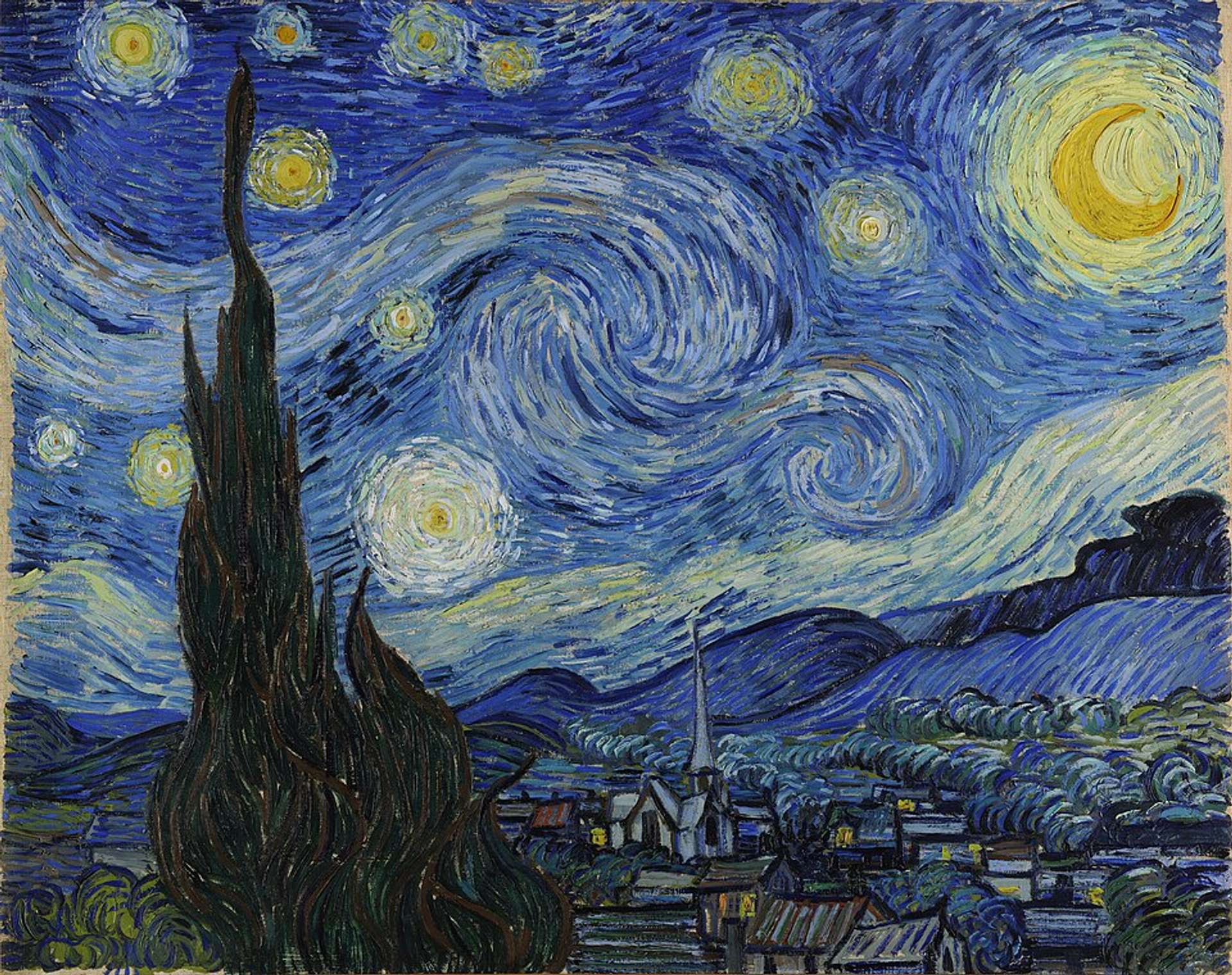
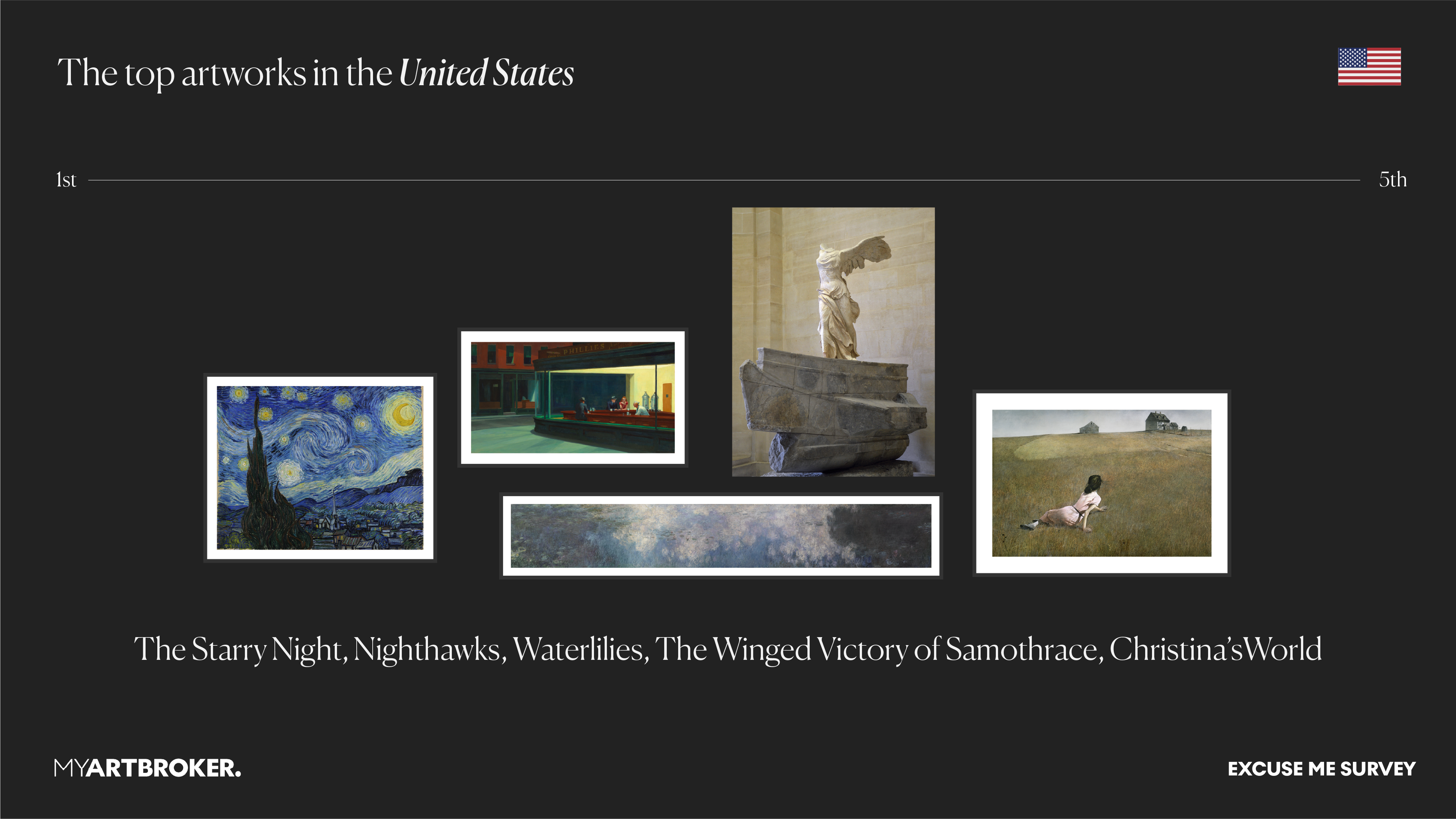
Launched globally over two weeks in early 2025, our survey garnered 7,500 open‑ended responses across 70 countries to reveal why people chose the art they love. In the U.S., respondents were 57 % female, 38 % male, and 3 % non‑binary. Ranking in the top three of America’s favourite artworks were Vincent Van Gogh’s Starry Night, Edward Hopper’s Nighthawks, and Claude Monet’s Water Lilies.
Two artworks unique to American voters appear in the U.S. Top 10, despite barely registering among UK respondents: Jean-Honoré Fragonard’s The Swing and the Winged Victory of Samothrace. These works suggest a distinctly American taste for art that holds opposing forces in balance: motion and stillness, spectacle and solace, perfection and its undoing. The U.S. ranking shares global favourites like Starry Night and Ophelia, yet leans more towards art that reflects collective anxieties and ambitions.
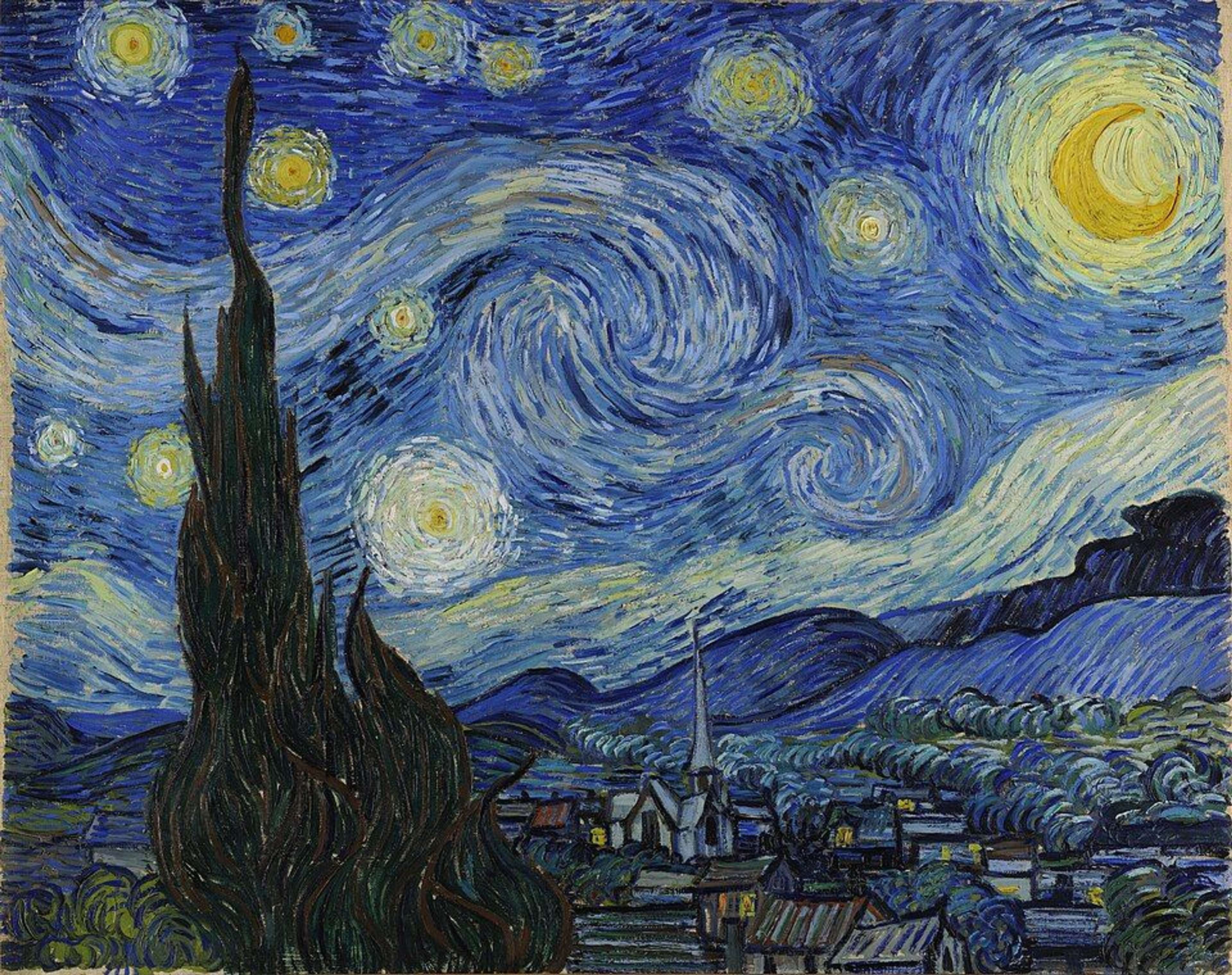
1. The Starry Night by Vincent van Gogh
Dominating the top U.S. spot is Vincent van Gogh’s 1889 masterpiece The Starry Night, reflecting its popularity on the global stage - where it was named almost twice as often as the second most popular choice. Painted during his turbulent months at the Saint‑Rémy asylum, the canvas transforms a nocturnal vista into an ecstatic symphony of pulsating blues and shimmering orbs. At the same time, the quiet village below offers a counterpoint of stability. Perhaps it’s this tension between the restless sky and grounded earth that speaks so powerfully to American hearts: in an age of uncertainty, we yearn to find anchorage in moments of upheaval.
Inside this tapestry of light and shadow, viewers find both catharsis and calm. “It’s iconic. It’s a perfect painting,” one admirer notes, while another observes; “The strokes show a sadness but also a calm sense of being. The night sky is sometimes a scary place, but with his stars shining bright, you can almost feel relaxed.”
Out of those who find solace in van Gogh’s swirling hues: 60 % identify as female, 36 % as male, and 4 % as non‑binary. Millennials lead the vote (44%), followed by Baby Boomers (28%) and Gen X (20%), however American Gen Z appear to have alternate tastes, with this demographic only consisting of 8% of votes. One participant recalls, “It was the first piece of art that made me stop and think. I had a print of it next to my bed and I would stare at the swirls and imagine real stars swirling in the skies in France.” In today’s fast‑paced culture, The Starry Night offers a space for reflection: its energetic brushstrokes echo our restless inner worlds, while its quiet village provides the refuge we so urgently seek.
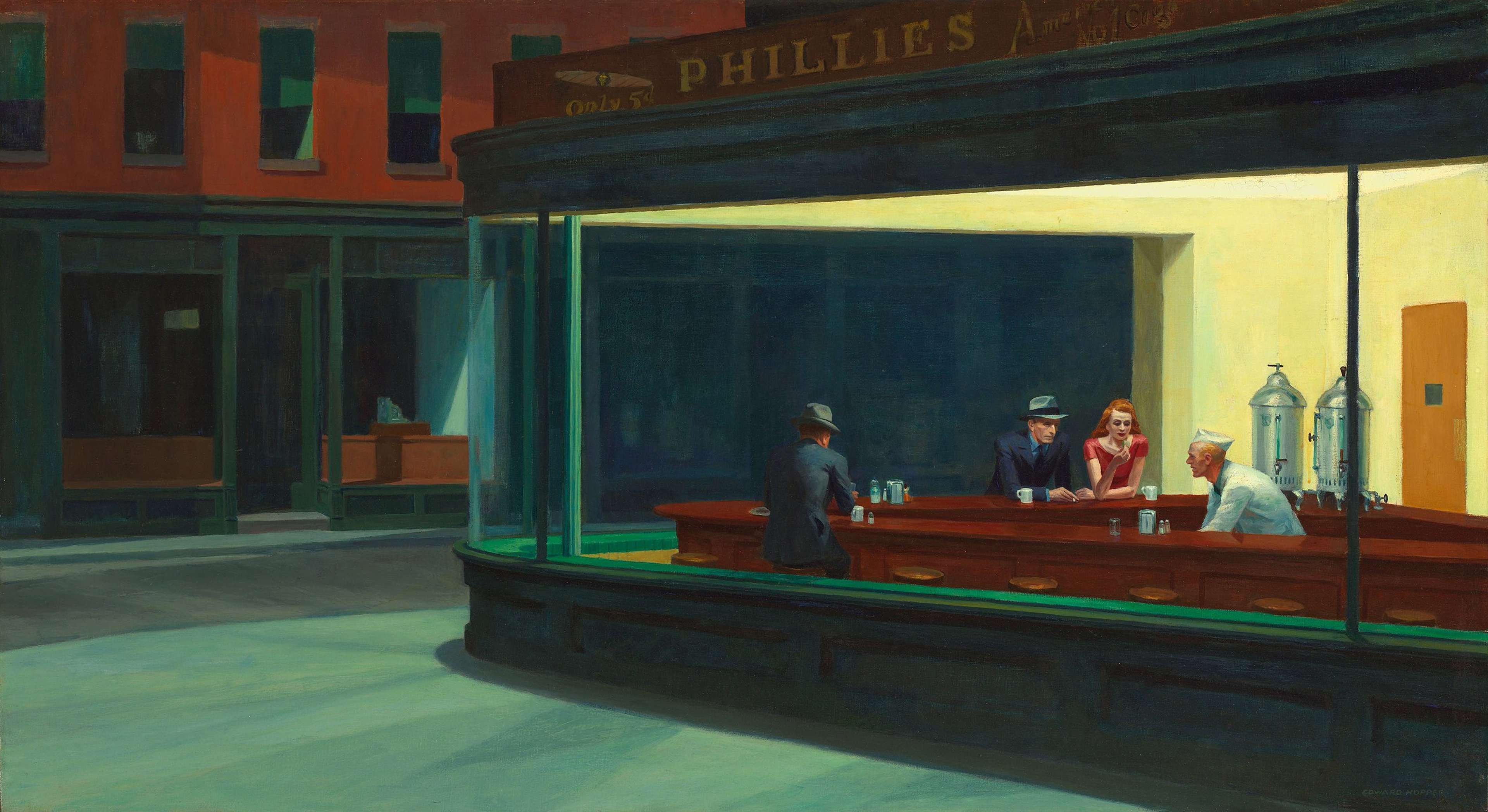
2. Nighthawks by Edward Hopper
Taking second place is Edward Hopper’s Nighthawks (1942), long embedded in the American imagination as a glowing study of urban solitude. Painted in the wake of Pearl Harbor and amid wartime uncertainty, the empty streets and neon‑lit diner evoke collective anxiety and private retreat, the night becoming a stage for silent reflection. Unlike in the UK, where Gen Z led the vote, American admirers span all four generations, reflecting the cross-generational appeal of Hopper’s study of isolation and ambiguity.
Much like in the UK, where Nighthawks drew stronger male support, 72% of its American admirers identify as male and 28% as female. Respondents consistently cite Hopper’s artwork as capturing the essence of urban alienation, and inviting us into a dialogue where solitude is experienced rather than judged. “It has a sadness to it, but also we get a moment in time where we see humanity for what it is,” notes one admirer, while another observes, “I feel that of all artworks this one captured solitude and loneliness best.” One respondent speaks of a liberating distance: “While viewing from the outside in, we get this sense of freedom of not being confined to the day‑to‑day routine.” Hopper’s exploration of space, mood, and meaning is precisely why Nighthawks is an artwork so many people want to own.
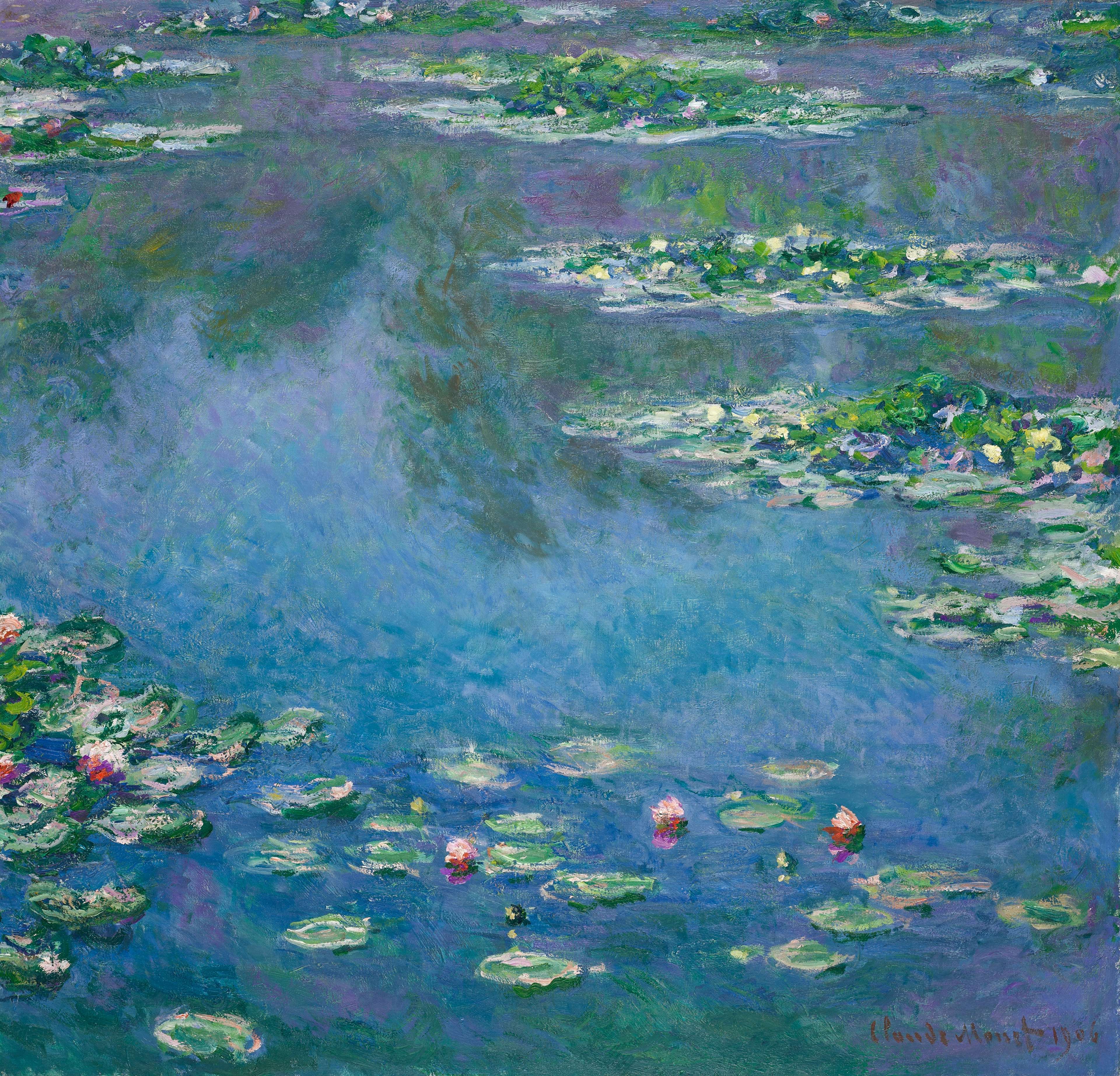
3. Water Lilies by Claude Monet
In third place is Claude Monet’s Water Lillies, an artwork created as part of his late‑career explorations of his Giverny pond. By 1914, Monet had redirected his gaze entirely upon the surface of his water pond, ignoring horizon lines and tilting the canvas so that is became a floating mosaic of blossoms, leaves and reflected light. The result is a series of paintings without gravity or narrative, where time seems to pause, and the viewer becomes as much a participant as an observer.
In the U.S., admirers of Water Lilies are predominantly female (66.7 %), with male (22.2 %), non‑binary (5.6 %) and other (5.6 %) voices completing the picture. Generationally, Millennials lead at 38.9 %, followed by Gen Z at 27.8 %, and both Gen X and Baby Boomers at 16.7 % each - figures that suggest a shared longing for respite. One voter recalls; “when I look at it I feel immersed in its ethereal feeling… it feels like you are with the lake and the lilies,” while another traces their passion back to school days, explaining that “Impressionist painters made a big impact on me, especially Claude Monet. I always wanted my garden to look like one of his paintings.” For others, the work feels like a refuge: one admirer notes that “its blues and greens are so soothing,” while another says it “transports me to Monet’s Giverny…having that painting would take me there every time I look at it.” In these reflections, Water Lilies becomes a meditation in memory, offering those who look at it a serene pause and a chance to reflect.
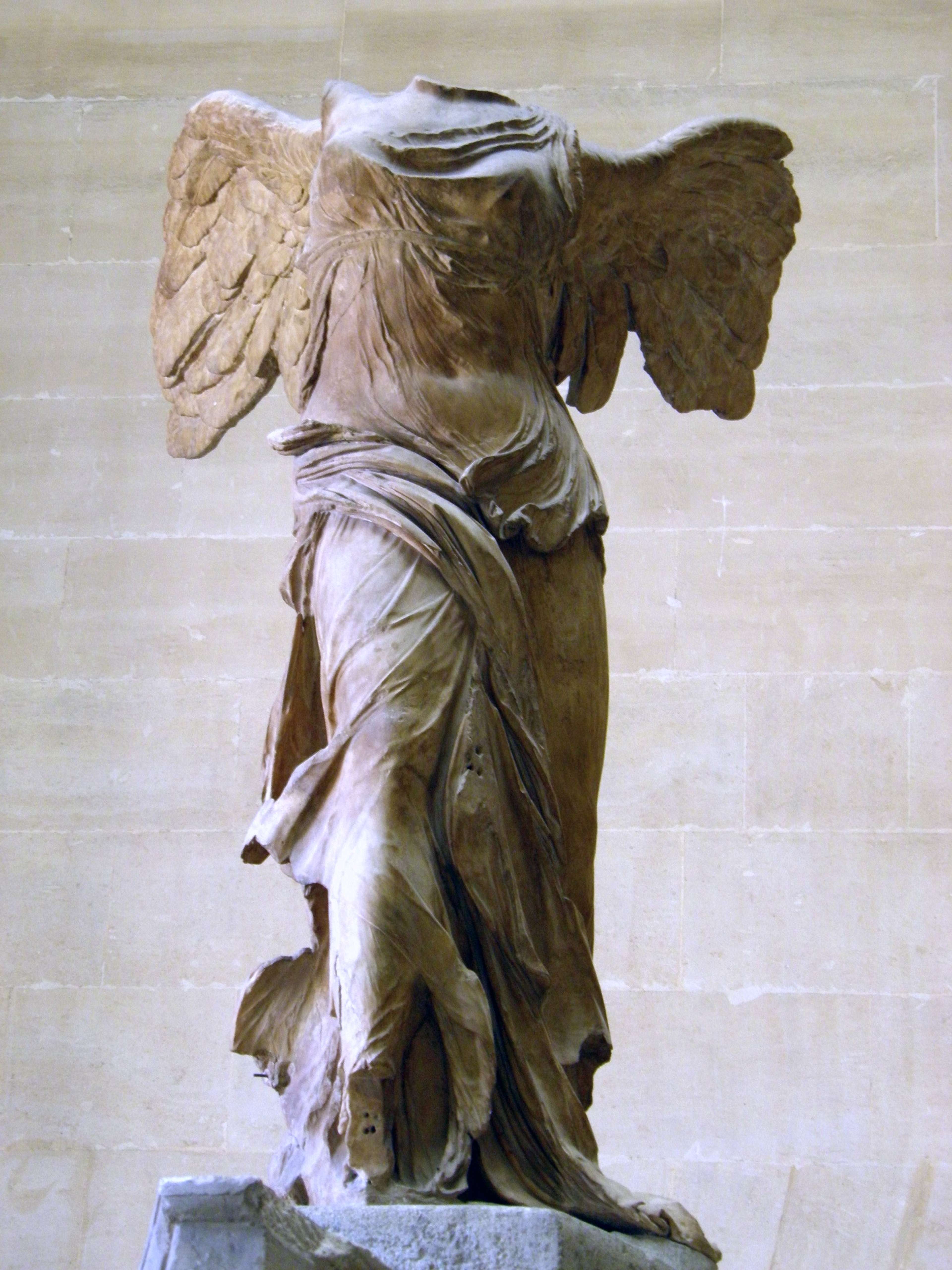
4. The Winged Victory of Samothrace
In fourth place is the ancient Hellenistic statue The Winged Victory of Samothrace, a marble sculpture whose posture recalls the exhilaration of triumph. Believed to have been created around 190 BCE in the aftermath of a Rhodian naval victory, it originally crowned the bow of a warship memorialised on the island sanctuary at Samothrace. Now perched atop part of the prow of an ancient warship in the Louvre, Nike’s marble form soars nearly eighteen feet, her reconstructed wings unfurling in a triumphant gesture. A gust of sculpted wind animates her garments, the heavy folds drawn across her body so that they both conceal and reveal her form, lending the goddess a moment of breathless intensity between battle’s fury and its triumphant victory.
Although The Winged Victory placed eighth in our global ranking, it appears only in the U.S. Top 10 list and is absent from the UK’s own Top 10; underscoring a particularly American hunger for its fractured, defiant beauty. Here, 82.4 % of would‑be owners identify as women, with men make up 17.6 % of its admirers. Gen X leads the age profile at 29.4 %, while Millennials, Gen Z and Baby Boomers each account for 23.5 %. That such a potent emblem of classical warfare appeals overwhelmingly to women may seem surprising at first - statues of victory were historically erected by and for male conquerors. Yet The Winged Victory resists easy conquest narratives. Headless and armless, she stands as a symbol not of domination but of persistence: battle-scarred, wind-battered, and still alight with motion and grace. It’s this combination of strength that does not depend on wholeness, that perhaps speaks so vividly to female viewers. In a culture where women are so often expected to soften their resilience, Nike’s unapologetic presence stands an icon of female victory.
For many Americans, the statue’s headless and armless posture is not a flaw but a source of power. One respondent remembers being “blown away” on first sighting, while another admits that “mostly I love it because it’s ‘broken’, I think she is made more beautiful because of it.” Admirers often marvelled at the realism of her drapery; “the draping and detail in stone is so mind‑blowing,” says one admirer, while another confesses “I stared at her for hours instead of touring the Louvre.” Moreover, Nike’s legacy lives on in contemporary culture: her name, meaning “victory,” has been infamously adopted by the American sportswear titan, cementing her place not just in art history but in everyday life. In America’s cultural narrative, where reinvention is prized, Nike’s broken elegance speaks to a collective will to endure and emerge triumphant.
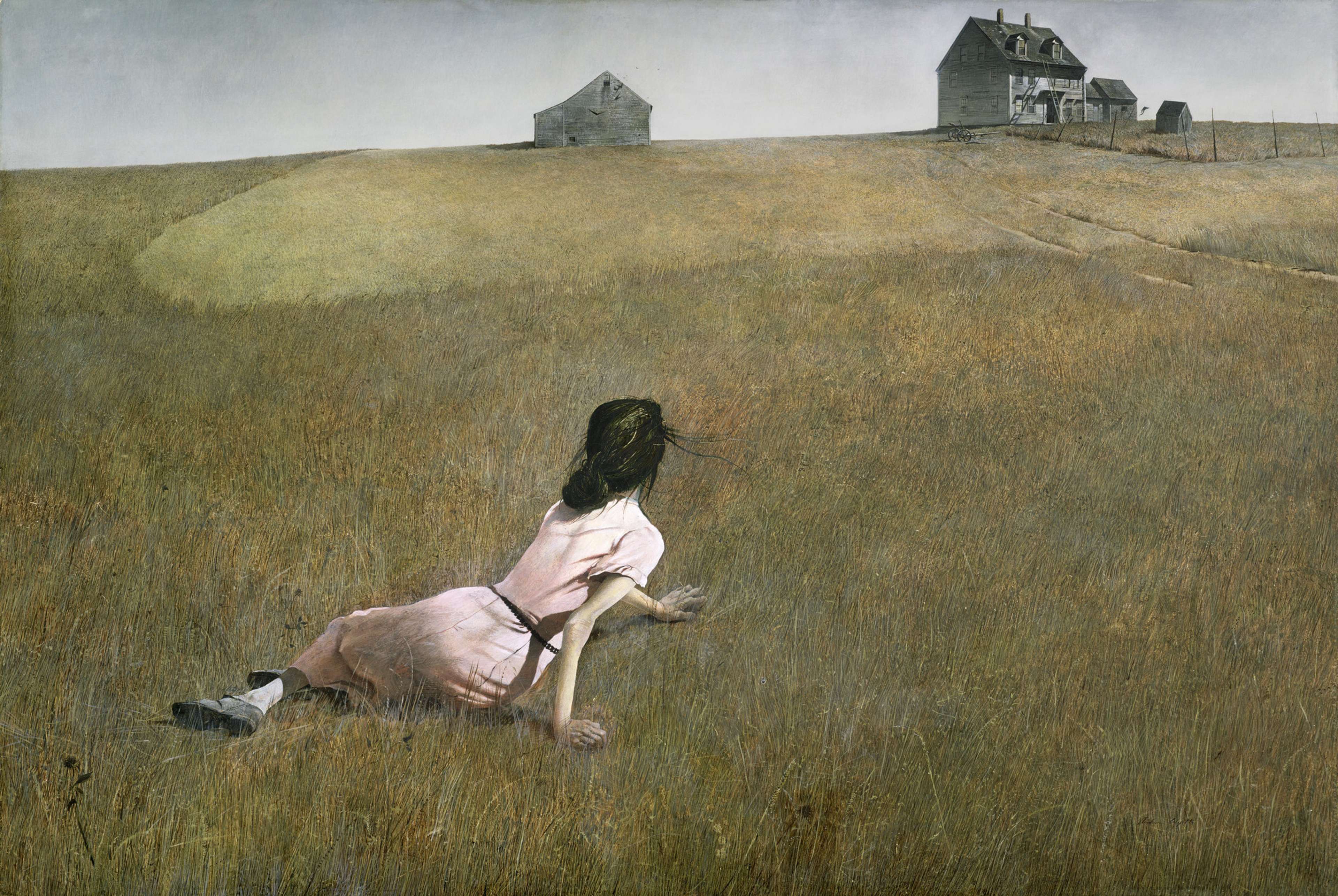
5. Christina’s World by Andrew Wyeth
Ranking fifth among U.S. respondents, Andrew Wyeth’s Christina’s World (1948) transforms a windswept Maine hillside into an emblem of American perseverance. At its centre is Anna Christina Olson, Wyeth’s neighbour who had a degenerative muscle disorder. In the image, her body is propped on fragile arms as she crawls through golden grasses toward a distant farmhouse. The painting’s low viewpoint invites us to share Christina’s struggle, and though her face remains turned away, Christina’s rigid posture and the barren sweep around her become a testament to human will confronting adversity.
Wyeth painted Christina’s World at a moment when postwar America was redefining itself. The solitary farmhouse evokes the young nation’s frontier mythology, its promise of independence and self-reliance rooted in the vast landscape. Yet Wyeth tempers that myth with an undercurrent of modern disquiet: Christina’s painstaking crawl across that field mirrors the futility of purpose in a post-war world that can feel indifferent. Her forward gaze speaks to universal yearnings for connection, memory and a place to belong.
Among American admirers, 68.8 % identified as female, and 50% of voters were Millennials. For many, Christina’s World echoes the daily negotiations of strength and vulnerability, one respondent sharing; “it makes you feel loneliness and determination”, while others find it “hauntingly beautiful, there is a deep sense of sadness in it that resonates with me”.
In popular culture, Christina’s World has come to signify solitude and hope. Its composition reportedly inspired Jenny’s abandoned homestead scene in Forrest Gump, and the Olson House - now a National Historic Landmark - can be visited through the Farnsworth Art Museum.
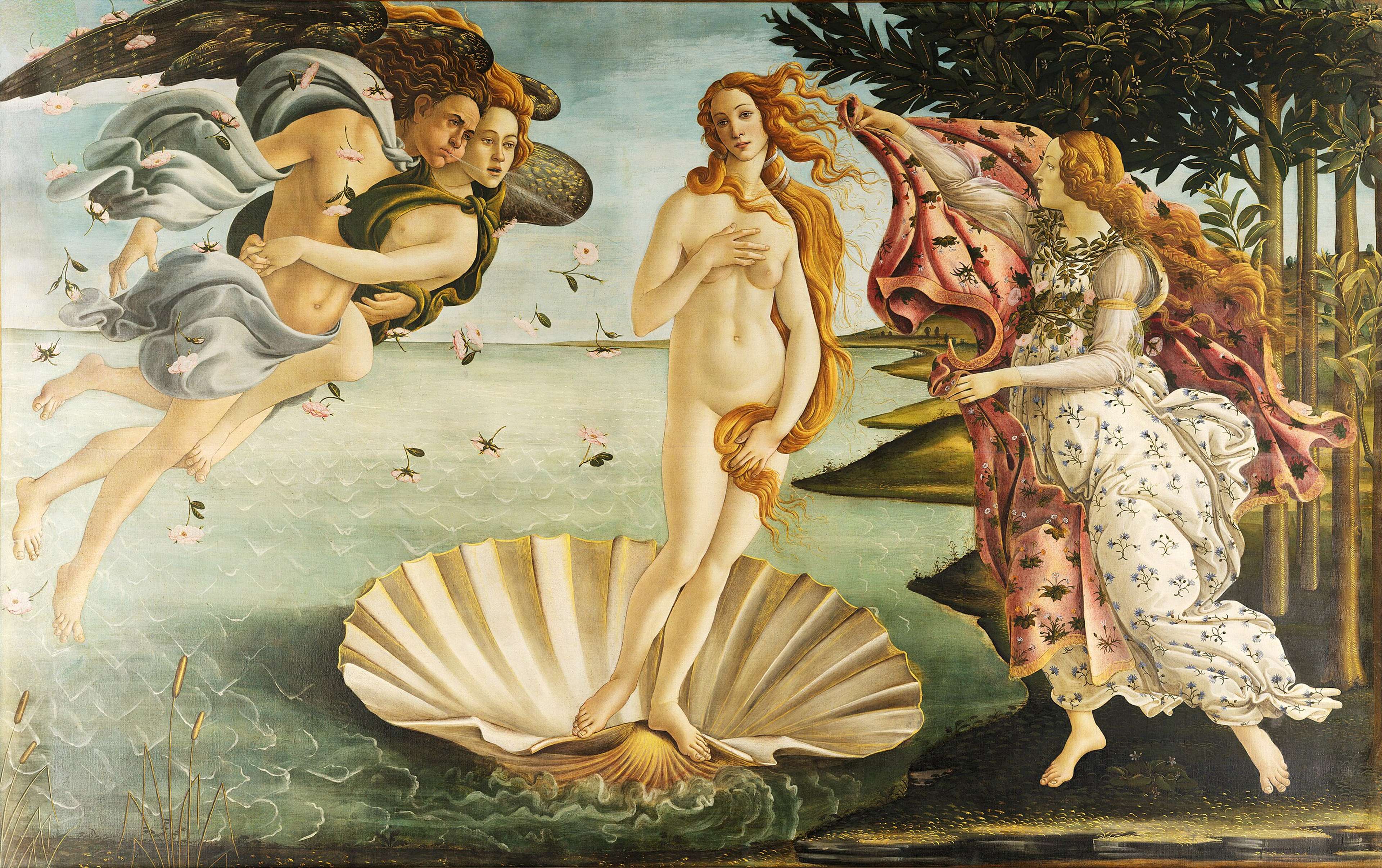
6. The Birth of Venus by Sandro Botticelli
Sandro Botticelli’s The Birth of Venus (c. 1486) takes sixth place in the artworks Americans most want to own. Here, Botticelli reimagines the classical myth of Venus’s birth: the goddess of love and beauty is nude save for her cascading hair, and stands upon a scallop shell that drifts ashore on a sea of turquoise. To her left, Zephyrus and Aura channel the ocean breeze, their breath scattering roses above her head, while to her right, one of the Horae (goddesses of the seasons) awaits, draping Venus in a cloak of spring blossoms. Venus embodies an erotic purity, her pose drawn from ancient statuary yet suffused with the artist’s trademark linear style.
In the U.S., 65 % of admirers are women, and Millennials and Gen X share the largest generational vote (35.3 % each). Perhaps for Americans, Venus’s emergence from chaos into ordered beauty parallels the nation’s own narrative of reinvention and uplift. One respondent explains how Botticelli “had a way of portraying women as ethereal beings with a lightness about them,” while another confesses, “I’m entranced by her divine grace, by the way every fold of fabric and petal feels both real and otherworldly.”
Botticelli’s Venus has escaped the walls of the Uffizi to become a recurring fixture in popular culture. In 1984, Andy Warhol’s Renaissance Paintings series recasts her as a pop‑icon, and she’s constantly referenced in music: from Nick Cave and Warren Ellis’s song “White Elephant” to Lady Gaga’s “Applause” music video, where Gaga’s seashell bra and platinum wig transform her into a living Venus. Bottecceli’s Venus also appears on the cover of Gaga’s 2013 Artpop album, reinvented under Jeff Koons’ playful gaze. Even The New Yorker has riffed on her image twice, reminding us that Botticelli’s ideal remains an icon across eras.
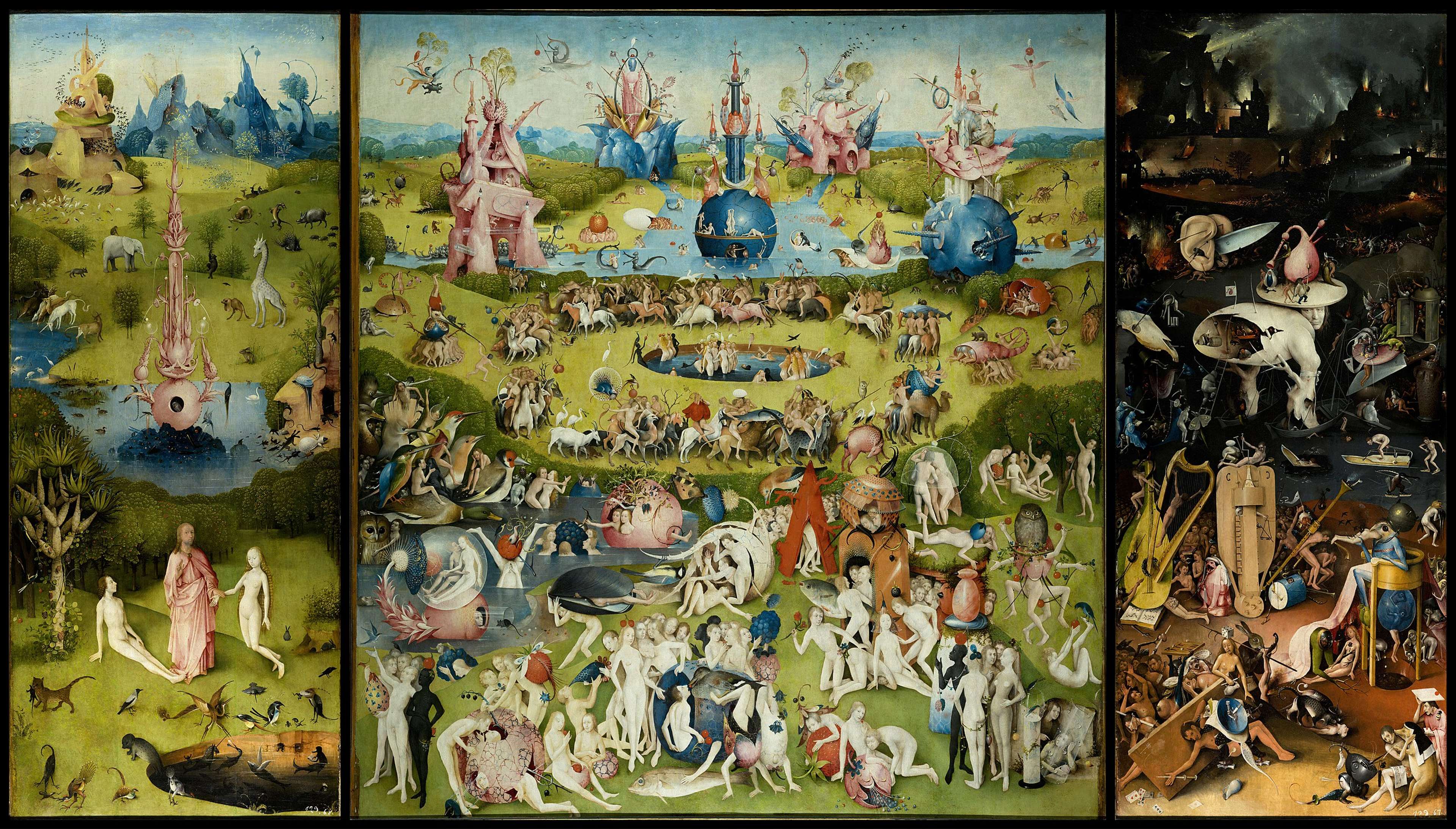
7. The Garden of Earthly Delights by Hieronymus Bosch
In seventh place is Hieronymus Bosch’s The Garden of Earthly Delights (c. 1490–1500), which erupts onto the canvas as a wildly imaginative panorama of the temptation of Eden. In the central panel, nude figures lounge amongst oversized fruits, fragmented architecture and surreal creatures - a “surrealist Where’s Waldo of depravity,” as one respondent delightfully put it.
At first glance, Bosch’s triptych may seem a bacchanal of lust and excess, but the more you look, the more it reveals human ambition and folly. Men and women drift through carnivorous fountains, ride hybrid beasts, and eat impossibly big strawberries, used to symbolise carnal pleasure. “It invokes every emotion for me,” one admirer explained, “You could look at it for weeks and still find something you missed.” Maybe U.S. art lovers see this work as a reflection of America’s own dance between moral aspiration and ambitious appetite.
In the U.S., nearly 69 % of those who selected Bosch’s Garden of Earthly Delights identified as women, and half were Millennials, with Gen Z making up a further 25 %. Admirers celebrate the painting’s “multi layers of subject matter” and its “wild, imaginative beings”. One fan marvels that “there’s always something weird and new to explore,” while another calls it “a spiritual journey every time you perceive it,” noting that “no matter how long I look at it, I always discover a new wild‑looking creature.” They praise Bosch as “a forward thinker of his time,” citing how this triptych “goes beyond beauty for beauty’s sake and demands attention.”
At its core, The Garden’s central panel offers a cautionary allegory: a false paradise where lust, gluttony and vanity rule, only to culminate in Hell’s nightmares. It is this blend of grotesquery and whimsy that appeals today. In confronting Bosch’s wildly imaginative scenes, viewers embark on a personal journey through desire and dread, finding in each tiny detail a tableau of human complexity that continues to captivate and confound.
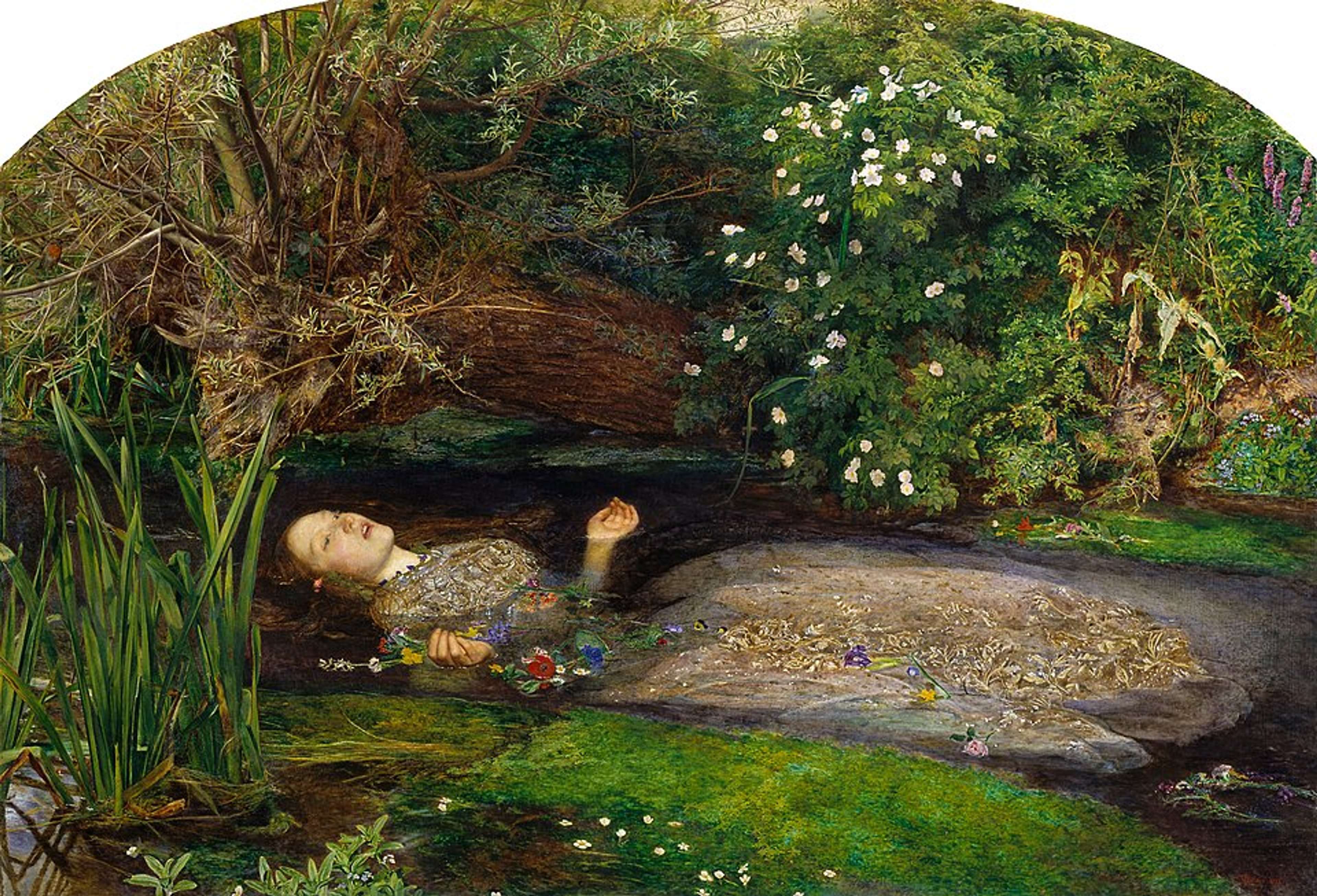
8. Ophelia by Sir John Everett Millais
Voted both the U.S. and UK’s eighth most desirable artwork (and the seventh most loved artwork globally), Sir John Everett Millais’ Ophelia (1851–52) remains one of the most iconic images of tragic beauty in Western art. Shakespeare’s doomed heroine floats in a slow‑moving stream, her pale face and outstretched arms framed by an exquisite array of wildflowers, each painted with Pre‑Raphaelite exactitude. Millais spent months on location in Surrey to create a tableau where nature’s vibrancy collides with Ophelia’s stillness.
Nearly 70 % of U.S. admirers were women, primarily Millennials (46.2 %), and their responses reveal a deep empathy with Ophelia’s duality of sorrow and serenity. One respondent notes, “It’s peaceful and romantic, but there’s sadness in it…Ophelia is just pure beauty.” Another praises the “ethereal quality,” recalling that it “speaks to my soul.” One art lover shares: “Even though it is Ophelia’s last moment, she seems serene and angelic… she looks at peace.” Perhaps Ophelia’s submerged figure mirrors how so many feel adrift beneath the surface of modern life.
9. The Kiss by Gustav Klimt
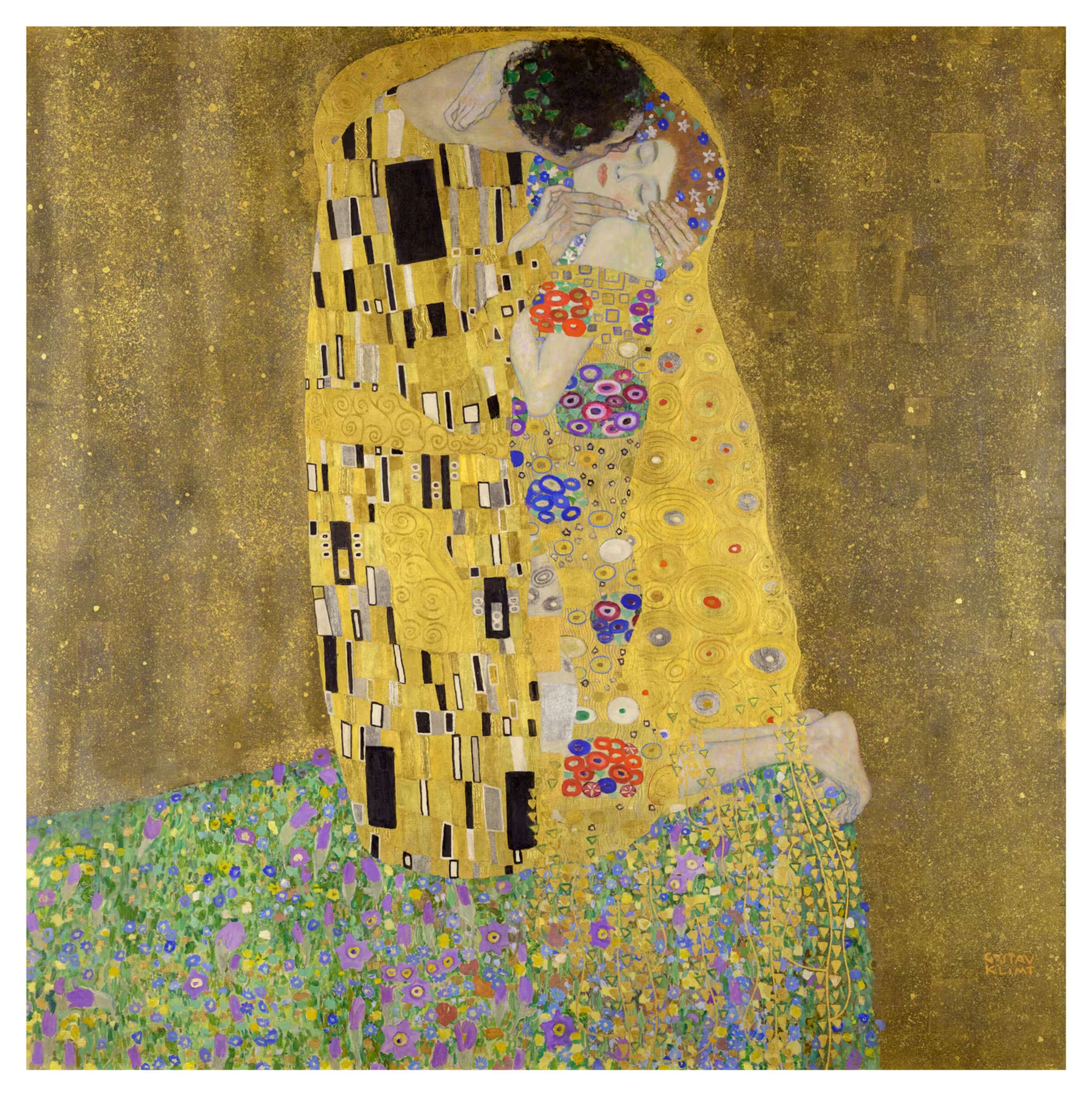
Gustav Klimt’s The Kiss (1907–08) places ninth in the U.S. rankings, compared to fifth place in the UK and third place worldwide. Painted during Klimt’s celebrated Golden Phase, the work fuses Byzantine mosaic techniques with Art Nouveau’s decorative lines. The entwined pair stand on a carpet of flowers, their bodies converging into a single patterned form. The male figure’s robe, covered with austere rectangles, contrasts with the female’s swirling gown of roses and circles, yet both dissolve at their meeting point, suggesting a union that transcends individual identity. Within this shrine of ornament and flesh, the couple’s pose evokes sacred devotion as the man bends to press a tender kiss upon the woman’s cheek, and she leans back in a gesture of surrender.
For American viewers, over 90 % of respondents who chose this work identified as female, and Generation X lead decisively with 63.6 %. One admirer describes: “The Kiss evokes such an intense feeling and story in my head about human connection and the evolution of love…it’s a reminder of the meaning of life.” Another confesses to being “lost in its ethereal and vibrant palette,” noting; “You can feel the love, the peace.” In a world that can police intimacy, Klimt’s The Kiss offers a sanctuary. As one respondent puts it; “It’s about a woman knowing she is being loved well”.
The legacy of The Kiss stretches beyond the walls of Vienna’s Belvedere. Klimt’s golden lovers have seeped into fashion, film, and design, becoming a cultural shorthand for tenderness and transcendence. Perhaps most hauntingly, in a scene from Martin Scorsese’s Shutter Island, the protagonist dreams of his burning apartment, where he and his wife stand locked in a desperate embrace. As he presses his face into hers from behind, she crumbles to ash in his arms - a dark inversion of Klimt’s embrace. The artwork’s presence in pop culture is a testament to how The Kiss endures as a symbol of intimacy at its most fragile.
10. The Swing by Jean‑Honoré Fragonard
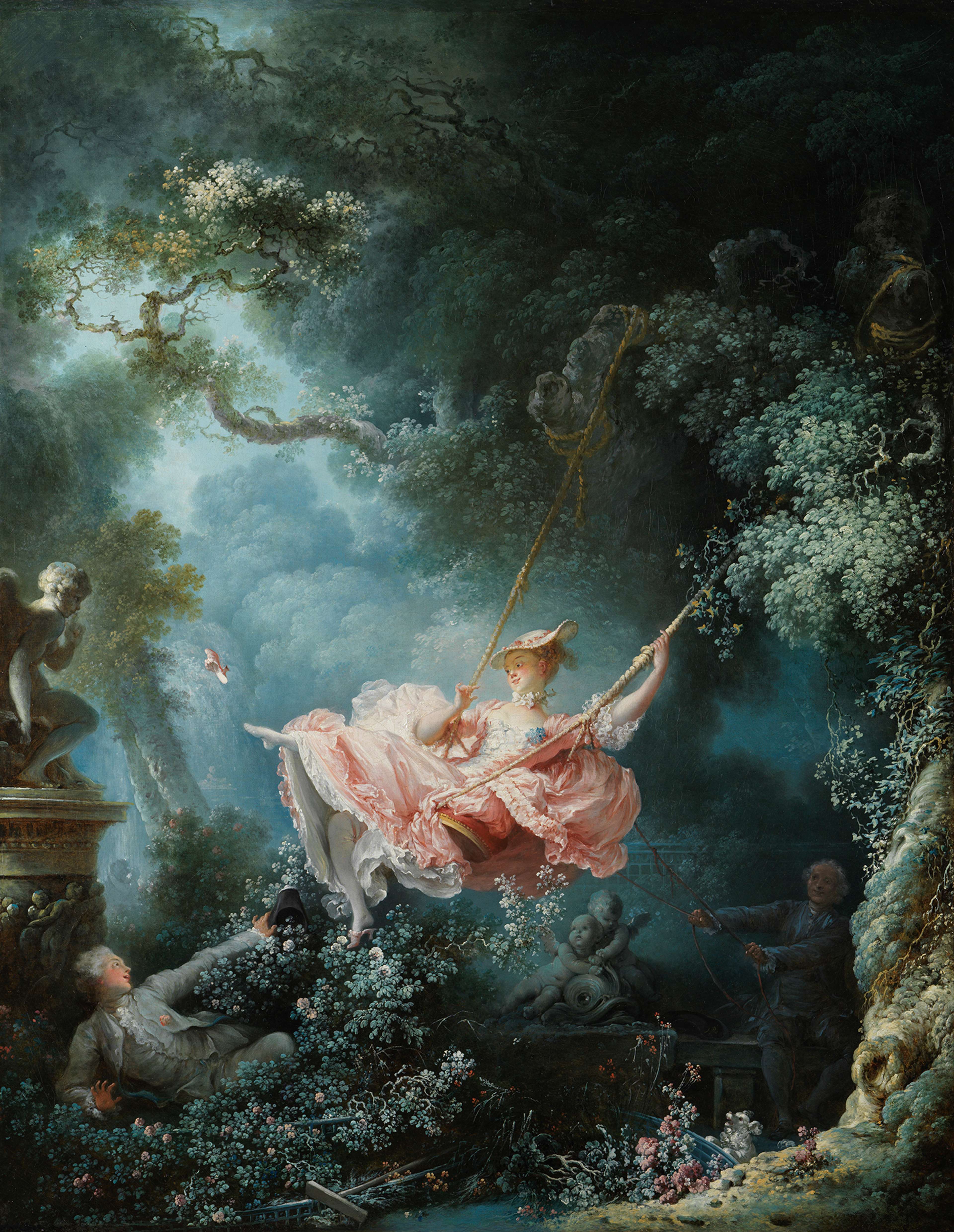
Jean‑Honoré Fragonard’s The Swing (1767) takes the final spot with its heady blend of mischief, sensuality and Rococo excess. A young woman, clad in a voluminous silk frock, soars mid‑air on a swing suspended from a leafy bough. Her slipper - sent flying by the force of her momentum - traces an arc toward a marble Cupid, whose finger to its lips winks to the painting’s clandestine flirtation. Below, a hidden suitor peers up her skirt, while the woman’s older husband pulls the ropes in innocent complicity.
In the U.S., 90 % of the The Swing’s admirers were female, evenly divided between Millennials and Gen Z. Respondents delight in its “playful” narrative and “cheeky” tension. One fan enthuses, “It’s so fanciful but so naughty at the same time. You first see the beautiful lady in pink, then spot the hidden man peeking, like we’re getting a glimpse into a fun, secret life.” Another observes: “It's visually stunning and tells a playful story. There’s a certain lightheartedness to it that I find very appealing."
Fragonard layers visual puns throughout the scene: the slipper mid‑flight signifies both liberation and erotic invitation; the Cupid statue, modeled on Falconet’s Seated Cupid, signals conspiratorial intimacy, and the overgrown roses echo the lady’s exposed calf, linking her fertility to nature’s abundance. Even the abandoned rake and barking dog hint at domestic disorder - an ode to desire’s unstoppable force. Americans find in The Swing an image of women owning their pleasure and playfulness; “The details are incredible, and the story it tells is so intriguing and scandalous. It makes me feel like I'm part of a secret” one admirer writes, while another shares, “It just makes me happy looking at it.”
The Swing’s influence extends into fashion and film. In Disney’s Frozen, Anna pauses in front of a gallery portrait to mimic The Swing’s iconic pose. On the runway, Vivienne Westwood has echoed its billowing pink silhouette, while Spanish fashion designer Manolo Blahnik has designed slippers and heels inspired by Fragonard’s work.
The Swing remains an exuberant reminder of art’s power to delight and provoke. As one respondent put it, “It’s the perfect example of how, before cameras, people used paintings to tell stories or gossip. I think that’s how they used to “spill the tea”, and I love it.”
America’s Top 10 reveals a nation drawn to emotion as much as image. What emerges is not a single aesthetic but a patchwork of longing for beauty, meaning, resilience, and escape. Where global and British voters leaned more toward romance and restraint, American voters favoured drama, contrast, and self-expression - art that mirrors the country’s own diverse identity.