Sarah Briggs Has Spent Her Career Watching People Look at Art

Market Reports
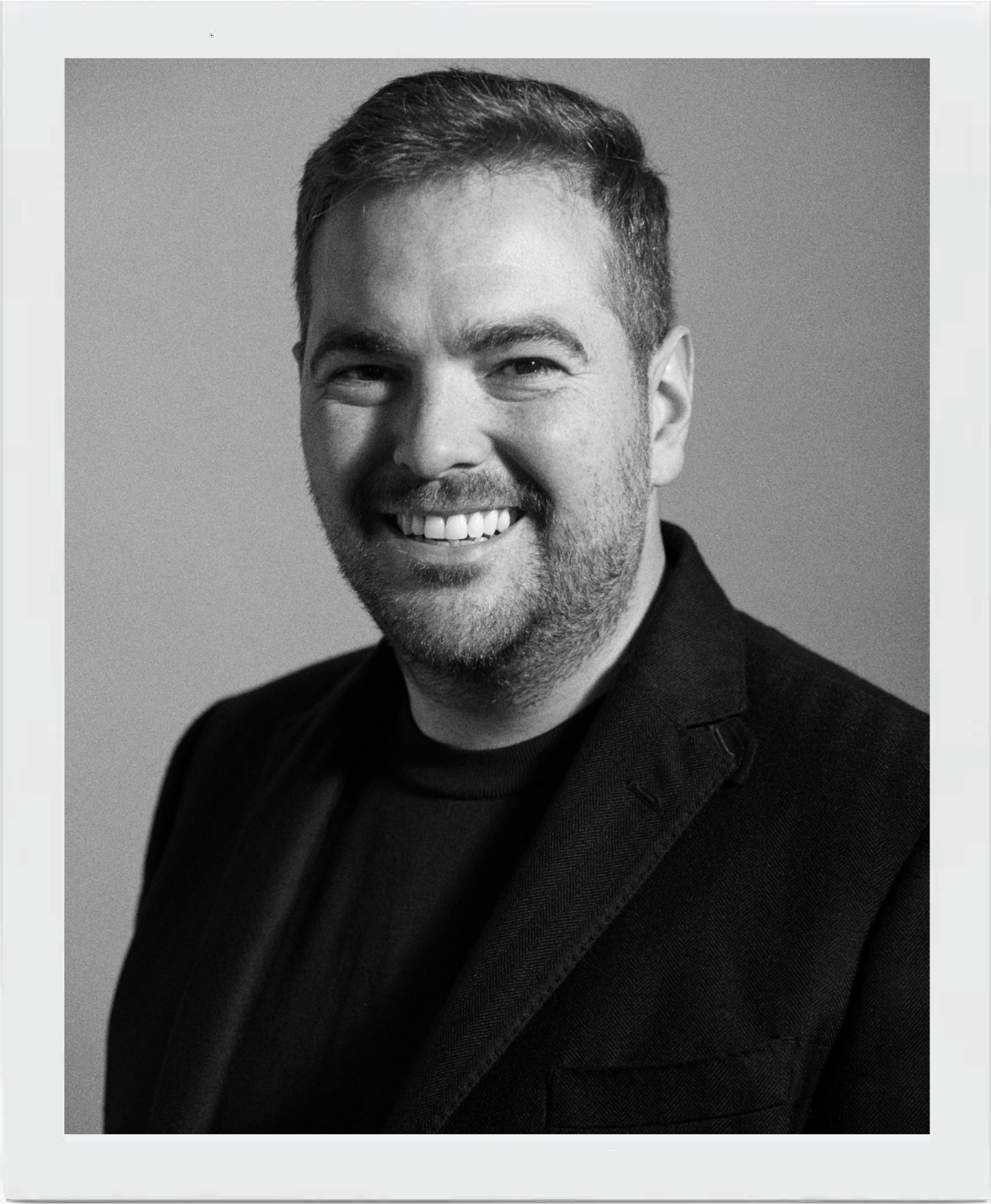
Sarah Briggs is sitting in the V&A café opposite me, back in the building where, without knowing it then, her career started. “This is where it began.” Not at a private view as one of the gallerinas, not in a lecture theatre at Christie’s Education at great expense to her parents, but behind a till in the early 1990s, asking visitors for a voluntary £3 donation, back when the V&A was closed on Fridays due to lack of funding, and the idea of museums as confident, contemporary brands still felt distant.
“I was sat looking at the backside of some classical sculpture,” she laughs. “Thinking: I’m never going to get a job I enjoy in the art world. I haven’t got a hope.”
It is hard not to feel, sitting opposite her now, that this is the kind of origin story the art world rarely tells properly. Not the polished version, not the inevitable version, but the real one, where careers begin in boredom and insecurity, where entry points are unglamorous, where the work is service work, and where the person you become is shaped as much by the public you deal with every day as by the art you eventually stand beside.
Over three decades later, Briggs is International Head of Strategic Marketing at Phillips Auction House, one of the most strategically important roles in the secondary market, and one that sits right at the intersection of culture, commerce, and attention. Her CV runs through the backbone of British cultural life, the V&A, the Hayward Gallery, Tate Britain during the launch era of Tate Modern, then into the commercial centre of gravity at Christie’s, Hauser & Wirth, and now Phillips. It is a sequence of institutions and companies that, on paper, reads like a greatest hits of the art world, and yet she speaks about it all with such disarming honesty that the grandeur never quite sticks.
She remains almost unnervingly unguarded, funny, candid, and without any of the career mythology the art world so often encourages. There is no curated narrative of inevitability here, no polished sense that this was always the plan, no retrospective confidence projected backwards onto the young woman behind the till.
“I didn’t have a plan,” she says, simply. “I was just curious.”
That curiosity, it turns out, is the thread that runs through everything, more than ambition, more than status, more than the usual story of progression. Briggs grew up in Devon, and museums weren’t part of family life. “I never went to galleries as a kid. That wasn’t something my family did.” Her early obsessions were music, magazines, the bright cultural pull of big cities, the sense that something else was happening somewhere else, that culture lived in the pages of i-D and The Face, in the androgynous style of the mid-eighties, in the idea of the city as possibility.
She left school with average grades and describes herself, still, as “not academic,” as someone who never imagined she would end up inside the institutions she now helps shape. There is something important in the way she repeats that, not as false modesty, but as a genuine reminder of how narrow the art world’s expected pathways still are, and how many people never even attempt them because they cannot see themselves reflected in the entry points.
A coach trip to the Royal Academy in 1985 to see German Art 1905–1985 stopped her cold. “I remember walking in and being speechless. Not just because of the paintings, but because of the people. I thought: look at these people looking at this. What is going on here?” That instinct never left her. Even now, she admits she enjoys watching audiences almost as much as the art itself, because the room matters, the atmosphere matters, the collective act of looking is part of the work. “Going to an exhibition where no one’s in the room isn’t as fun,” she says, smiling, as if she is still slightly surprised by her own fascination with behaviour.
There is a kind of quiet intellectual seriousness to that, because what she is really describing is not just spectatorship, but the social life of art, the way meaning is created through attention, through presence, through the psychology of crowds, through desire, through context. It is not a romantic view of art as transcendence, but a practical view of art as something lived, something consumed, something responded to, something that people move towards for reasons they do not always fully understand.
Briggs didn’t become a curator. She saw quickly that she wasn’t built for it, not for the academic solitude of research, not for the slow climb through traditional hierarchies. What she was built for was something adjacent, and arguably more powerful, marketing, not as promotion, but as behavioural understanding, as the discipline of attention and trust, as the work of connecting institutions to the people they claim to serve.
“If you’re not interested in why people do what they do,” she says, “it’s not the right field.” The public sector, she argues, taught marketing as a craft, audience research, segmentation, long-term brand building, the serious work of making institutions feel relevant rather than simply worthy. At Tate Britain, working under Stephen Deuchar, the question was never simply how to sell tickets, it was how to make people come back, how to understand what the audience actually needs, how to build meaning over time, how to ensure that an institution does not become a mausoleum.
There was time to think, time to craft, time to build, a luxury that barely exists in the commercial world. She speaks about the museum sector then, in the nineties and early 2000s, as a place where marketing was treated as a specialism, where collaboration between institutions was normal, where colleagues shared budgets and ideas and challenges because everyone was in the same boat, trying to bring people in, trying to justify funding, trying to open culture up.
That contrast becomes sharp when Briggs enters the auction world at Christie’s. It wasn’t with certainty, it was with curiosity. “I knew nothing. I’d never even been into an auction house.” She was struck immediately by how differently marketing was perceived. “In museums, marketing was treated as a specialism. In auctions, it was seen more as a support service, like finance or HR. That isn’t the case at Phillips now, but it certainly was back then.”
And then there was the politics, the catalogues, the promises, the hierarchy of consignors, the subtle negotiations behind what the public sees as effortless. “In exhibitions, the tension is about the one image that tells the story. In auctions, sometimes it’s about which vendor has been promised the cover.” She pauses. “It was all new to me. I had to learn fast.”
What she describes, without ever labouring it, is the difference between marketing as public engagement and marketing as commercial leverage, between storytelling for audiences and storytelling for clients, between institutional mission and market reality. It is not that one is purer than the other, it is that the incentives are different, and therefore the work becomes different, and therefore the emotional texture of the job changes.
Briggs is blunt when the conversation turns to motherhood. “That whole ‘you can have it all’ thing is absolute bollocks.” She describes returning to work with “permanent guilt,” and a kind of sharpened focus born from time scarcity. “It makes you direct. It makes you practical. You stop romanticising things.” Like many women of her generation, she carried both career and home life without the structures catching up around her. “It’s all invisible trade-offs.”
There is something deeply recognisable in that, particularly in an industry that is full of women, but where seniority has historically narrowed into male leadership at the top, and where the emotional labour of balancing ambition and caregiving has often been carried privately, unacknowledged, and framed as an individual problem rather than a structural one.
Now, at Phillips, Briggs speaks with a kind of calm clarity about what success actually is. “It’s not job titles. It’s not money. That’s nonsense.” Success, for her, is being surrounded by brilliant people, staying curious, working with integrity, and still feeling, after everything, that the work is human. “I feel lucky, mainly because of the people I’ve encountered.”
Even now, she shrugs off the idea of influence. “I don’t think I’m influential,” she says, instinctively. It’s the kind of humility that makes the statement untrue, because influence is often precisely that, the people who shape culture without needing to announce themselves, the people who build systems of attention and trust behind the scenes, the people who make institutions legible to audiences, and audiences legible to institutions.
At the end of our coffee, the story loops back to that first exhibition crowd, the moment she realised art is not just objects, but behaviour, attention, desire, and collective presence. “That’s why it was always marketing,” she says. “It was always people.”
Marketing has changed; it is now data, science, automation, AI, but the core remains the same. The human question has not moved. Why do we show up, what do we respond to, what makes culture feel alive. Sarah Briggs has spent her career answering that quietly, rigorously, without ego, and with the rare ability to see the art world not as a performance, but as a public, human space.
We should all be asking ourselves, far more often, the most human question of all: why do we show up?