Alfonso
Ossorio
Alfonso Ossorio, a pivotal figure in Post-War American art, played a key role in bridging Abstract Expressionism and Art Brut. If you're looking for Alfonso Ossorio original prints and editions for sale or would like to sell, request a complimentary valuation and browse our network's most in-demand works.
Alfonso Ossorio art for sale
Discover Alfonso Ossorio prints for sale, exclusively available through our private network of collectors. Explore signed and unsigned screenprints, lithographs, digital prints, and rare editioned proof prints by era-defining blue chip artists.
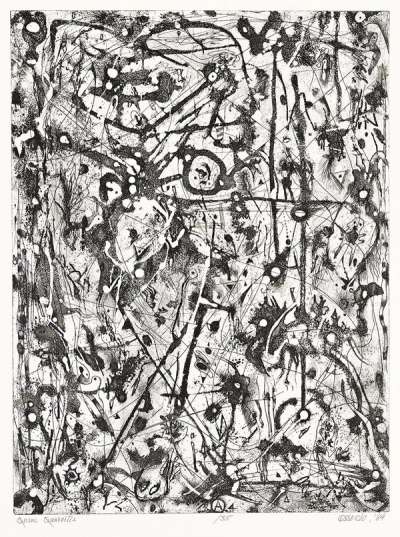
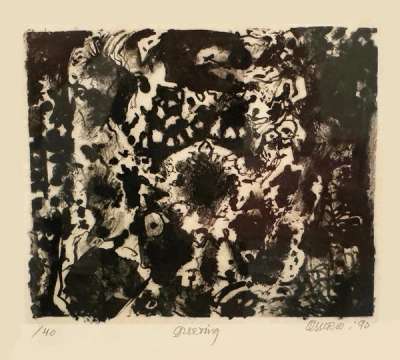
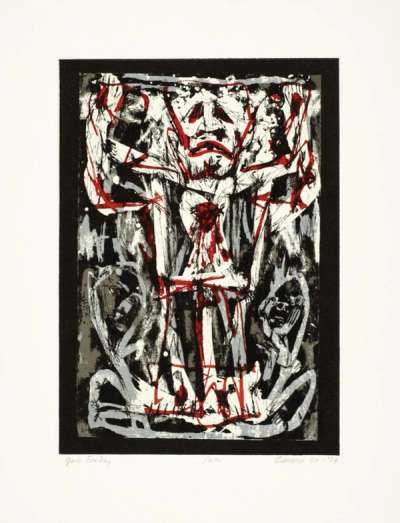
Sell Your Art
with Us
with Us
Join Our Network of Collectors. Buy, Sell and Track Demand
Biography
Between the ages of eight and thirteen, Ossorio attended school in England before moving to the United States at fourteen. He completed his education at Portsmouth Priory, graduating in 1934. Ossorio then pursued fine art studies at Harvard University from 1934 to 1938, continuing his education afterward at the Rhode Island School of Design. After serving as a medical illustrator during World War II, Ossorio settled in New York, where he became acquainted with prominent artists such as Jackson Pollock and Jean Dubuffet.
Ossorio's work defies easy categorisation, blending elements of Abstract Expressionism with personal iconography. His art often explored themes of spirituality, sexuality, and the human psyche, reflecting his complex cultural heritage and his struggles with his identity as a gay man in mid-20th century America.
The artist's oeuvre is characterised by its diversity, ranging from Surrealist paintings to intricate assemblages he called 'congregations'. These works, composed of found objects, shells, bones, and other materials, became a signature of Ossorio's later career, embodying his interest in the intersection of art and materiality.
In the 1950s, Ossorio's career gained momentum when he purchased The Creeks, a 60-acre estate in East Hampton, New York. This property became his home, studio and a showcase for his extensive art collection, including works by Pollock and Dubuffet. The Creeks played a crucial role in cementing Ossorio's position in the New York art scene, serving as a gathering space for artists, critics, and collectors.
To navigate the complex and layered emotions in his work, Ossorio developed a wax-resistant technique in the 1950s. The technique allowed him to blend abstraction and representation, creating intricate layers in his compositions. He started by applying a light colour wash to the paper, then used wax to draw forms before adding watercolour, which permeated the paper except where the wax was applied. This method resulted in artworks with a complex, lattice-like structure, palimpsests that retain traces of Ossorio’s past. Notably, Beach Comber is a large-scale example of this technique, featuring vibrant, biomorphic forms. Despite its chaotic energy, the painting is crisp and flat, subtly nodding to Gorky’s melding of synthetic Cubism and Surrealism.
In the 1960s, Ossorio began creating his ‘congregations’, assemblage artworks that incorporated found objects and materials. The term ‘congregation’ reflects Ossorio's Filipino-Catholic heritage and underscores the process of bringing together disparate elements into a unified whole. These works featured objects like glass eyes, shells, and animal bones within deep wooden frames. These works demand active engagement from viewers, resisting immediate understanding and requiring attention to unravel their layered meanings. In return, they pulse with energy, oscillating between the material and the transcendental, offering an evolving viewing experience.
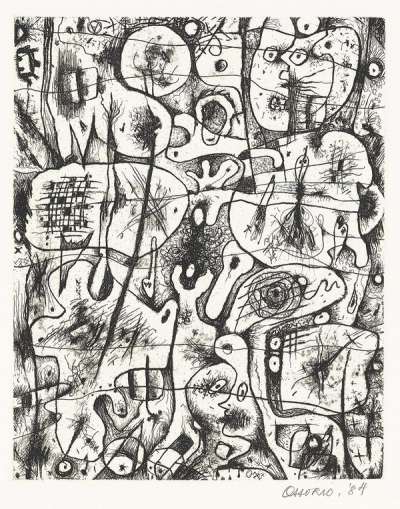
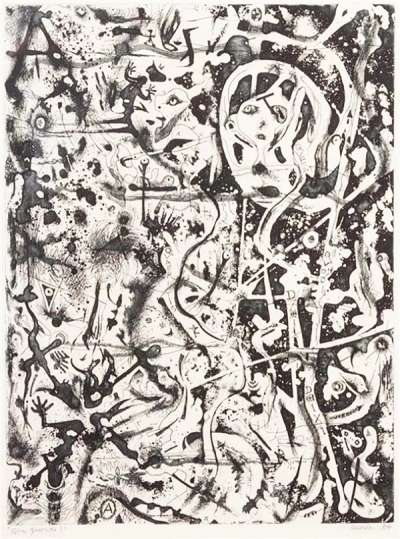
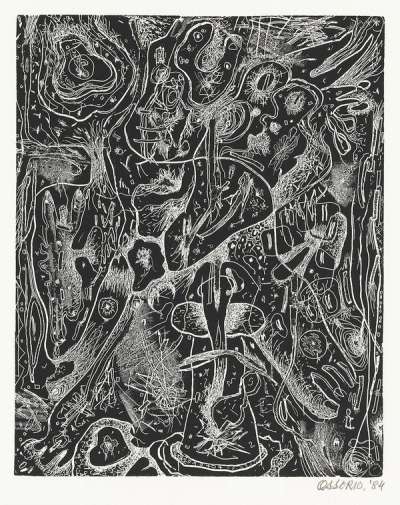
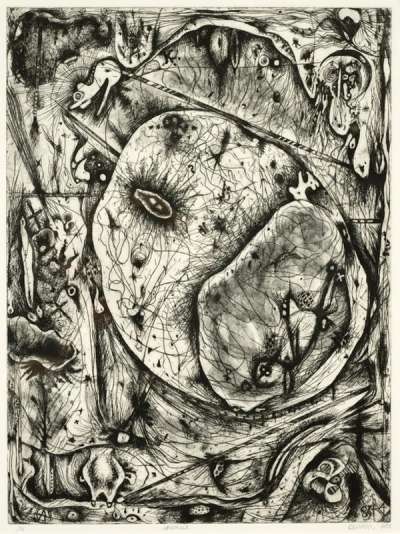
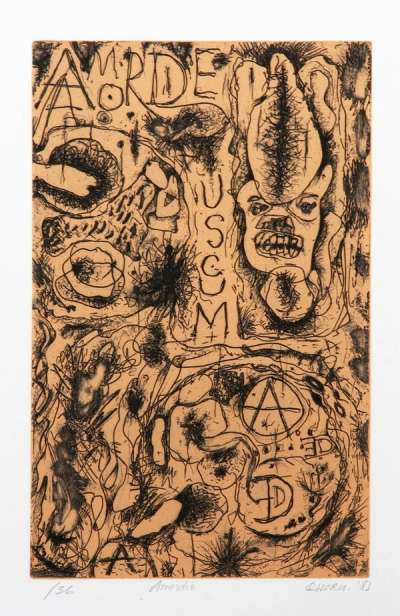
Ossorio's printmaking, particularly in his Quem Quaeritis series, reflects his return to his Catholic-Filipino roots and his ability to convey complex spiritual narratives through intricate visual compositions. In his 1984 etching from this series, Ossorio explores the mediaeval Easter liturgy, blurring the lines between the divine and the mortal. The etching presents a dense and detailed composition, where swirling lines and abstract forms emerge from the darkness, evoking the mystery of the sacred moment depicted. The interplay of light and shadow in this print evokes a sense of movement and spiritual intensity. The layering of imagery in the etching requires active engagement from the viewer, who is invited to explore the work's rich symbolism and complex emotional landscape, mirroring the artist's broader practice of combining material and transcendental elements in his art.