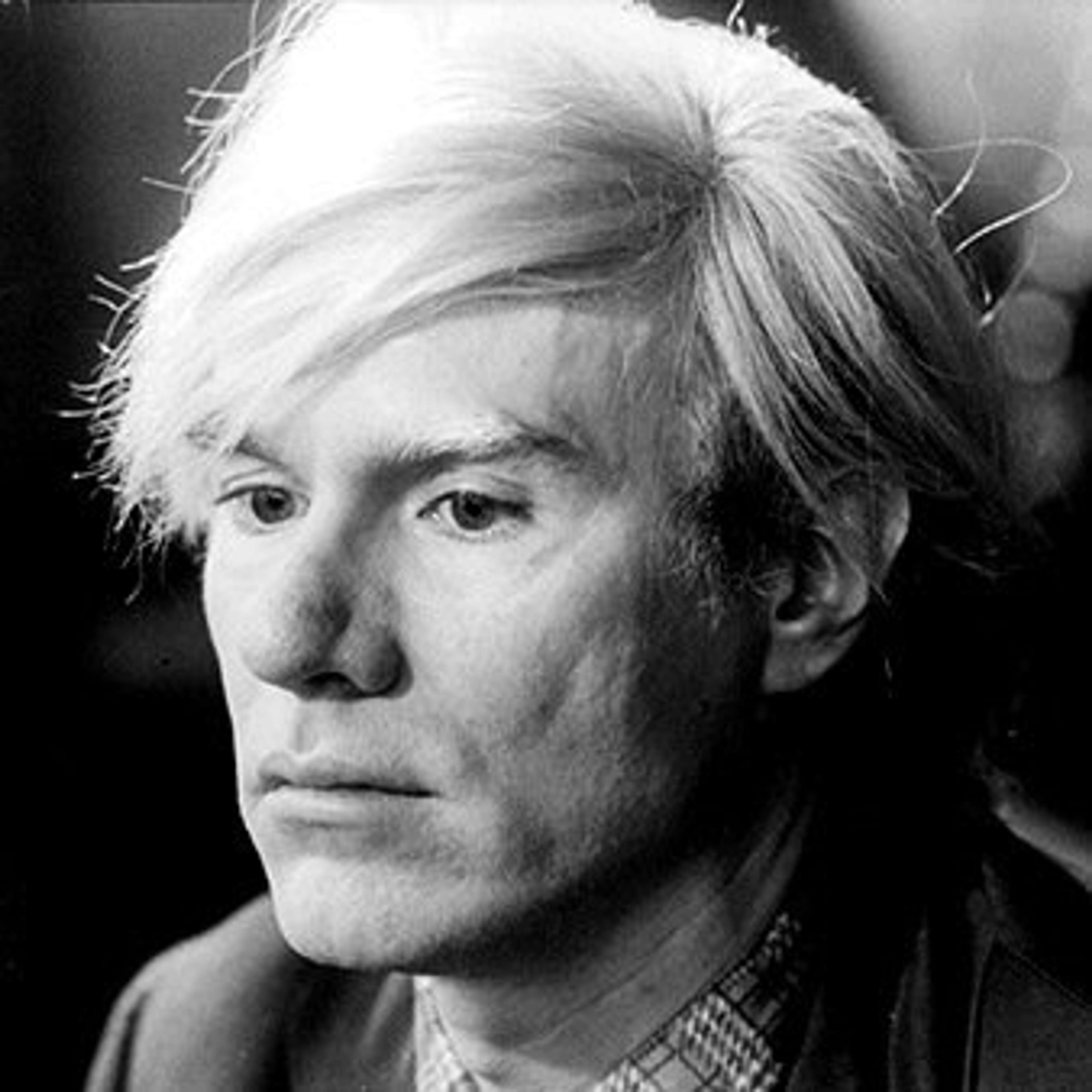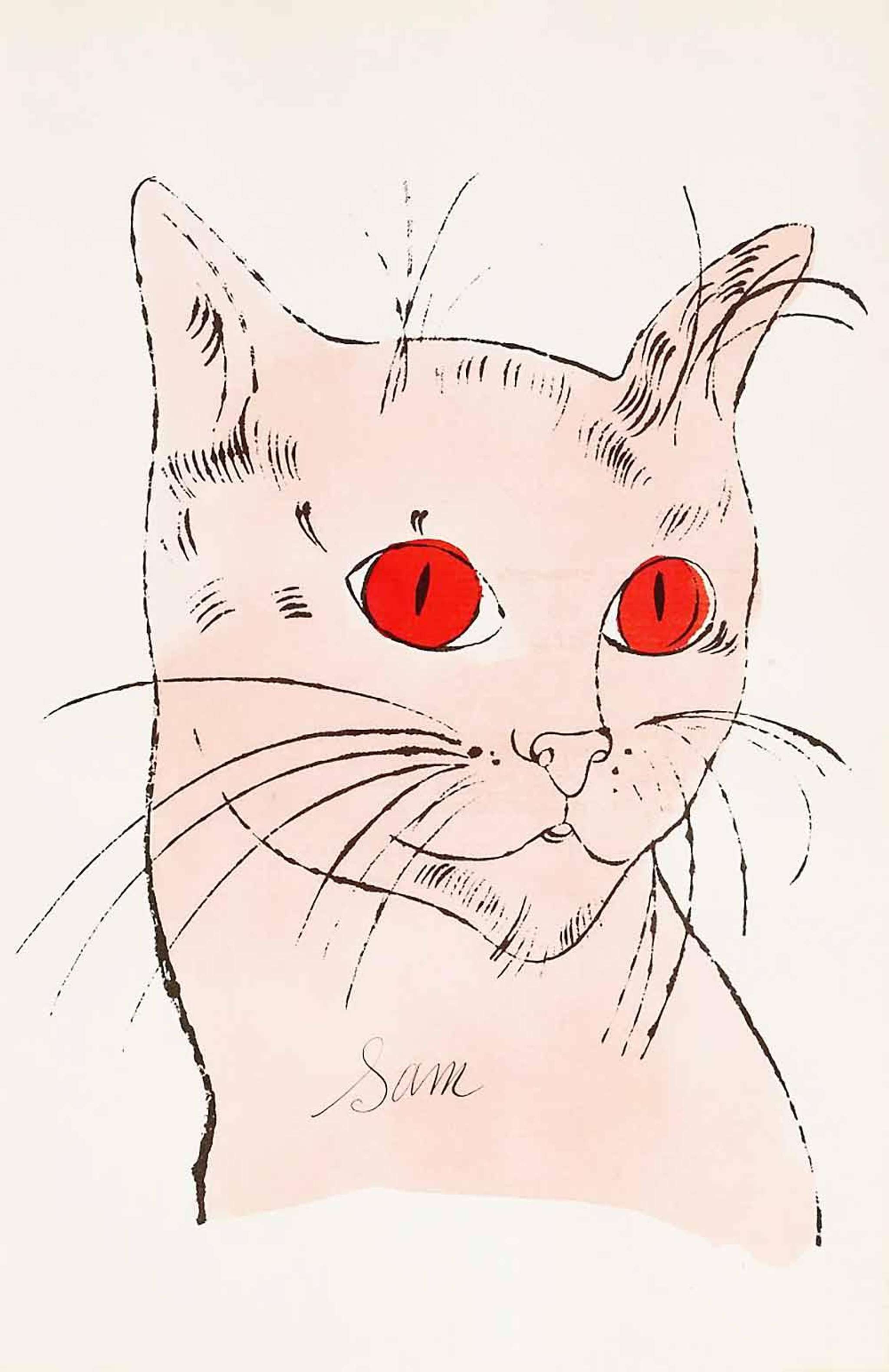


Before Andy Warhol achieved his glamorous position as the founding father of Pop Art, he lived with his mother, Julia, in a New York apartment surrounded by 25 cats. Cats Named Sam is a tender snapshot of this formative moment in Warhol's career, and a collaboration with his mother.
Warhol and his mother owned 25 cats, all named Sam except for one.
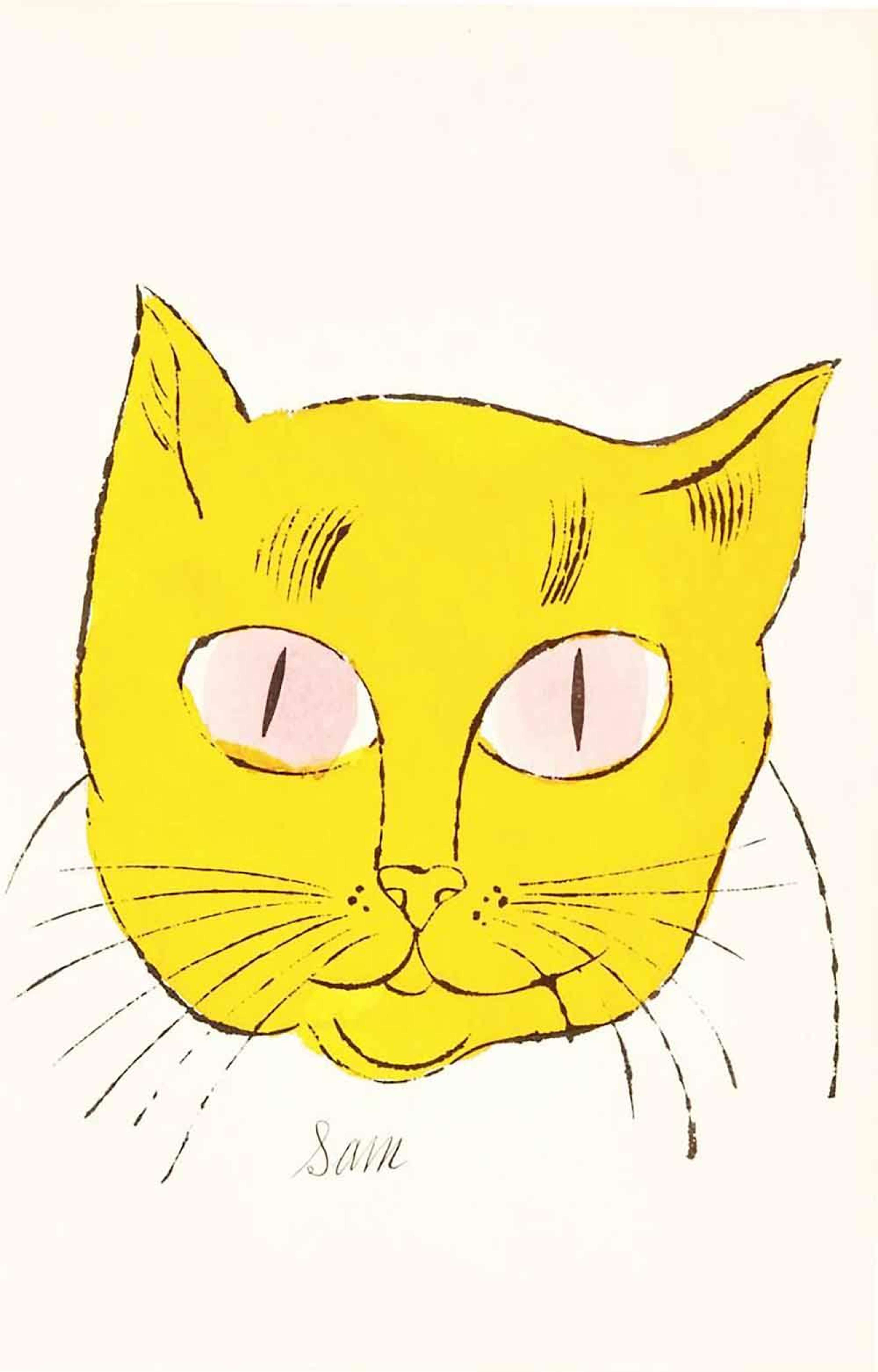
Before Warhol had reached superstar status in the art world, he lived with his mother, Julia, in New York throughout the 1950s. In their apartment on East 57th Street in Manhattan, Warhol and his mother owned a lonely cat named Hester. To combat her loneliness, Warhol began to grow his cat colony, eventually owning 25 cats all named 'Sam'.
The series was made to accompany a children's book Warhol published.
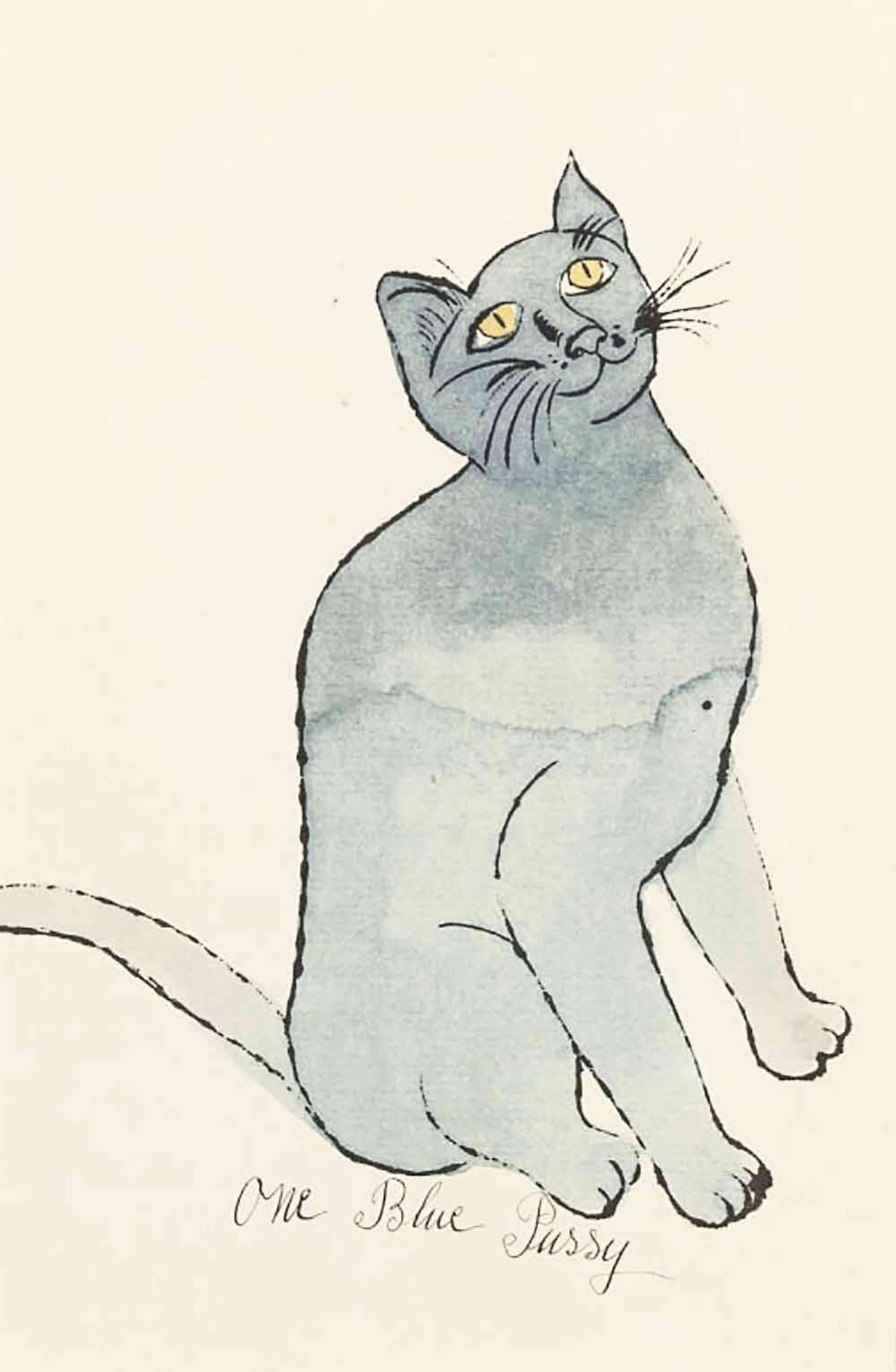
In 1954, Warhol published these prints in a children's book named 25 Cats Name (sic) Sam and One Blue Pussy. Despite the title of the book, Warhol only actually made 16 lithographs of his cats, but clearly studied each of them with an intimate scrutiny.
The series recalls the commercial prints made in Warhol's early career.
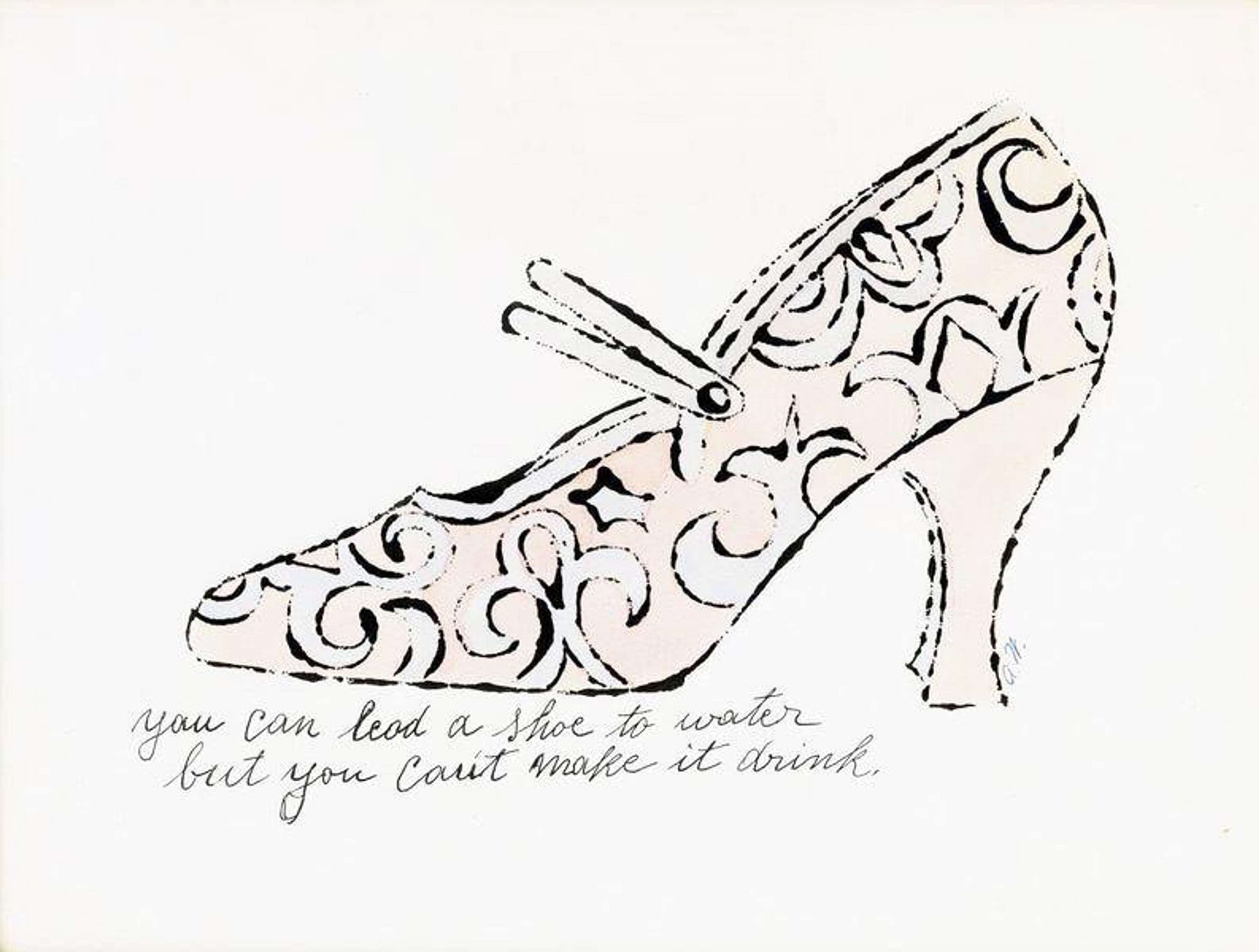
Much like his earlier print series, like La Recherche Du Shoe Perdu, Cats Named Sam reveals Warhol's printing style when he was working as a commercial illustrator. Characterised by graphic lines and bold colours, the prints in this series are an early instance of Warhol's application of a commercial aesthetic on a personalised subject.
Cats Named Sam is one of Warhol's earliest print series.
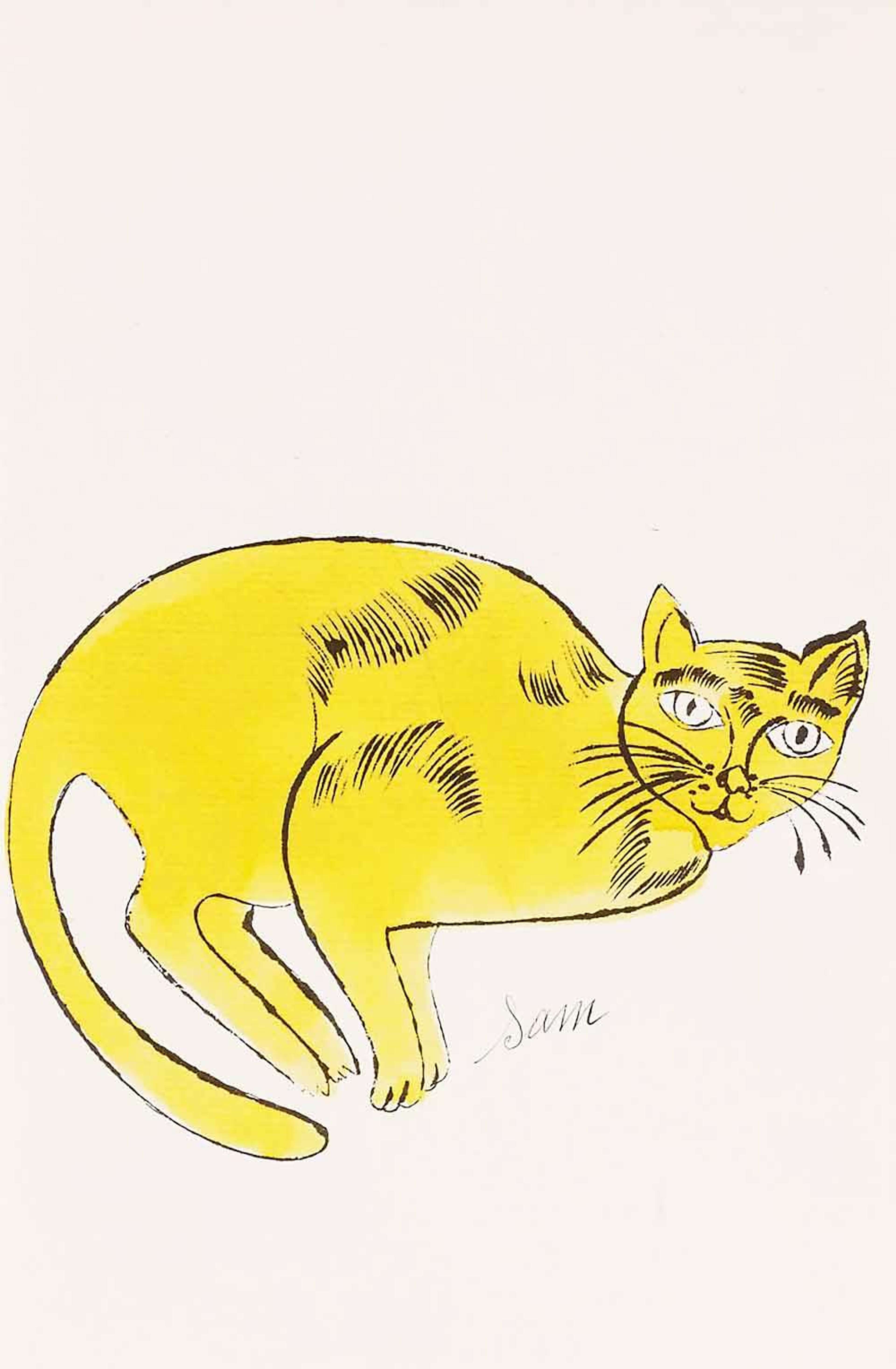
Created in 1954, Cats Named Sam is one of Warhol's earliest print sets. Throughout his career as the founding father of Pop Art, Warhol was famed for creating print sets which explored a popular theme, and this series showcases Warhol's developing interest in creating collections of prints rather than unique originals.
The series is telling of Warhol's early printing process.
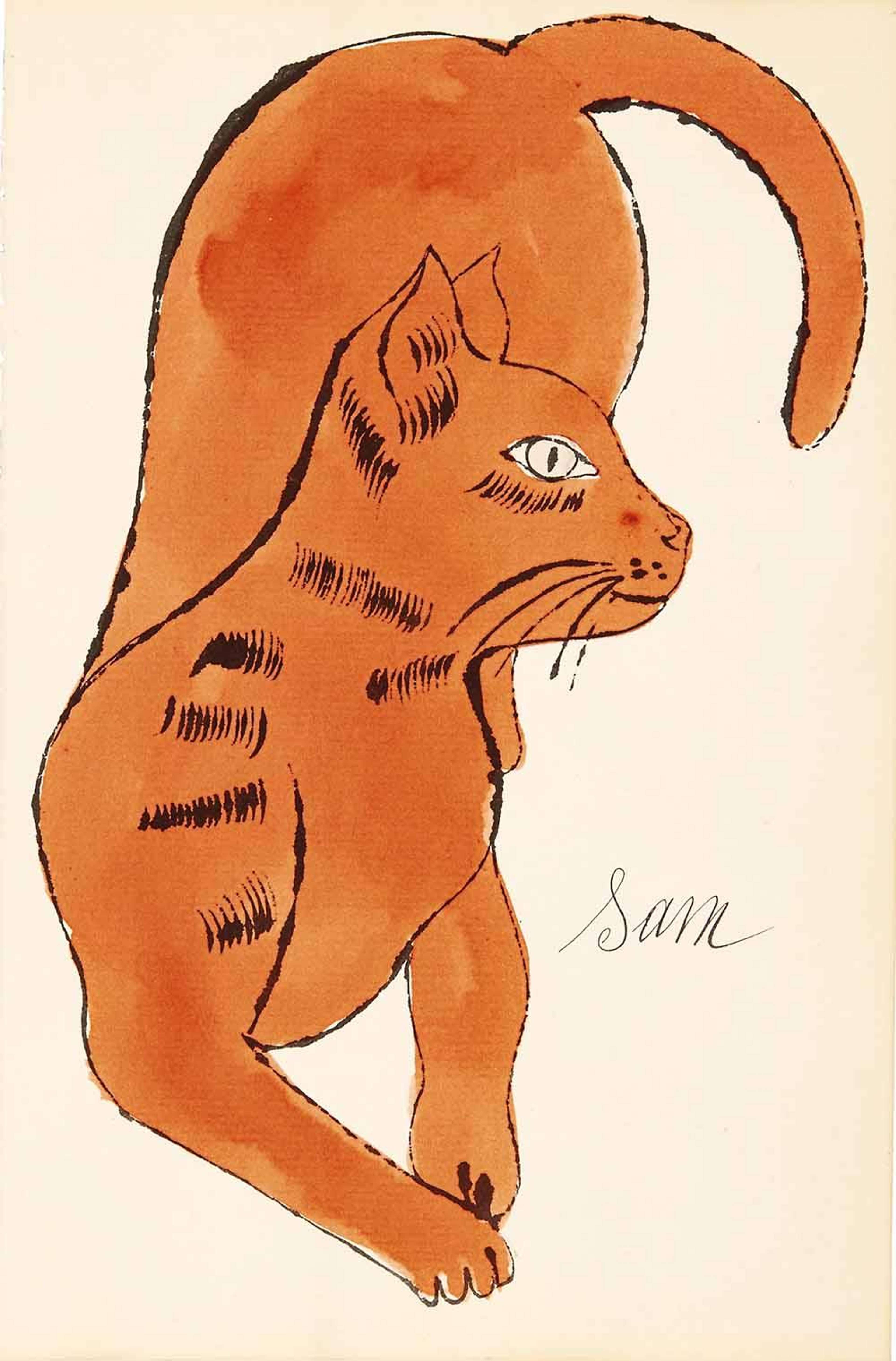
Cats Named Sam is a prime example of Warhol's early printing process. These lithographs showcase Warhol's blotted line technique, which he developed while working as a commercial illustrator in the 1950s. All the prints in this series feature a cat, outlined thickly in black and coloured vibrantly, at the centre of a plain background.
The prints are inscribed with his mother's calligraphy.
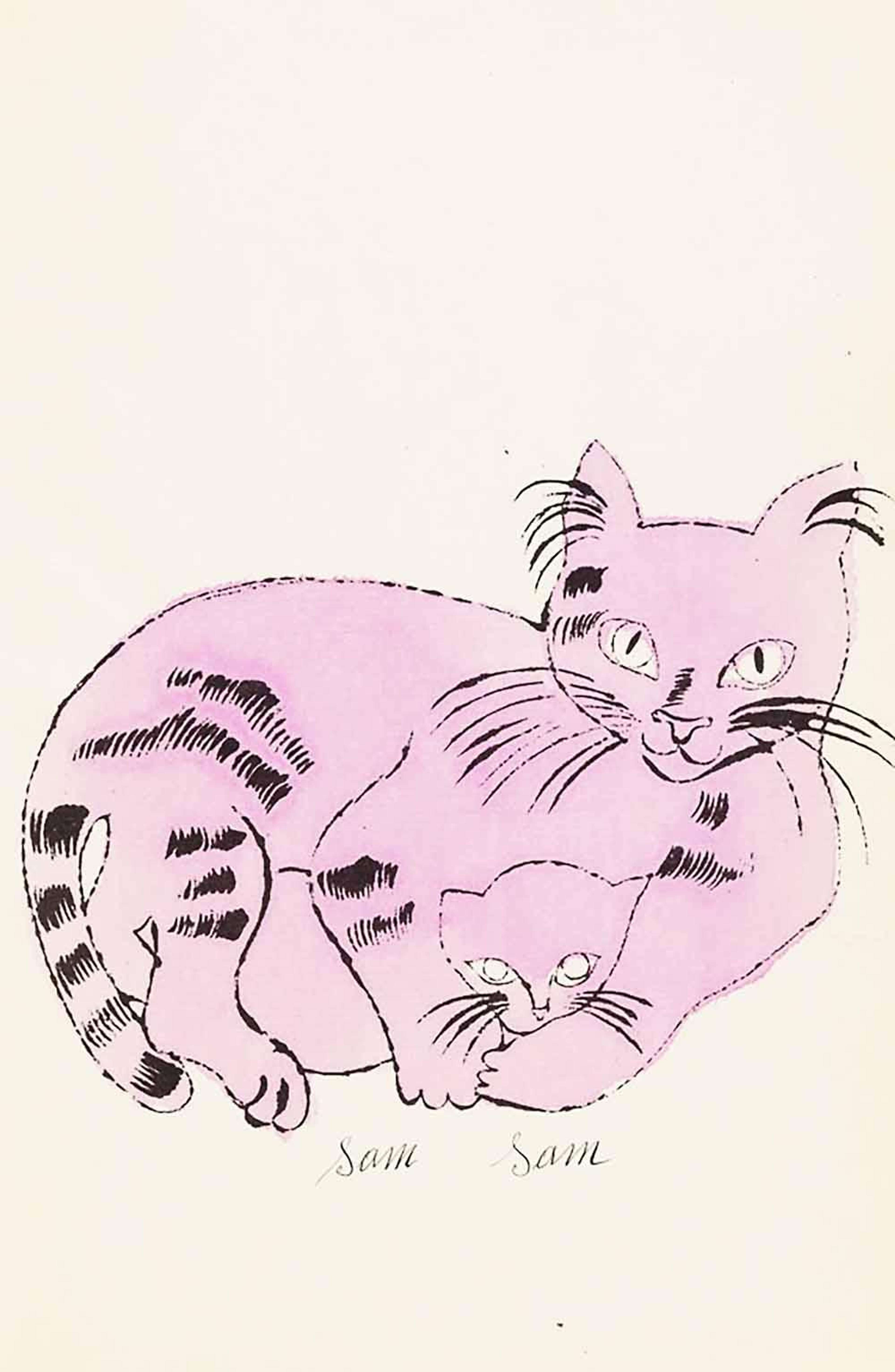
Throughout his early career, when he was living in Manhattan with his mother, Julia frequently transcribed many of the captions on her son's prints. Julia's calligraphy is also seen in La Recherche Shoe Du Perdu, and is telling of the close relationship between mother and son.
Cats Named Sam is one of Warhol's most endearing series.
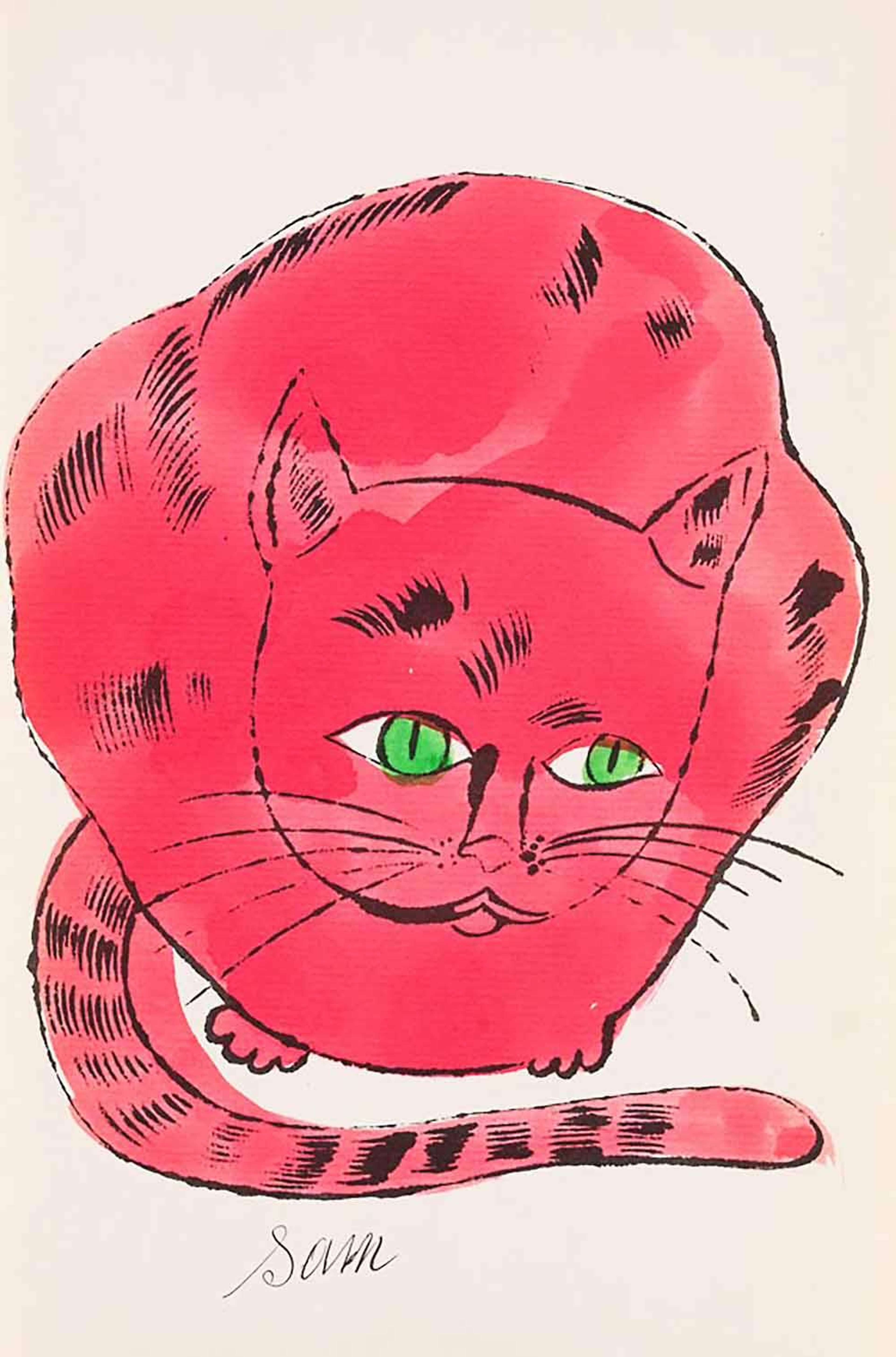
The care with which Warhol depicted each of his cats in this series is telling of his close relationship with them. Unlike many of his mass-media derived imagery, which sometime highlights the cold austere effects of pop culture, Cats Named Sam is an instance in which we see Warhol's personal affinity to his subjects.
The series reveals Warhol's early penchant for colour.
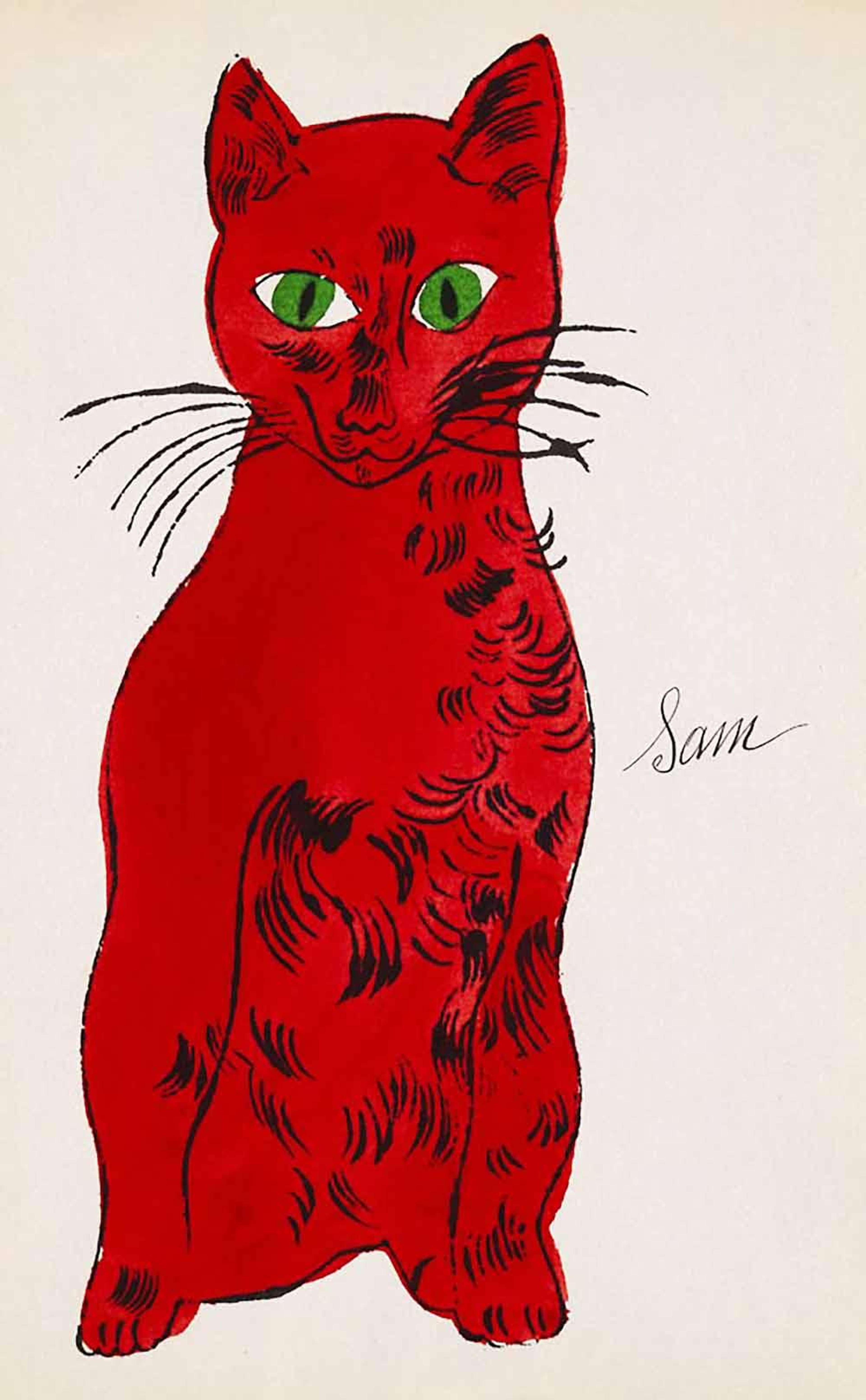
In order to capture each distinct personality of his cats, Warhol applied varying unnatural colours to their coats and eyes. His use of vivacious and artificial colour is something which would come to characterise his work at the height of his career.
Warhol's original Cats Name Sam and One Blue Pussy book is extremely rare.
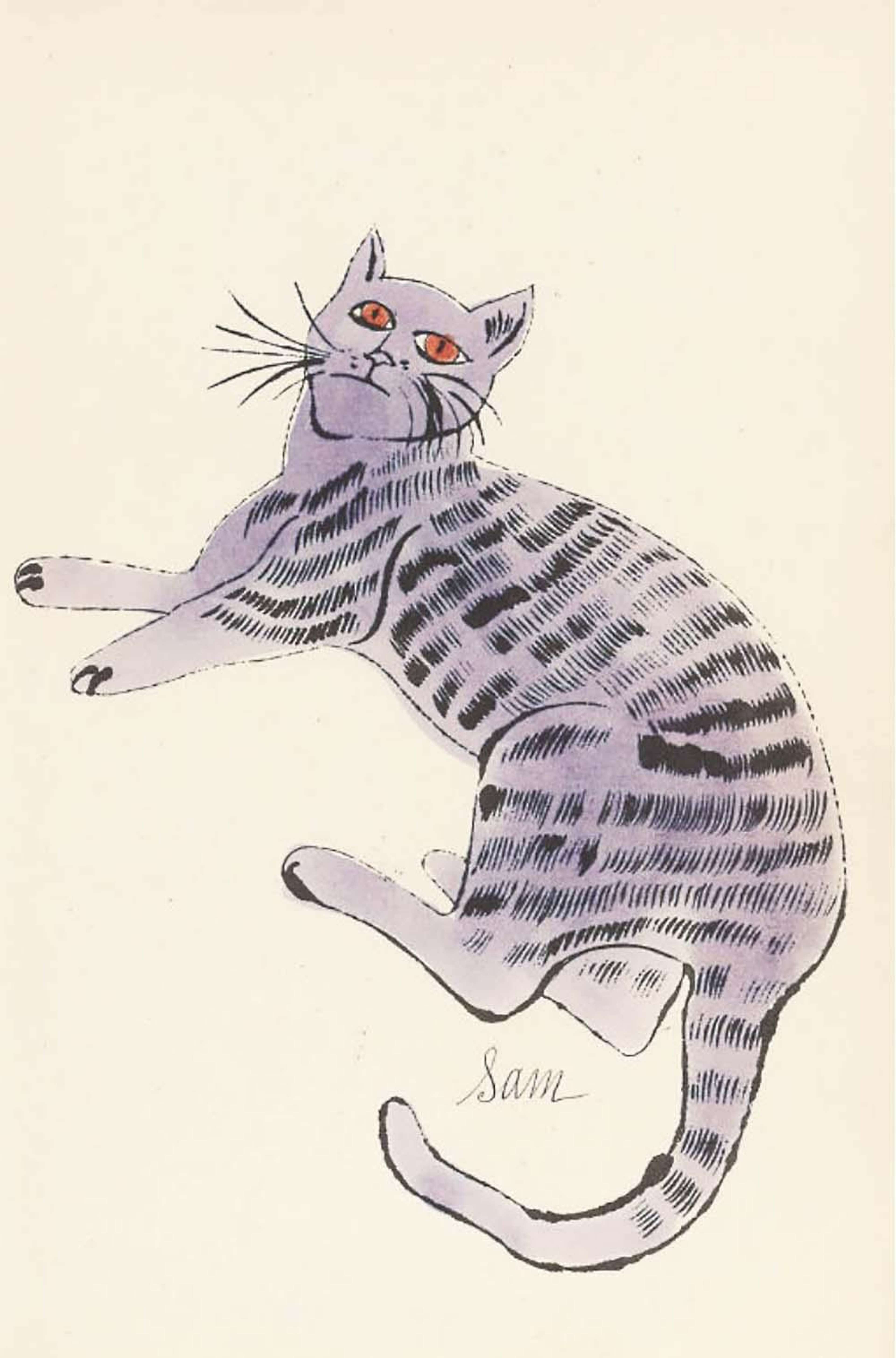
Though Warhol's original children's book is very hard to come by, the prints in this series have survived and are covetable examples of Warhol's earliest work. Each of the 16 lithographs are unique, and were coloured by either Warhol or his friends.
The series reveals Warhol's fascination with animals.
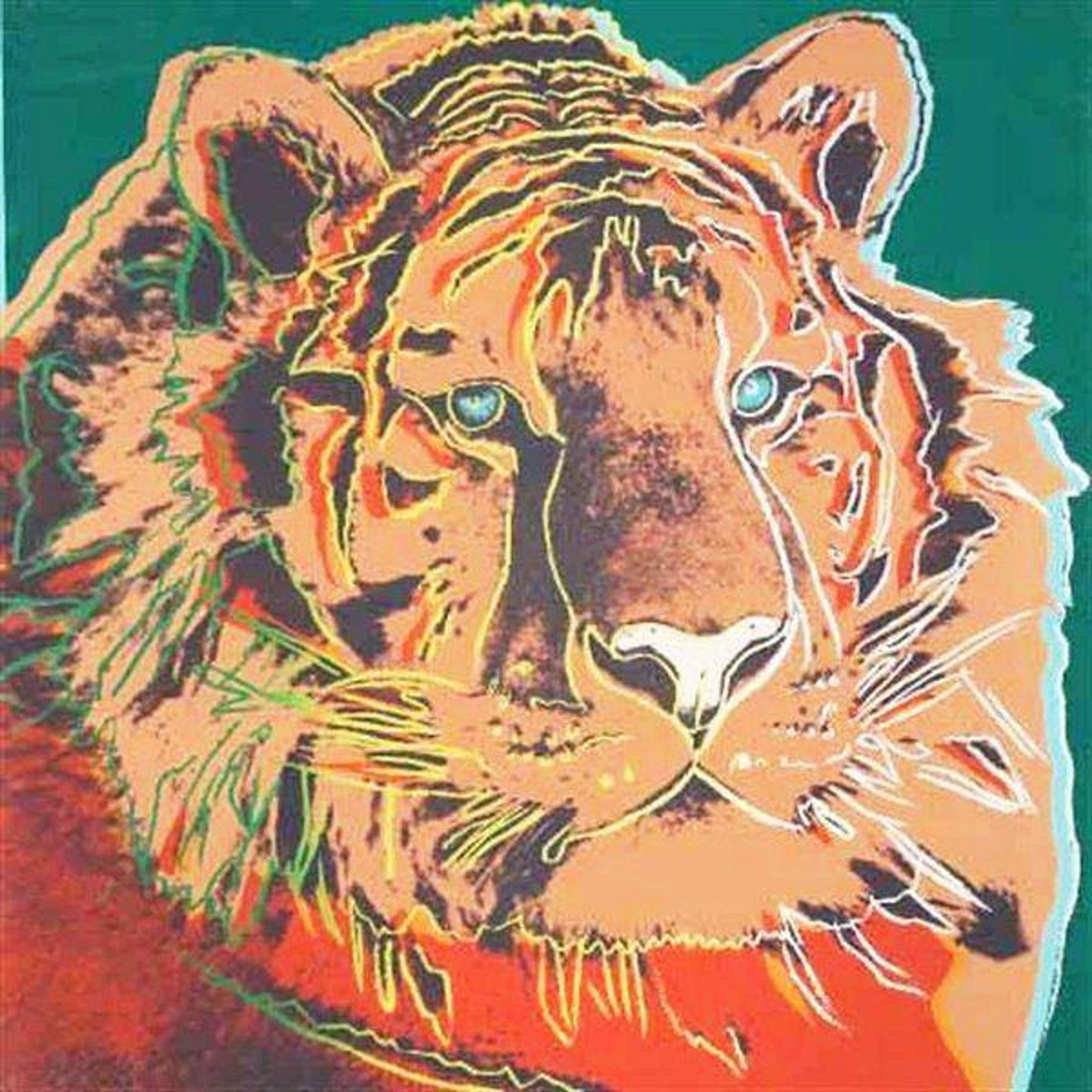
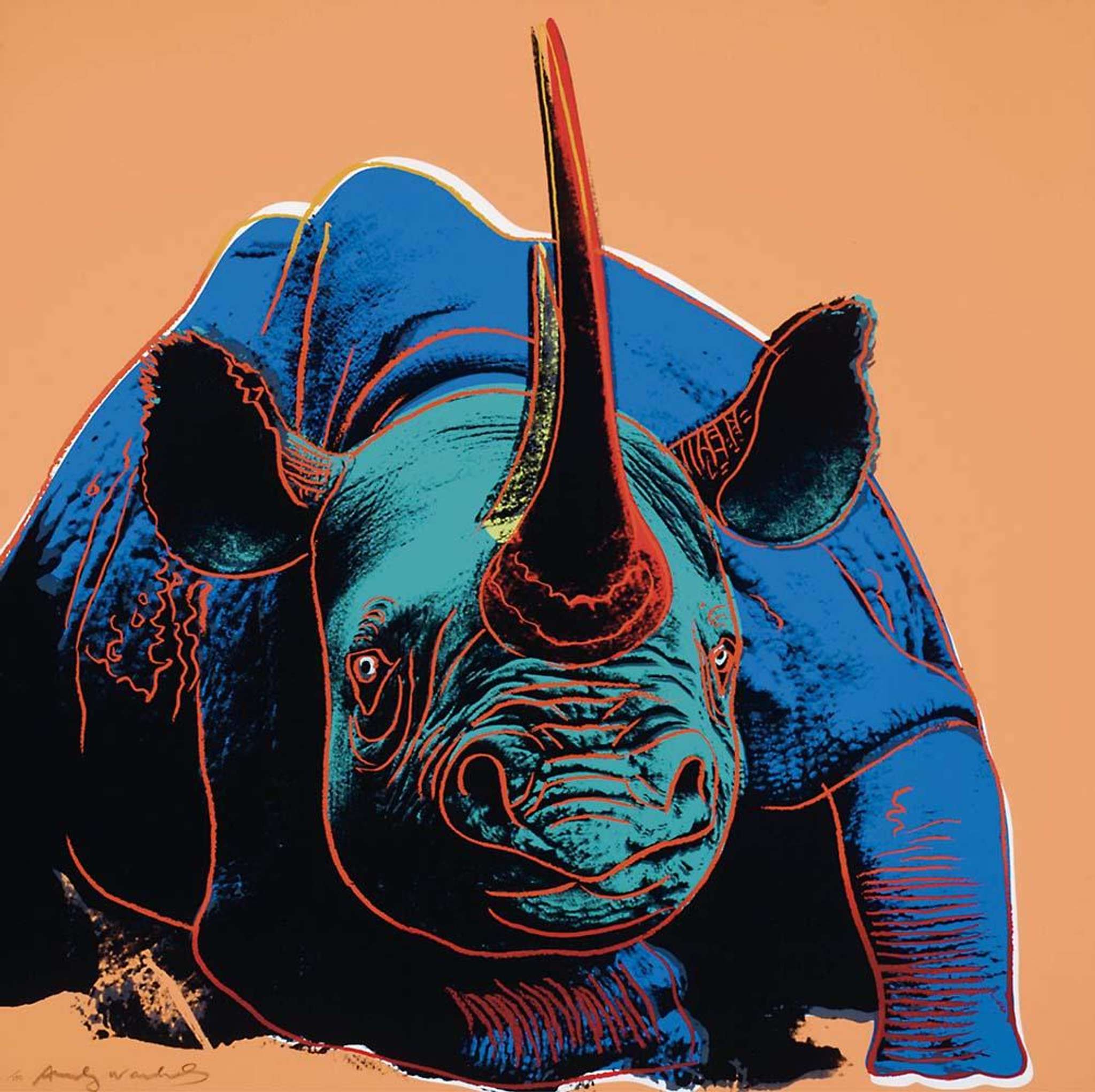
Throughout his long career, Warhol returned again and again to the subject of animals. Indeed, even though the Pop Artist is best known for his appropriations of celebrity portraits like Marilyn Monroe, his fascination with animals was enduring. Decades later, Warhol returned to the subject of the feline in his Endangered Species series, depicting a Siberian Tiger to raise awareness of its potential extinction.