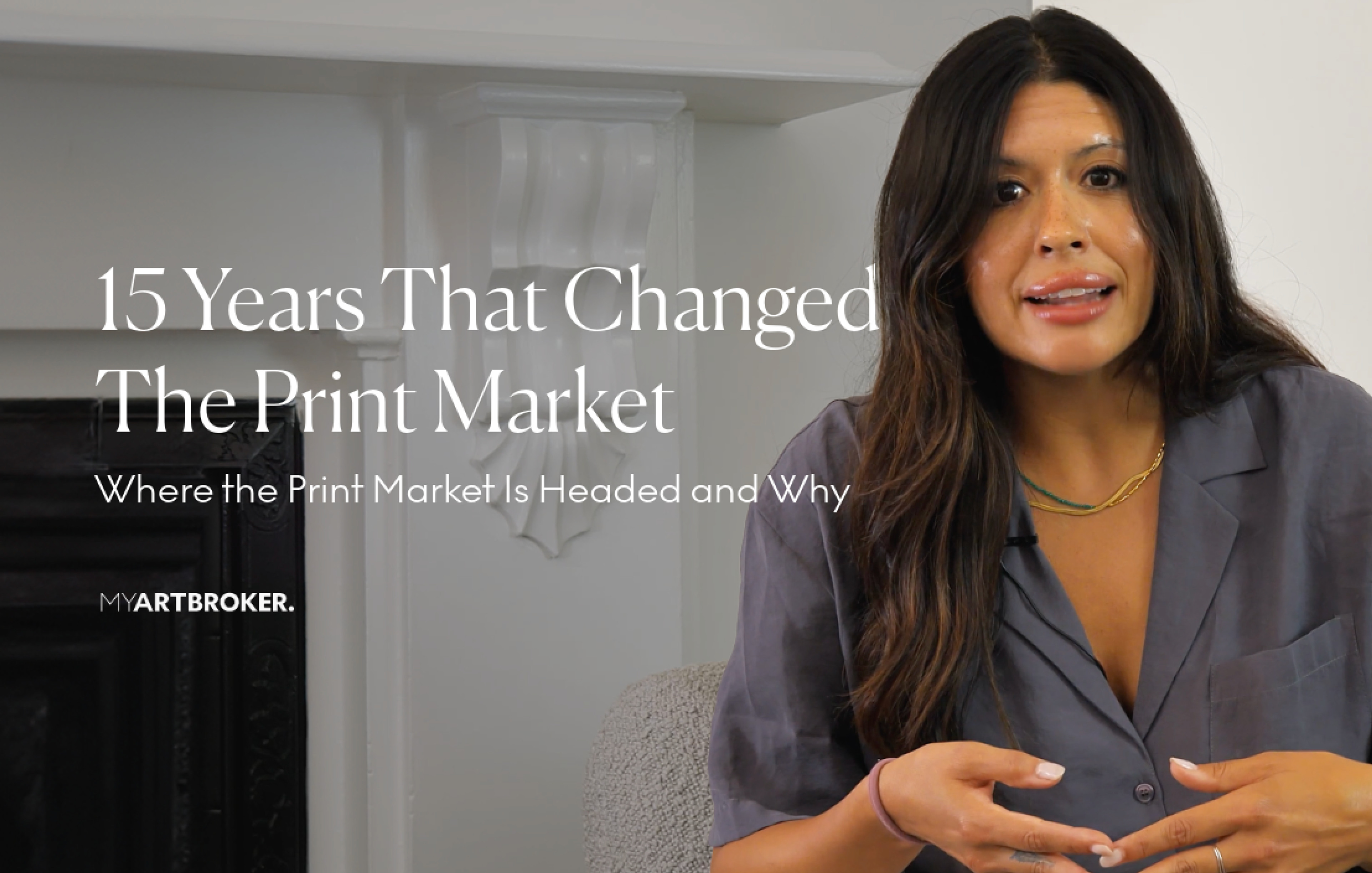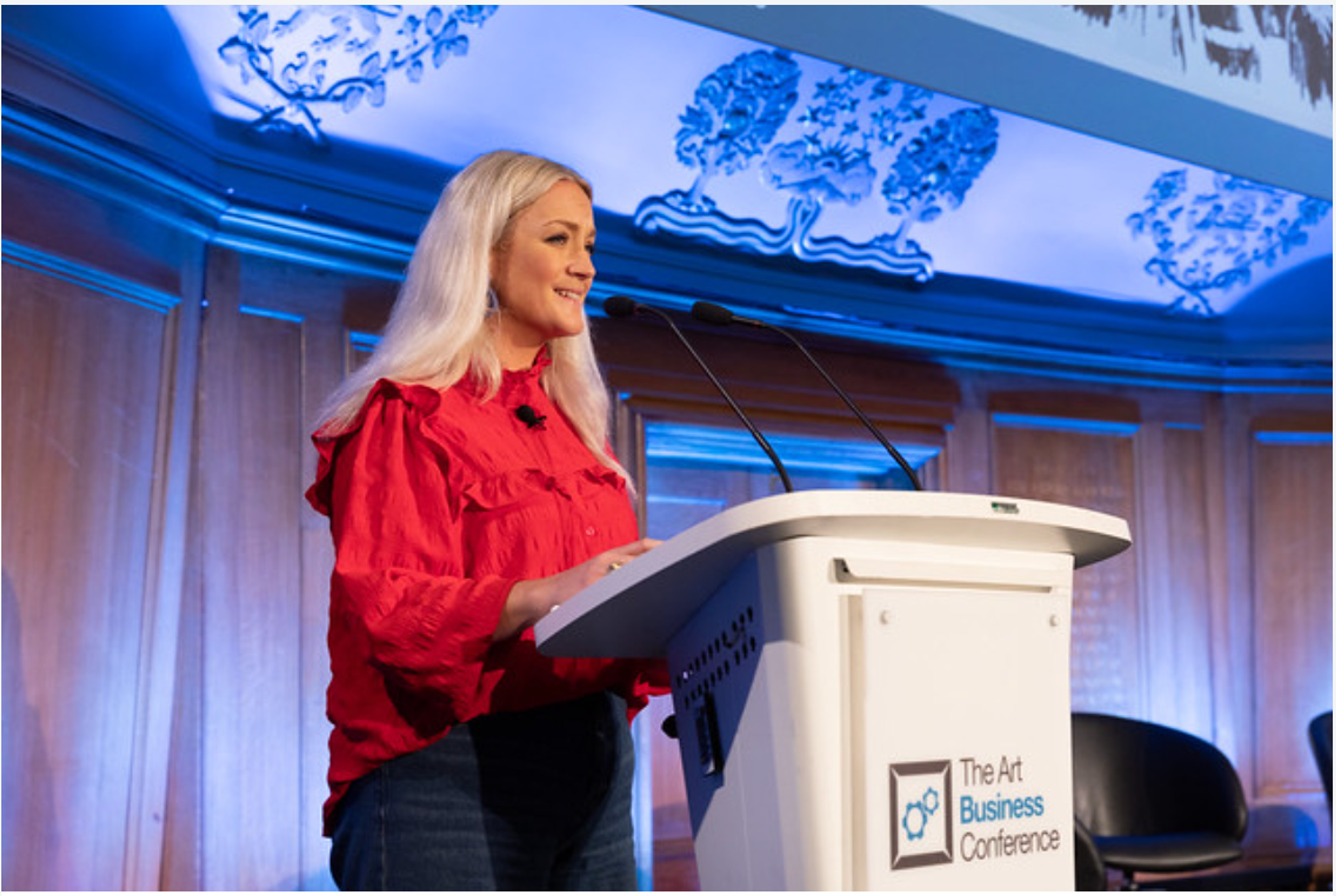

Across both themes – market trajectory and technology – a wide spectrum of views emerged. But in the push toward binary debates, much of the nuance was lost. It was into this gap that Charlotte Stewart, Managing Director of MyArtBroker, stepped with her keynote, From Clicks to Connoisseurship.
Her message was not about generative tools but a reminder that AI extends far beyond ChatGPT-style applications. Its real potential lies in proprietary data, infrastructure, and the systems that support connoisseurship. This, she argued, is where the art market is heading – and it is a shift that will shape how collecting evolves in the years ahead. “We live in a market moving at the speed of clicks – and yet still governed by structures closer to the 18th century.”
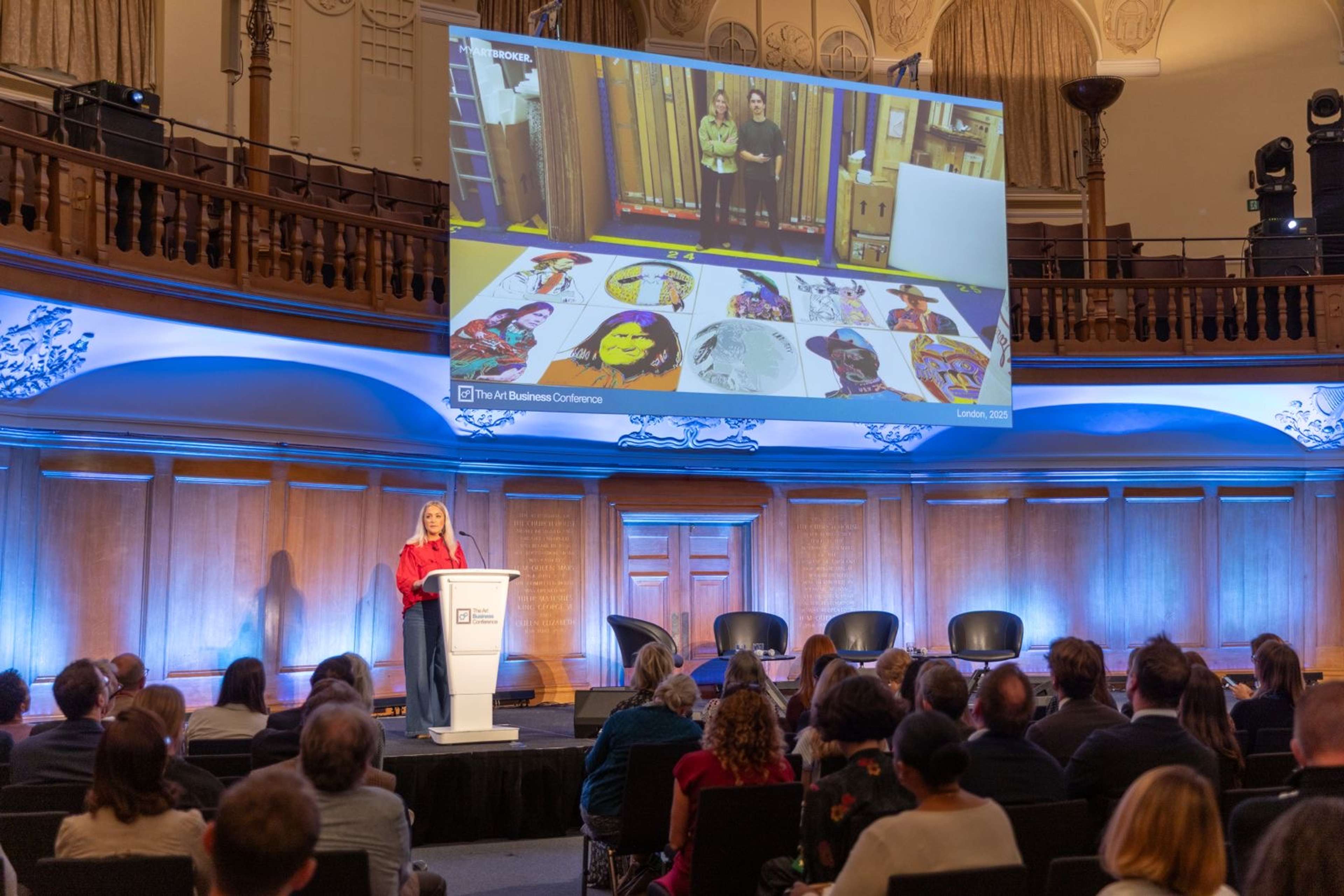
From Clicks to Connoisseurship: AI, Prints, and Market Change
Charlotte’s framework offered a way of reading the rest of the day’s conversations. The real question was not contraction versus rebound, or AI good versus AI bad. It was whether the art market can adapt to digital-native buyers, embrace transparency, and modernise its systems without eroding the expertise that underpins trust.
The Risk of Flattened Expertise in the Digital Art Market
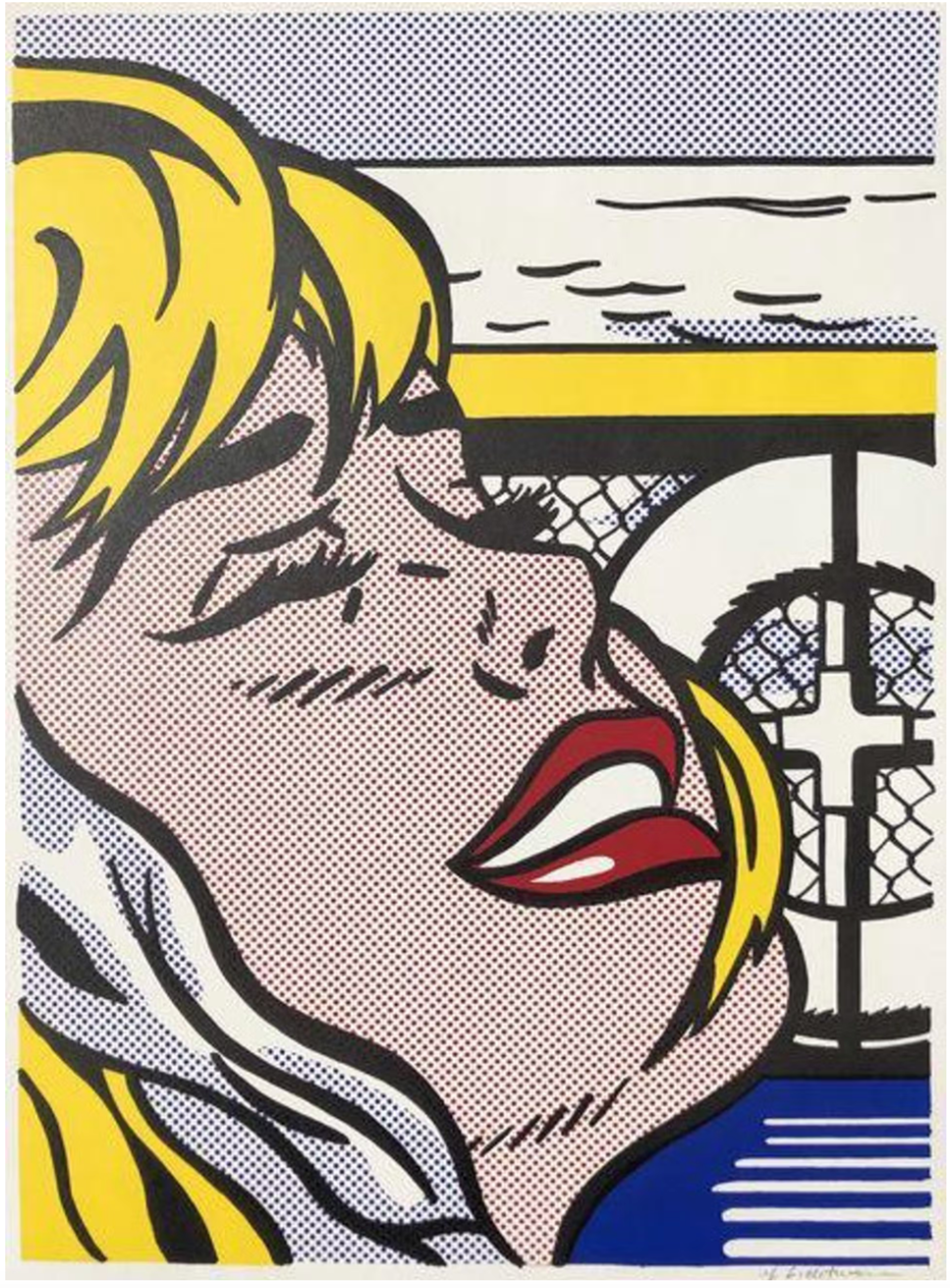
She warned of the risk of flattened expertise. In a market where information is instant, abundant, and easily replicated, convenience has surged but depth is harder to preserve. A generation ago, buying a Hockney print meant stepping into a Christie’s saleroom, catalogue in hand, surrounded by specialists. Today, a 25-year-old can find the same work on Instagram, track its value online, and transact on a phone. “Convenience is off the charts,” Charlotte said, but so too is the risk of eroding connoisseurship.
Prints and Multiples at the Frontline of Collecting Trends
Second, she placed prints and multiples at the frontline of this shift. Once treated as peripheral, prints are now a competitive collecting category. They are accessible, data-rich, and attractive to younger, digital-native buyers. But they are also complex: paper quality, edition size, printer’s marks, and provenance can all dramatically affect value. Prints come with datasets originals do not – comparables across editions and sales histories that provide unusual transparency. Yet those numbers demand expert interpretation. With connoisseurship, prints move firmly into the luxury ecosystem, collected with the same appetite for scarcity and tradeability as watches or handbags.
Investment in Editions: Preserving Value and Building Confidence
Charlotte also addressed the art world’s unease with the language of investment - a framing she openly supports, given the liquidity and tradability that editions allow. She argued that preserving value is not in conflict with connoisseurship but integral to it. For new collectors coming into the market through editions, financial confidence is what enables participation. Prints, she suggested, function less like speculative bets and more like long-term assets: durable holdings that make the market accessible without diminishing its seriousness.
Artificial Intelligence and Art Market Infrastructure
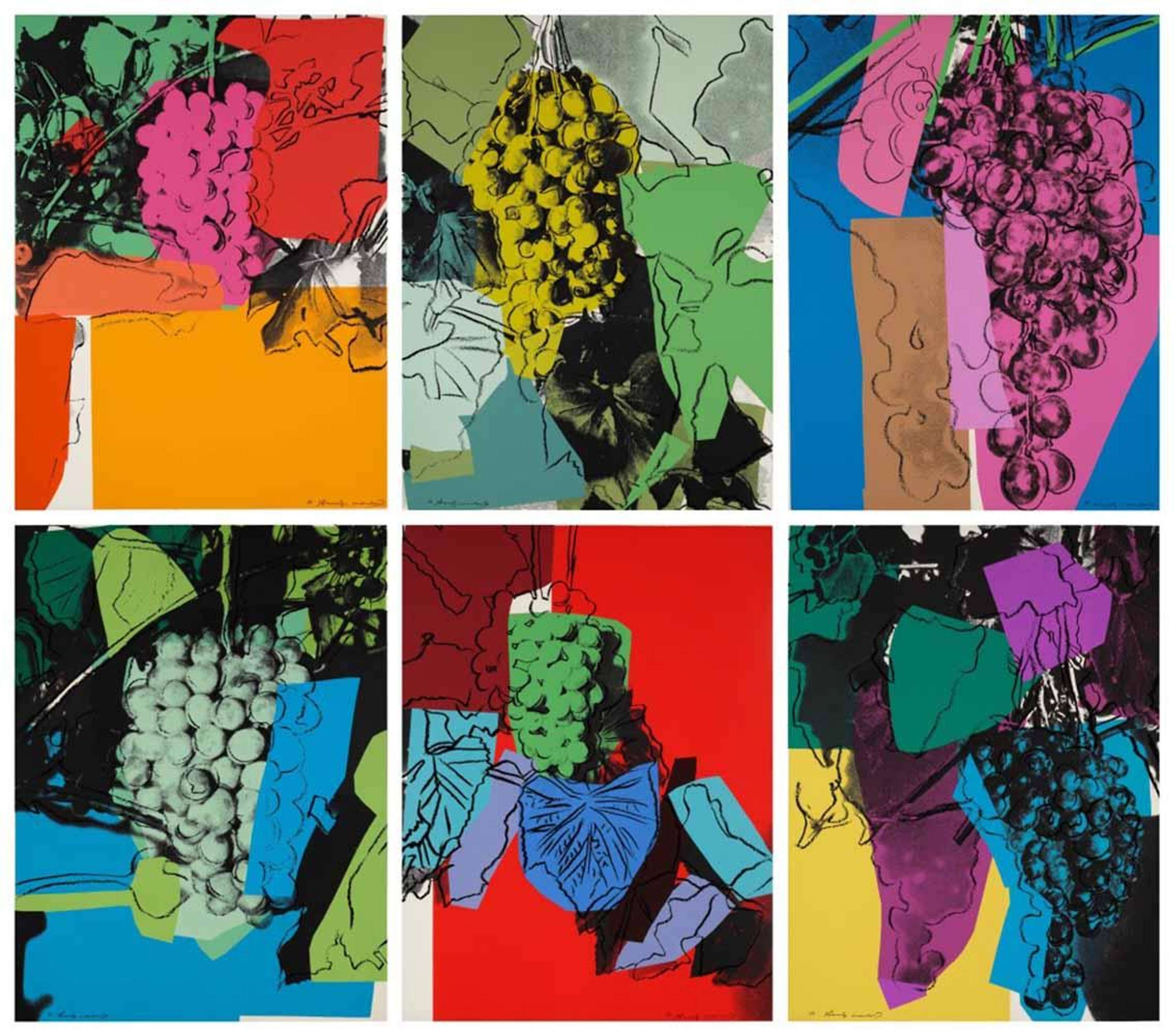
Lastly, she reframed the conversation around AI and infrastructure. Rather than a threat to creativity or expertise, she argued, AI’s real potential lies in modernising the market’s underlying systems – from valuations to logistics and data. When applied to proprietary datasets and scaled through machine learning, AI can extend the reach of specialists without displacing them. An algorithm might flag that one Warhol colourway is outperforming another, but only a trained specialist can explain why – and whether it matters in the current market context.
Her conclusion was that convenience without expertise risks hollowing out the market, while clinging to outdated systems risks losing the next generation. The path forward lies in balance – clicks with connoisseurship, algorithms with interpretation, transparency with trust. “Clicks can bring people in,” Charlotte said. “But connoisseurship keeps them there.”
The Wealth Transfer and a Shift in Collecting Priorities
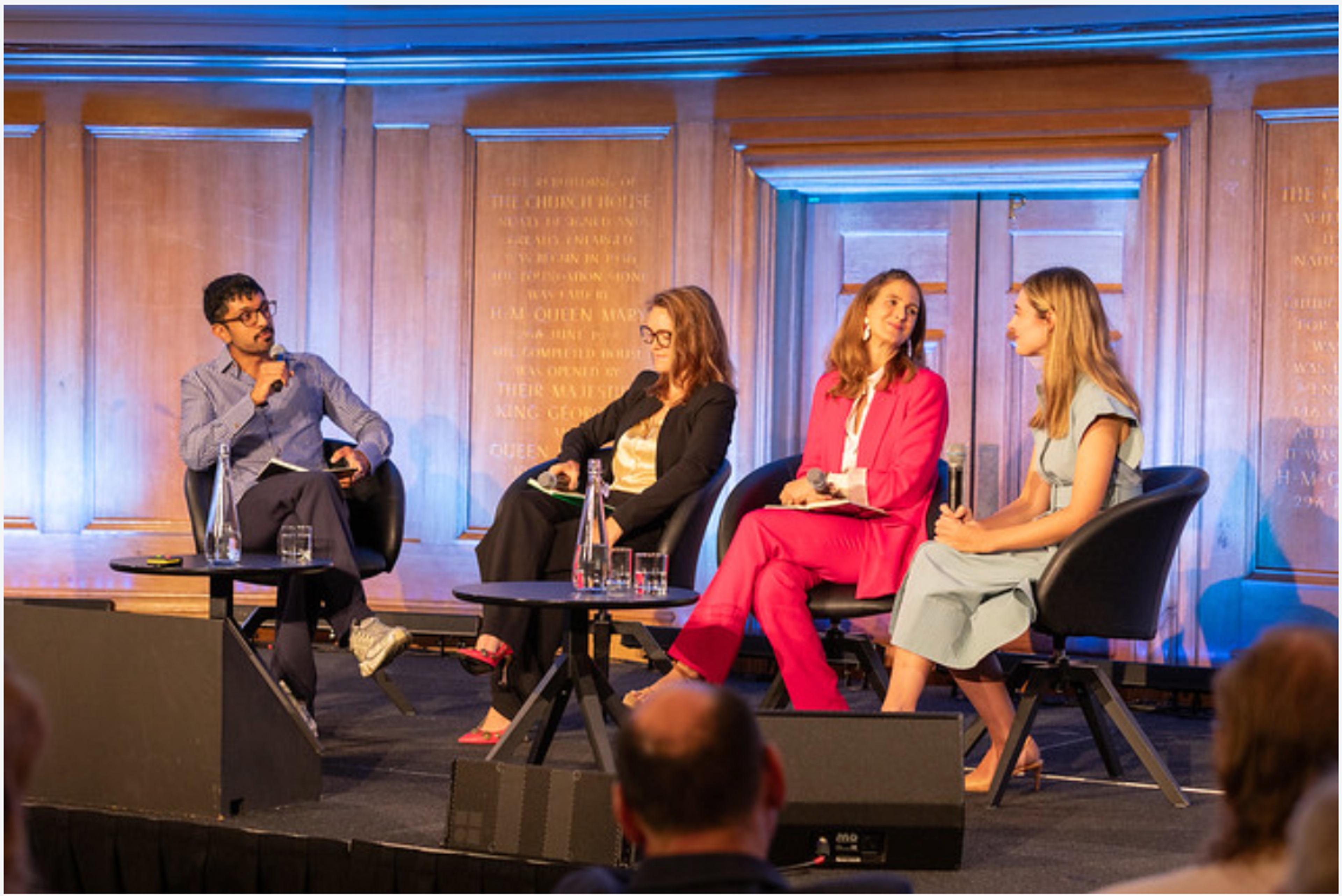
That balance between speed and expertise underpins the demographic shift too. In the opening session, Phillips CEO Martin Wilson, in conversation with conference chair Georgina Adam, described the art market at a crossroads. His core message was that the great wealth transfer is also a great transfer of taste. This is something I have written about and researched myself: you cannot see the wealth transfer – it is not tangible – but there are clear trends that prove it is happening in real time. The children of established collectors are not simply inheriting collections or following parental patterns. They are pursuing art that reflects their own values – identity, sustainability, and a connection to living artists.
Living Artists, Blue Chip Legacies, and the Role of Editions
Wilson stressed that living artists have always been part of Phillips’ DNA – a positioning that, in my view, places the auction house ahead of others and only grows more relevant. Younger cohorts want to engage directly with artists and feel part of their orbit. It’s less about acquiring a trophy and more about cultivating a sense of belonging.
His emphasis on living artists was a powerful way to open the conference. Yet it also raises questions for blue chip legacies. Younger generations may be energised by living artists right now, but the great 20th-century names are not going anywhere; their weight in the market is too firmly established. Warhol, Hockney, and others remain among the most traded and trusted names in the secondary market. The challenge is not their survival, but how their significance is framed alongside the energy surrounding contemporary practice.
This is where Wilson’s focus on shifting tastes and Charlotte’s emphasis on connoisseurship converge. Editions bridge the divide: they allow living artists to reach new digital-native buyers, while also preserving the relevance of blue-chip legacies through scarcity, data, and specialist interpretation. In a market split between immediacy and depth, editions are the format that can hold both.
How Younger Collectors Are Redefining the Editions Market
This is not a rejection of the market’s past but a redefinition of what drives taste. As Wilson and Charlotte stressed in their respective discussions, younger buyers want immediacy, transparency, and direct access. They gather information from Instagram, peers, and online networks rather than relying on traditional gatekeepers. They want engagement without intermediaries.
This is also why editions have proven resilient. Like luxury watches or handbags, they thrive in markets where scarcity, tradeability, and community converge. Editions give younger collectors a way into blue chip legacies that feels transparent and connected. And when paired with expertise and interpretation, they become the bridge between established names and a new generation of buyers – open in form, but underpinned by connoisseurship.
The Balance Across the Day
Artnet Intelligence Report: Strategy and Education Gaps
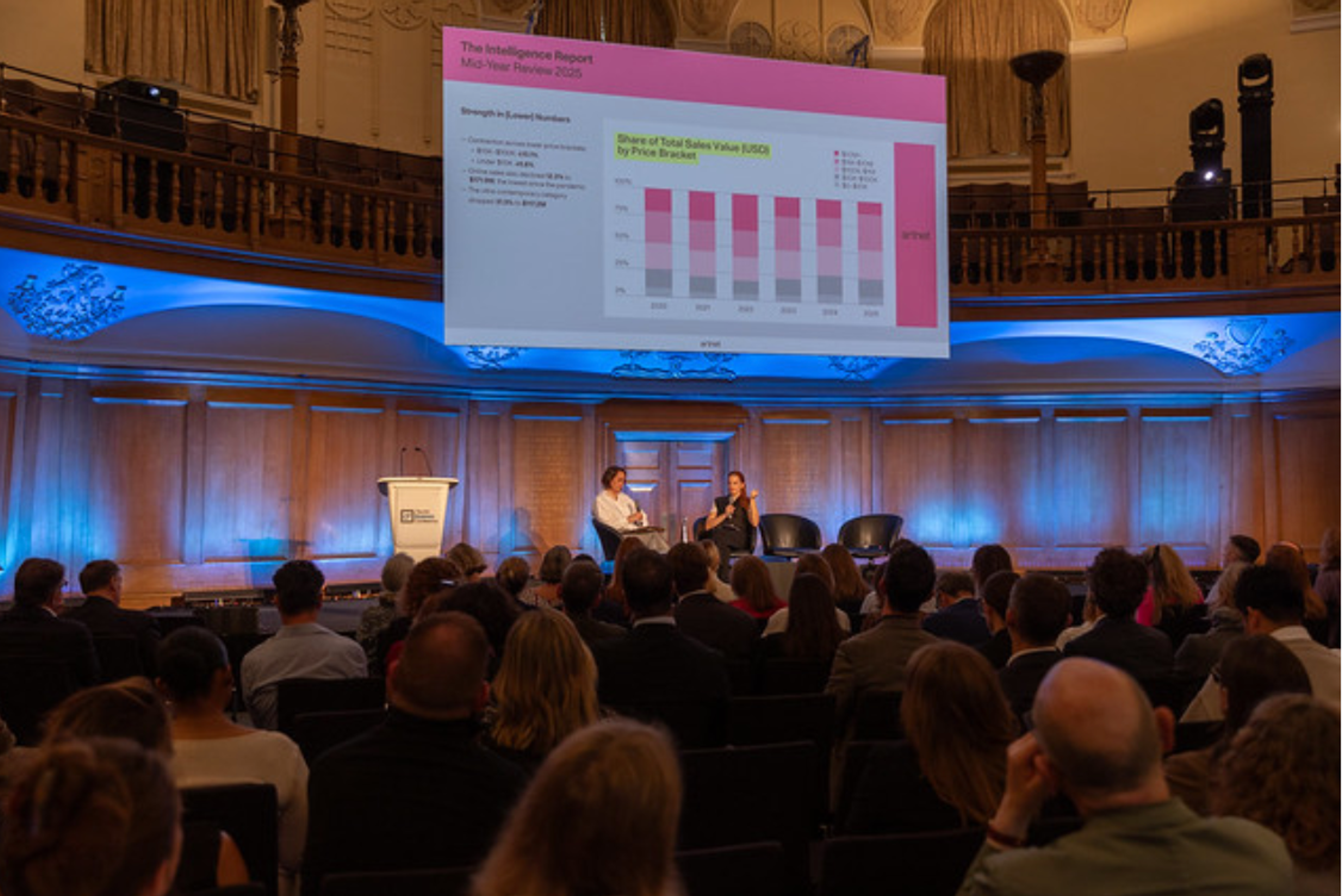
The same point could be drawn from the Intelligence Report presented by Artnet’s Naomi Rea and Margaret Carrigan. Their analysis highlighted a market still under pressure: average prices are down, oversupply continues to weigh on sales, and confidence at the very top end remains muted. Yet the impulse to live with art is not disappearing; there are still pockets of resilience, particularly in lower price levels and ultra-contemporary segments.
My own reading of this is that appetite remains strong, but what the market currently lacks is real strategy and education, and this is where our job as experts comes sharply into focus. Data can reveal contraction or growth, but it cannot by itself explain how collectors should navigate the next cycle. Figures only become meaningful when interpreted and contextualised, another reminder that connoisseurship and expertise remain the bedrock of market confidence.
Art Advisory and the Role of Expertise
The rest of the day’s discussions reinforced the same balance between speed and substance. The advisory panel, with speakers from The Fine Art Group and Beaumont Nathan, highlighted that today’s collectors expect convenience and tailored guidance – the joy of discovery, but discovery shaped in the right way. One-stop access to both public and private markets is in demand, but trust remains the real currency.
This too, aligns with advancements of technology – which can expand reach, but it cannot replace expertise. Advisors, like dealers, are not being displaced by new tools; their role is evolving alongside them. Digital platforms may deliver access, yet it is specialist interpretation that underpins confidence and legitimacy. The future of advisory lies not in resisting change, but in using technology to enhance expertise rather than erode it.
Logistics, Cultural Policy, and Market Infrastructure
AML was also discussed during the conference, with a focus on how regulation and compliance are reshaping the movement of art. Trade flows, tax regimes, and cross-border logistics may not carry the glamour of headline sales, but they form part of the essential infrastructure that underpins trust and determines how art circulates globally. These structural questions led naturally into another area that rarely makes art market headlines, but is no less powerful: cultural policy.
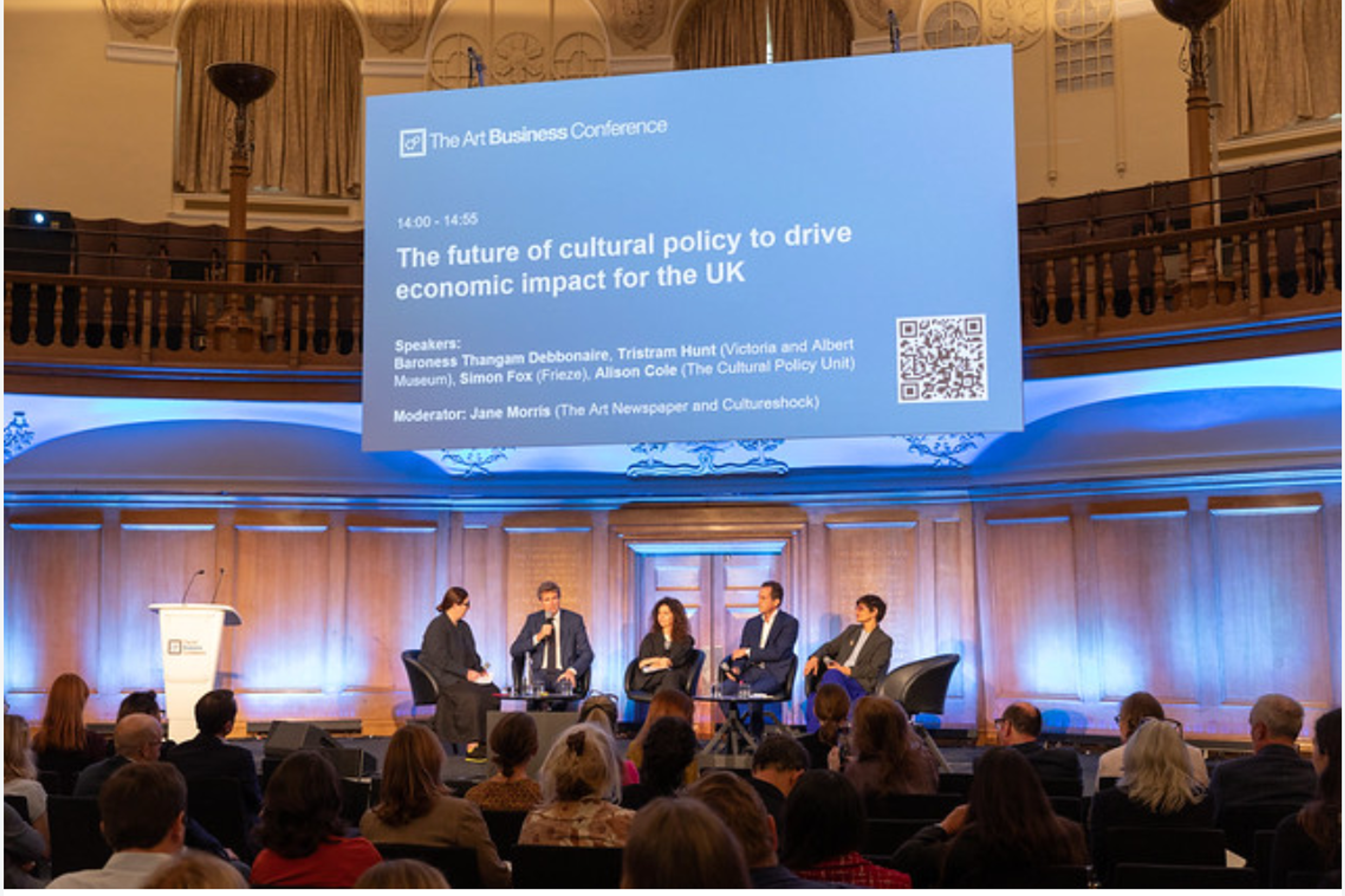
Moderated by Jane Morris of The Art Newspaper and Culture Shock, the panel brought together senior voices from politics and major institutions including the Victoria & Albert Museum, Frieze, and The Cultural Policy Unit. The conversation emphasised how fragile cultural frameworks can be and how urgently they need greater support if the UK is to sustain its role as a cultural hub. Cultural policy was positioned not just as an art world issue but as a matter of national strategy and soft power.
The Banksy mural at the Royal Courts of Justice was also raised – not the centre of the debate, but a telling example that stayed with me. For me, it highlighted a larger question: how is UK cultural policy going to handle politically charged artworks, and what protections will be put in place? Street art is created to be seen and engaged with, yet this work was quickly covered because its political message was deemed too stark. The incident also speaks to a deeper problem: there is no shortage of wealth in the art world, but too little of it is directed into the public sector. Without stronger funding for cultural infrastructure, politically charged works remain vulnerable – left to be covered over or sidelined when they become uncomfortable. Until cultural policy addresses this imbalance, the systems meant to protect and present art will lag behind the realities of how it is made, shared, and experienced.
Looking Ahead: Rebuilding The Foundation
The discussions on logistics and cultural policy were a reminder that the art market does not operate in isolation. It sits within wider systems – political, regulatory, and cultural – that shape how art moves, how it is funded, and how it is seen. These frameworks are fragile, and without greater support they risk lagging behind the realities of how art is made, shared, and collected.
That makes the forward challenge clear. The market’s future will be defined less by short-term swings than by how it rebuilds its foundations. Infrastructure – from valuations and logistics to cultural policy – will determine how art circulates, how it is protected, and how it is experienced. At the same time, the expectations of digital-native collectors are already forcing the market to rethink access, pricing, and communication.
The task now is to balance these forces: modernising systems to meet new demands while safeguarding the expertise that gives art its meaning and value. That balance will decide whether blue chip legacies remain relevant, whether living artists find sustainable markets, and whether the next generation of collectors can participate with confidence.
Connoisseurship remains the constant. It is what will allow the art market not just to weather change, but to scale into its next phase. Clicks can bring people in. But connoisseurship keeps them there.
Clicks can bring people in. But connoisseurship keeps them there.