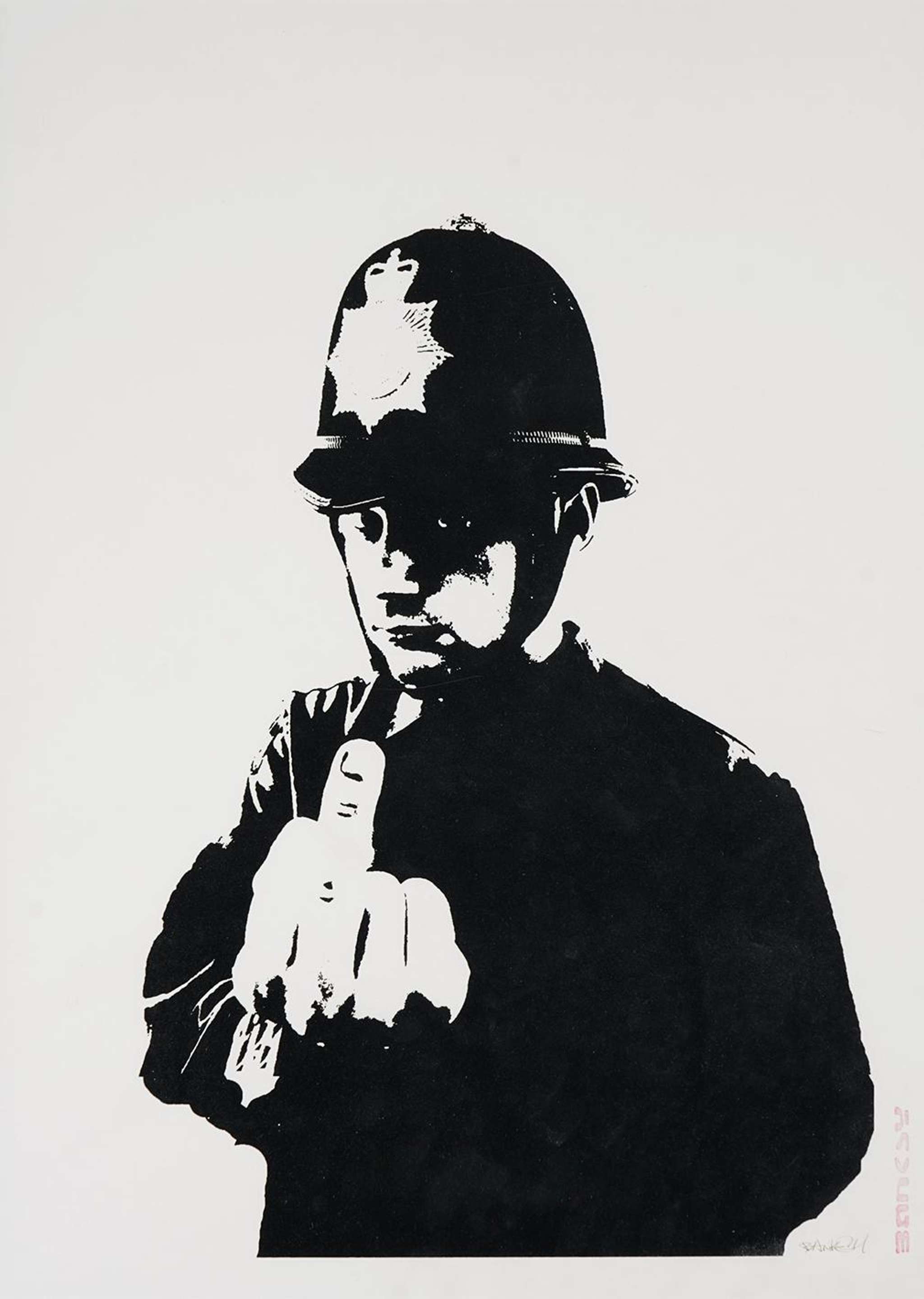


Banksy’s Rude Copper (2002) was his first print release, created in response to the 2000 Terrorism Act and its expanded stop-and-search powers. The series is characteristically confrontational and anti-establishment in its tone, depicting a policeman in a custodian helmet giving the viewer the middle finger. Produced with Banksy’s agent Steve Lazarides and famously sold from the boot of his car, the series set the tone for Banksy’s early critiques which direct satire and scepticism toward authority.
Rude Copper (2002) was Banksy’s first print release
At the heart of Rude Copper is a British bobby brazenly “flipping the bird”. Published in 2002 by Pictures on Walls, Banksy’s Rude Copper series marks his debut print release and set the blueprint for his later screenprints. The gesture of the policeman is a direct and crude inversion of the officer’s supposed civic role - by weaponising a universal sign, Banksy strips away euphemism and ceremony around policing. The insolent stare and half-shadowed face push the figure towards theatre, implying that authority can be costume as much as character. The image remains one of the most widely searched and cited Banksy critiques of law enforcement.
The 2000 Terrorism Act and stop-and-search powers catalysed the image
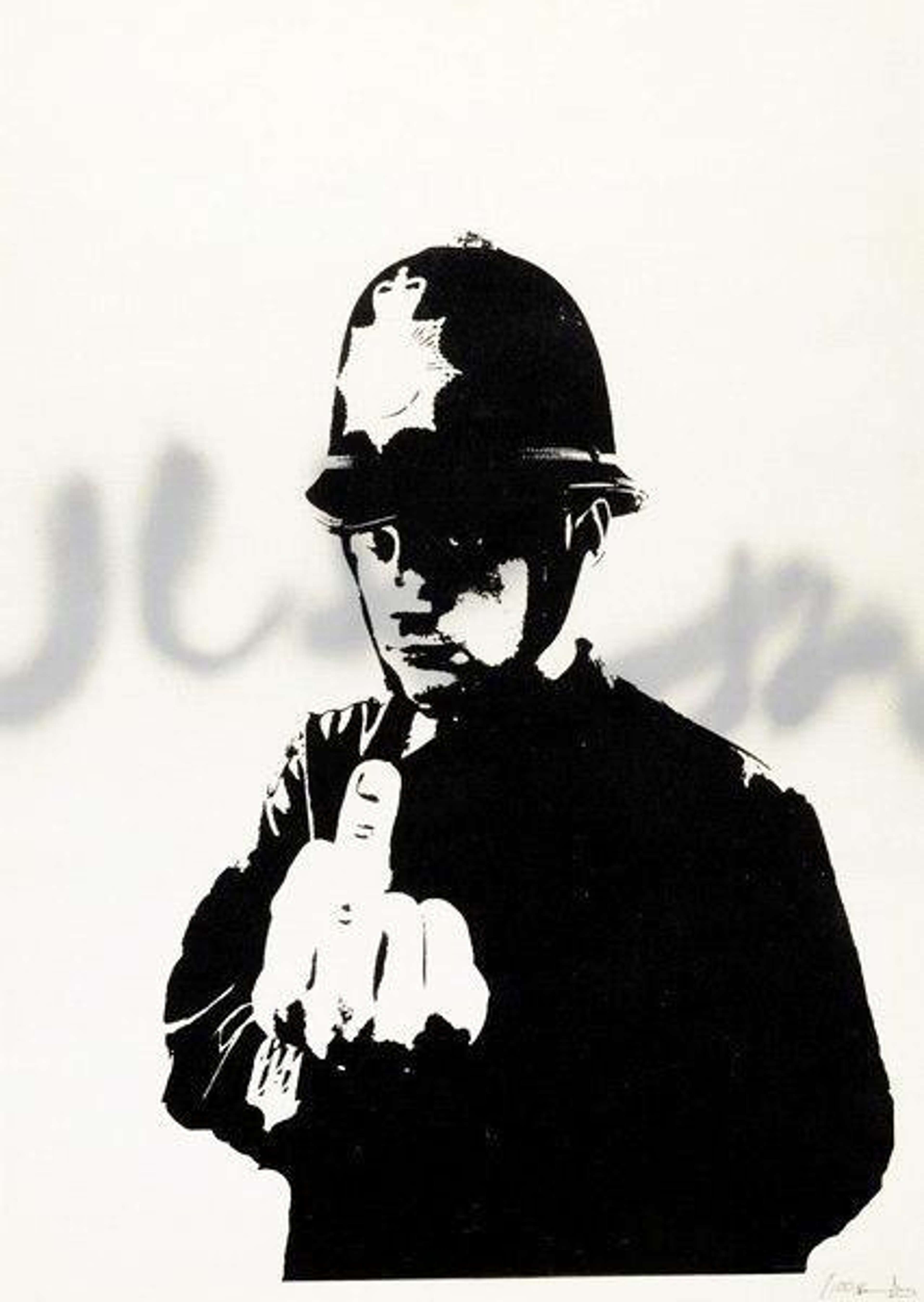
Rude Copper was conceived against the backdrop of the 2000 Terrorism Act, which broadened stop-and-search powers and reshaped the everyday experience of policing in the UK. Banksy channels public anxiety into the confrontational pose, and a decade later elements of those powers were checked by the European Court of Human Rights, underscoring how contested that legal expansion had been. The print’s popularity owes to its encapsulation of public response to changing civil liberties and the policing of public space.
Banksy’s use of foreshortening makes the officer’s hand ‘leave’ the frame
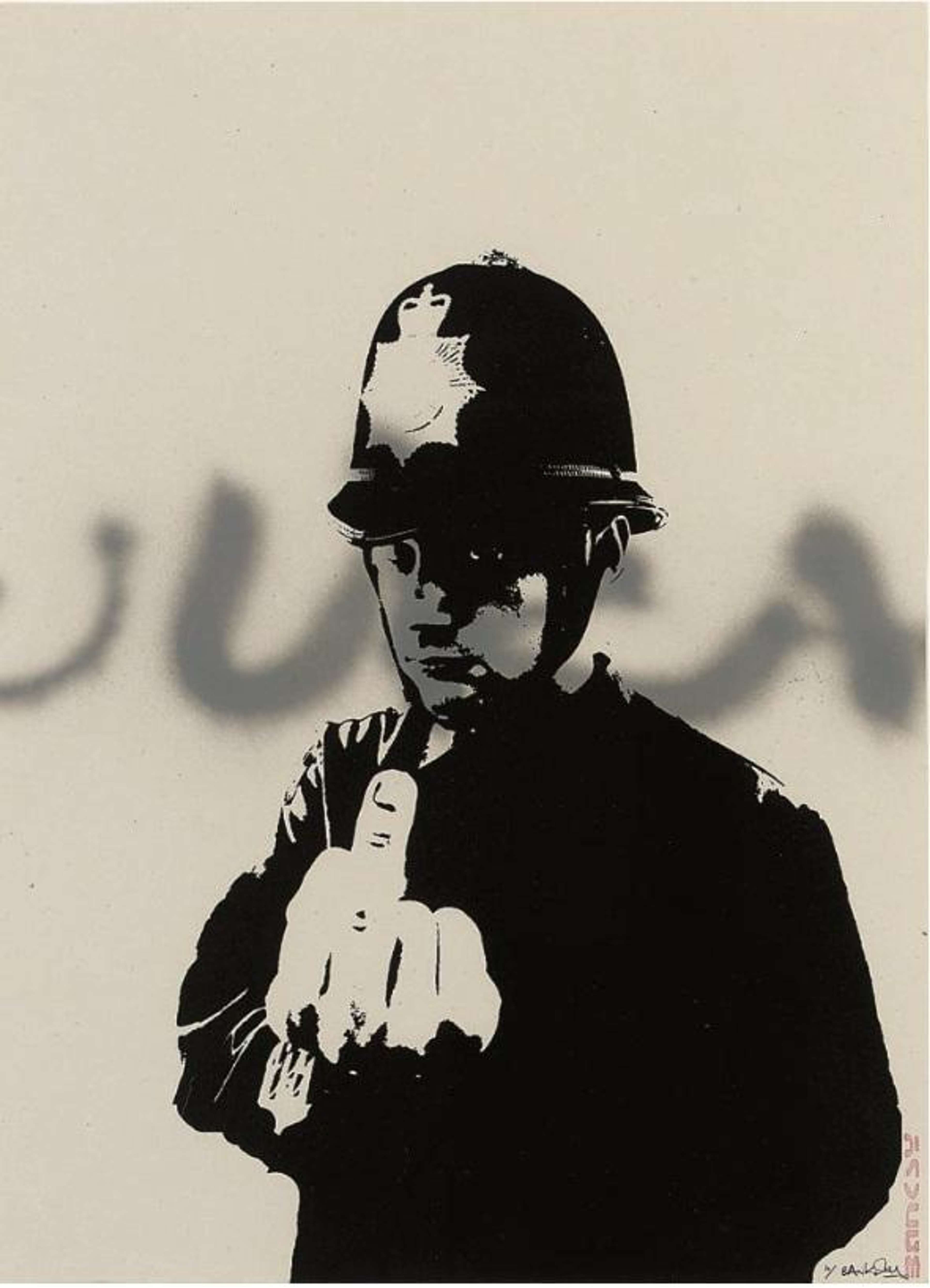
Part of Rude Copper’s impact is Banksy’s use of foreshortening, a technique that pushes the officer’s hand toward us while his body recedes, creating an illusion of depth. In this series, the middle finger dominates, making the insult feel immediate and unavoidable. This artistic device utilises classical illusionism and repurposes it for street art. The effect is that the viewer becomes the target, ensuring the message reads instantly - an essential to Banksy’s visual rhetoric.
The custodian helmet subverts the "friendly bobby on the beat" stereotype
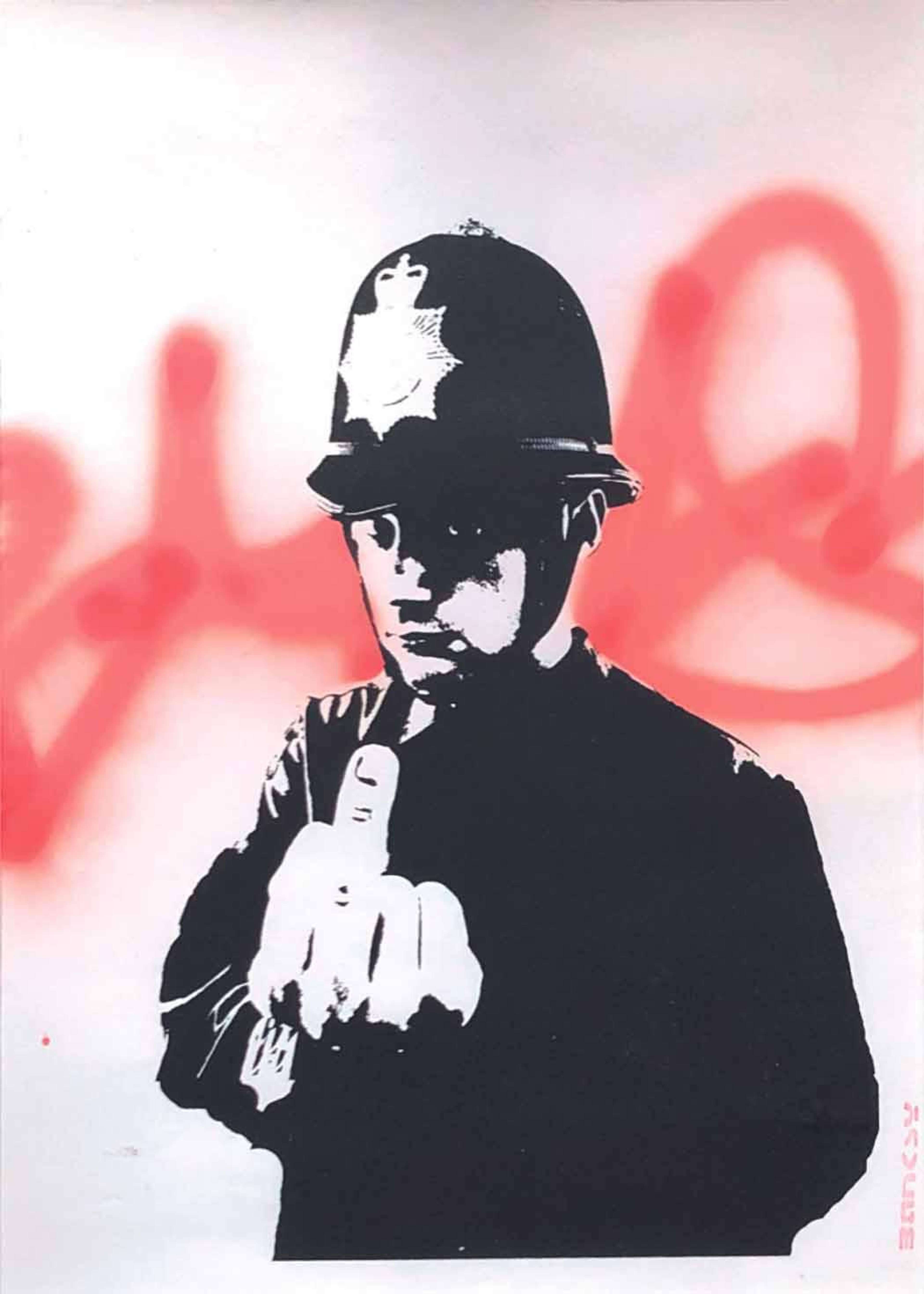
The officer in the prints wears the iconic custodian helmet, long associated with the friendly neighbourhood “bobby on the beat”. Banksy intentionally uses that TV-polished nostalgia, and the emblem of reassurance becomes a mask for hostility, highlighting the gap between the myth of benevolent policing and lived reality under broadened powers. By anchoring the figure in such recognisable headgear, the print acquires a specifically British charge while remaining internationally readable. The helmet’s old-fashioned silhouette also sharpens the satire, and suggests that tradition is part of how authority presents itself.
Jay Jay Burridge is the model for Rude Copper
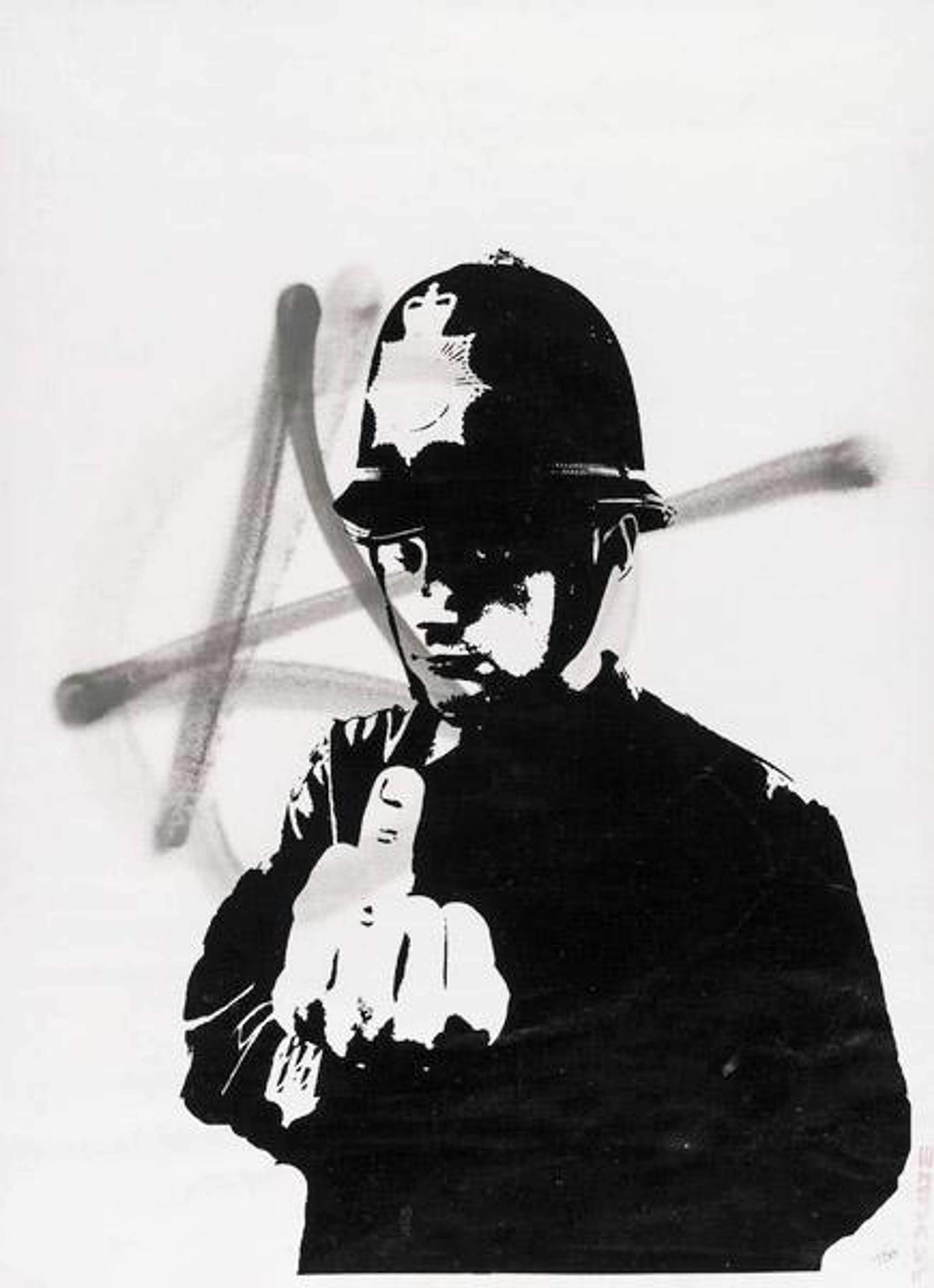
The artist Jay Jay Burridge was the model behind the policeman’s pose, a fellow creative in Banksy’s circle. This choice reinforces the print’s play with performance, with an artist inhabiting the image of a policeman, suggesting that authority can be donned rather than earned.
The original Rude Copper mural depicted two police officers, not one
Before the print edition, Rude Copper appeared on a London street wall as two officers synchronously brandishing middle fingers. The later screenprint compresses that image into a single figure, intensifying focus and simplifying the composition. Both versions of the image retain Banksy’s direct provocation, but the single ‘copper’ sharpens the emblem.
The edition combined unsigned prints with signed and hand-finished variants
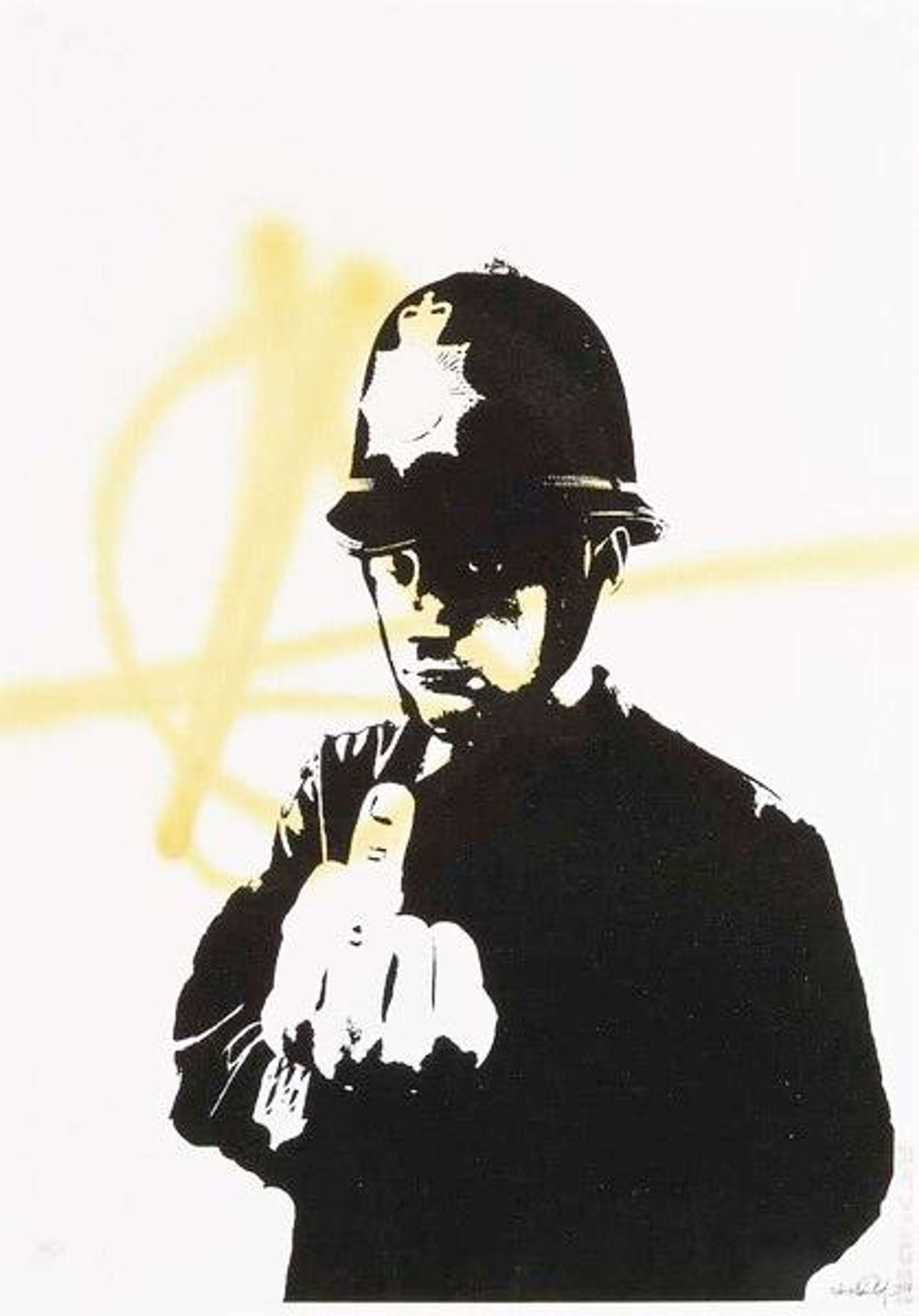
Originally planned as a run of 100, the 2002 release was bumped at the last minute to 250 unsigned screenprints, with a small number of extra signed examples, and roughly thirty hand-finished pieces with spray-painted backgrounds. Some have a red Banksy stamp, and the edition appeared on two paper stocks. The makeshift production reflects the improvisational, opportunistic energy of Banksy and Steve Lazarides at the time.
Steve Lazarides sold early Rude Copper prints from the boot of his car
Rude Copper was the product of Banksy’s working relationship with Steve Lazarides, who acted as agent and distributor in these formative years - famously selling Rude Copper prints directly from his car due to the lack of a gallery. When originally sold, prints sold for around £40, a price that feels mythic today, but captures the energy of the early Banksy market.
The highest price achieved for a Rude Copper print to date is £125,000
Against an original release price of £40, Rude Copper has since achieved headline results on the secondary market. The record for a signed Rude Copper (Anarchy) is £125,000 (hammer) at Forum Auctions, London, on 4 September 2020. This record price mirrors the broader institutional acceptance of Banksy, where street provocation now circulates through blue-chip auction calendars.
Rude Copper anchors Banksy’s wider policing motifs
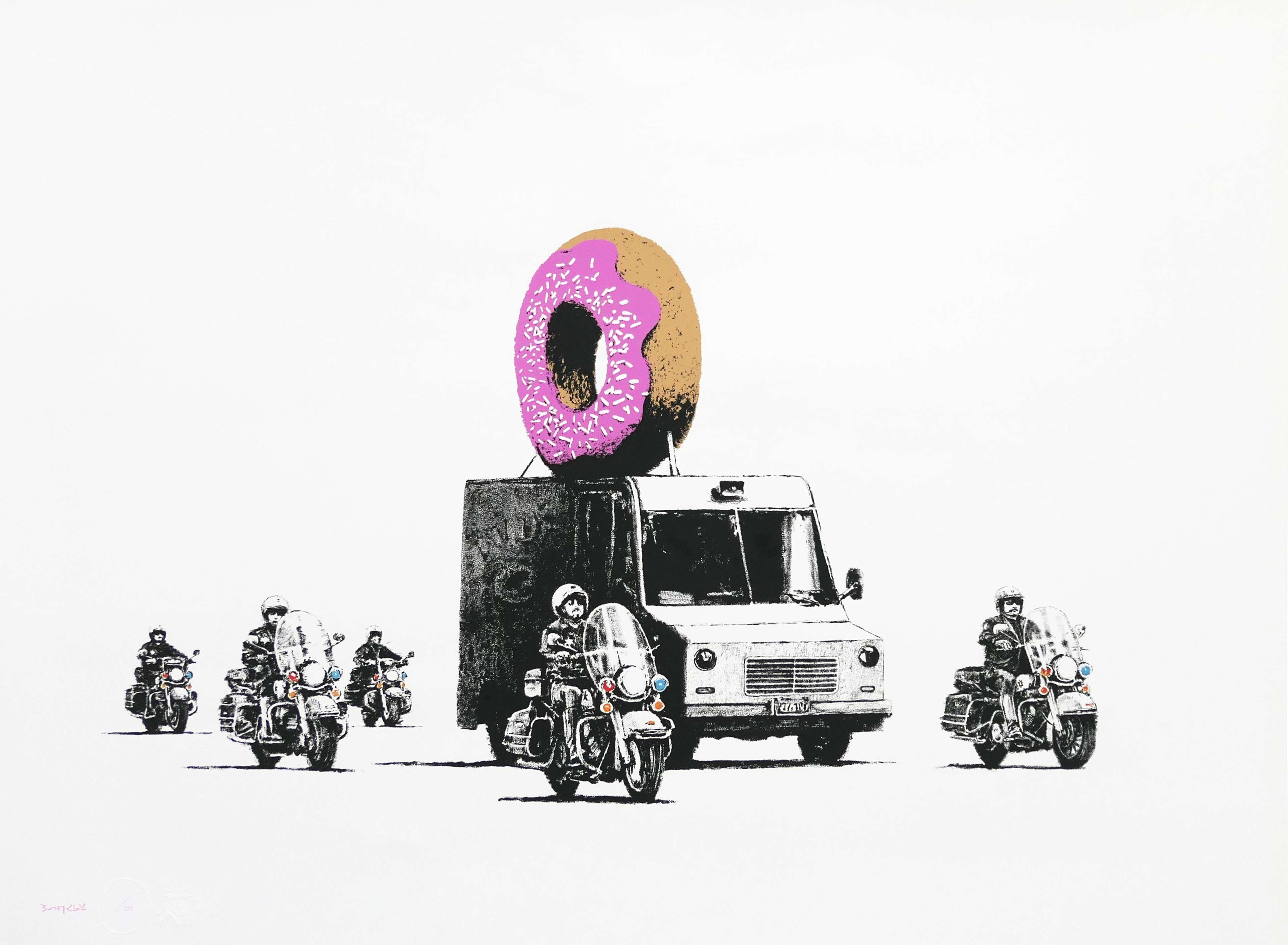
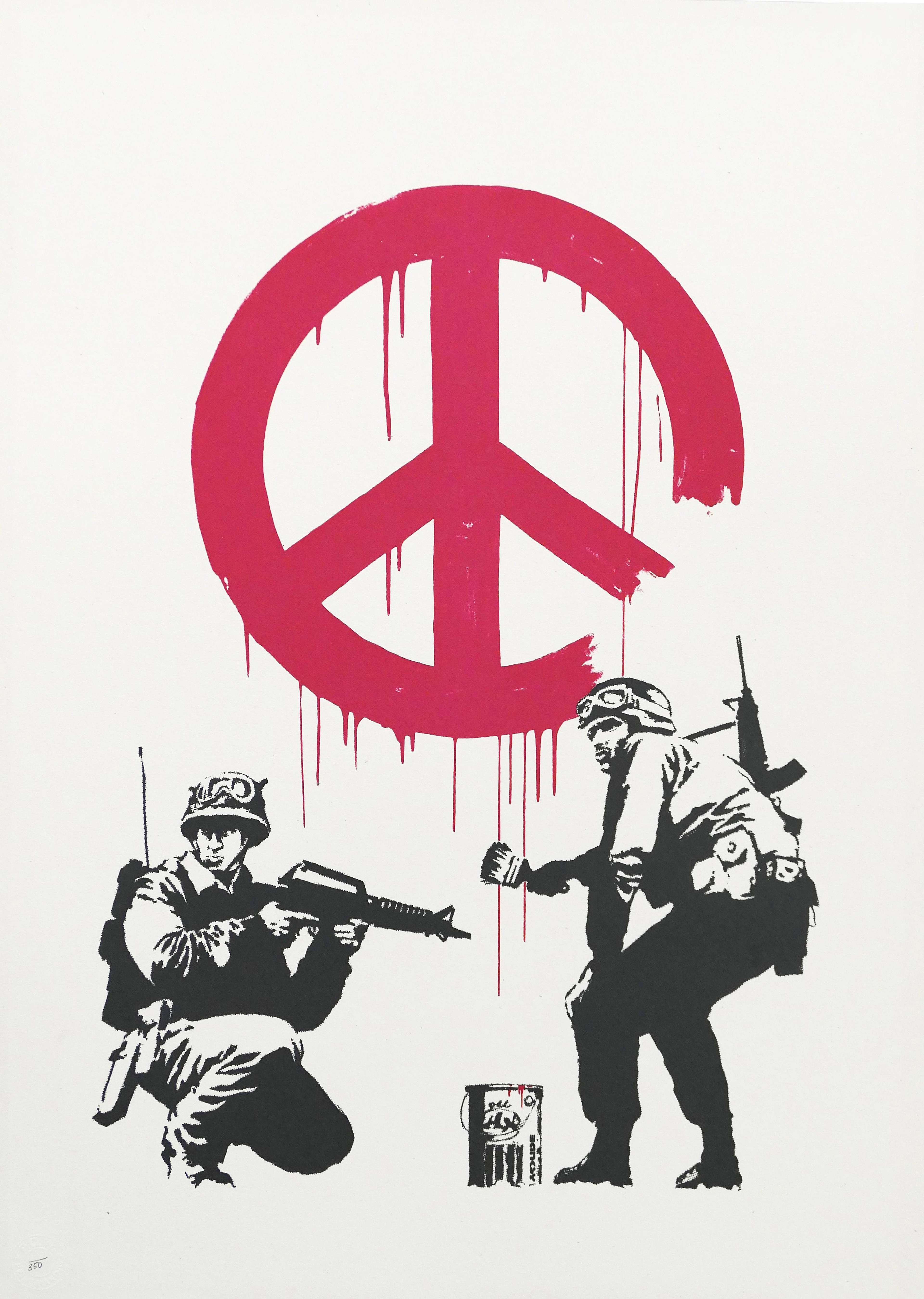
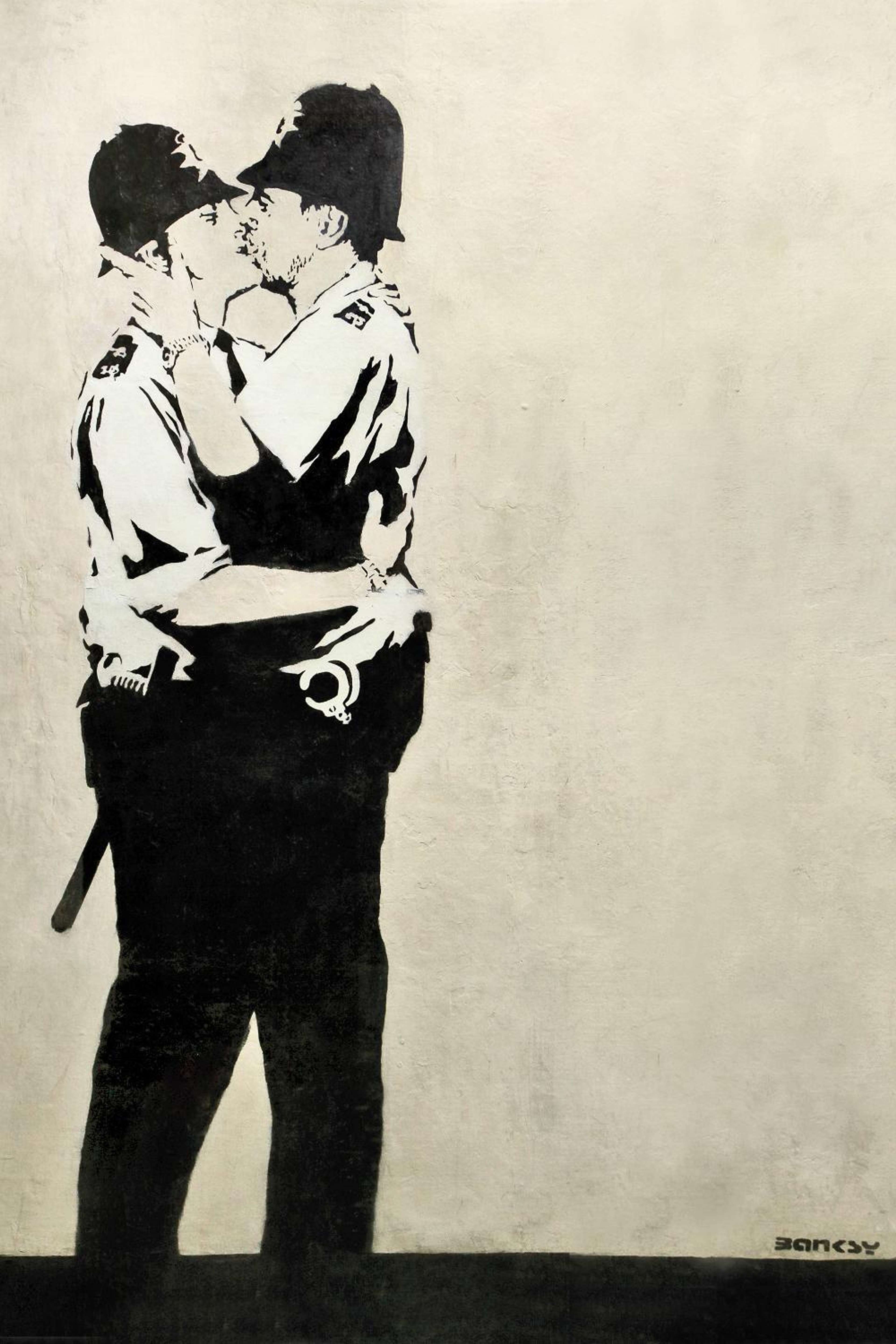
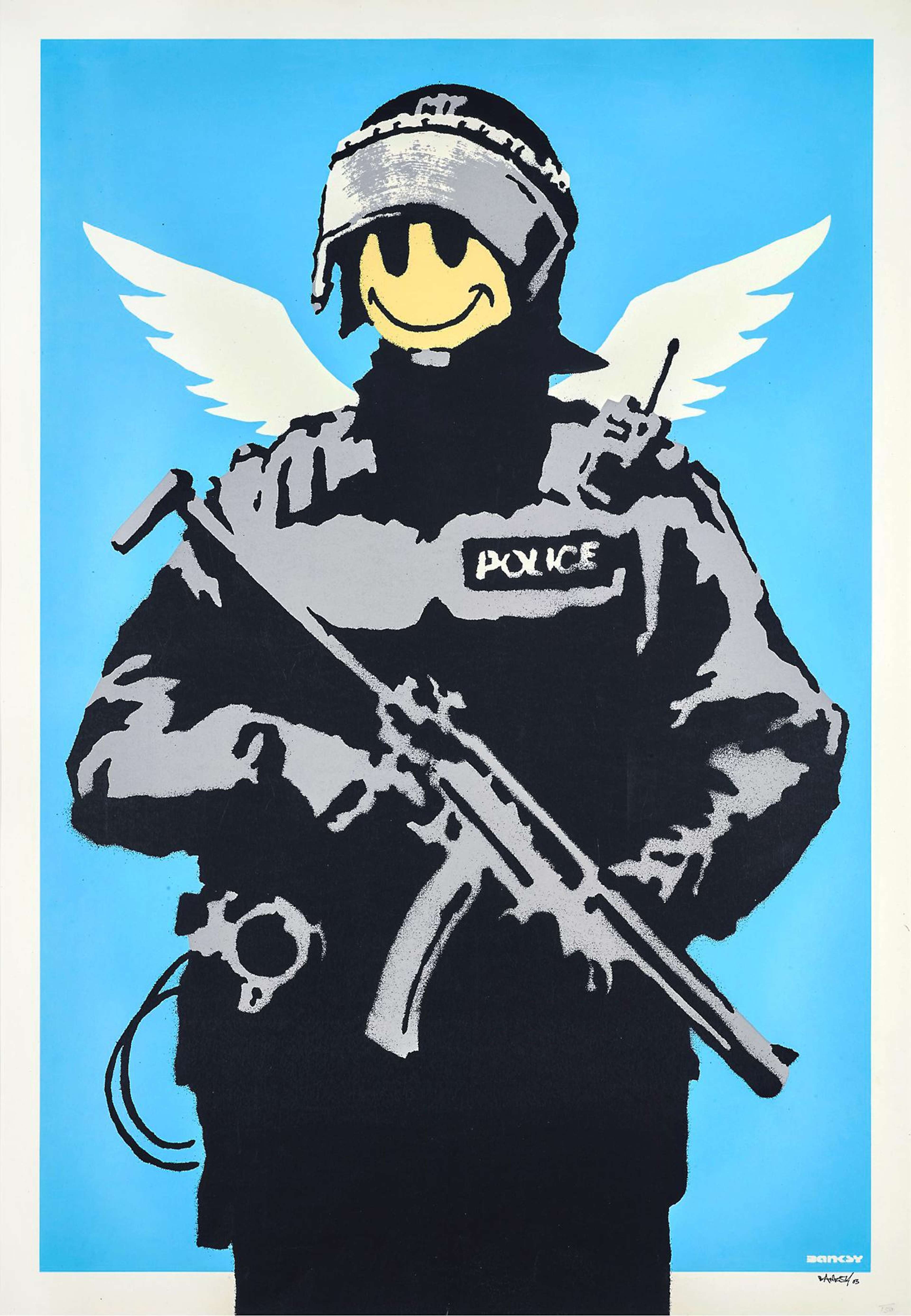
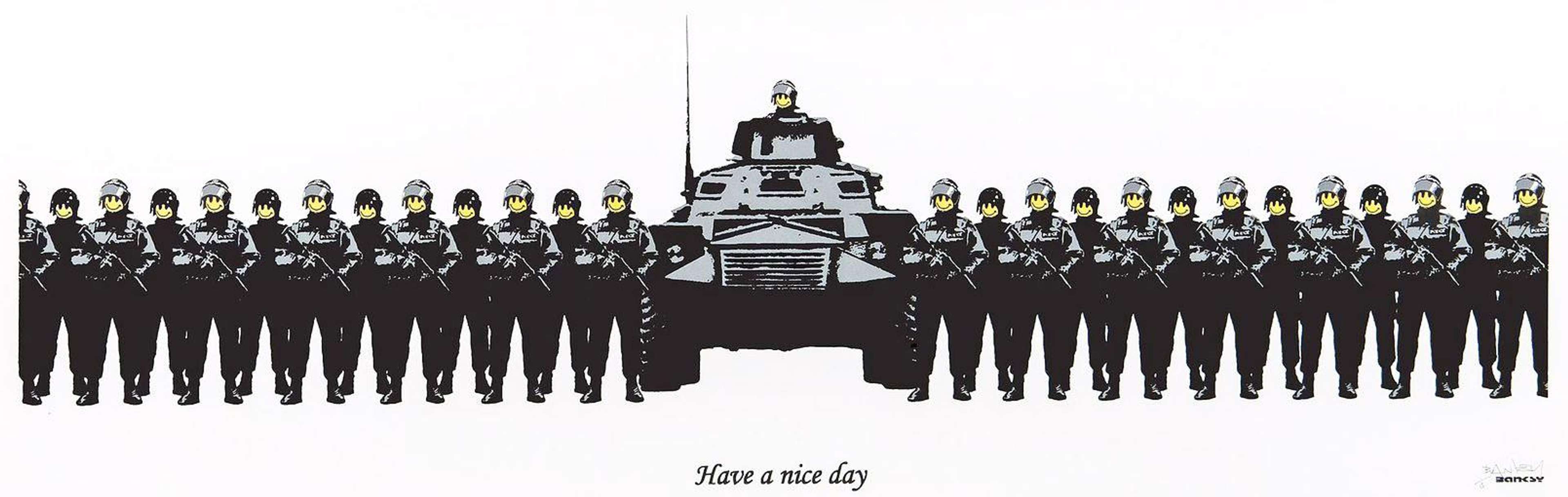
Rude Copper sits within a sustained interrogation of policing across Banksy’s oeuvre, aligning with works like Flying Coppers, Have a Nice Day, Donuts, CND Soldiers, Golf Sale, Happy Choppers and Kissing Coppers. Across these images, the police become proxies for power structures, surveillance and the politics of public order. Sometimes the critique is more humorous, like in Donuts, other times it is openly caustic, but the message is always clear: authority must be scrutinised and critiqued. Rude Copper being the opening move in Banksy’s anti-authority series explains why it remains an icon of Banksy’s print canon.