Rude
Copper
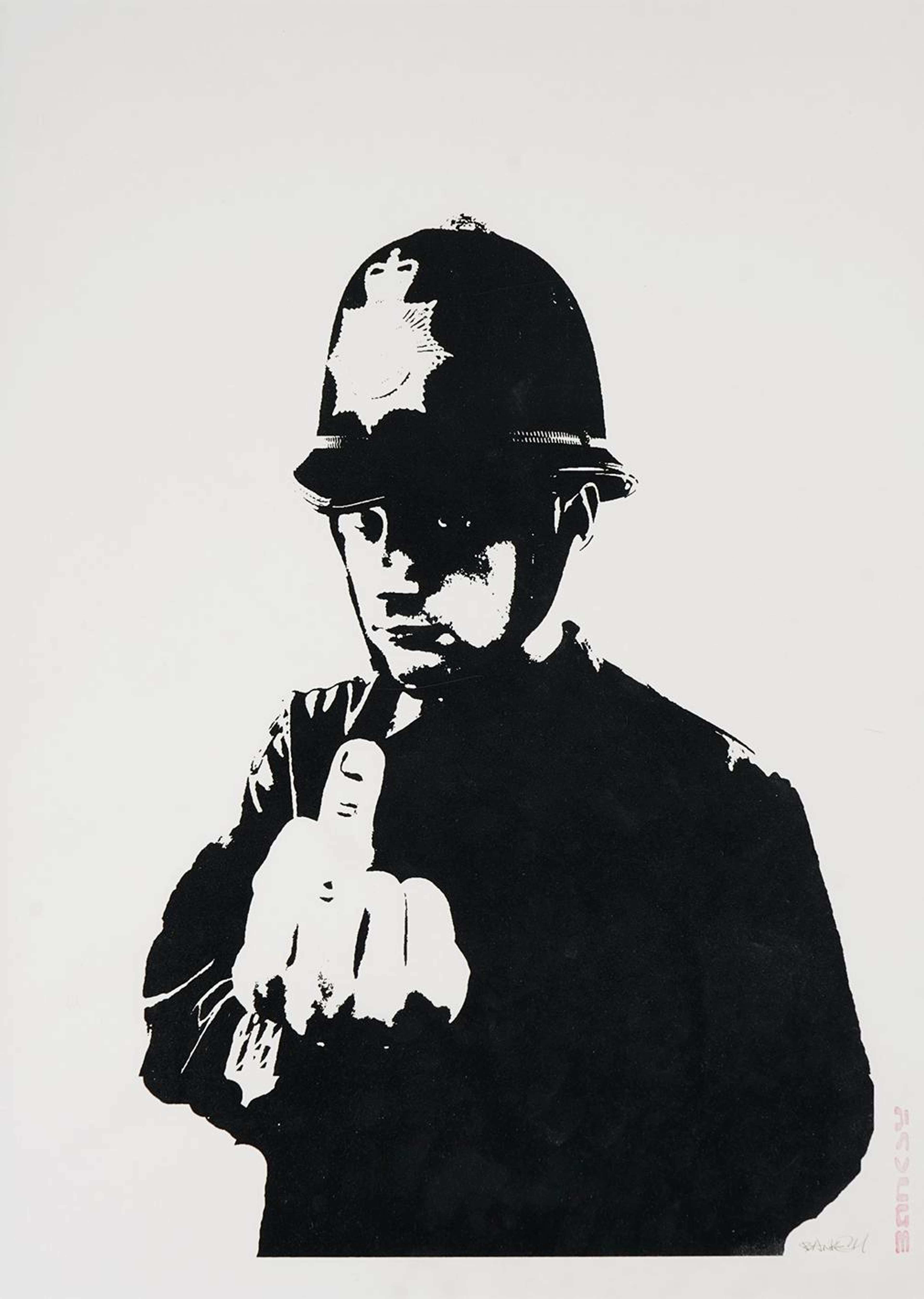
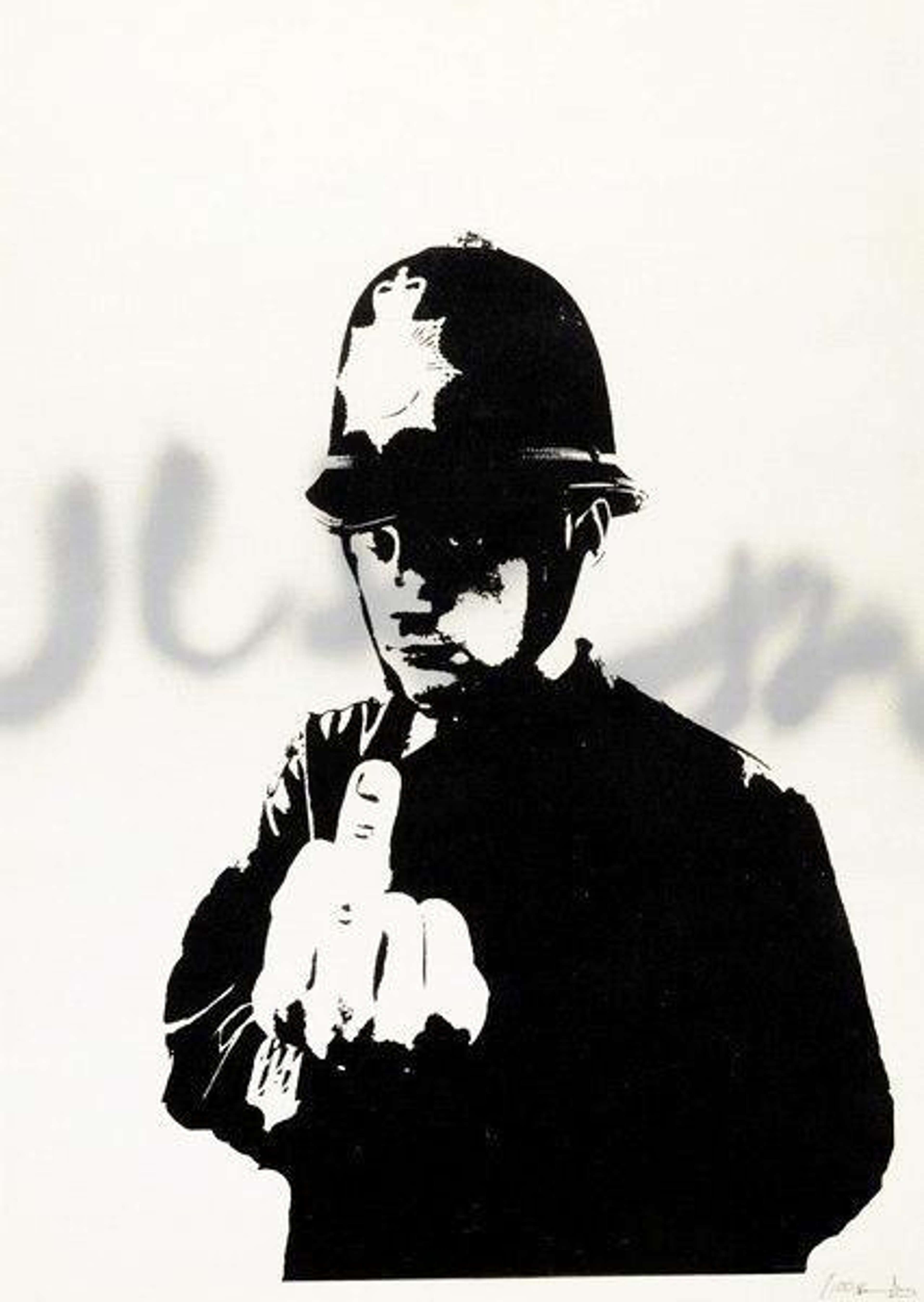
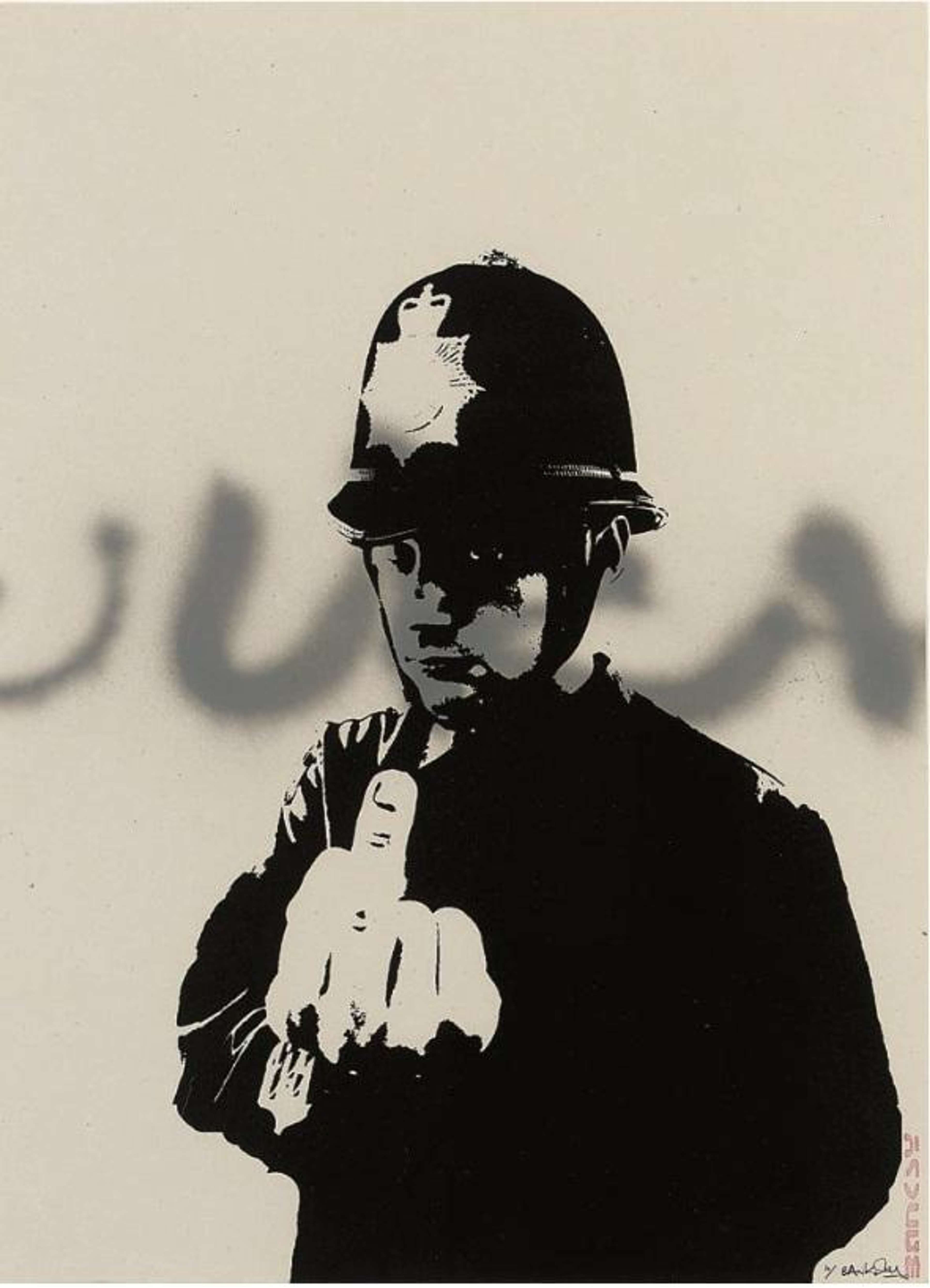
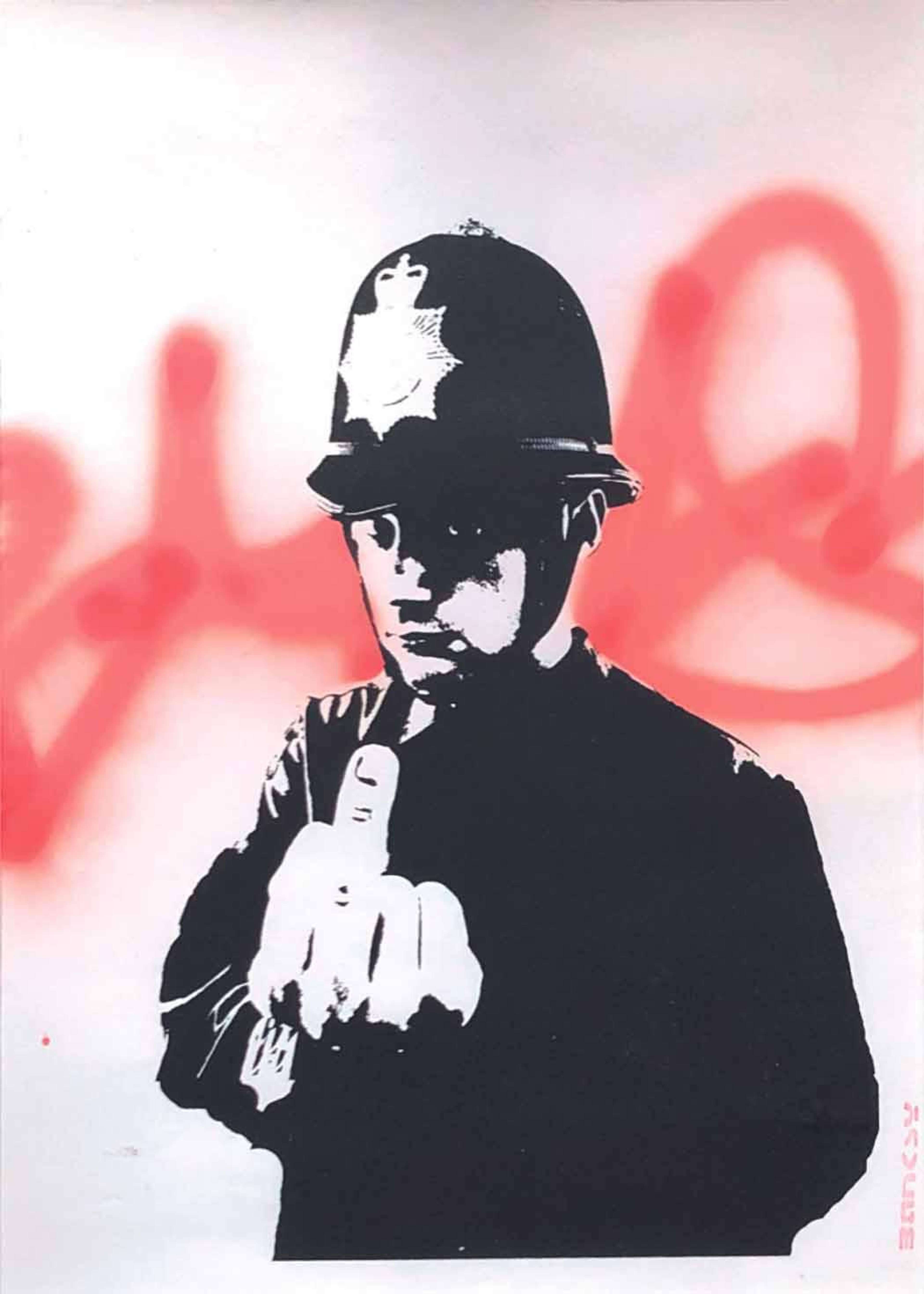
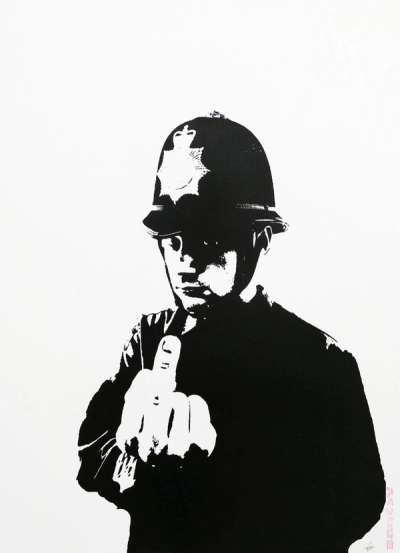
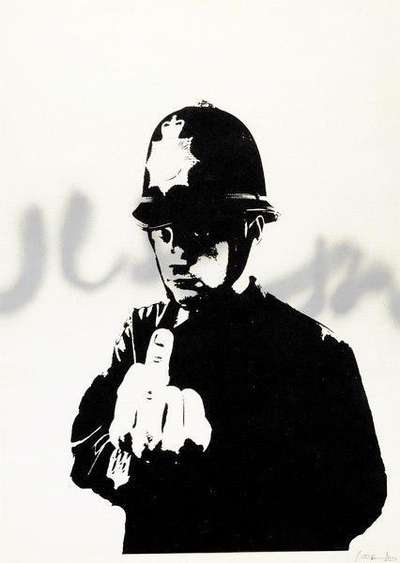
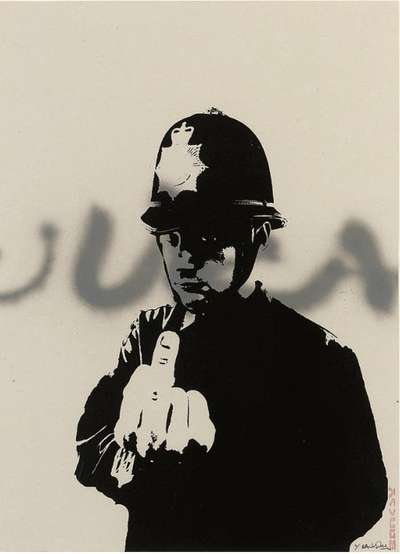
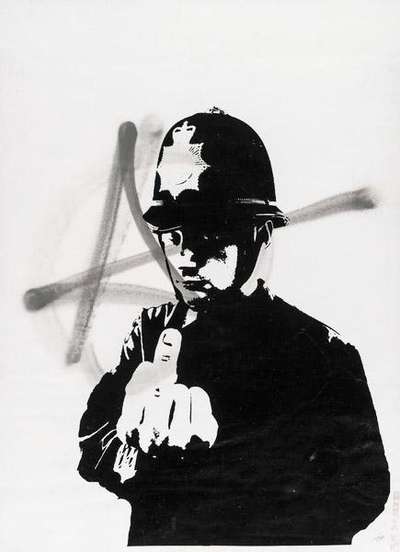
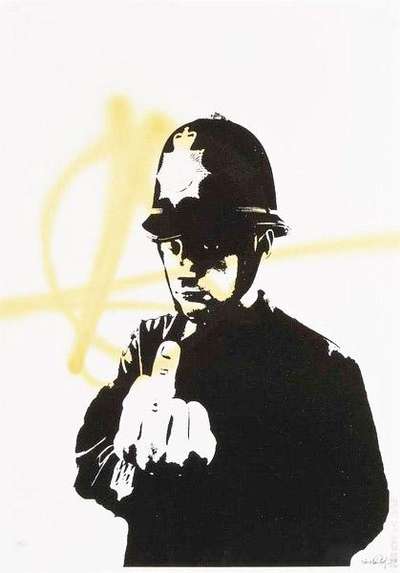
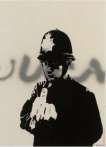
Rude Copper displays Banksy's disdain for police, created in response to the controversial 2000 Terrorism Act increasing the force's stop and search powers. The classic British ‘bobby’ is shown flipping the bird to the viewer; Banksy's use of foreshortening impactfully emphasizes the policeman’s intimidating and ‘rude’ disposition.
Banksy Rude Copper For sale
Rude Copper Value (5 Years)
Works from the Rude Copper series by Banksy have a strong market value presence, with 58 auction appearances. Top performing works have achieved standout auction results, with peak hammer prices of £125000. Over the past 12 months, average values across the series have ranged from £10000 to £70000. The series shows an average annual growth rate of 12.25%.
Rude Copper Market value
Auction Results
| Artwork | Auction Date | Auction House | Return to Seller | Hammer Price | Buyer Paid |
|---|---|---|---|---|---|
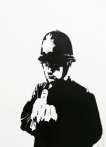 Rude Copper Banksy Unsigned Print | 4 Jun 2026 | Phillips London | £7,650 | £9,000 | £13,000 |
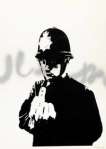 Rude Copper Banksy Signed Mixed Media | 1 Mar 2024 | Bonhams Los Angeles | £51,000 | £60,000 | £70,000 |
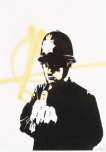 Rude Copper (Anarchy) Banksy Signed Print | 4 Sept 2020 | Forum Auctions London | £110,500 | £130,000 | £160,000 |
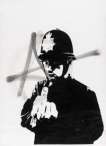 Rude Copper (Anarchy) Banksy Signed Mixed Media | 21 Jan 2020 | Forum Auctions London | £68,000 | £80,000 | £90,000 |
 Rude Copper (hand finished) Banksy Signed Print | 16 Sept 2009 | Christie's London | £5,100 | £6,000 | £8,000 |
Sell Your Art
with Us
with Us
Join Our Network of Collectors. Buy, Sell and Track Demand
Meaning & Analysis
Issued in 2002, Rude Copper was Banksy’s first print release. A work vaunting the artist’s contempt for authority, it depicts a British policeman giving 'the finger'. Stencilled in Banksy's signature black and white style, the work uses a perspectival technique called 'foreshortening' to give the impression that the policeman's hand is coming out of the frame, and moving towards us.
The figure depicted wears a custodian helmet, traditionally worn by police on patrol in England and Wales, recalling the old-fashioned allure of TV programmes such as Heartbeat, which romanticised the police force. The model for Rude Copper was an artist named Jay Jay Burridge, who is rumoured to have shared an artist's studio next door to Banksy. Here, the benevolent stereotype of the 'Bobby' is turned on its head; the figure glares out at us, half in shadow, with an insolent stare that suggests his nature as an impersonator who has donned police uniform. A cutting satire of modern policing methods, Banksy makes clear that the figure in question is anything but a true 'copper'.
The inspiration for Rude Copper was the 2000 Terrorism Act, which gave police officers the power to stop and search without suspicion (this power was overruled by a European Court of Human Rights ruling in 2010). With his powerful depiction of a forceful gesture - giving 'the finger' - Banksy appears to be warning the public to be wary of the authorities; at the same time, the artist alludes to the law’s apparent disdain for the disadvantaged, and perhaps even the police force's widespread corruption and endemic racism.
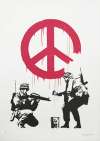
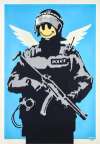
Banksy is well known for his criticism of the establishment and the figures that uphold it. Banksy prints that invoke a similar theme include Flying Coppers, Kissing Coppers, Applause, CND Soldiers, Golf Sale, Happy Choppers and Have a Nice Day. Some of these works criticise the trivialisation of warfare; others, such as Turf War, Queen Victoria and Monkey Queen, mock some of the UK’s most historic rulers.