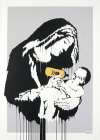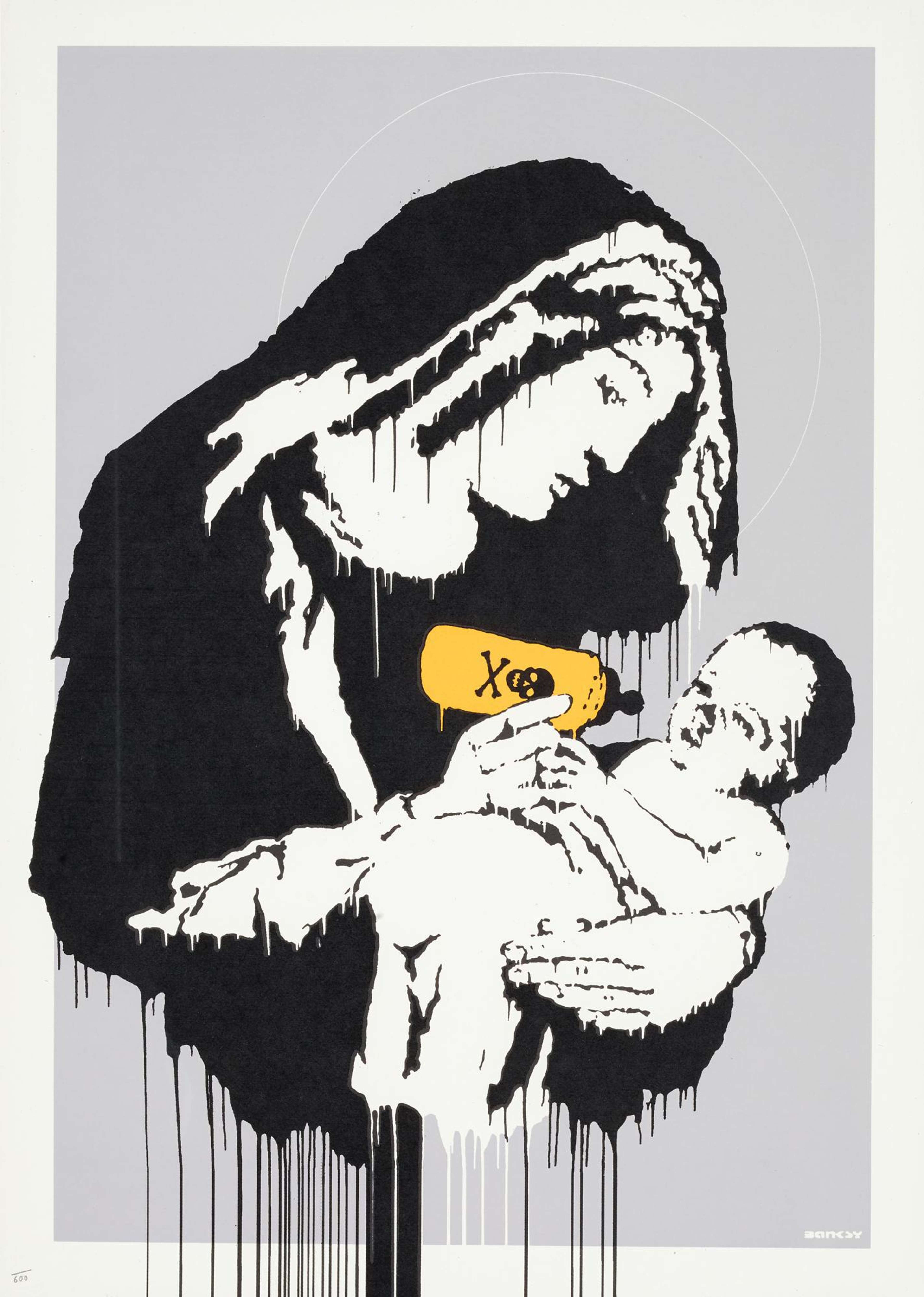


Banksy’s Toxic Mary (2003) reimagines the Madonna and Child, the baby fed from a bottle marked with a skull-and-crossbones. The series critiques organised religion and consumer culture, turning classical religious iconography into a pointed indictment of social control and exposing how harmful beliefs pass between generations.
Renaissance iconography is deliberately subverted in Toxic Mary
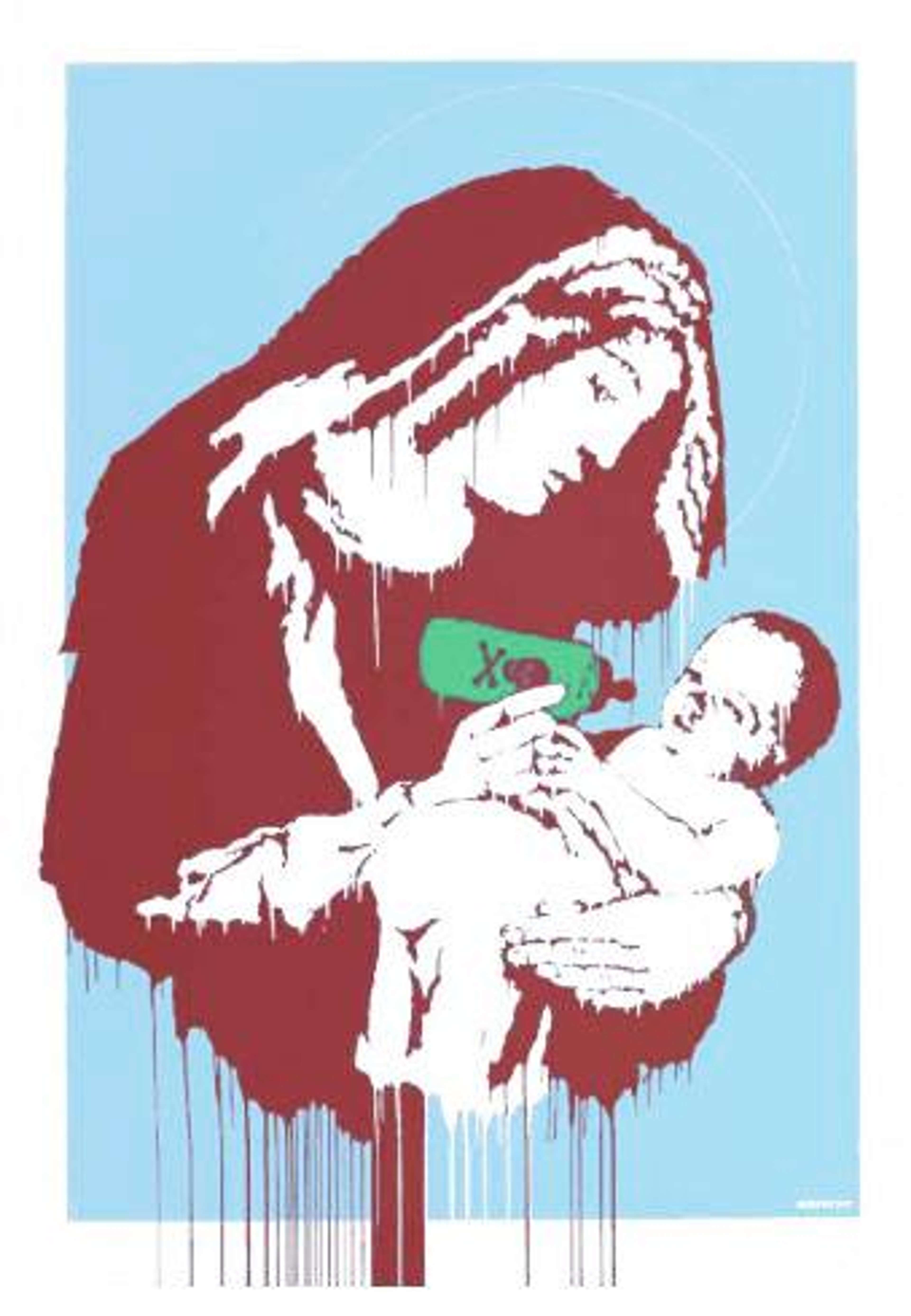
In Toxic Mary, Banksy deliberately references the familiar motif of the Madonna and Child, a staple of Renaissance painting and most famously depicted by artists such as Raphael. However, instead of a serene mother's gaze and a cherubic baby, we see Mary feeding her child from a bottle marked with a poison symbol, challenging the sanctity of the tradition. By doing so, Banksy critiques the visual language of piety, forcing viewers to reflect on how beliefs are packaged and passed on.
The skull-and-crossbones bottle replaces nourishing breastmilk
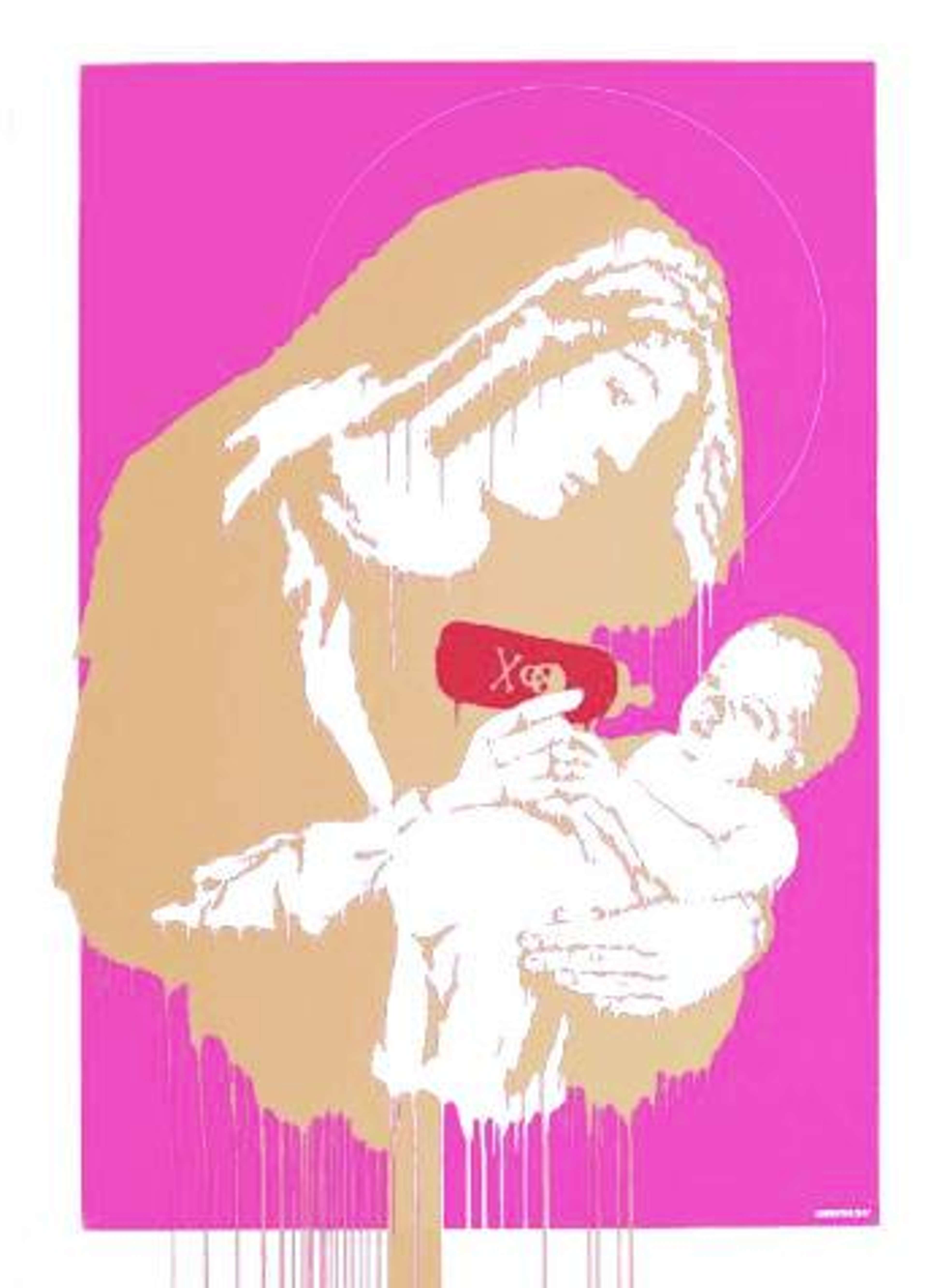
Rather than depicting Mary breastfeeding or offering a symbolic blessing, Banksy places a bottle labelled with skull and crossbones into the child’s mouth. This substitution suggests that the nurturing act has become corrupted, suggesting that religion can sometimes behave like a poison that passes from one generation to the next. The shift from natural maternal feeding to a branded bottle implies both commodification and contamination of cultural transmission.
Banksy uses dripping paint to visually express decay and disintegration
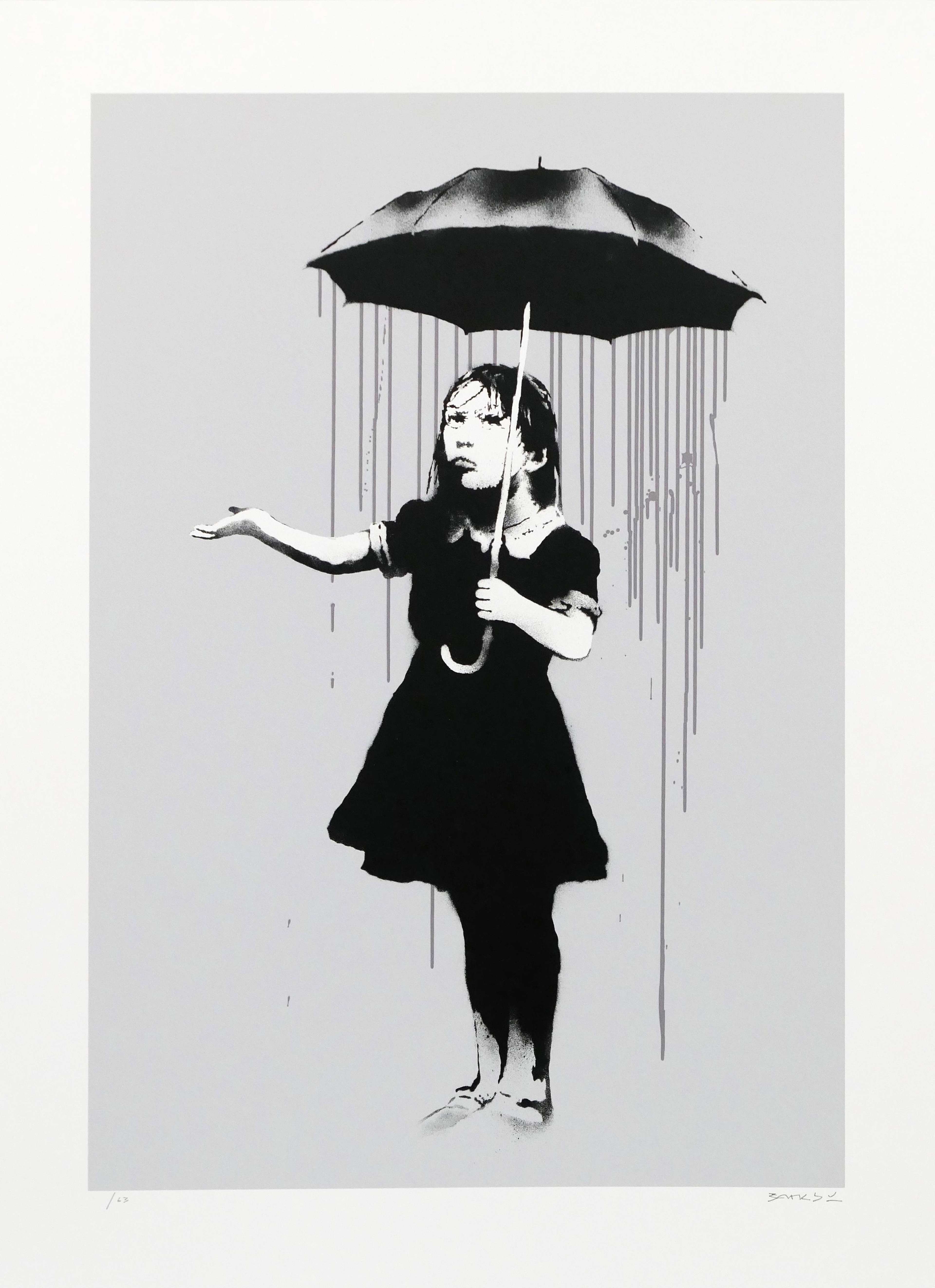
While Banksy is usually known for his sharp stencil technique, in Toxic Mary he allows the image to drip and bleed beyond its frame. These melting effects give a sense of decay and suggest authority dissolving under its own contradiction. The drips also subvert the clean lines of classical religious art and make the image feel as if the icon is disintegrating. This technique reinforces the message that what seems solid is in fact unstable.
Toxic Mary is also a critique of capitalism
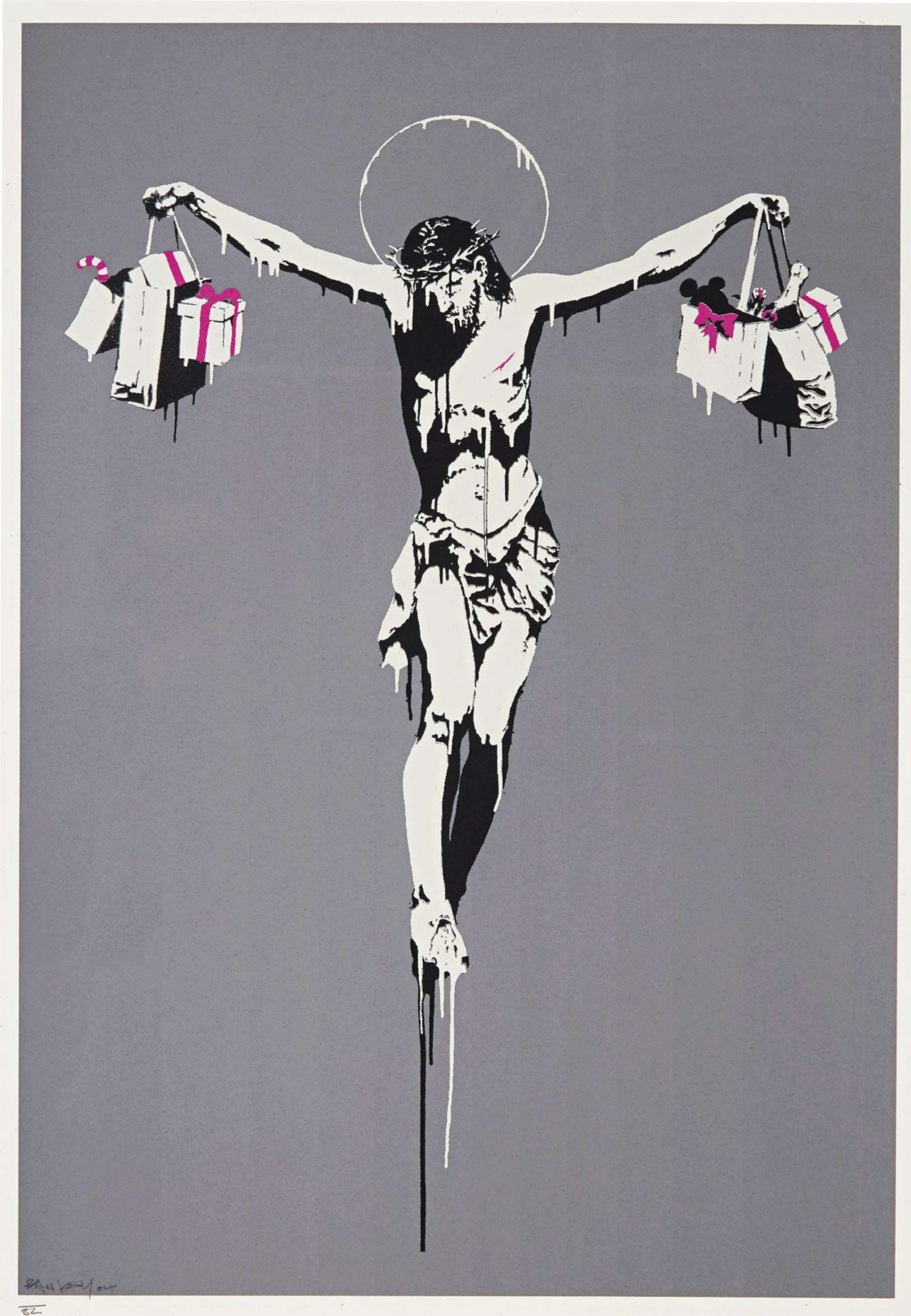
Although superficially a critique of Christian iconography, Toxic Mary also functions as an anti-capitalist statement. The bottle points to how nurturing has been hijacked by industrial culture, medicine and branding, and Banksy draws a parallel with how religion commodifies devotion just as capitalism commodifies care. Through combining religious and commercial imagery, he exposes how consumer culture and institutional religion can converge in their control of bodies and beliefs.
Toxic Mary first appeared at Banksy’s 2003 Turf War exhibition in London
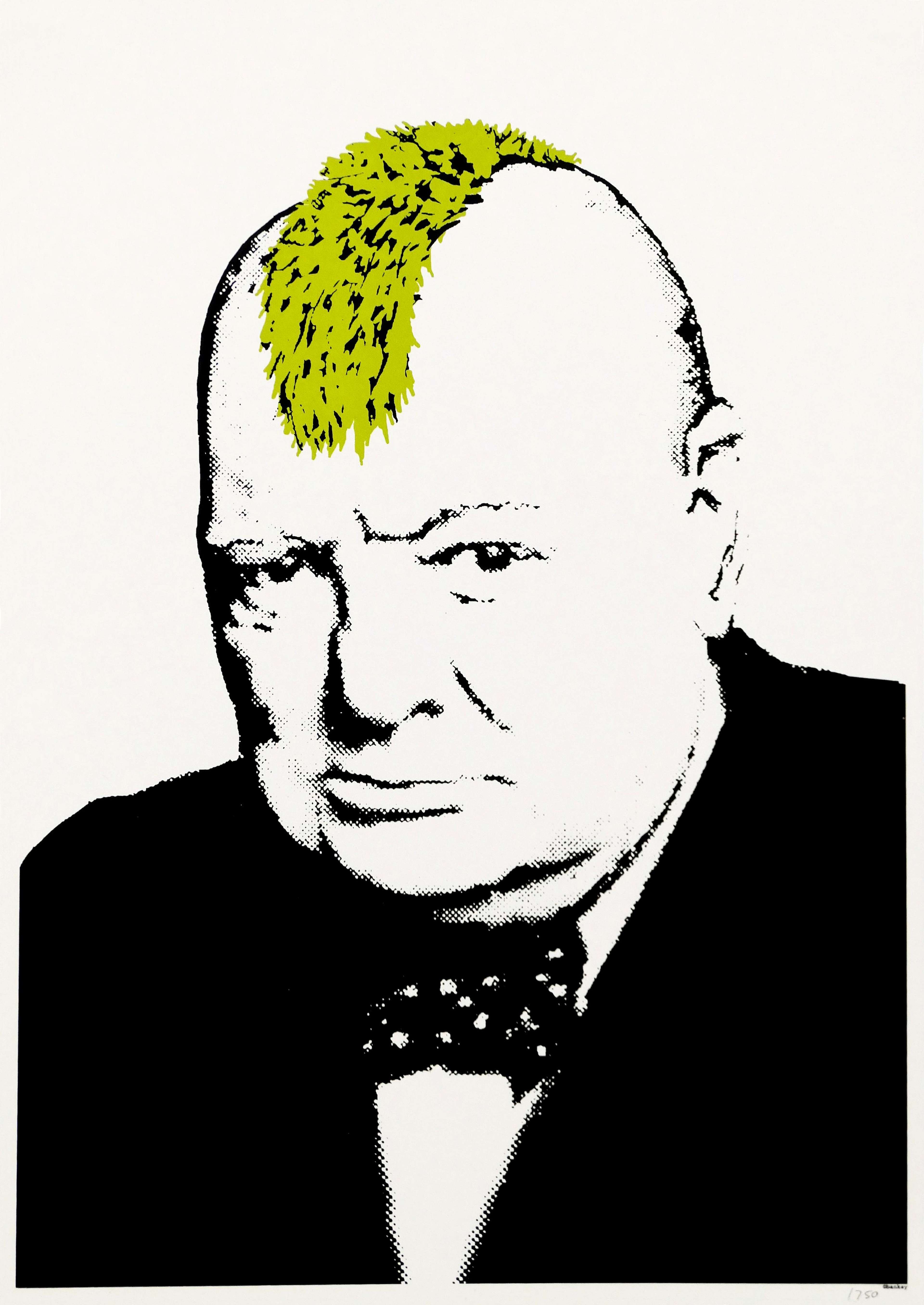
Toxic Mary debuted at Banksy’s 2003 London show Turf War, held in a disused warehouse in London’s East End. This was the artist’s first major solo show, staged with characteristic secrecy and complete with live animals painted with police insignia, portraits of political leaders as clowns, and installations. Amid this anarchic display, Toxic Mary made its debut, appropriating classical art to expose modern corruption and cementing his reputation as one of Britain’s most subversive cultural commentators.
Toxic Mary prints were originally sold for £75
When first released in 2003, Toxic Mary prints were priced at around £150 for signed editions and about £75 for unsigned editions. Two decades later, these prints are worth tens of thousands. The current record price for a print in this series is a signed Toxic Mary (AP pink), which achieved £95,760 (hammer) in 2021 in a Sotheby’s online sale.
The original title for Banksy’s Toxic Mary series was “Virgin Mary”
Before becoming known as Toxic Mary, the print was first titled Virgin Mary - a name that positioned it even more provocatively within the realm of religious art. The later change mimics the idea that sacred figures can be re-branded through contemporary anxieties about purity, contamination and control.
Toxic Mary uses motherhood to create tension between care and control
Toxic Mary explores the emotional contradictions of motherhood by using the Madonna and Child as a study of conflicted nurture. The Virgin’s calm expression, paired with the poisoned bottle, creates a tension between care and control that recurs throughout Banksy’s work, where authority often masquerades as protection.
The skull-and-crossbones hazard symbol makes Toxic Mary’s critique universally understandable
By deploying the skull-and-crossbones symbol, Banksy uses a global hazard motif that needs no translation. The Madonna and Child are instantly reframed through the visual language of the warning label, fusing devotion and danger to ensure the message of harm is immediate.
Toxic Mary is a commentary on generational inheritance
Toxic Mary visualises how religion, norms and commercial narratives move from parent to child through rituals, lullabies, stories, and branded objects. The bottle acts as a conduit for ideas about purity, obedience, gender and power. The image invites viewers to reflect on their own inheritances and the quiet ways in which love might perpetuate control.