

Yet despite this growth, Dylan’s art market remains one of the most misunderstood corners of the contemporary editions world.
Collectors regularly encounter a strange contradiction. A gallery might offer a Dylan print for £6,000, £8,000, even £10,000. Yet the same work may appear on the secondary market for half that figure. Sometimes less.
This pricing distortion has created confusion for buyers and frustration for collectors who assumed the gallery price represented the real value of the work. The reality is simpler. Dylan’s print market is not broken. It is just structured in a way that makes the gap between retail price and real market value unusually visible. Understanding that gap is the key to buying Dylan’s work intelligently in 2026.
Dylan the Artist: A Print Market Born from the Road
Dylan’s visual art is deeply connected to his life as a touring musician.
Between 1989 and 1992, while travelling across America and Europe, Dylan produced a series of quick sketches capturing the places he encountered along the way. These drawings formed the basis of what would later become the Drawn Blank series, first exhibited publicly in the mid-2000s.
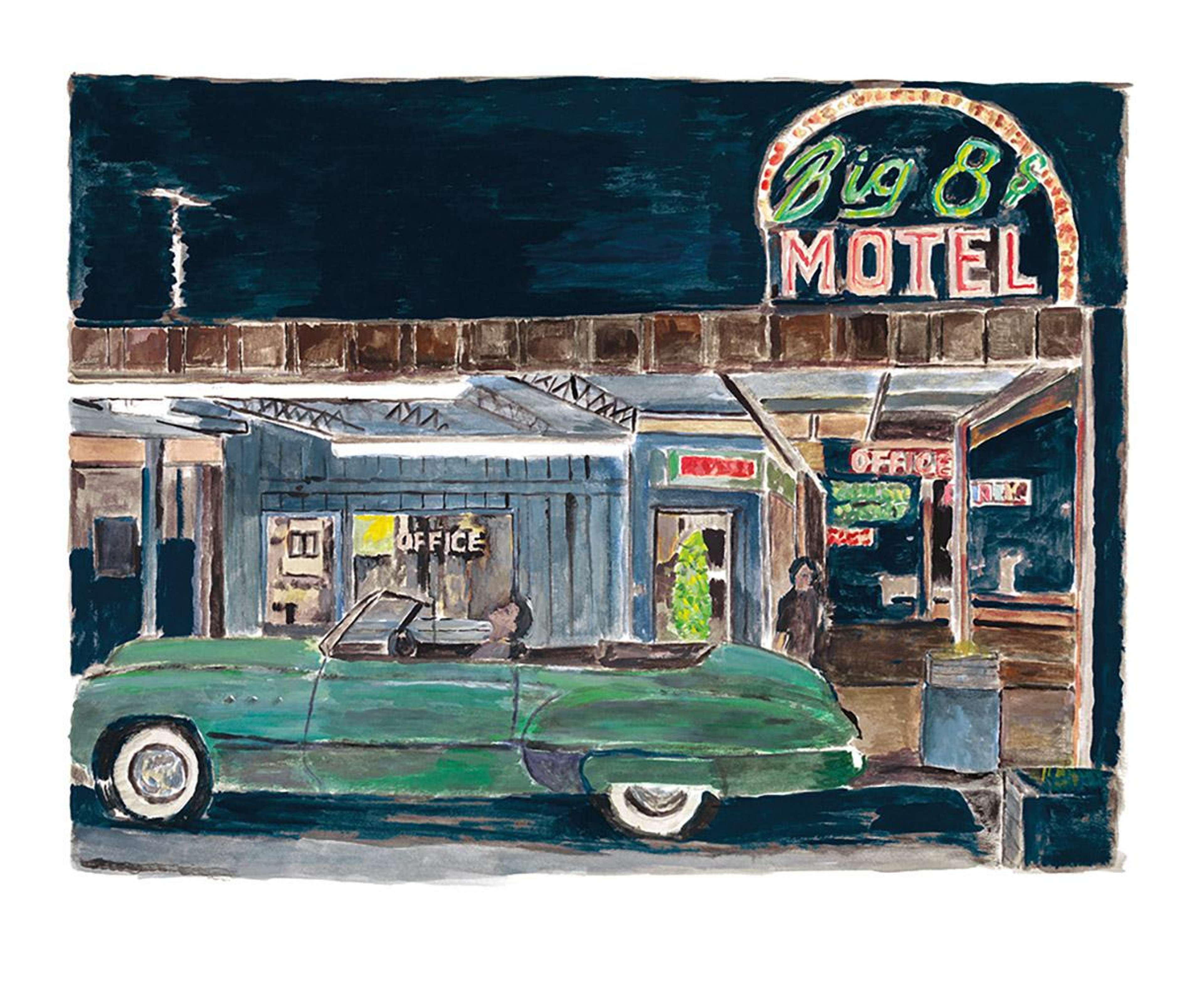
The works are not grand studio compositions. They are observations. A motel pool in the afternoon heat. Train tracks stretching across a flat horizon. An empty café table. A bicycle leaning against a wall.
The subjects feel cinematic. Almost like still frames from a road movie.
In 2007 these drawings were transformed into colour works and released as limited edition prints. Almost immediately, they became the foundation of Dylan’s art market.
Today the Drawn Blank series remains the most widely traded body of Dylan prints.
Typical secondary-market prices for individual works generally sit between £800 and £4,000, depending on subject, colour variant, and condition.
But many collectors first encounter these works in galleries at significantly higher prices.
And that is where the confusion begins.
Buying a Bob Dylan from a Gallery
The biggest misunderstanding in the Dylan market is about pricing structure.
Many Dylan collectors encounter the work through galleries that represent official publishers or distribute new releases. In these environments the works are presented as contemporary art editions connected to a globally recognised cultural figure. And priced accordingly.
Retail gallery prices often range from £5,000 to £12,000, and even higher - depending on the series and presentation. Yet when those same works appear at auction or on the secondary market, the realised prices can be dramatically lower. This does not necessarily mean galleries are behaving unfairly. Retail art pricing includes exhibition space, marketing, framing, inventory risk, and the costs of running a gallery business.
But it does mean that the gallery price is not a reliable indicator of true market value. In most contemporary print markets this gap exists quietly behind the scenes. In Dylan’s market it is simply more obvious. Collectors who buy purely through galleries often assume they are paying the market price. In reality they are paying the retail price. The secondary market tells a different story.
The Core Bob Dylan Print Series
While Dylan continues to produce new work, a handful of series define the market collectors encounter today:
Drawn Blank
The Drawn Blank series is the centre of Dylan’s print market.
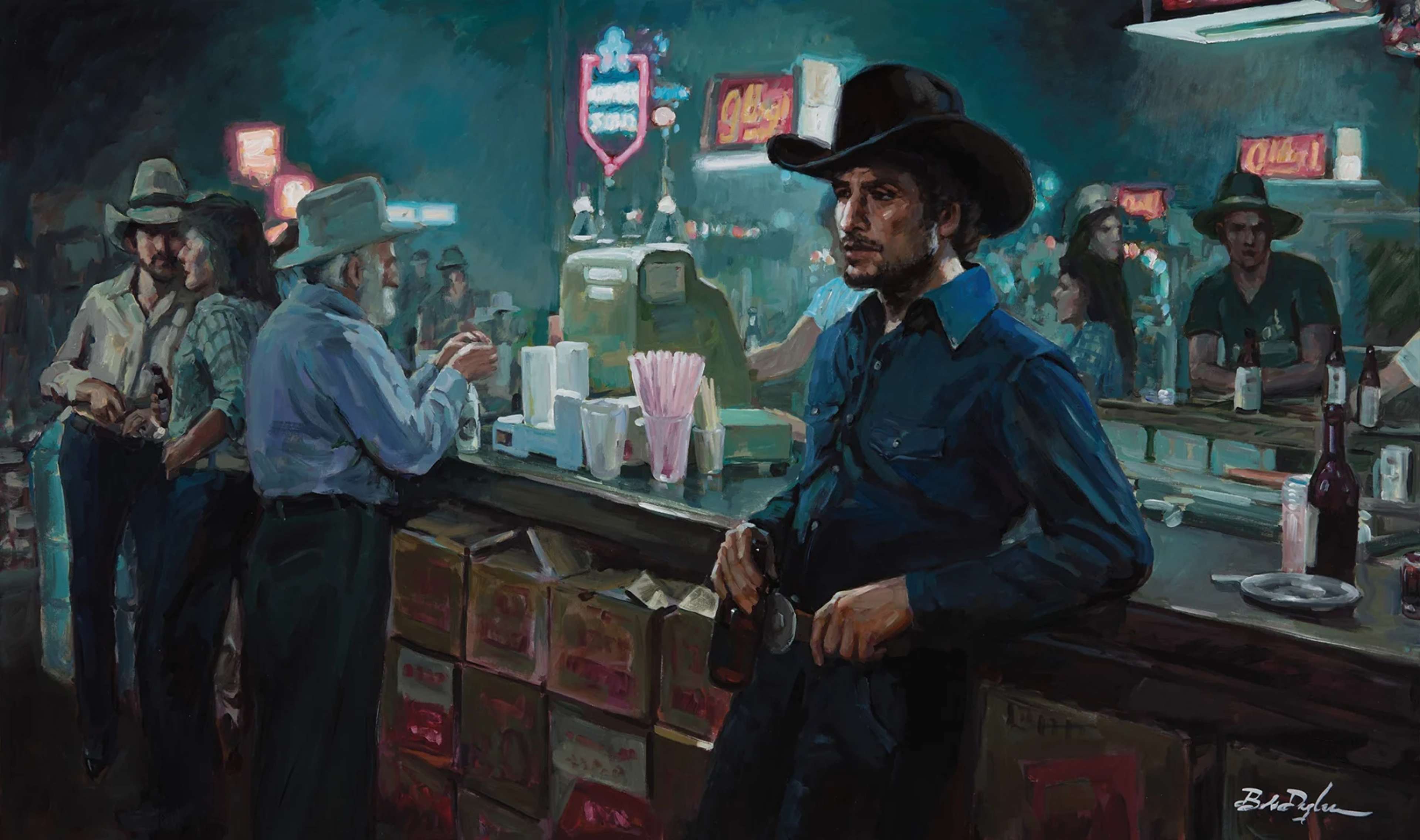
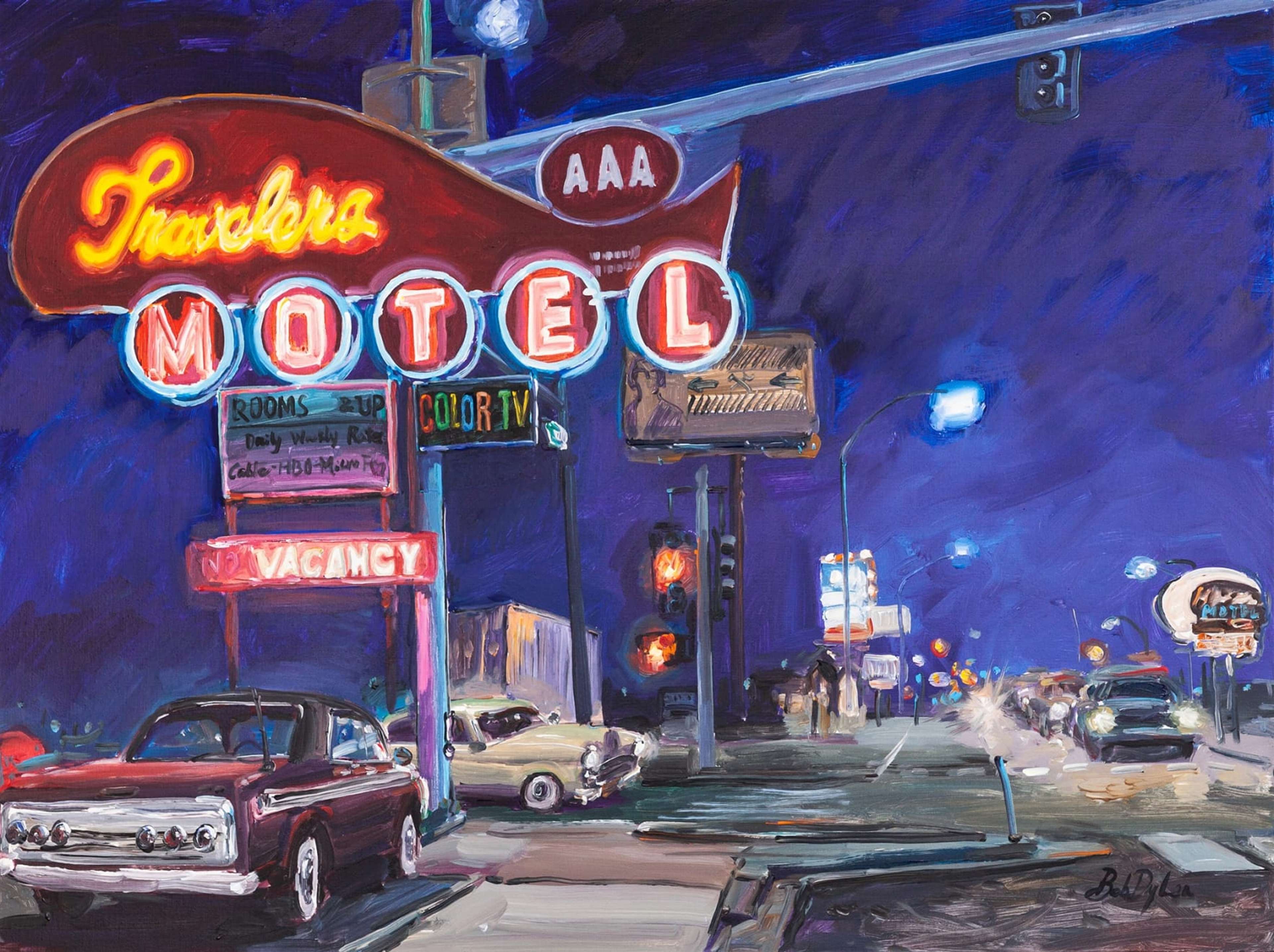
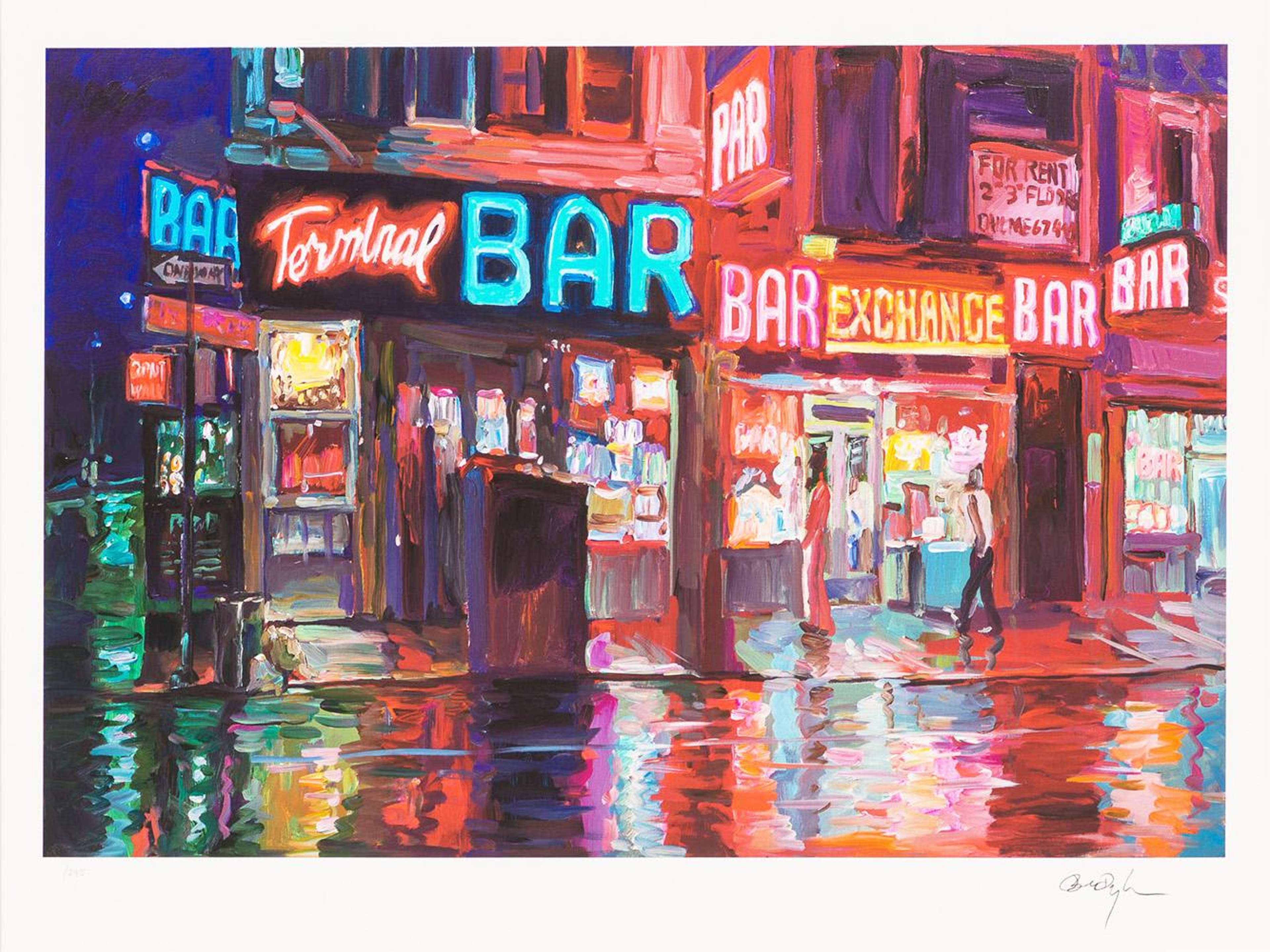
The works revisit Dylan’s touring sketches with vibrant colour variations. The imagery is often simple but evocative. Train tracks. Bar interiors. Motel rooms. Sunflowers in a jar.
Many were produced in editions of roughly 295 impressions, usually as signed giclée prints.
Certain subjects have become particularly popular with collectors, including:
These works tend to perform consistently on the secondary market because they capture the atmosphere collectors associate with Dylan’s mythology: the restless traveller moving through anonymous American landscapes. For buyers entering the Dylan market, Drawn Blank remains the most liquid and recognisable series.
The Beaten Path
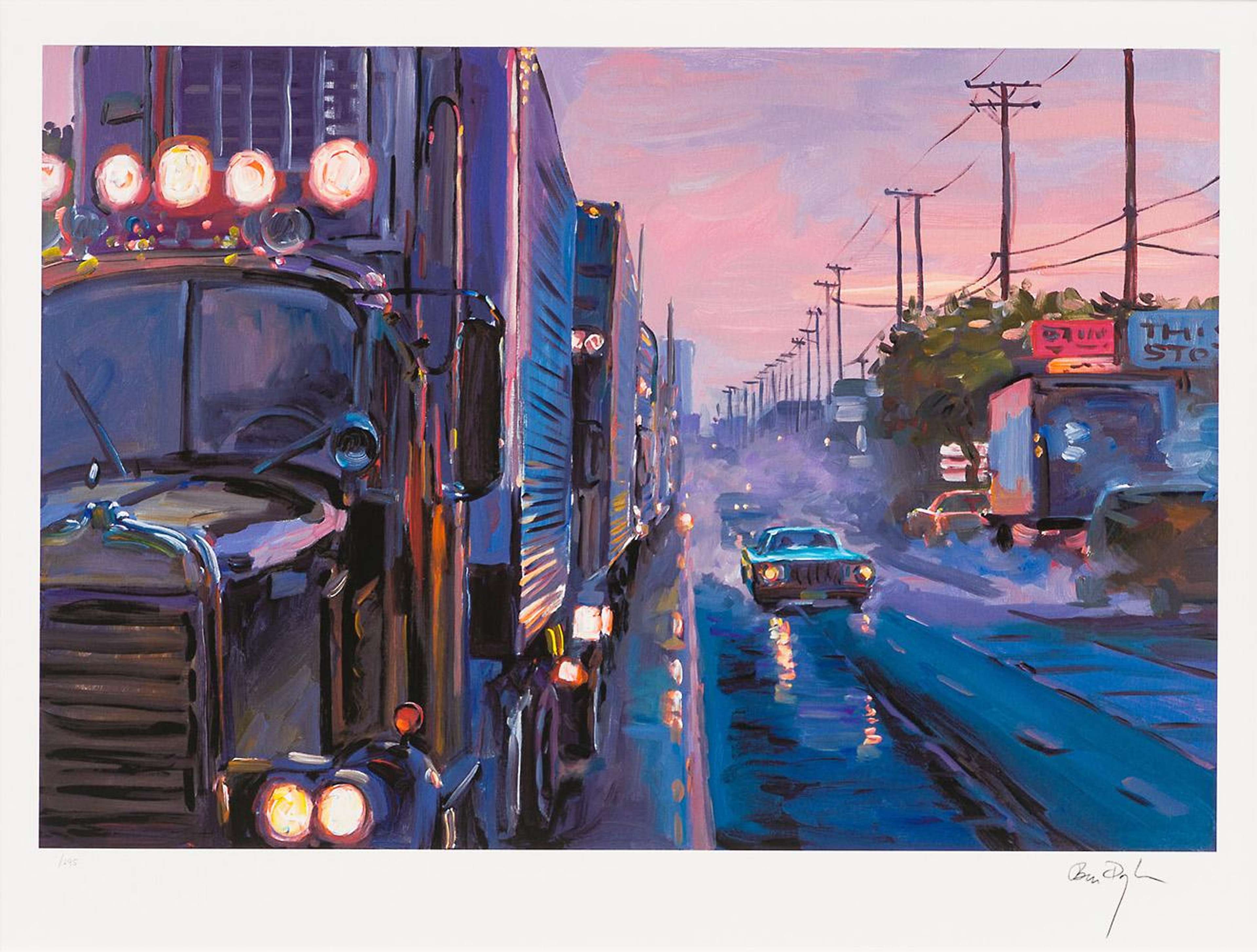
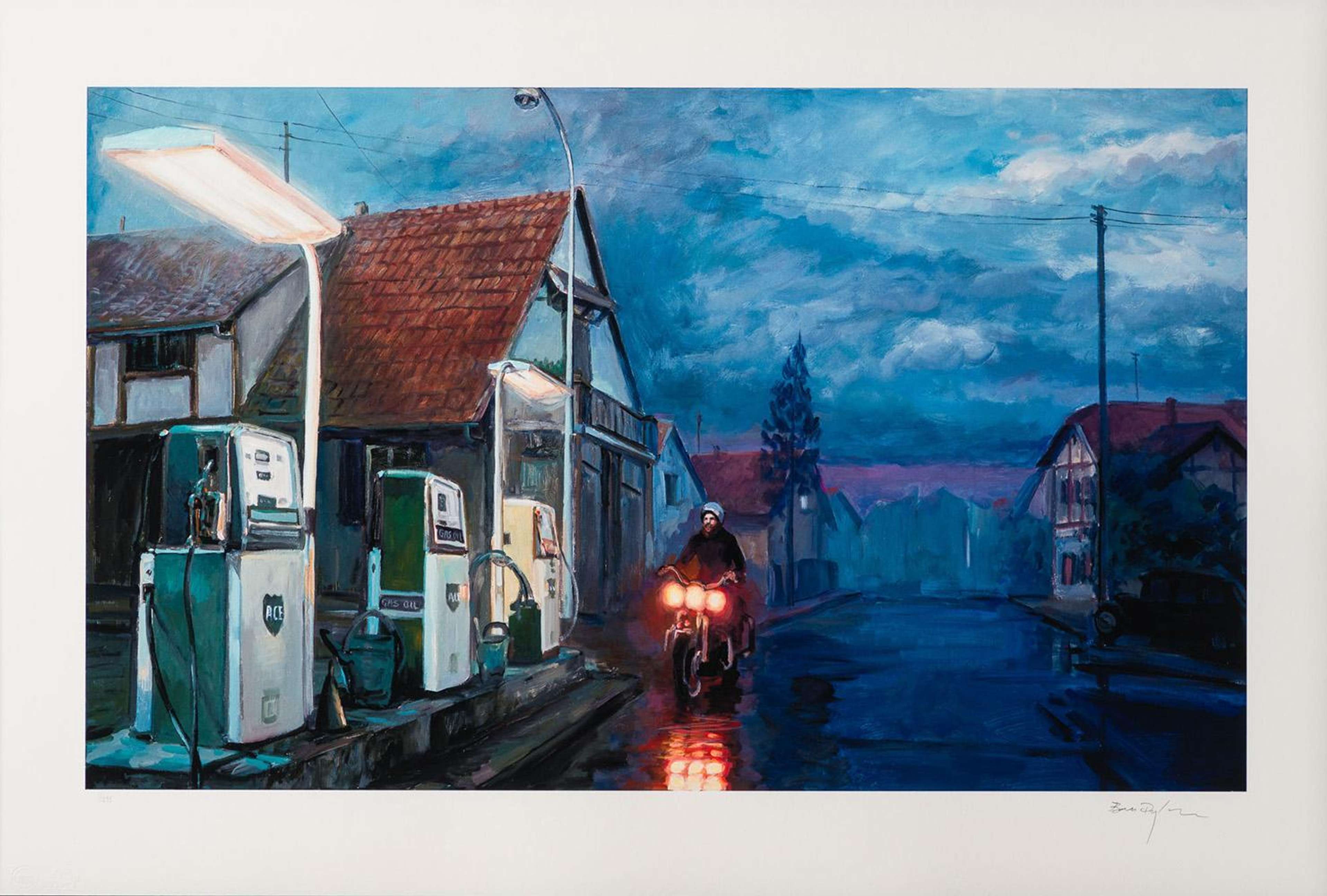
Released in the mid-2010s, The Beaten Path expands Dylan’s fascination with roadside America.
The works depict quiet highways, diners, motels and small towns scattered across the American landscape. They feel slightly more expansive than the Drawn Blank interiors, almost like wider cinematic frames.
Pricing on the secondary market tends to sit in a similar range to Drawn Blank works, although gallery prices can again be considerably higher.
Mondo Scripto
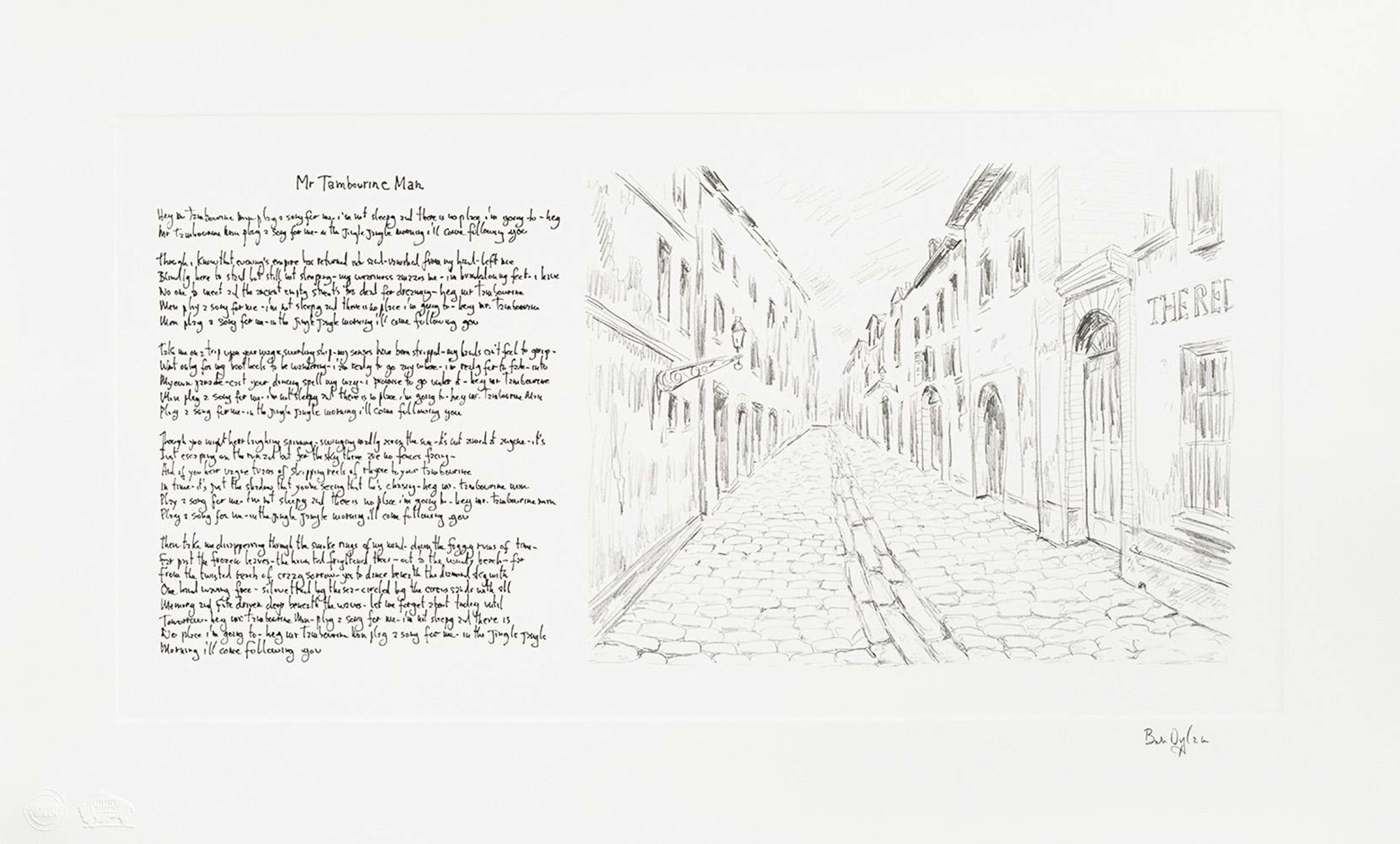
One of Dylan’s more conceptually interesting projects is Mondo Scripto, a series combining handwritten song lyrics with accompanying drawings.
Each piece pairs a famous Dylan lyric sheet with a loose illustration. The works appeal particularly to music collectors because they bring Dylan’s songwriting directly into the visual work.
Despite the cultural appeal, the secondary market for these pieces has historically been more modest. Many have sold at auction between £800 and £3,000, making them one of the more accessible entry points into Dylan’s art.
Side Tracks
At the higher end of Dylan’s print market are the Side Tracks works.
These pieces often incorporate references to specific concerts or tour moments and are sometimes hand-embellished.
Because of their relative scarcity and narrative link to Dylan’s touring history, these works have occasionally achieved much stronger prices at auction, with some examples exceeding £20,000.
They remain a smaller but notable part of the overall market.
Prints vs Originals
Dylan also produces original works on paper and paintings.
These appear far less frequently on the market and can achieve significantly higher prices when they do surface. Some have sold for tens of thousands of pounds.
But originals represent a relatively small segment of Dylan’s art market.
For most collectors, the real activity takes place in the print market, where the works are more widely available and prices remain accessible compared with many contemporary artists.
Where to Buy a Bob Dylan in 2026
For buyers today there are essentially three routes into the Dylan market:
Bob Dylan: Buying at Halcyon & Castle Fine Art
Galleries, such as Halcyon and Castle Fine Art remain the primary source for new releases and exhibitions. They offer a polished buying experience and often handle framing, certification, and presentation. But they also represent the highest pricing tier in the market, do check if the work you’re looking for is available on the secondary market via auction first. We can do this for you and set up an alert when one comes to market. Browse Dylan works here.
For collectors focused on acquiring a specific fresh to market primary work they love rather than weighing up market value, galleries may still make sense. For buyers interested in fair pricing, caution is required.
Buying a Bob Dylan Work at Auction
Auction houses regularly include Dylan prints in contemporary prints and edition sales. These sales provide a clearer picture of real collector demand and price levels. They also introduce competition between buyers.
Auction purchases come with buyer’s premiums that can add roughly 25 to 30 % to the hammer price. Auctions are often the best place to observe how Dylan’s market actually behaves, and where better value for money can be made in this specific market. Browse works here, and enquire to buy through our partners.
Why Dylan’s Market Feels So Confusing
Three structural factors make Dylan’s art market feel inconsistent.
First, the gap between gallery retail prices and secondary market values is unusually visible.
Second, Dylan’s collector base is split between art collectors and music fans, two groups that approach the work with very different expectations.
And third, many of the editions are relatively large, which naturally moderates price growth on the resale market.
None of these factors indicate a weak market. They simply create a market that behaves differently from the blue-chip print markets collectors may be more familiar with.
The Story Behind the Works
Ultimately the appeal of Dylan’s art lies less in technical mastery and more in narrative.
The works feel like fragments of the same American landscape that appears throughout his songs. Motels, trains, bars, empty streets. Places that seem familiar but slightly distant.
They reflect the life of someone who has spent decades moving through cities and highways, observing the quiet details most travellers overlook.
For many collectors, owning a Dylan print feels less like acquiring a piece of contemporary art and more like owning a visual extension of Dylan’s songwriting.