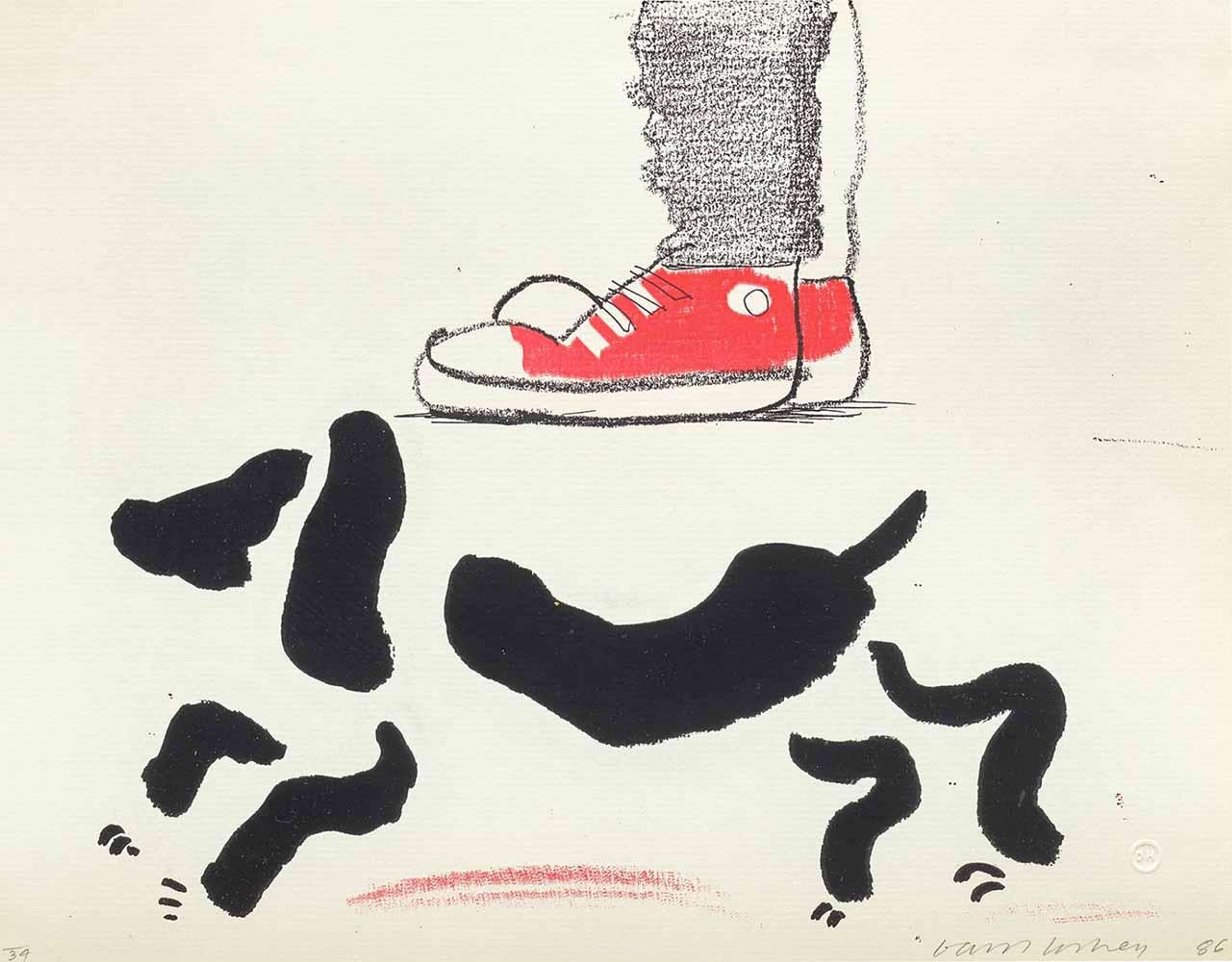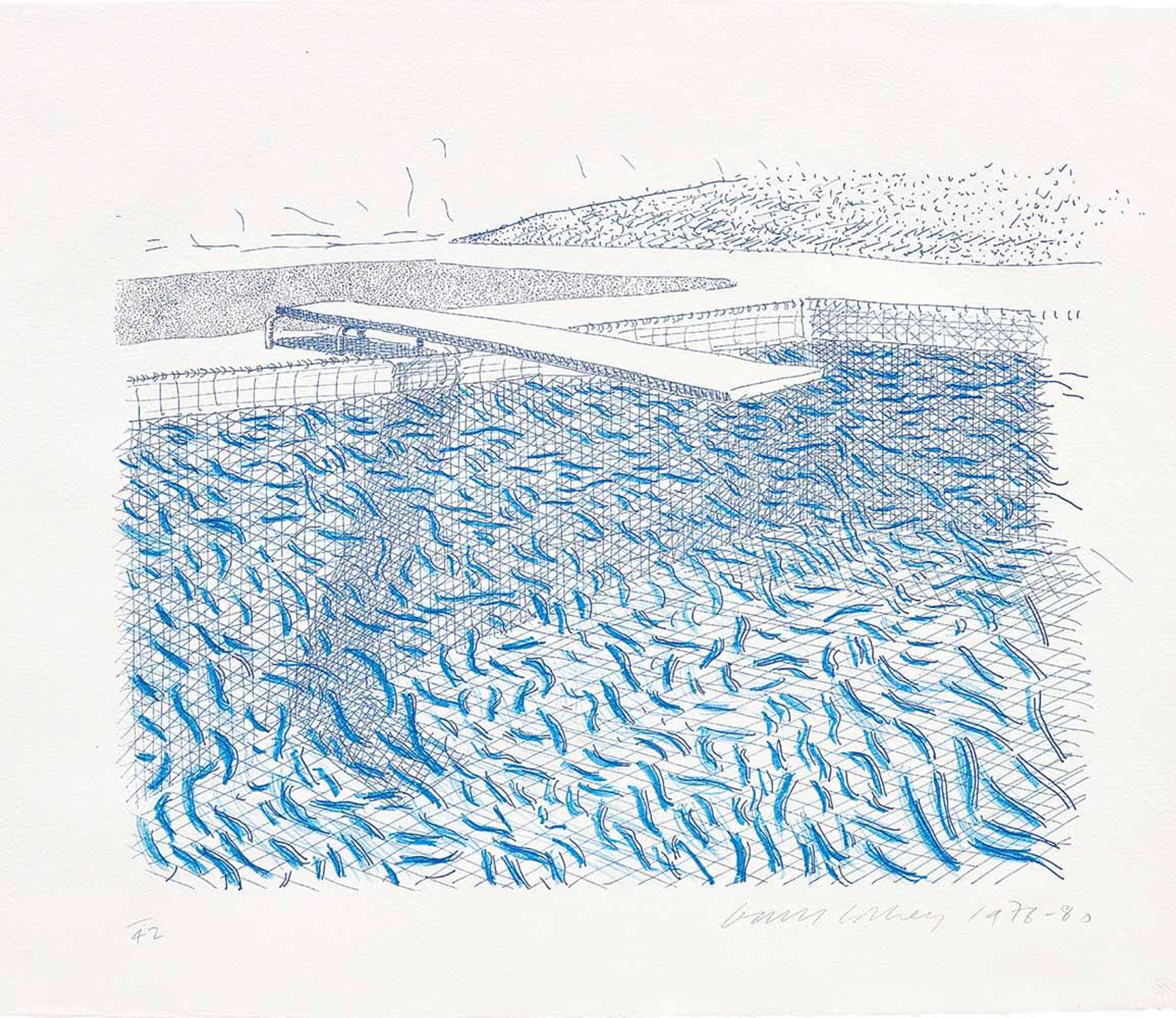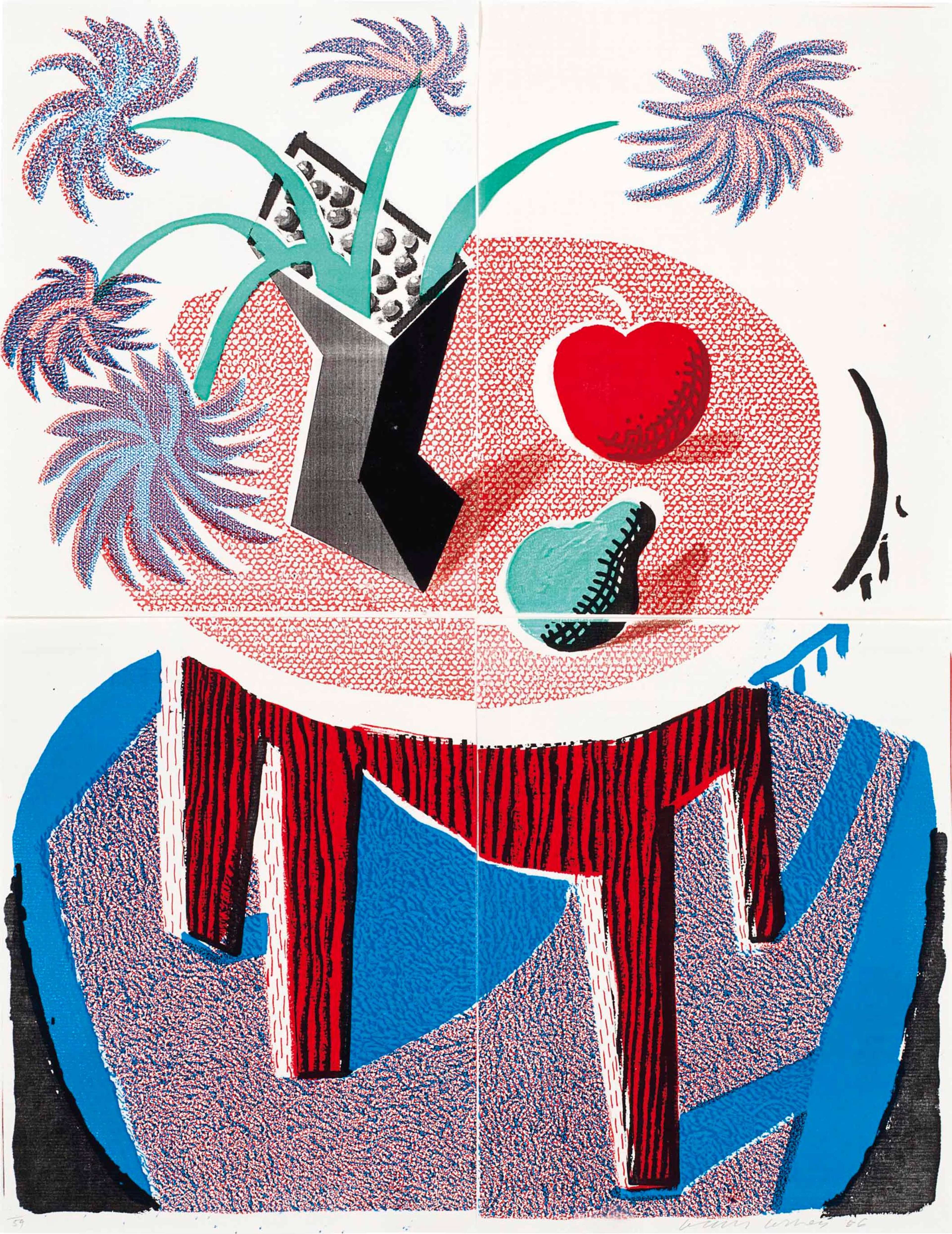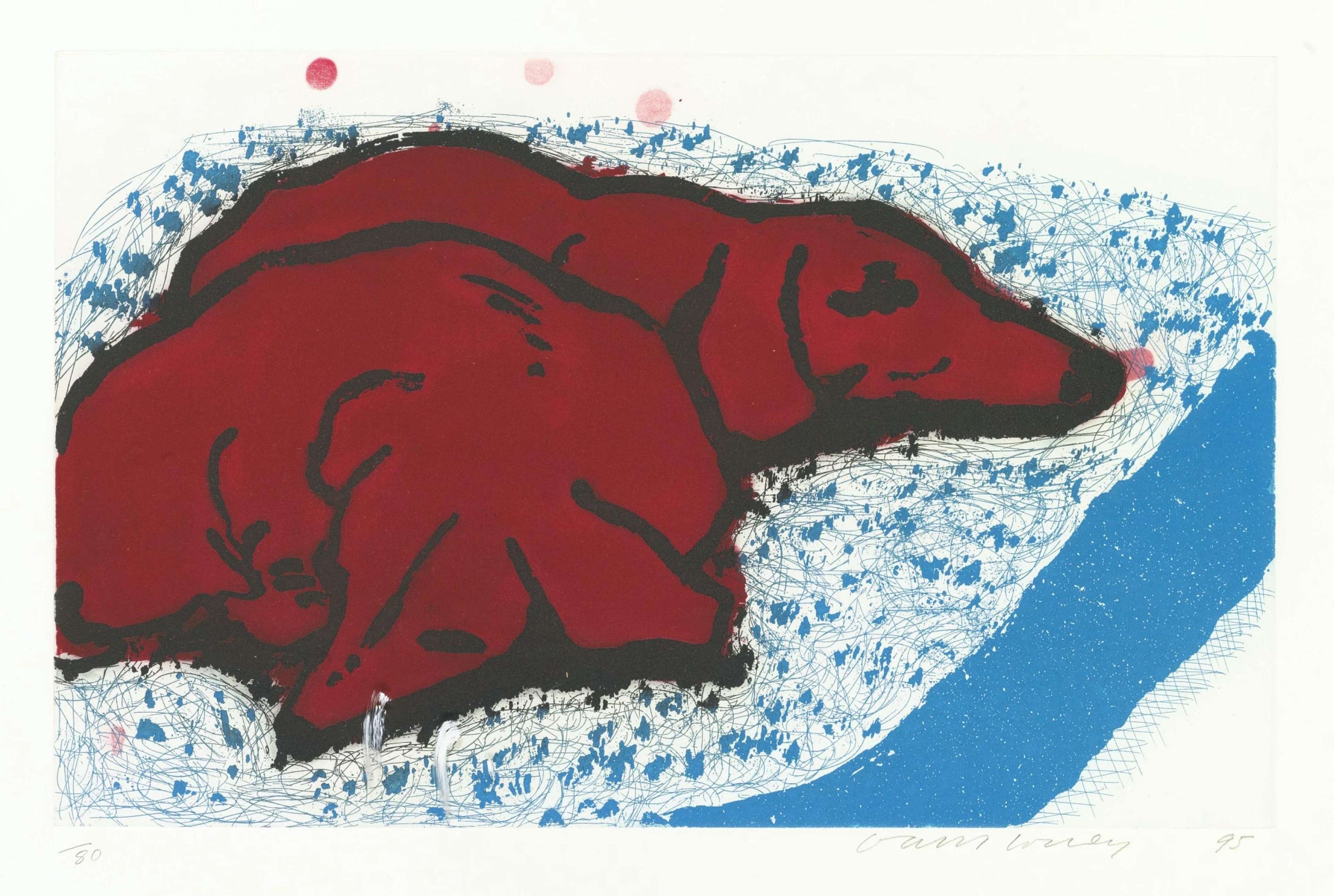

What makes Hockney’s print practice so distinctive is that he has never treated medium as incidental. Each process offered him a different set of visual possibilities. Lithography preserved the freedom of drawing. Etching gave him line, structure and narrative control. Aquatint extended tonal range. Screenprint sharpened colour and graphic force. Xerox photocopying brought speed and immediacy. Digital drawing allowed him to make original works designed specifically for editioning in print. Taken together, these media show a career defined by restless experimentation, technical fluency and a refusal to separate tradition from innovation.
This glossary focuses on the principal printmaking techniques Hockney has worked with throughout his career, explaining what each process is, why it suited him, and where it appears most clearly in his body of work.
Why printmaking matters in Hockney’s work
Printmaking entered Hockney’s practice early and never left it. He began making lithographs as a teenager at Bradford School of Art, developed etching into one of the defining mediums of his early career at the Royal College of Art, and later embraced new technologies without abandoning the logic of the editioned print.
Printmaking also gave Hockney a structure for many of his enduring concerns. Across his editions, one sees the same preoccupations return in different forms: portraiture, landscape, storytelling, flatness, theatrical space, perspective, and the relationship between looking and remembering. That is why a glossary of Hockney’s print techniques is useful. It clarifies not just how the works were made, but how the medium itself shaped the development of his visual language.
Lithography
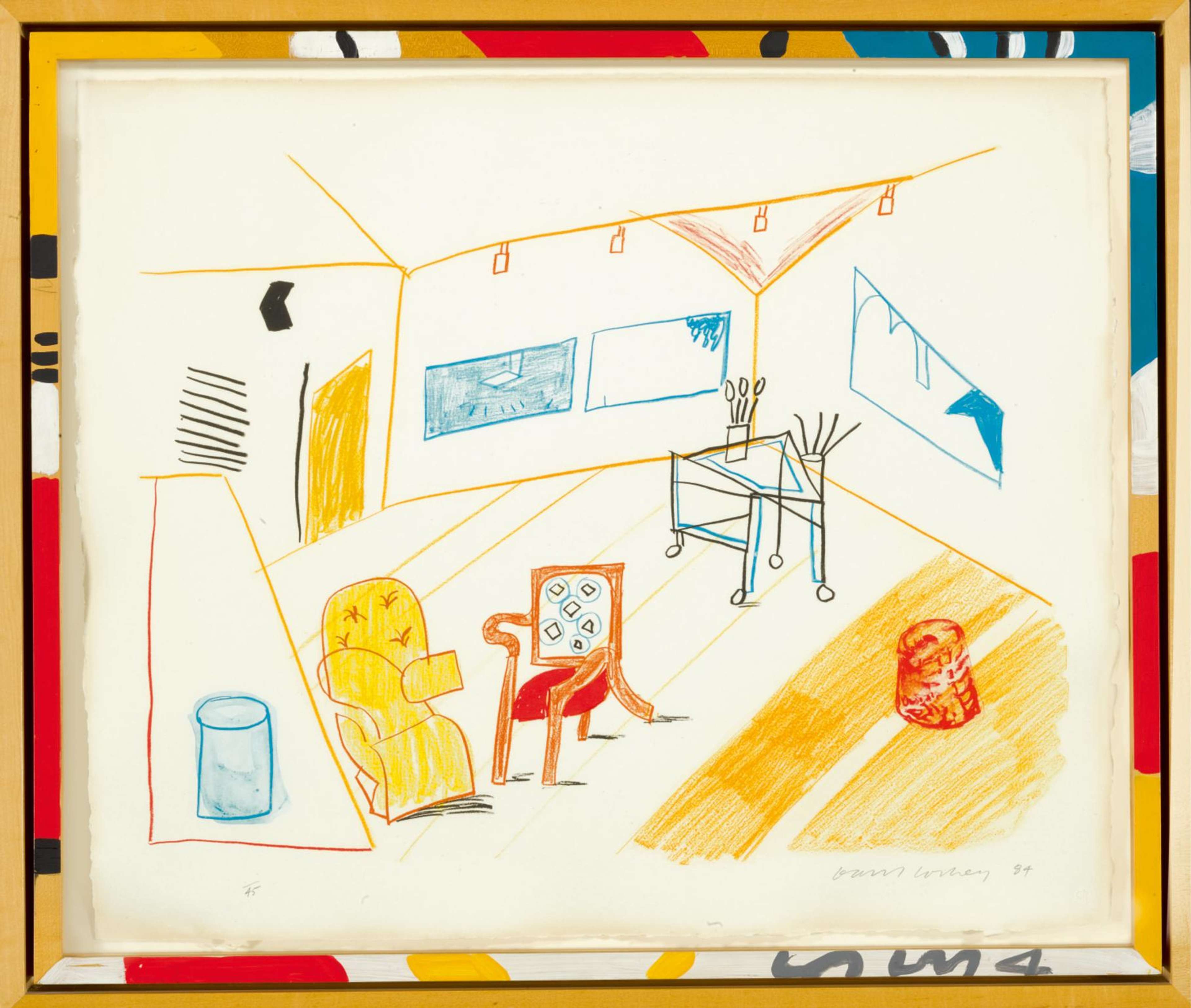
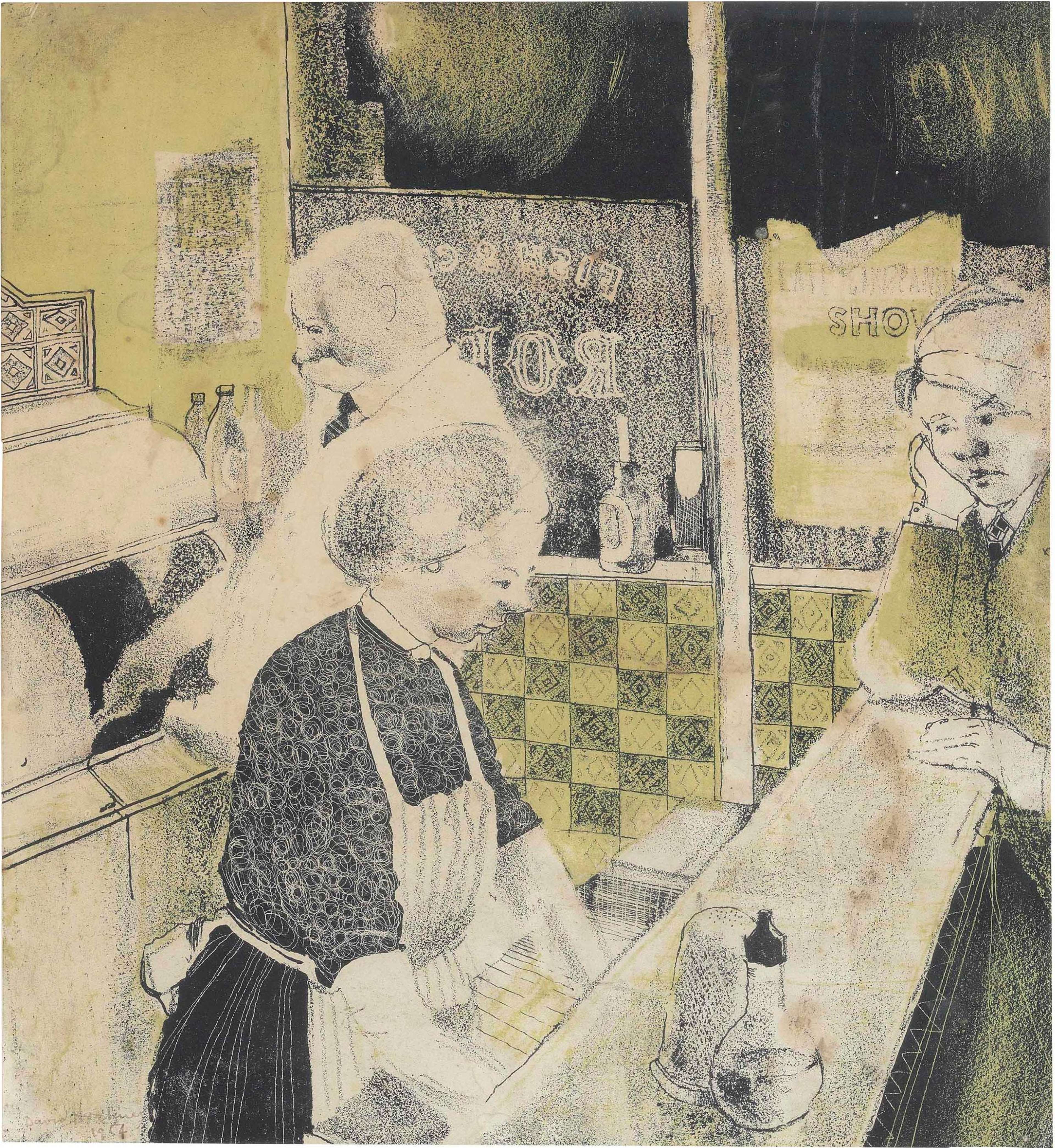
Lithography is a printmaking process in which the artist draws onto a flat stone or metal plate with a greasy crayon or ink. The surface is then chemically treated so that the drawn areas attract ink while the dampened blank areas repel it. Because the matrix remains flat rather than carved, lithography is known as a planographic process. Tate notes that this gives artists an unusual freedom, allowing marks that retain the directness and responsiveness of drawing.
That directness helps explain why lithography was Hockney’s entry point into printmaking. His earliest known prints, made in Bradford in 1954, were lithographs, and the medium remained important throughout his career. It suited his instinctive strengths as a draughtsman, preserving line, touch and immediacy in a way that more mechanically mediated processes could not. In works such as Woman With A Sewing Machine and Fish And Chip Shop, lithography allowed him to turn everyday life into a graphic subject without losing the intimacy of close observation.
Lithography also remained significant as Hockney’s practice matured, exploring his iconic swimming pool motif through the medium in Pool Made With Paper And Blue Ink For Book – a later touchstone within his print practice. These works show how he used the medium differently across time: in the 1960s for wit, framing and visual play, and later for broader colour, open space and recurring motifs such as the swimming pool.
Lithography mattered to Hockney because it preserved clarity. Even when his imagery grew more stylised or decorative, the medium allowed him to keep faith with drawing as the basis of the image. That quality remained visible in later workshop collaborations in Los Angeles, including A Hollywood Collection of 1965, the first set of lithographs he made with Gemini G.E.L. and printer Ken Tyler.
You can learn more about Hockney's early use of lithography here.
Etching
Etching is an intaglio process. The artist covers a metal plate with an acid-resistant ground, draws into that ground with a needle to expose the metal beneath, and then places the plate in acid so the exposed lines are bitten into the surface. When ink is pushed into those recessed lines and the plate is run through a press, the image is transferred onto paper. Tate’s research on Hockney’s early printmaking makes clear that etching quickly became one of the principal ways he explored narrative, self-fashioning and experimentation during the early 1960s.
If lithography gave Hockney a way to draw in print, etching gave him a way to structure an image. Its combination of precision and spontaneity suited his growing interest in storytelling. This becomes especially clear in A Rake’s Progress (1961–63), where he reworked Hogarth’s narrative sequence into an autobiographical modern journey, and later in Illustrations for Six Fairy Tales from the Brothers Grimm (1969), where etching became a vehicle for literary and psychological atmosphere. The official Hockney site recognises this importance by separating Etchings, A Rake’s Progress Etchings and Blue Guitar Etchings into distinct categories.
Etching was central to Hockney’s rise as a printmaker because it allowed him to marry line with narrative intent. The medium could be spare, satirical and autobiographical in the early 1960s, but also richly allusive and art historically engaged later on.
Hockney’s etchings also show that he never approached traditional media conservatively. Even within the discipline of intaglio, he adapted process to suit image and idea, incorporating aquatint, soft-ground and other variations in order to expand the range of what etching could do. That openness is one of the reasons his etchings remain among the most admired and widely collected works in his graphic oeuvre.
Learn more about Hockney's etchings and their artistic significance here.
Aquatint
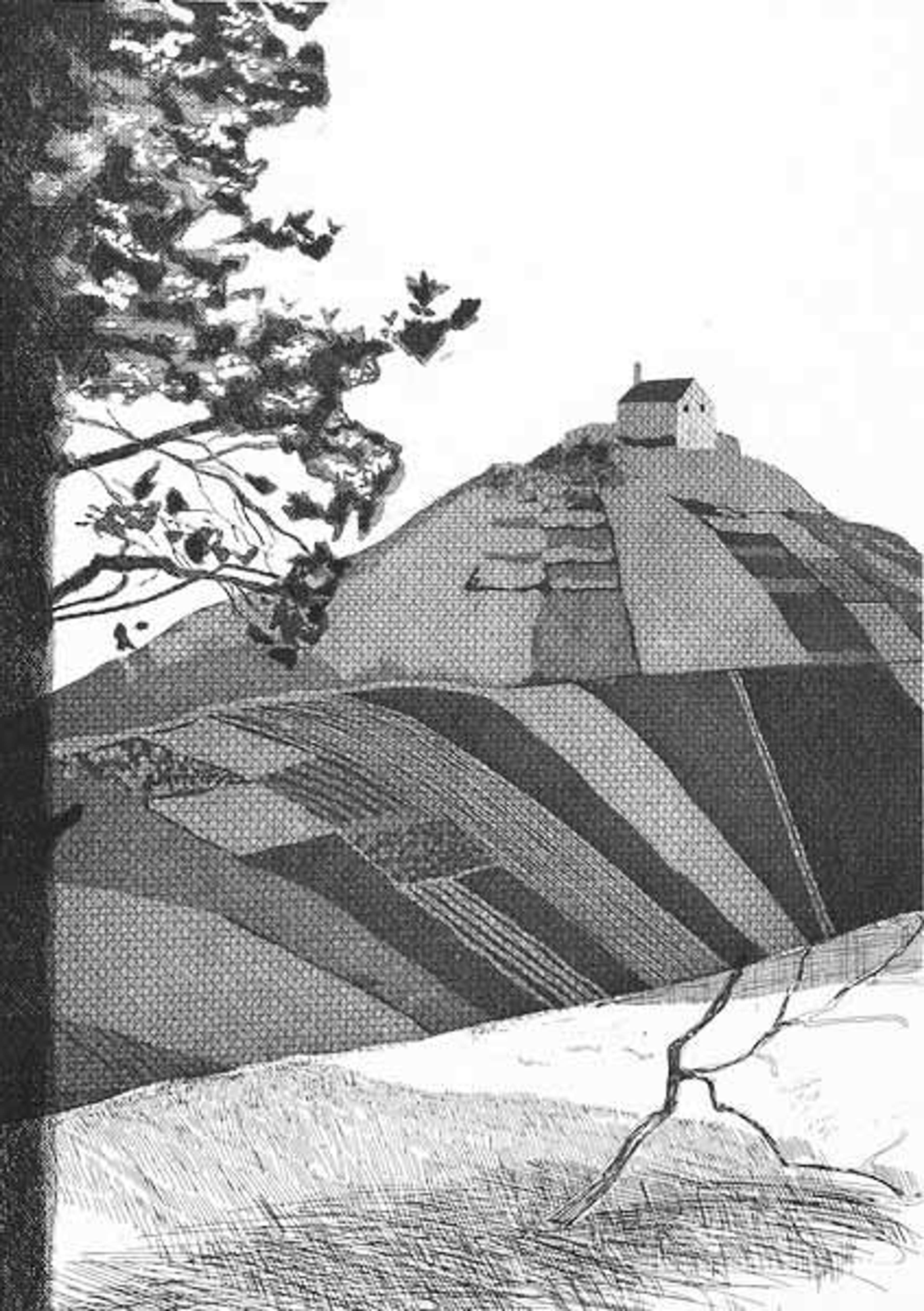
Aquatint is a tonal variation of etching used to create areas of shade, atmosphere and gradation rather than relying only on line. Instead of drawing every passage by incision, the printer applies a granular resist so that acid bites a textured field into the plate. This allows the final impression to carry broad tonal areas, from soft haze to deep shadow.
Aquatint was important to Hockney because it broadened the expressive range of etching. On the official Hockney site, early works in his etchings category are explicitly catalogued as “etching in black with aquatint,” confirming that the process was embedded in his printmaking from the start. Rather than abandoning line, aquatint allowed him to support it with tone. This was particularly useful in works where atmosphere, dramatic tension or visual contrast mattered as much as contour.
In practical terms, aquatint gave Hockney a more expansive tonal language. It helped him move etching closer to the richness of drawing and painting without losing the discipline of the plate. In the Brothers Grimm etchings, for example, tonal passages deepen the strange, theatrical mood of the scenes and allow the fairy-tale settings to feel more immersive than a purely linear treatment would. Aquatint should therefore be understood not as separate from his etching practice, but as one of the techniques through which he made that practice more flexible and visually ambitious.
Soft-ground etching
Soft-ground etching is a variation of etching in which the plate is coated with a softer, more impressionable ground. Instead of producing only crisp incised lines, the artist can draw through paper placed on the plate or press textured materials such as fabric or leaves into the surface. The resulting image can register softness, grain and tactile variation in ways that standard hard-ground etching cannot.
This technique appealed to Hockney because it made etching less rigid and more sensuous. In your existing article on his etchings, the Illustrations for Six Fairy Tales from the Brothers Grimm are identified as a major example of this approach, with Hockney using lace, leaves and fabric to transfer textures directly onto the plate. That method suited the series perfectly. Fairy tales are built from atmosphere as much as action, and soft-ground etching gave Hockney a way to make setting, surface and mood feel as charged as the figures themselves.
Soft-ground is worth distinguishing in a Hockney glossary because it reveals the depth of his technical curiosity. He was not simply choosing between one medium and another. He was actively testing what a medium could become when pushed beyond its most conventional use. In that sense, soft-ground etching anticipates much of what follows in his practice: an insistence that process must remain alive, adaptable and responsive to subject.
Screenprint
Screenprint, or silkscreen, is a process in which ink is pushed through a mesh screen using a stencil. Each colour is typically applied through a separate screen, which makes the technique particularly effective for bold colour areas, sharp edges and layered graphic compositions.
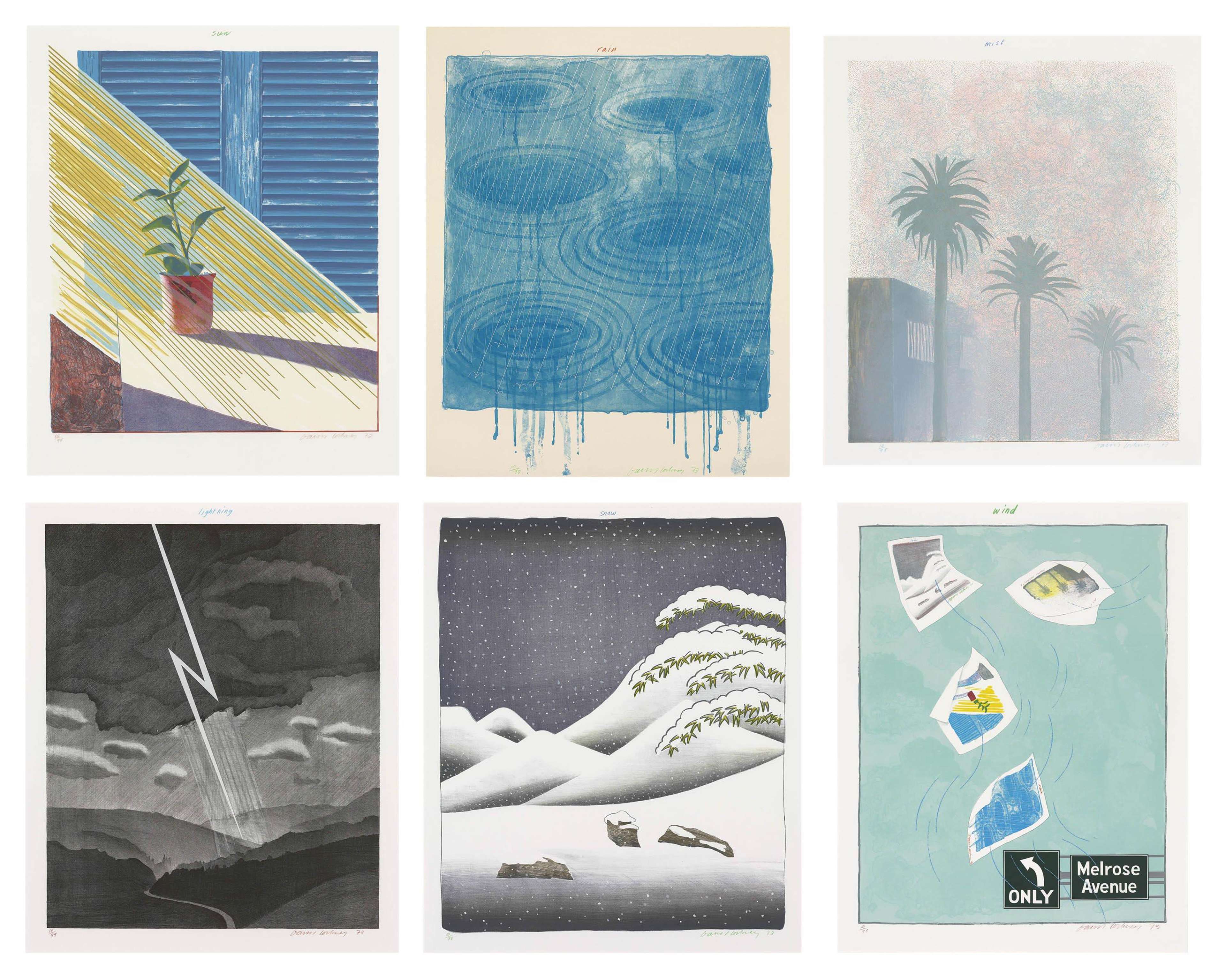
Screenprint is not the medium most commonly associated with Hockney, but it plays an important role in his printmaking nonetheless, particularly in combination with lithography. Certain prints from The Weather Series, like Rain, Snow, Lightning and The Sun are traditionally catalogued as “lithograph and screenprint in colours,” while the complete set is described as six lithographs, five with screenprint. This hybrid construction is telling. Hockney used screenprint not as an isolated graphic statement, but as part of a broader workshop language that allowed colour, surface and composition to work together with greater force.
The medium suited him because it intensified visual clarity. Where lithography could retain the intimacy of drawing, screenprint could flatten and strengthen colour. It gave Hockney another way to organise space, simplify forms and heighten decorative effect. In works from the 1970s and 1990s, this became especially useful as he moved further into seriality, fragmentation and bolder formal patterning. Hockney continued this experimental approach in Some New Prints, where lithography and screenprinting were likewise combined to create depth and contrast in this later body of work.
Xerox photocopy prints
Hockney’s Xerox works are among the clearest examples of his willingness to treat new technology as a serious artistic medium. On the official Hockney website, these works are grouped under Home Made Prints, placing them firmly within his graphic practice rather than outside it.
In the 1980s, Hockney began using Xerox photocopiers to produce original artworks rather than copies of existing ones. This mattered because the photocopier offered speed, spontaneity and a different relationship between artist and machine. Instead of moving through the slower, collaborative procedures of the print studio, Hockney could work directly and experimentally: drawing onto paper, re-feeding sheets through the machine, swapping colour cartridges, and layering passages quickly until the image reached its final form. In this respect, the photocopier brought him closer to the immediacy of painting while still resulting in an editioned print.
These works are significant in any glossary of Hockney’s print techniques because they show him testing the boundaries of what printmaking could be. They belong to the same larger history as his lithographs and etchings: not because they look similar, but because they emerge from the same impulse to rethink reproduction, flatness, surface and visual construction. The Xerox works also help bridge the apparent gap between his traditional graphic practice and his later digital editions.
Digital prints and inkjet prints
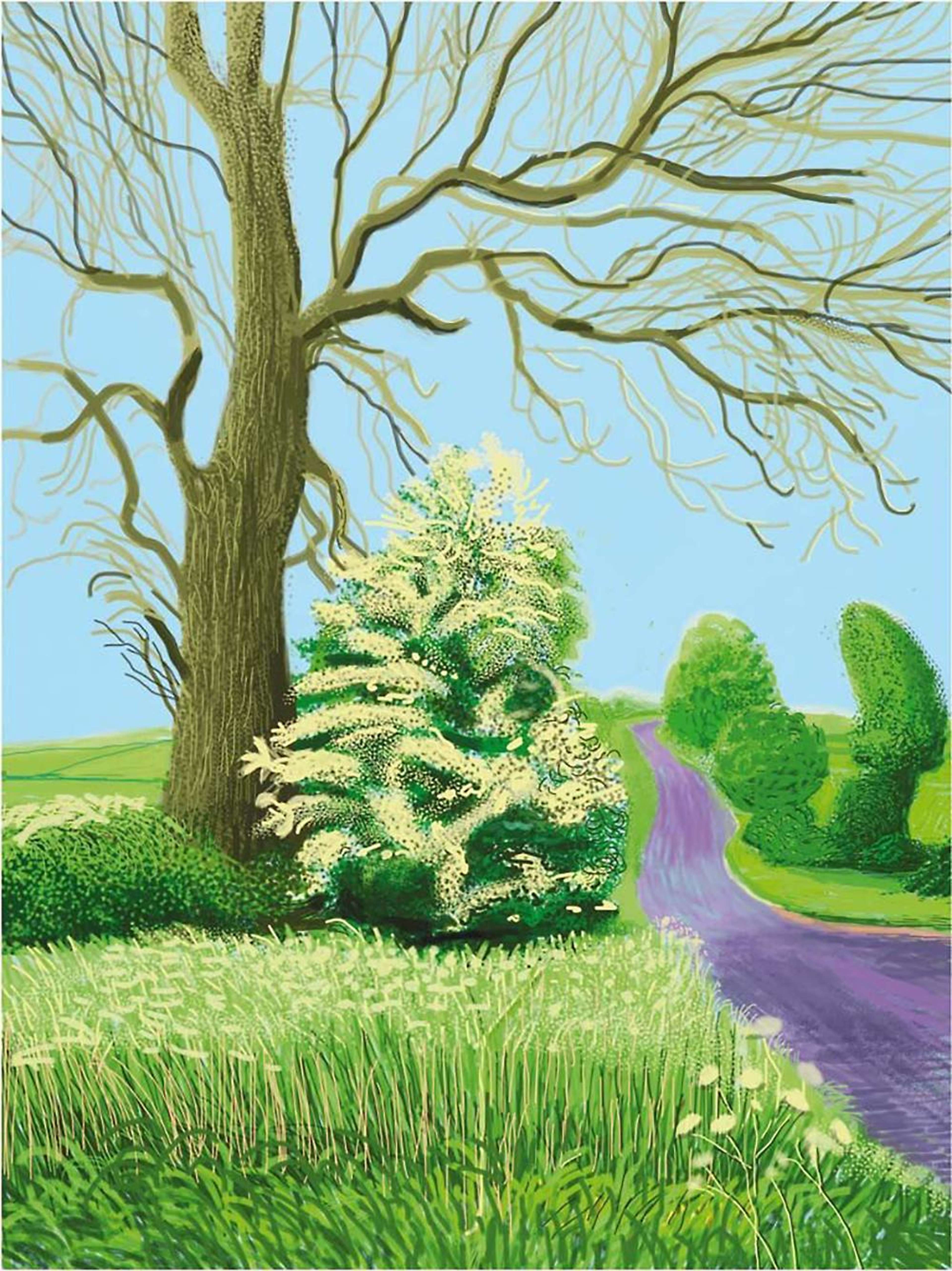
Digital print is the broad term for works conceived through digital drawing or digital image construction and then printed as original editions. In Hockney’s case, that includes computer drawings, iPhone works and iPad works. The official Hockney website is particularly clear on this point: these works were made specifically for printing and should not be understood as photographic reproductions of pre-existing originals. They are original graphic works in their own right.
This distinction is crucial. When Sotheby’s catalogues Untitled, 329, it identifies the work as an “inkjet print in colours,” while works from The Arrival of Spring in Woldgate, East Yorkshire in 2011 are catalogued as “iPad drawing printed in colours on wove paper.” Christie’s and Sotheby’s have both consistently treated these works as part of Hockney’s editioned print practice, not as secondary afterthoughts to painting.
For Hockney, digital drawing extended concerns already present in his earlier printmaking. The iPad and computer offered immediacy, colour range and flexibility, but they also preserved his long-standing interest in line, seriality and close observation. The Arrival Of Spring prints are perhaps the clearest example: they use a contemporary device to pursue one of the oldest ambitions in art, the attempt to record seasonal change, light and time.
The digital works therefore belong naturally in this glossary. They are not a departure from Hockney’s printmaking but one of its most compelling late chapters. They show how consistently he has approached and adapted to new technologies as a means of renewing the visual experience of the world, and how an artist can translate it.
Discover where Hockney's Arrival of Spring prints sit within his market.
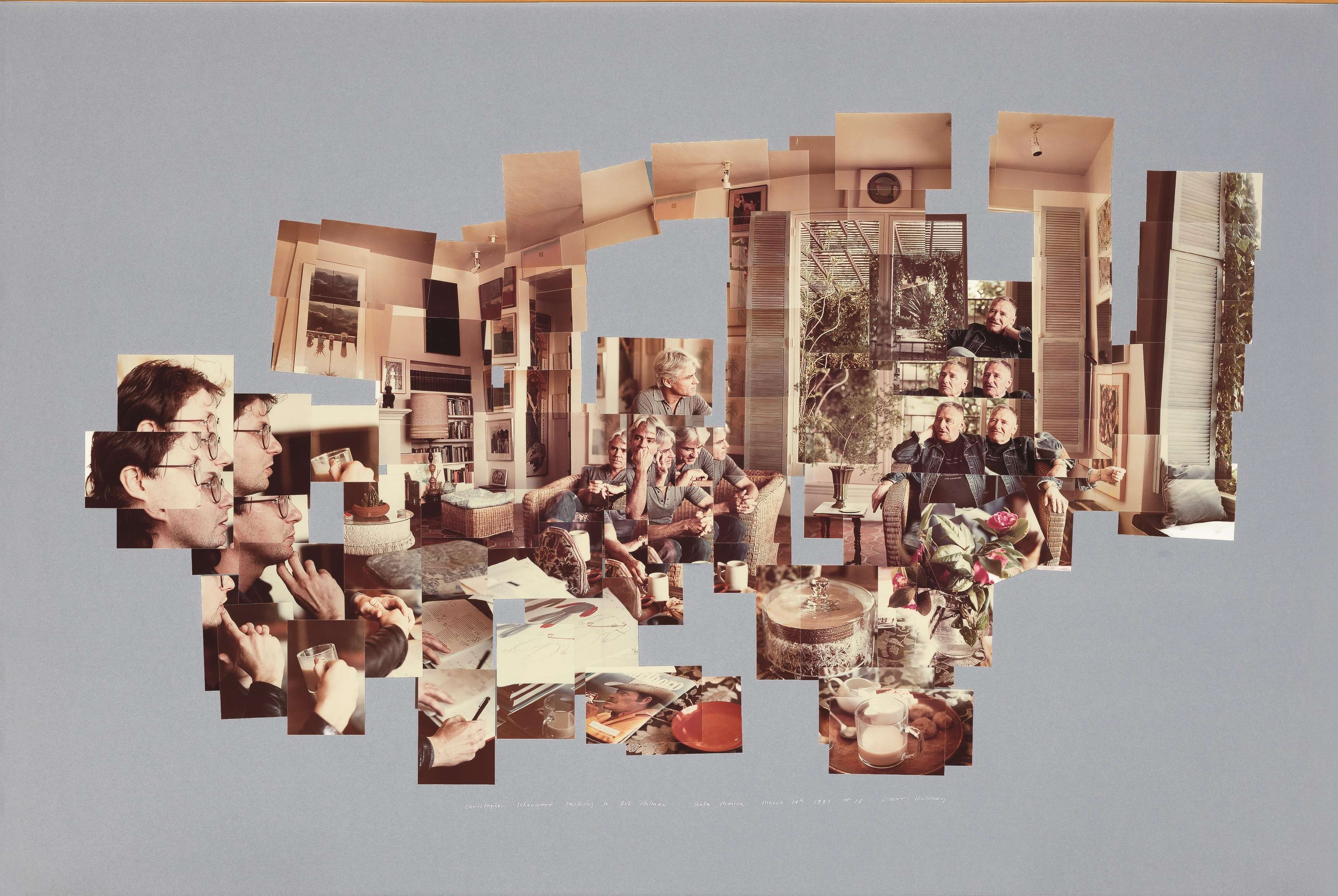
Photographic collage and joiners
Photographic collage is not a printmaking medium in the strict technical sense, but it is an essential part of Hockney’s wider graphic language and deserves a place in this glossary as a related process. The official Hockney site treats photographic collages, composite Polaroids and photographic drawings as a separate body of work within Photographs, distinct from his Digital Works. That distinction is useful: it keeps terms precise while still acknowledging their relationship to his broader experiments with reproducible image-making.
Hockney’s joiners are made by assembling multiple photographs into one composite image. Rather than creating a seamless panorama, he allows shifts in angle, scale and time to remain visible. This gives the viewer a more active role and breaks decisively with the frozen single-point perspective of conventional photography. Although not printmaking in the traditional sense, the joiners share much with Hockney’s prints: fragmentation, serial thinking, flatness, and an enduring interest in how an image is built from parts.
They also help explain the logic of Hockney’s later digital works. The joiners, Xerox prints and iPad drawings all stem from the same refusal to accept a single stable viewpoint. Seen in that context, photographic collage is not an outlier in Hockney’s career but a neighbouring territory that enriches the meaning of his graphic practice as a whole.
Hockney’s printmaking legacy
Taken together, these techniques reveal a printmaker who has never been content to stay within one formal language. Hockney’s career moves from student lithographs to mature etchings, from hybrid lithograph-screenprints to Xerox experimentation, and from photographic collage to digital editions conceived on the iPad. Yet the through-line is remarkably consistent. He returns again and again to the same questions: how do we see, how do images hold time, and how can a medium sharpen rather than limit perception.
That is what gives Hockney’s printmaking its lasting importance. His editions are not ancillary to the paintings. They are among the most concentrated expressions of his artistic thinking. Whether drawn on stone, bitten into copper, layered through a screen, copied through a Xerox machine or tapped into being on a tablet screen, Hockney’s prints show the same conviction: that medium is part of meaning, and that technical experiment can still produce some of the most lucid and compelling images in contemporary art.