

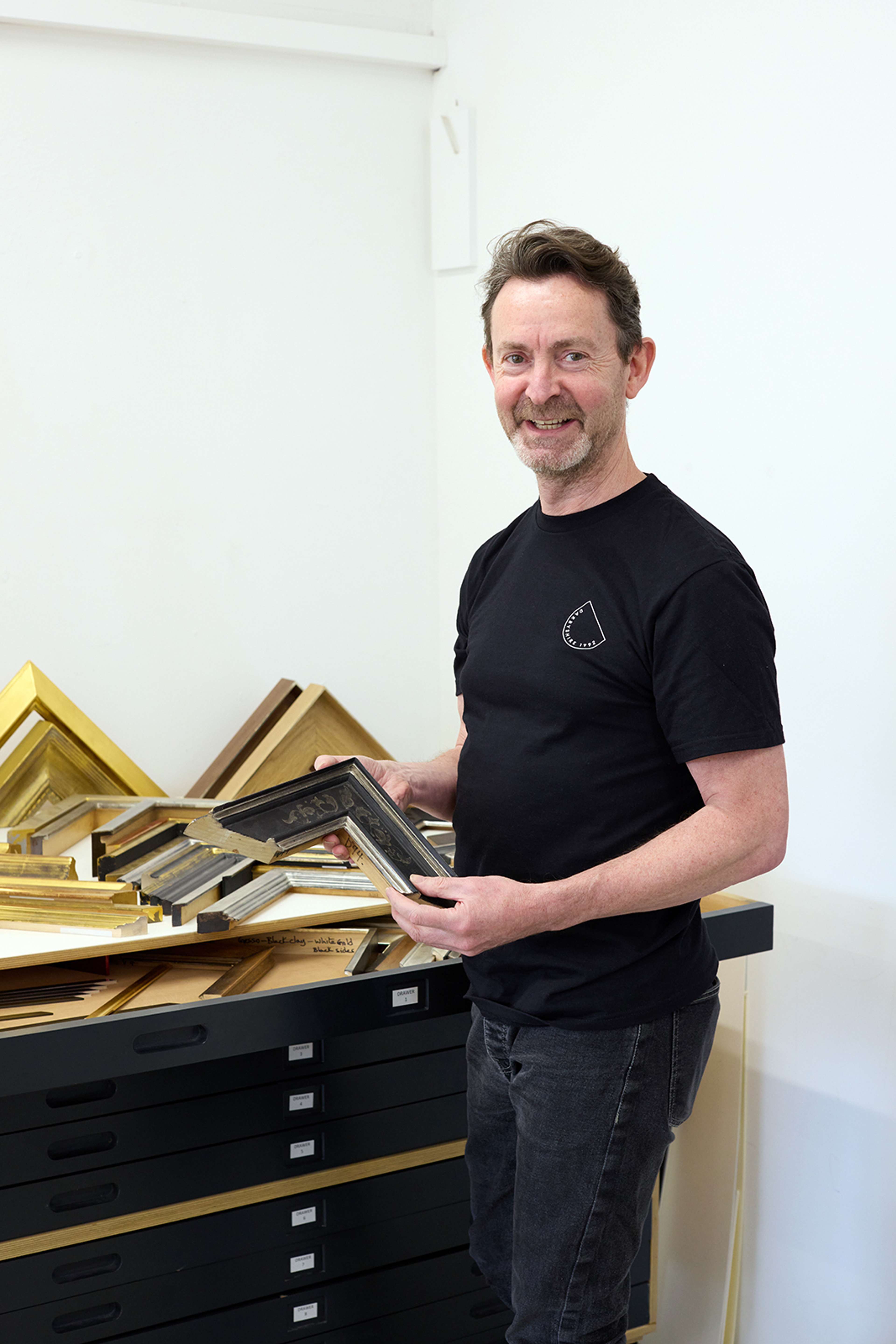
For Richard Law, one of Darbyshire’s Framing Consultants, the starting point is clear: collectors must always think beyond appearances alone when framing their artworks. “In many cases, clients tend to focus on the aesthetic and decorative aspects of picture framing,” they explain. “However, it is equally important to prioritise the protection and longevity of the artwork.”
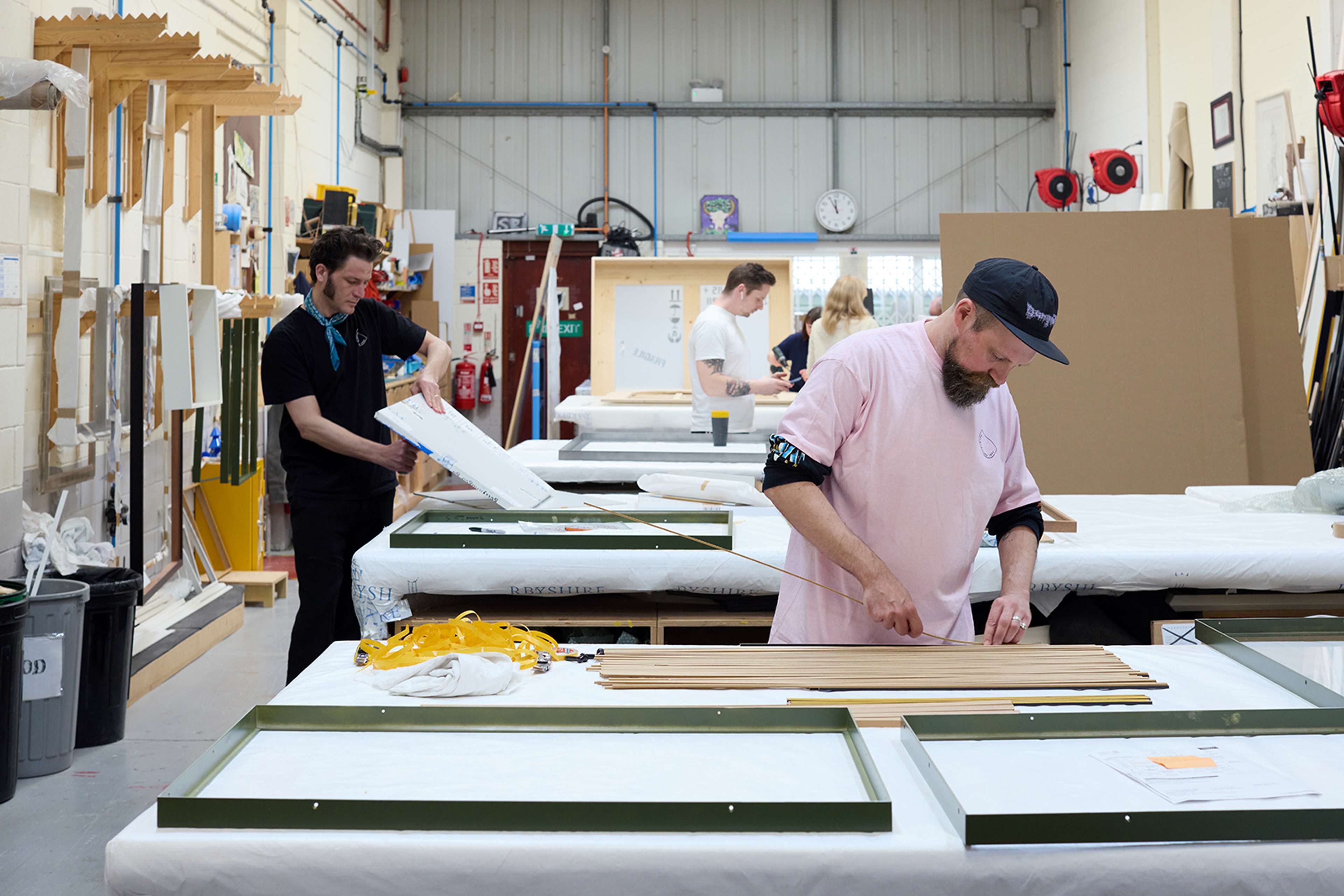
That distinction sits at the heart of their approach. A frame, in Darbyshire’s view, is a protective structure as much as it is a visual surround for a work of art. “A custom frame is a complex system in which each component plays a role in defending the artwork from environmental and chemical damage,” Richard says. “This is especially critical for works on paper, which are inherently more vulnerable.”
Why Framing Matters So Much for Hockney Prints
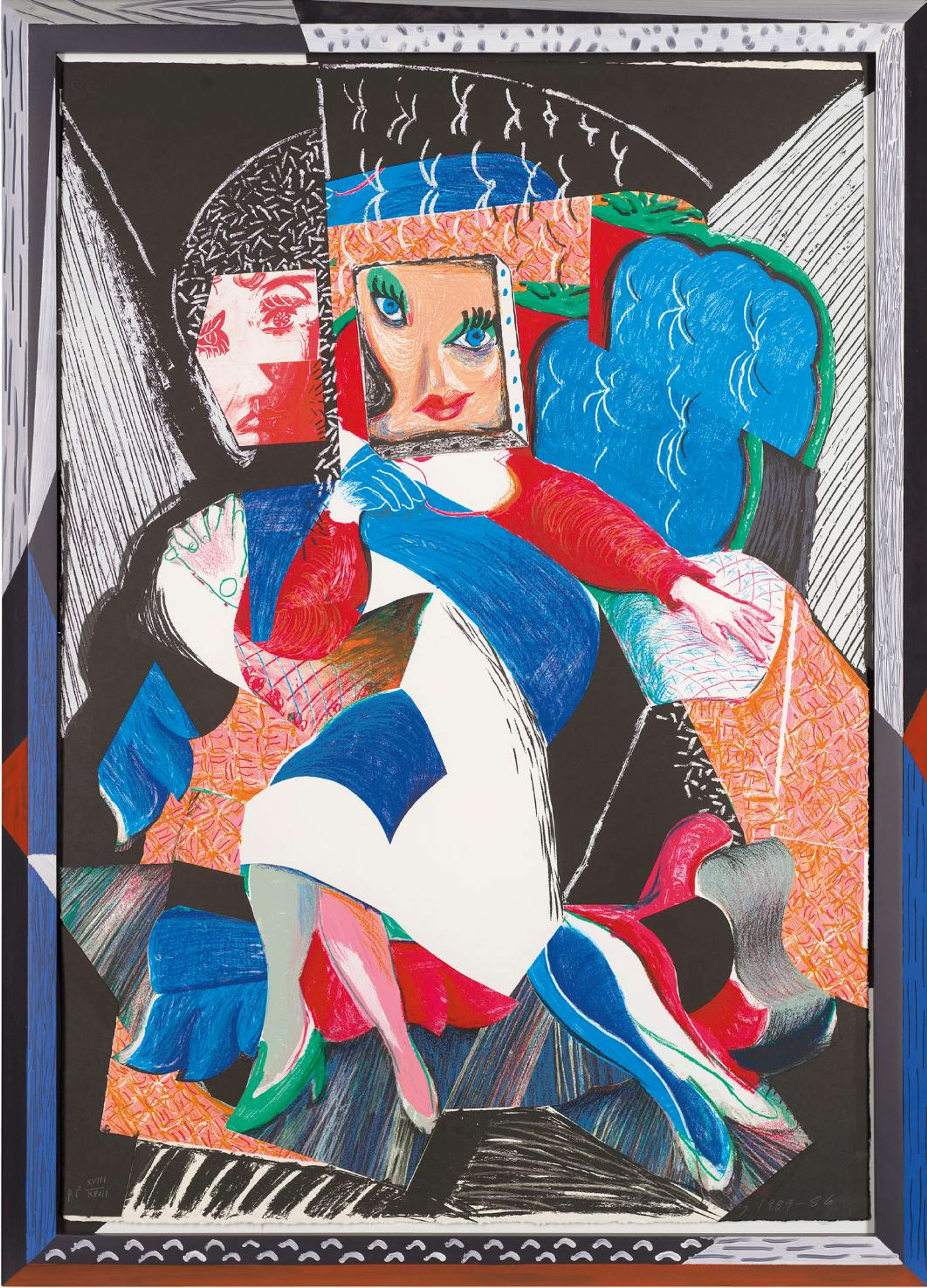
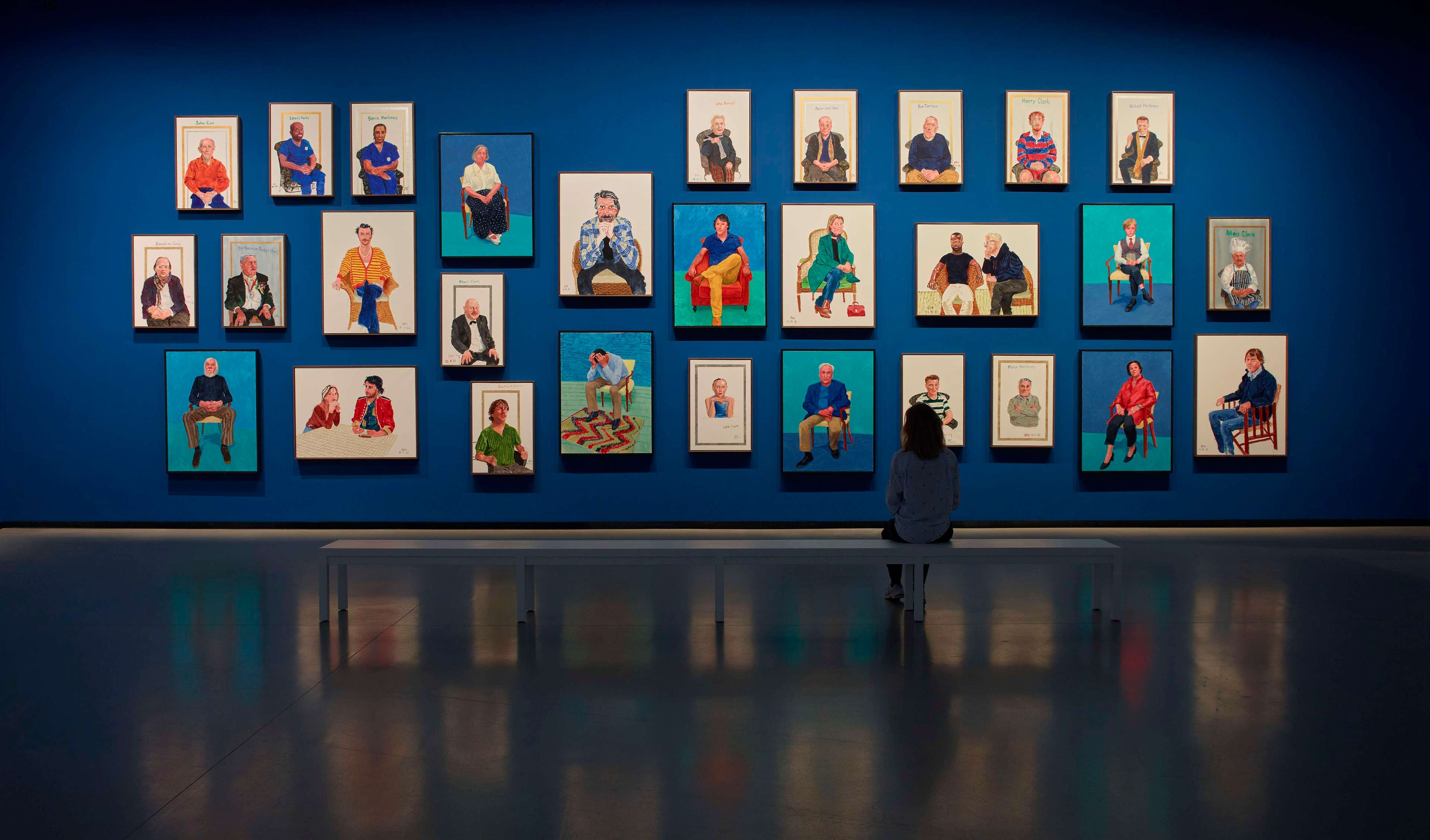
Hockney's works demand this level of care purely because of the sheer breadth of his printmaking practice. An early lithography, with the tactile presence of the sheet and – in some cases – deckled edges, presents differently from a later digital print or iPad drawing. The conservation standard must remain high throughout, but the final presentation will of course vary depending on the medium at hand.
As Richard puts it, “Given the sheer breadth of David Hockney’s printmaking practice, the final presentation of each print may require a different approach.” Richard notes that while some collectors bring in “early lithographs,” others are framing ”more contemporary pieces, such as iPad drawings, or inkjet prints.” In some cases, the print can guide the decision. “A lithograph printed on paper with a natural deckled edge may benefit from float mounting, allowing the edge to remain visible and enhancing the overall viewing experience.”
Museum-Standard Materials Over Decorative Shortcuts, Every Time
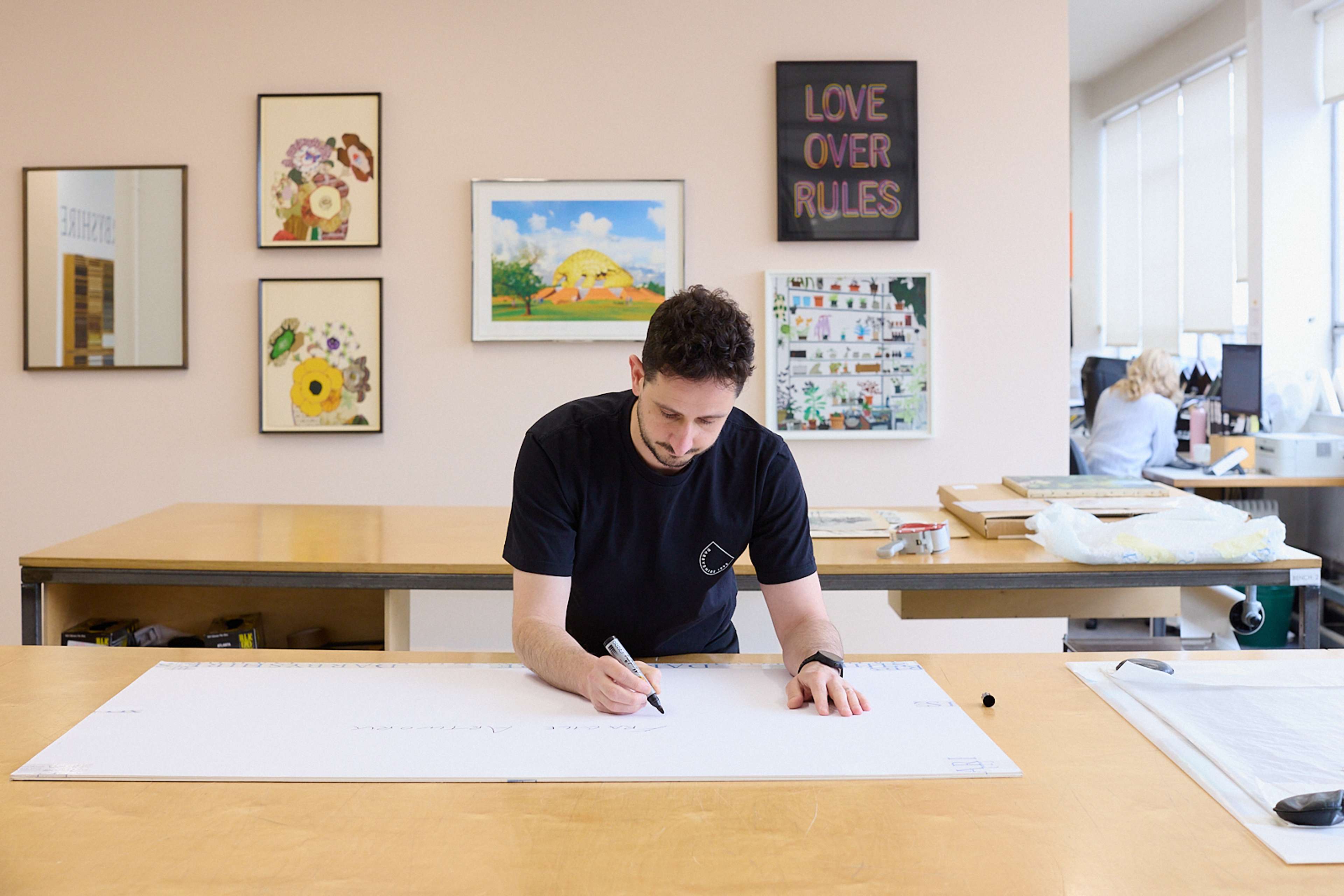
If there’s one point Richard and the Darbyshire team return to, it’s the importance of materials. For valuable works on paper like Hockney prints, they’re unequivocal: the boards and supports around the print must be conservation grade.
“The matboard and backing board, in particular, form the immediate environment around the piece and should be of the highest conservation grade,” Richard explains. “Museums and professional conservators worldwide recommend using only 100% cotton, acid-free, lignin-free boards.”
Though it might be enticing to cut corners to get your Hockney print on the wall as soon as possible, poor-quality materials can cause gradual but lasting damage. Darbyshire identifies one of the most common mistakes collectors make as “the use of low-grade or non-museum-quality boards and materials.” While intermediate-quality boards remain widely available, Richard stresses that these “do not offer the same level of protection as 100% cotton museum boards.”
In short: lower costs come with lower standards of protection. “Although they are more affordable, this cost saving comes at the expense of reduced protection for the artwork.” A mistake like this can shave thousands off of the value of your Hockney print and, crucially, lead to unnecessary damage to a print that might compromise its longevity.
The Role of Glazing in Preserving Colour and Clarity
For Hockney in particular, glazing is another critical consideration. His prints are continually championed for their luminosity and chromatic intensity, all of which can be compromised by poor display conditions over time.
“When considering how to present your artwork, it’s essential to also think about the type of glazing used in the frame,” Richard explains. “The right glazing not only enhances how the piece is viewed but, more importantly, provides crucial protection against UV light.”
For Hockney prints, their recommendation is specific: “For prints by David Hockney, we typically recommend Tru Vue® Optium Museum Acrylic®, a material trusted and widely used by leading museums worldwide.” Richard points to its unique ability to block “up to 99% of harmful UV rays,” while also offering low reflection, shatter resistance, and strong light transmission to allow the work to be seen properly while protecting it.
What Poor Framing Can Do To a Hockney Print
Darbyshire also sees the consequences when these standards haven’t been met. Some Hockney prints come in for reframing, already carrying the legacy of earlier mistakes. In those instances, framing becomes inseparable from conservation.
Richard notes that works brought in for reframing may sometimes require specialist treatment to “yellowing caused by lower-grade materials, or window aperture marks on the print resulting from non-UV or lower-grade UV glazing previously used in the frame.” When this is the case, Darbyshire collaborates with industry-standard paper conservators to address these issues – with treatments often resulting in “remarkable” results.
These are exactly the sorts of issues that remind collectors that poor framing isn’t just a cosmetic faux pas. It can leave a lasting mark on the work itself.
Ultimately, framing any artwork should be treated as part of the responsibility of ownership. As Richard simply puts it: “If an artwork, contemporary print, or painting is worth investing in, then framing it to the highest standard should be your first consideration.”
Darbyshire are true custodians of the artworks they frame; paying close attention to their vulnerabilities, guiding collectors towards museum-standard materials, and ensuring that the decisions made today enhance an artwork’s future. In the specific context of Hockney, whose works on paper are as technically varied as they are visually distinctive, this custodial mindset is nothing short of crucial.