
David Hockney’s portraits of Celia Birtwell, begun in the late 1960s and revisited over six decades, map friendship and artistic exploration. As friend, muse and fashion designer, Birtwell embodies the energy of late-twentieth-century British fashion and art, demonstrating how Hockney’s most prolific sitter anchored his developing methods without losing the work’s intimacy.
Celia Birtwell is David Hockney’s most frequently depicted portrait sitter
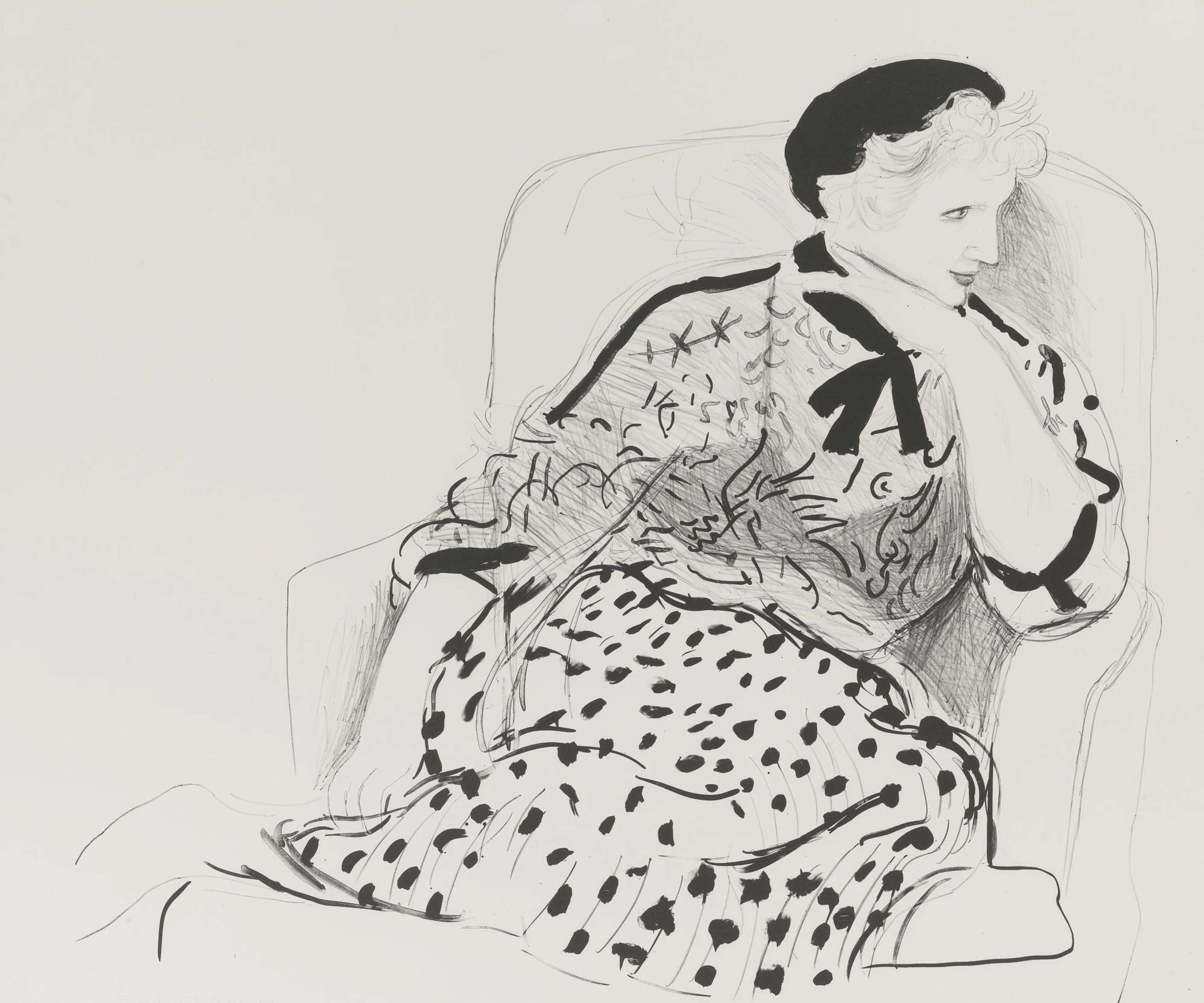
Hockney returned to Celia more than to any other sitter in his prints because he knew her well and trusted the working relationship. This closeness allowed him to look more closely and take technical risks without losing the integrity of the likeness. The detailed shifts from settings and props to small changes in posture, hairstyle, gaze and mood reveal the intimacy of their connection.
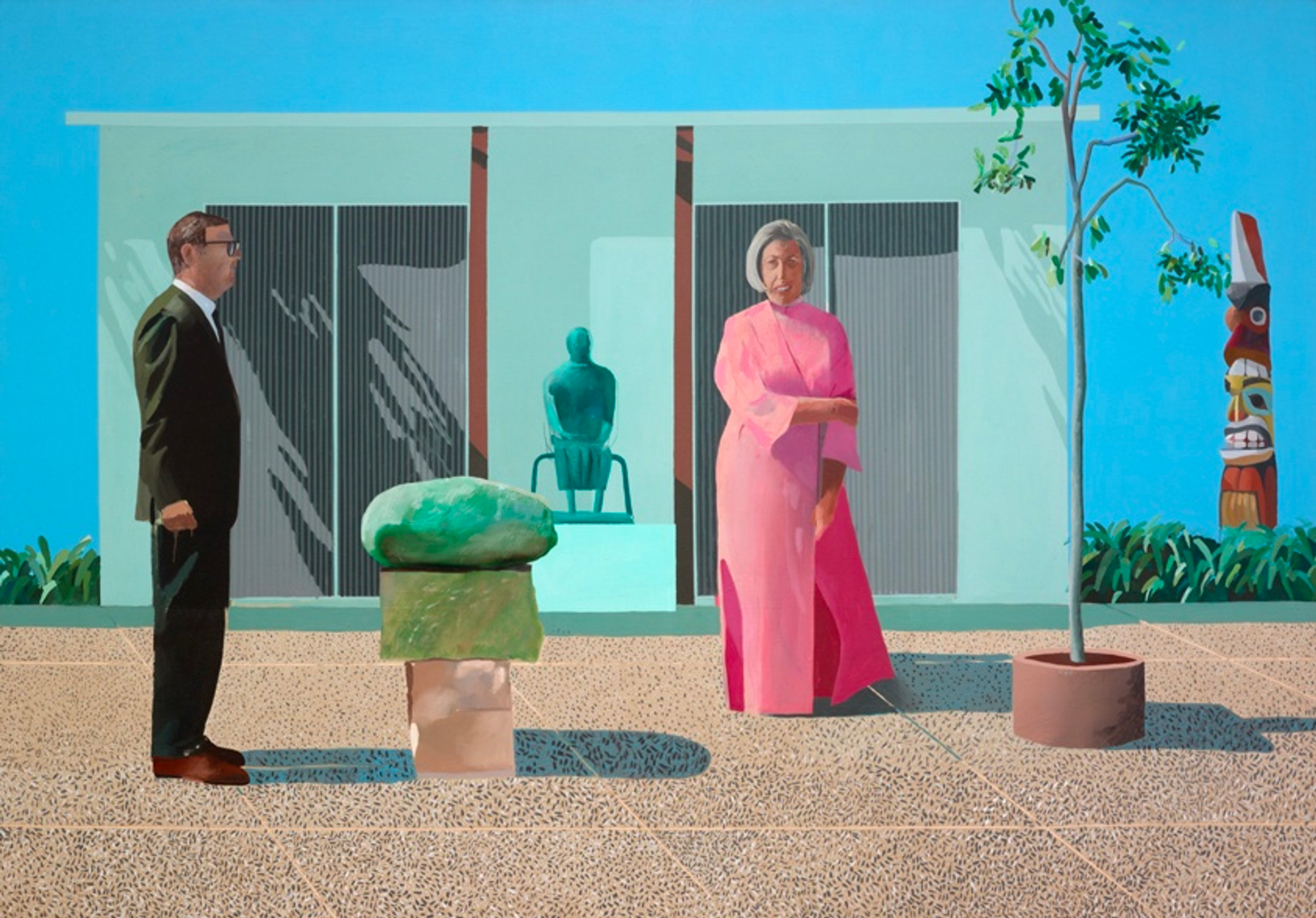
Mr and Mrs Clark and Percy established Birtwell as a landmark image in British art
The 1971 double portrait Mr and Mrs Clark and Percy shows Celia with her husband, Ossie Clark, and made her widely recognisable beyond the fashion world. The details Hockney studied in that painting, such as the light in her hair, the fall of patterned fabric, their unflinching gaze, reappear throughout his portraits of Celia - linking the seminal painting to the prints in a continuous visual language.
The Celia series records Hockney’s transition from etching to lithography
Hockney’s early portraits of Celia tended to be etchings, but by the mid-1970s his prints began to test colour, so that by the late 1970s and 1980s his lithography displayed more painterly gestures. Despite these developing techniques, Celia remains the fixed point against which change is measured. By keeping the sitter constant, Hockney showcases how the process can alter mood, clarity and intimacy of a portrait.
A period spent in Malibu 1973 produced more intimate studies of Celia Birtwell
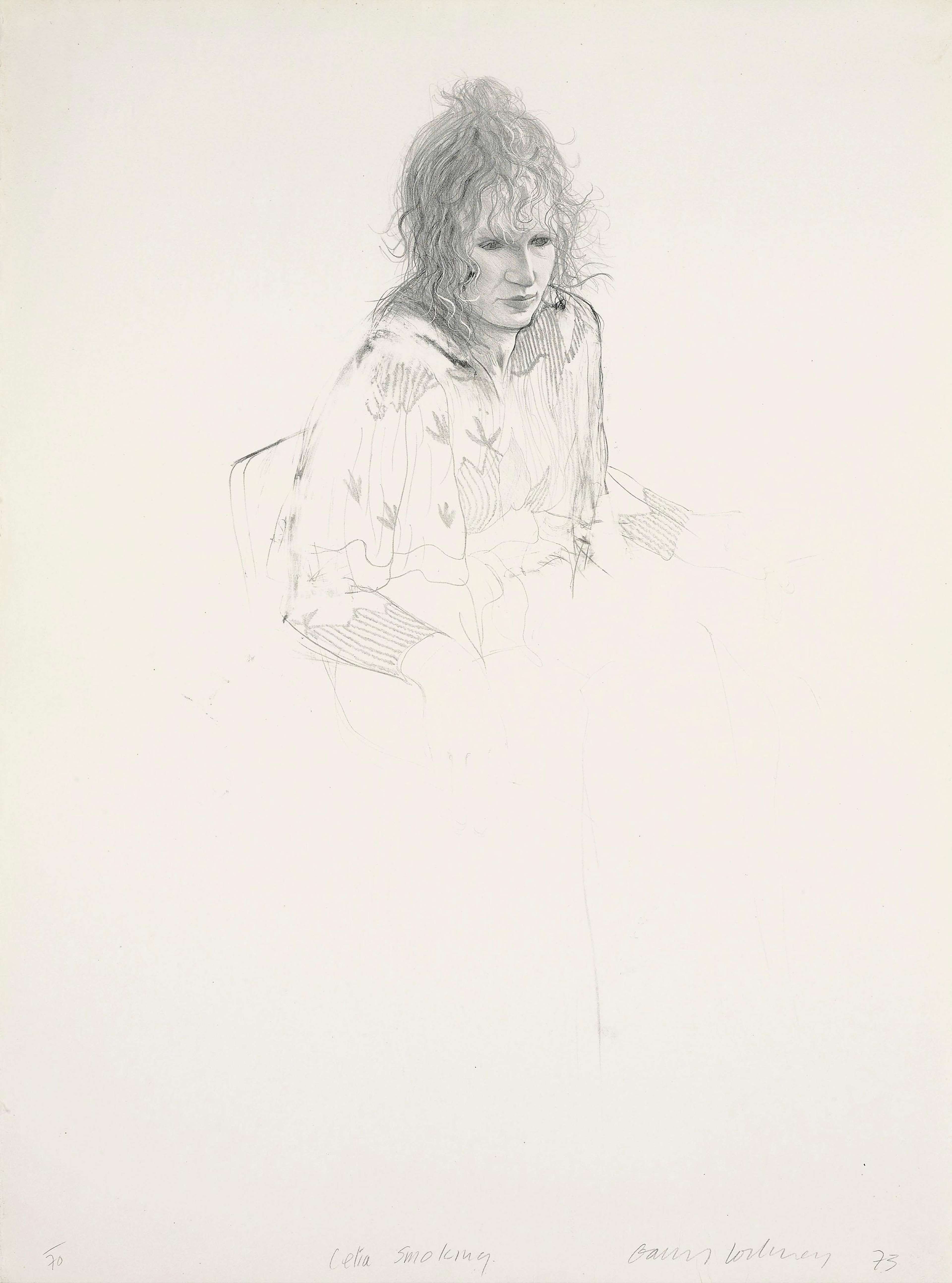
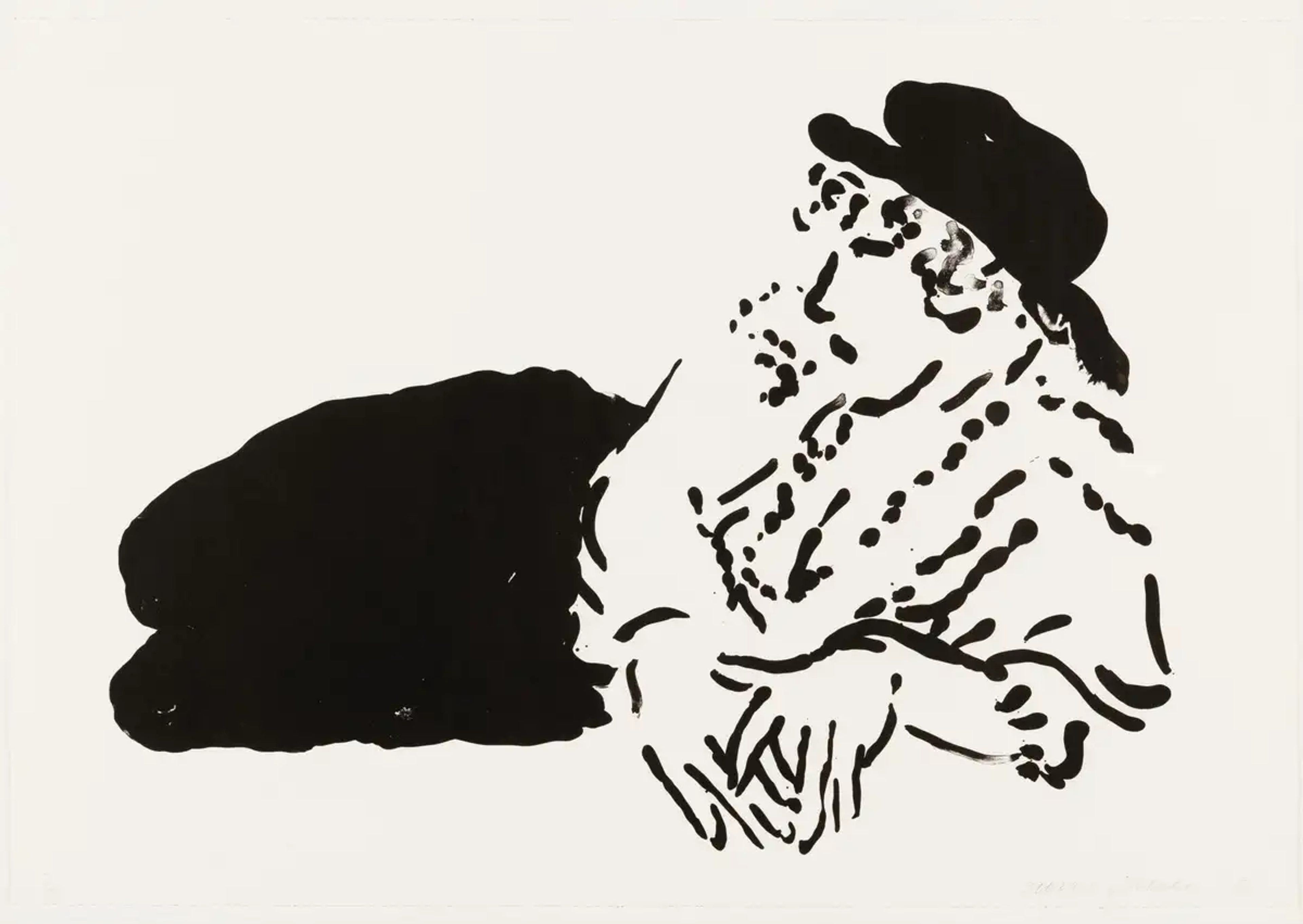
Time together in Malibu focused Hockney’s interest in depicting Celia’s inner mood rather than the setting or props. Celia Smoking is quiet and concentrated: the cigarette is barely portrayed, while the drawing pays close attention to her expression and the texture of her hair. The restrained lithograph is a testament to Hockney and Birtwell’s friendship, with even this modest portrait conveying intimacy between artist and sitter.
The Celia portraits builds a conversation with Matisse, Degas and Toulouse-Lautrec
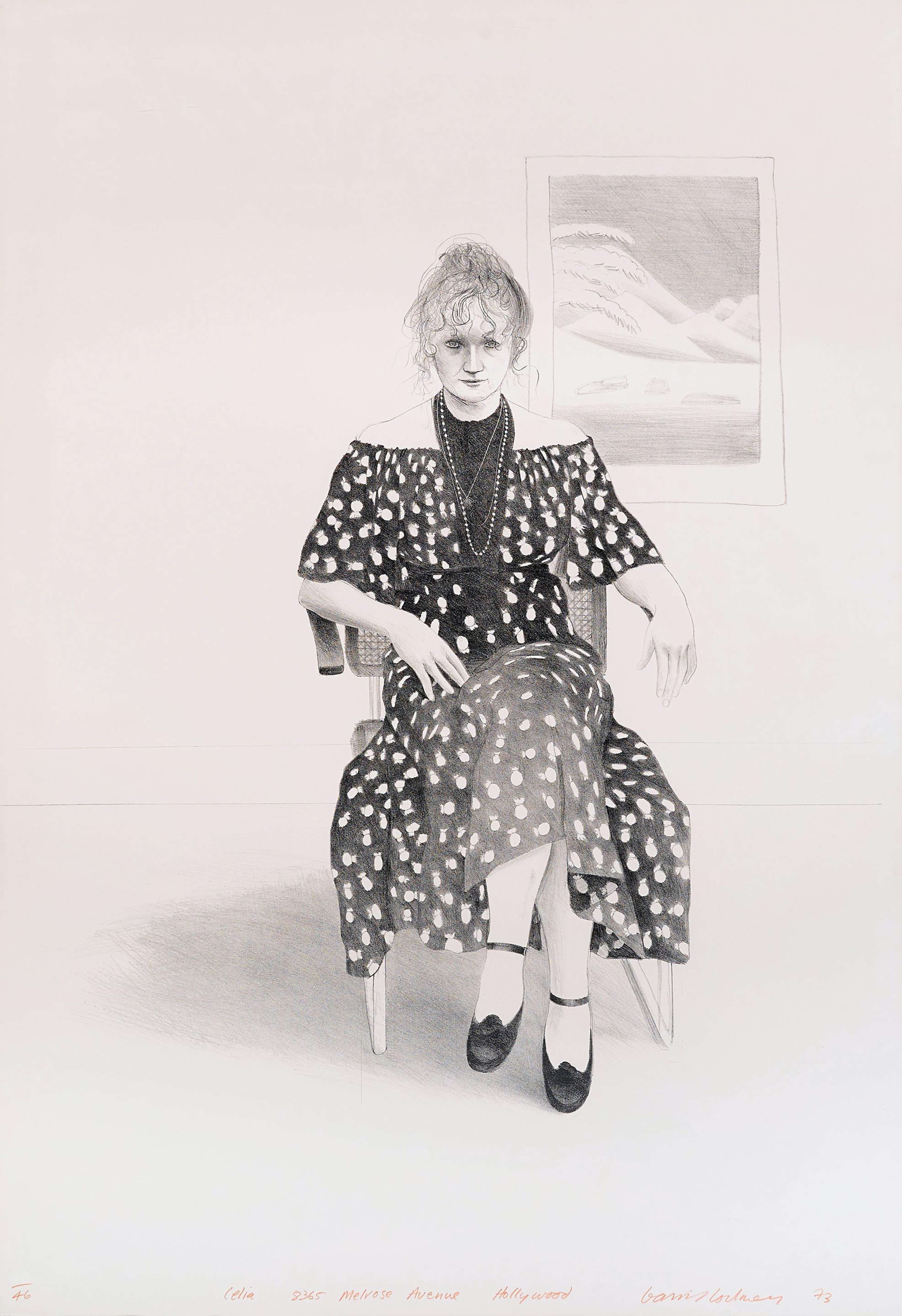
Hockney pays homage to earlier masters through the seated poses, toilette scenes and off-guard viewpoints. From Matisse he borrows the use of bright, flat colours and simplified shapes; from Degas, the sense of catching a subject in an unguarded, everyday moment; and from Lautrec, the immediacy and liveliness found in scenes of modern life. Celia’s presence brings these art-historical ideas into the contemporary world, keeping the portraits personal rather than purely academic.
Celia Birtwell also appears in Hockney’s multi-image photo-collages
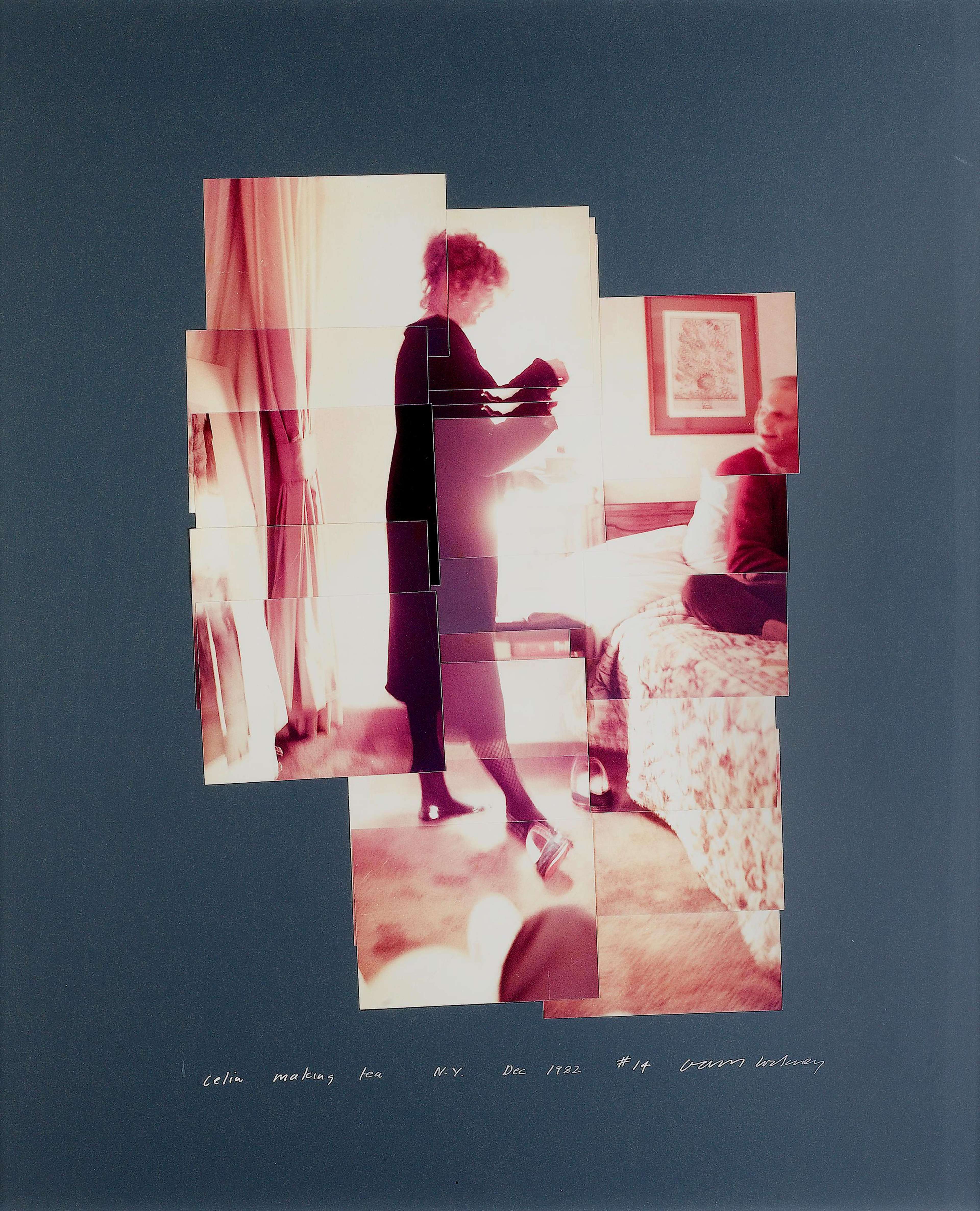
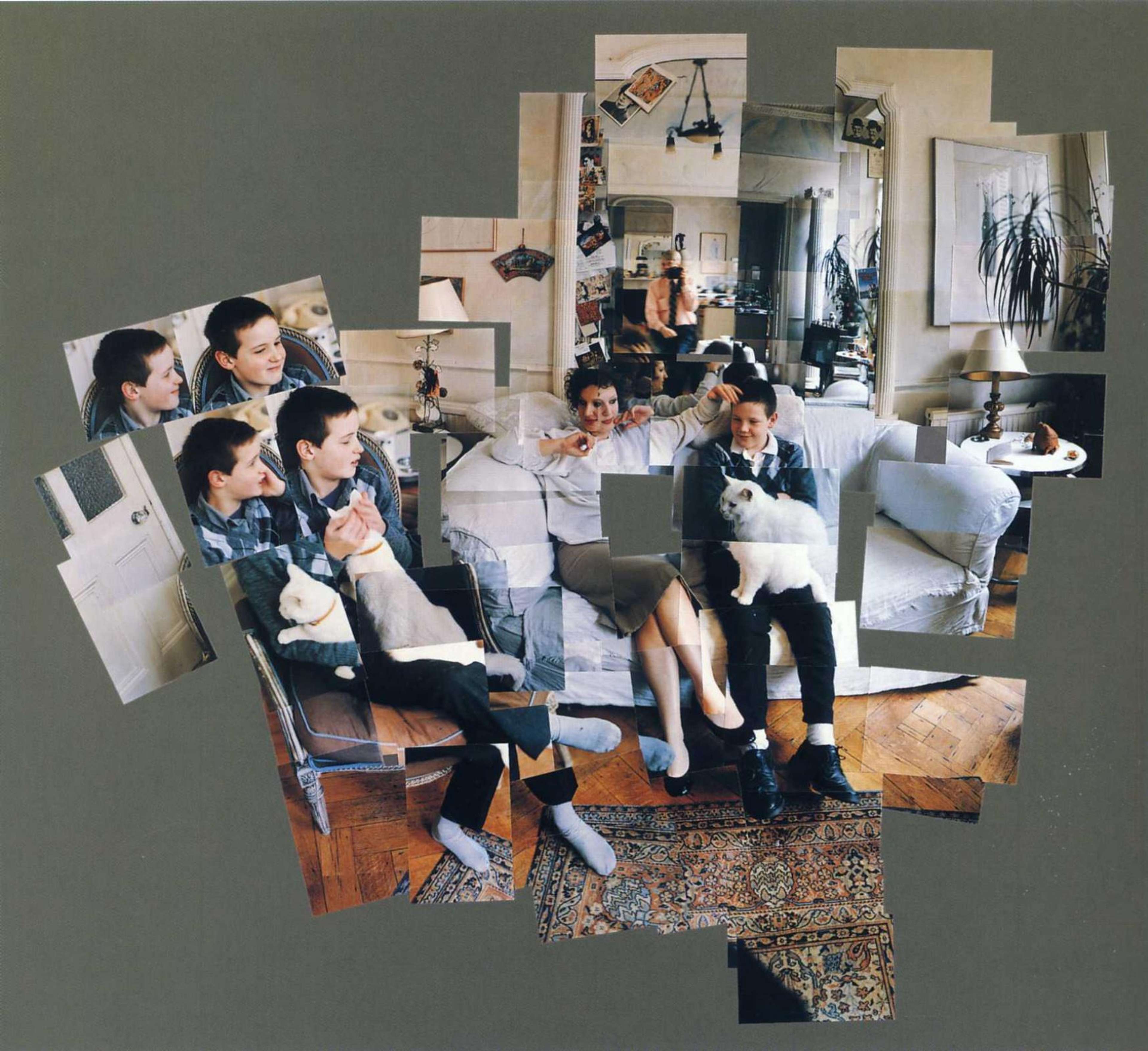
Hockney’s Photo Collages patch together many small views to suggest how we actually look at someone over time. In Celia Making Tea (1982), the action is captured, which challenges the single frozen viewpoint of traditional portraiture and demonstrates that photography can add depth and duration to a portrait.
The Gemini G.E.L. portfolio places Birtwell at the centre of Hockney’s portraiture
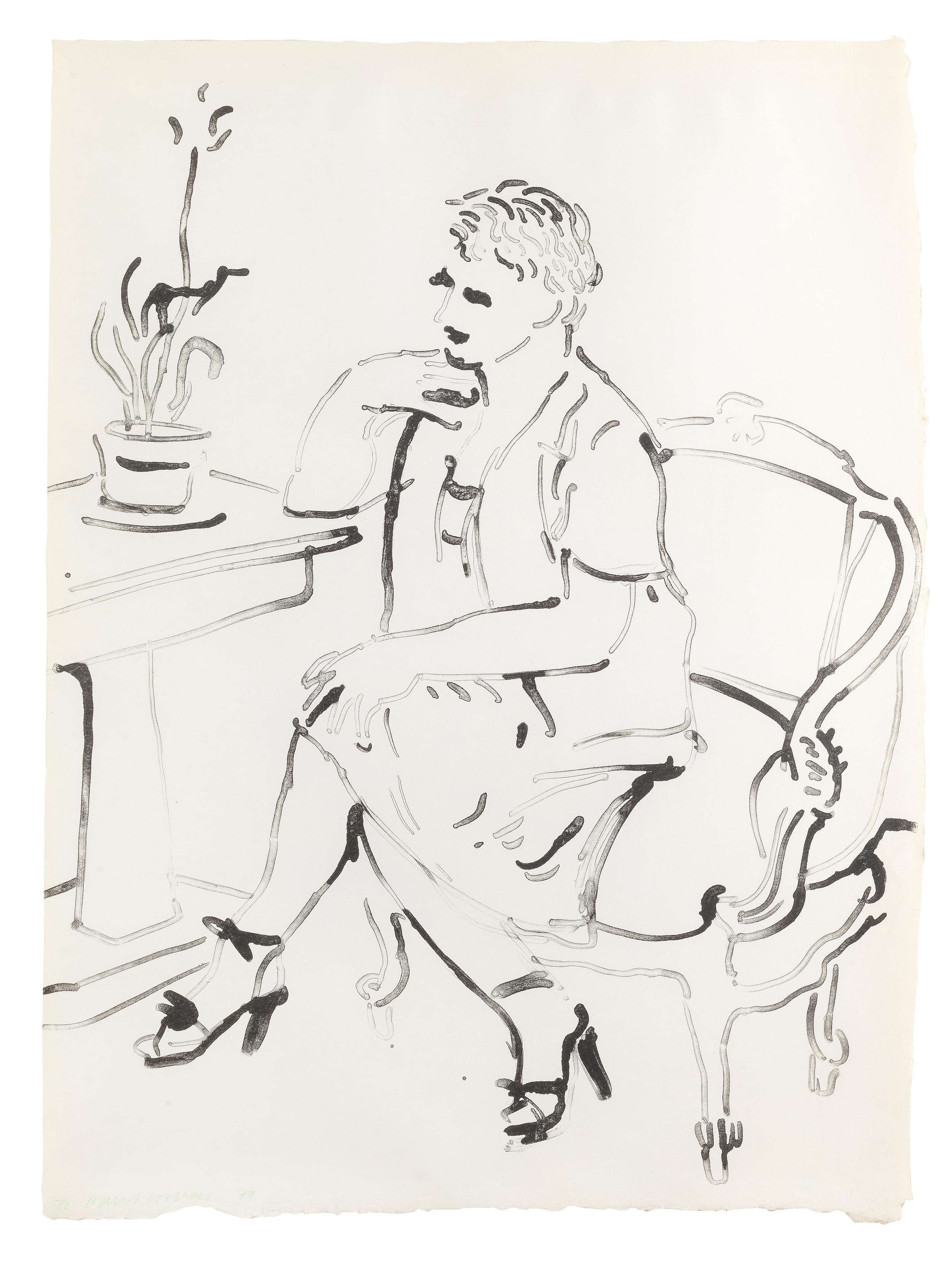
Celia features prominently in Hockney’s 1979 Gemini G.E.L. Portfolio, showing how the artist relied on repeated sittings, proofing and revision. Her reliability as a collaborator let him test papers, inks and scale with confidence. The result explains why many of Hockney’s most assured prints emerge through portraits of Celia.
An Image of Celia (1986) brings together multiple viewpoints
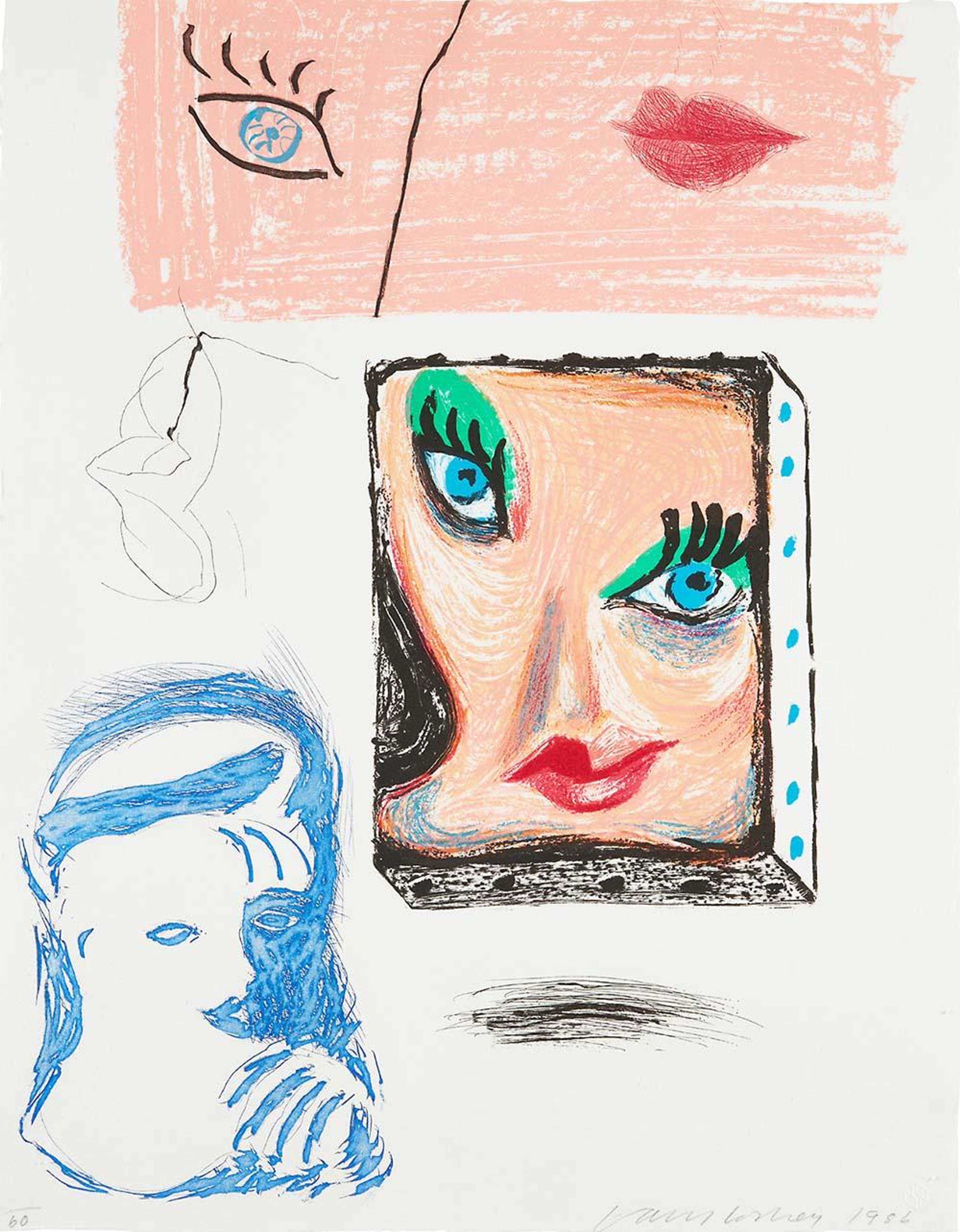
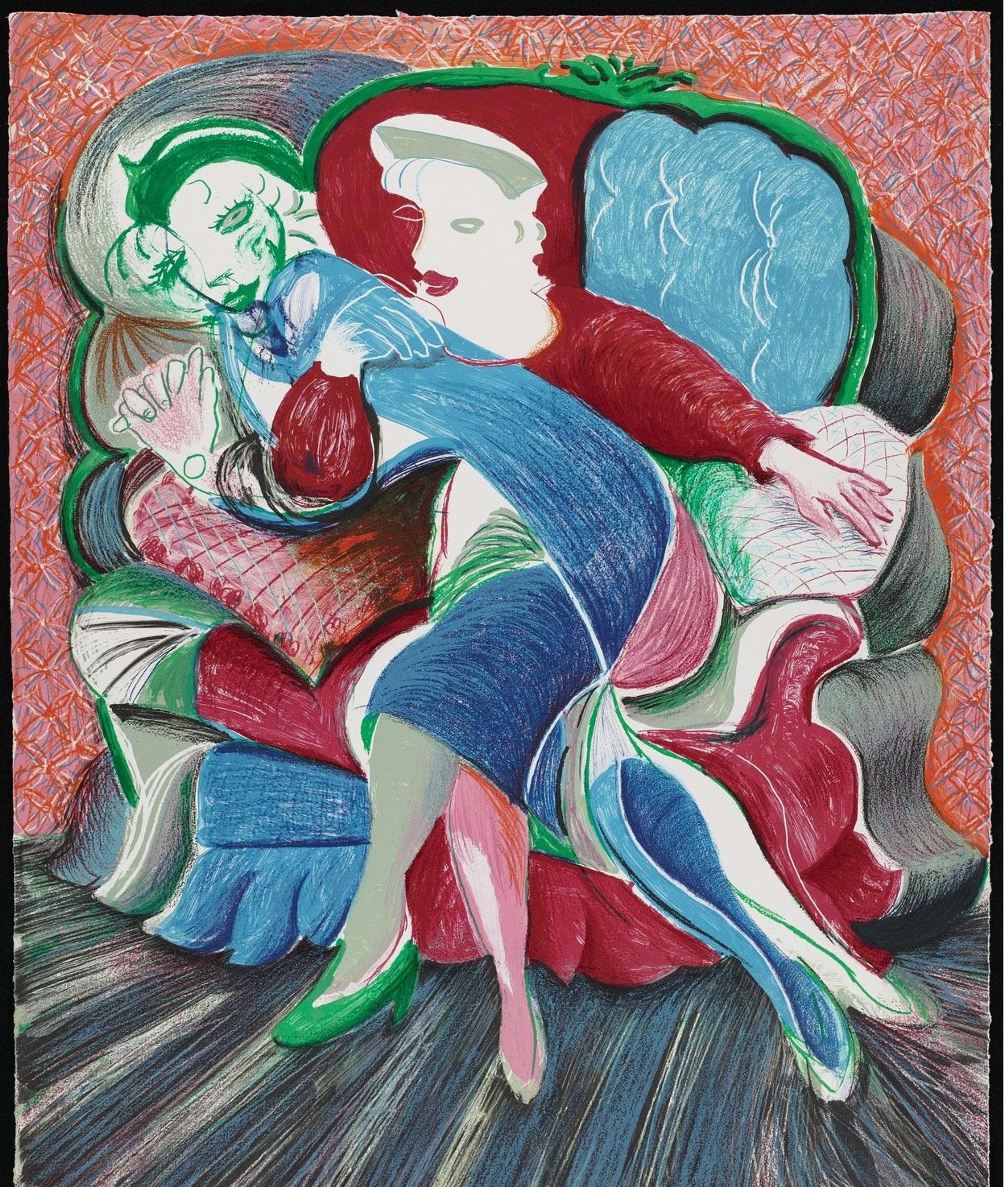
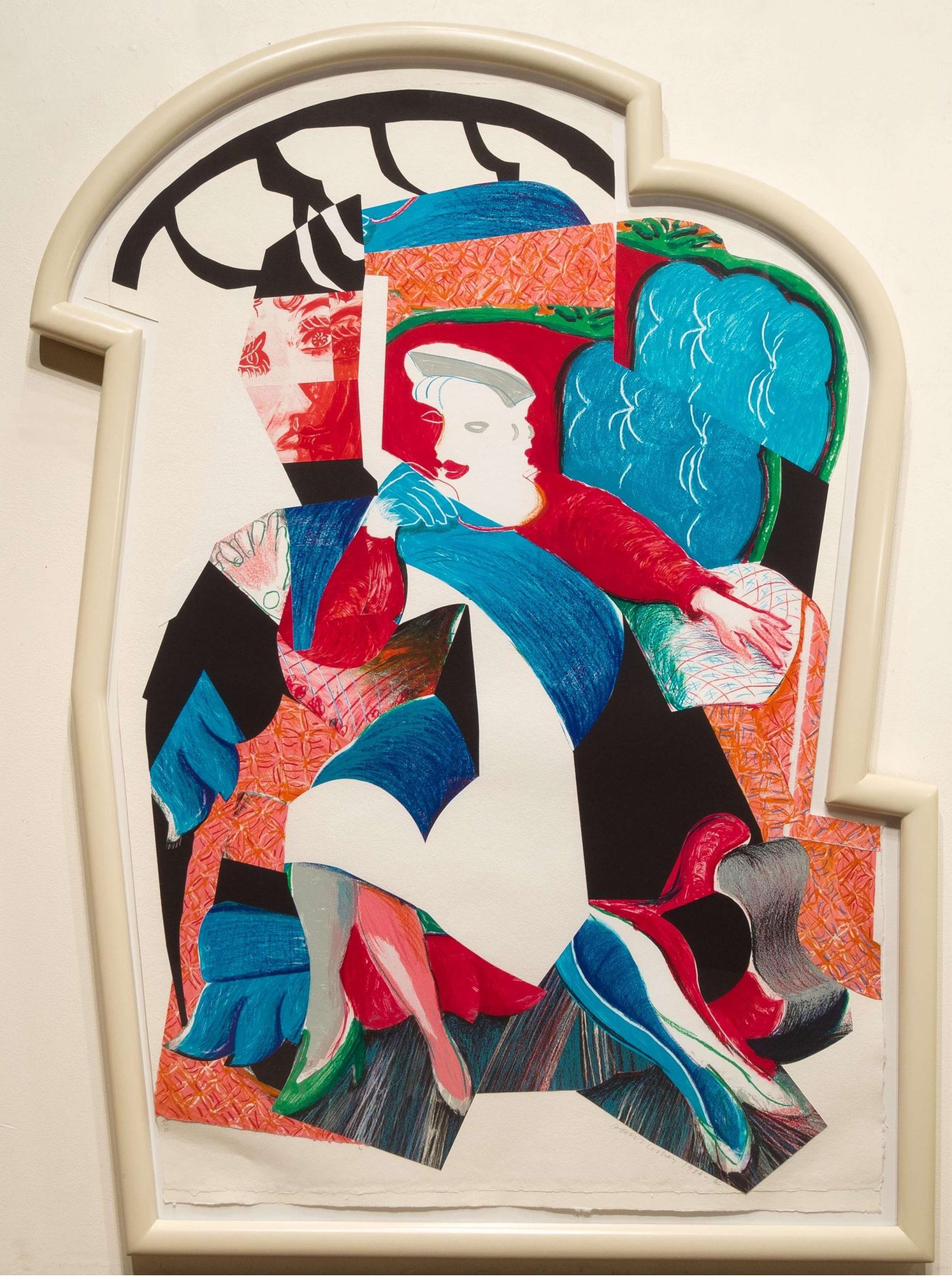
An Image Of Celia is a complex lithograph that layers frontal and profile views of her face. Saturated reds and blues pull the head forward against a blank background, while simplified features appear as surreal fragments. The effect is a portrait assembled from many different moments of looking.
Major exhibitions present Birtwell as a constant in Hockney’s portrait practice
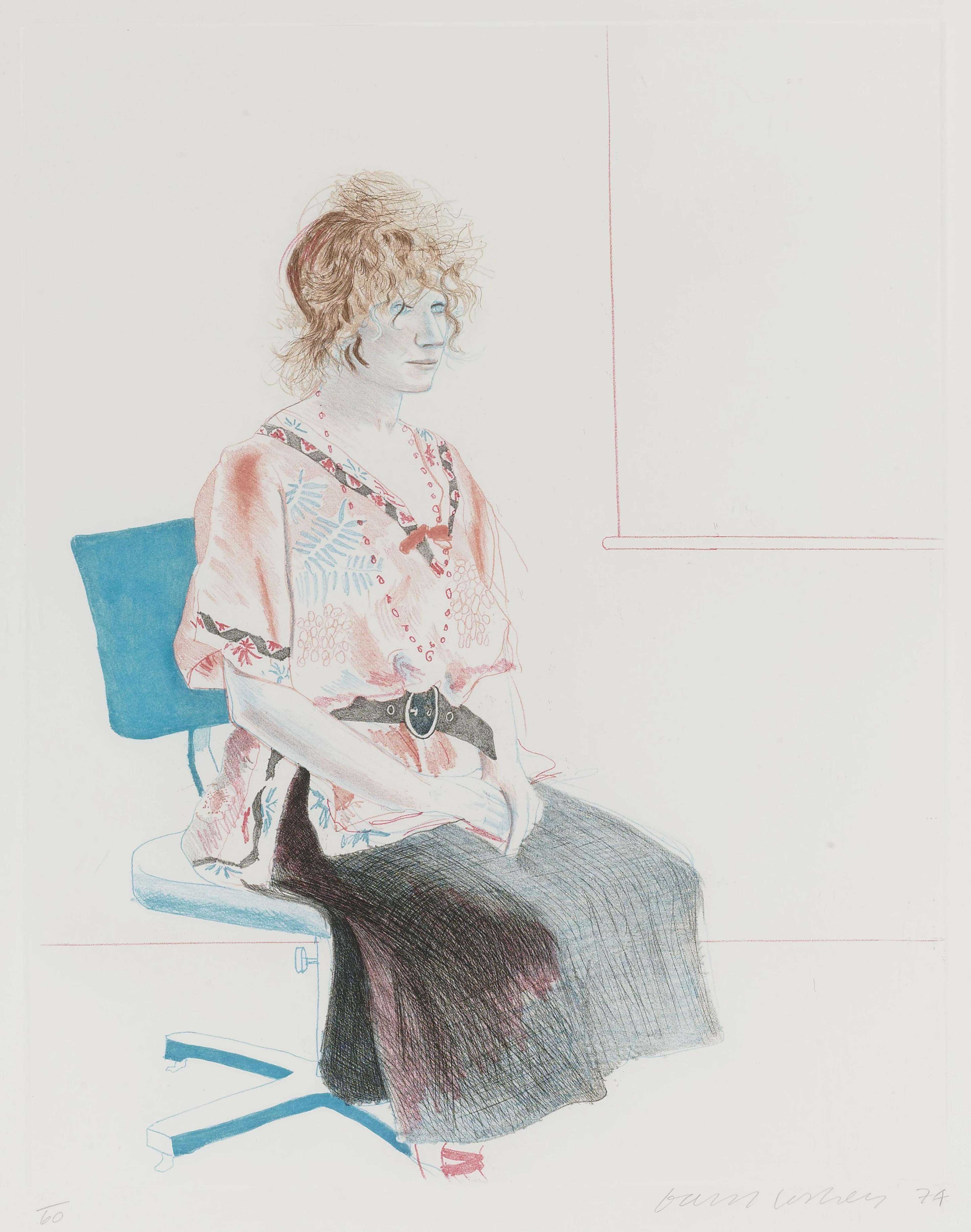
From the Royal Academy’s 82 Portraits and 1 Still-Life (2016) to the National Portrait Gallery’s drawing surveys, Celia is a headline presence. Her recurring inclusion reflects not only her status as his most frequent sitter, but also the endurance of their friendship over six decades. Speaking of her experience posing, Birtwell has said, “When we’re together, we just laugh and laugh,” she admitted in an interview, while Hockney has described her as “such a special person... a beautiful face, with lots of things in it that appeal to me.” Their portraits together carry that ease and affection.
Hockney and Birtwell’s friendship has outlasted fame, fashion and time
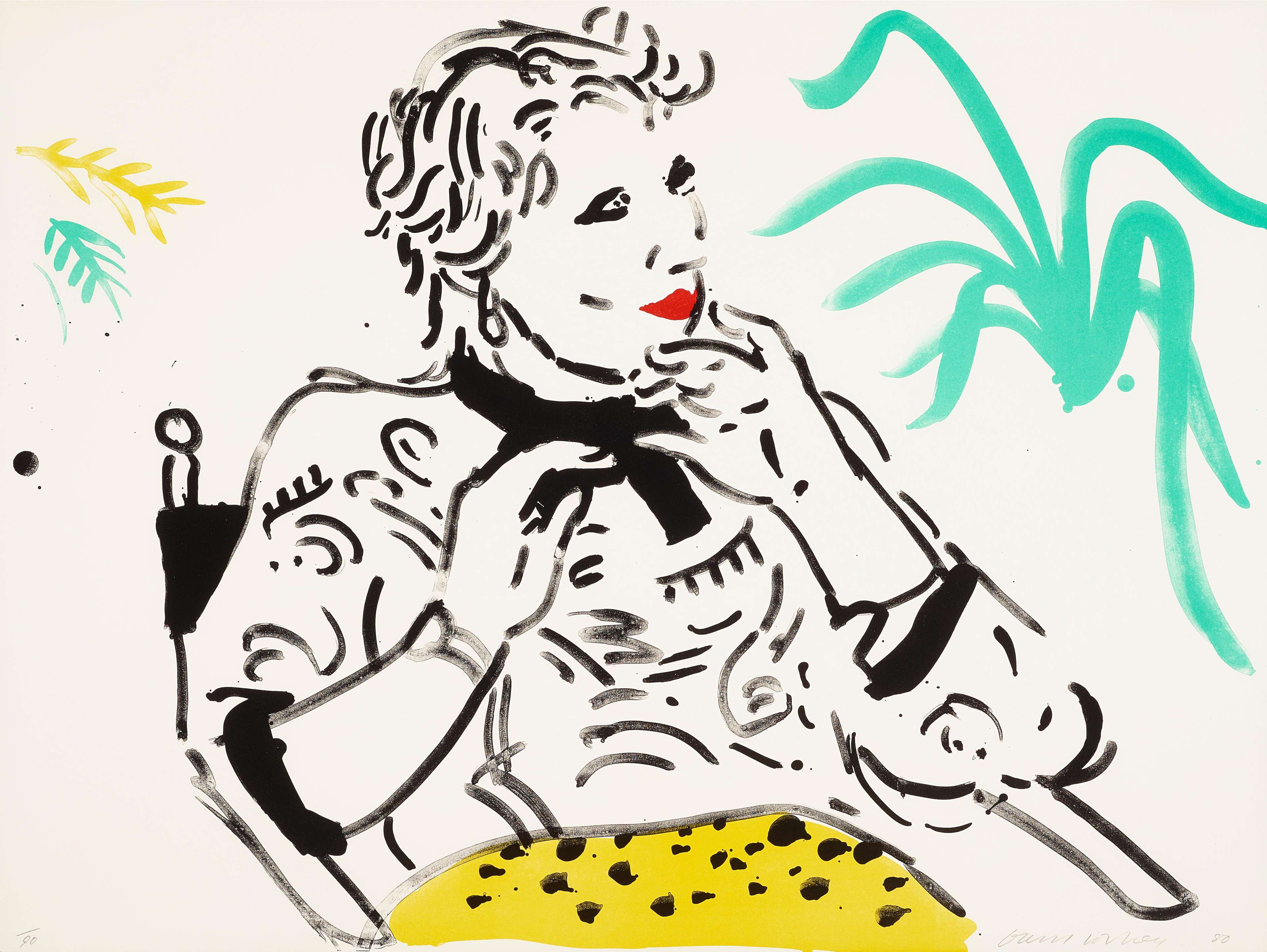
Hockney and Birtwell first met in the late 1960s, when both were rising stars in their fields - he in art, she in textile design - and their friendship has long outlasted the era’s glamour. “He’s a real intellectual, David,” Birtwell has said, “and that he chose me is incredibly flattering.” Hockney echoes the sentiment: “Celia is one of the few girls I know really well. I’ve drawn her so many times and knowing her makes it always slightly different.”