Eye
And Camera
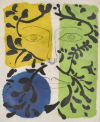
John Piper's extensive Eye and Camera (c. 1967-1980) print series explores the gaze in art, by turning photographs of the artist's own wife into visually captivating screenprints. Piper's masterful compositions challenge traditional notions of perception and highlight the unique perspective of the artist's eye and camera lens.
John Piper Eye And Camera For sale
Eye And Camera Market value
Auction Results
| Artwork | Auction Date | Auction House | Return to Seller | Hammer Price | Buyer Paid |
|---|
Sell Your Art
with Us
with Us
Join Our Network of Collectors. Buy, Sell and Track Demand
Meaning & Analysis
Eye and Camera is a print series by John Piper, produced over a period spanning the late 1960s, 70s and early 80s, that explores the relationship between the artist's vision and the photographic medium. Through a series of screenprints, Piper investigates the interplay between human perception and the camera's objective lens, highlighting the similarities and differences in how the world is captured through each.
Better known for his depictions of British pastoral scenes, churches, and palatial architecture Piper's prints in this portfolio offer something unique. Based on photographs taken by the artist of his wife, the prints are mildly erotic in subject, depicting variously her form in silhouette, stockinged legs crossed, or other angles of her body, often in hosiery. Piper blurs the boundaries between representation and abstraction by partially obscuring his wife with a blocky black ground, repetitious composition and different, bold colourways. The effect is Pop Art-esque, reminiscent of Andy Warhol’s pioneering screenprints thanks to Piper’s use of the screenprint medium, block colour, and sensual compositions.
The Eye And Camera series showcases Piper's more experimental side, as he employs various techniques, such as collage, photomontage, and mixed media, prior to printmaking. By incorporating photographic elements into his prints, Piper blurs the distinction between traditional printmaking and photography, which already share an affinity in their seriality, and thus questioning the boundaries of artistic expression. Through these compositions, Piper explores the concept of framing and selective vision; he manipulates the viewpoint, cropping, and layering of images to create visual tension and ambiguity. Seen altogether, the series presents a singular fragmented erotic scene, suggesting the limitations of both the human eye and the camera lens and generating a cinematic quality.