

Understanding Yayoi Kusama’s Print Practice
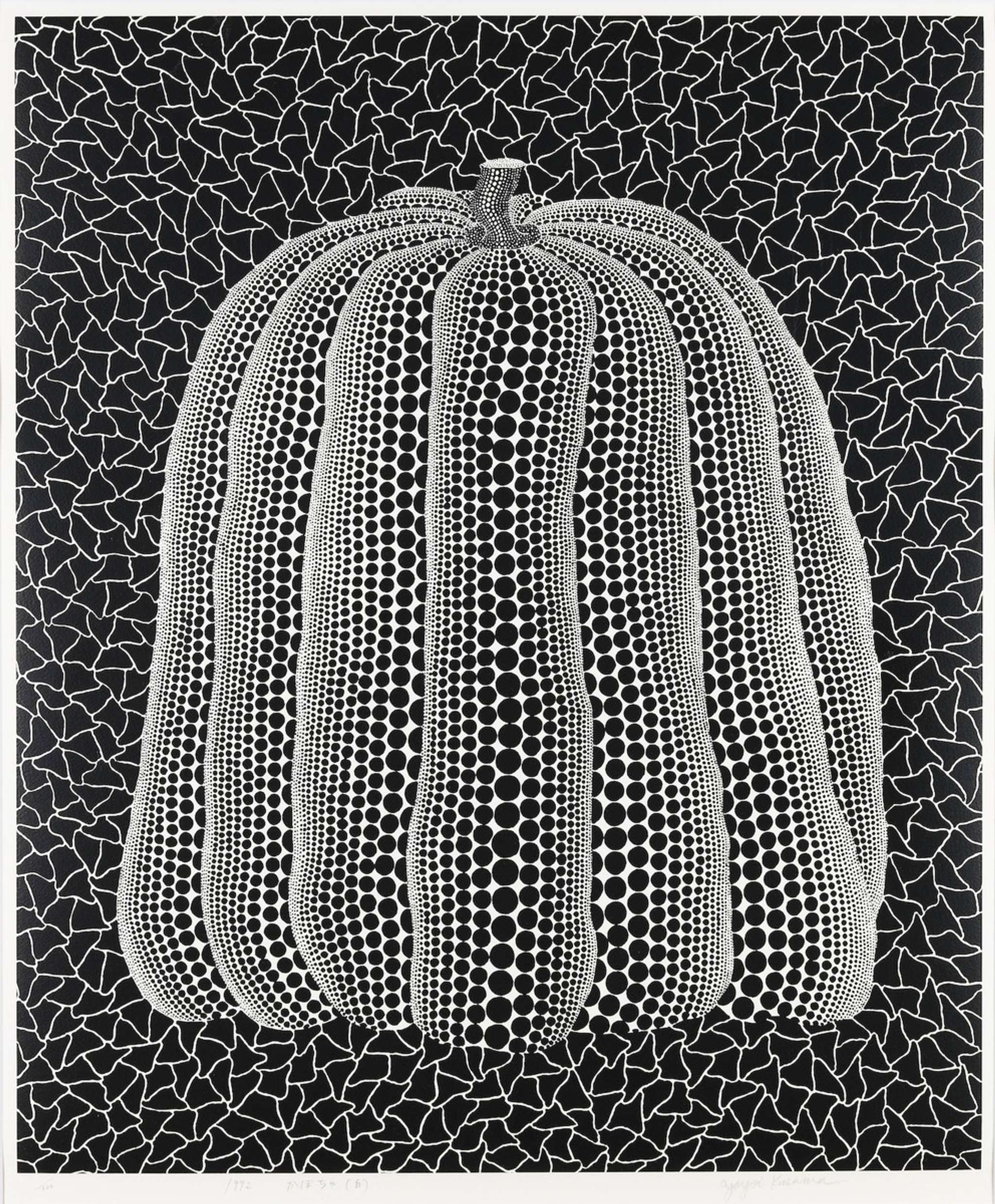
Yayoi Kusama engaged with printmaking since the 1960s and her Infinity Nets, polka-dot patterns and natural subject matter appear repeatedly throughout her prints. From the 1970s onward, she developed a sustained print practice through collaborations with established publishers and specialist printers, especially in Japan. Early examples include lithographs and screenprints produced around her return to Tokyo in 1973, following her time in New York.
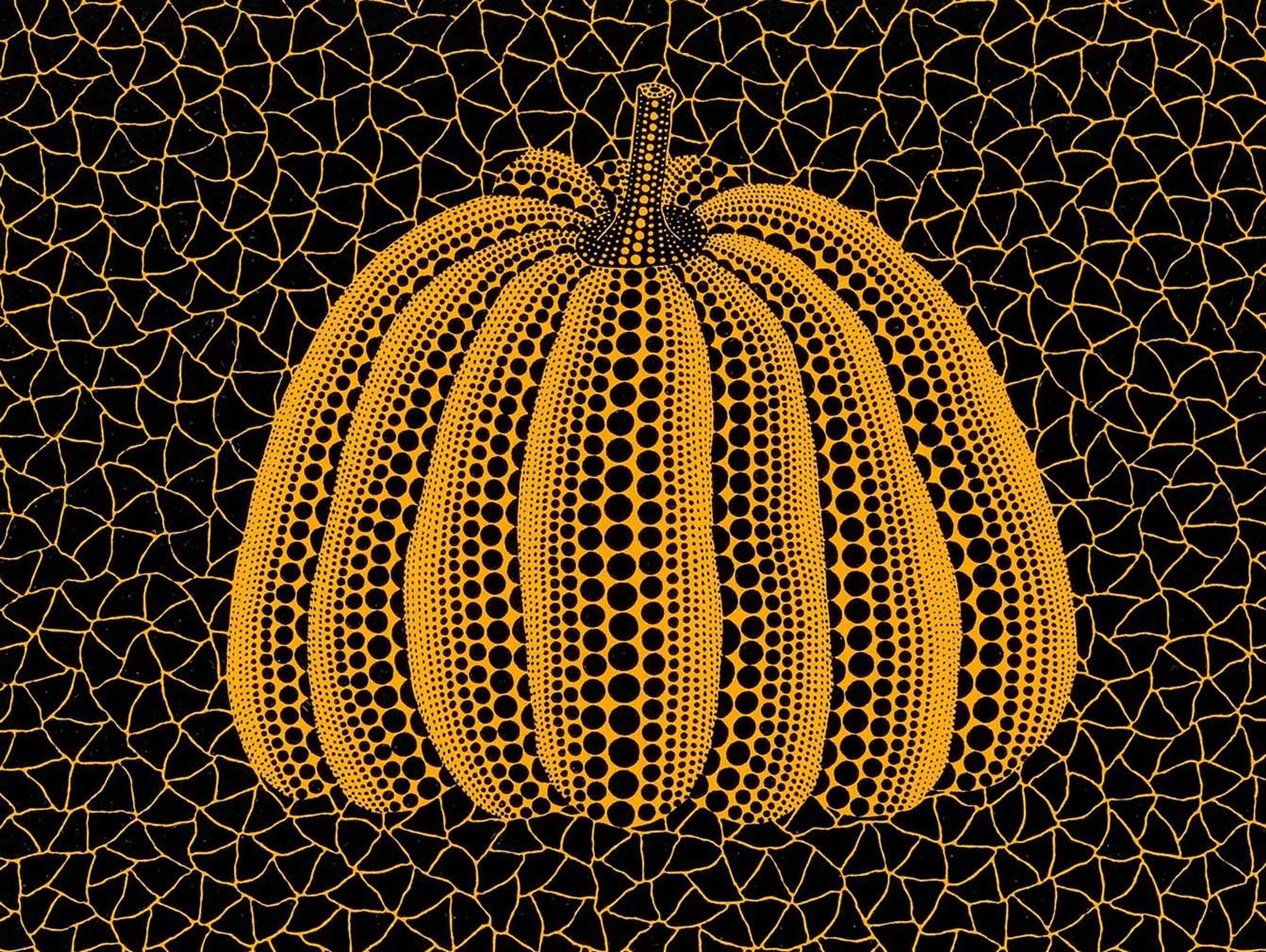
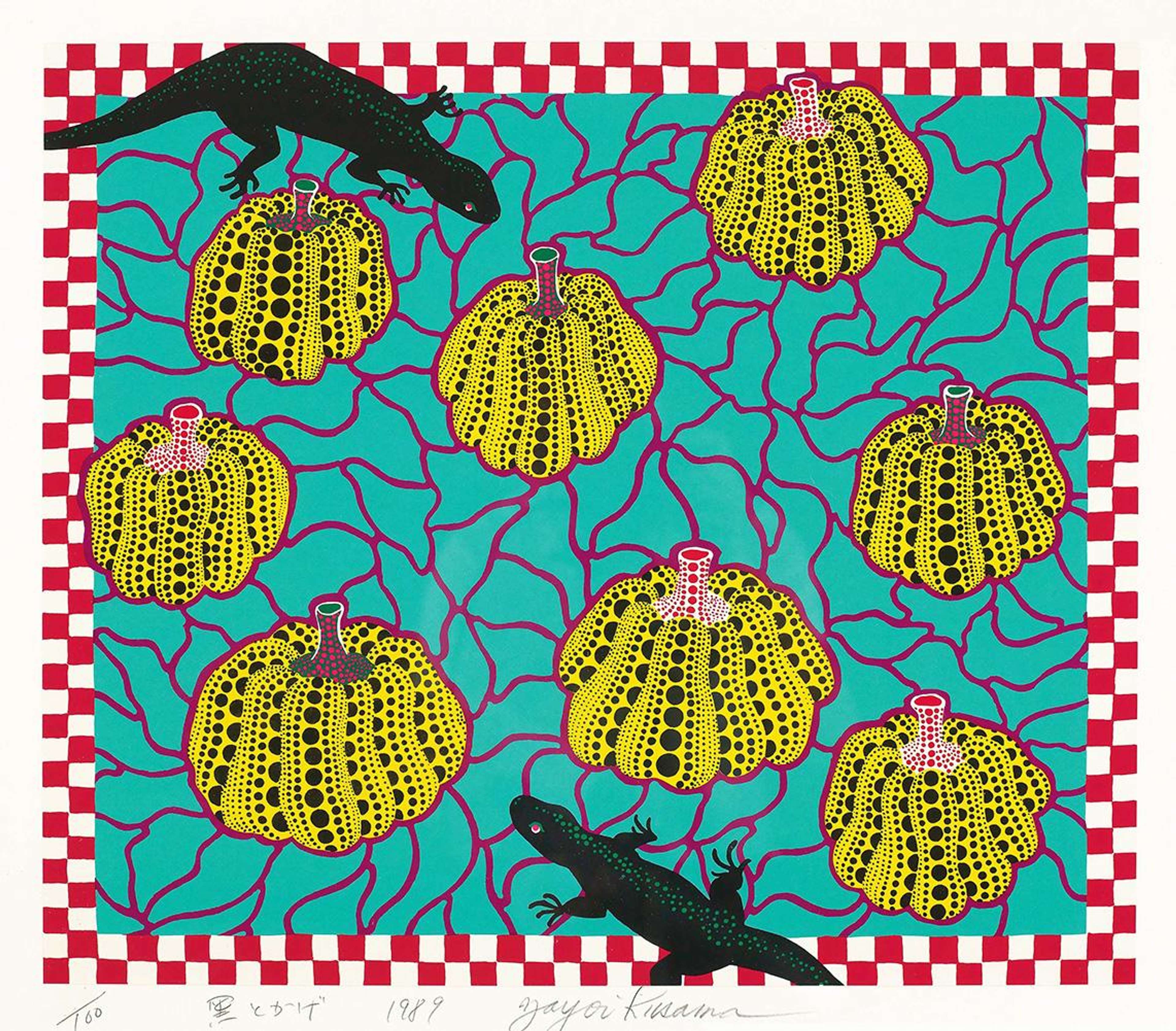
Many editions were published by Toki-no-Wasuremono (Tokyo), sometimes co-published with Takeda Arts, and printed by specialist studios such as Ryoichi Ishida’s. These collaborations allowed Kusama to translate her polka-dots and Nets into print format without losing their visual intensity, and her serial approach only intensified the obsessive, meditative character of her wider practice. Though Kusama’s prints are created using a variety of techniques, including lithography, etching, and silkscreen, they consistently maintain the flatness of surface and density of pattern that mirrors her paintings and soft sculptures. Works such as Dots Obsession (2011) demonstrate how her signature forms can shift between mediums while preserving their conceptual intent. In this way, her printmaking is an integral, iterative part of her lifelong investigation of repetition, self-obliteration, and pattern.
Are Kusama Prints Signed by the Artist?
In many Kusama limited editions, the artist hand-signed and numbered each impression, particularly in smaller or more closely controlled runs. For example, her 2004 set of five Morning is Here screenprints were all hand-signed, dated and numbered by the artist. However, not all prints are signed, and while a signature strengthens provenance, its absence is not always a red flag. Collectors should therefore refer to Kusama’s catalogue raisonné if a print was sold as a signed limited edition.
Edition Numbers and Formats on Kusama Prints
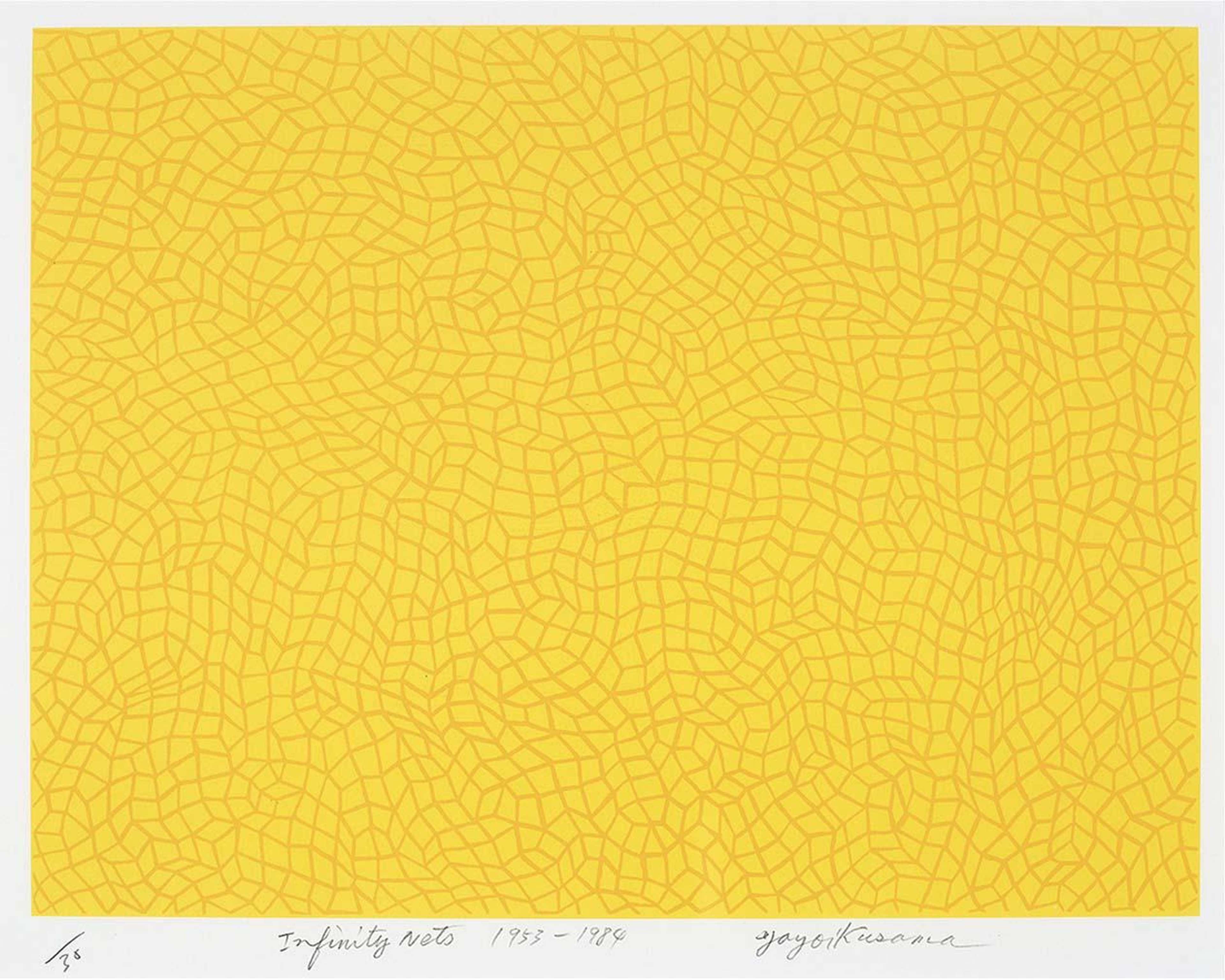
Kusama’s print editions vary by series, date, and publisher. For example, her Morning is Here screenprints (2004) were issued in an edition of 95, along with 13 artist’s proofs and 11 hors commerce proofs. Each of the five prints in the set was hand-signed, alphabetically labeled, and published by Toki-no-Wasuremono. Her Infinity Nets (YBL) screenprint (2004), also published by Toki-no-Wasuremono, was issued in an edition of just 40, reflecting how edition sizes can vary between series. In all cases, an edition number should fall within the known range for that work and any proofs should correspond to documented counts.
Print Techniques Used in Kusama Prints
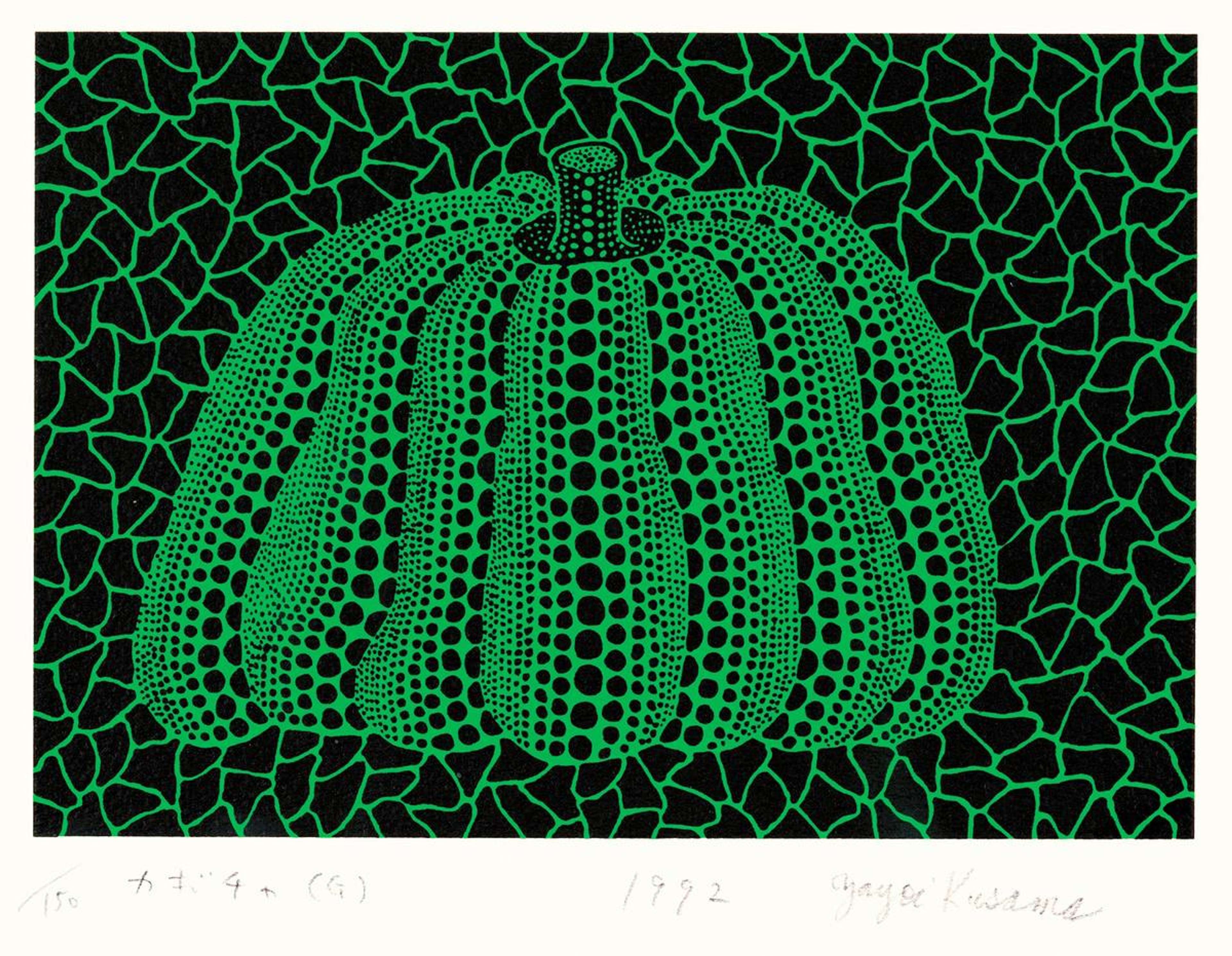
Kusama’s prints span several traditional printmaking techniques, each chosen to suit the visual style of her repetitive, highly controlled motifs. The most frequently used method in her print practice was screenprinting, a process suited to her flat colour, sharp edges, and repeating patterns. Screenprints allow for consistent saturation and clean, uniform layering – qualities seen in works such as Pumpkin 2000 (Green) or the Infinity Nets series, where inconsistency would disrupt the intended optical effect.
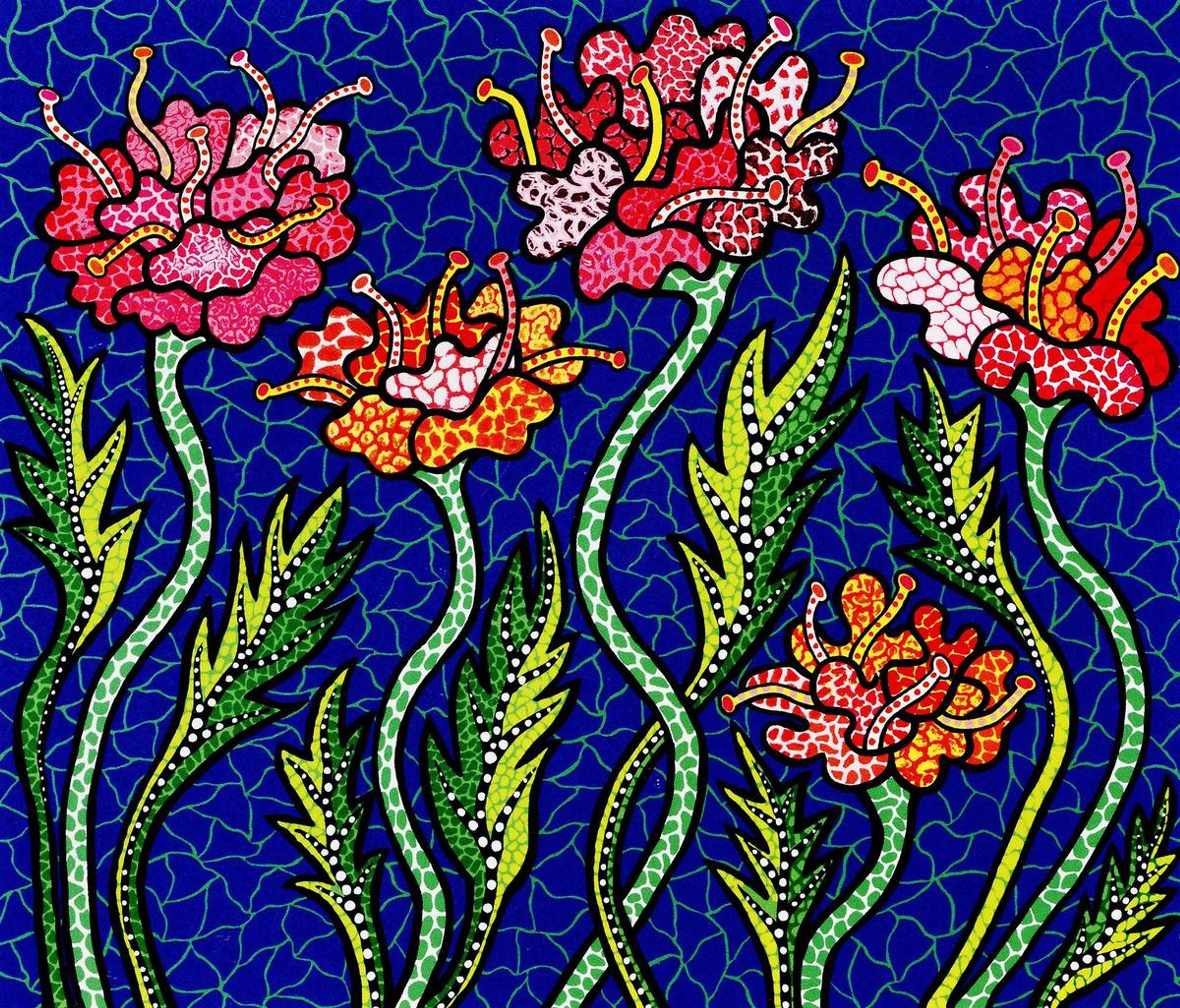
In addition to screenprinting, Kusama worked extensively with lithography, etching, and other intaglio techniques, particularly in earlier decades. A number of prints from the 1970s and 1980s, such as her Flowers series, were produced using different techniques across the period, including screenprinting, lithography, and etching, depending on the work. These methods allow for softer tonal effects or more tactile surfaces. In more recent years, certain prints employed mixed media techniques. These may combine screenprint with collage, embossing, or even the application of reflective materials or textured papers.
Understanding the relationship between technique, paper, and process is a helpful step in print authentication. Serious collectors should reference catalogue entries, publisher documentation, or ask a specialist to confirm the correct medium and edition structure for each work.
Publishers and Studios Associated With Kusama Prints
From the late 1980s onward, many Kusama print editions were produced in Japan, with publisher and printer information often recorded in catalogues and auction listings. For example, Toki-no-Wasuremono (Tokyo) appears as publisher on a number of editions, and the artist also worked with specialist printers including Ryoichi Ishida’s studio on certain screenprint series. A Kusama print that lacks clear publisher or printer information should prompt closer scrutiny and careful cross-checking against documented examples.
Provenance of Kusama Prints
Provenance refers to the documented history of an artwork and reputable Kusama prints will typically have gallery receipts, exhibition records, auction catalogues or publisher archives. The Yayoi Kusama Foundation’s registration inquiry checks whether an image and registration number match their records, but it is not a physical authentication service nor does it issue Certificates of Authenticity (COAs) for prints. In fact, the Kusama Museum warns collectors that counterfeit prints are widespread and even forged COAs have been identified. Collectors should prioritise specialist advice, gallery letters, catalog entries and publisher invoices.
Condition Issues That Affect Kusama Print Authentication
Genuine Kusama prints might naturally show age-related wear if they are decades old, such as fading or minor tears. If a print is severely faded or discolored, verify that this matches known storage history and look for the kinds of wear consistent with a print’s claimed age. Paper yellowing, soft creases, or foxing may be acceptable in older prints. In some cases, poor restoration attempts or aggressive cleaning can raise additional concerns. A condition report from a reputable dealer or conservator is often necessary for high-value works, and while condition alone does not determine authenticity, it plays a key role in verifying that a print’s physical state aligns with its documented origin and production date.
Seek Expert Authentication for Kusama Prints
If you are looking for advice to authenticate your Yayoi Kusama print, get in touch with our team of specialists.
Request a valuation for your Kusama print today.