Fruit
Basket
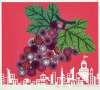
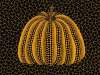
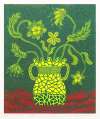
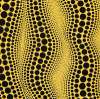
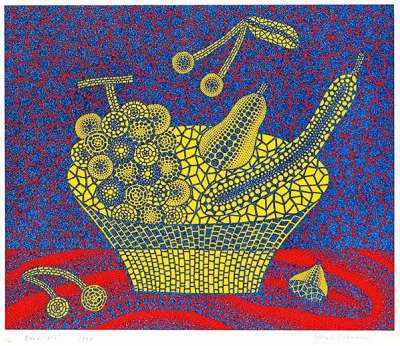
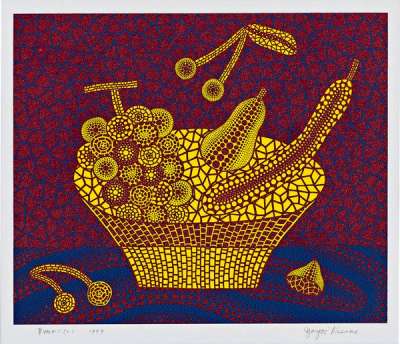
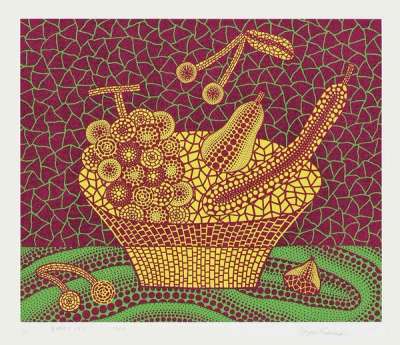
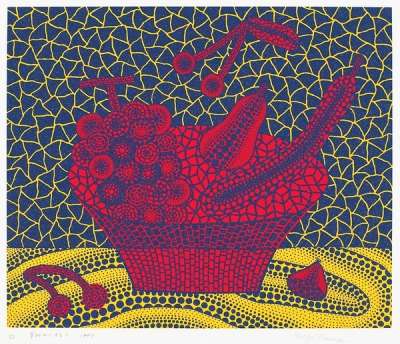
Yayoi Kusama’s Fruit Basket print series explores spatial representation through her signature dots. By arranging her dots directionally and according to size, she effectively evokes the dimensionality of the fruit, on a block colour background. Kusama’s love of fruits and vegetables stems from her parent’s employment as seed sellers.
Yayoi Kusama Fruit Basket For sale
Fruit Basket Value (5 Years)
With £35696 in the past 12 months, Yayoi Kusama's Fruit Basket series is one of the most actively traded in the market. Prices have varied significantly – from £830 to £29020 – driven by fluctuations in factors like condition, provenance, and market timing. Over the past 12 months, the average selling price was £17848, with an average annual growth rate of 18.91% across the series.
Fruit Basket Market value
Auction Results
| Artwork | Auction Date | Auction House | Return to Seller | Hammer Price | Buyer Paid |
|---|---|---|---|---|---|
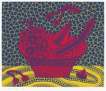 Fruit Basket 5 Yayoi Kusama Signed Print | 28 May 2025 | New Art Est-Ouest Auctions Co. | £17,850 | £21,000 | £25,000 |
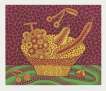 Fruit Basket 3 Yayoi Kusama Signed Print | 12 Dec 2024 | Phillips Hong Kong | £11,900 | £14,000 | £19,000 |
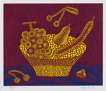 Fruit Basket 2 Yayoi Kusama Signed Print | 29 Aug 2023 | Seoul Auction | £17,000 | £20,000 | £23,000 |
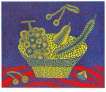 Fruit Basket 1 Yayoi Kusama Signed Print | 29 Apr 2020 | Seoul Auction | £8,500 | £10,000 | £11,500 |
Sell Your Art
with Us
with Us
Join Our Network of Collectors. Buy, Sell and Track Demand
Meaning & Analysis
Fruit, vegetables, and fruit baskets are a staple motif in the oeuvre of Japanese artist Yayoi Kusama. This collection gathers prints depicting overflowing fruit baskets, in brash primary colours, and using both Kusama’s famed polka dot and net patterns.
Fruit and vegetables, particularly displayed in baskets, are a universal symbol of abundance and also connote the seasonal recurrence of harvest time. Kusama was familiar with the human dependence on the natural world that this implies, coming from a family that cultivated vegetable seeds for its living. It is no wonder then, that in these prints she leans into the art historical tradition of the still life— often laden with allegorical meanings, such as the plenitude and good health implied here— in order to show her appreciation for a harvest that looks appetising; her basket is laden with grapes, cherries, bananas and pears. Yayoi Kusama subverts the traditionalism of the genre of the still life, however, as she moves away from the realism of the old master’s paintings and finds her own way to evoke depth and form. She uses her iconic dots motif to give roundness to her grapes and cherries, for example, by concentrating larger dots towards the centre of the sphere and radiating smaller dots away from this point. This unique means of representation evokes the sumptuousness of the fruit, particularly in Fruit Basket 5, where the block burgundy colour of the fruits and basket add to this richness.
Despite the evident positive impact her childhood as the daughter of seed sellers has had on her artistic career—the source, most notably, of her iconic Pumpkin motif— Yayoi had a troubled childhood in which she clashed with her mother and experienced deeply unsettling and perspective-shifting mental illness. It was her hallucinatory experiences that inspired, even necessitated, her repetitious painting of dots and other recurrent patterns, as a means of coping with her terrifying visions of bright lights, spots, and other obliterating patterns. Here, those dots become a radical representational technique, that embodies Kusama’s resourcefulness as an artist as she turns her trauma into a lens through which she observes the world with great wonder.