
In truth, it’s both. For this week, Frieze is the market – a barometer, a meeting point, and a trend in itself. Whether you’re a gallerist, collector, advisor, curator, or part of the wider orbit, there’s a gravitational pull that draws everyone in, and toward this week. Everyone wants to be part of it, and every dealer has their own strategy. Some show in the tent, others opt out – but all contribute to the atmosphere.
Saatchi Yates, for example, hasn’t had a booth since 2023, but their recent Marina Abramović exhibition – timed just ahead of the fair – landed the cover of The Evening Standard’s Frieze issue. Presence looks different now, just like the wider art market, and it doesn’t always require a booth.
Frieze remains the moment when London’s art world feels concentrated, on show, and a little on edge – not apart from the market, but entirely inside it.
Frieze London: VIP Day and the Material Turn
Working-Class Realism and the Return to Material Narratives
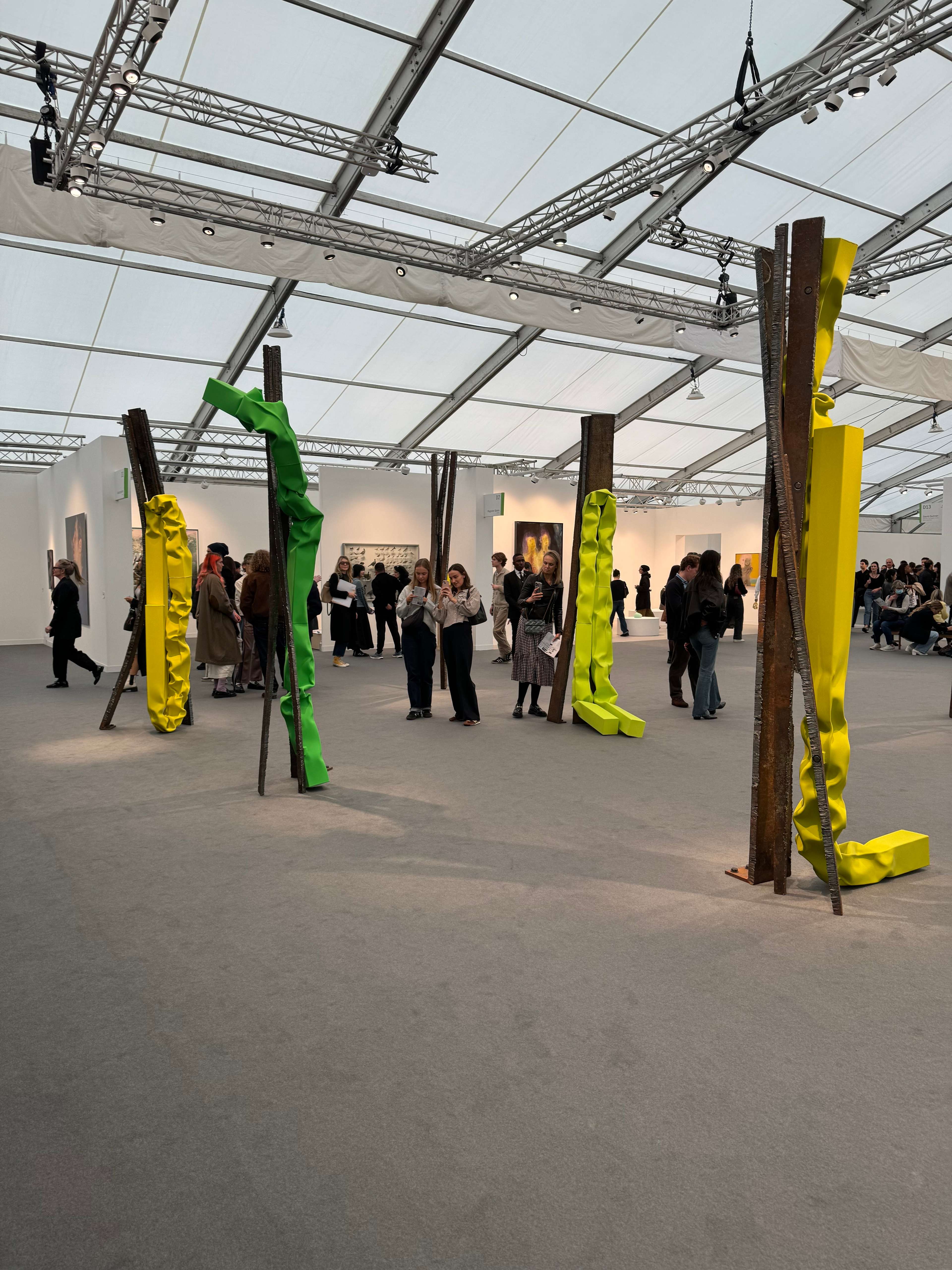
Across Frieze London 2025, the booths presented artists that foregrounded labour, form, and texture as carriers of meaning – signalling a turn in tone across many presentations.
In the Focus section, Ginny on Frederick’s solo presentation of Alex Margo Arden’s Accounts, 2025 was a standout. Using rescued museum mannequins and a tug-of-war rope, Arden staged a surreal, darkly comic vision of bureaucratic fatigue that embodied a kind of working-class realism – theatrical yet deeply human. The piece captured a wider mood that rippled through the fair: art that embraced endurance, humour, and the materiality of everyday life.
At Firth Street Gallery, Małgorzata Mirga-Tas’s rich velvet collages from her Siukar Manusia series extended that conversation. Depicting first-generation Roma residents of Kraków’s Nowa Huta district, they challenged anti-Roma stereotypes through vibrant, affirmative imagery. Their hand-stitched surfaces, drawn from domestic traditions, exemplified a wider material focus in contemporary practice, where fabric and texture carry both aesthetic and political charge.
Do Ho Suh and the Rise of Editions in the Contemporary Market
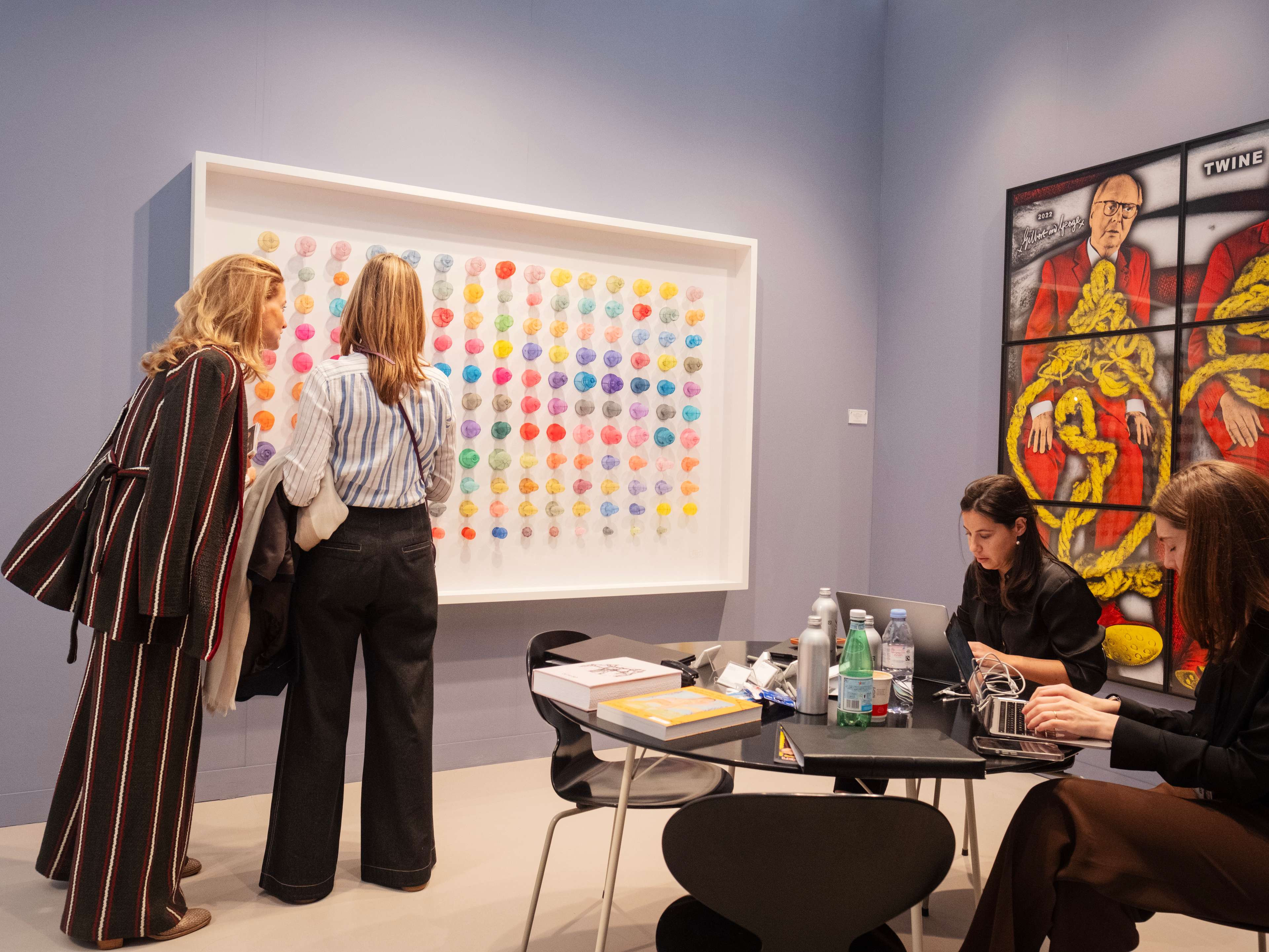
That intersection between tactility and collectability was nowhere clearer than at Lehmann Maupin, where Do Ho Suh’s booth became one of the fair’s most visited. In a solo presentation of new and recent works, collectors encountered translucent polyester editioned sculptures from three new series within the artist’s practice. Intricate fabric replicas of domestic objects – doorknobs, a furnace, even an entire washroom – explored memory and identity in shared spaces, perhaps even nodding subtly to Pop through their translation of the everyday into form and colour.
“This week felt like a celebration of our London-based artists,” said partner Isabella Icoz, referencing the momentum from Suh’s Tate Modern solo exhibition Walk the House. Over 15 works sold on VIP day, with prices starting around £50,000.
The appeal of Suh’s editions lies not only in their meticulous craft but in how they expand the boundaries of collectability. In a market that increasingly prizes tactility, emotional connection, and accessibility, editioned works like Suh’s offer all three – combining conceptual strength with a format that invites wider participation. It’s a model that continues to gain traction across the contemporary market, as artists and collectors alike recognise the creative and commercial value of working in series.
Elsewhere, at Thaddaeus Ropac and Sprüth Magers, Gilbert & George works were priced from £50,000 to £250,000, coinciding with their solo exhibition at the Hayward Gallery. As Monika Sprüth and Philomene Magers noted, “London once again proved itself as a leading centre for the art market” – a fitting observation in a year defined by strong institutional ties and a recalibration of priorities across the fair.
Pace and Gagosian Lead with Immersive Vision
Towards the back of the tent, where the mega galleries now live, Pace Gallery’s solo presentation of William Monk delivered one of the most contemplative experiences of Frieze London 2025. His monumental canvases, radiant with cosmic rhythm and atmospheric colour, struck a balance between abstraction and emotional gravity. The works were a showstopper – a reminder that process-driven painting still commands attention when it fuses ambition with intimacy. Yet by the weekend, rumours suggested that several pieces remained available – a telling signal of a market that’s deliberate rather than impulsive, even when interest is high.
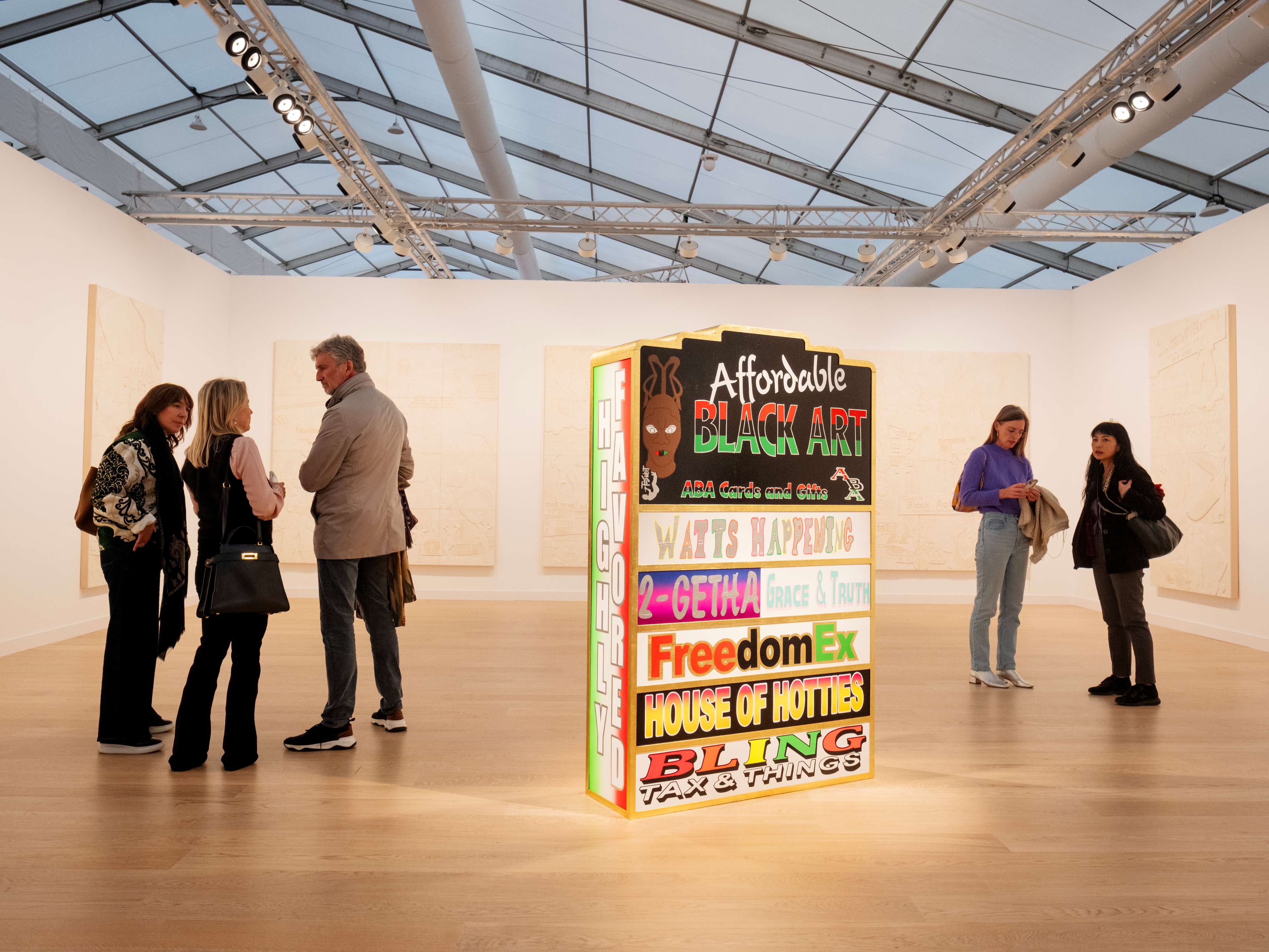
Gagosian’s dedicated booth for Lauren Halsey took that ambition in a different direction. Large-scale carved wood reliefs, a central neon sculpture, and wallpapered interiors transformed the stand into a self-contained environment – a kind of built manifesto. Always innovative and often sold out before the fair even opens, Gagosian’s presentation blended materials, scales, and mediums in line with this year’s prevailing trends. Halsey’s installation – architectural, Afrofuturist, and materially hybrid – captured the week’s defining tone: immersive, human, and visually commanding.
Arguably the most notable shift this year came from what wasn’t on view. At Frieze 2023, as the market began to soften, many galleries placed their bets on blue chip names with proven resale value – Warhol, Lichtenstein, and Hirst among them. This year, those anchors were largely absent. Instead of hedging with market-tested names, galleries leaned into process, narrative, and materiality.
It felt like a recalibration: depth over name, material over myth.
Frieze Masters: Connoisseurship, Surrealism & Historical Depth
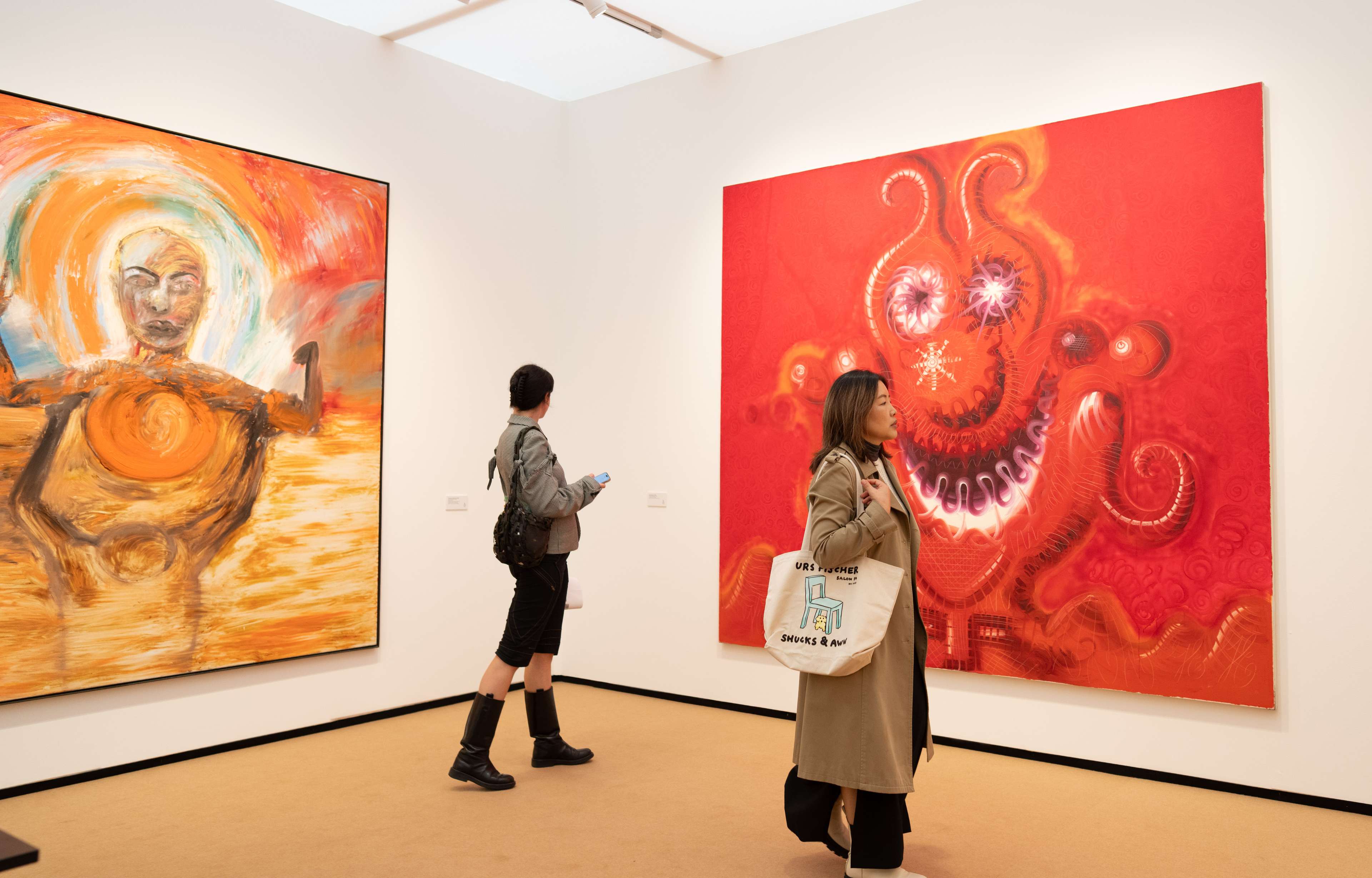
While Frieze London was defined by fresh materiality and edition-led energy, Frieze Masters offered a different kind of momentum – one rooted in historical depth, connoisseurship, and quietly confident sales.
Surrealism Sales Signal High-End Market Appetite at Hauser & Wirth
Hauser & Wirth led with a masterfully curated selection that leaned heavily into surrealism and Dada – a strategy that appears directly aligned with broader market momentum. Following the success of the Karpidas Collection earlier this season at Sotheby's, the appetite for major works by Magritte, Klee, Picabia, and Duchamp has only grown. On day one alone, the gallery placed over 30 works across both Frieze London and Masters, including:
- René Magritte, Le domaine enchanté, for $1.6 million
- Paul Klee, Befestigter Ort, for €1.4 million
- Francis Picabia, Les rochers à Saint-Honorat (undisclosed)
- Marcel Duchamp, Jaquette, for $1.35 million
“These sales are a testament to connoisseurship,” said Iwan Wirth, noting that collectors showed confidence in works with both historical and conceptual depth.
Bridget Riley’s ‘Fragments’ Series Attracts Institutional Demand
At Archeus Post-Modern, a complete set of Bridget Riley’s Fragment series drew serious attention from both private collectors and institutions. “We’ve brought two very special groups of Riley works to the fair and met with a knowledgeable, appreciative audience that understands the rarity of what they’re seeing,” said Brian Balfour-Oatts. He added that while the fair felt slightly less crowded than usual, conversations were focused and well-informed – with spontaneous buying happening at the lower levels.
Strong American Interest at Waddington Custot
Waddington Custot reported strong engagement from new US-based collectors and placed several important paintings, including a Pierre Soulages and Eugéne Boudin, alongside two sculptures by Barry Flanagan. The booth also had on view a rare coloured David Hockney paper pulp piece, which was selected by Harris Reed as one of the fair’s highlights. “There’s a renewed energy this year under the new directorship,” said Victor Custot, referring to Emanuela Tarizzo’s leadership.
Confident Sales at Annely Juda Despite Wider Headwinds
At Annely Juda Fine Art, Director of Sales Holly Braine struck a confident tone: “We had managed our expectations due to the wider economic headwinds, but we’ve been really heartened by the opening day. Collector presence is striking, and sales are robust.”
What Defines Success at Frieze Masters in 2025?
What came through most strongly at Masters wasn’t just the calibre of works, but the carefully considered approach to placement – one that mirrors the broader market’s search for depth and staying power. Between the two tents, the full picture showed London dealers responding to different collector energies, with distinct but equally important strategies.
As one gallerist, speaking anonymously, joked, “People are still measuring wealth and the money people are willing to spend by the Birkin bag they’re carrying.” But they also added that some of the most important sales happen right at the last minute – a reminder that not everything at Frieze can be predicted by appearances.
It’s easy to confuse visibility with impact. Frieze is a spectacle – exhilarating, adrenaline high, something everyone wants to feel and be a part of – but it isn’t the whole market. Like the auctions, it sets the tone, but not the pace. The most telling details of market confidence won’t be loud gestures or headlines reviewing the fair. Instead, it will be the quiet, deliberate movements that continue long after the tent comes down.