
That shift came into sharp relief during an Artlogic-hosted panel, Adam Lindemann – collector, former gallerist, and longtime fixture in the trade – joined Financial Times columnist Melanie Gerlis for a discussion largely framed around his decision to step away, as a dealer and gallerist, in the art world. In it, Lindemann described the moment we’re in as a “new renaissance.” It’s a bold phrase – but one that captures something real about the scale of change underway, even if not everyone agrees on what form that so-called renaissance will take.
In this month’s newsletter, I explore what that renaissance could look like in practice. Not as a buzzword – but as a provocation. And there are two interconnected shifts shaping this moment:
- A redefinition of value and visibility – as galleries scale back and institutional support becomes more constrained.
- The rapid global expansion of art fairs – and whether this is actually growing the market or simply redistributing it.
These shifts aren’t hypothetical. They’re already reshaping how, where, and why collectors buy. And they raise a bigger question still: Does the art world still know what it’s for?
Value, Visibility, and the Shifting Role of the Gallery
If Lindemann’s departure marked a symbolic turning point, it’s because he gave voice to something many in the trade have quietly sensed for some time: the centre of gravity has shifted. Not just from galleries to fairs, or from fairs to platforms – but from authority to participation. From deciding value to demonstrating it.
For much of the 20th century, galleries were the gatekeepers of prestige – arbiters of quality, taste, opportunity, and, crucially, network. (And network is so crucial – I’ll return to that later.) But in today’s market, value moves differently. It’s no longer determined solely by curation or proximity; it’s shaped by visibility, data, and digital fluency. Collectors no longer want to be told what to buy – they want to know why it matters, how it performs, and where it sits within a broader ecosystem of relevance.
That’s the shift Lindemann put into words when he explained his decision to step away – not bitterly, but with clarity. Despite his deep involvement in fairs and reputation as a tastemaker (a title he more aptly assigned to Tim Blum), he described feeling as though he was “talking to himself.” Whether playfully rehanging Calder works – “I was just Duchampianising them,” he joked – or selling art he genuinely loved, what he met was resistance. “It began to feel like a prison,” he said.
Yet, beneath that frustration was conviction. He spoke of potential – of a “new renaissance,” not in the financial sense, but in spirit. A belief that when the art world returns to form, it will come back leaner, smarter, more honest.
“My generation has aged out a bit,” Lindemann admitted – and in that line, an entire shift came into focus. Today, it’s younger audiences filling arts and cultural events: dressed up, filming, engaging. TikTok, Instagram, Snapchat – the visual fluency they inhabit now shapes how they encounter and circulate art.
This brings us back to the point about networks. Once built through gallery dinners and insider introductions, networks today are increasingly assembled online – a shift reflected in our recent Print Collectors’ Survey. For many younger collectors, community and connoisseurship begin digitally. They’re bringing energy, urgency, and visibility back into the room.
But as Lindemann pointed out, that same network doesn’t necessarily translate into economic stability. There’s participation – but little infrastructure. And that’s where the contradiction lies. Because even as the art world feels busier than ever – with fairs expanding, platforms multiplying, and digital visibility at an all-time high – the foundations that once sustained creative and commercial ecosystems are eroding.
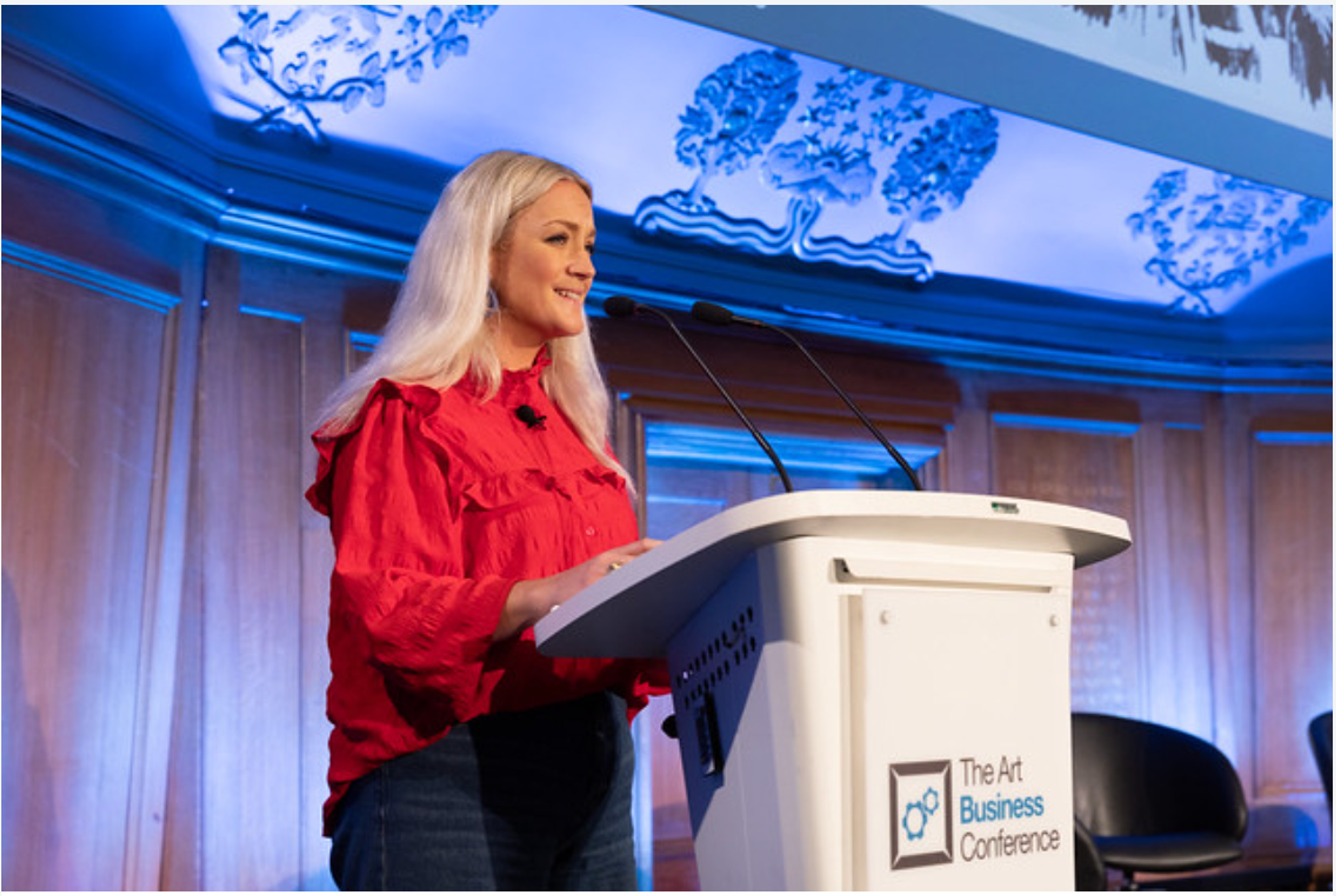
The reality is that while the appearance of momentum is growing, the possibility of building a sustainable career within the art world is shrinking. Institutional support is contracting. Public funding remains precarious. And for many emerging artists, dealers, and professionals, the structures that once turned passion into livelihood – museums, non-profits, mid-tier galleries – are under immense pressure. These were the exact tensions discussed at the Art Business Conference in London, where speakers echoed similar concerns about infrastructure, access, and the shrinking middle. Lindemann, too, touched on this point, noting the influx of “20-year-olds going into art – too many, in fact – because there are no jobs for them.”
It’s a paradox that defines this moment: cultural participation is surging, yet the economics that sustain it are thinning. Lindemann’s “new renaissance” feels less like a revival of old systems and more like a call to invent new ones – not just new platforms, but new forms of support, distribution, and value. He believes this next generation will carry the art world forward. And perhaps they will – if the infrastructure makes space for them to do so.
Global Expansion vs. Shrinking Relevance: The Fair Model Under Pressure
Beneath Lindemann’s optimism, a harder truth emerges – one that speaks less to rebirth and more to constraint. In an August episode of The Art World: What If…?, hosts Allan Schwartzman and Charlotte Burns revisited a 2024 conversation with Deana Haggag, American arts organisation leader, who warned of structural decay across the arts: rising censorship, dwindling public support, and the slow erosion of the institutional scaffolding that once sustained artists, curators, and culture workers alike.
Her concern feels increasingly relevant – especially in the context of the global fair circuit, where expansion remains the dominant narrative. Art Basel now includes Paris and will launch in Qatar in 2026. Frieze has planted flags in Seoul and Los Angeles. TEFAF continues to deepen its US presence. Across Asia, Tokyo Gendai and Singapore Art Week are positioning themselves as regional hubs. On the surface, the map has never looked busier.
But a bigger map doesn’t mean a bigger market – and the data bears that out. According to Artnet’s Mid-Year Intelligence Report, the top markets – the US, UK, and Asia – all contracted in 2024. Paris was the outlier, growing by a modest 4.7%, suggesting that initiatives like Art Basel Paris and Sotheby’s new salesroom may be gaining traction. Still, the broader question remains – as Schwartzman and Burns ask pointedly in their podcast series: “Does the opening of one fair come at the expense of another?” It’s a concern echoed by Jeff Magid in ArtNews, who argues that expansion without transformation risks replicating the same gatekeeping in new locations. What looks like growth may, in fact, be redistribution – of attention, capital, and already-fatigued audiences.
Lindemann, for his part, has long sat at the intersection of provocation and participation. Asked by Gerlis about his 2011 Occupy Art Basel Miami Beach manifesto, he recalled it with a laugh: “I wrote it over a bottle of whiskey.” The tongue-in-cheek satire critiqued the glitz, celebrity worship, and transactional sheen of the fair circuit. But even then, the target wasn’t the art world itself – it was the loss of intimacy, the performative veneer, and the creeping sense that access was replacing substance – echoing Haggag’s warning above.
“Some shows were about ideas, others about sales,” Lindemann said. The pride came from curating something original, surprising, and real. So the question naturally follows: is there any creative authorship in the endless roll-out of branded fairs? Or is this just scaled infrastructure – sponsored, repeated, and optimised for VIP traffic?
The recent announcement that Art Basel Paris+ will introduce an extra-early preview slot for its closest VIP clients underscores this tension. Sylvain Lévy – collector, curator, and LinkedIn thought leader – outlined both sides: it signals deeper investment in top-tier relationships, but also formalises exclusion. It’s the very kind of tiered access Lindemann once mocked – a model that widens the visibility gap while narrowing the experience of art itself. And in a market shaped by new participants seeking meaning, not just status, that tension is becoming harder to ignore.
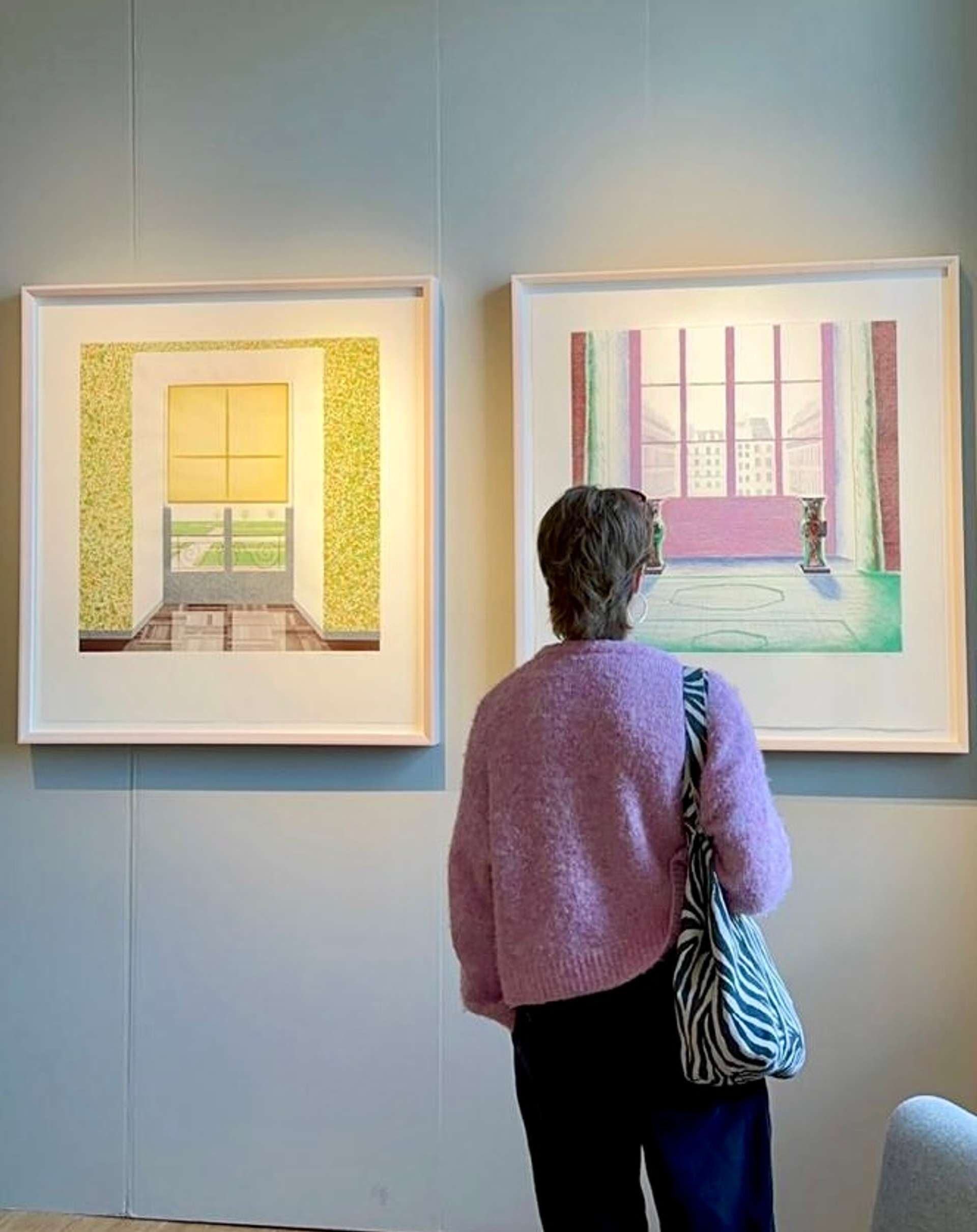
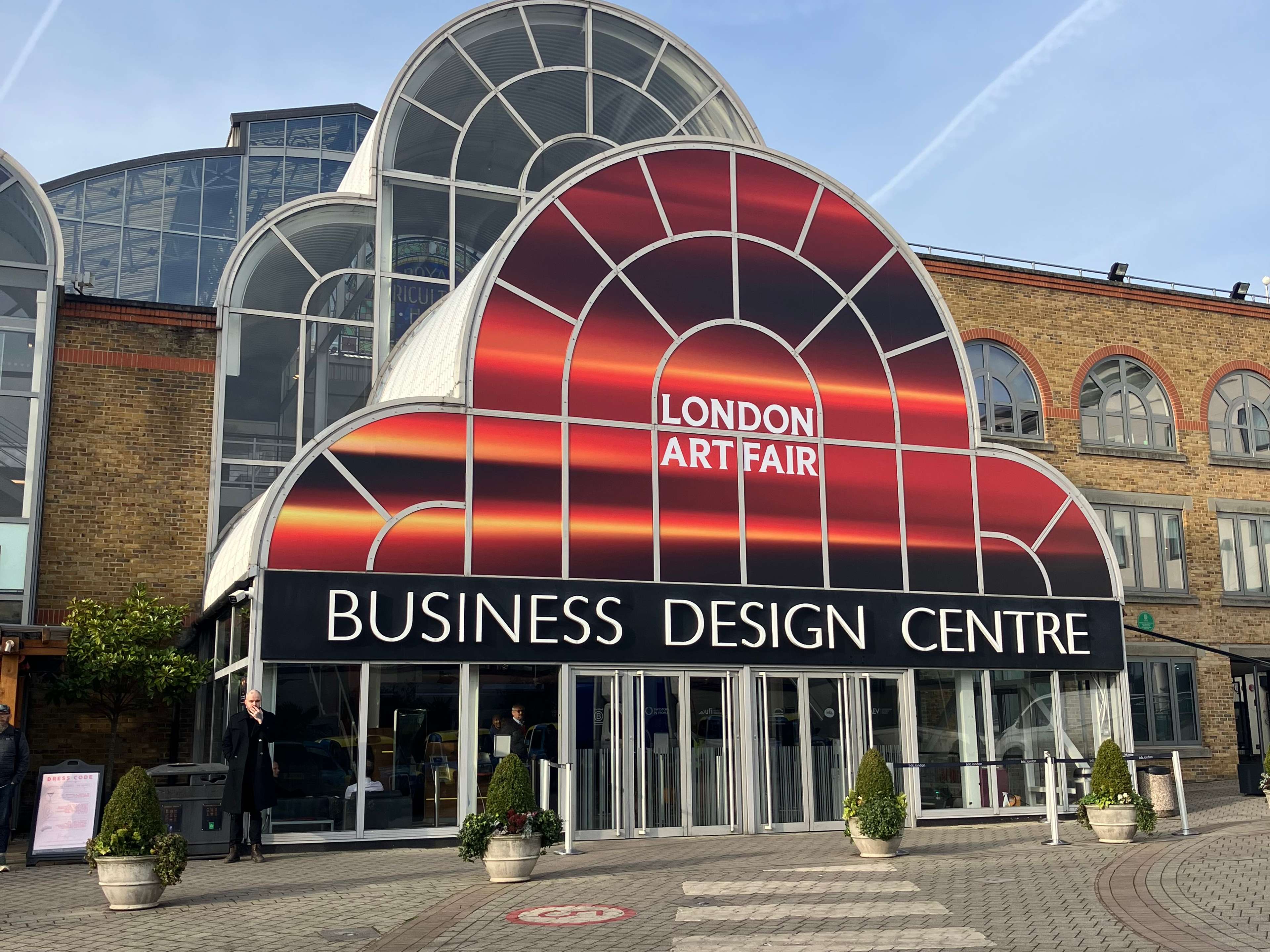
This context helps explain why smaller, more specialist events in the UK – such as the London Original Print Fair and the London Art Fair – have resonated so strongly this year. I attended both, and while I am not diminishing the value of mega-fairs, there’s an authenticity and agency present at these smaller events that’s harder to find elsewhere. The LOPF, now in its 40th edition, drew serious collectors, curators, and print specialists. And the January opening of the London Art Fair saw its VIP night packed – not for spectacle, but because of curatorial clarity and collector trust.
So where does this leave the fair model?
These flagship events still command brand power and VIP prestige. But the high end is showing fatigue. Expansion may bring visibility – but not necessarily vitality. And as major players chase new territories, the risk is that core markets like the UK and US risk being overlooked, just when they need reinvestment most.
The numbers reflect this rebalancing. Global art fairs peaked at 408 in 2019, dipped during the pandemic, and have since climbed back to 377. Yet, collector attendance has fallen 40% from pre-pandemic highs, and the share of gallery sales made at fairs has dropped from 46% to just 29%, according to the latest Art Basel & UBS Report.
Prints, by contrast, offer a more agile and sustainable model. They circulate easily, resist the scale-dependence of the fair system, and invite access, participation, and cross-border exchange. According to the same Art Basel report, prints now account for 35% of purchases among high-net-worth collectors – a notable uplift. Our own 2025 Print Collector Survey reinforces this: today’s print buyers are digital-first, passion-led, and globally distributed, with a multi-platform approach that spans auctions, galleries, private sales, and online platforms. These collectors aren’t defined by a single channel, but by fluency across many – and they don’t need a branded tentpole event to participate.
The question isn’t whether art fairs will survive. They will. But the role they play is shifting. The message is being echoed across multiple professional voices: expansion alone is not a stand-in for progress. The real work now is not to multiply events – but to rethink what access, engagement, and value look like in a market trying to adapt to its own contradictions.
Rebuilding From the Middle: Who Is This Renaissance Really For?
The art world is in motion – new fairs, new platforms, new players. But for those working inside it, many of the same questions remain unresolved. If expansion is happening at every turn, why are the most active participants – emerging artists, dealers, curators, and cultural workers – still struggling to find sustainable ground?
Because what’s being built isn’t always what’s most needed. Participation has grown, but the support structures that once turned cultural labour into lasting careers haven’t kept pace. The result is a market that feels more dynamic on the surface – but more precarious beneath it.
As we move into Q4, the challenge isn’t about returning to form. It’s about building new foundations. The future won’t be shaped by prestige or legacy alone, but by those already redefining the rules from the middle out.
And those voices are already here.
Lindsay Dewar, COO of ArtTactic. Naomi Rea, EIC of Artnet. Tim Schneider, voice and founder of The Gray Market. Lucy Corban on Instagram. Erin-Atlanta Argun – known internally as MyArtBroker’s “Excuse Me Girl.” Whether through data, journalism, social media, or platform strategy, they’re not just reporting on the market – they’re reshaping how it communicates, who it reaches, and what it values.
Lindemann once described the pride of owning a gallery as a “creative act.” A chance to assemble something original – not just to sell, but to show. So as Q4 begins, it’s worth asking: where is that creative energy now? Is it in the branded previews and VIP access? Or is it in the quieter spaces – the smaller shows, the digital platforms, the voices rising from the edges?
Because if this is truly a renaissance, it can’t just be about what comes back.
It has to be about what – and who – gets built next.