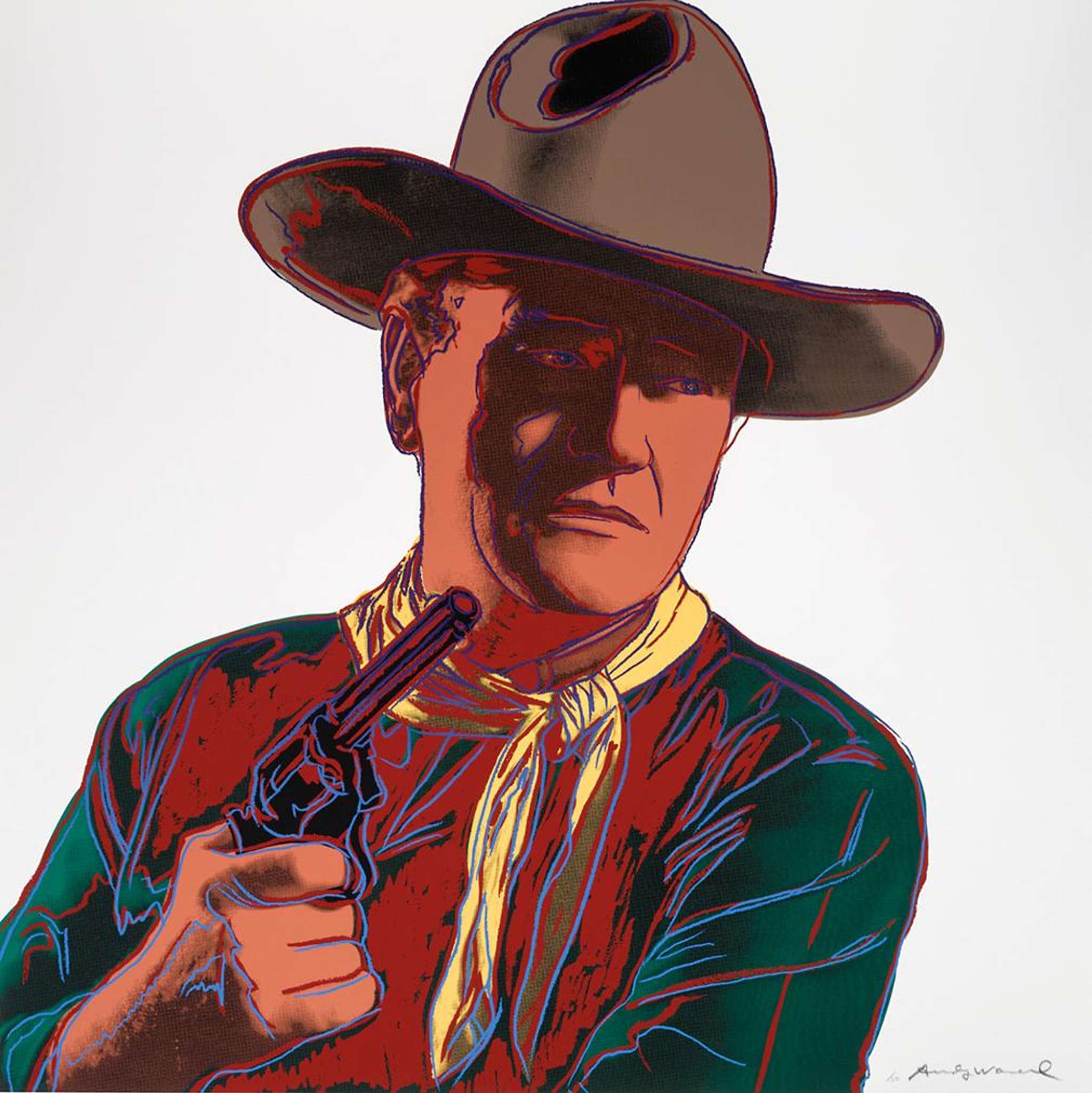


Andy Warhol’s John Wayne (1986) from his Cowboys And Indians collection recreates Hollywood’s most bankable cowboy into a Pop icon. Drawn from a publicity still for The Man Who Shot Liberty Valance (1962), the portrait magnifies Wayne’s rugged persona while exploring how celebrity culture, American West mythology, and mass media shape identity.
Andy Warhol created John Wayne in 1986 for the Cowboys and Indians series
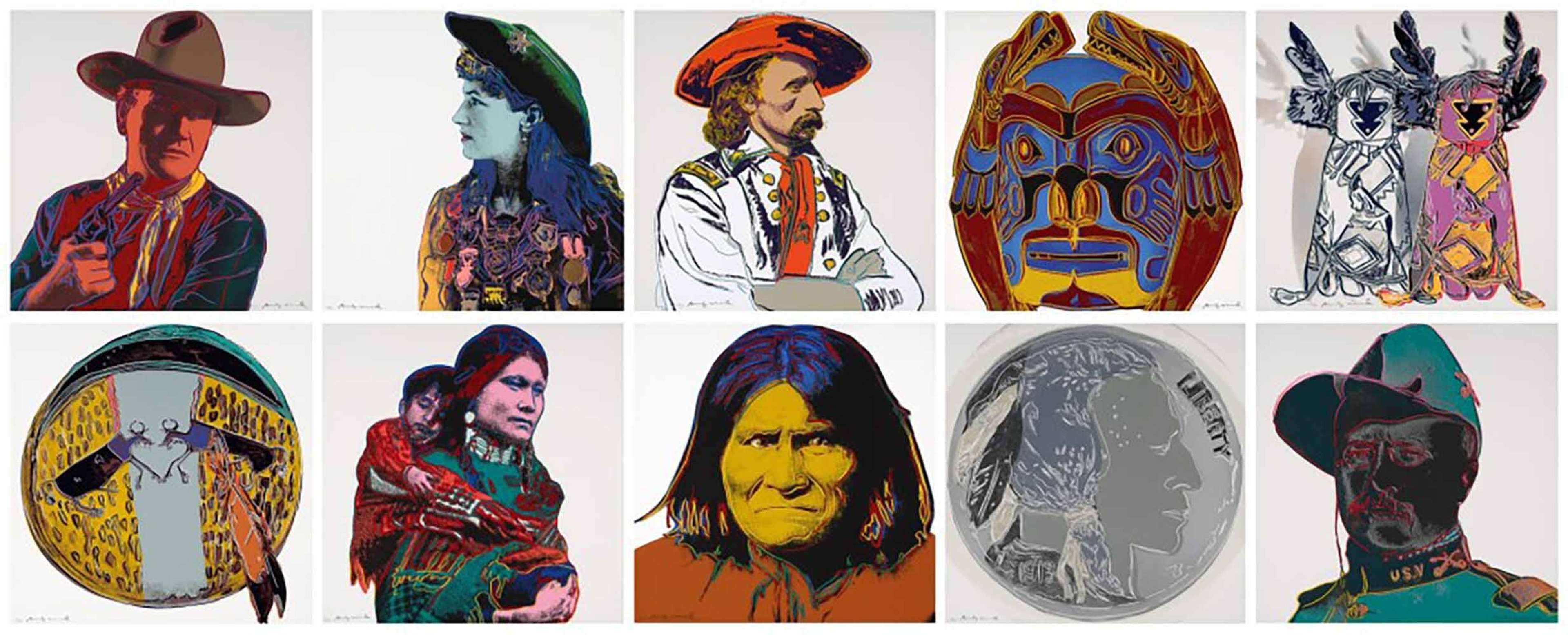
John Wayne (1986) belongs to Cowboys and Indians, a ten-print series that reframes Western lore through the visual language of Pop Art. Created at the end of Warhol’s career, the series shifts his celebrity project from movie star headshots to the broader myth-making of the American West. Wayne was already a mass-produced emblem of frontier masculinity, and was a perfect vessel for Warhol’s inquiry into how images circulate, solidify into archetypes, and accrue value. Positioning the actor among historical figures and cultural motifs, Warhol interrogates cinema and history, asking viewers to see the West as a mediated spectacle rather than documented history. Dated 1986, the work was conceived just before the artist’s passing in 1987, sharpening its status as one of his last major projects.
John Wayne comes from a press still for The Man Who Shot Liberty Valance
Warhol based the image on a publicity photograph from John Ford’s The Man Who Shot Liberty Valance (1962), a deliberate choice that foregrounds the reproducibility at the centre of both cinema and screenprinting. By lifting a studio image already crafted to project Wayne’s persona, Warhol doubles the mediation: promotional fiction becomes fine art, then recirculates as a collectible commodity. This deliberate dialogue underscores Pop Art’s use of appropriation as analysis, while also exploring the link between Hollywood fabrication and the construction of national myth. Warhol uses the iconic gesture of Wayne’s revolver so that audiences immediately recognise the image, ensuring the work can serve to show how memory and marketing co-produce icons.
Warhol first explored Western Themes in his 1968 film Lonesome Cowboys
Before John Wayne (1986) and the Cowboys and Indians portfolio, Warhol explored the American West in his feature film Lonesome Cowboys (1968). Returning to the subject nearly two decades later, he trades underground cinema for Pop Art screenprints, but his fascination with how the West is staged, stylised and sold remains clear. John Wayne uses Warhol’s interest in the American West to interrogate myth-making, star power and media-made masculinity within his broader project of image, repetition and celebrity.
John Wayne’s birth name is Marion Robert Morrison
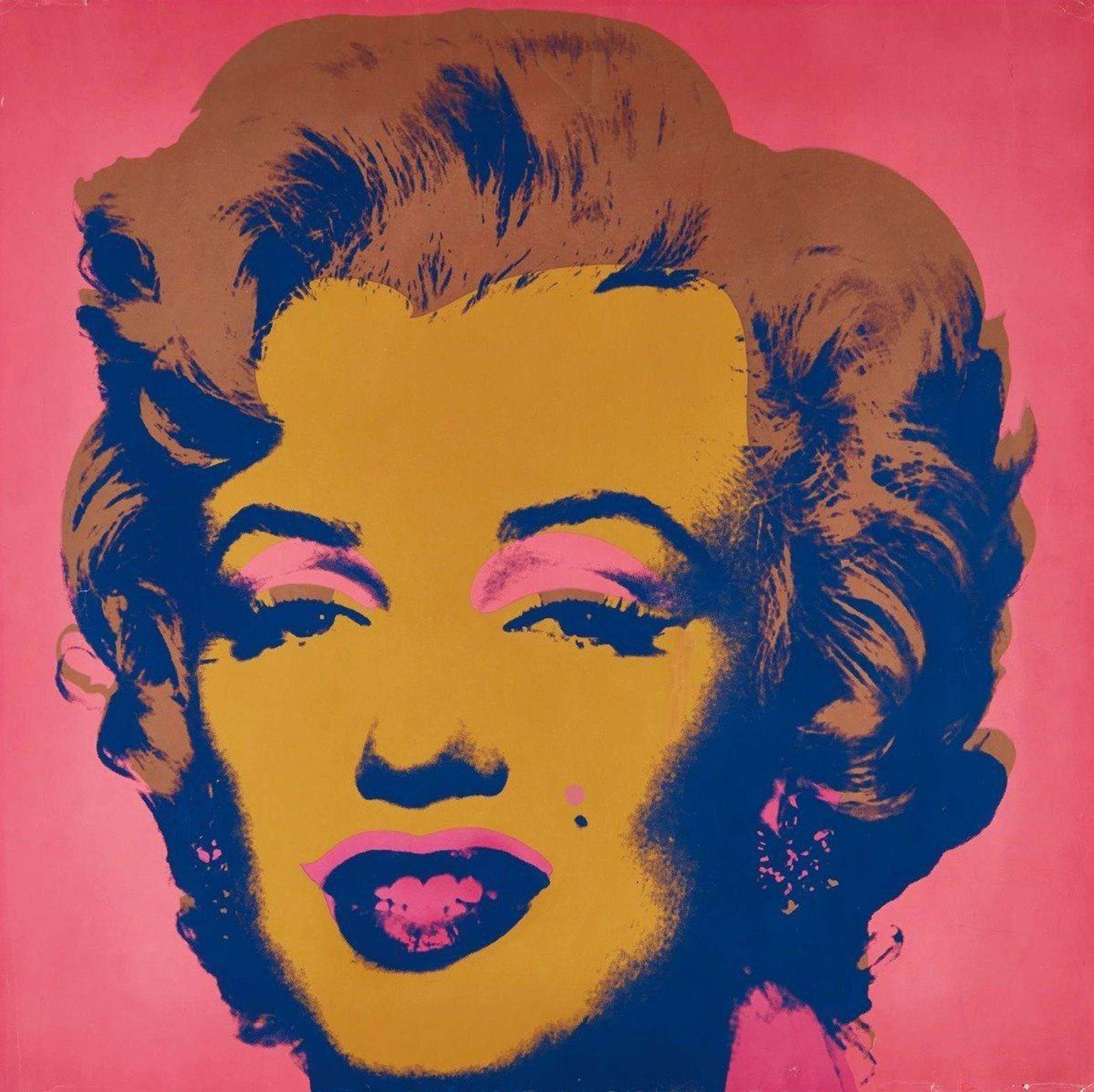
Warhol’s focus on John Wayne elevates the celebrity persona above the individual Marion Robert Morrison - the actor’s birth name before Hollywood refashioned him. With the hat brim veiling the eyes and the revolver held at the ready, the image reads instantly as a cowboy archetype. As with Marilyn, Elvis, and Liz Taylor, the star became strategically suited to screenprint repetition. The result sharpens the work’s critique of celebrity culture and the manufactured myths of the American West.
Warhol’s Pop Art techniques amplify the mythology of the American West
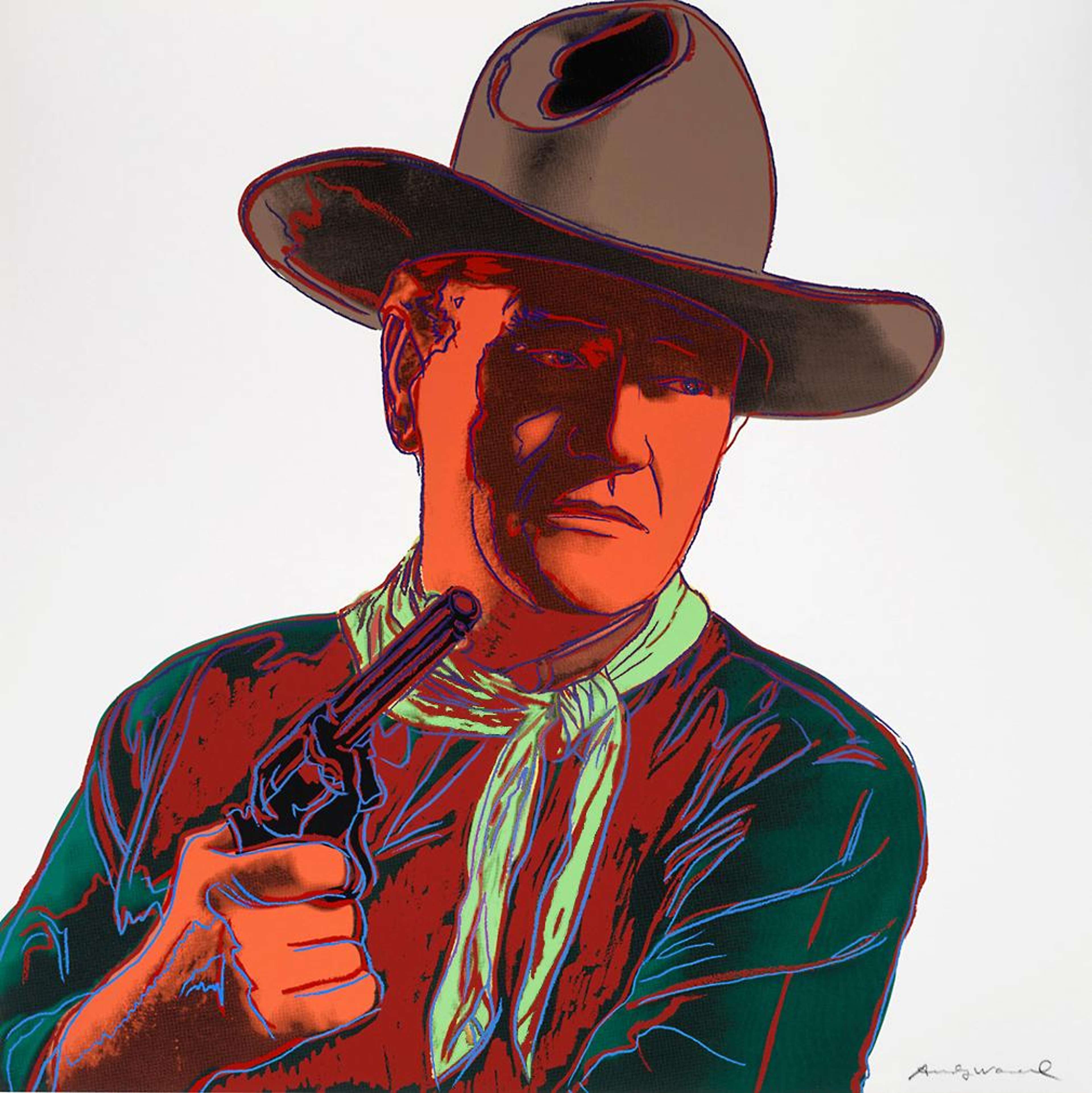
The print’s high-contrast palette and bright outlines push Wayne’s features toward graphic abstraction. The colour choices transform the film into a mythic emblem which both celebrates and critiques the mass-production of heroism. In the context of Cowboys and Indians, John Wayne signals the West as a manufactured fantasy, perpetuated by posters, TV, and merchandising. The result is a simultaneously seductive and sceptical image that acknowledges its own artificiality even as it leverages them for maximum visual punch.
Legal controversy prompted recalls and removed edition numbers
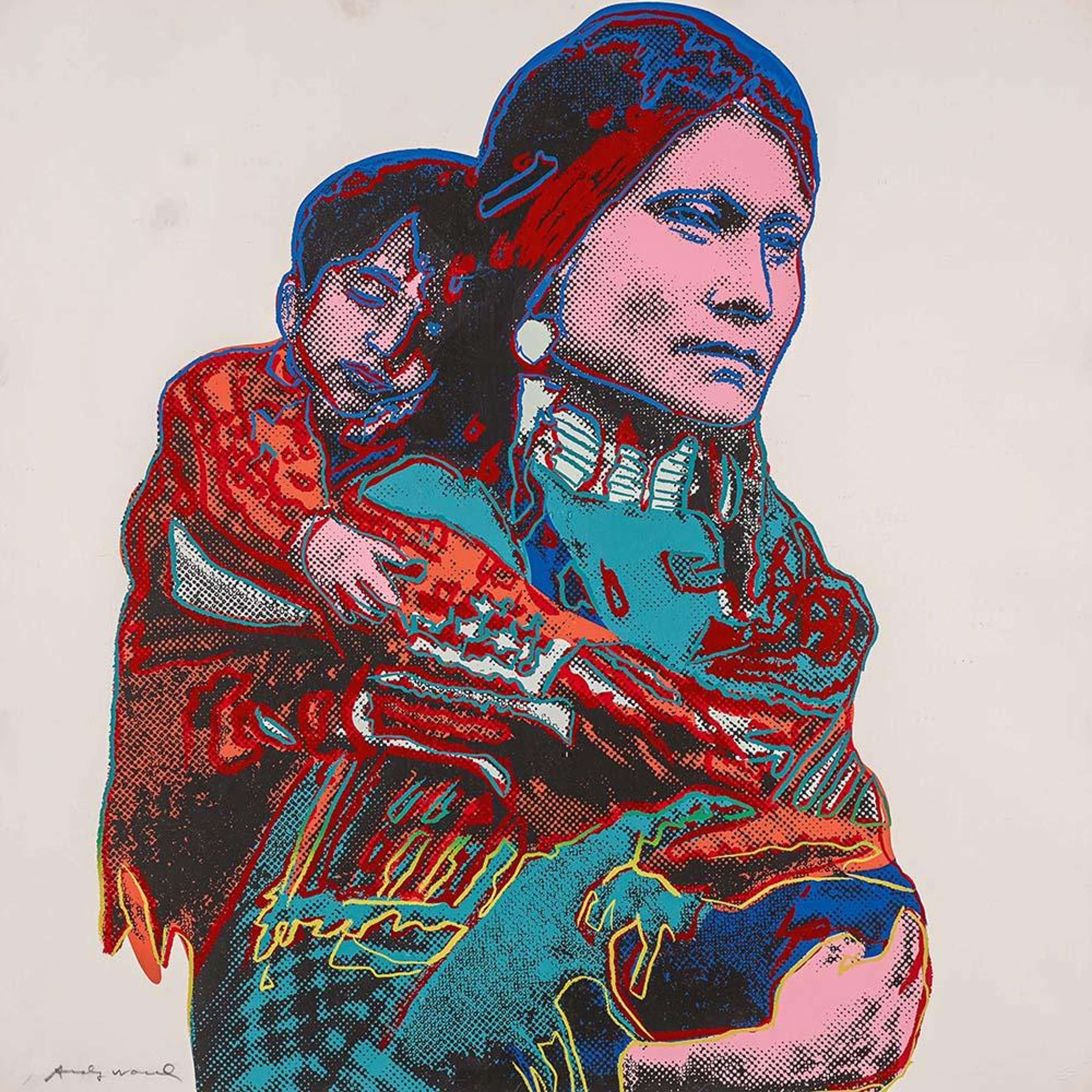
Upon release, the Wayne estate challenged Warhol’s use of the actor’s likeness, triggering a copyright dispute. In response, Warhol reportedly recalled remaining prints and, in some cases, removed edition numbers to reduce exposure. He also produced unique works distinguished by alternative scarf colours, strengthening the claim that these were one-of-a-kind objects rather than interchangeable products. This dispute illuminates the fine line between appropriation art and publicity rights, revealing how Warhol’s use of celebrity imagery can be seen to have pushed legal and ethical boundaries.
The Warhol Foundation re-numbered prints and reached a settlement with the Wayne family
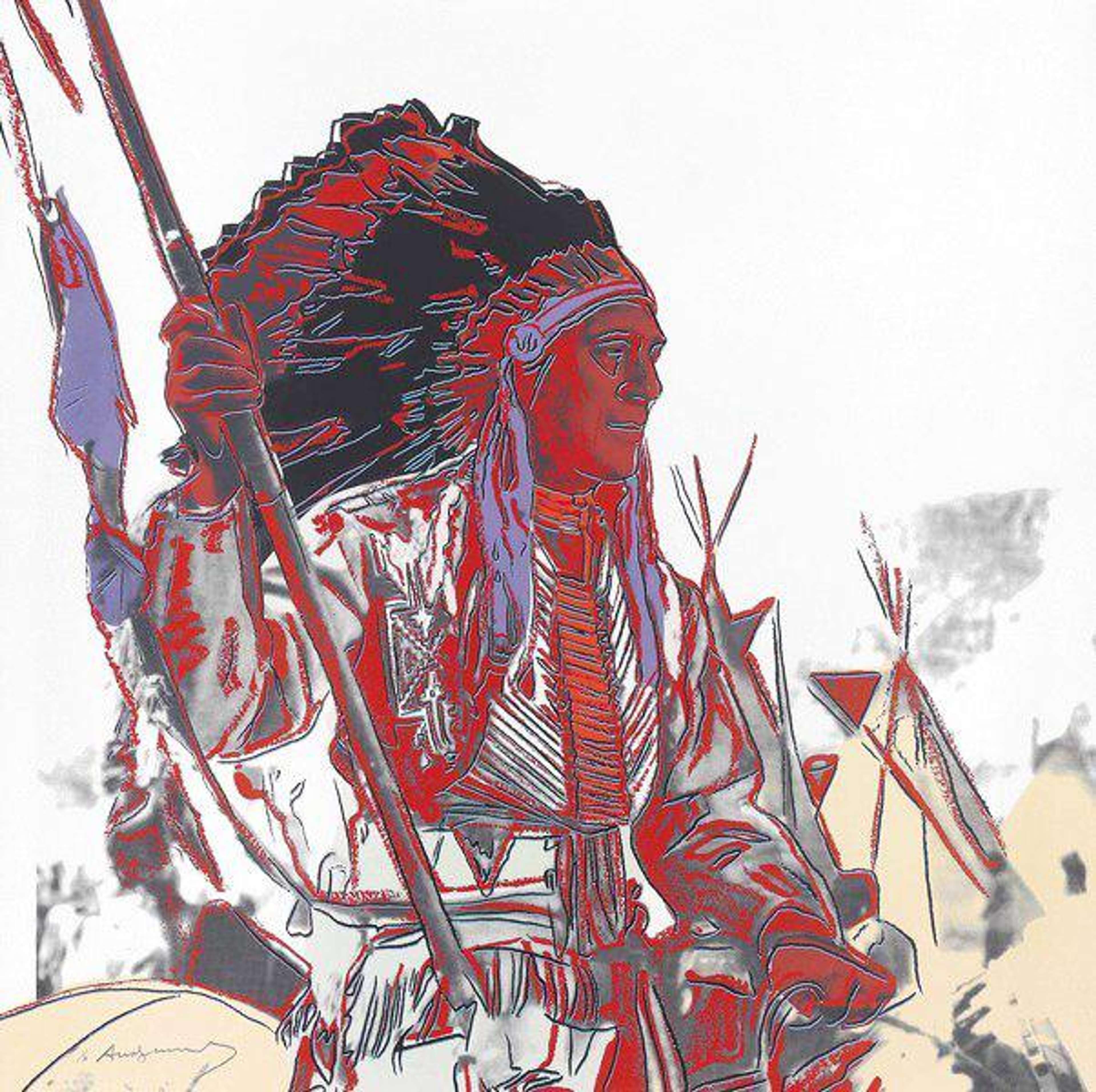
Following Warhol’s death, the Andy Warhol Foundation undertook a re-numbering of John Wayne prints within the Cowboys and Indians portfolio and concluded a legal settlement that included gifting other portfolio prints to the Wayne family. This posthumous housekeeping clarified the edition’s status, aligned documentation across institutions and private collections, and stabilised the work’s market identity.
John Wayne appears the archetype cowboy with his gun raised and eyes in shadow
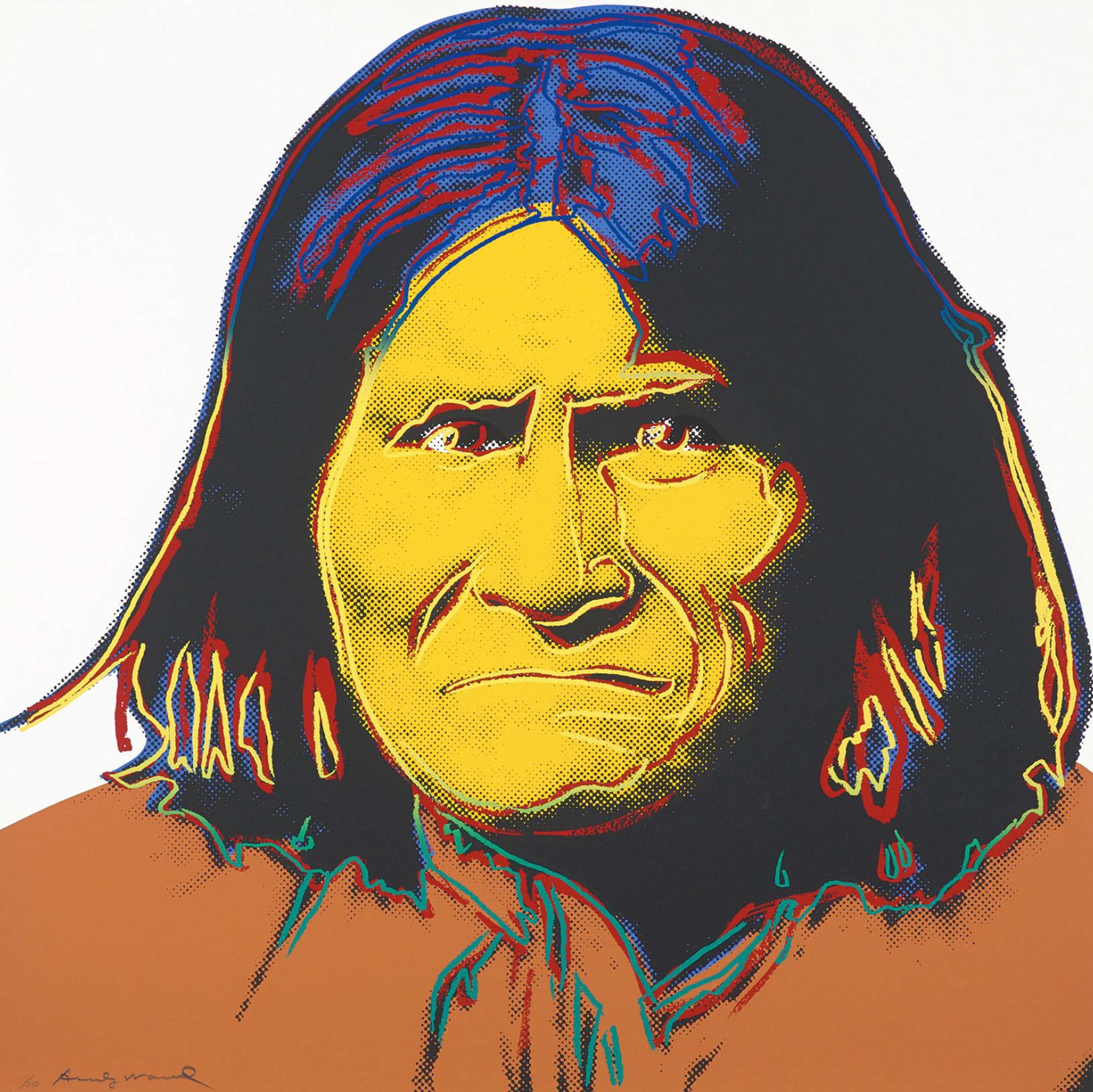
Wayne’s Stetson hat, the bandana, the drawn revolver, and the obscured eyes beneath the brim projects action and authority, while the use of red heightens drama and scale. By withholding a direct gaze, Warhol makes Wayne both imposing and unreachable, an icon to be looked at rather than known. This advances the portfolio’s critique where the cowboy becomes an image-engineered myth rather than a historical figure.
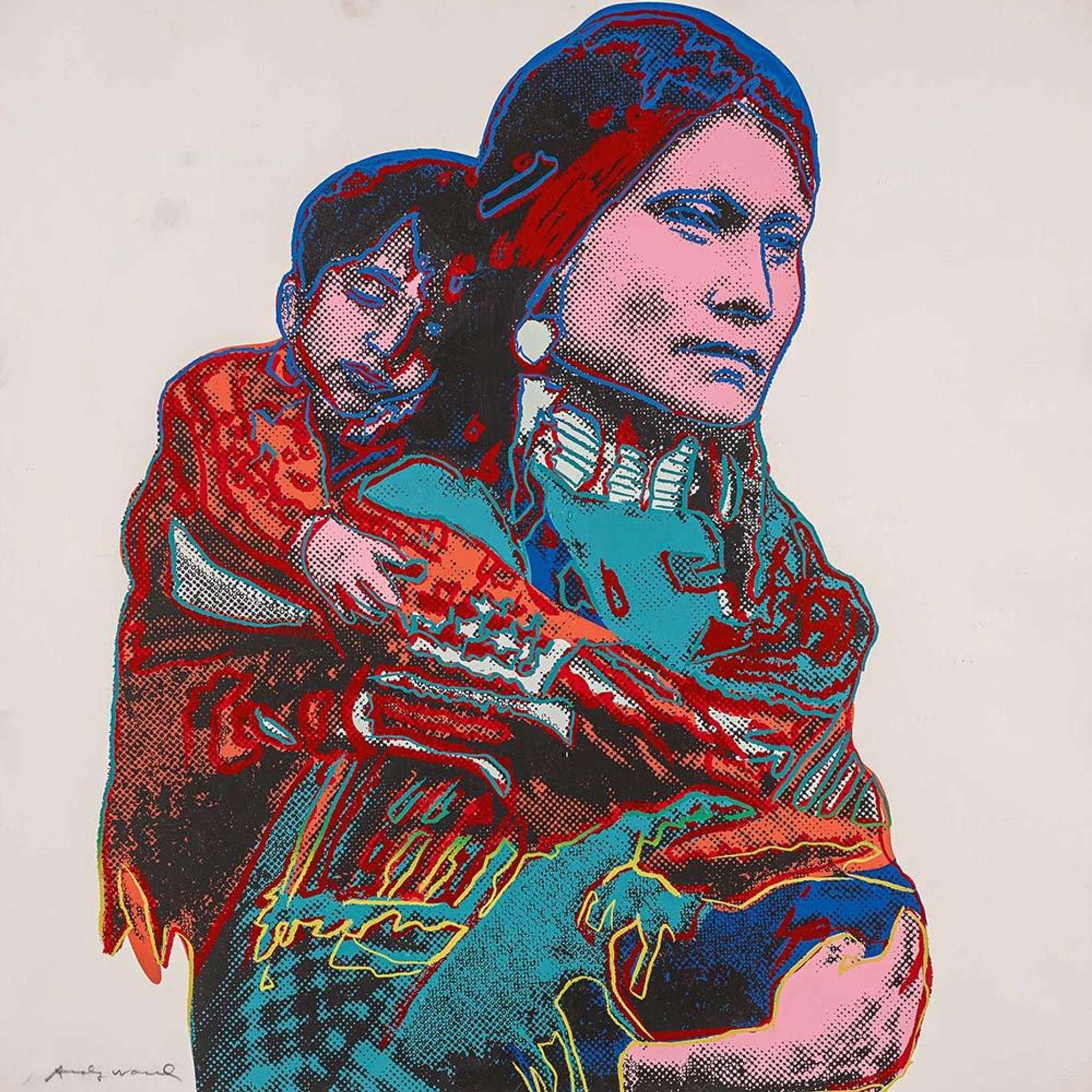
Cowboys and Indians interrogates Hollywood myths of Native Americans
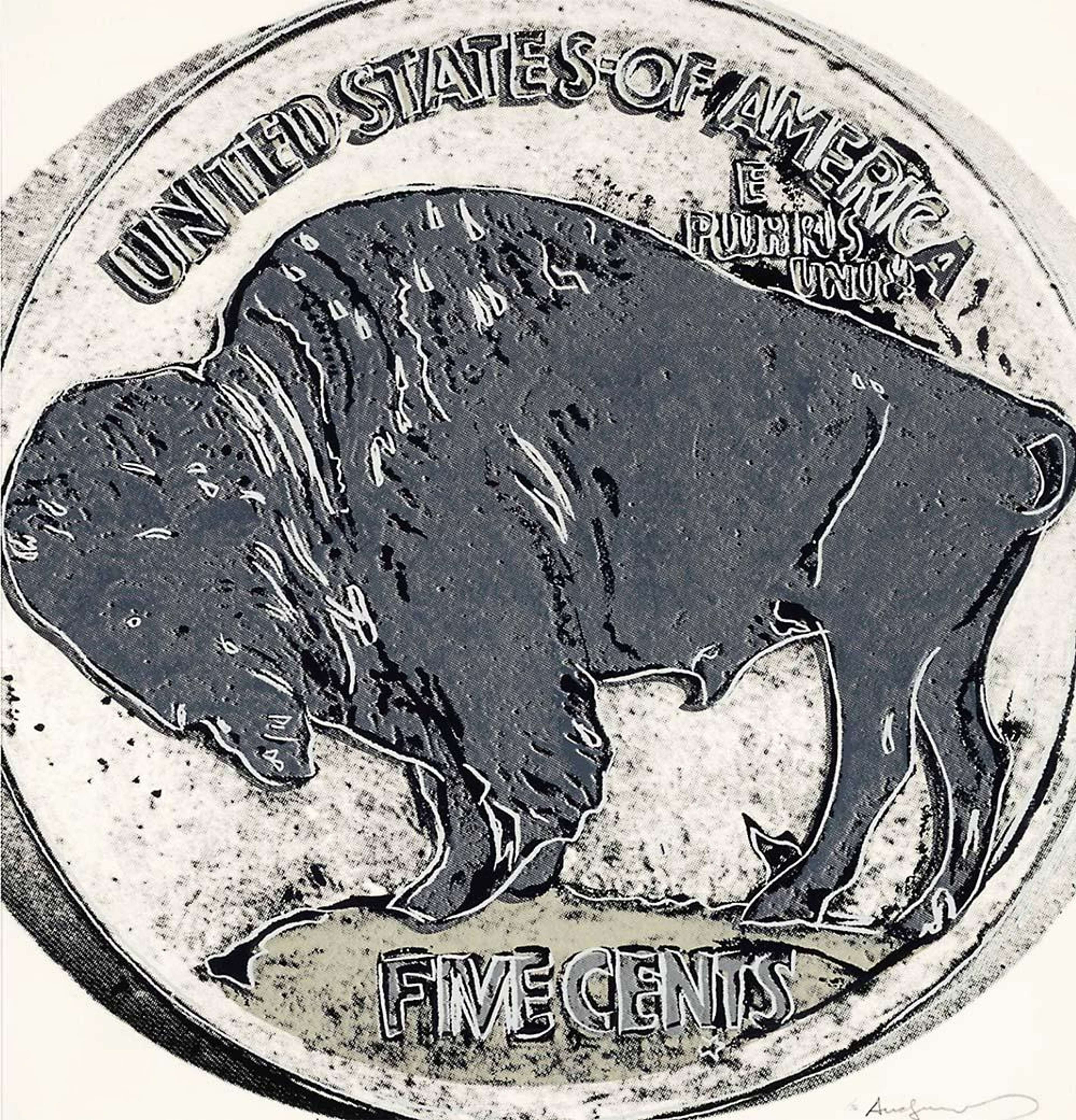
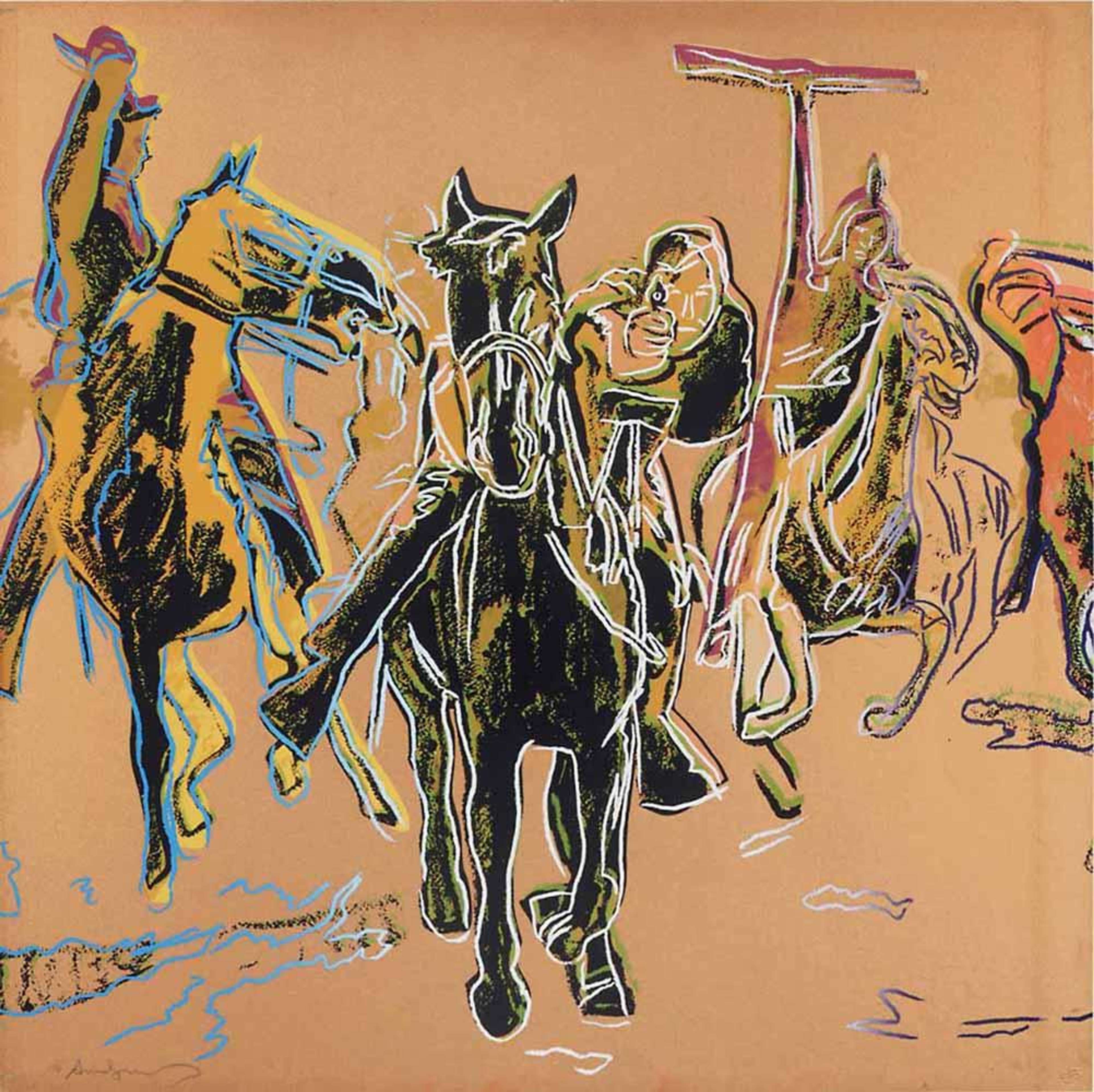
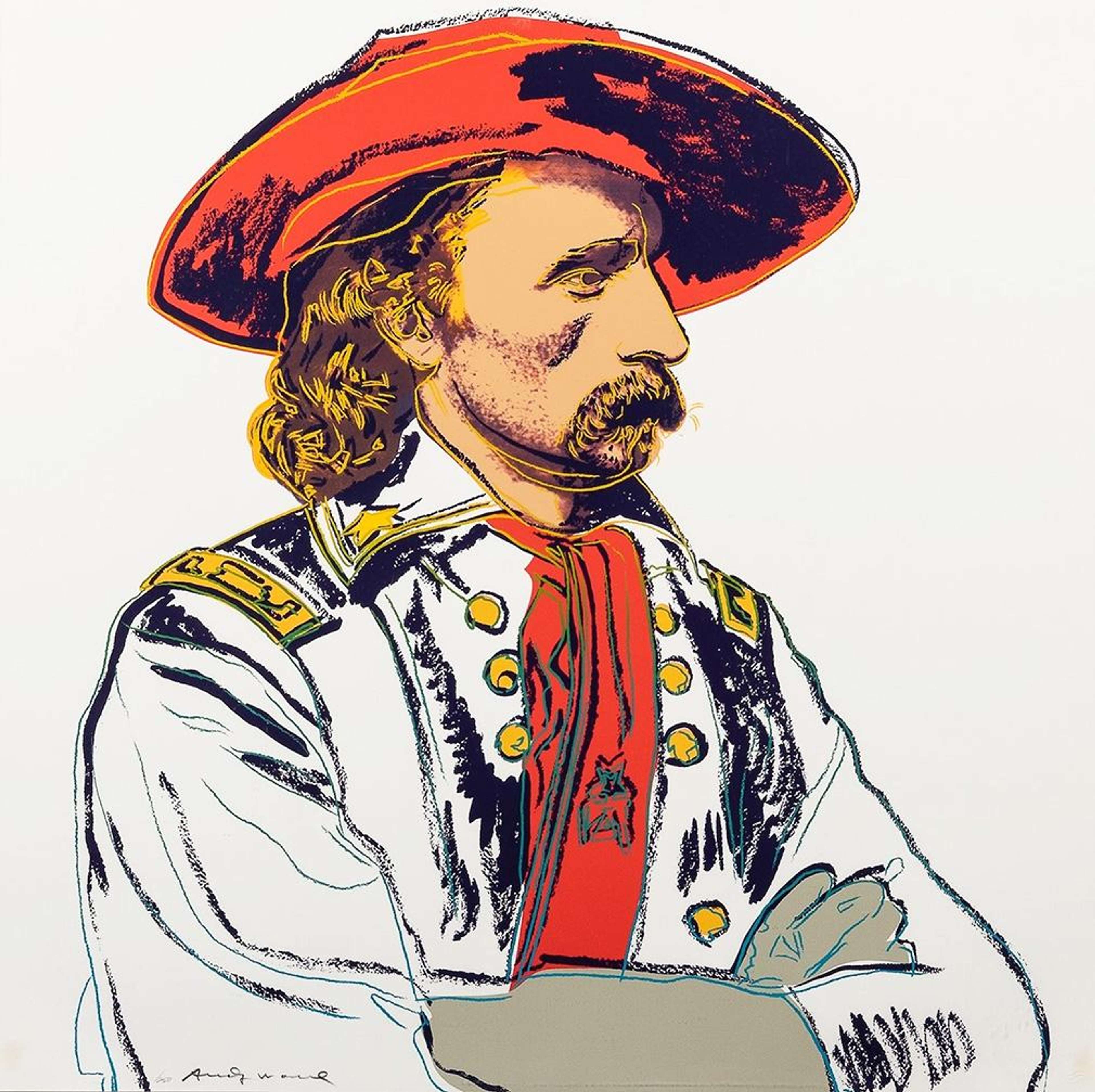
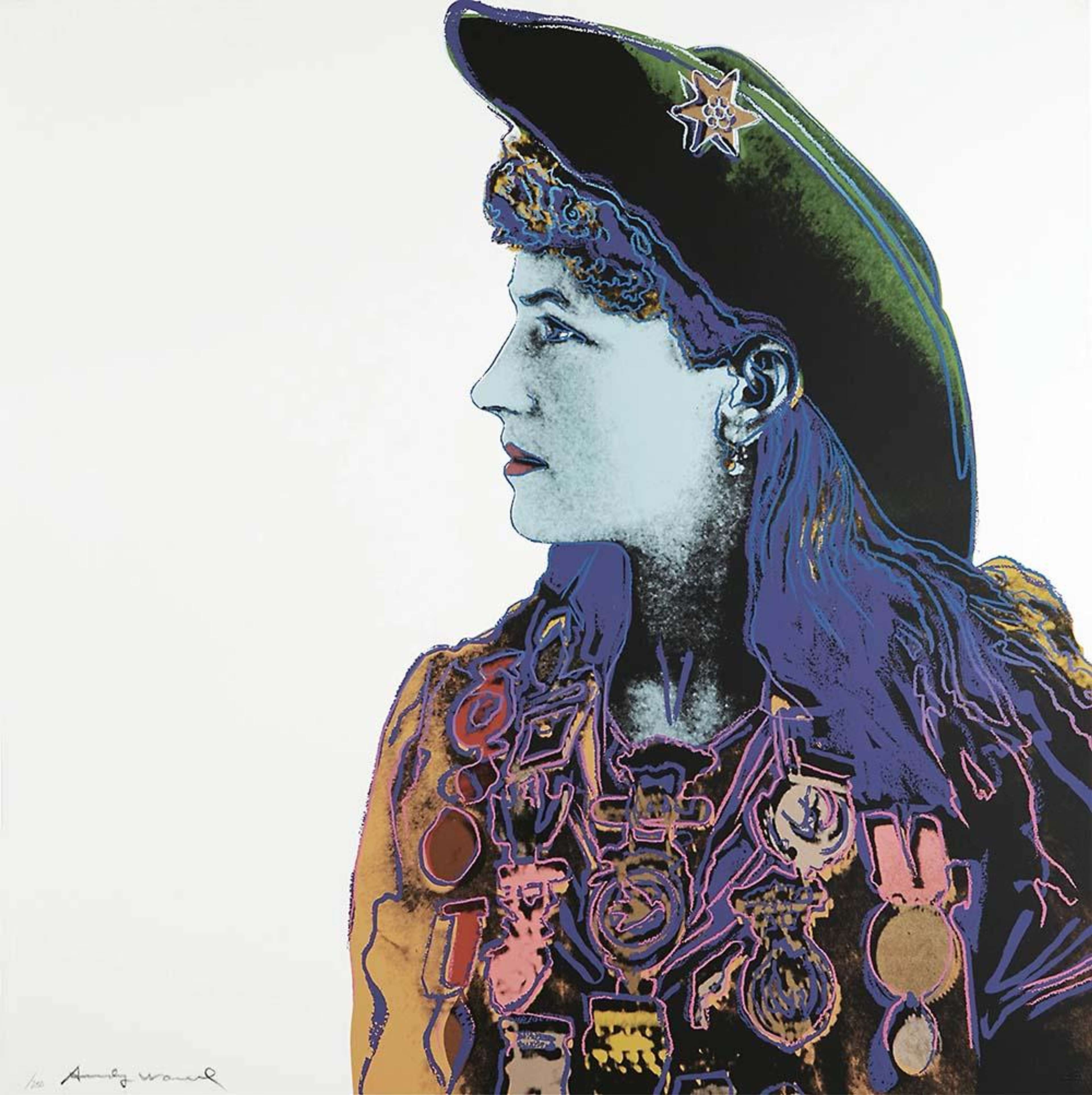
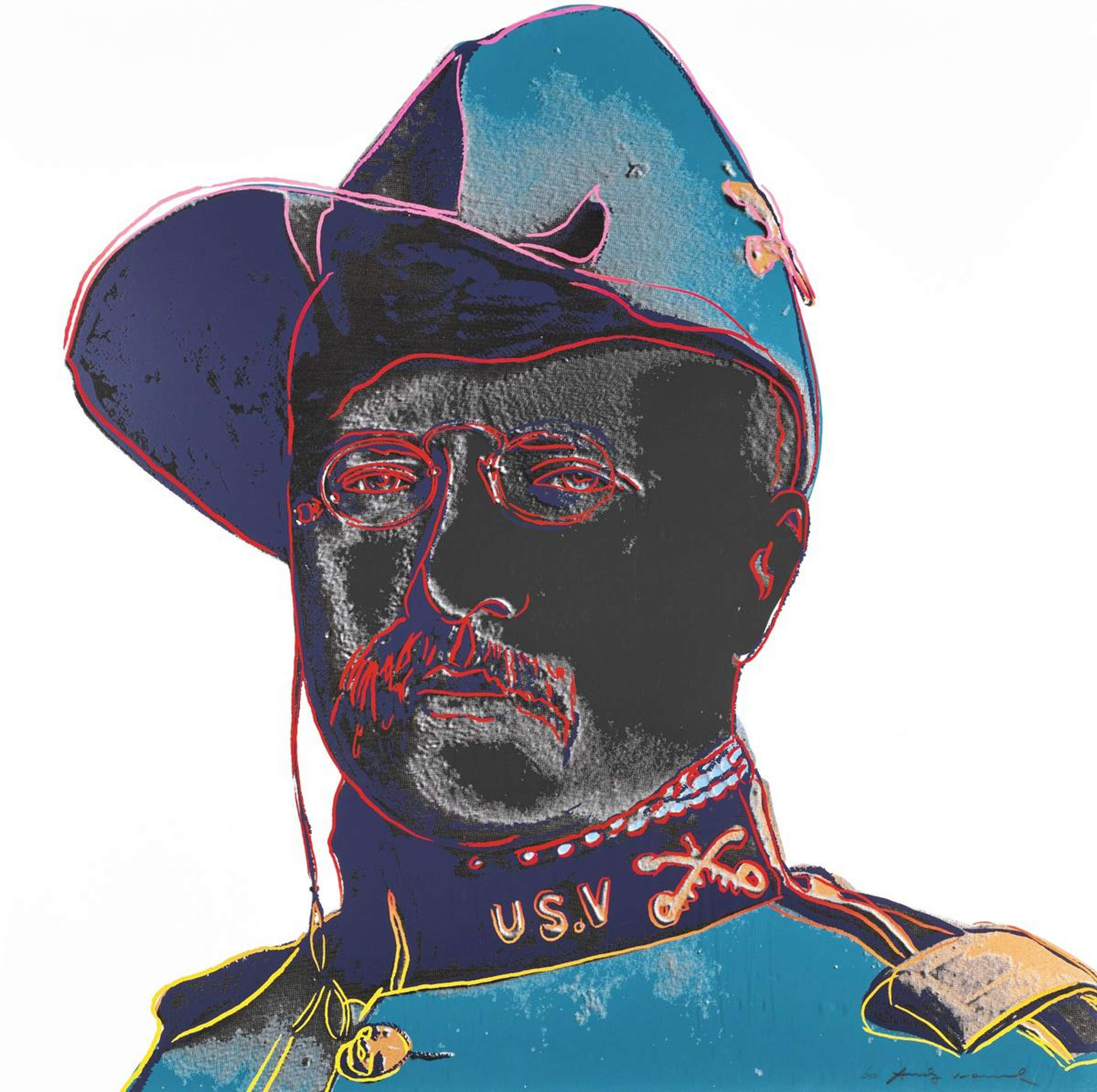
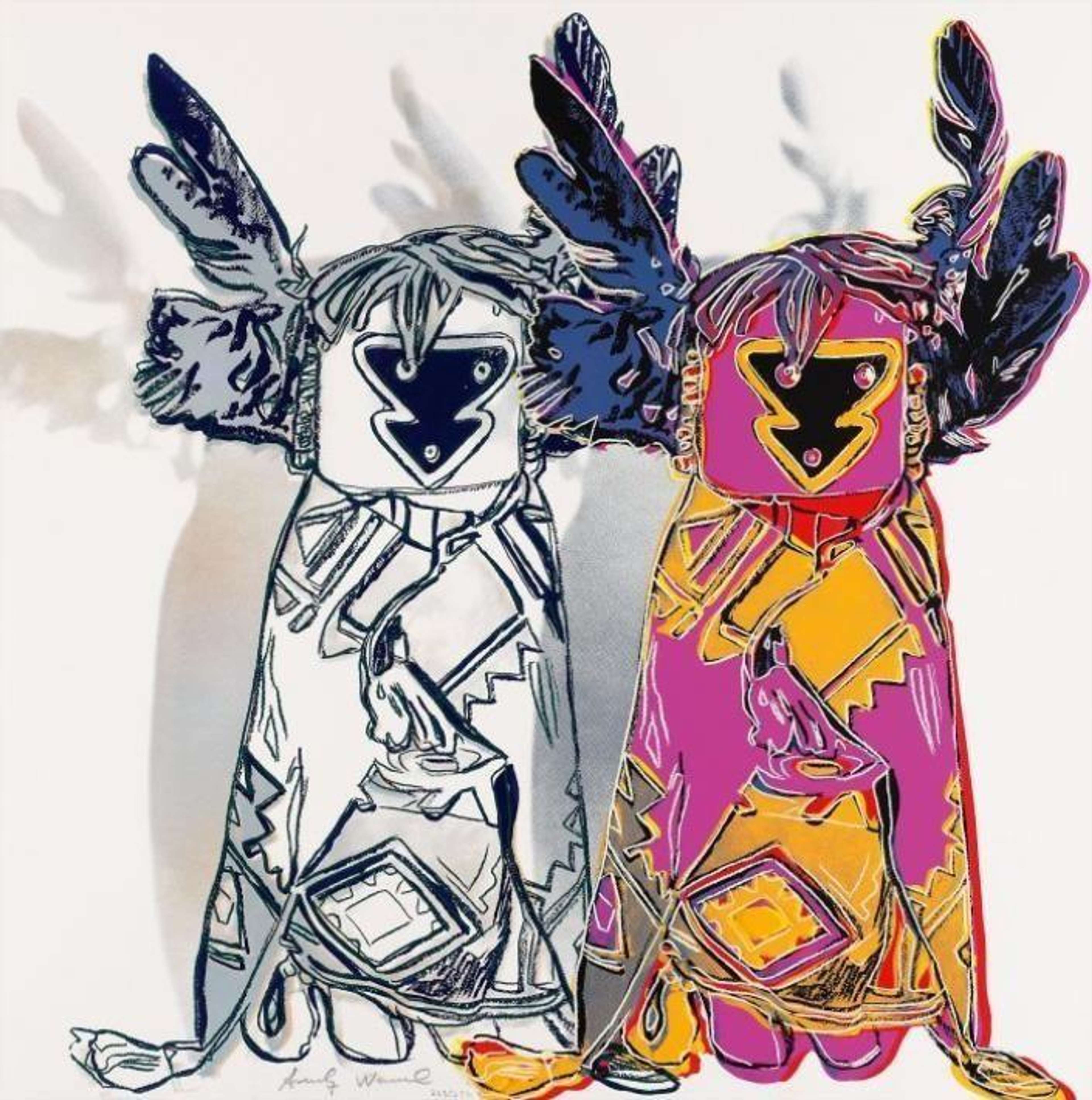
The Cowboys and Indians series uses subjects such as Annie Oakley, Geronimo, Theodore Roosevelt, Kachina Dolls, and General George Custer, alongside John Wayne. By juxtaposing celebrity cowboys with Indigenous figures and ceremonial objects, Warhol exposes how popular culture romanticises and distorts the past. Instead of cultural accuracy, he offers media images through which most people encountered the American West. The Cowboys and Indians series reads as both a commentary on Hollywood’s portrayal of Native Americans, inviting viewers to scrutinise the gap between image and history.
John Wayne stands among Warhol’s final major works before his death in 1987
Created in 1986, John Wayne belongs to Warhol’s late-career printmaking, aligning with Myths (1981) and Ads (1985): projects that explore mass-media folklore and consumer iconography. As one of the artist’s final major works before his death in 1987, the print probes the mythologising of celebrity while reflecting Warhol’s long-standing fascination with B-westerns and the paraphernalia of cowboy culture.