

Understanding Damien Hirst’s Print Practice
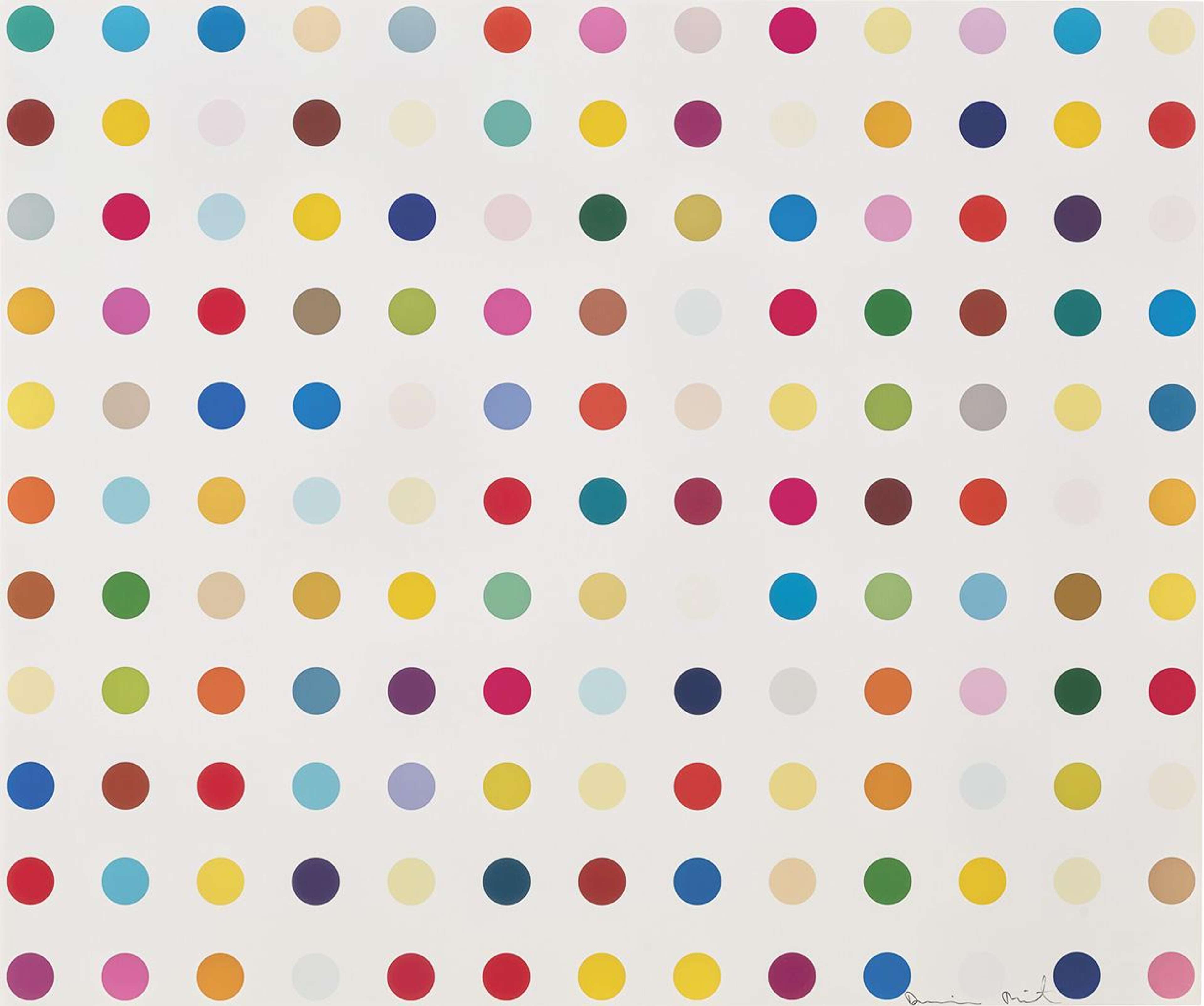
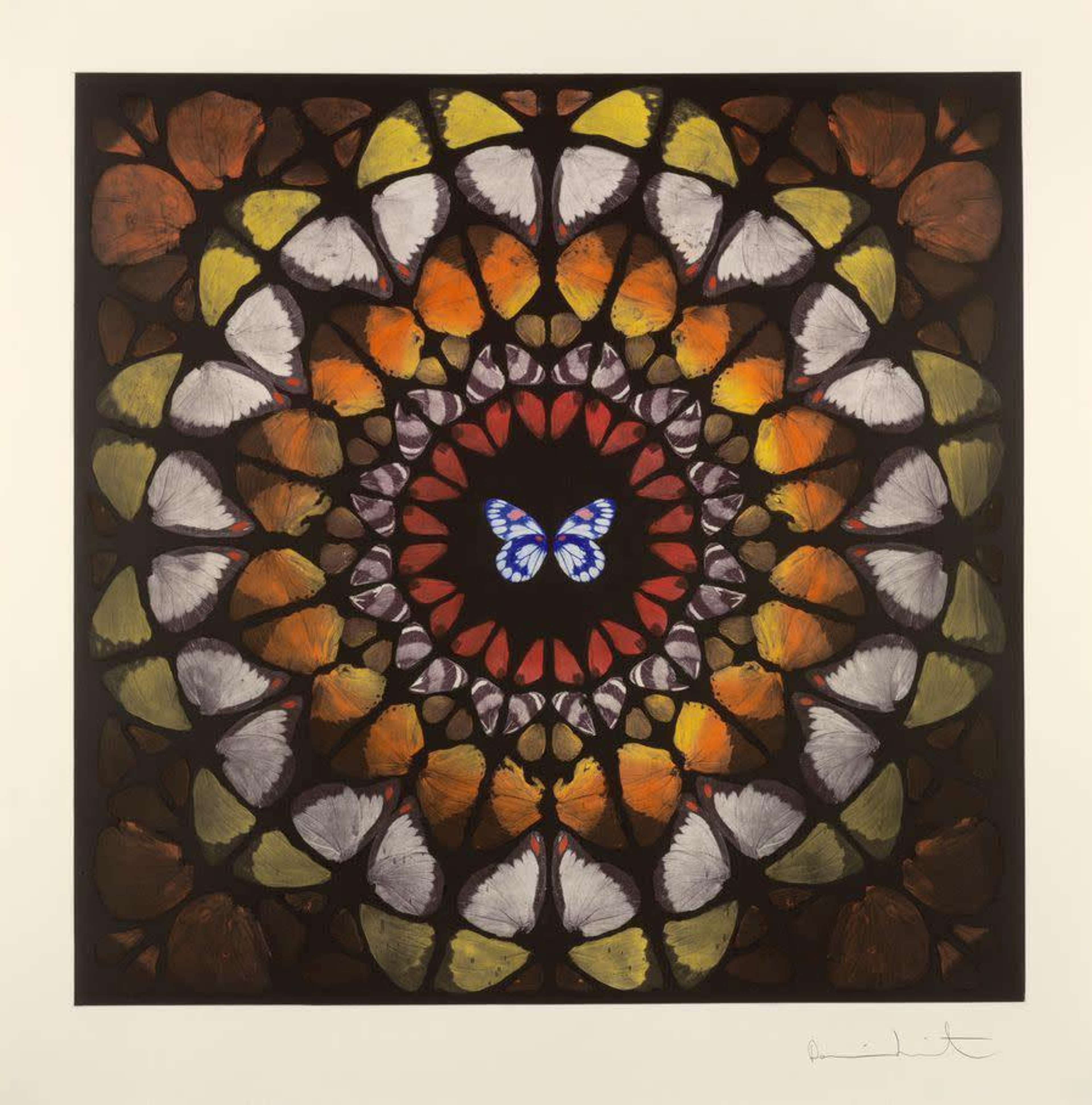
Few contemporary artists have produced such a wide-ranging and conceptually driven body of print editions as Damien Hirst. Known for his popular spot and butterfly motifs, as well as recurring themes of pharmaceuticals, human anatomy, and death, Hirst rose to prominence in the 1990s as a leading figure in the Young British Artists (YBAs). His work has often courted controversy, perhaps most prominently when he suspended animals – including tiger sharks, cows, calves and sheep – in formaldehyde. His printmaking reflects the same fascination with repetition, spectacle, and industrial production. Over time, his editions have become a major part of his practice, reaching global audiences and playing a central role in how his work is collected and circulated.
Print Techniques Used in Hirst Prints
Hirst’s prints are produced using a wide variety of printmaking techniques and the technique is typically chosen to suit the concept of the series – whether that means the precision of pharmaceutical diagrams, the flatness of spot paintings, or the morbidity of butterflies and skulls. While some series use traditional methods like etching or woodcut, others rely on contemporary technologies, including large-scale digital pigment printing. Knowing how a particular edition was made is key to identifying an authentic print, and authenticators examine texture, finish, and paper edges to confirm that the technique matches the documented production.
Are Hirst Prints Signed by the Artist?
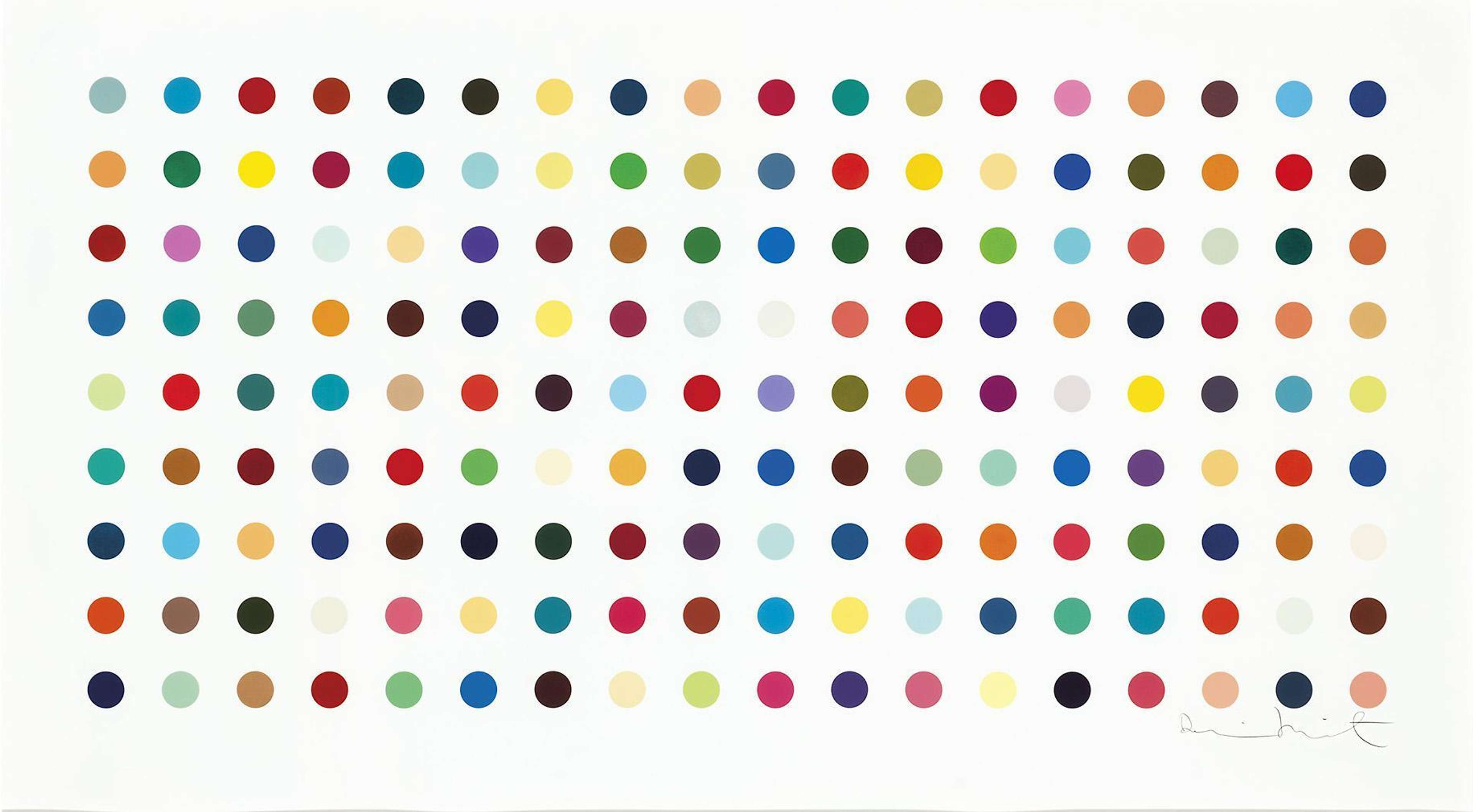
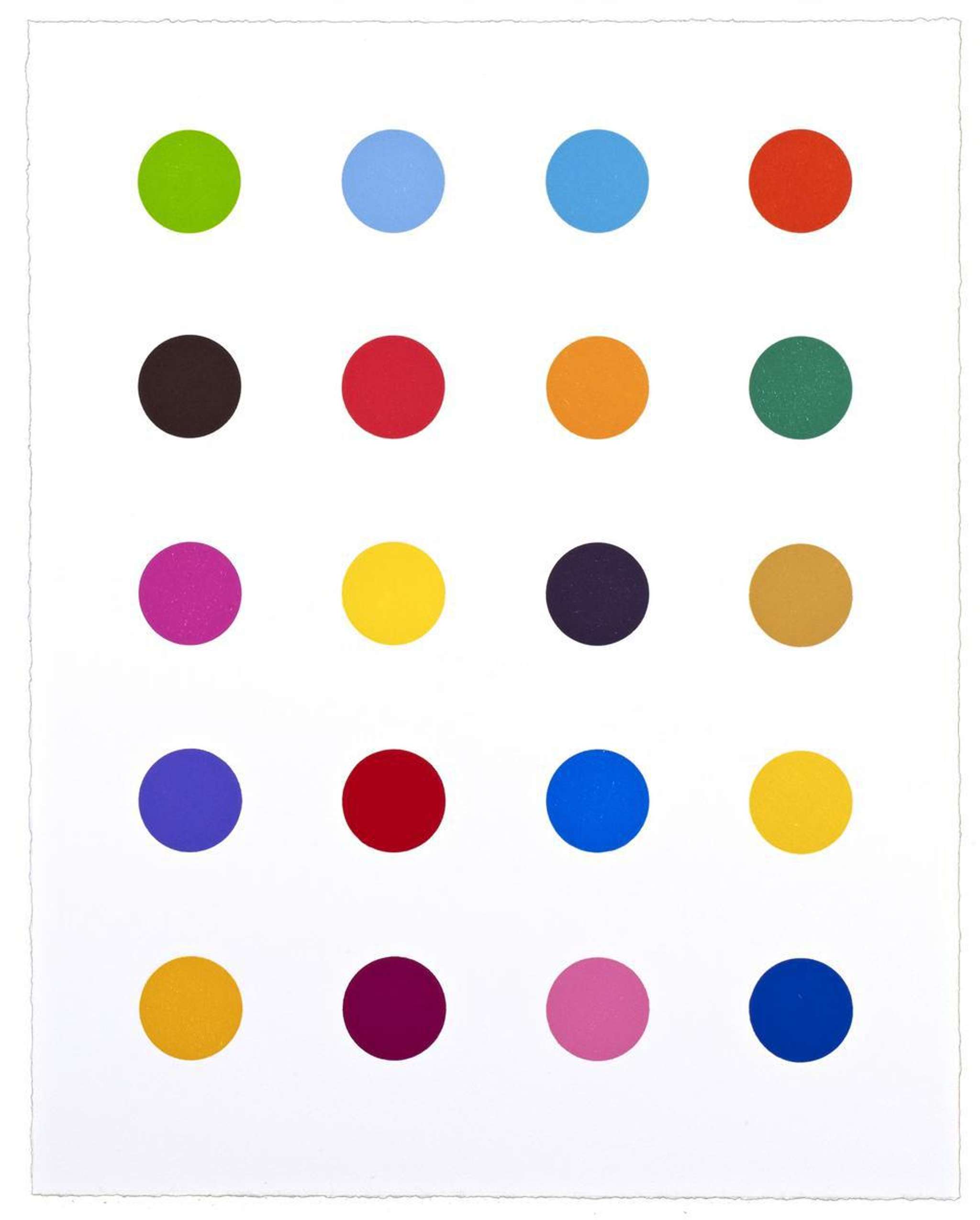
Many of Hirst’s limited edition prints are hand-signed, but the way he signs them varies depending on the series and when it was produced. In earlier editions such as the Spots series, In A Spin and The Souls on Jacob’s Ladder Take Their Flight, Hirst typically signed on the front of the print, often in pencil. In more recent works, particularly those published by HENI Editions, the signature is usually found on a printed label attached to the back of the piece. For example, prints in The Virtues and The Empresses series include a signed and numbered label on the reverse. Many HENI prints are mounted on aluminium composite panels, and the signature is sometimes applied in pen on the back label rather than the image surface. While a hand signature can be a helpful indicator of authenticity, its absence is not necessarily a red flag.
Edition Numbers and Formats on Hirst Prints
Hirst’s limited editions are typically issued with an edition notation that should match the publisher’s stated edition structure (e.g. “12/50”). Edition sizes vary widely across Hirst’s portfolios and print series, so the stated edition number should always be checked against the publisher’s specifications for that particular work. For example, Hirst’s butterfly-themed editions range from large, numbered runs that can reach into the thousands, such as Rainbow Editions, to smaller limited releases, such as The Dead (2009). Knowing the correct edition size and format for each series is crucial and a red flag is any print numbered outside the known edition size.
Materials Used In Hirst Prints
Many paper-based Hirst editions are produced on heavyweight, archival fine art papers, with the specific sheet type often listed in the publisher’s edition details. For example, Gold Tears (2012) is described as an inkjet print on 305gsm Hahnemühle Photo Rag, with glaze and foil-blocked elements. In more recent editions, particularly those published by HENI Editions, Hirst has moved away from traditional paper toward aluminium composite panels and canvas-backed giclée. Works like The Virtues and The Empresses are produced using high-resolution digital pigment printing, laminated under acrylic or varnished to preserve a smooth, durable surface. By contrast, The Archangels are giclée prints on archival fine art paper, hand-signed and numbered on the front.
Publishers and Studios Associated With Hirst Prints
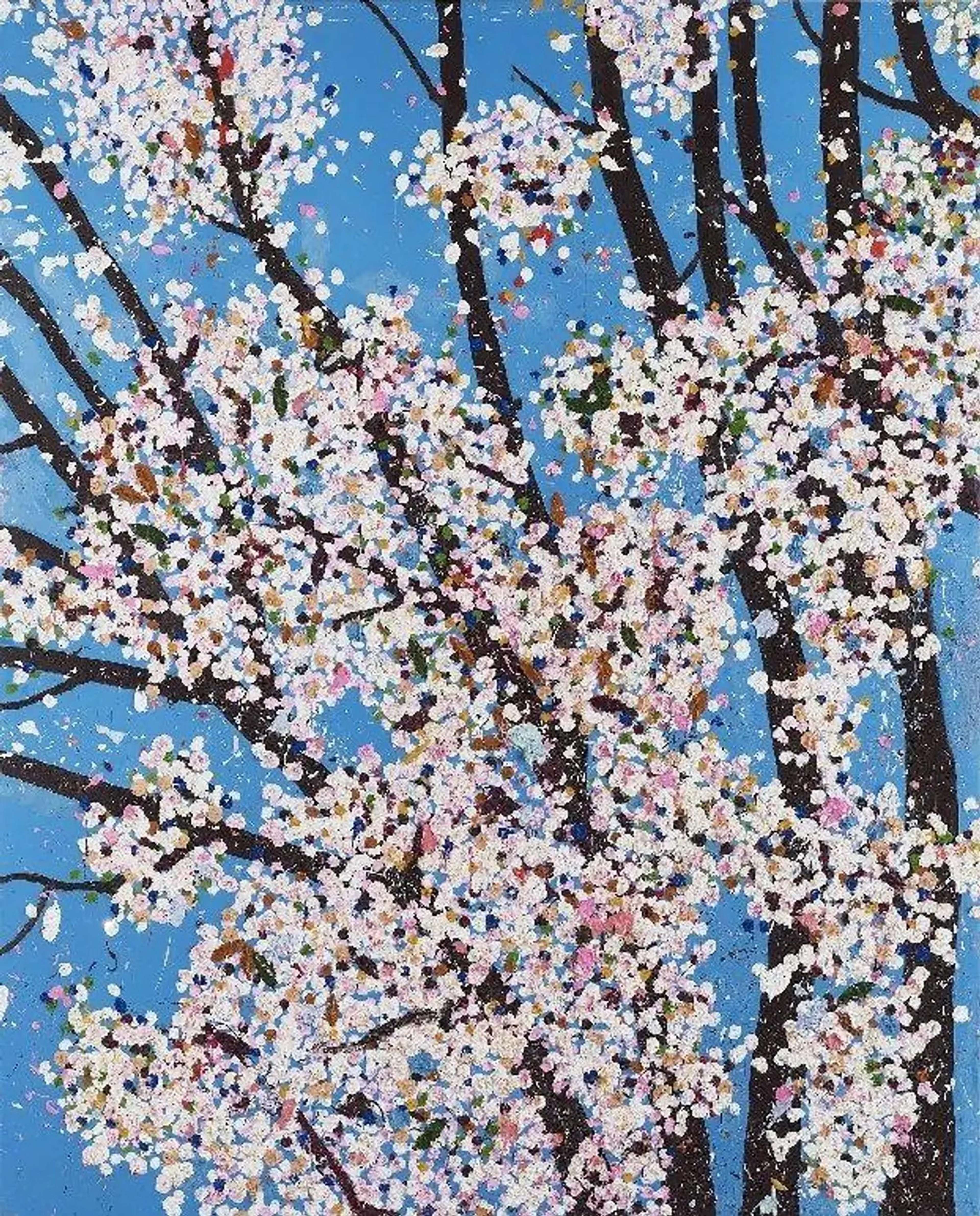
The Paragon Press in London published several major Hirst print projects, including portfolios such as In A Spin. In 2005 he founded Other Criteria, a publishing imprint that handled many Hirst prints as well as editions for other artists through the 2000s. In recent years Hirst has collaborated with galleries like Paul Stolper and with HENI Editions, and his own production company Science Ltd has overseen production and distribution across his wider practice. Publisher marks vary between editions, so the absence of an embossed stamp is not proof of inauthenticity – the work should be assessed against the publisher’s documented format, including any labels, stamps, or accompanying paperwork. If a print has publisher info that doesn’t match any known Hirst collaborator, it’s important to ask for a specialist opinion.
Provenance and Ownership History of Hirst Prints
Collectors should look for gallery invoices, sale receipts, or publisher records to establish provenance. Certificates of authenticity (COAs) should be examined and come from recognised sources. Many recent HENI editions are issued with blockchain-based certificates, designed to provide secure digital provenance. Some works are accompanied by certificates referencing the Hirst Authentication Committee (HIAC), which is now disbanded, and these should be assessed alongside provenance and publisher documentation. Since then, responsibility for verifying authenticity has shifted to publisher documentation and direct provenance, making consistency between a print and its paperwork more important than ever.
Condition Issues That Affect Hirst Print Authentication
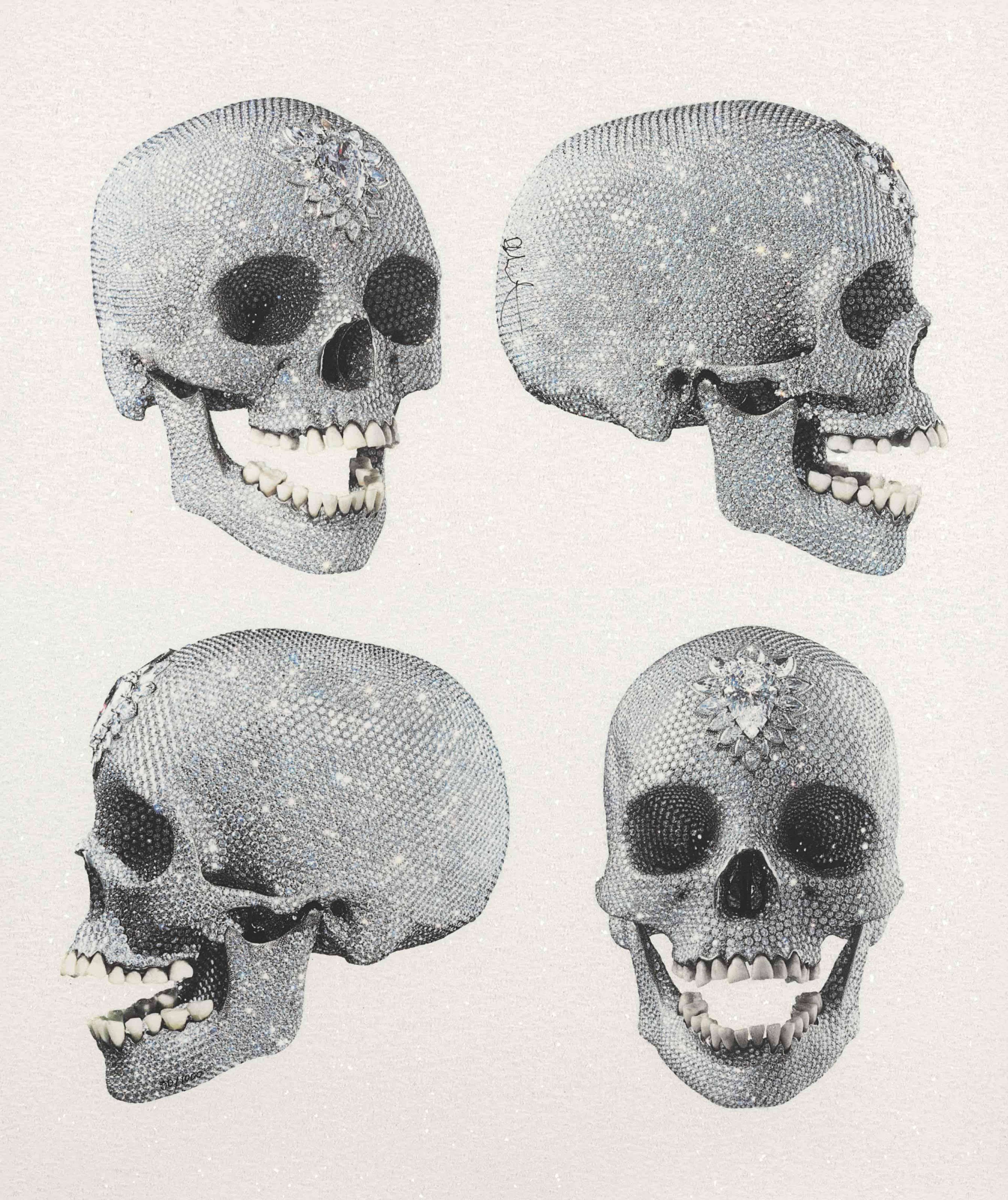
Many editions use delicate materials such as diamond dust, varnish or glossy lamination that can degrade over time if not properly handled or framed. Common issues include fading, flaking or damage to verso labels which can obscure edition details or raise concerns about authenticity. While minor wear doesn't disqualify a print, alteration that affects the signature, edition number or surface treatment should be taken seriously. Collectors are advised to inspect prints unframed whenever possible and to document any condition flaws.
Seek Expert Authentication for Hirst Prints
If you are looking for advice to authenticate your Damien Hirst print, get in touch with our team of specialists.
Request a valuation for your Hirst print today.