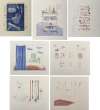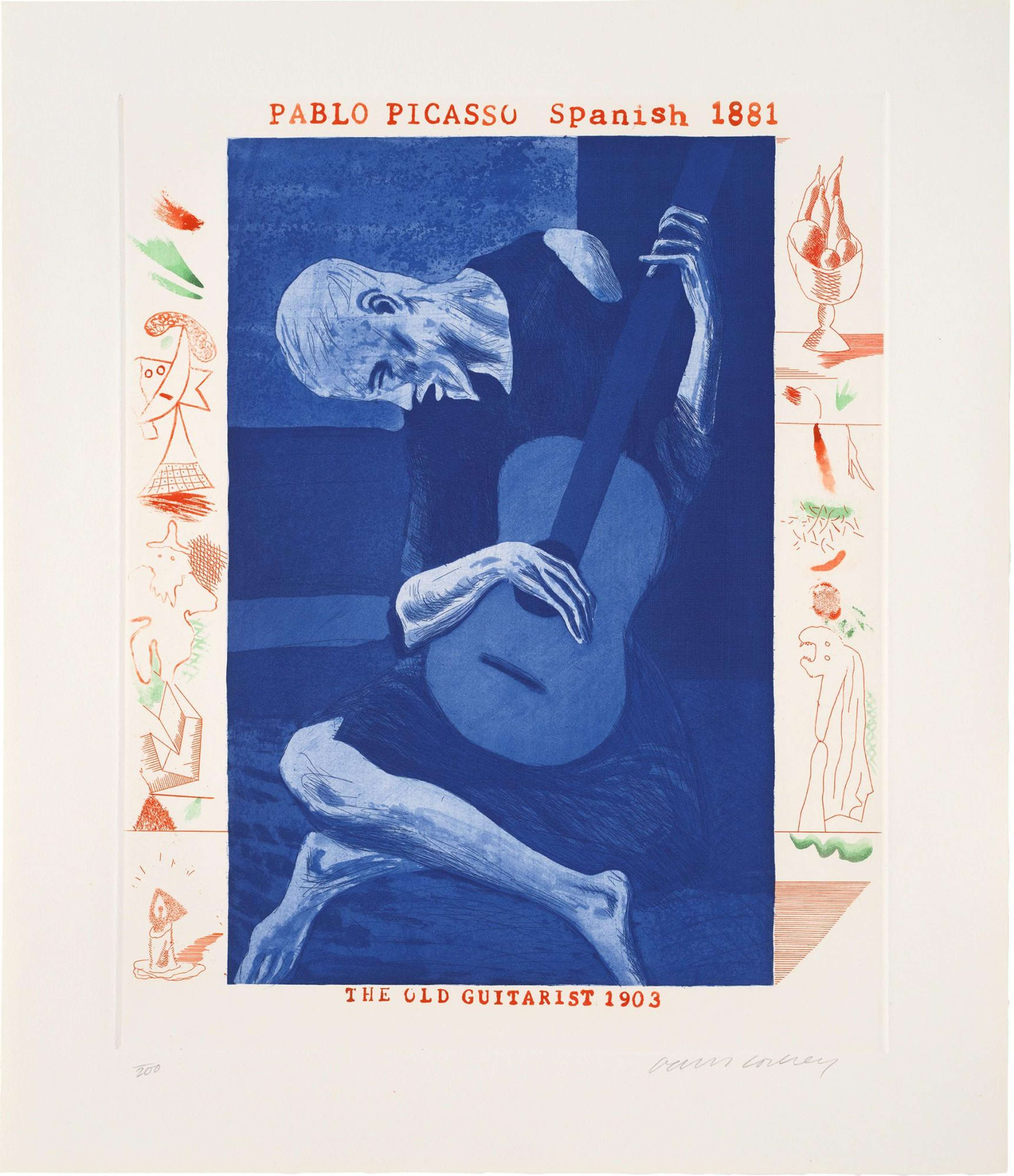


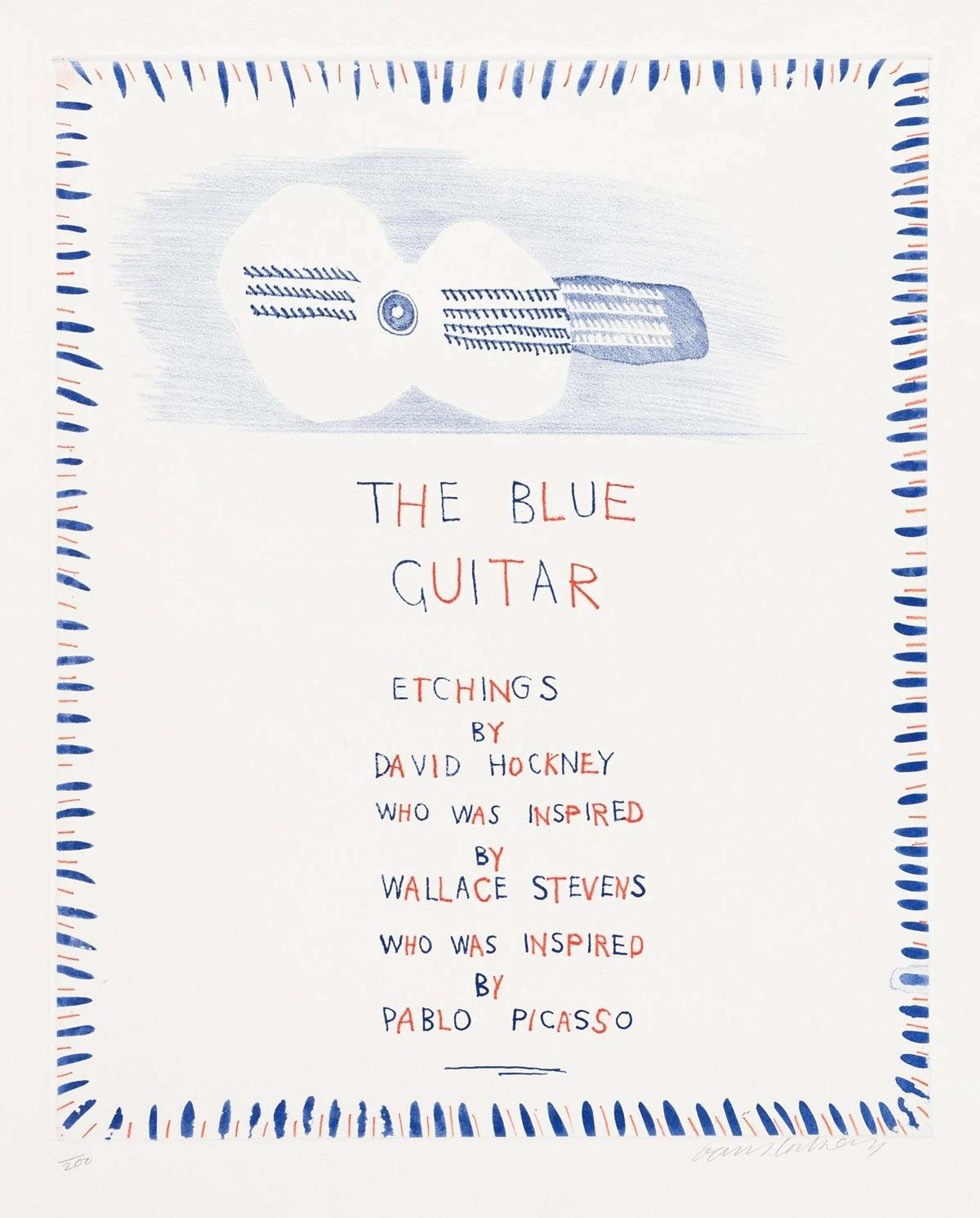
David Hockney's The Blue Guitar is a collection of etchings inspired by Wallace Stevens' 1937 poem The Man with the Blue Guitar, which itself drew inspiration from Picasso's 1903 painting The Old Guitarist. Hockney interpreted the poem's themes through a visual style heavily influenced by Picasso, blending Cubist perspectives with his distinct approach to create surreal, dreamlike compositions.
Hockney's The Blue Guitar series is inspired by Wallace Stevens' poem
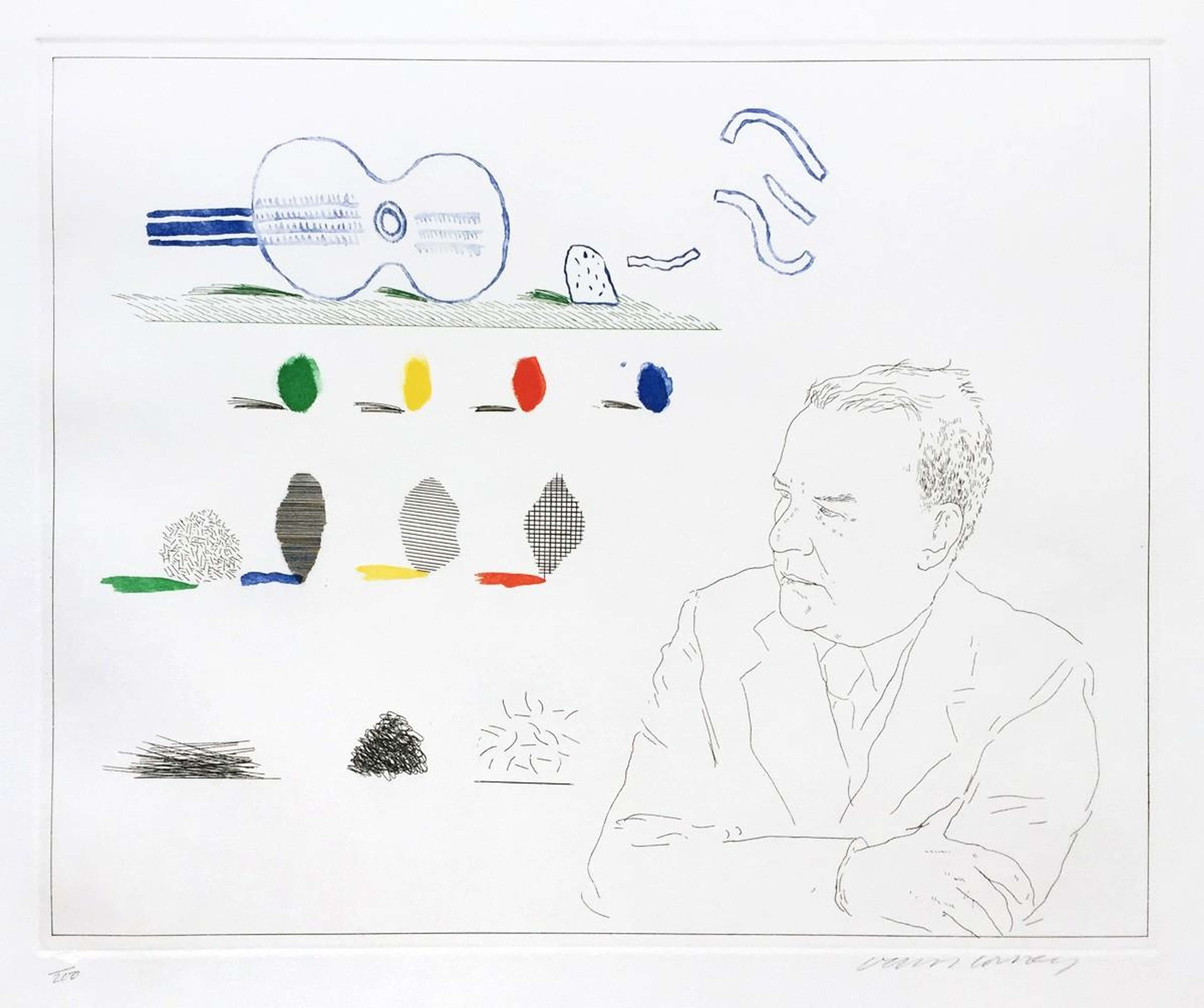
Wallace Stevens’ poem, The Man with the Blue Guitar (1937), explores the relationship between art and reality, using the metaphor of a blue guitar to represent the transformative power of artistic imagination. Drawing thematic, as opposed to narrative, threads from the poem, Hockney explores themes of transformation and reality vs imagination.
Hockney took inspiration from Picasso’s Cubist style
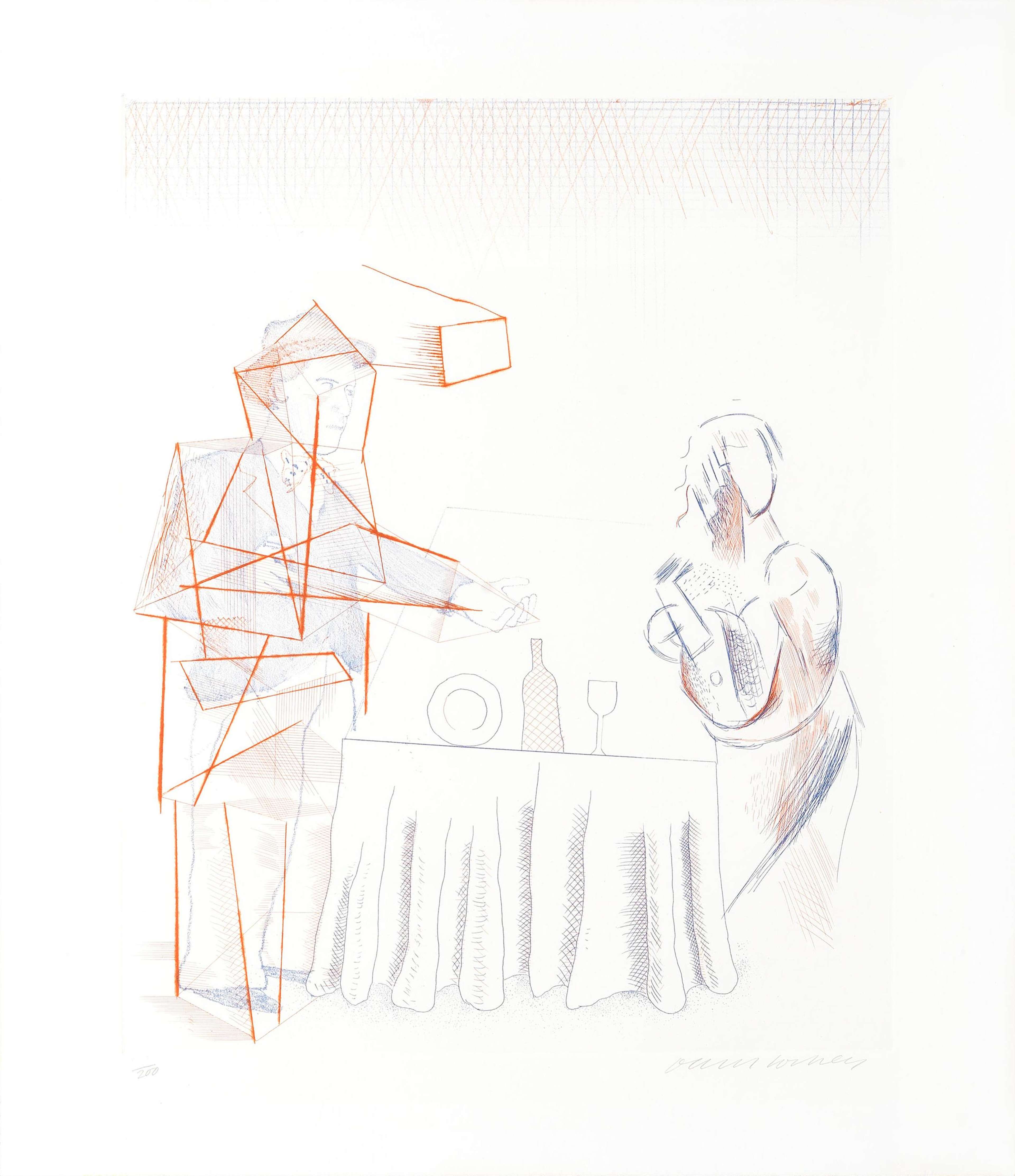
Inspired by Picasso, Hockney explored Cubist perspectives, this approach highlighting his skill in blending different stylistic elements and artistic methods to create original and innovative art. Critic Gert Schiff noted that Hockney’s ability to adapt Picasso's techniques to his own unique representation demonstrates the ongoing evolution of art through appropriation and reinterpretation.
Hockney adopted Picasso’s sugar-lift aquatint technique to produce this series
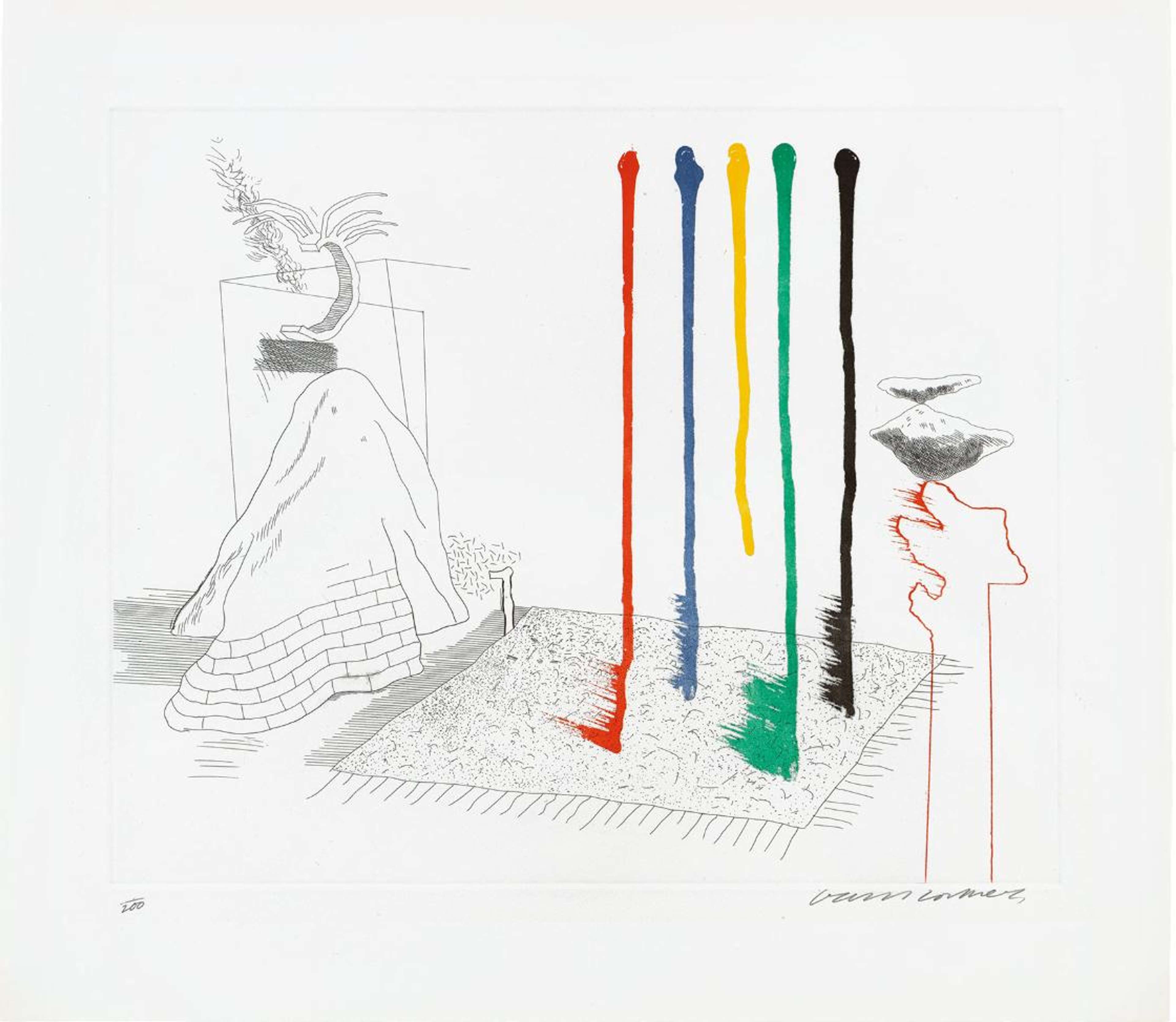
Hockney had admired Picasso since first encountering his works at a Tate retrospective in 1960. Following Picasso's death in 1973, Hockney was invited to contribute to a series of prints inspired by the artist, and travelled to Paris to work with Aldo Crommelynck, Picasso's master printer. Here, he learned Picasso’s favoured technique, the sugar lift aquatint technique, and it was this technique which Hockney used to create the coloured etchings in this series.
In The Blue Guitar Hockney incorporates his own distinctive techniques
The first plate in the series is a direct reproduction of Picasso's 1903 The Old Guitarist, capturing the essence of Picasso's Blue Period. However, Hockney enhances this homage by applying an indigo wash to amplify the painting's melancholy mood. Following this introduction, Hockney shifts back to his distinctive style, characterised by lighter and more sparse compositions that often appear surreal or absurd, such as It Picks Its Way (1977) and Discord Merely Magnifies (1977).
The series is filled with strange symbols
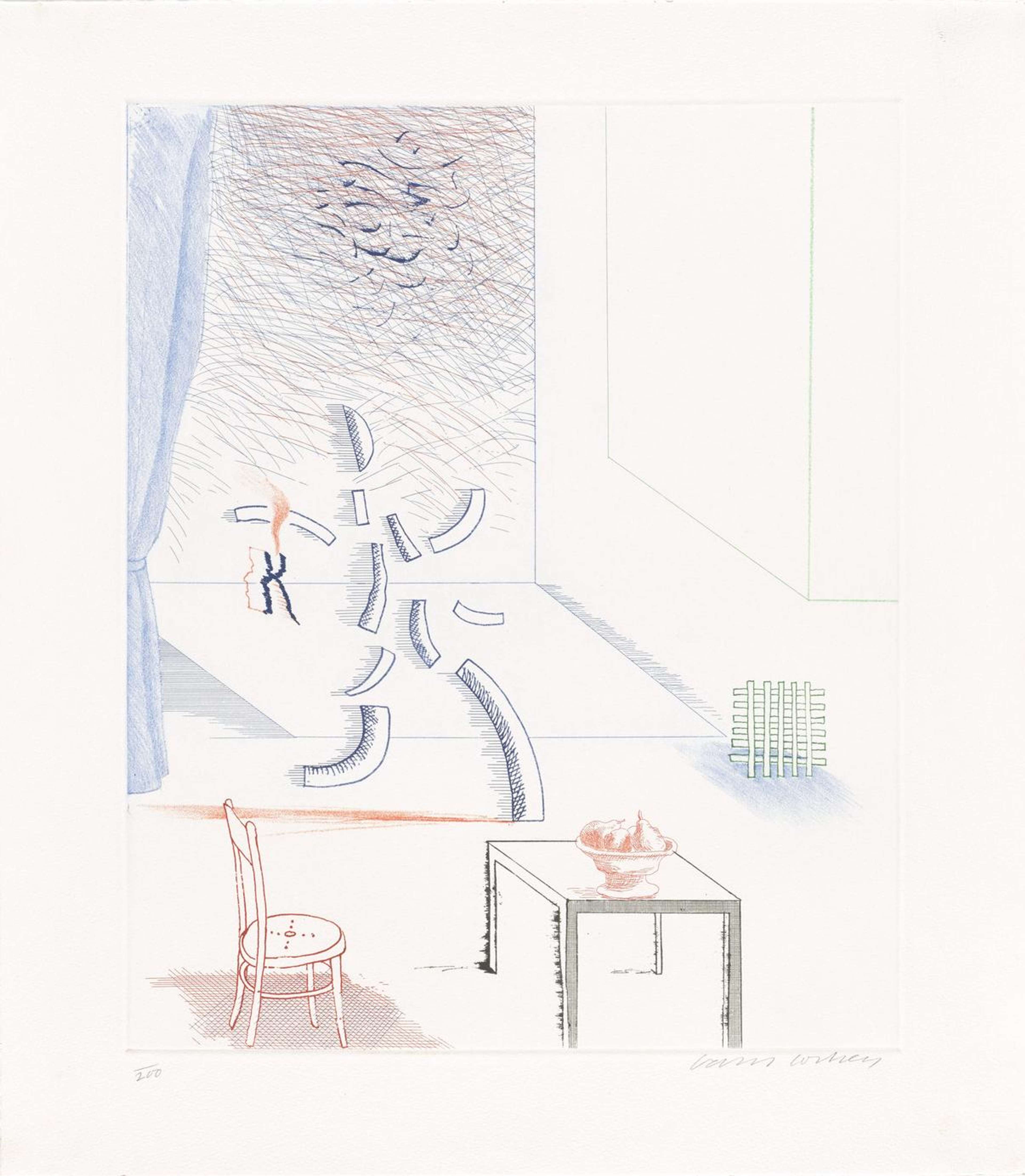
Hockney’s unusual compositions are rich with enigmatic symbols, providing a dreamlike connection to Wallace Stevens' poetry. Hockney, who had previously drawn inspiration from other poets, first explored this approach with his 1967 series Illustrations for Fourteen Poems by C.P. Cavafy, a loose interpretation of the Greek poet's work. Even earlier, in 1961, Hockney produced the print titled Myself and My Heroes, featuring himself alongside American poet Walt Whitman and Gandhi.
The Blue Guitar demonstrates the influence of literature on Hockney’s work
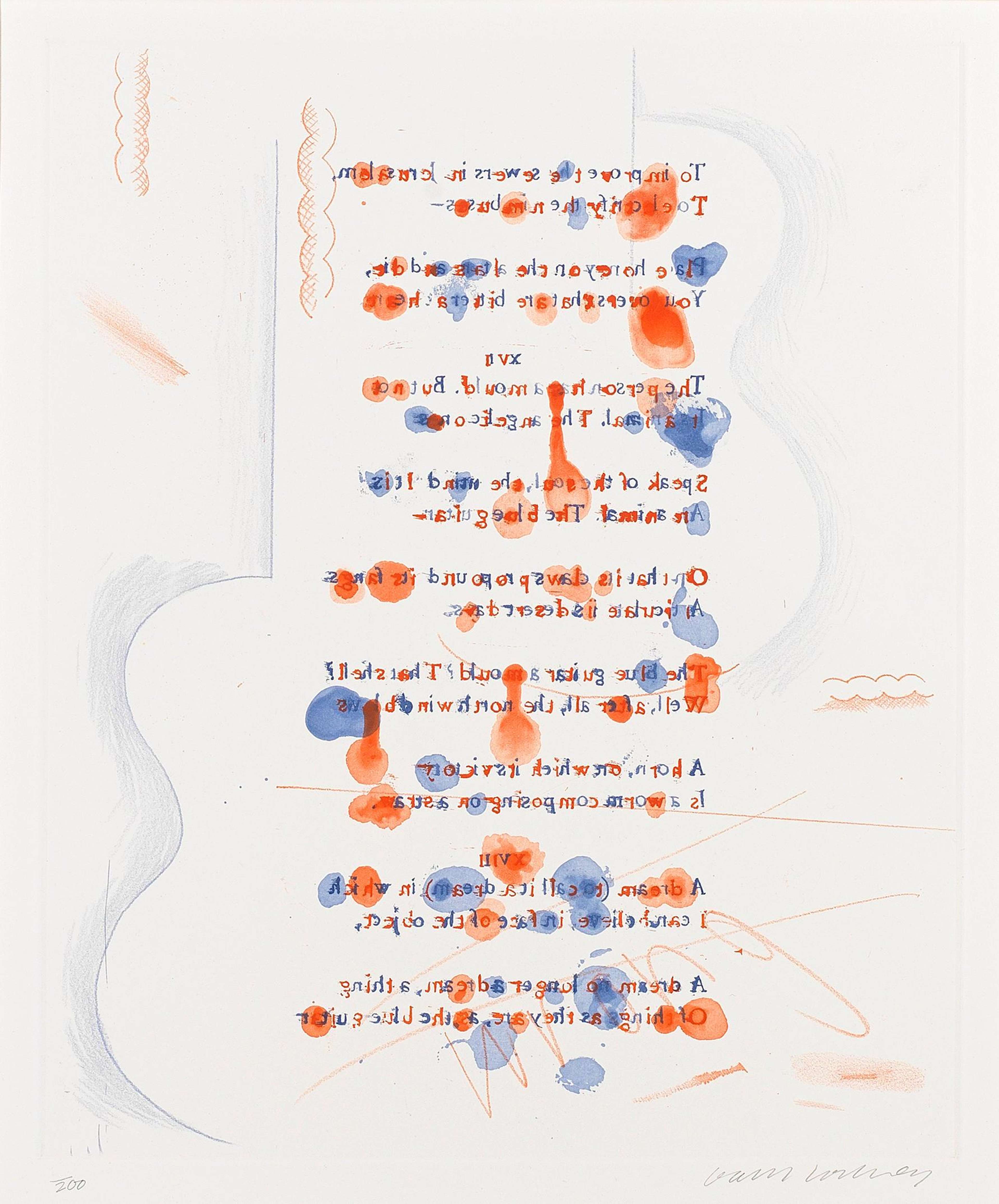
This series illustrates Hockney's return to art history and literature for inspiration, reflecting his curiosity and desire to master new techniques. It highlights his skill in becoming a distinguished printmaker, retelling well-known literature through his signature wit and playfulness.
Hockney plays with perspective to emphasise the surrealism in Stevens’ poem
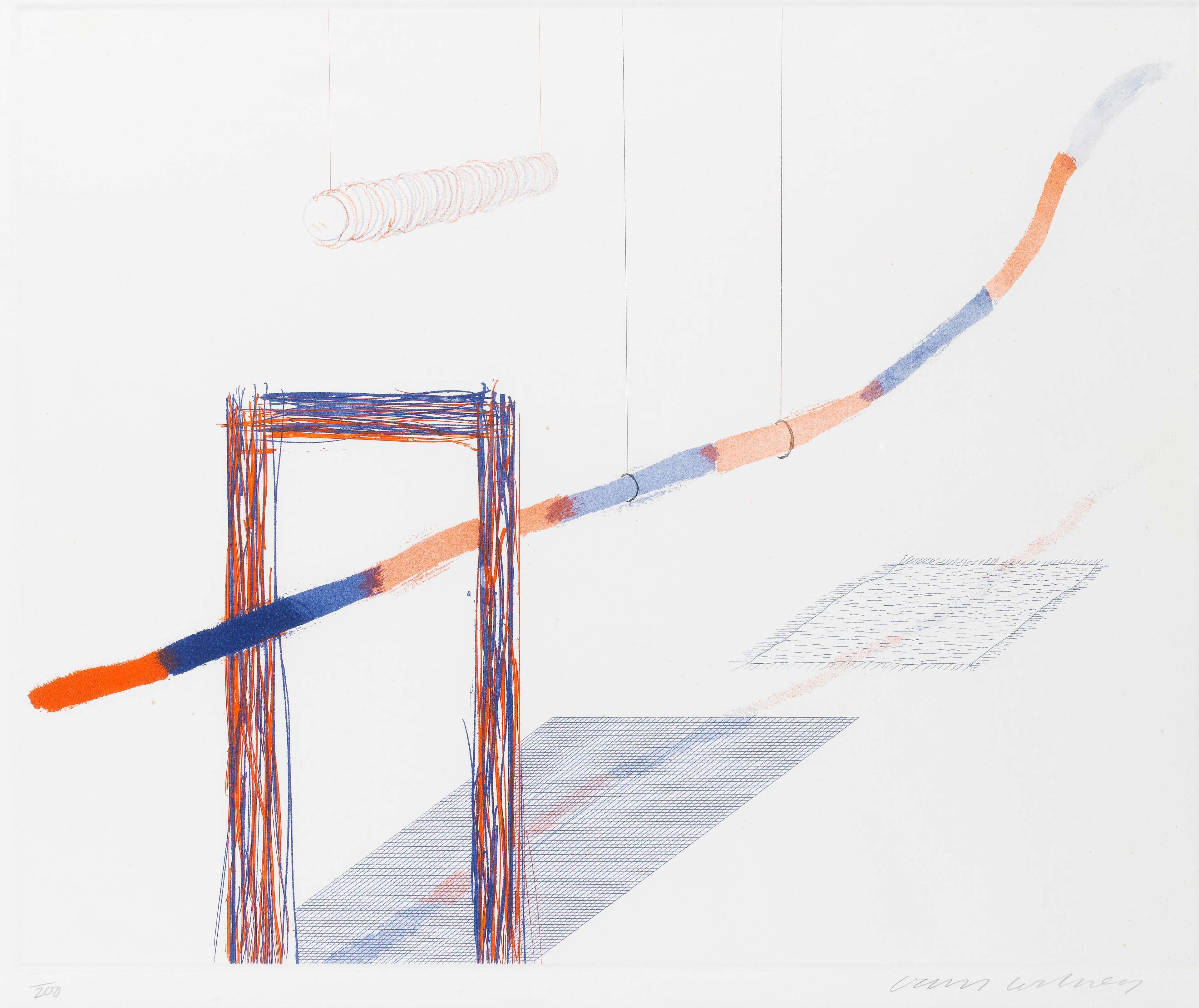
Hockney plays with perspective in this series, often distorting and fragmenting the space within the compositions, seen in pieces such as A Moving Still Life (1977) and In A Chiaroscuro (1977). This technique adds to the surreal and dreamlike quality of the images.
The Blue Guitar features a dominant blue palette
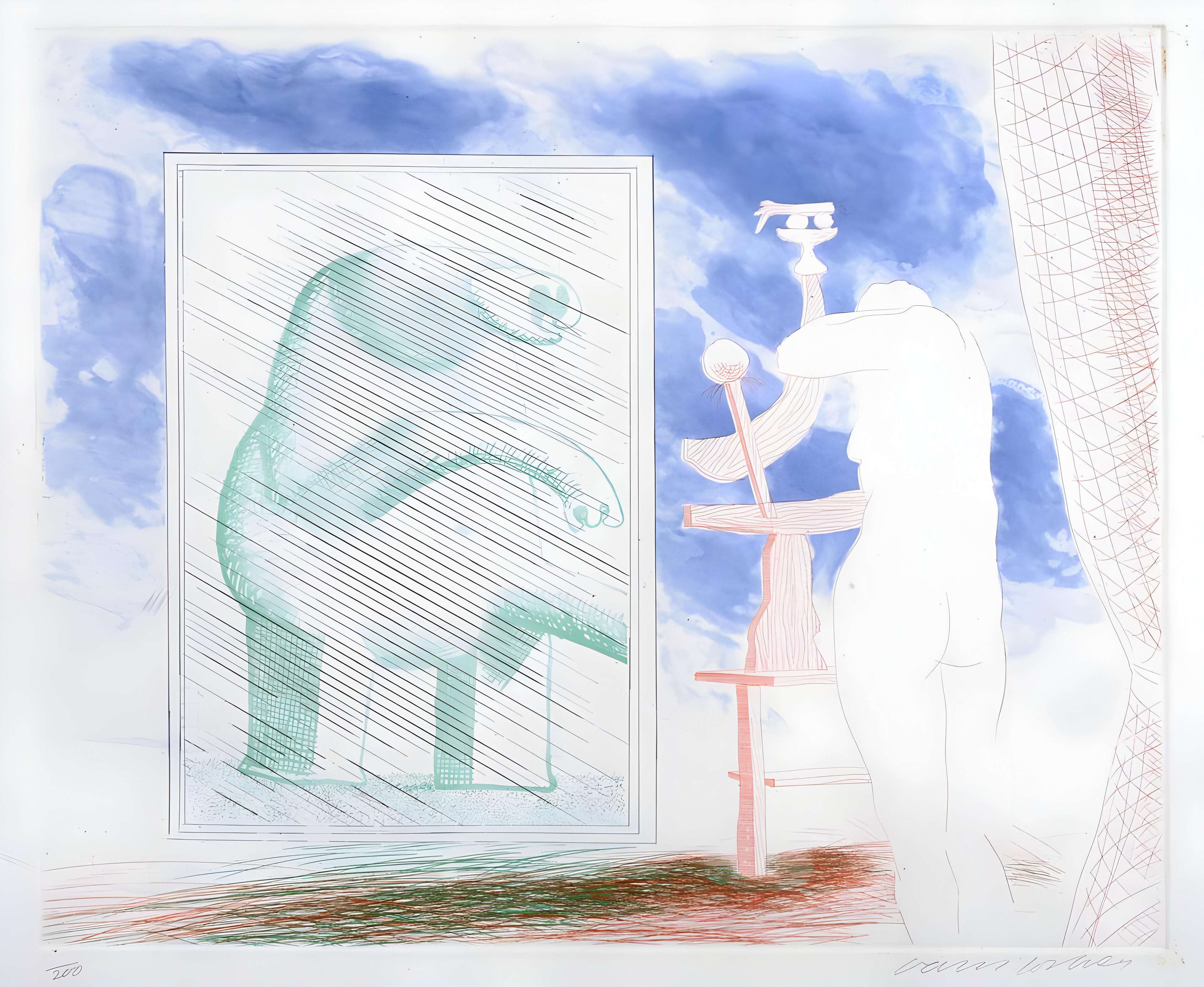
True to its title, this series features a dominant blue palette. The various shades of blue evoke different moods and atmospheres across the prints, evident in pieces including A Picture Of Ourselves (1977) and What Is This Picasso (1976).
The Blue Guitar has been exhibited worldwide
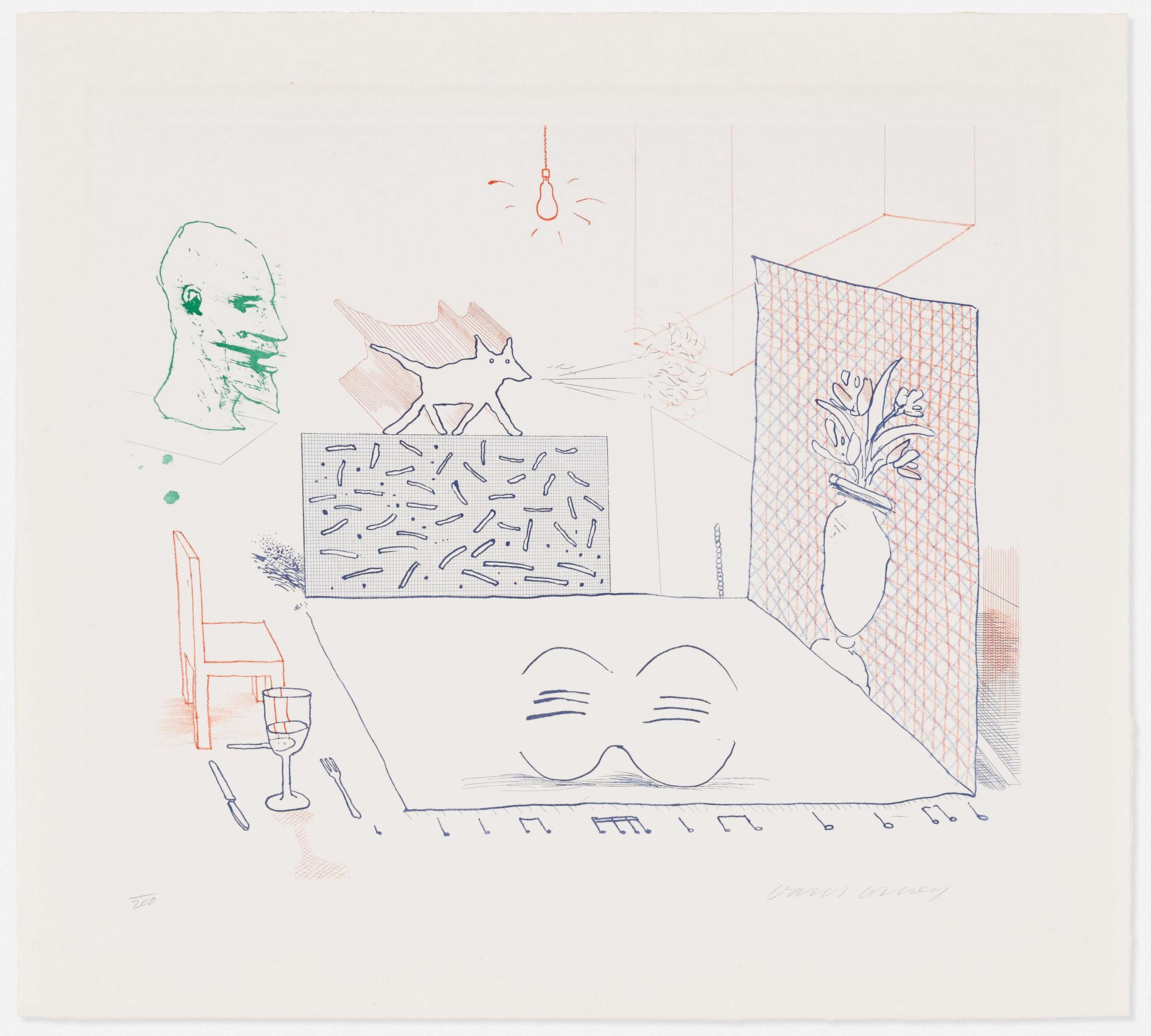
The series has been exhibited worldwide in venues including the Tate in London, the Museum of Modern Art in New York, and The Centre Pompidou in Paris. His series is considered one of Hockney's most important works, and marked a significant period in his career when he was deeply engaged with printmaking.
The title of the series is a metaphor
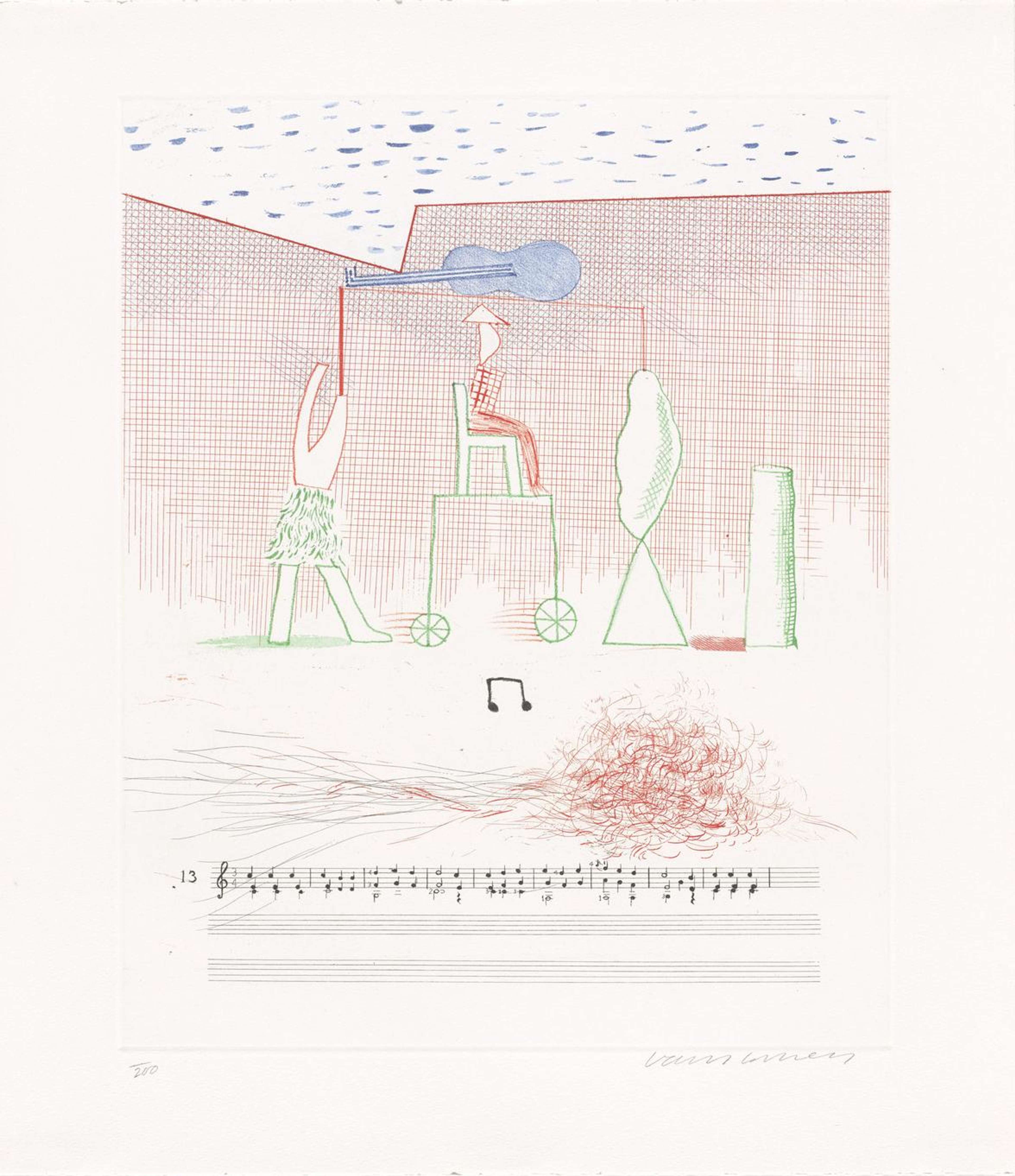
The title The Blue Guitar refers not only to Stevens’ poem, but also to the idea of the artist’s tool, in this case the guitar, as a metaphor for the creative process. The blue guitar becomes a symbol of artistic imagination.