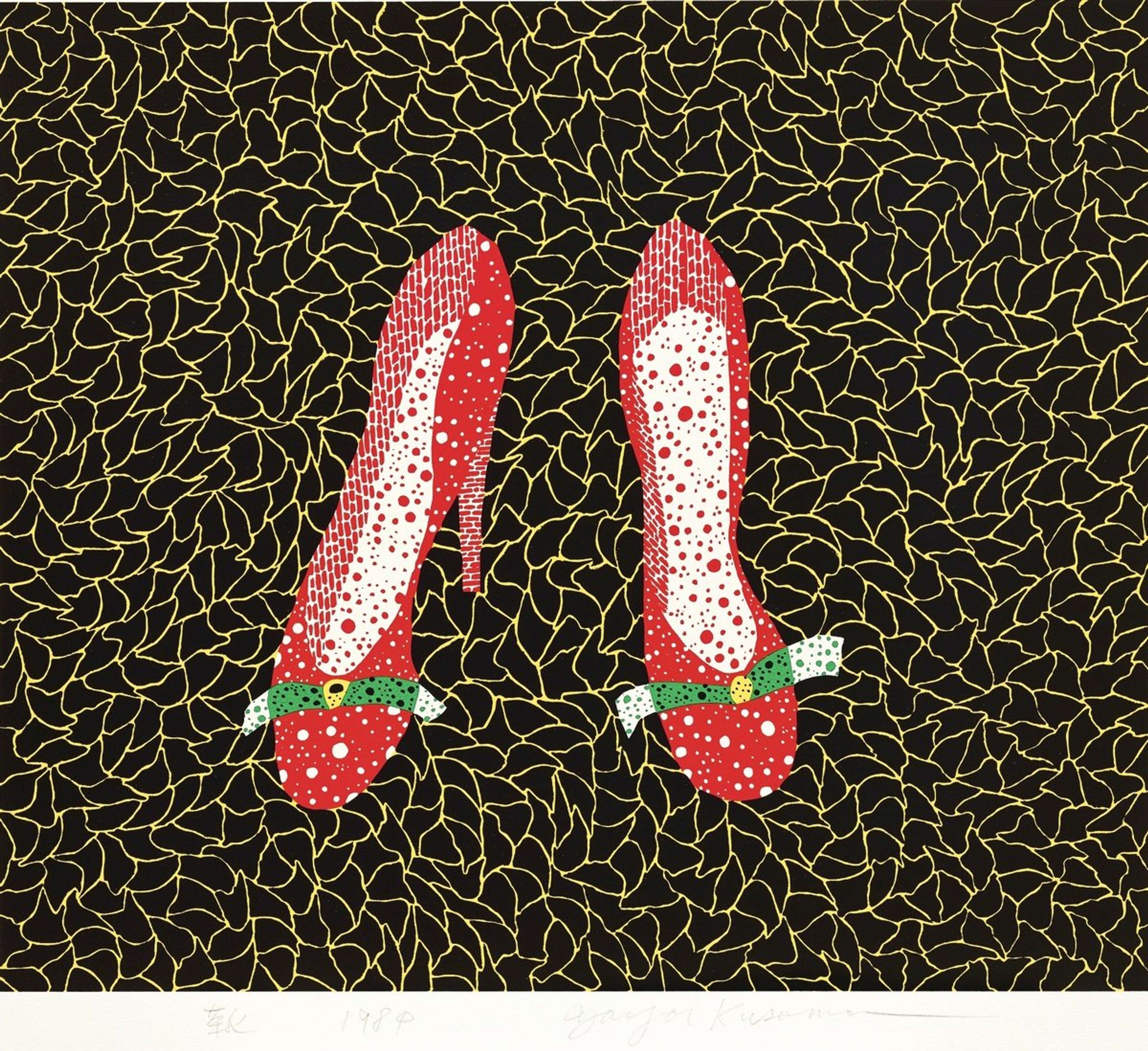


Yayoi Kusama’s Shoes (1984) transforms everyday footwear into colourful artworks, covering high heels in her signature polka dots and Infinity Nets. A playful exploration of self-expression and fashion, the series reflects Kusama’s lifelong fascination with fashion as an extension of art. This series invites viewers to consider themes of identity, femininity, and the extraordinary within the ordinary.
Kusama’s Shoes celebrate self-expression and fashion
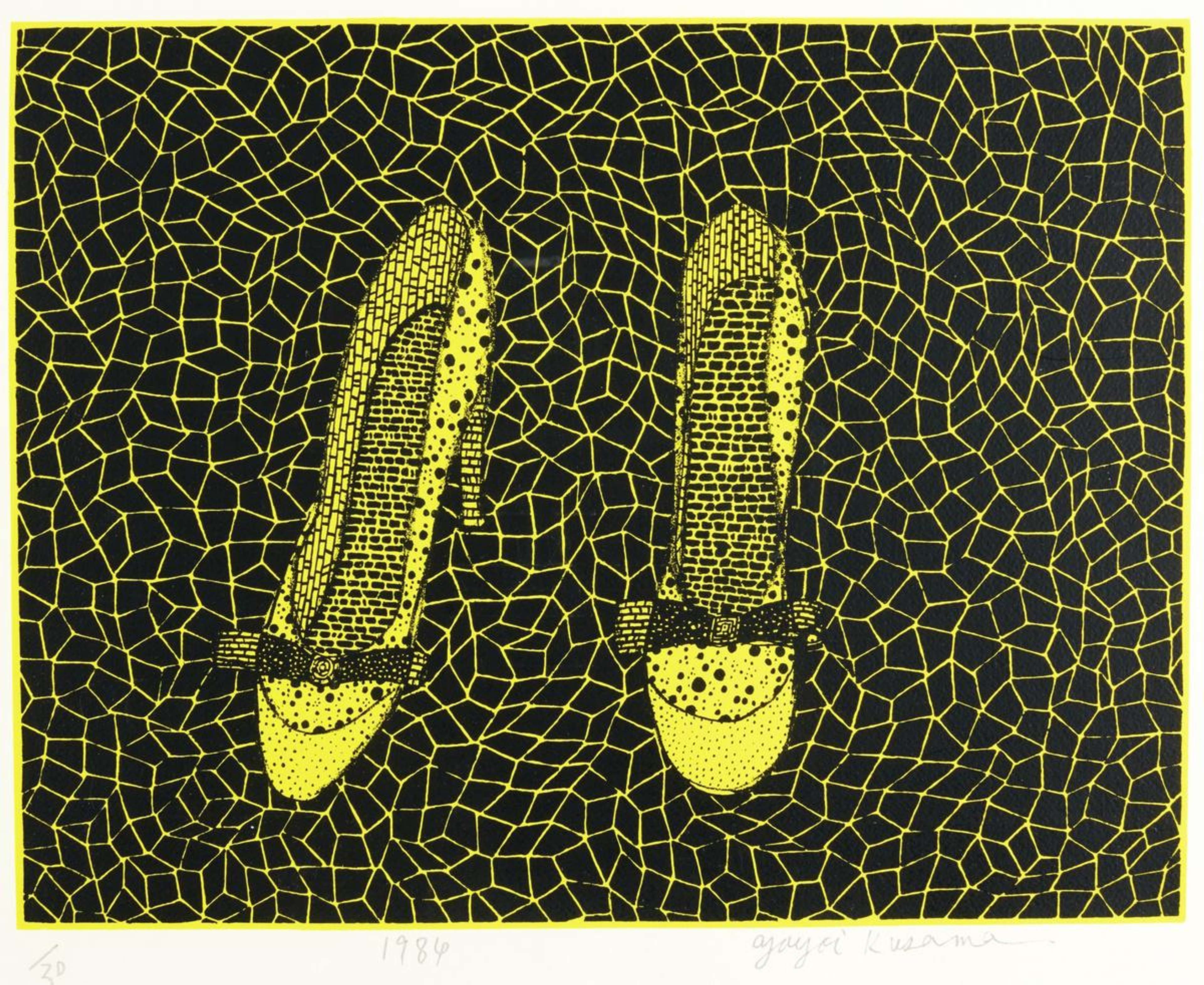
Yayoi Kusama’s recurring shoe motif appears across her sculptures, paintings, and prints, symbolising her joyful approach to self-expression. In her Shoes series, she places high heels at the center of each composition as a celebration of personal style and as an embrace of fashion as part of her art. Shoes merges art and fashion, reflecting the artist’s belief that what we wear can be an extension of our creative identity.
Polka dots in Kusama’s art represent infinity and self-obliteration
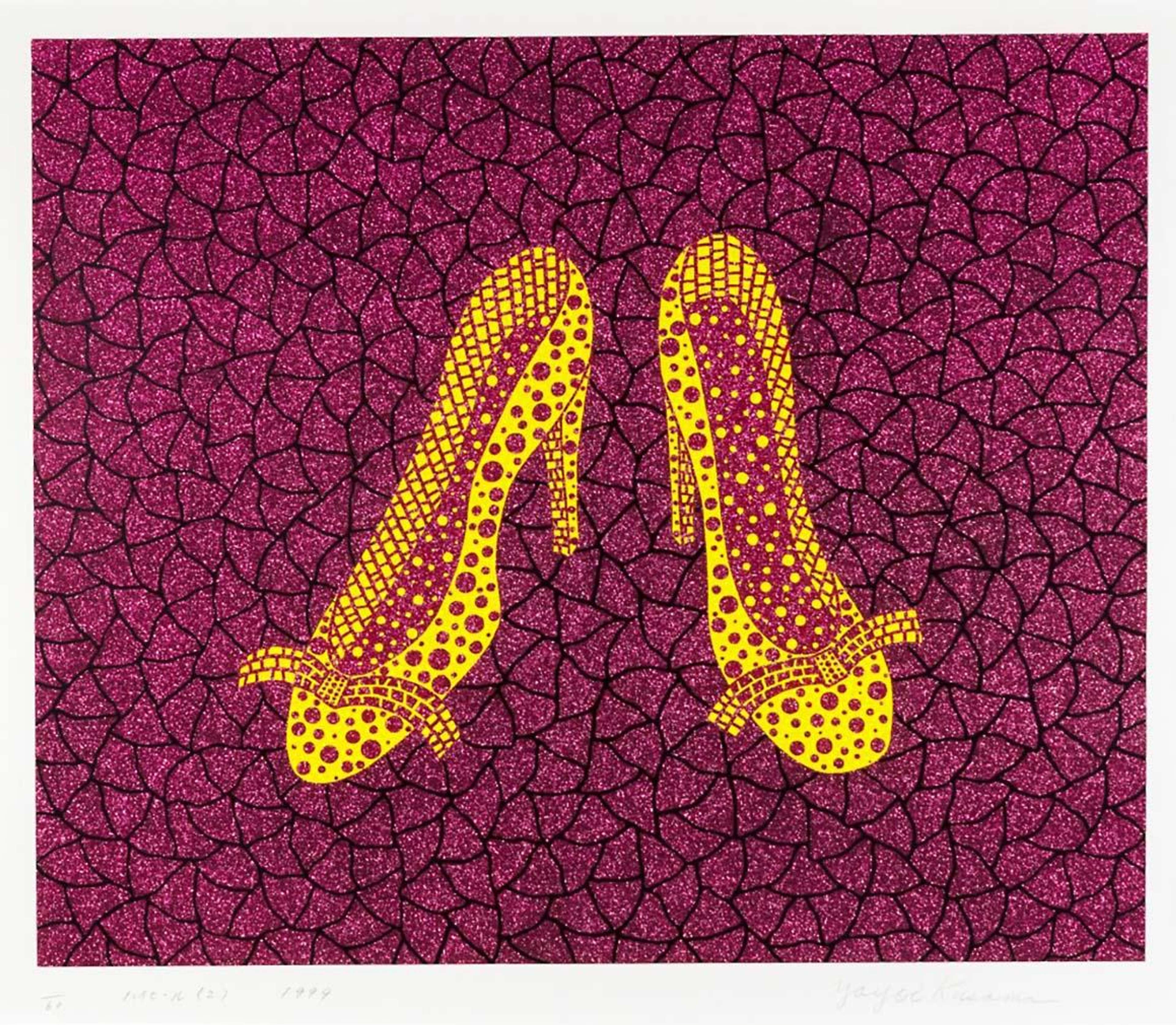
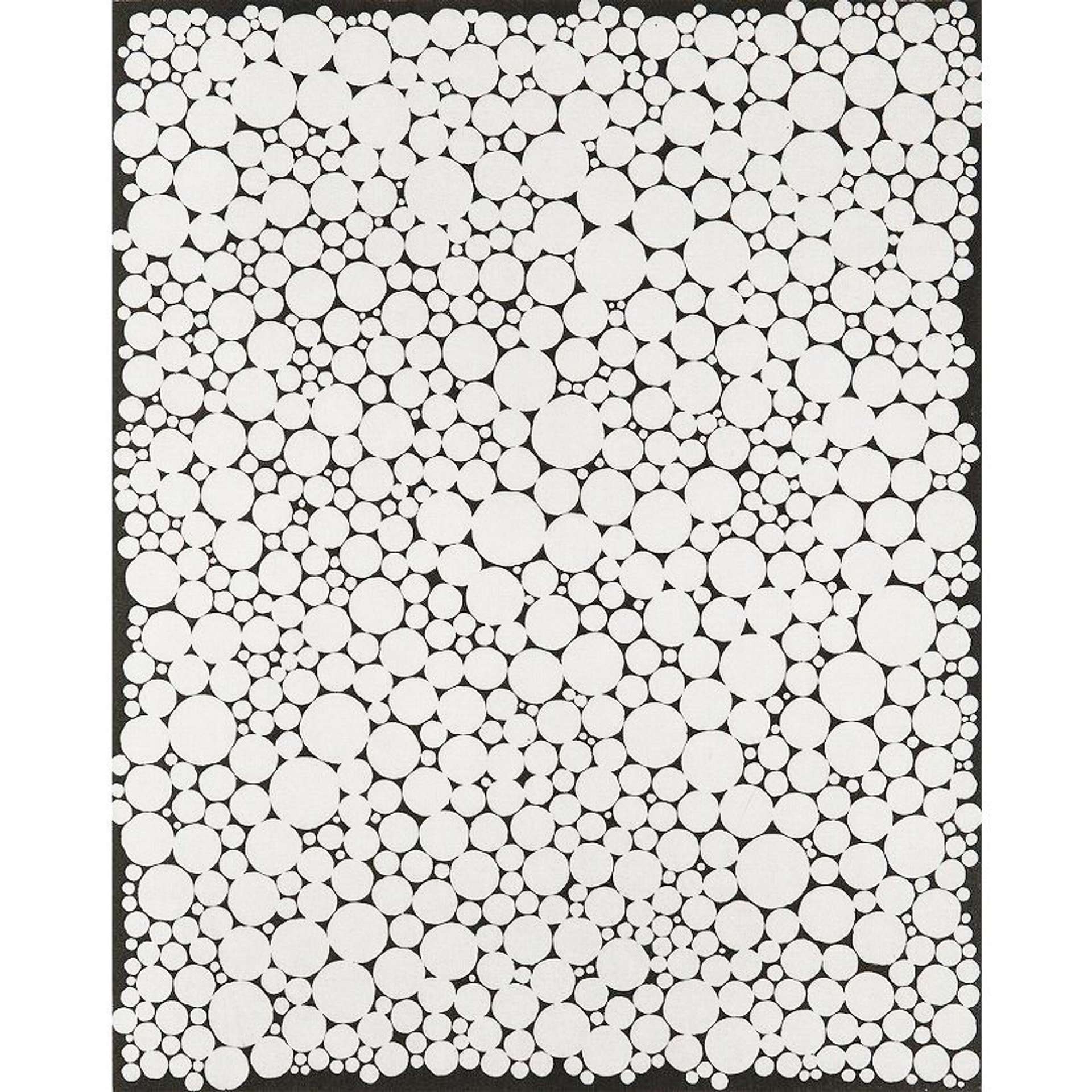
Kusama uses the endless repetition of polka dots and nets as a metaphor for infinity and the dissolution of self. In Kusama’s philosophy, each dot can represent a star in the cosmos or an atom – the building blocks of an infinite universe. By covering objects associated with personal journey and movement in countless dots, Kusama connects the shoe wearer’s individual path with a larger cosmic journey. This obsessive patterning is part of Kusama’s lifelong theme of “self-obliteration,” where the self merges into the infinite, symbolically losing oneself in patterns.
Kusama’s personal style is an extension of her art
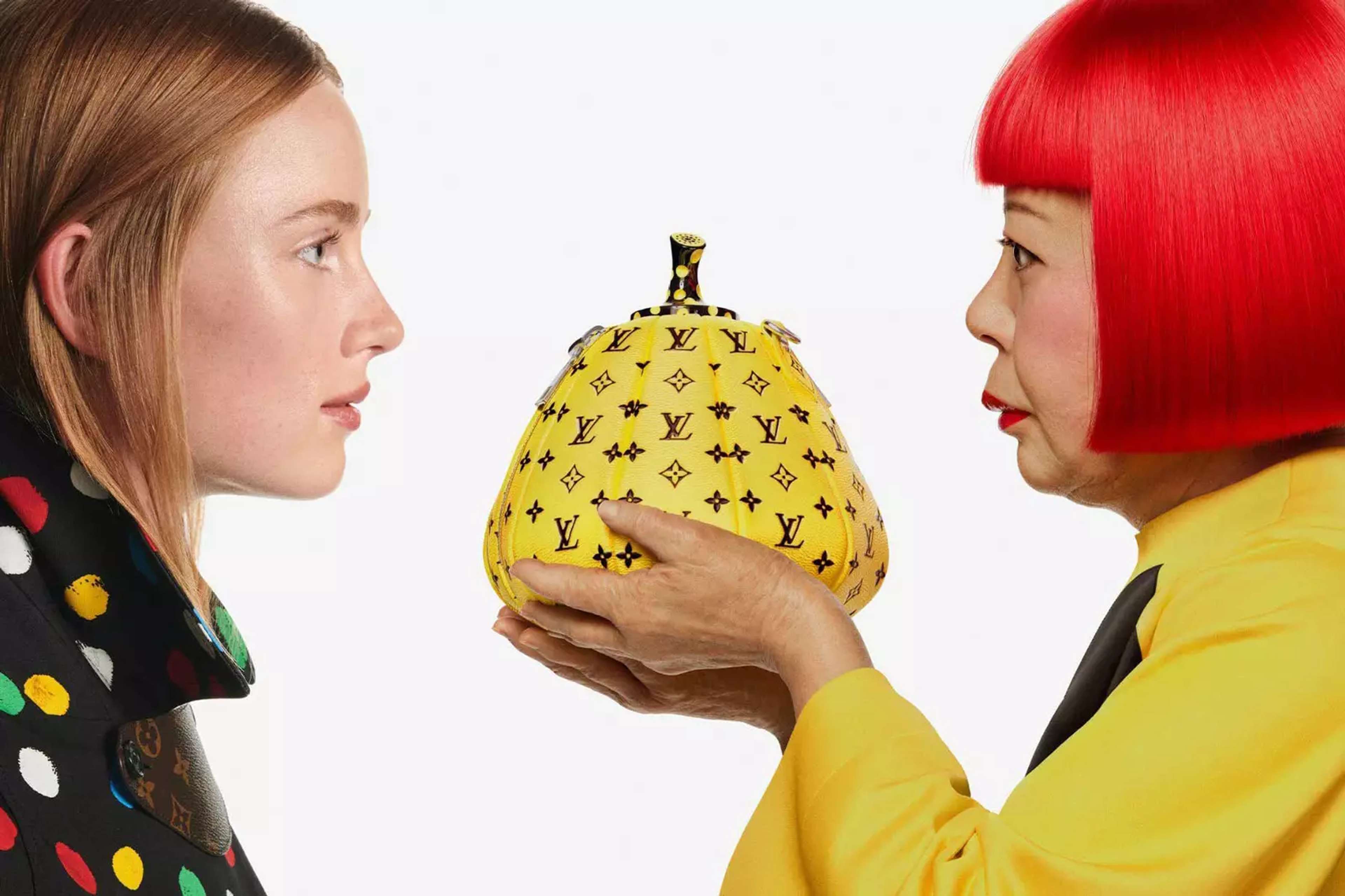
Kusama’s own fashion sense has always been part of her artistic persona. She is known for wearing polka-dotted outfits of her own design and a bright red wig: her trademark look that mirrors her art’s unapologetic personality. Early in her career, Kusama often attended her gallery openings in a traditional kimono with a parasol, playing with Western stereotypes of Japanese women. By parodying the “Hollywood geisha” image, she used personal style as performance art, crafting a self-empowered, individualistic image. This blending of art and fashion shows how Kusama’s identity and creativity are deeply intertwined.
Kusama has collaborated with Louis Vuitton
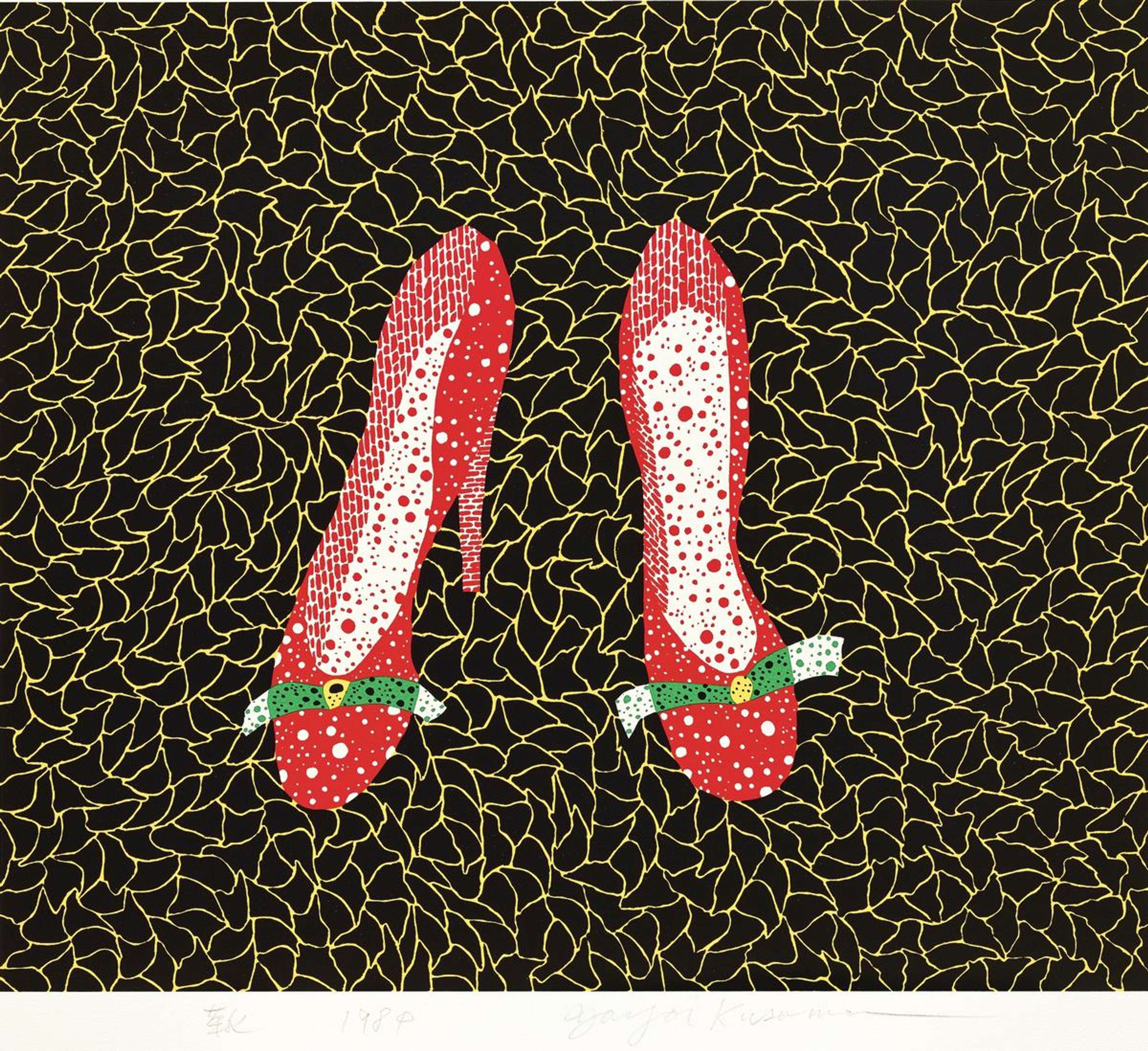
Kusama’s fusion of art and fashion extends to real-world couture through famous collaborations. In 2012, she partnered with Louis Vuitton to release a line of polka dot–covered handbags, and a decade later in 2023, a second Louis Vuitton collection launched on a larger scale. These high-fashion collaborations introduced her playful dots to bags and shoes (including sneakers, boots, loafers, and stilettos), bringing Kusama’s motifs into luxury storefronts worldwide. Inspired by her Infinity Mirror Rooms and trademark colours, the collections transform everyday fashion items into wearable art.
Shoes become symbols for Kusama’s exploration of the surreal
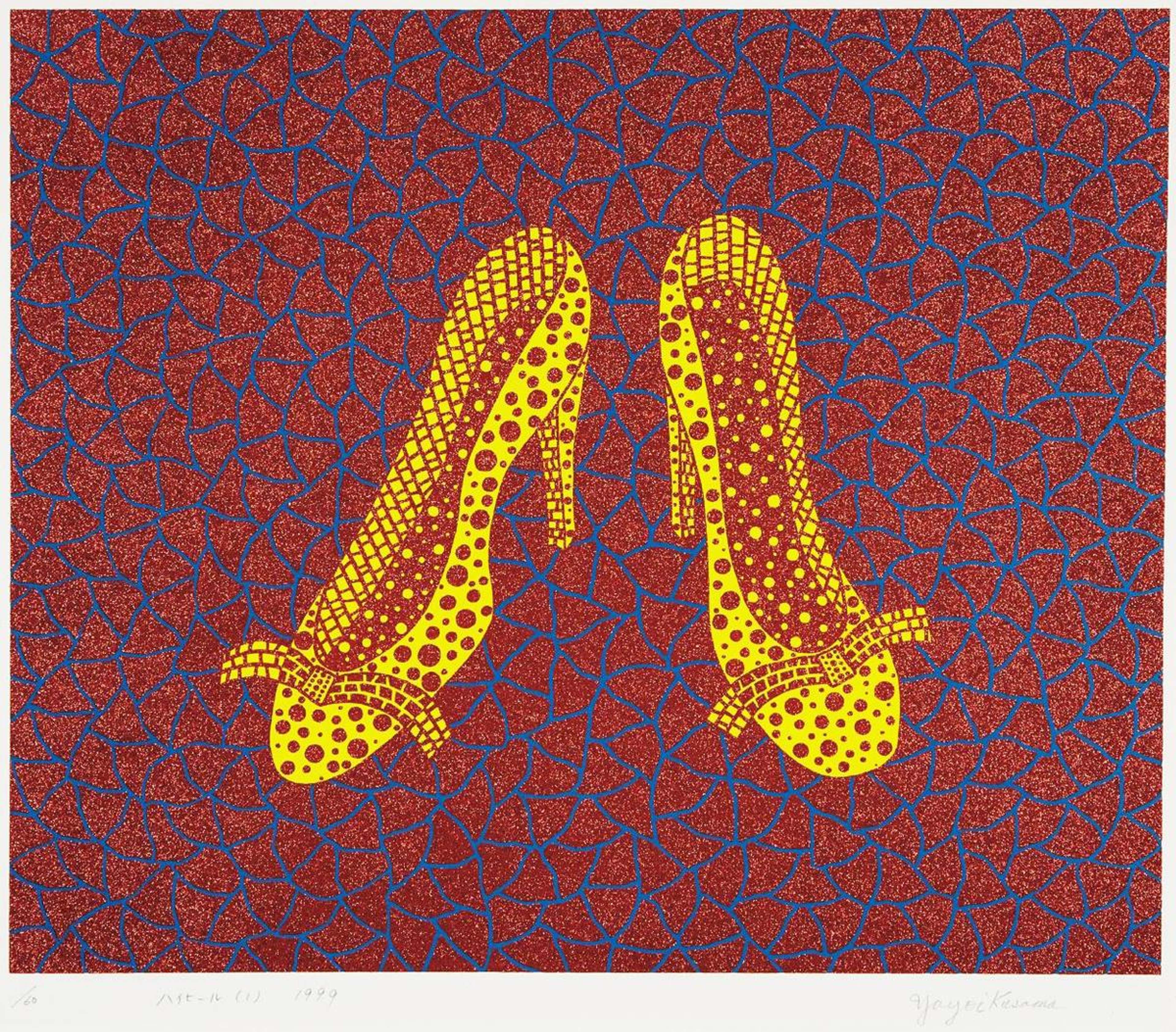
Kusama transforms the everyday accessory of a shoe through colour, repetition, and stylised form. The contours of the footwear are exaggerated and surrounded by rhythmic patterns, creating a dreamlike, surreal quality. This approach echoes Kusama’s broader desire to dissolve boundaries between art and life. By isolating a familiar object and immersing it in her infinite patterns, she elevates it into a symbol of obsession, transformation, and personal expression.
Kusama’s shoe motif bridges fashion and fine art
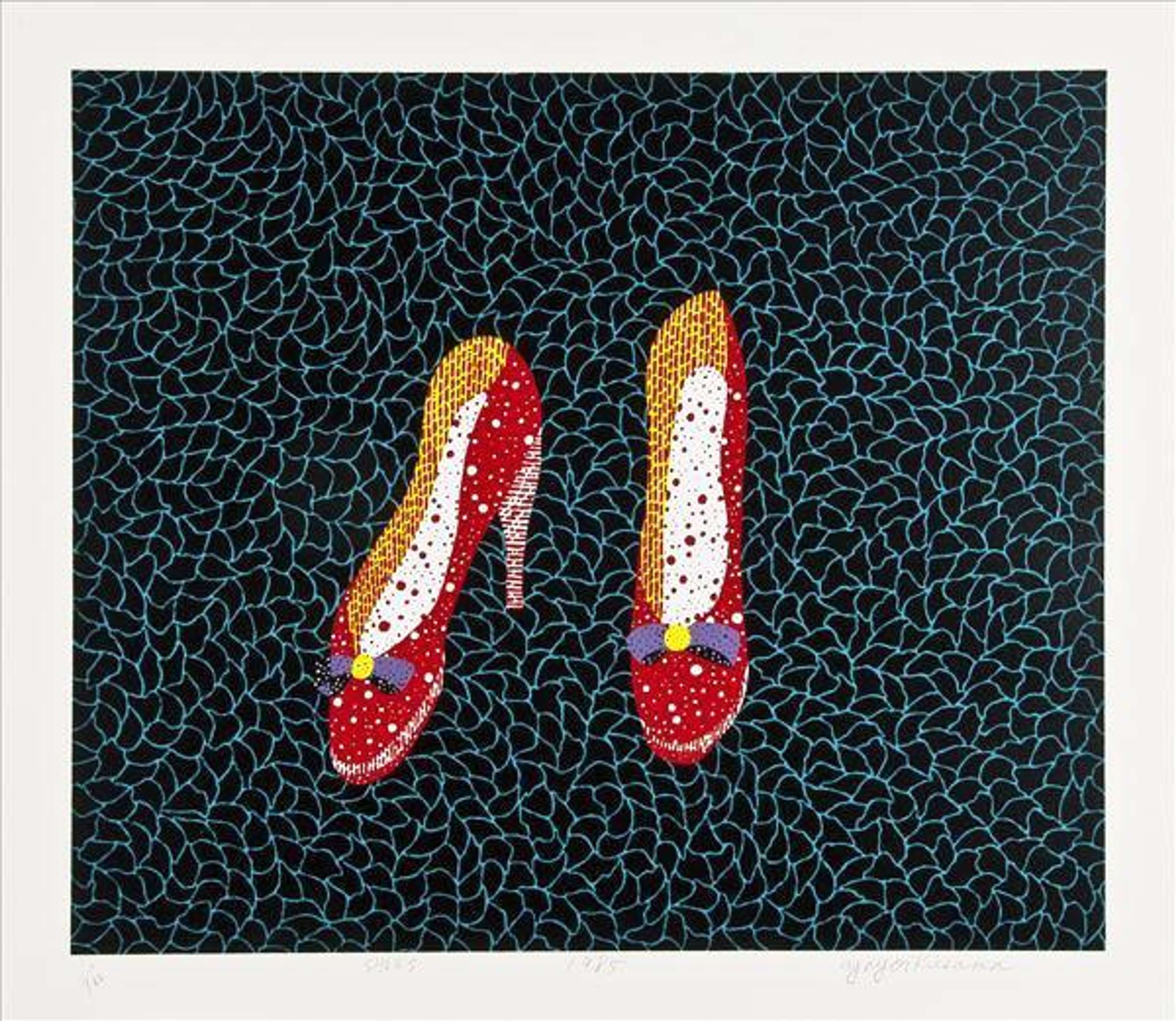
The high-heeled shoe is a motif Kusama returns to repeatedly, linking everyday fashion accessories with surreal art. She has depicted shoes not only in prints but also in large-scale sculptures – from her phallic Gold Heels to High Heels for Going to Heaven. While her shoe sculptures are fantastical, the prints are more straightforward, yet they share the same theme: Kusama’s fascination with self-fashioning and the broader fashion world.
High Heels symbolise femininity and identity
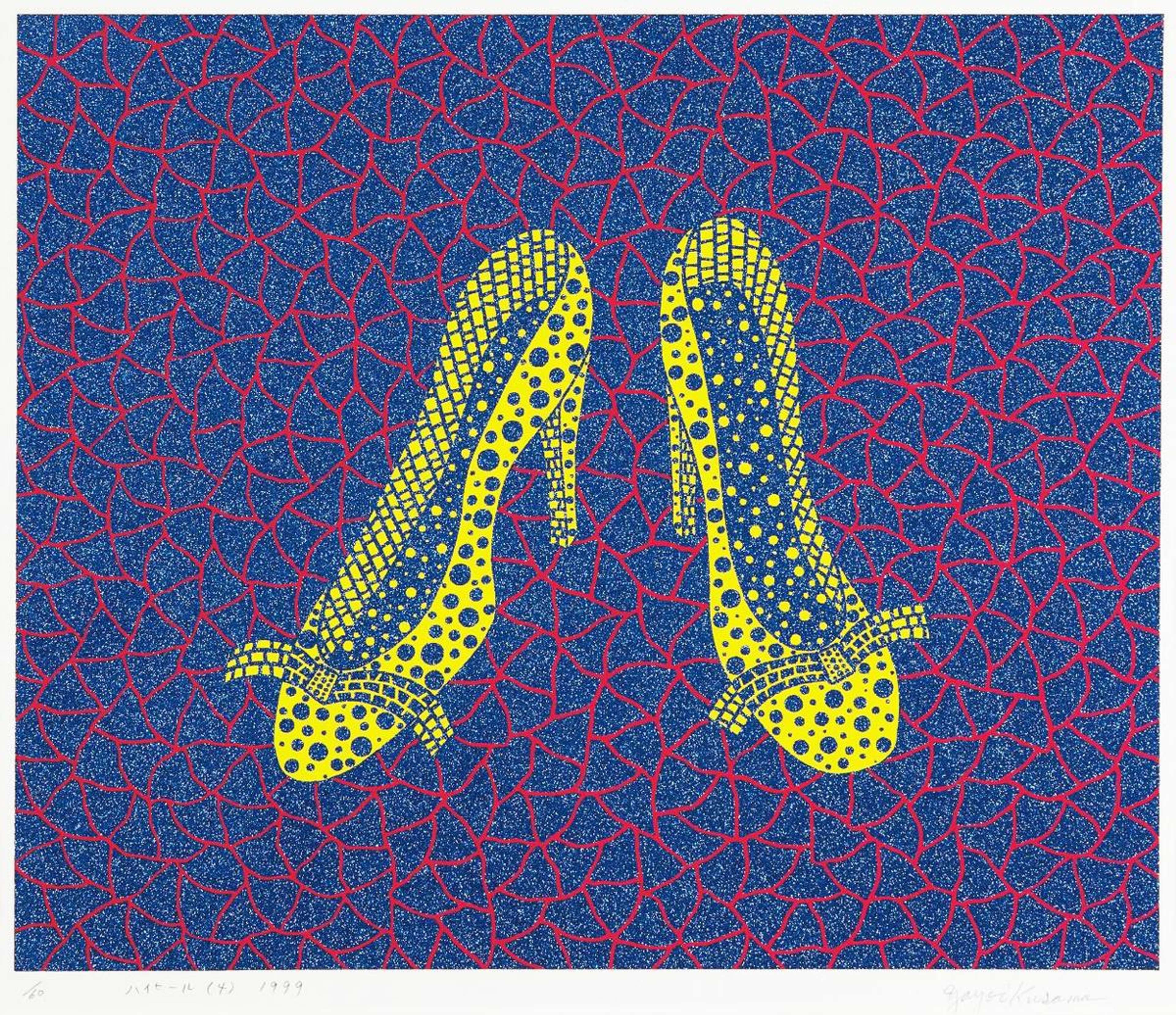
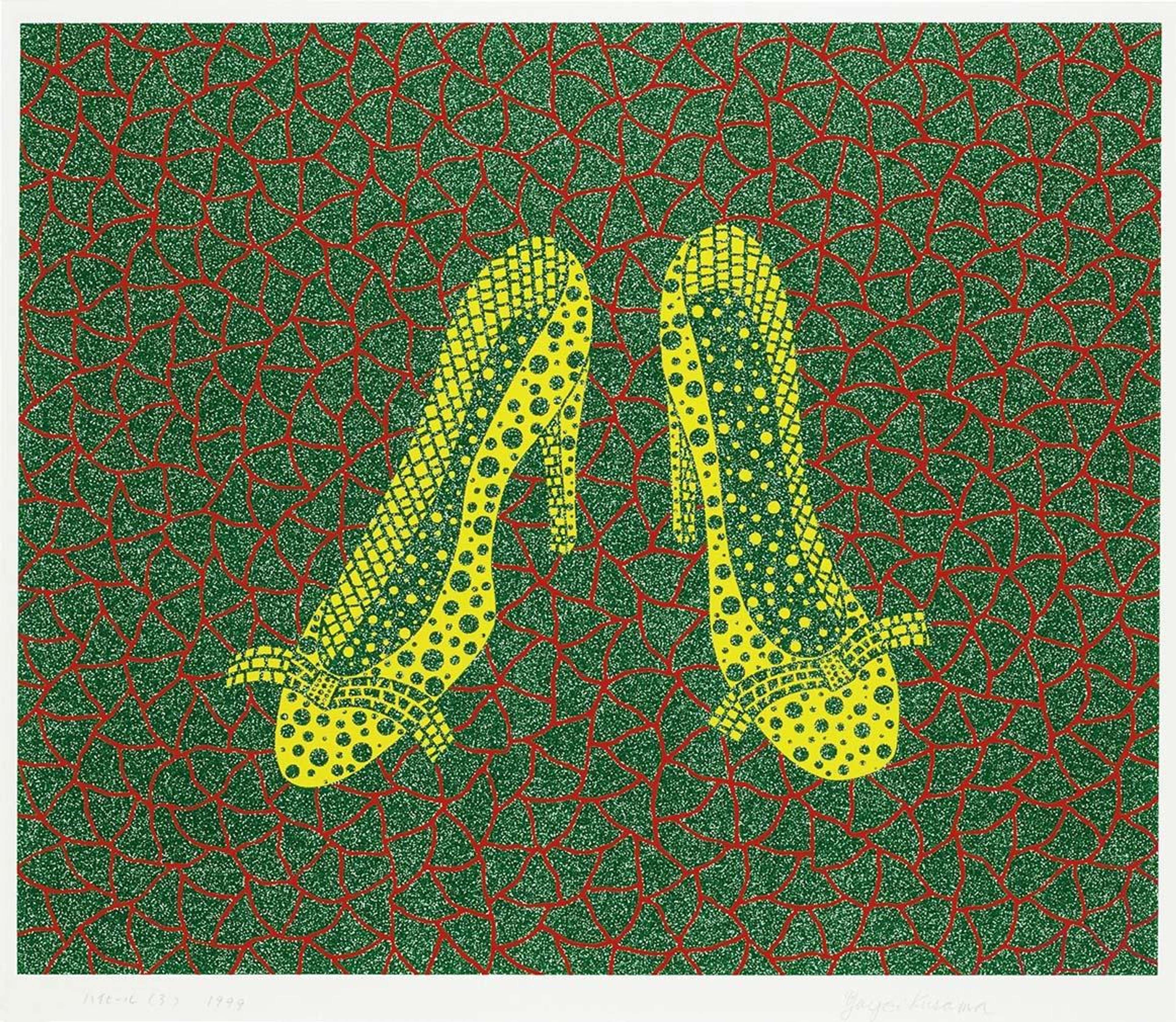
In Kusama’s Shoes, each print features a pair of brightly coloured, polka-dotted high heels set against an Infinity Nets background. The vibrant colours and playful dots celebrate a stereotypically “feminine” form of self-fashioning, yet notably no person is visible, creating a sense of anonymity and intrigue. By presenting high heels awaiting an unknown wearer, Kusama subtly comments on feminine identity, where glamour is celebrated whilst also hinting at the universality of feminine societal ideals.
Kusama’s High Heels explores empowerment and confinement
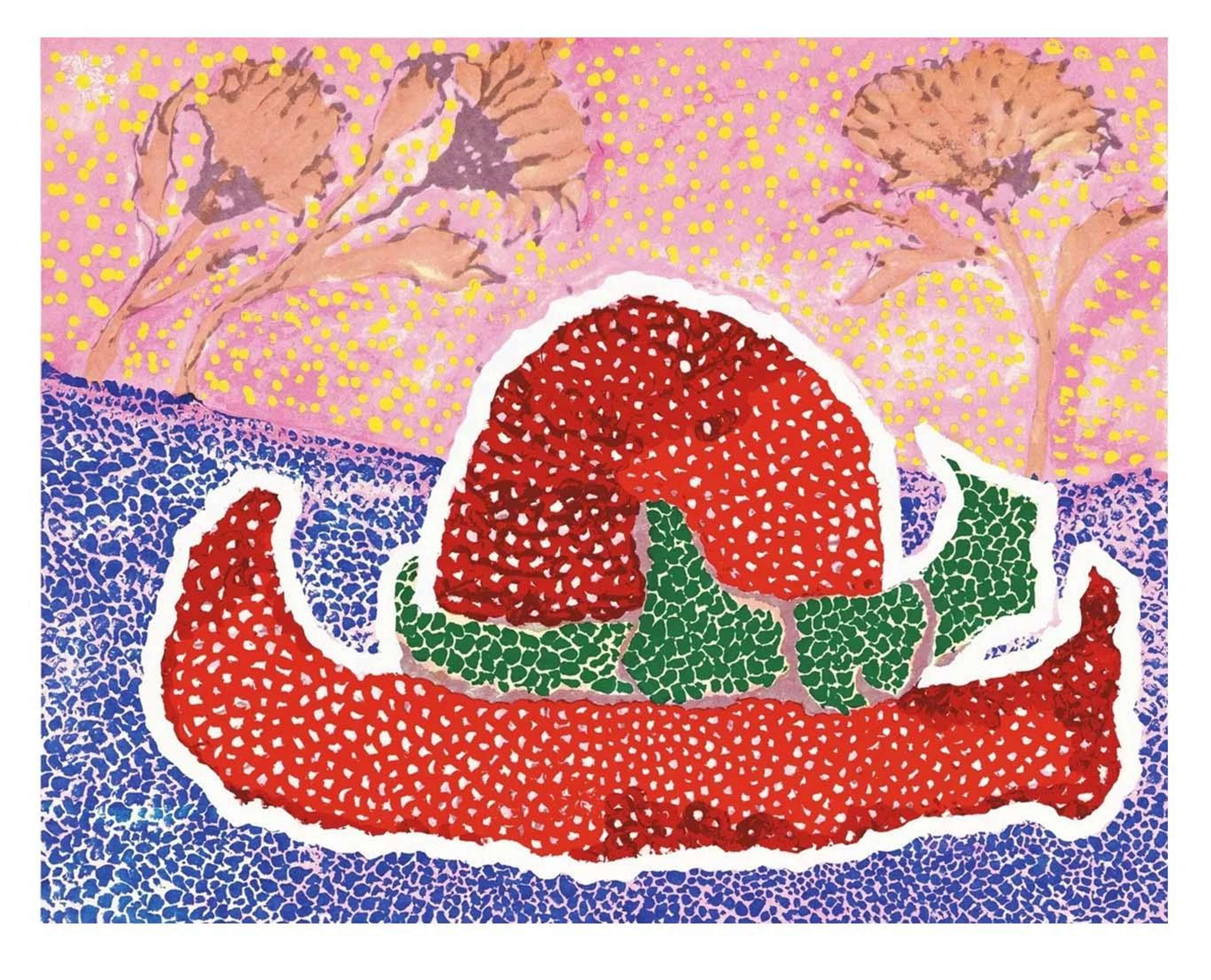
Kusama’s later High Heels series - featuring more patterned shoes - highlights the dual nature of this feminine symbol. On one hand, high heels evoke empowerment, confidence, and beauty - on the other, they signify discomfort and restriction. In High Heels, Kusama brings these conflicting ideas together as a commentary on the fashion industry’s impact on women, inviting discussion about societal expectations of beauty and subjugation.
Kusama’s exploration of fashion also includes hats
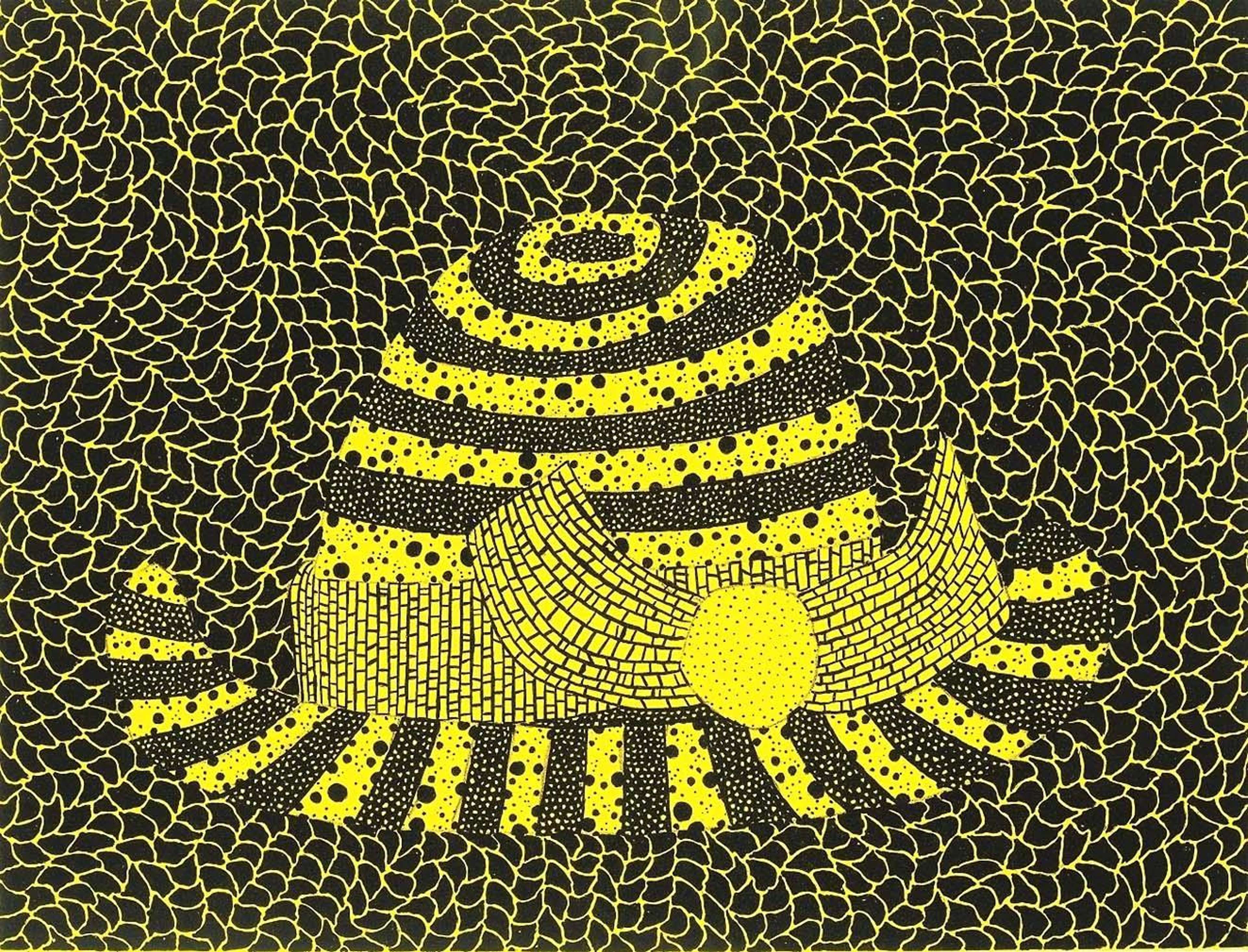
Shoes are not the only fashion items Kusama explores through her art; hats also appear as symbols within her work. In her Hats series, Kusama depicts various hats completely covered in her dots and patterns. Historically, a hat can signify social status, profession, or conformity, but Kusama subverts this by erasing each hat’s individuality under a field of polka dots. This act of covering a traditional symbol of identity turns it into part of an infinite pattern, reflecting her theme of self-obliteration.
Shoes reveals the power of object transformation
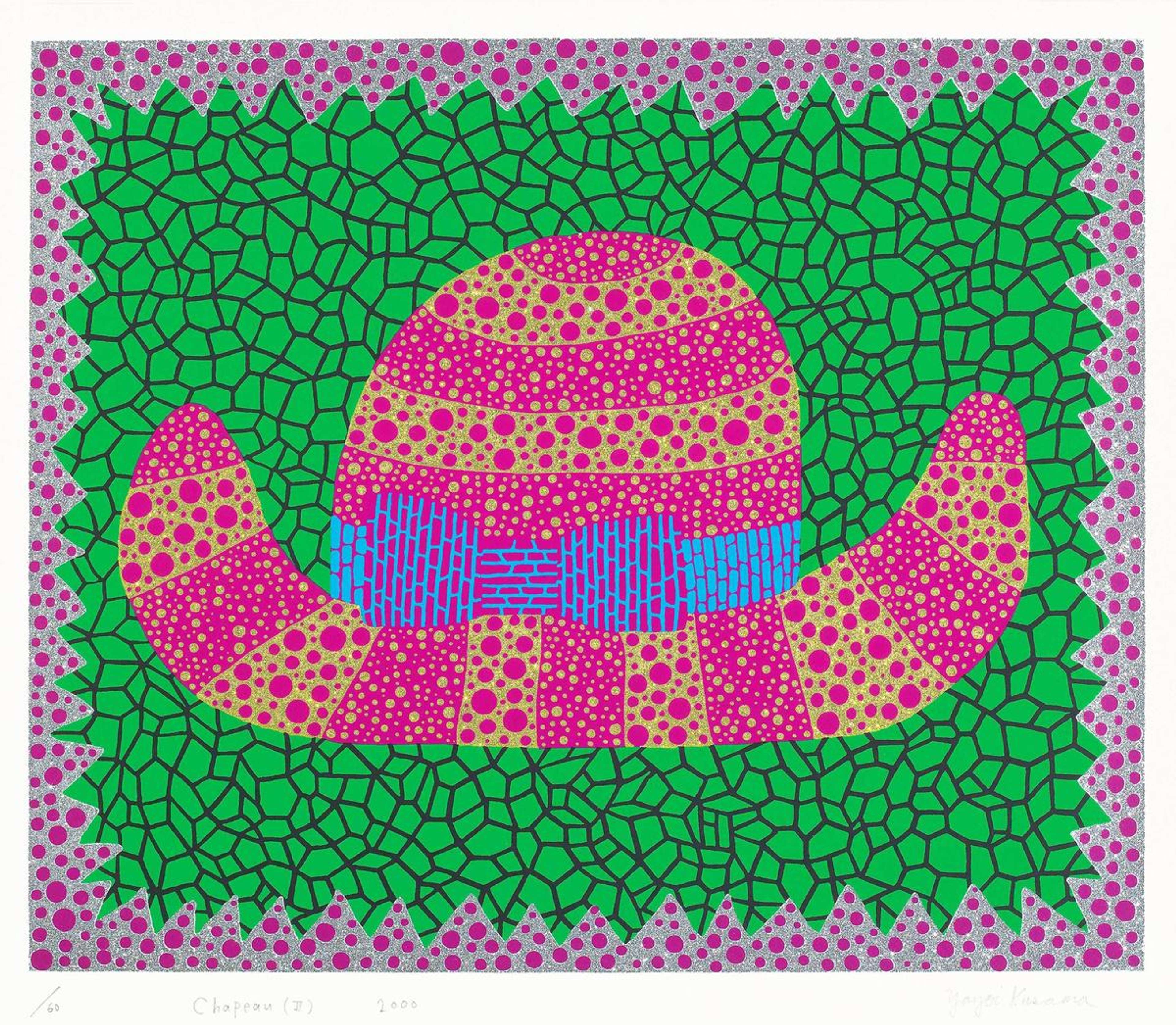
In Shoes, Kusama’s transformation of an ordinary accessory into a charged symbol aligns her with surrealist predecessors such as Meret Oppenheim, Salvador Dalí, and René Magritte, who each used familiar objects to explore the psyche and the strangeness of everyday life. By isolating the shoe and covering it with repetitive patterns, Kusama strips the item of its utility and reinvents it as a symbol of identity, fantasy, and psychological projection. These surreal qualities echo her lived experience of mental illness, obsession, and femininity, revealing how fashion can become a transformative tool for reimagining the self and distorting the familiar.