
Because while the auction houses unquestionably delivered – through tightly curated private collections, careful estimate management, and genuinely innovative sale formats – any suggestion that “the market is back” oversimplifies what’s really happening. What November actually revealed is a market that has been quietly reorganising itself for 18 months: recalibrating how buyers make decisions, what motivates them, and where competition now concentrates.
So what did this November show that last year didn’t – beyond Klimt’s and Kahlo’s astonishing new records, Cattelan’s gold toilet, and Phillips’ literal “Out of This World” fossil? It revealed where collectors are willing to commit and why. Activity broadened across mediums with a clear internal logic. And crucially, the day sales – the purest barometer of real depth – delivered outstanding results for blue chip prints and multiples, especially Hockney and Lichtenstein, both on track for record years.
For my fellow data-minded individuals, here are the numbers that shaped the week (based on my calculations, excluding Impressionist and Works on Paper sales):
$1.79bn – total hammer across evening + day Post-War, Contemporary & Modern sales (strongest in three years)
$2.2bn – total season value including Impressionist sales (PiEx)
+66% – year-on-year hammer growth
+75% – increase in average lot value (despite fewer lots: 1,450 vs 1,535 in 2024)
87% – sell-through rate across the houses
18 – total sales this season, including four private collections and Phillips’ inaugural Out of This World sale
6 white-glove sales:
Sotheby’s Lauder Evening & Day (private collection)
Sotheby’s Pritzker / Exquisite Corpus Evening & Day (private collection)
Sotheby’s Modern Evening
$815.8m – private collection hammer total (≈45% of all November sales)
$216.2m – combined day sales hammer (≈12% of all November sales)
Headline Records:
Gustav Klimt, Portrait of Elisabeth Lederer – $236.6m
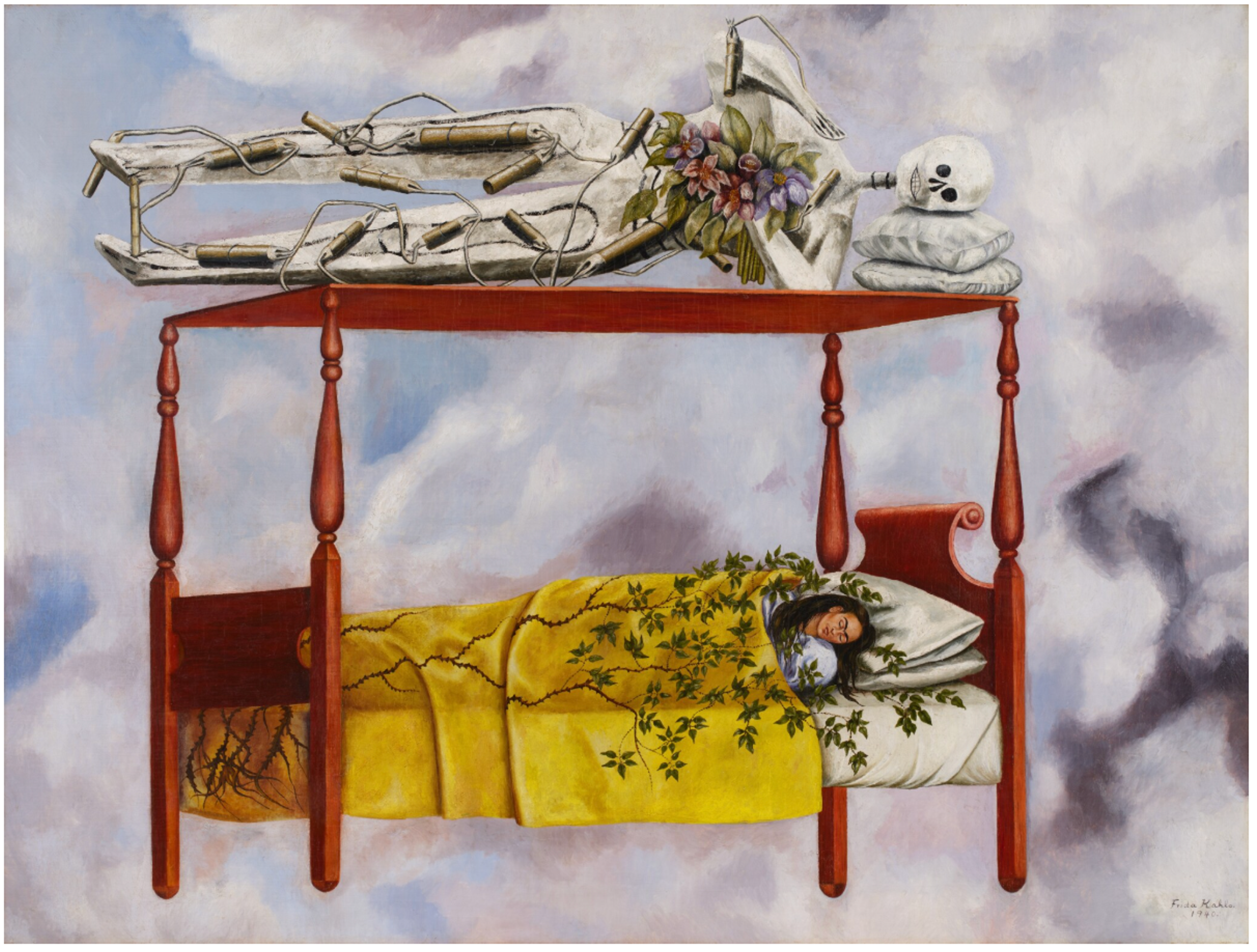
Frida Kahlo, El sueño (La cama) – $54.6m
What Did The November Sales Reveal About Market Strength?
The Day Sales: The Real Test of Confidence
Sotheby’s tested the depth of demand for Hockney’s Arrival of Spring collection by offering a second group of prints from the same private collection only weeks after the dedicated October sale in London, which had already achieved a white-glove £4.8 million at the hammer. When additional works resurfaced in the November Contemporary Day Sale, a move that could risk buyer fatigue, instead proved created an unusually clean read on strong appetite. All eight lots offered beat expectations, with 25th of April and 19th of May leading at $762,000 (with fees).
What was most interesting wasn’t just the records, number, or enthusiasm for Hockney, but how quickly the “right calibre” of artwork – imagery, medium, artist, brand, provenance and timing – can move a print collection drastically up the ladder in price valuation overnight.
A similar pattern shaped Roy Lichtenstein’s print market throughout the year. Sotheby’s rollout of works from the artist’s personal collection began in last year's November sales, continued through May in New York, and peaked with the dedicated September sale achieving a white-glove $21.6 million. But Christie’s November day sale offered an important distinction where momentum carried beyond provenance-driven material. Nude With Blue Hair (State I) achieved just over $1 million (with fees), despite lacking the artist’s personal provenance.
I still categorise the middle market as the $500,000–$1 million band, but Hockney’s Arrival of Spring works are now pushing its upper edge, and Lichtenstein’s Nudes collection has already surpassed it. These prints have reset expectations for what constitutes “high value” within editioned works – confidently entering territory once reserved for categories priced above individual prints. For context: Arrival of Spring average values now sit at £255,000, and the Nudes collection at £299,000, representing 2.4x and 1.6x increases (respectively) since 2023.
Klimt Versus Kahlo: The Trophy Lots That Anchored the Season
The headline lot of the season came from Sotheby’s Leonard A. Lauder Collection, one of four white-glove results for the house. Gustav Klimt’s Portrait of Elisabeth Lederer, fresh to market and carrying unmatched provenance, achieved $236.6 million after a 20-minute bidding battle. It is now Klimt’s most valuable work and the second-highest price ever achieved at auction. Sales like these don’t simply lift totals; they anchor them. Nearly a quarter of Sotheby’s entire week came from this single work.
In a separate sale, another win emerged from Sotheby’s Exquisite Corpus Evening Sale, which also achieved white-glove results across day and evening presentations. Frida Kahlo’s El sueño (La cama), surpassed its $40 million estimate and achieved $56.4 million (with fees), setting a new record for Kahlo and a female artist at auction. The UBS Art Basel Survey highlights both women artists and collectors as the fastest-growing forces in the market. While still miles away from the record prices achieved for male artists, Kahlo’s achievement was a historic result and a symbolic achievement – it was a cultural realignment, showing demand materialising at price levels (albeit slowly) that have long excluded women.
The New Collector & The New Object: Cattelan’s Toilet and Phillips’ Triceratops
While the season’s headline trophies came from painting, two unconventional lots – Maurizio Cattelan’s America and Phillips’ juvenile Triceratops skeleton, Cera – revealed something far more telling about where collector appetite is expanding.
At Sotheby’s, Cattelan’s America achieved $12.1 million, doubling the price realised for his banana Comedian last year. Reports of muted bidding may be accurate, but the significance lies elsewhere: America generated cultural currency. It showed how conceptual works with built-in notoriety can animate a sales season, creating oxygen around competing narratives.
Phillips, however, delivered the season’s boldest innovation. Cera, the first juvenile Triceratops specimen offered at auction in the US, anchored their inaugural Out of This World sale. Far from a novelty, the piece ignited real demand – 14 bidders, hammering above estimate at $4.3 million. Instead of hinging solely on spectacle; Phillips showed strategic alignment with a collector base moving toward interdisciplinary acquisitions by presenting a dedicated sale to natural history, scientific objects, design, and especially, narrative-rich materials.
This aligns directly with the UBS Art Basel survey findings, which show collectors increasingly buying into “non-traditional” categories. Phillips read the room – and it worked. They managed to combine spectacle with genuine ingenuity, partnering with a natural history specialist to secure consignments and shape the sale. I’d bet this won’t be the last time we see strategies that reflect this rising cross-category confidence.
What Comes Next: Reading the Market Heading into 2026
November 2025 revealed a market that has quietly reorganised itself. The sales offered a clearer, more coherent read on buyer behaviour than we’ve seen in several seasons. Yes, there were still anomalies and guarantees in the mix, and the blockbuster Klimt and Kahlo undeniably shaped confidence, but what stood out was the breadth and internal logic of what performed. Cattelan’s America (love it or hate it) injected cultural narrative into Sotheby’s week, while Phillips’ fossil-led Out of This World sale demonstrated genuine innovation. From a juvenile Triceratops to space-terrestrial and geological objects, Phillips proved that when the storytelling is strong, buyers will show up across categories, price bands, and channels.
Another key takeaway – and one that matters for 2026 – is that auction houses can still consign. Private sales are undoubtedly on the rise, and part of that trend is structural: many of the season’s most important estate-driven offerings were inherently tied to questions of timing, inheritance, or death. But the scale of what the next generation is set to inherit is unprecedented, and it won’t just be paintings. It will be objects, collections, assemblages – material that spans categories. It would not be surprising to see a more diverse slate of private collections hitting the block in the years ahead. And importantly, despite a 5% reduction in total lot count this November, value rose sharply. That is a clear indicator: when the material is right, there are buyers.
As we head into 2026, I’m less focused on whether totals inch higher (though given this season – and the extraordinary momentum in the Lichtenstein and Hockney print markets – it would not surprise me if 2025 edges past 2024). The more meaningful question is which segments will set the new pace. Every indicator points to a collector base that is more hybrid, more research-driven, and more narrative-oriented – increasingly willing to assign value outside the traditional canon and confident acting on it. That’s the momentum to watch – and the momentum most likely to define the opening months of 2026.