Soup
Can
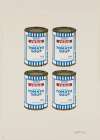
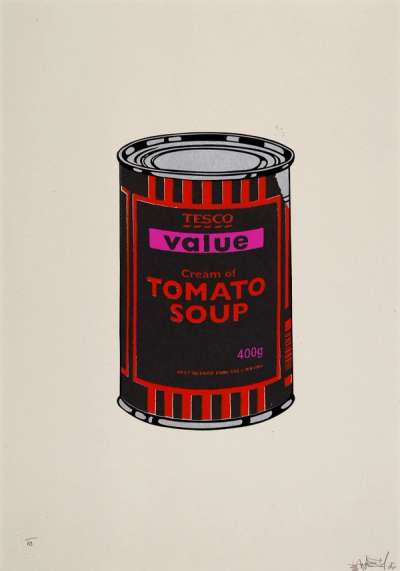
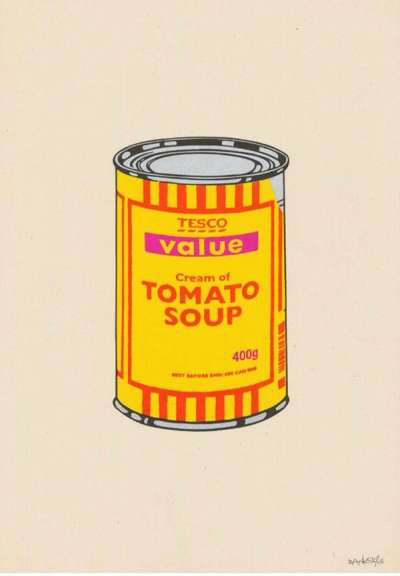
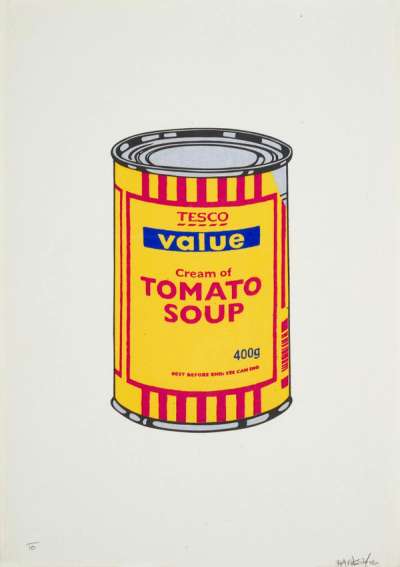
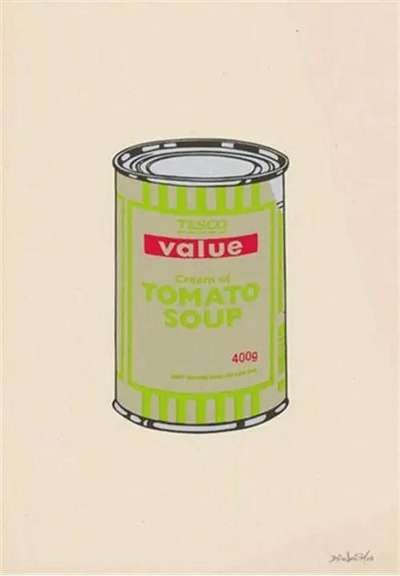
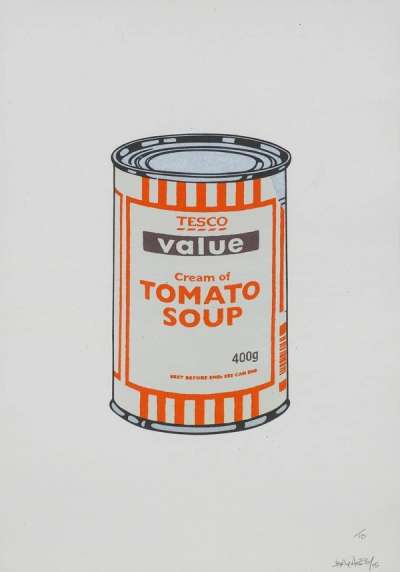
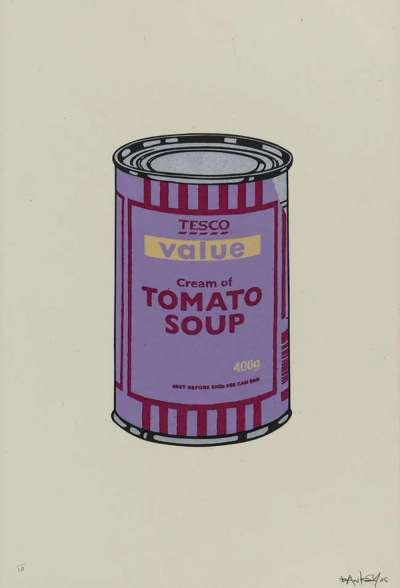
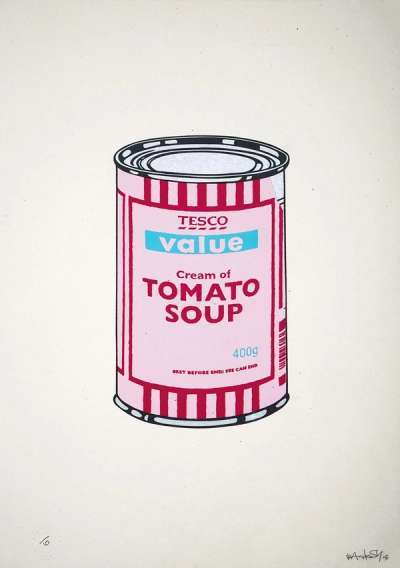
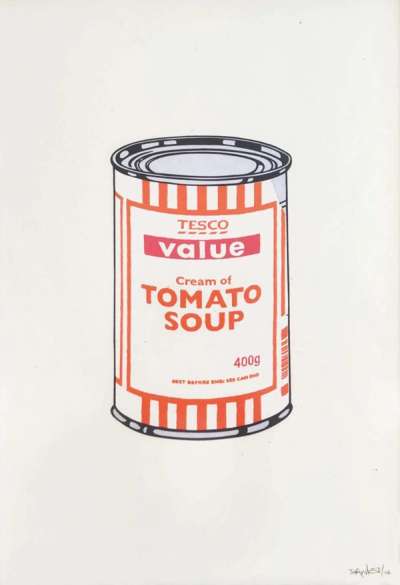
This series by Banksy reimagines Andy Warhol's Soup Cans for the disillusioned contemporary viewer. Depicting a Tesco Value soup, he implicitly mocks the corporations that drive wealth inequality, and criticises the outcome of the consumerism Warhol championed.
Banksy Soup Can For sale
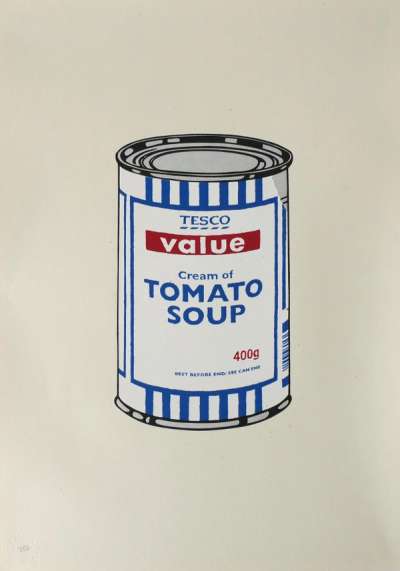
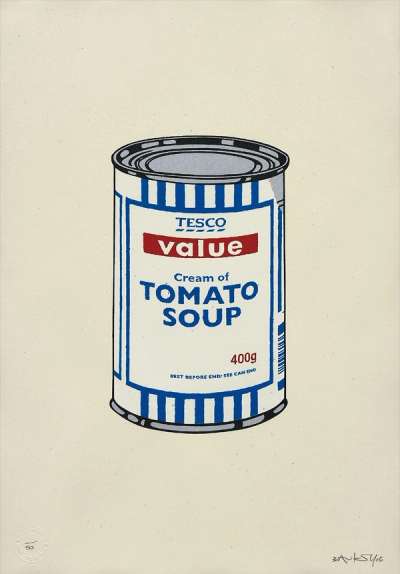
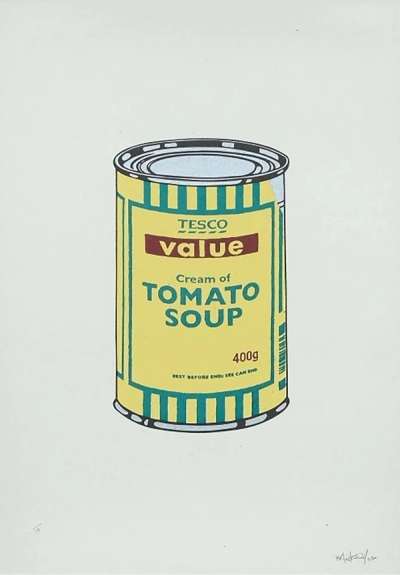
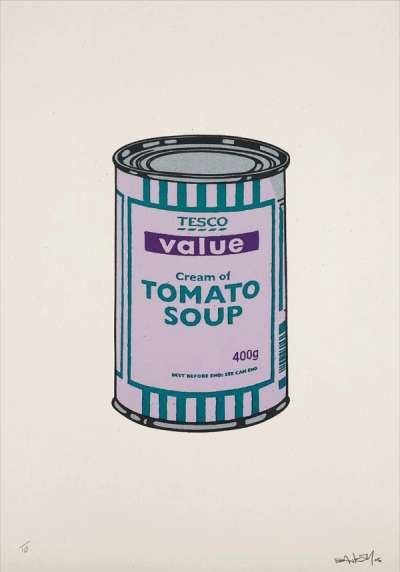
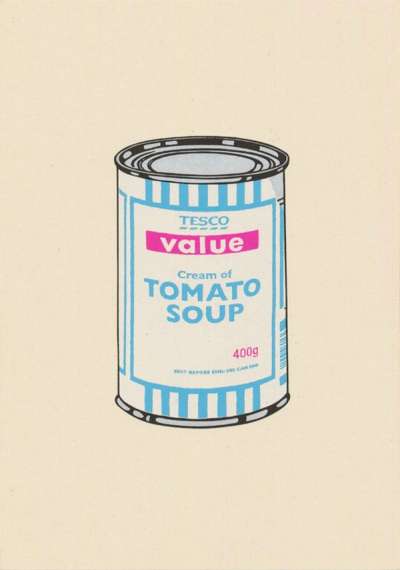
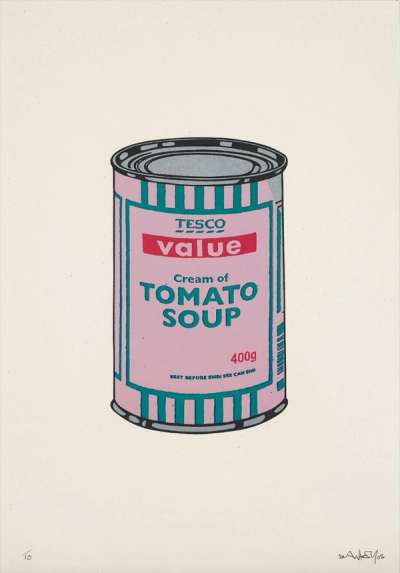
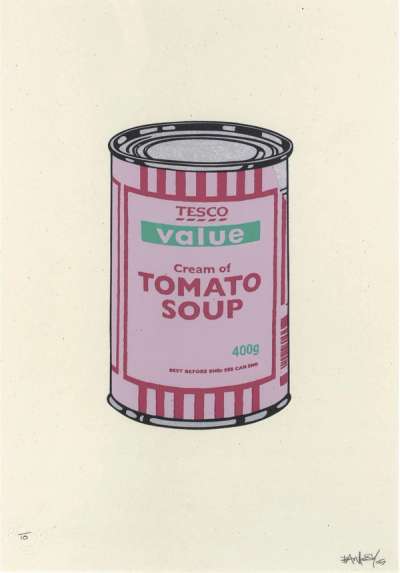
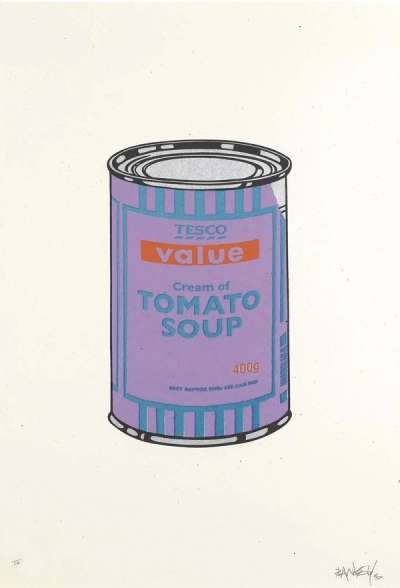
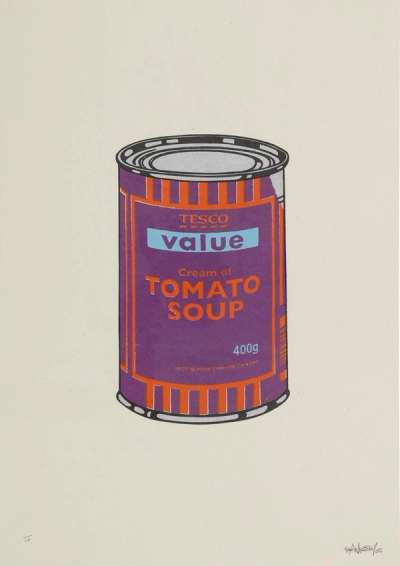
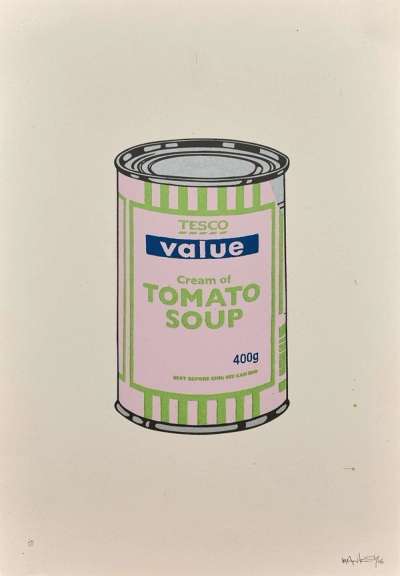
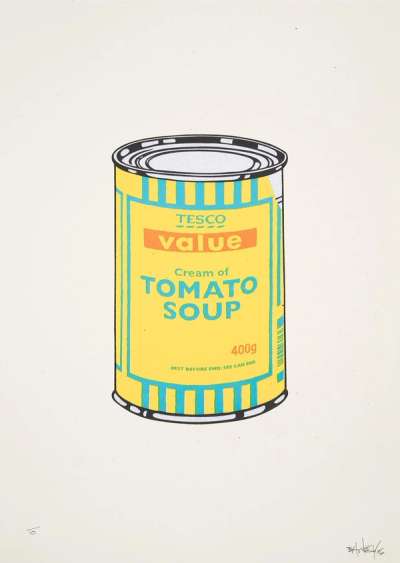
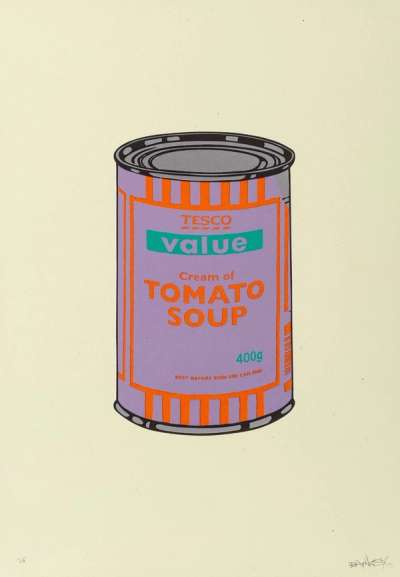
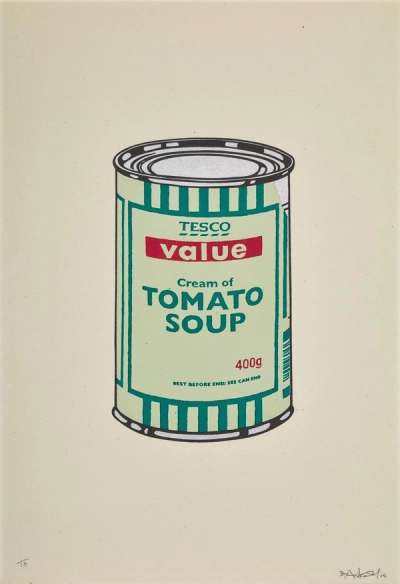
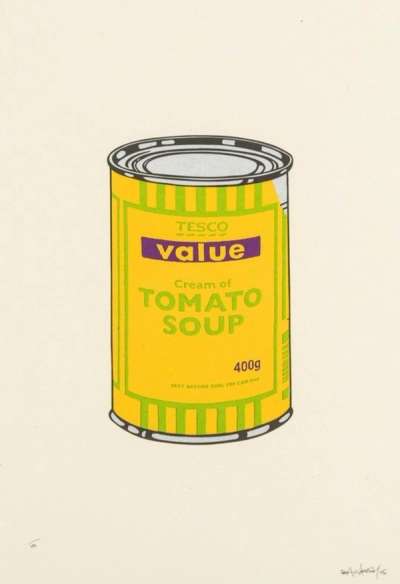
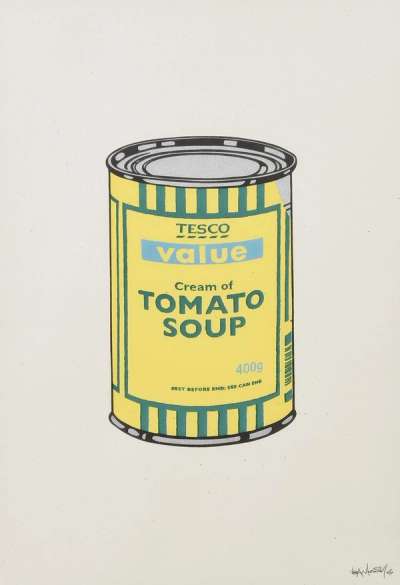
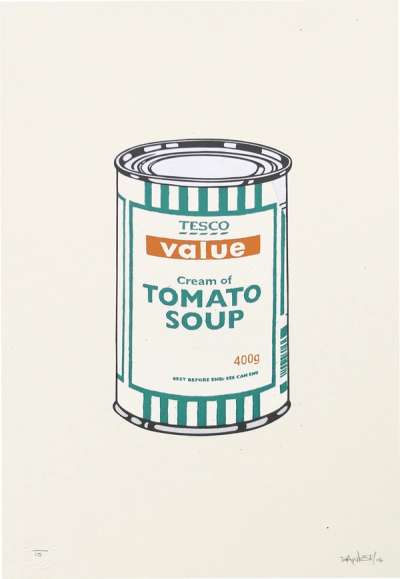
Soup Can Value (5 Years)
Works from the Soup Can series by Banksy have a strong market value presence, with 157 auction appearances. Top performing works have achieved standout auction results, with peak hammer prices of £113977. Over the past 12 months, average values across the series have ranged from £10000 to £48000. The series shows an average annual growth rate of 6.77%.
Soup Can Market value
Auction Results
| Artwork | Auction Date | Auction House | Return to Seller | Hammer Price | Buyer Paid |
|---|---|---|---|---|---|
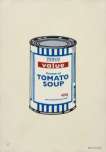 Soup Can Banksy Signed Print | 31 Mar 2026 | Christie's London | £17,000 | £20,000 | £28,000 |
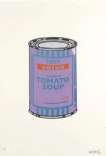 Soup Can (violet, blue and tan) Banksy Signed Print | 30 Sept 2025 | Christie's London | £38,250 | £45,000 | £60,000 |
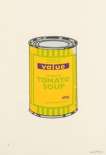 Soup Can (banana, lime and purple) Banksy Signed Print | 30 Sept 2025 | Christie's London | £38,250 | £45,000 | £60,000 |
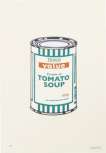 Soup Can (white, emerald and tan) Banksy Signed Print | 25 Jun 2025 | Bonhams New Bond Street | £17,000 | £20,000 | £26,000 |
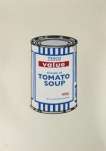 Soup Can Banksy Unsigned Print | 30 Oct 2024 | Tate Ward Auctions | £10,200 | £12,000 | £16,000 |
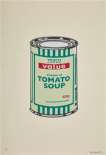 Soup Can (mint, emerald and cherry) Banksy Signed Print | 28 Sept 2023 | Christie's London | £29,750 | £35,000 | £45,000 |
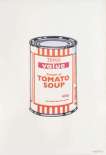 Soup Can (white, orange and raspberry) Banksy Signed Print | 30 Aug 2023 | Forum Auctions London | £34,000 | £40,000 | £50,000 |
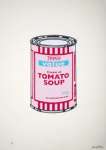 Soup Can (pink, cherry and blue) Banksy Signed Print | 29 Mar 2023 | Tate Ward Auctions | £22,100 | £26,000 | £35,000 |
Sell Your Art
with Us
with Us
Join Our Network of Collectors. Buy, Sell and Track Demand
Meaning & Analysis
Banksy’s 2005 Soup Can, an obvious nod to Andy Warhol’s Pop prints, depicts the now defunct range of Tesco cream of tomato soup. Contrary to Warhol’s homage to the endlessly reproduced images of consumer society, here Banksy offers a biting criticism of a supermarket giant that has come to dominate the contemporary UK marketplace.
This print is closely related to the 2006 edition, Soup Can Quad, which depicts four cans of the same flavour soup – in contrast to Warhol’s range of 32 flavours. A thinly-veiled reference to the King of Pop Art, the print seeks to build an icon that references the stark reality - and monotony - of surviving on a tight budget. Banksy's cans feature gold tops - a motif that draws our attention to the wealth these commodities can bring to a select number of shareholders.
Printed in three colourways on a cream background, the edition evokes the nostalgic 'vintage' aesthetic now widely called upon by supermarkets, such as Tesco, as a means to market and sell British-made products. This work is not the first of Banksy's prints to criticise the supermarket chain Tesco: his mural Very Little Helps references the Tesco slogan ‘Every Little Helps,’ is considered to be one of the most famous murals in London. It remains preserved in its original location, now covered by Perspex.
Banksy's original Soup Can screenprint was released in 2005 and published by Pictures on Walls. The artist's soup cans are now considered to be among his most iconic and recognisable artworks. A total edition of 300 (50 signed and 250 Soup Can unsigned prints) was issued for this variation of the work. Soup Can was later released in 28 colour variations with 10 signed prints of each colour, resulting in 280 signed prints in total.