

Understanding Bridget Riley’s Print Practice
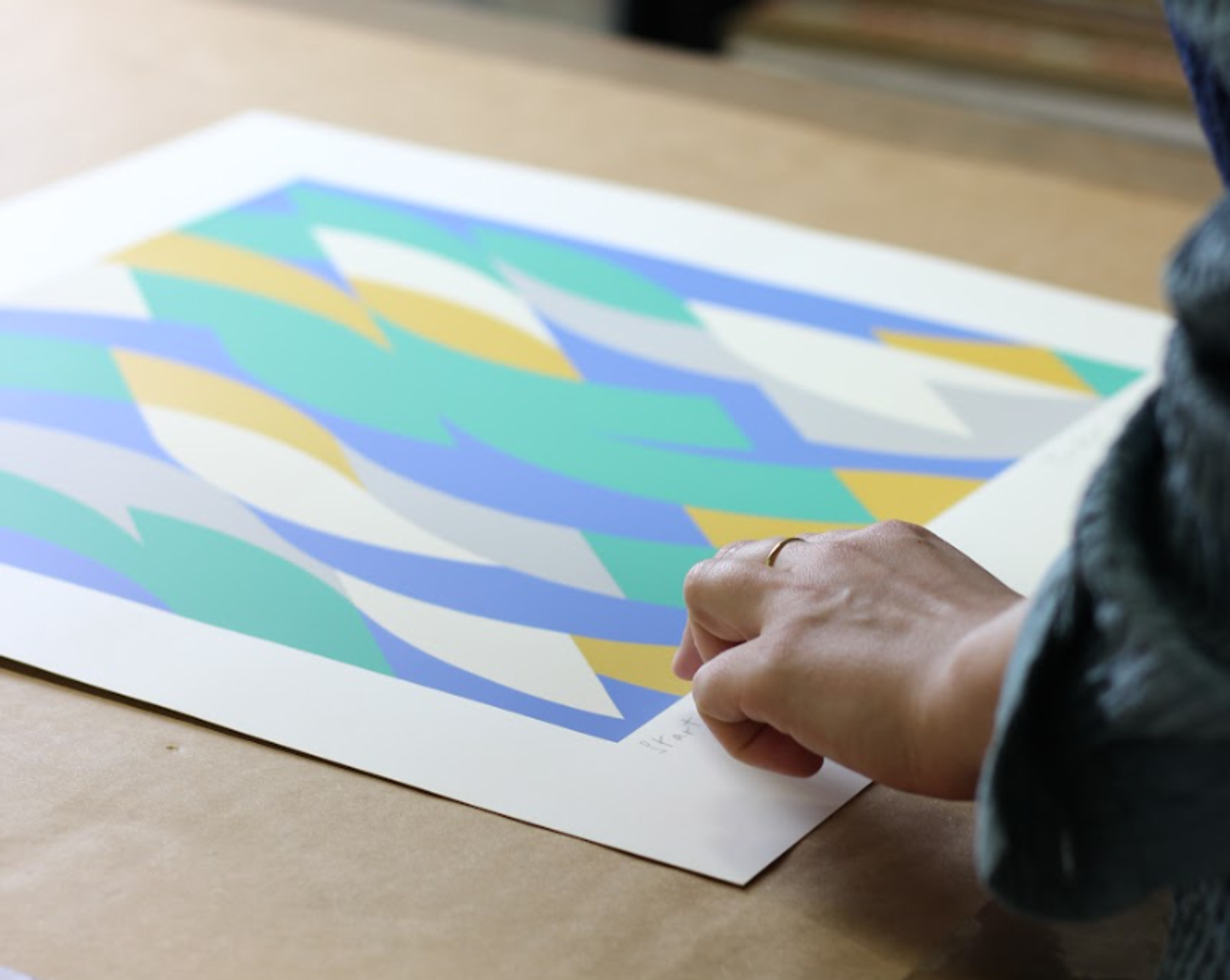
Riley has engaged deeply and deliberately with printmaking at key moments throughout her career. Her connection to printmaking began in childhood, through her father’s work as a printer. This ingrained respect for the medium translated into a highly developed printmaking practice as an artist. Riley made her first screenprint in 1962 and has consistently treated prints as independent artworks within her wider practice. Each print edition is conceived with the same conceptual precision as her paintings, often exploring optical effects and colour combinations unique to print format.
Riley’s process is defined by close collaboration with master printers and she has worked with specialist print studios to achieve the precision she demands. In the 1960s and 1970s, Riley partnered with Kelpra Studio in London, founded by Chris Prater, where she would supervise printing sessions, watching multiple impressions run and making minute adjustments until the image was exactly right. This hands-on approach pushed the technical limits of screenprinting, with Riley’s early series titled Nineteen Greys (1968) frequently cited as requiring exceptionally fine control of tonal variation across the edition of 75. From the 1980s onward, Riley continued her printmaking with Artizan Editions under Sally Gimson, who printed nearly 80% of Riley’s prints from 1981 to 2012.
Print Techniques Used in Riley Prints
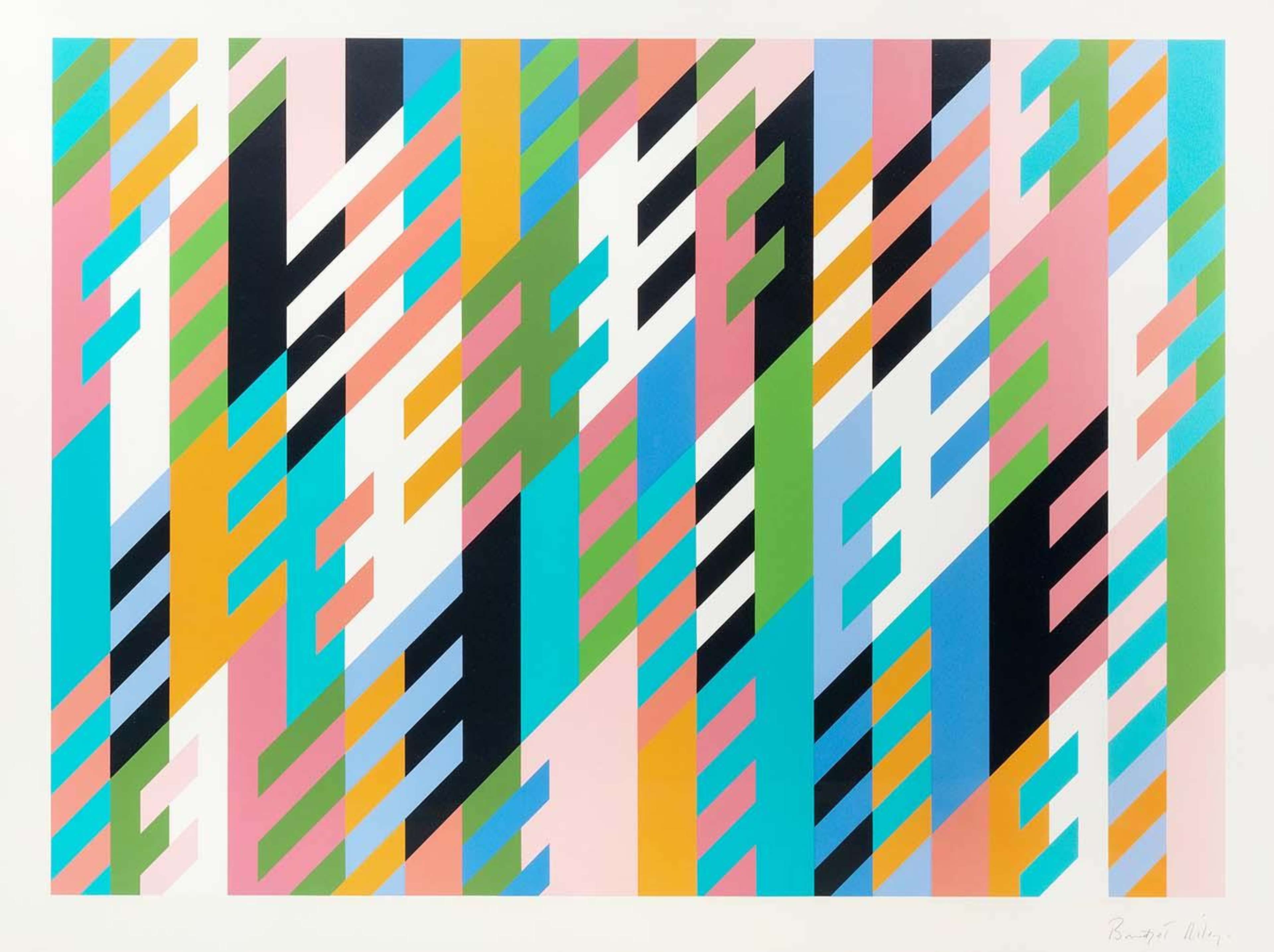
Riley has worked primarily in screenprint since 1962, drawn to the medium’s ability to deliver the sharp edges and flat colour essential to her Op-Art designs. Unlike other print techniques, screenprinting offers precise control over form and colour – qualities that align with Riley’s demand for clarity, consistency and visual impact.
While screenprint dominates Riley’s print practice, occasional confusion can arise from related material produced alongside her editions. Dedication, Visual Arts Building Albion College (1966) is itself a screenprint created to mark the opening of the college’s Visual Arts Building, but promotional posters connected to the same event were produced using offset lithography. Any works attributed to Riley in techniques outside her established print practice should be checked carefully against Riley’s catalogue raisonné.
Are Riley Prints Signed by the Artist?
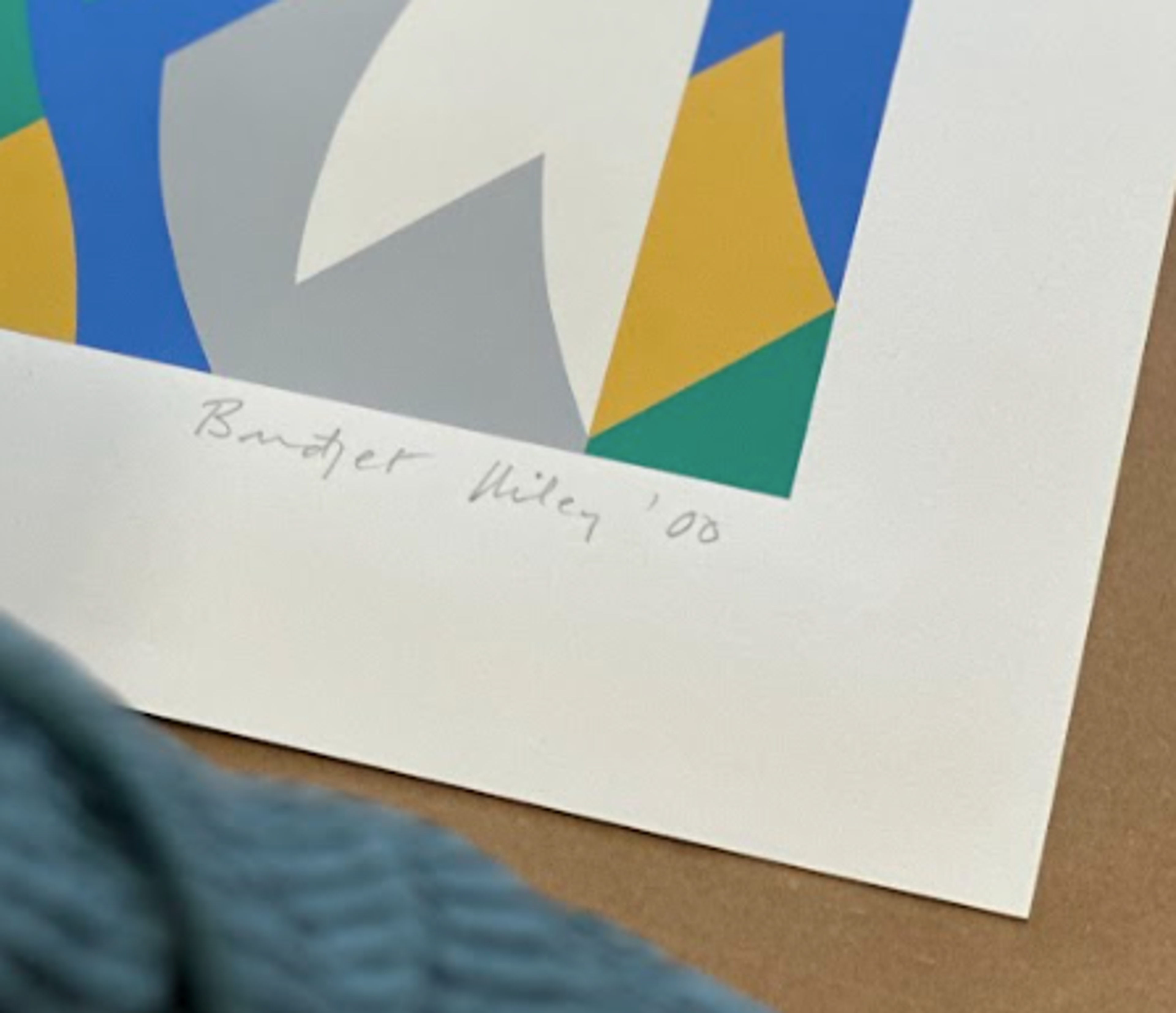
Many authentic Riley prints are hand-signed by the artist, typically in pencil in the lower margin alongside the edition number. While a signature alone doesn't confirm authenticity, it can be a key indicator, especially when its placement and style align with Riley’s known signing practices. For authentication, ensure the signature matches her documented autograph and appears where expected.
Edition Numbers and Formats on Riley Prints
Riley’s limited edition prints are carefully structured, typically numbered in pencil using the standard fraction format (e.g. 25/75). Edition sizes vary by project: some are 75 for major suites, while other individual works, such as Fold (2004), are issued in larger editions. Edition details, including total numbers and formats, are documented in Riley’s catalogue raisonné and should be cross-referenced during authentication.
Any edition number that appears inconsistent in format, placement or handwriting warrants closer scrutiny. Some prints may be marked as artist’s proofs or printer’s proofs, but these are limited in number and should correspond to a documented edition. Riley’s editions are usually uniform and deliberate, so irregularities in numbering, inconsistency within a series or undocumented edition sizes are something to be careful of.
Materials and Colours Used In Riley Prints
Materials and print quality are helpful indicators when evaluating the authenticity of a Riley print. Her original prints are produced on high-quality paper stock appropriate for fine art editions. From the 1960s onward, Riley often used high-quality wove papers typical of fine art screenprinting, including papers such as BFK Rives and Saunders, which are valued for their durability and printmaking properties. In some cases, she employed more unconventional materials: her early Fragment series (1965), for instance, was screenprinted on Plexiglas (Perspex) rather than paper, using the rigid, reflective acrylic surface to enhance the optical effect. Matching the materials of a print to those documented for the edition is a key step in the authentication process.
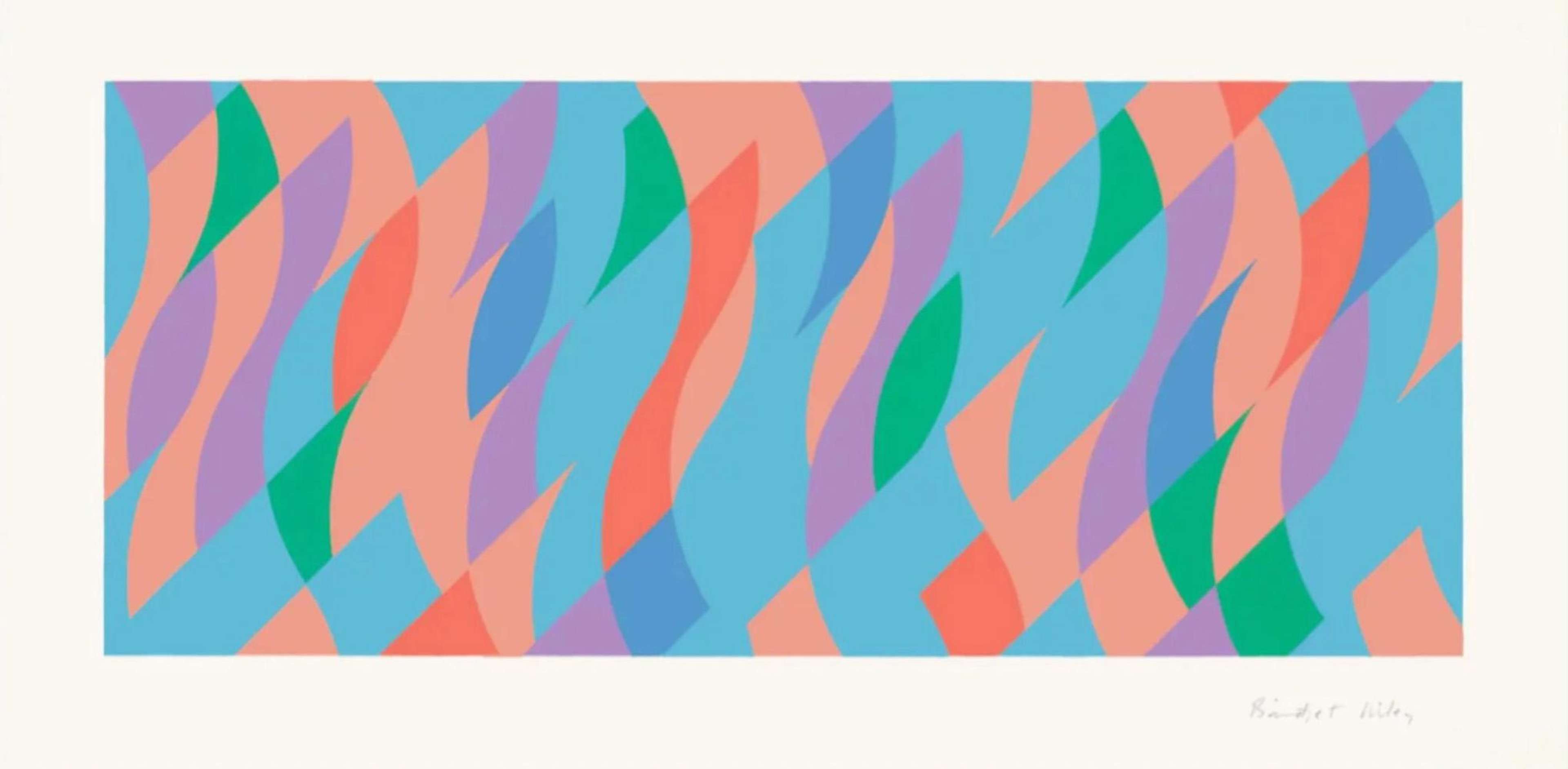
Riley was highly precise about her colour choices, carefully adjusting hue and contrast to create her optical effects. Her studio and printers worked meticulously to ensure every print in an edition matched. If a print appears unusually bright, faded, or different from known examples, it’s important to assess whether it’s simply aged or potentially inauthentic. Early works may show natural signs of aging, but the overall colour palette should still match the edition.
Publishers and Print Studios Associated With Bridget Riley
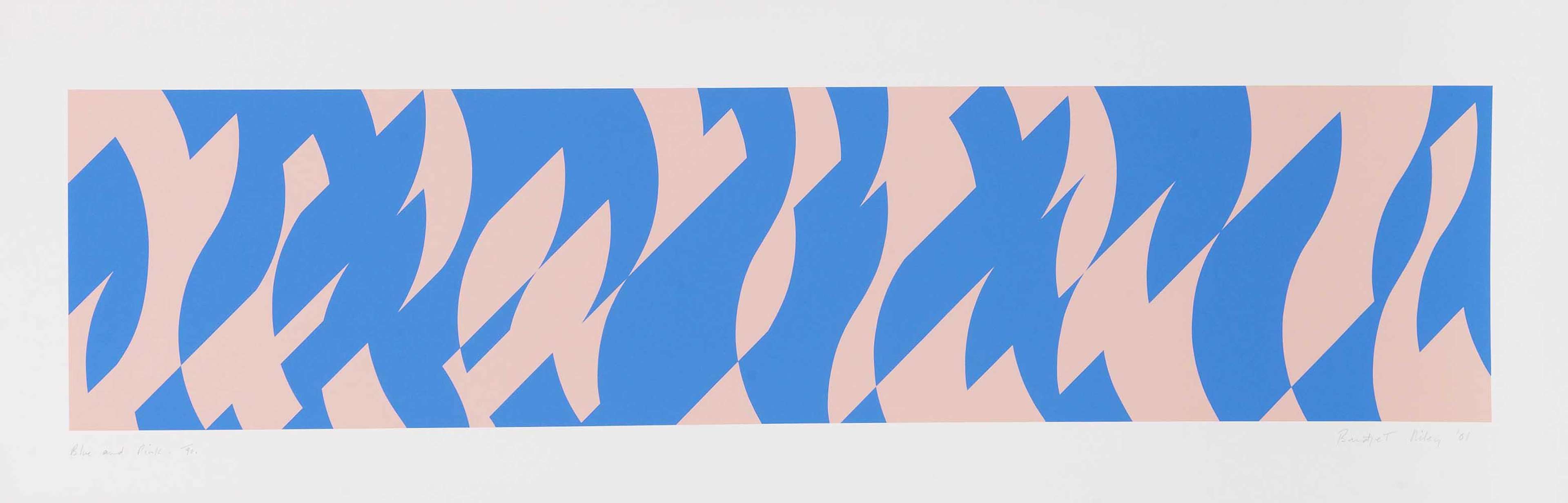
Riley has consistently worked with a small number of trusted studios and publishers, and these associations are well documented. In the 1960s and 1970s, one of her most important early collaborators was Kelpra Studio in London, led by Chris Prater. Kelpra printed many of Riley’s early screenprints, including Nineteen Greys and works from the Fragment period. A genuine Riley print from this era will often reference Kelpra in its provenance or production history. From the early 1980s to 2012, Riley worked extensively with Artizan Editions, where Sally Gimson and her team printed the majority of her later works, including Blue And Pink (2001) and Rose Rose (2011).
Riley’s editions have been published by a number of reputable galleries and publishers throughout her career. Among them are Pace Editions (New York), which published the Dominance series (1977), and Cristea Roberts Gallery, which has worked closely with Riley’s print oeuvre, presenting works from the artist’s archive and publishing major surveys of her graphic work. Riley’s work has also been exhibited and supported by influential commercial galleries, including Karsten Schubert, whose London gallery played a significant role in presenting her work to collectors and institutions.
Provenance and Ownership History of Riley Prints
Reliable provenance ideally includes documentation such as a gallery invoice, original purchase receipt, or inclusion in an exhibition or catalogue raisonné. Auction houses like Sotheby’s or Christie’s usually provide condition reports and sale histories that contribute to a clear provenance chain. The Bridget Riley Art Foundation does not offer authentication services to the public. One of the best references for Riley's prints remains the catalogue raisonné, which documents every authorised edition. If a print’s title, edition, or technical details do not match a listed entry, or if no provenance can be traced to a recognised dealer or sale, further scrutiny is essential.
Condition Issues That Affect Riley Print Authentication
While condition is most often associated with a print’s market value, it can also play a role in the authentication process. Signs of age or damage, such as fading or creasing, can obscure or alter key indicators like colour or signature. A print may still be authentic, but careful assessment is required to distinguish natural ageing from irregularities. Conversely, a print that appears exceptionally pristine may warrant closer scrutiny if it dates from the 1960s. Some early Riley prints do survive in excellent condition, but authentic works from this period can show mild signs of ageing. Authenticators assess whether a print’s condition aligns with its stated production date and edition history. While condition alone does not determine authenticity, it can influence how confidently materials, colours, and production details are evaluated.
Seek Expert Authentication for Riley Prints
If you are looking for advice to authenticate your Bridget Riley print, get in touch with our team of specialists.
Request a valuation for your Riley print today.