Big Celia Print #1
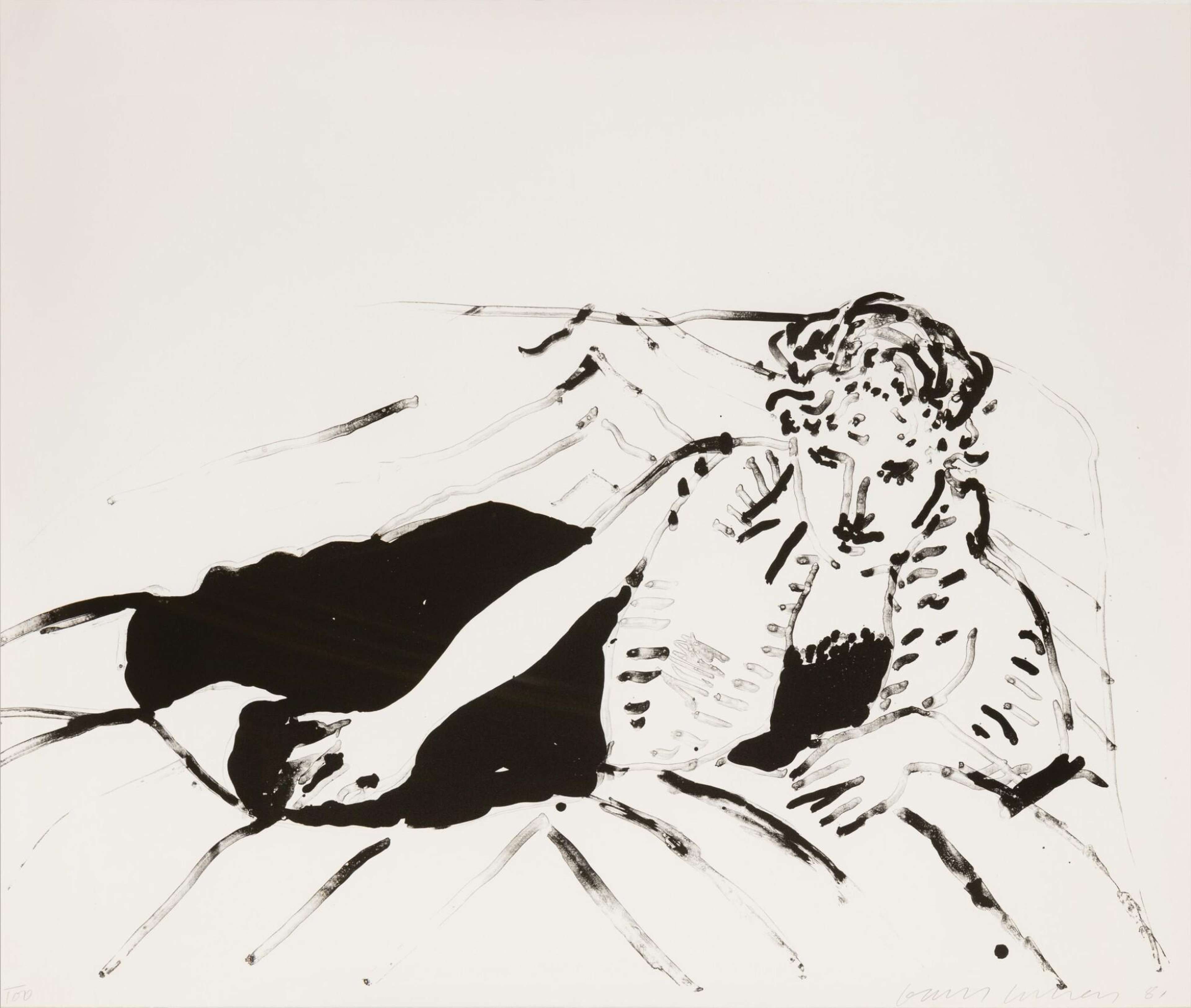
Big Celia Print #1
Signed Print
David Hockney
120 x 144cm, Edition of 100, Lithograph, 1981
£13,500-£20,000
$25,000-$40,000 Market Value Indicator
$25,000-$40,000 Market Value Indicator
¥120,000-¥180,000 Market Value Indicator
€16,000-€23,000 Market Value Indicator
$140,000-$210,000 Market Value Indicator
¥2,800,000-¥4,150,000 Market Value Indicator
$18,000-$27,000 Market Value Indicator
There aren't enough data points on this work for a comprehensive result. Please speak to a specialist by making an enquiry.
Track auction value trend
Meaning & Analysis
Big Celia Print #1 (1982) is a signed lithograph print on Arches Cover wove paper by David Hockney depicting his lifelong friend Celia Birtwell. Featuring in over thirty of his prints, the famous textile and fashion designer became the icon of Hockney’s portraits throughout the 1980s. As Hockney drew people who were close to him repeatedly over a long period of time, his works allow the viewer to trace the evolution of his visual language as well as the many dimensions of the sitters’ emotions and feelings.
In the 1960s, when Hockney began his journey as an artist, realistic depictions of human features were considered to be outdated. In this print, Hockney employed a broken contour and used it as economically as possible to render Celia Birtwell’s appearance. Speaking of his belief in the inexhaustible possibilities of portraiture, Hockney has said: ‘They said you couldn’t do portraits anymore. But you can, everything is open now. Portraiture remains infinite.’
Measuring 120.7cm x 143.5cm, the work presents Celia Birtwell enlarged in size, contrasting with the small-scale drawings of friends that make Hockney’s 1976 Gemini G.E.L Portfolio. Dressed in a black skirt and a stripy top, the woman reclines on a bed and creates the impression of looming over the viewer. The thick, black-ink contour outlining the woman’s posture fades and picks up again in an irregular manner. Given its unusual use of a broken line, the print differs from the controlled hand drawings of Celia made in the late 1970s and attests to Hockney’s versatility as an artist who constantly sought new ways of approaching his favourite subjects and themes.