

Why Collect Andy Warhol Prints in 2026?
Warhol’s print market remains one of the most liquid and structurally resilient segments of the contemporary art market. Unlike many blue chip artists whose value concentrates in singular trophy works, Warhol’s editioned prints trade consistently across multiple price tiers and series.
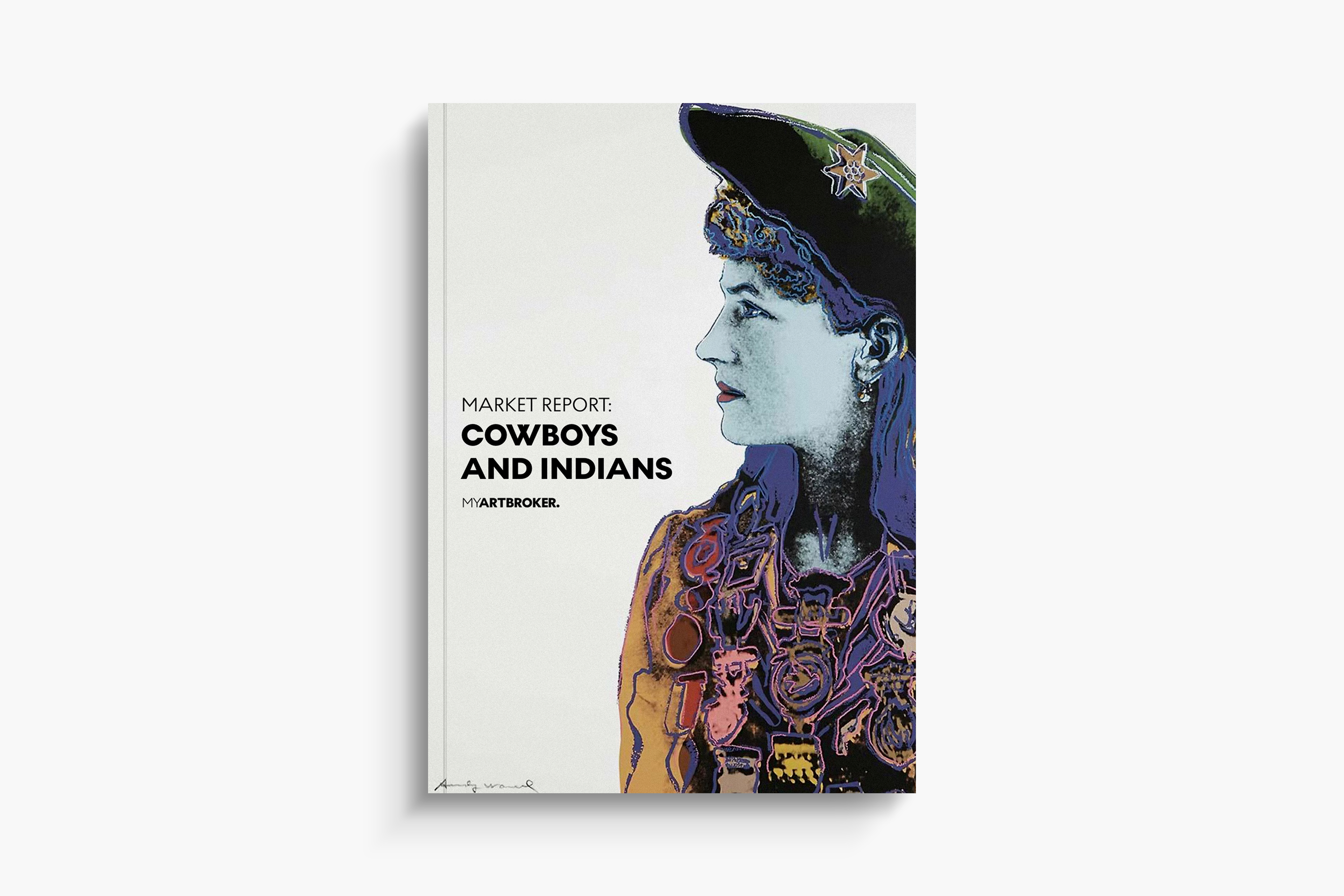
From cultural icons like Marilyn and Mao to narrative portfolios such as Cowboys and Indians and Endangered Species, Warhol’s prints allow collectors to access historically significant imagery at a range of entry points. His work continues to anchor museum exhibitions, institutional programming, and academic scholarship – reinforcing long-term relevance.
For buyers in 2026, Warhol offers three distinct advantages:
- Recognisable global demand
- Deep secondary market liquidity
- Clear differentiation between series and proof types
This combination of cultural authority and active trading makes Warhol prints one of the most accessible entry points into the blue chip segment.
Are Andy Warhol Prints a Good Investment in 2026?
Warhol prints remain one of the most actively traded segments of the blue chip print market, but performance varies meaningfully by series, proof type, and market timing.
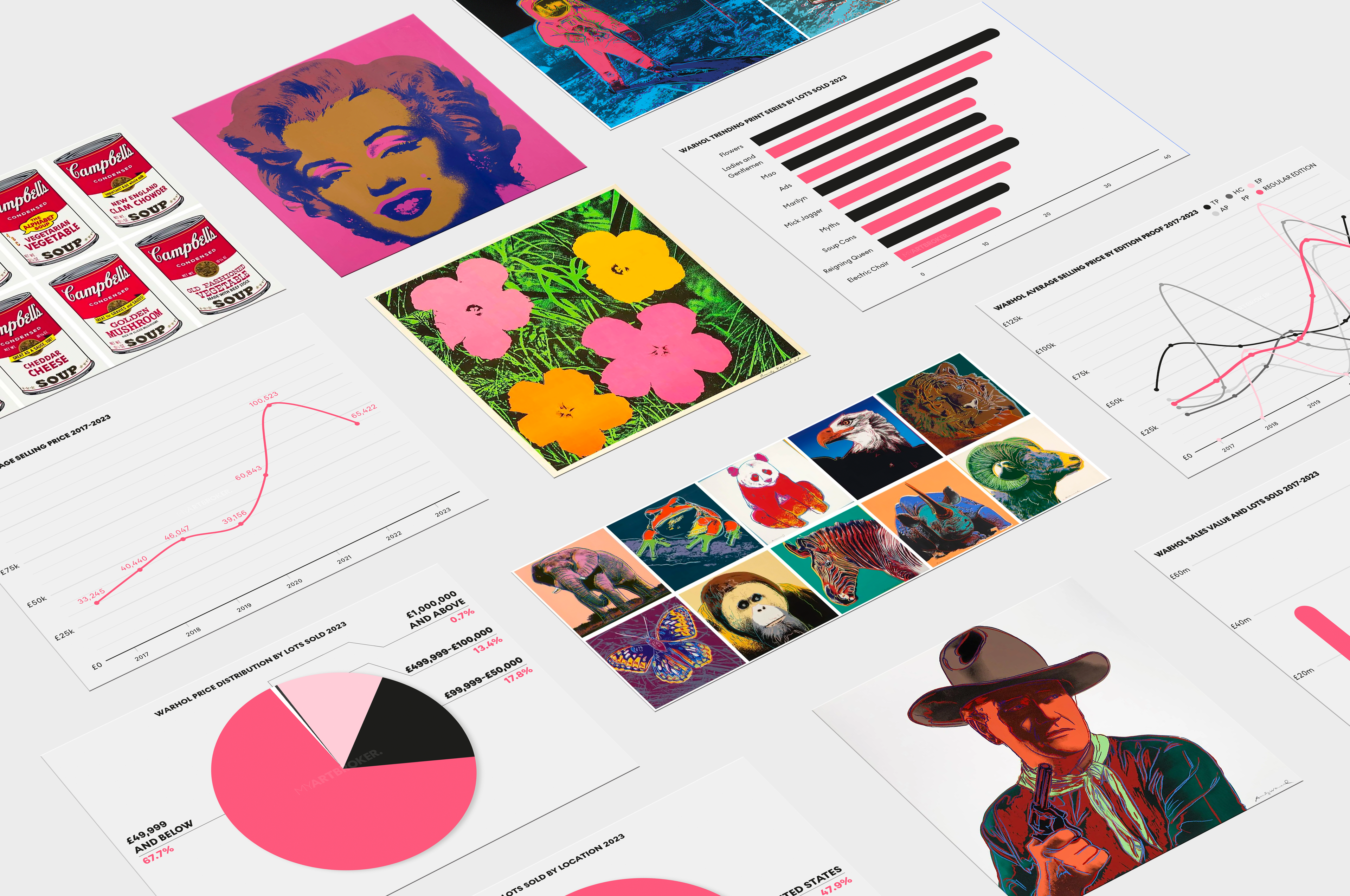
Over the past three years, value concentration has shifted. In 2022, complete sets such as Marilyn, Mick Jagger, and Queen Elizabeth II drove headline totals. In 2023 and 2024, attention moved toward trial proofs (TP), as collectors pursued rarity and colour variation. By 2025 and into 2026, main edition prints have accounted for the majority of public market volume, reflecting both tightening proof supply and sustained demand for signed standard editions.
This evolution highlights an important point for buyers: Warhol’s market does not move uniformly. Certain series – particularly Endangered Species, Myths, and select celebrity portraits – continue to show strong depth, while others trade more opportunistically depending on availability.
Unlike the originals market, where eight-figure works can face narrow buyer pools, Warhol’s print market benefits from broader participation and greater liquidity. That liquidity can moderate volatility but also creates recurring entry points for informed buyers.
For a deeper breakdown of long-term price performance, liquidity metrics, and proof-level behaviour, see our Andy Warhol Investment Guide.
How Much Is an Andy Warhol Print Worth in 2026?
The price of a Warhol print varies significantly depending on series, edition type, colourway, condition, and whether the work forms part of a complete portfolio.
Entry Tier (£5,000–£20,000)
Early illustrated books, lesser-traded subjects, and selected signed prints from larger editions sit within this range. These works provide accessible entry points into the Warhol market but require careful attention to condition and signature authenticity.
Mid-Tier (£20,000–£150,000)
Signed main edition prints from established series typically fall within this bracket. For collectors seeking quintessential and instantly recognisable Warhol imagery, many Flowers editions and Campbell's Soup Cans also trade within the lower to mid-range of this tier, offering an accessible entry point into one of the artist’s most iconic motifs.
Upper Tier (£150,000–£600,000+)
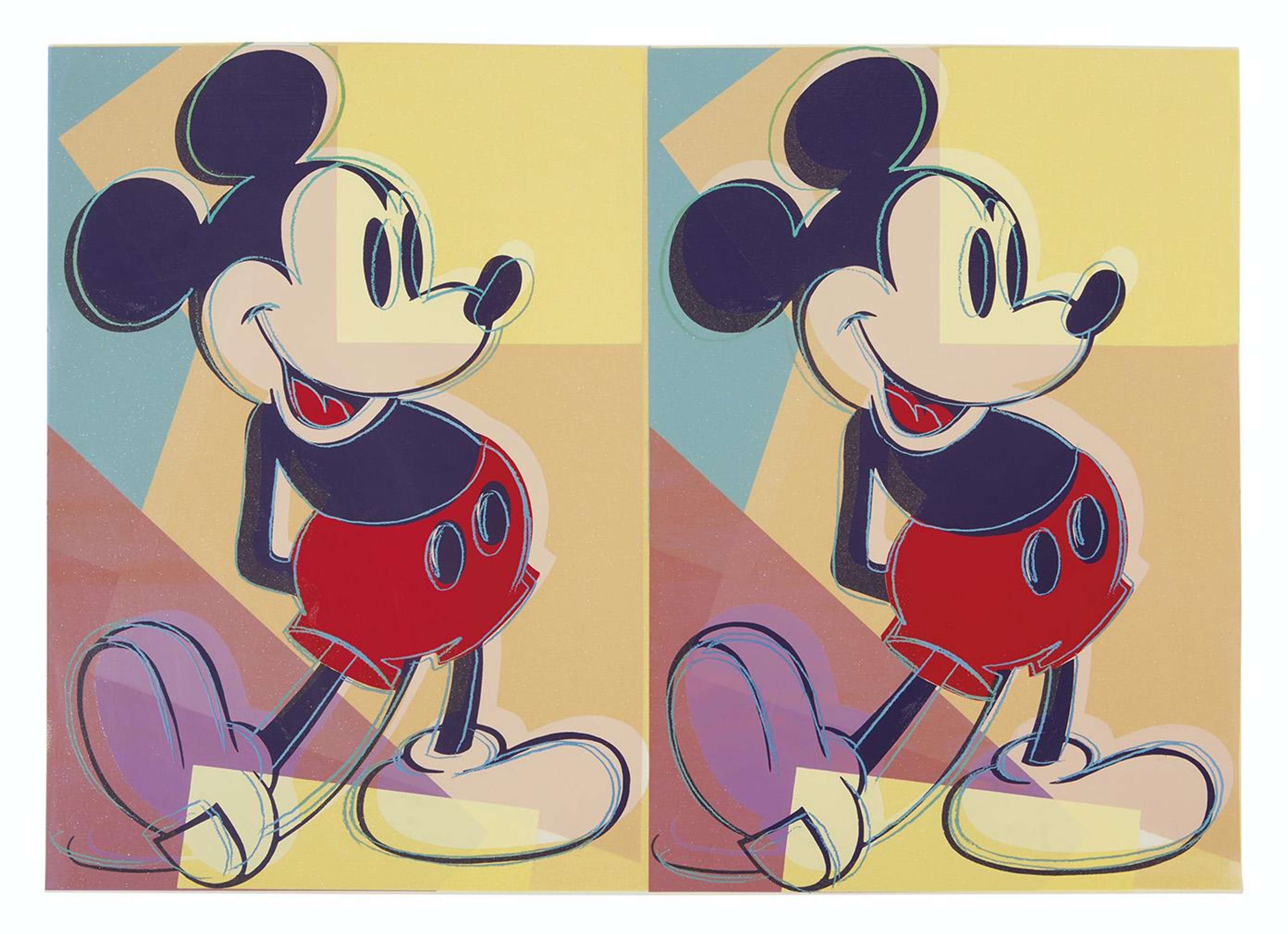
Strong colourways from Moonwalk and Endangered Species collections, and rare works such as Double Mickey Mouse sit here. Pricing in this tier is influenced heavily by colour saturation, provenance, and condition.
Trial Proofs
TPs often command 1.5x to 3x the value of signed main editions due to their rarity and unique colour combinations. However, availability is limited, and many now trade privately rather than publicly. The most expensive TP to sell at auction is a rare Marilyn portrait offered at Sotheby’s in 2023, which achieved £426,000. For a deeper analysis of pricing trends and proof-level performance within this series, see our Andy Warhol Marilyn Market Report.
Complete Sets
Complete portfolios range from under £100,000 for early illustrated works to multi-million-pound results for iconic sets.
Sets can command premiums when the prints share matching edition numbers or is formed of special proofs. Value is also influenced by the number of works in the portfolio, which can range from ten to four or even two prints. The most expensive complete set sold publicly is the ten-print Marilyn portfolio, which achieved over £4 million in 2022.
For buyers, understanding where a specific work sits within this structure – series, proof status, colourway, and supply level – is more important than headline auction totals.
What Determines the Value of an Andy Warhol Print?
Warhol print value is shaped by a combination of structural and aesthetic factors. Understanding these variables helps buyers distinguish between headline results and long-term sustainable pricing.
1. Series Strength
Certain portfolios have established long-term collector demand due to their cultural recognition and sustained market activity. Others have gained momentum more recently as collectors reassess Warhol’s broader body of work. Series that benefit from strong museum visibility, recognisable imagery, and consistent secondary market trading tend to demonstrate the strongest liquidity and price stability over time.
2. Proof Status (Trial Proof vs Main Edition)
TPs and artist’s proofs (APs) are typically rarer than signed main editions and can command significant premiums, particularly when the colourway is desirable and the condition is strong. However, proof designation alone does not always guarantee value; market appetite and condition remain decisive.
3. Colourway and Subject
Within the same image, different colour combinations can produce meaningful price variation. Subject can also influence demand – for example, certain animals in Endangered Species consistently outperform others. In some portfolios, variation is built into the edition itself: each print in the Mick Jagger series features a different colour configuration, meaning desirability often depends on which version becomes available on the market at a given moment and how collectors respond to that specific image.
4. Market Timing and Supply
Warhol’s market is highly active, and multiple examples of the same image can appear within a single auction season. When supply clusters, bidding strength can fragment across several lots, sometimes allowing strong prints to sell closer to estimate.
For buyers, this can create a strategic opportunity: monitoring upcoming sales and acting when several comparable works appear can reduce competition and improve pricing leverage. When an image appears only once in a season, bidding pressure is typically far stronger.
If you are looking to buy a Warhol print, the key is evaluating how these factors interact rather than focusing on a single metric such as proof status or headline sale price.
What Types of Andy Warhol Prints Are for Sale?
Warhol produced prints continuously from the early 1960s through the late 1980s. For buyers, the decade in which a print was produced often provides the clearest framework for understanding style, subject matter, and market demand. Each period reflects a different phase of Warhol’s practice and introduces different types of works to the market.
1960s Andy Warhol Prints: Pop Icons and Cultural Figures
Warhol’s earliest print editions from the 1960s established the imagery that defines Pop Art today. Works such as Marilyn (1967), Campbell’s Soup Cans (1968), and Flowers (1964/1970 editioned prints) translate mass-media imagery into bold screenprinted compositions.
This decade also includes politically and culturally significant works such as the Flash – November 22, 1963 portfolio (1968), which references the assassination of President John F. Kennedy through repeated imagery of Jacqueline Kennedy. For collectors searching for famous Warhol prints, the 1960s remain the most recognisable starting point and sit closest to the artist’s breakthrough Pop period.
1970s Andy Warhol Prints: Expanding Portraiture and Cultural Subjects
During the 1970s, Warhol expanded his portrait practice and began producing more complex portfolio-based editions. Prints such as Ladies and Gentlemen (1975), a series portraying drag performers and members of New York’s queer community, and Skulls (1976), which explores themes of mortality through graphic repetition, reflect a shift toward more conceptual subject matter.
Buyers researching Warhol portrait prints or 1970s Warhol screenprints will frequently encounter works from this period. Compared with the most recognisable Pop imagery of the 1960s, many 1970s prints offer alternative collecting pathways within Warhol’s market.
1980s Andy Warhol Prints: Narrative Series and Cultural Commentary
The 1980s represent Warhol’s most prolific printmaking period. During these years he produced many of the thematic portfolios that now anchor the contemporary Warhol print market.
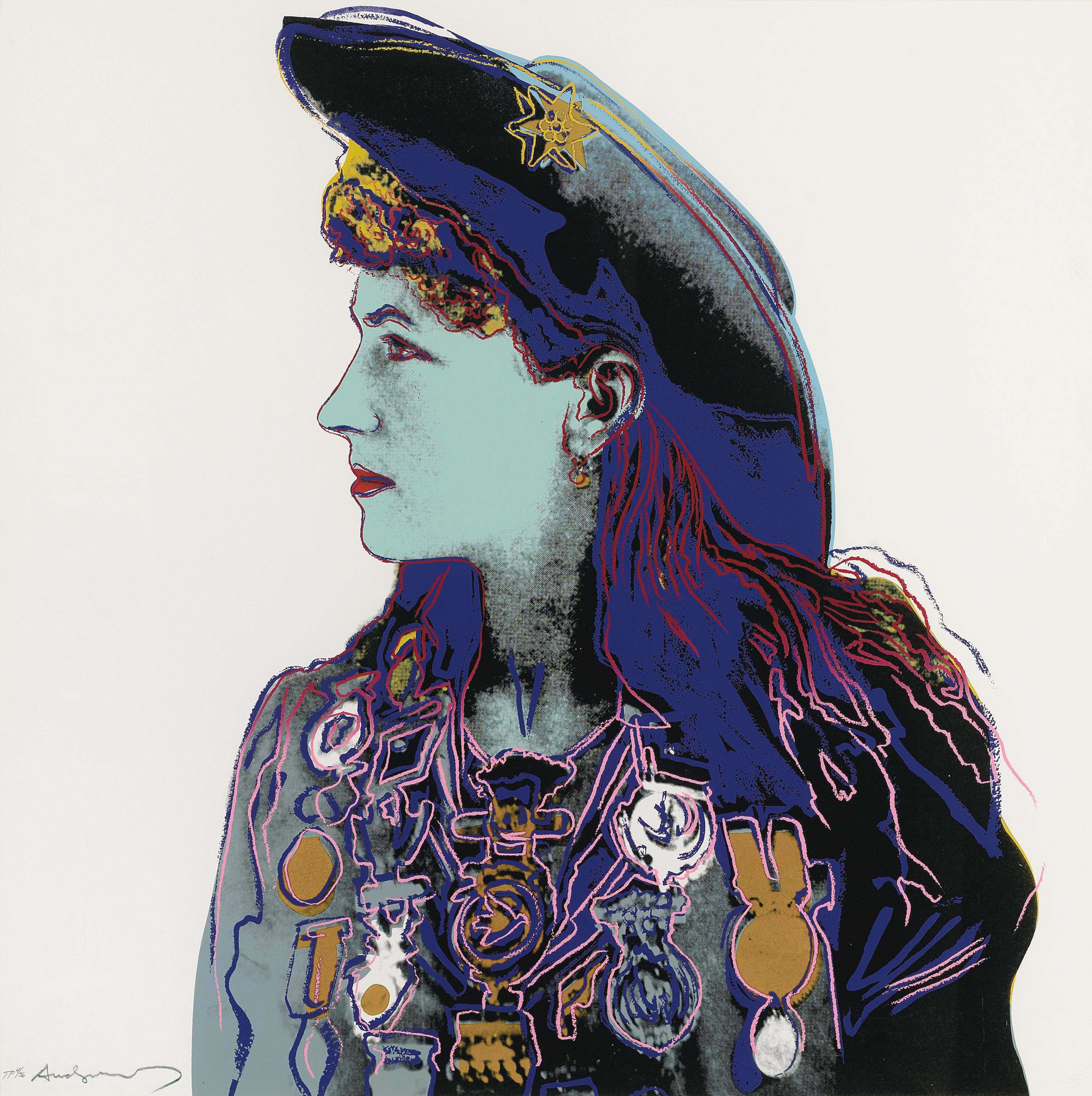
Major series include Endangered Species (1983), Myths (1981), Ads (1985), Cowboys and Indians (1986), and Moonwalk (1987). These portfolios explore themes ranging from environmental awareness to mass media mythology and American cultural identity.
For buyers searching for Warhol animal prints, Warhol portfolio prints, or Warhol screenprint series, works from the 1980s often dominate the market. Individual prints trade regularly, while complete portfolios appear less frequently and can command premiums.
Art Historical and Experimental Series
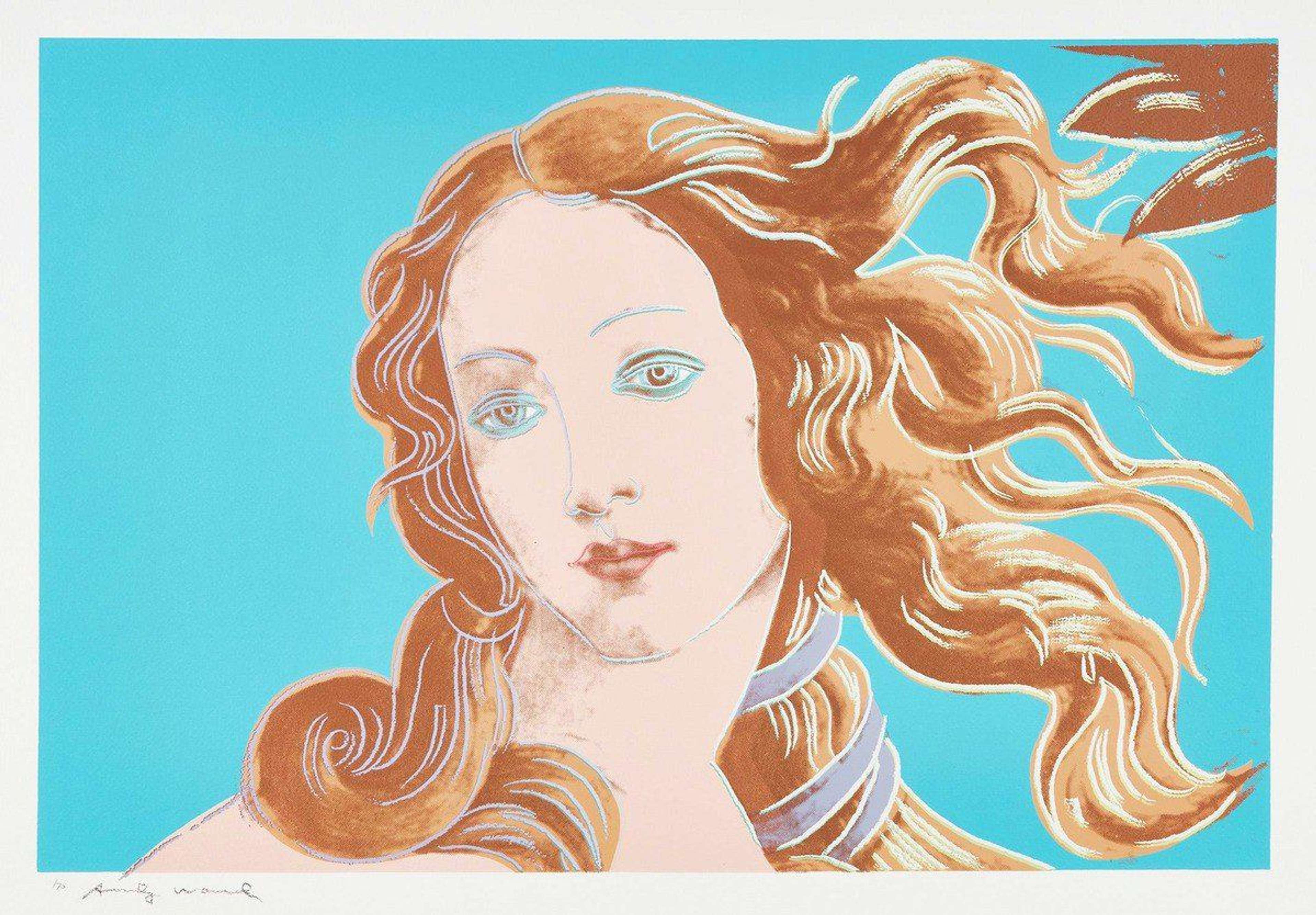
Alongside portraits and narrative portfolios, Warhol also produced prints that reinterpret historical artworks. The Details of Renaissance Paintings portfolio (1984), for example, transforms Old Master compositions such as Botticelli’s Birth of Venus into brightly coloured screenprints.
For collectors interested in Warhol’s dialogue with art history, these prints offer a different perspective on his practice beyond celebrity portraiture and Pop imagery.
For buyers entering the Warhol market, identifying which decade a print belongs to can help frame expectations around subject matter, style, and collector demand. Early Pop works from the 1960s remain the most recognisable, while later portfolios from the 1980s offer broader thematic collecting opportunities within Warhol’s print practice.
What Are the Most Popular Andy Warhol Prints in 2026?
When collectors search for the most popular Warhol prints, demand consistently concentrates around a handful of culturally iconic and structurally strong portfolios. In 2026, Marilyn, Endangered Species, and Mick Jagger remain among the most actively traded and closely watched Warhol print series
1.Marilyn (1967)
Warhol’s Marilyn prints are among the most recognisable images in contemporary art. Signed main edition prints continue to anchor the upper tier of the Warhol print market, while complete sets sit at the very top of editioned results. Colourway, condition, and margin quality materially influence pricing within this series.
2. Endangered Species (1983)
Endangered Species remains one of the strongest-performing Warhol portfolios in recent years. Individual prints such as African Elephant, Orangutan, and Grevy’s Zebra demonstrate consistent demand, while trial proofs from the series command premiums due to rarity. The combination of bold graphic appeal and thematic relevance continues to support liquidity.
3. Mick Jagger (1975)
The Mick Jagger portfolio combines celebrity iconography with painterly line work, distinguishing it from Warhol’s flatter screenprint style. Signed prints from this series trade actively, and complete sets are increasingly scarce. As with other Warhol prints, colour variation and condition significantly affect value.
How Do You Authenticate an Andy Warhol Print Before Buying?
Warhol’s prints are extensively documented, but there is no longer an authentication board providing a single definitive opinion. The Andy Warhol Art Authentication Board ceased operating in 2012, making catalogue alignment, edition details, provenance and physical examination central to the buying process.
Using the Andy Warhol Print Catalogue Raisonné
The principal reference is Andy Warhol Prints: A Catalogue Raisonné 1962–1987, compiled by Frayda Feldman and Jörg Schellmann. Commonly known as Feldman and Schellmann, it records the image and sheet dimensions, edition size, proof structure, printer, publisher and production details for each recognised print.
Catalogue inclusion identifies the edition, but the individual impression must still correspond with the entry and have a credible ownership history.
Checking Warhol Signatures, Edition Numbers & Publisher Details
Warhol’s signature varies between editions. It may appear in pencil or ink and on the front or reverse, while some recognised editions were issued unsigned. Edition numbers and proof designations should follow the documented structure for the exact work; a signed but unnumbered impression should not be assumed to be a legitimate proof.
Warhol worked with printers and publishers including Rupert Jasen Smith, Alexander Heinrici and Styria Studio. Paper, blindstamps and publisher marks should align with the production details recorded for the edition.
What the Recent Alleged Warhol Forgery Scheme Reveals
A lawsuit filed in September 2026 alleges that a Florida family paid more than $6.7 million for over 200 purported Warhol paintings, prints and other works connected to a network spanning Florida, Philadelphia and Peru.
According to the complaint, the alleged scheme extended beyond the production of fake works. It included fabricated invoices and provenance, false gallery labels, a domain resembling that of the Andy Warhol Foundation and people allegedly posing as auction-house specialists. The Miami dealer at the centre of the related federal case, Leslie Roberts, has separately entered a guilty plea to wire fraud.
For buyers, the case demonstrates why a certificate, gallery assurance or purported institutional connection cannot be accepted on its own. The physical print, Feldman and Schellmann entry, edition structure, publisher information and provenance must form one independently verifiable record.
Buyers should request previous auction records and clear photographs of the front, reverse, signature, numbering, margins, labels and stamps. Particular caution is needed with works described as “presumably a proof,” signed but unnumbered impressions, prints without catalogue references and certificates whose issuer cannot be verified.
For a detailed account of the process, read Authenticating a Warhol Print.
How Do You Check the Condition of an Andy Warhol Print Before Buying?
Condition plays a decisive role in a Warhol print’s value, particularly for works produced during the 1960s and 1970s. His screenprints rely on strong colour and clean printed surfaces, making fading, abrasions and other damage readily visible.
Prolonged exposure to light can weaken bright colourways, particularly in series such as Marilyn and Flowers. Buyers should also check the sheet for toning, foxing, creases, hinge marks and trimmed margins. Cutting a print down to fit a frame alters its original dimensions and can materially reduce demand.
Later works may present different issues. Thick areas of screenprinted ink can show cracking or surface loss, while diamond-dust editions should be examined for unevenness, abrasion or shedding. Previous framing with acidic mounts, tape or non-archival backing can also cause gradual deterioration.
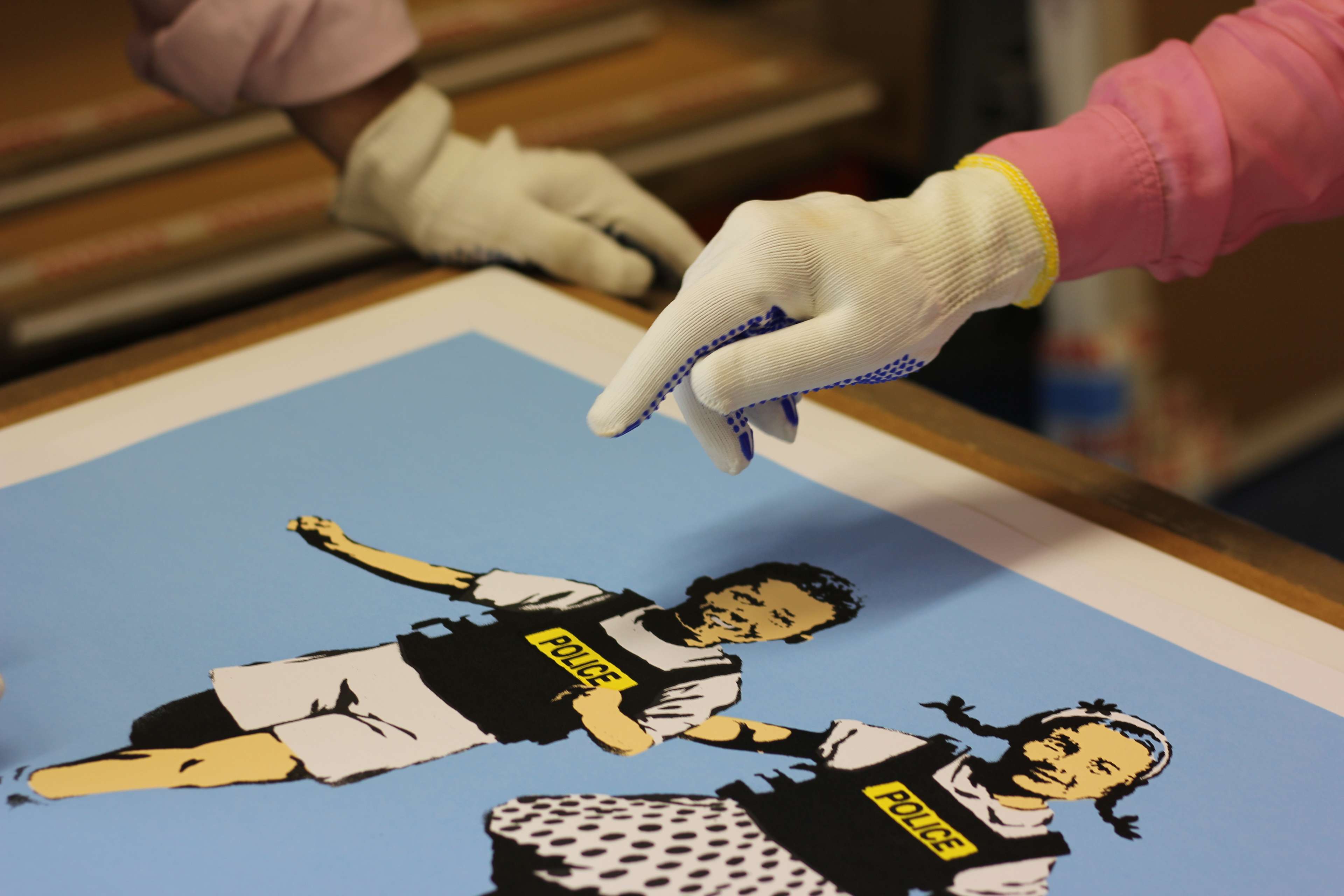
Buyers should request a professional condition report, high-resolution images of the margins and printed surface, and details of any previous conservation. Photographs taken under raking light can reveal creases, abrasions and repairs that are difficult to see under normal lighting. Minor, stable ageing may be preferable to aggressive cleaning or poorly documented restoration.
For further guidance, see Is That Print Still Worth Buying?, where specialist conservators and framers discuss real examples involving Warhol and other blue chip printmakers.
Where to Buy Andy Warhol Prints in 2026
Warhol has one of the largest secondary print markets of any blue chip artist. Works are available through international and regional auction houses, galleries, specialist dealers and private sales. The right route depends on the edition being sought, the depth of public supply and the level of due diligence provided.
Buying Warhol Prints at Auction
Sotheby’s, Christie’s and Phillips regularly offer Warhol prints, alongside regional houses handling more accessible editions. Auction results provide useful public price evidence, but estimates should not be treated as valuations or guarantees of quality.
Buyers must calculate the full acquisition cost, including the buyer’s premium, applicable VAT, Artist’s Resale Right and delivery. They should also request a condition report and establish whether the print has been examined outside its frame before bidding. For a detailed comparison, see our guide to auction and private-sale fees.
Buying Warhol Prints Privately
A substantial part of Warhol’s print market operates privately. This can provide access to signed editions, trial proofs and complete portfolios that are not scheduled for public auction.
Private sale also allows more time to examine the edition, condition and provenance and to negotiate the complete acquisition price. Buyers should confirm what commission and services are included rather than comparing a private asking price directly with an auction hammer result.
Buying Warhol Prints From a Gallery
Galleries and specialist print dealers can provide access to documented works at fixed asking prices. Buyers should establish whether the gallery owns the print or is acting on consignment, what due diligence has been completed and what is included in the price.
Gallery prices may exceed auction hammer results because they include the dealer’s margin and service. The comparison should therefore be made against the total cost and quality of the available impression.
Why Use MyArtBroker to Buy Andy Warhol Prints?
MyArtBroker specialises in blue chip prints and multiples. Our team combines edition-level expertise with public auction data, private-market evidence and live collector demand to help buyers assess and acquire Warhol prints.
The Trading Floor connects more than 30,000 international collectors and shows works currently available, held in collections or wanted by buyers. If a particular Warhol edition is not listed, our specialists can approach owners within the network to identify potential private-sale opportunities.
Before a purchase proceeds, our specialists review the edition structure, Feldman and Schellmann alignment, condition and provenance. Buyers receive the available photographs, documentation and condition information, together with data-backed guidance on how the price compares with recent public and private sales.
The total purchase price and buyer’s commission are agreed before the buyer commits. Our team then manages the transaction, payment, packing and insured delivery. MyPortfolio allows collectors to track the work and monitor their wider collection after acquisition.