Ladies and Gentlemen (complete set)
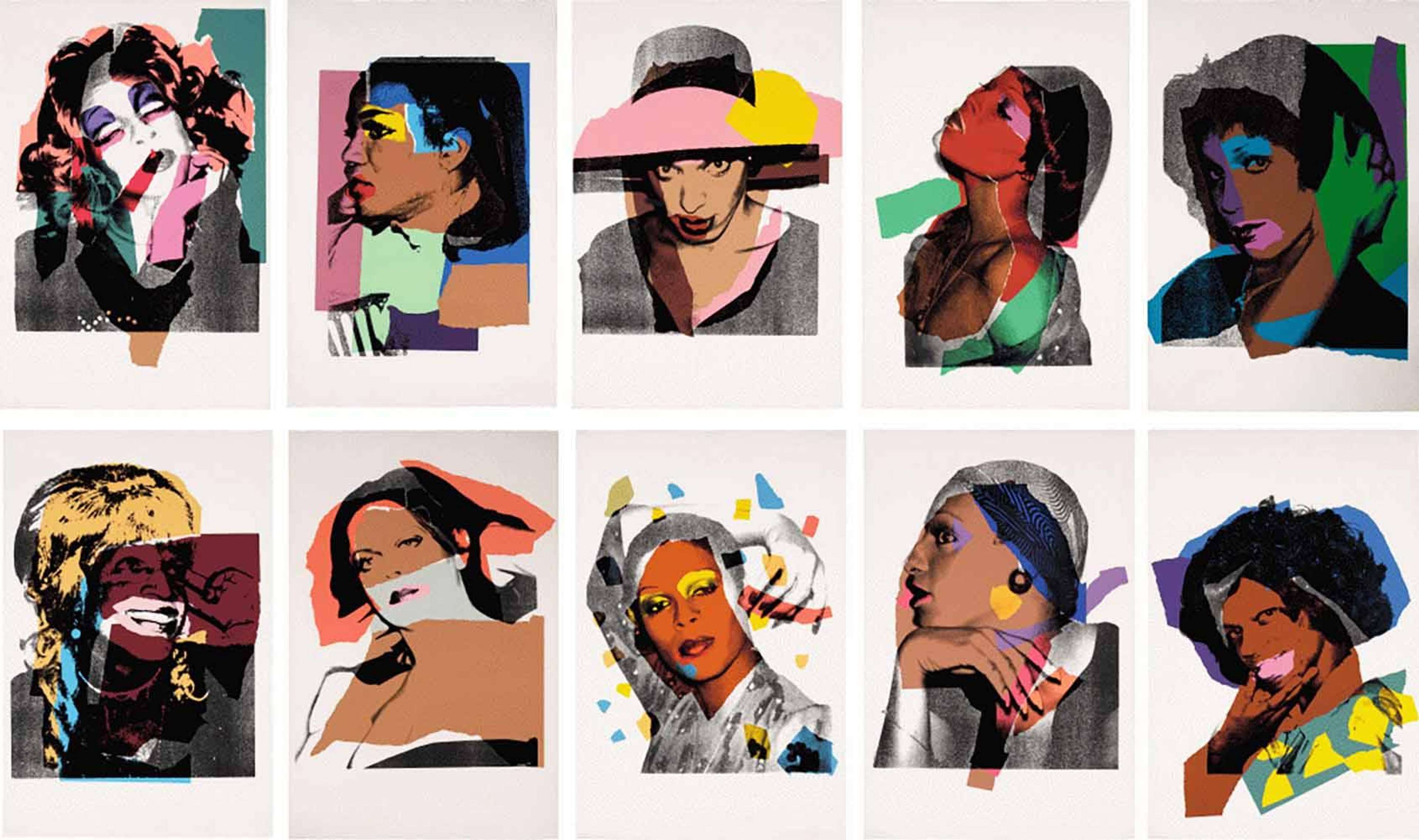
Ladies and Gentlemen (complete set)
Signed Print
Andy Warhol
111 x 72cm, Edition of 125, Screenprint, 1975
£90,000-£140,000
$170,000-$270,000 Market Value Indicator
$170,000-$260,000 Market Value Indicator
¥810,000-¥1,260,000 Market Value Indicator
€110,000-€160,000 Market Value Indicator
$940,000-$1,460,000 Market Value Indicator
¥19,600,000-¥30,480,000 Market Value Indicator
$120,000-$190,000 Market Value Indicator
There aren't enough data points on this work for a comprehensive result. Please speak to a specialist by making an enquiry.
Track auction value trend
Meaning & Analysis
Ladies and Gentlemen (complete set) is a portfolio of 10 screenprints depicting Black and Latina drag queens and transgender women, each portrait produced through Warhol's characteristic method of layered flat colour planes set against or across a photographic ground. Made in 1975 in a signed edition of 125 complete sets, the subjects were photographed by Warhol at drag bars in New York the previous year.
Warhol produced the Ladies And Gentlemen portraits on commission from the Italian collector Luciano Anselmino, initially intended for the Italian market rather than for exhibition in the United States. The subjects – photographed at New York venues frequented by Black and Latina drag and trans communities – were presented in the finished prints without names or individual identification, a decision that has attracted sustained critical attention: Warhol accorded his sitters the same formal treatment as his celebrity portraits while simultaneously withholding their identities.
Across the 10 prints, each portrait overlays its photographic base with shifting planes of flat colour – teal and magenta, salmon and mauve, royal blue and gold, yellow and maroon – that fragment and redistribute attention across the face, the gesture, the clothing. Some colour blocks function as grounds behind the figure; others cut directly across the face or body, creating a collaged instability that is both glamorising and unsettling. The effect is neither straightforwardly celebratory nor coldly documentary, but charged. These are portraits made in a specific social register, at a moment when the subjects' lives were largely invisible to mainstream American culture, by an artist whose own relationship to queer identity was central and largely unspoken. The series sits at a complex intersection of visibility, representation and appropriation that continues to generate critical debate.