

The 2026 Roy Lichtenstein Market Report, which analyses more than 2,000 auction results between 2017 and H1 2026, finds that value is shaped by a combination of factors. Edition size is a starting point – but rarely the deciding one.
Image Matters More Than Edition Size Alone
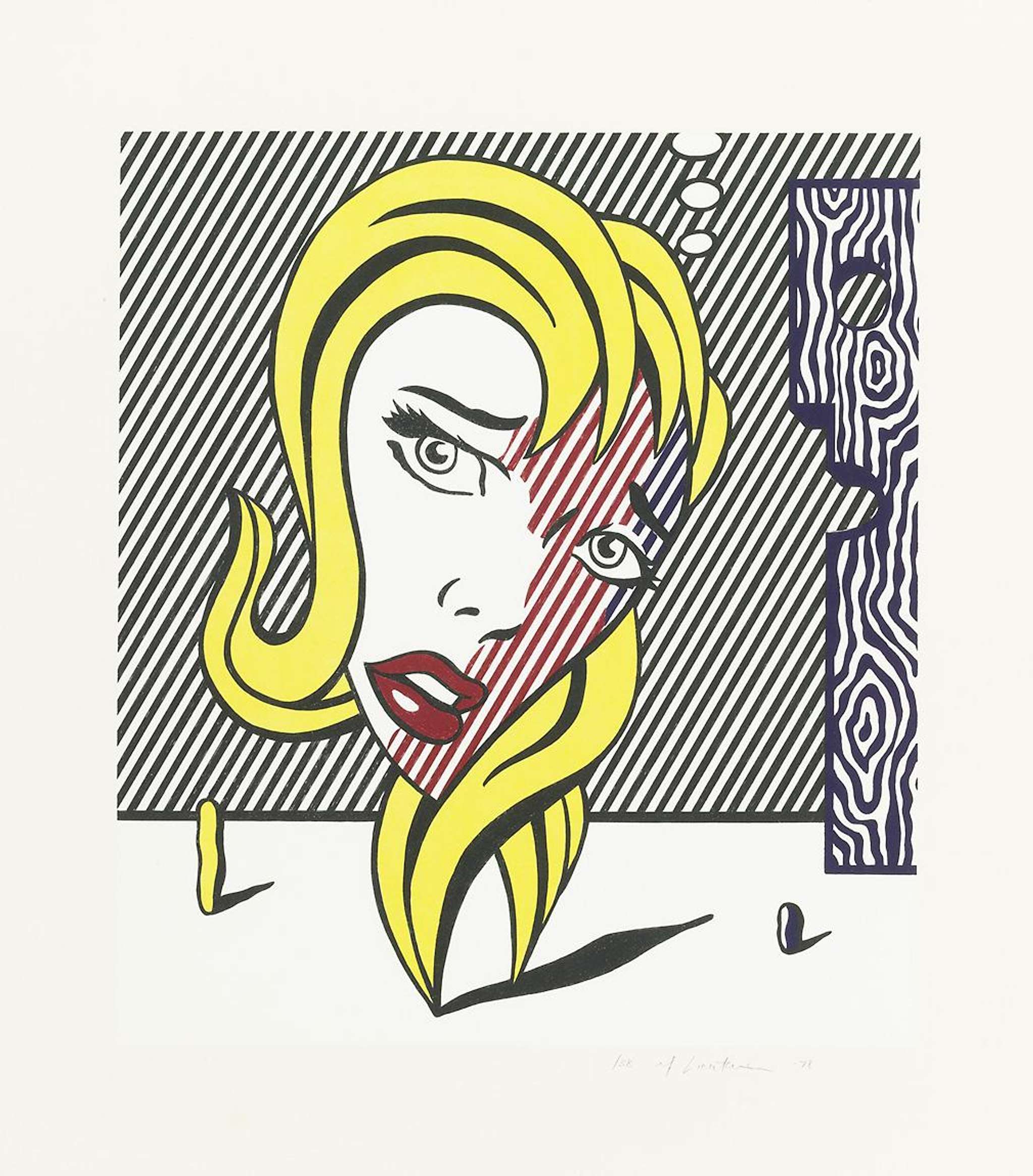
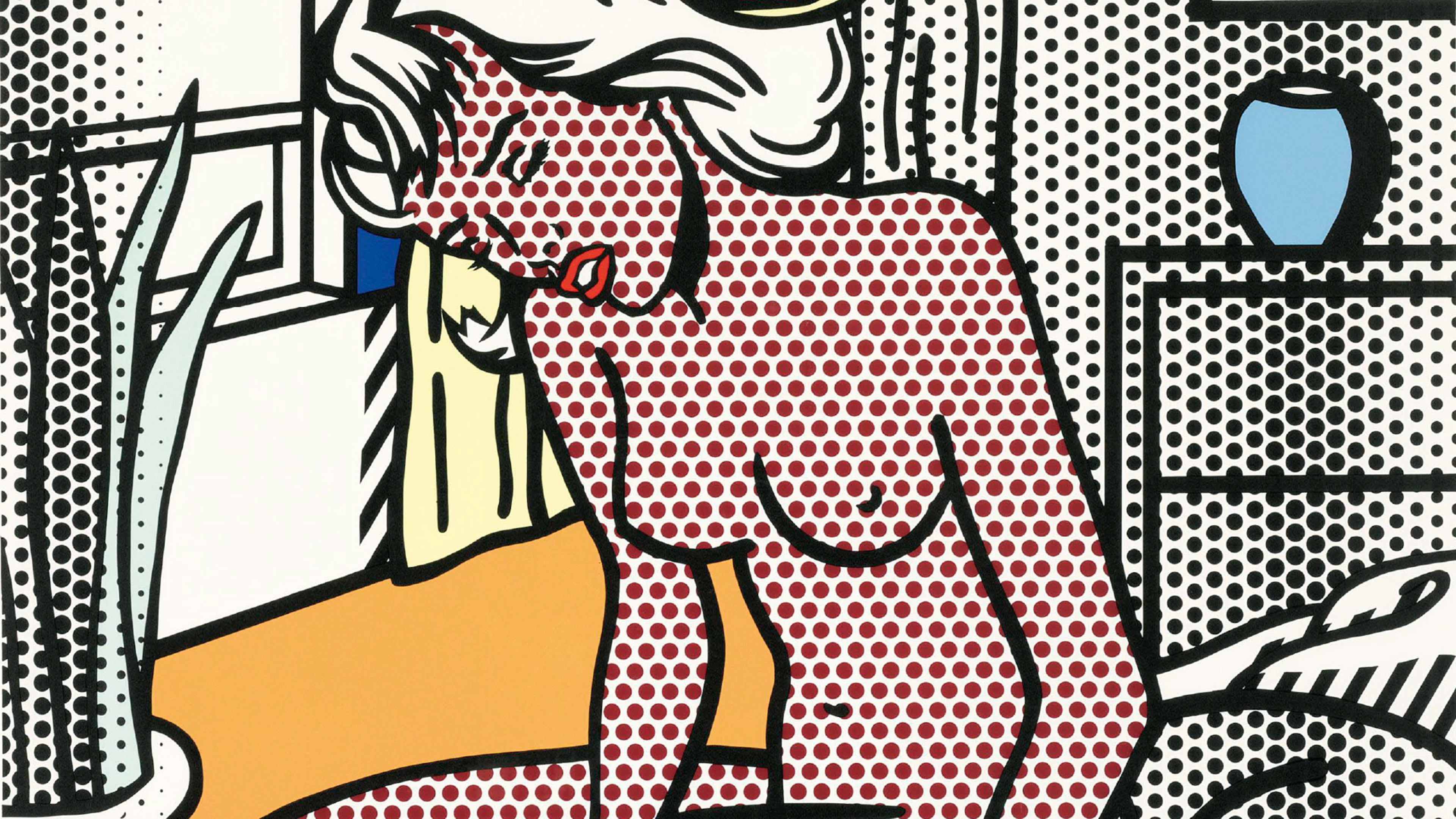
The clearest evidence comes from the Nudes, where Nude With Blue Hair, Thinking Nude, and Two Nudes share an identical edition structure. Despite comparable scarcity, their peak standard-edition results range from approximately £200,000 to £632,000. The difference is the image itself – composition, colour, and the strength of the individual design.
The same pattern runs throughout Lichtenstein's market. Within Water Lilies – a series of six works sharing the same production year and an edition of just 23 – the market values individual compositions very differently. Water Lily Pond With Reflections and Water Lilies With Willows have both approached or exceeded £1 million, while other works from the same collection continue to trade below £100,000. Subject matter, scale, material complexity, and the art historical references embedded in specific images all influence how collectors respond. No two works in the same series are interchangeable. Collectors are increasingly valuing individual compositions rather than treating an entire series as a single market. The Buyer's Guide to Roy Lichtenstein covers how to assess these distinctions when approaching the market.
Proofs Versus Standard Editions
Beyond the image, impression type is increasingly central to price. Artist's proofs (APs) are impressions outside the primary numbered edition, retained by the artist and produced in smaller numbers. Across the Nudes, APs have achieved average hammer prices nearly double those of standard editions – approximately £358,000 versus £183,000. In Water Lilies, proof premiums reached 34–57% for specific works in 2025, and higher still for printer's proofs (PPs), of which very few exist across the entire series.
The premium reflects genuine scarcity within an already limited edition structure. In today's market, the distinction between a numbered impression and an AP of the same image is no longer marginal – it can materially affect value. Reflections, published in larger editions of 68, shows a more modest AP premium of around 18% – suggesting that where editions are larger, the impression-type premium compresses.
State I Impressions
A further layer of complexity applies specifically to the Nudes. Several works in the series were published in two states: a primary numbered edition of 40 or 60, and a State I variant limited to just 10 impressions. Prior to the estate release in late 2024, State I impressions appeared too infrequently at auction to establish reliable pricing benchmarks. The concentrated supply from Sotheby's estate sales provided a rare opportunity to compare variants directly. The results were instructive. For Nude With Blue Hair, a standard-edition impression achieved £632,192 in 2024 and a State I of the same work followed at £650,301 in 2025. The State I premium was real but modest, suggesting that at the top of the market, collectors are pricing primarily for the image and then for the impression type – not the other way around. For a full breakdown of how impression type affects pricing across the Nudes, see The Market For Roy Lichtenstein's 1990s Nudes.
Collection Hierarchy
Not all Lichtenstein series occupy the same market position, and knowing where a work sits within the wider hierarchy matters. Water Lilies, the Nudes, and Reflections account for approximately 30% of total auction value across the ten-year period analysed, despite representing just 7% of lots sold. Within the premium market – defined as results above £250,000 – 27 of the 33 works to exceed that threshold over the period came from Water Lilies or the Nudes alone. Works from other collections are not without value, but they operate in a different market. For collectors interested in what other areas of Lichtenstein's editioned output offer, Hidden Gems: The Prints of Roy Lichtenstein looks at overlooked areas of the catalogue, while the Investment Guide to Roy Lichtenstein takes a longer-term view of where value has historically been created and where it might develop next.
Condition and Provenance
Two further factors increasingly shape where within its range a specific work will price: condition and provenance. Condition has always mattered in the print market, but its importance has grown as prices have risen. At the levels now achieved for major Lichtenstein works, condition reports are standard practice and any departure from excellent is reflected in the result. Works printed on stainless steel – as is the case for the Water Lilies series – require careful storage; surface marks or reflective imperfections are visible in a way that paper-based prints are not. Lichtenstein's use of enamel on steel and stainless steel as substrates and its implications for condition and market performance is worth understanding before acquiring works from those series.
Provenance – the documented ownership history of a specific impression – carries growing weight. Distinguished provenance, including estate provenance from the Dorothy and Roy Lichtenstein Collection, can command a premium of its own. Estate-provenanced works established some of the strongest benchmarks of the past two years, and that provenance premium has not disappeared as those works have moved into new collections.
What This Means in Practice
A work's value is not the sum of its edition size plus its collection name. It is shaped by how the image, the impression type, the condition, and the comparative supply of similar examples all interact at the moment of sale. The 2026 Roy Lichtenstein Market Report provides a ten-year analysis of these dynamics across more than 2,000 results.
For those approaching the market as buyers, the Buyer's Guide to Roy Lichtenstein covers the practical considerations in detail. If you are thinking about selling, the Roy Lichtenstein Print Valuation Guide is a clear starting point, and the Seller's Guide to Roy Lichtenstein sets out how the process works from initial valuation through to completion.
Download the 2026 Roy Lichtenstein Market Report · Get a free valuation · Explore Roy Lichtenstein's market

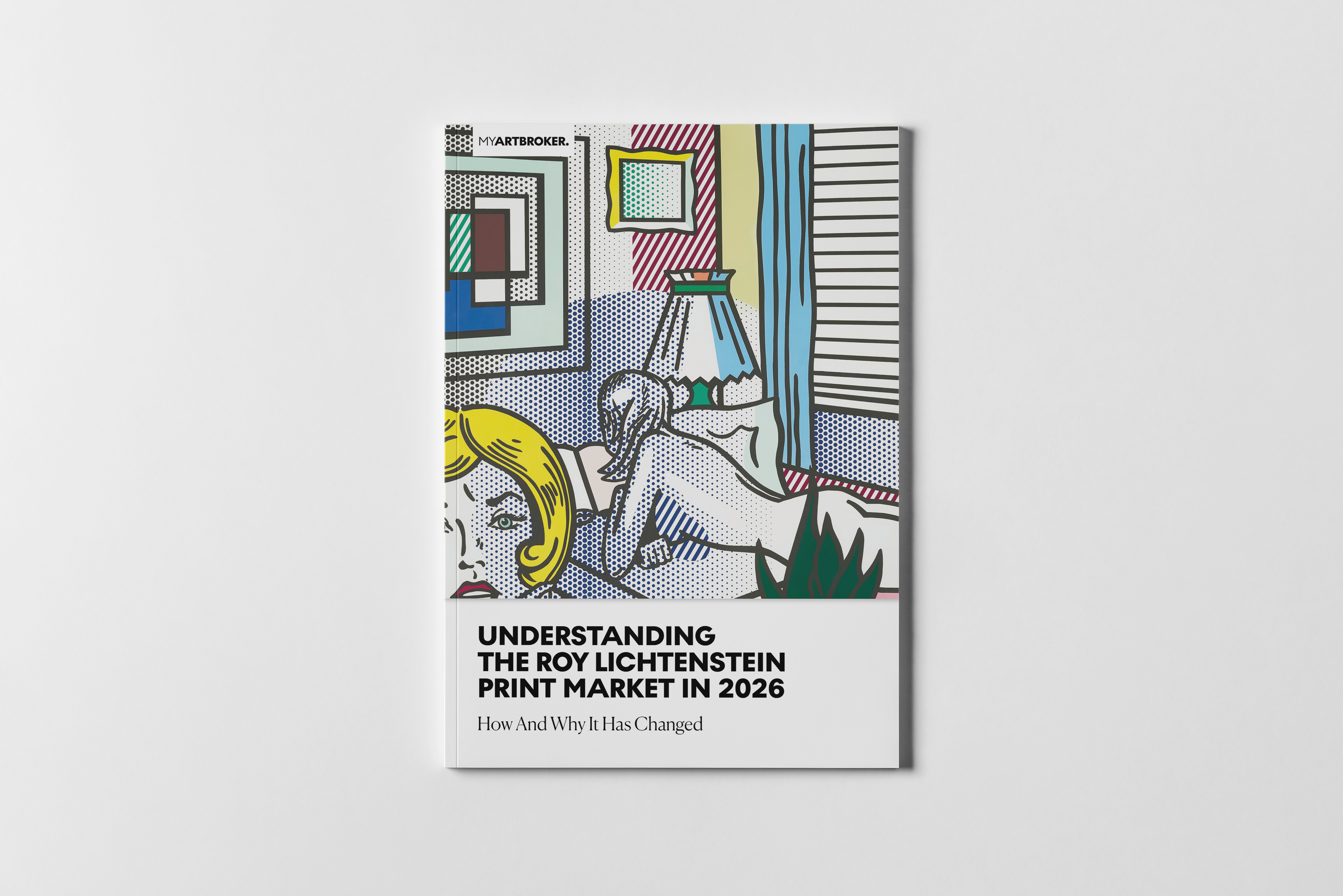
The Roy Lichtenstein Print Market Report 2026
How and Why the Market Has Changed: A 10-Year Analysis (2017–H1 2026)
This report analyses Roy Lichtenstein's print market over the past decade, examining auction performance, pricing trends, collector demand, the strongest-performing series, the growing premium for Artist's Proofs and the key developments shaping the market in H1 2026.