That pair of results goes to the heart of October’s auctions. Collection sales dominated the month. Christie’s offered Peter Simon’s Monsoon collection across evening and day sales, alongside prints from the Collection of Antonio Homem Sonnabend and works from the Estate of Frank Stella in New York. Sotheby’s presented works from Dorothy and Roy Lichtenstein’s collection, Kermit Oswald’s Haring’s House and Hockney’s Normandy flowers. Together, those seven auctions sold 302 of 310 lots, a 97% sell-through rate.
Monsoon stands apart on price. A major private collection anchoring the evening sales is nothing new, and Peter Simon’s £86.9 million evening auction follows that familiar model. The bigger shift is the rise of dedicated print collection sales, where ownership history now gets some of the billing usually associated with major paintings and unique works.
So what does provenance actually mean to a buyer? October suggests at least four things. First, proof, the paper trail that helps establish the work matches its catalogue description. Second, proximity, a direct line from the artist to the work through a dealer, friend or family member. Third, prestige, the glamour of a celebrated former owner. Fourth, access, the chance to buy material that might otherwise remain unavailable. Proof is the baseline. The real question is which of the other three collectors will pay extra for, and whether they keep paying once the dedicated sale is over and the next impression of the same image comes up.
All prices are hammer prices, excluding buyer’s premium, unless stated otherwise.
Christie’s London Evening Sales Showed the Pull of a Major Collection
Christie’s London week showed how much a single collection can carry. The house’s 20th/21st Century Evening Sale made £91.4 million. The Monsoon evening sale came within touching distance at £86.9 million, with 40 of its 41 lots sold. The Monsoon day sale added almost £8 million, with 28 of 69 lots beating their high estimates and only two unsold.
Elsewhere, Sotheby’s Contemporary Evening Auction made £36.7 million, selling 27 of 37 lots, and Phillips sold all 20 lots in its Modern & Contemporary Art Evening Sale for £11.7 million.
Monsoon combined prestige with quality. Three things were sold at once, the collector’s name, the strength of what Simon had assembled and the occasion built around it. In prints, the arithmetic is less forgiving. An exceptional ownership history can set one impression apart, but collectors usually have prices for other impressions to judge it against.
Sonnabend’s Lichtenstein Prints Took Provenance Beyond the Estate
Christie’s New York sold all 52 lots from the Collection of Antonio Homem Sonnabend for $2.12 million. Twenty-five finished above their high estimates, and Lichtenstein accounted for more than half the total.
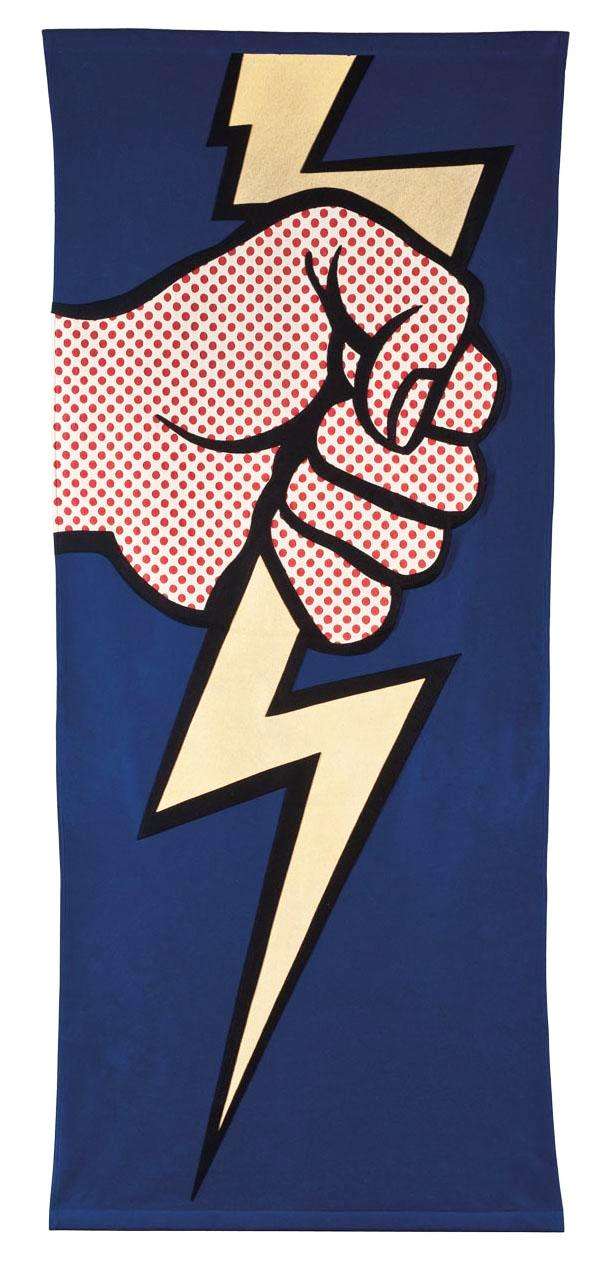
Crying Girl reached $140,000 against a $40,000–60,000 estimate, while the Thunderbolt banner led at $240,000 against $70,000–100,000. Both had been acquired directly from Lichtenstein by Ileana Sonnabend, whose role in introducing American Pop to European audiences makes these impressions part of the story of how his market was built. Ileana’s name carried both a direct line to the artist and the glamour of the dealer who helped make him. For collectors who have followed the estate releases, the sale pushed the provenance conversation one step further back, to the dealers who first championed him.
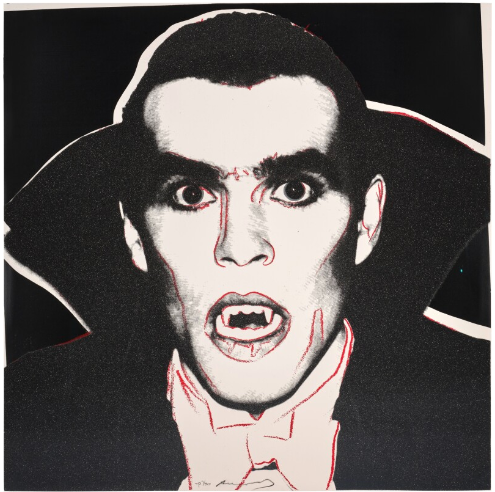
Direct acquisition was not unique to the Lichtensteins, though. Every lot had come from its artist through Ileana or Antonio, yet the response varied sharply. Our comparison with recent public auction results placed Warhol’s Chicken Noodle, Black Bean and Cream of Mushroom broadly in line with their medians, while Crying Girl and Shipboard Girl sold at three to four times theirs.
The Sonnabend name, in other words, did not come with a flat premium. Condition, edition details and demand for individual images also need to be considered, and Lichtenstein’s strength elsewhere in October suggests the collection met a market that was already receptive. What the history does give these impressions is a lasting point of difference. Whether collectors will pay as much for it outside a dedicated Sonnabend auction is still an open question.
Sotheby’s Lichtenstein Family Collection Offered More Than Editions
The live component of Sotheby’s Reflections on Pop, drawn from the Collection of Dorothy and Roy Lichtenstein, sold 22 of 23 lots. Collectors who had followed the family’s earlier print releases found a different offering this time, with studies, a prototype and sculpture taking much of the spending.
Interior with Painting of Nude (Study) led at $1.9 million, followed by Entablature at $700,000 and Landscape Mobile at $500,000. Glass II (Prototype) made $320,000, and even the $180,000 Reflections on The Scream was a study rather than an impression of the editioned print.
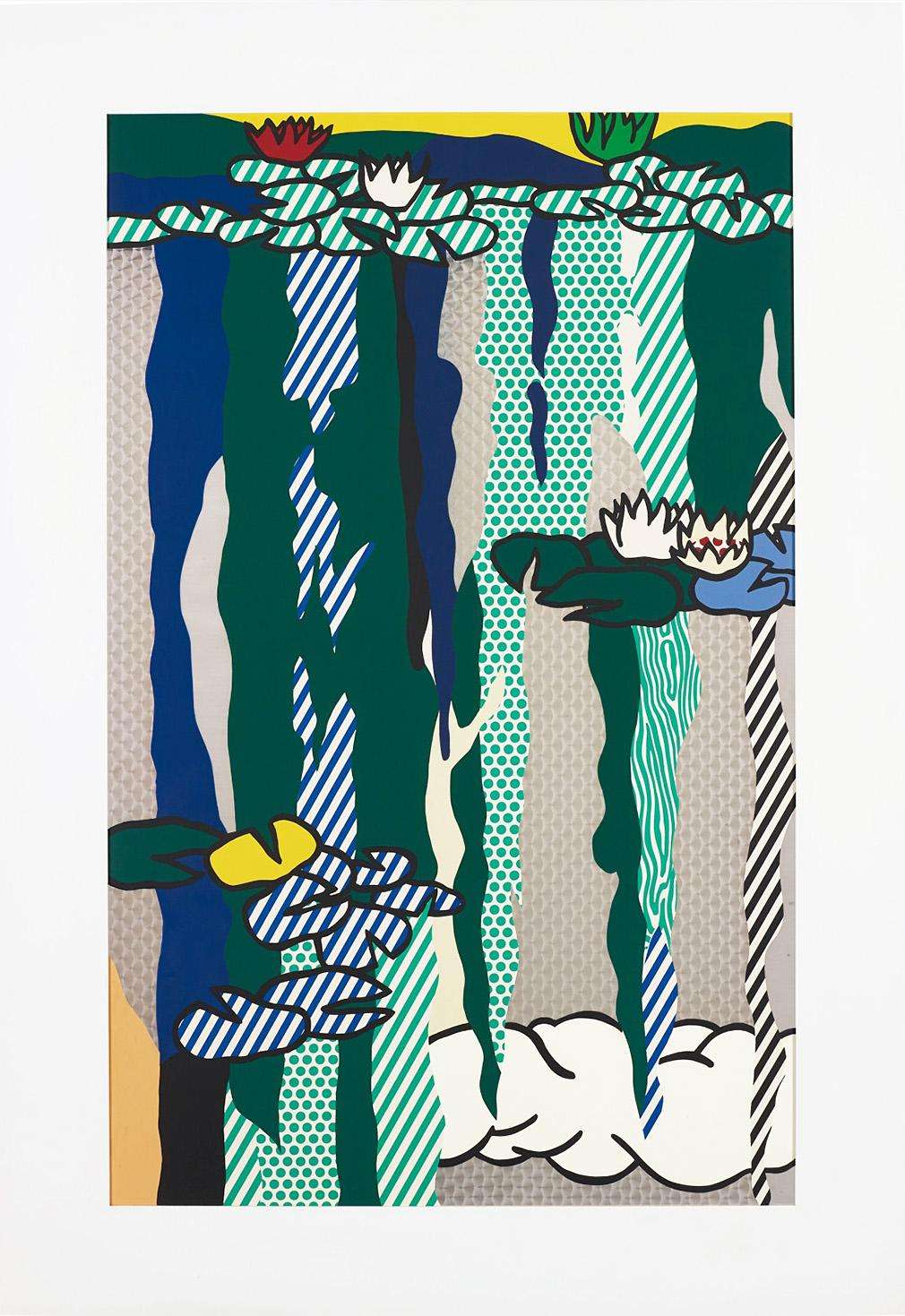
The editions held their own as well. Water Lily reached $42,000 against a $15,000–25,000 estimate, Red Lamps made $110,000 and Water Lilies with Cloud sold at its $600,000 high estimate.
The release brought studies and a prototype into public view alongside finished editions, opening up Lichtenstein’s working process. That widens the appeal of these releases, but it also muddies comparisons with earlier sales. A higher total can reflect different material reaching the market rather than equivalent prints becoming more expensive.
Frank Stella’s Estate Sale Set Prices Rather Than Following Them
Christie’s online Graphic Alchemist, works from the Estate of Frank Stella, closed on 22 October with 61 of 65 lots sold for $1.40 million, against a combined estimate of $755,000–1.09 million. Thirty-five lots beat their high estimates, and not one sold below its low estimate.
Sinjerli Variation Squared with Colored Grounds, a complete artist’s proof set of six prints, led at $240,000 against $60,000–80,000. The Fossil Whale (Dome), from Moby Dick Domes, made $110,000 against $15,000–20,000, while Stubb and Flask Kill a Right Whale (Dome) and Moby Dick from The Waves each reached $42,000.
Several Stella results ran well ahead of earlier public prices. Compared to earlier public results, several images sold at two to several times their previous auction prices, though many have changed hands only a handful of times.
Stella’s thin trading record makes the results harder to benchmark. Estate provenance, the works offered and modest estimates may all have encouraged competition. This was also the first estate sale since Stella’s death in 2024, which helped establish useful reference points, but the size of any estate premium remains difficult to separate from those other factors.

Keith Haring’s House Found Buyers for the Personal and Unexpected
Sotheby’s online Haring’s House sale brought $1.76 million from 40 sold lots, against a combined estimate of $912,000–1.34 million. Twenty-six beat their high estimates as collectors competed for material kept by Kermit Oswald, Haring’s childhood friend and artistic collaborator.
Much of the sale was informal and unconventional material rather than editioned prints. An Untitled ($50 Bill), estimated at $2,000–3,000, made $100,000. Untitled (Chalk Box), made with LA II, reached $22,000 against the same estimate. For objects like these, a documented line back to one of Haring’s closest friends does much of the work of establishing what they are, and that confidence gave collectors room to compete.
Those results make lively headlines, but the estimates are part of the story too. Fourteen lots were offered without reserve, and some of the lowest estimates produced the biggest multiples. Buyers were not chasing everything equally. An Untitled drawing estimated at $70,000–100,000 sold for $45,000.
Hockney’s 20 Flowers from Normandy Sold Within a Narrow Price Range
Sotheby’s London sold all twenty impressions from Hockney’s 20 Flowers from Normandy for a combined £667,000, within the £500,000–700,000 estimate.
Ahead of the auction, Yessica Marks, Head of Prints at Sotheby’s Europe, told MyArtBroker that bringing the works together was “a wonderful opportunity, particularly given their exceptional provenance and the fact that every impression is fresh to the market.”
Unlike Sonnabend or Oswald, the previous owner was an unnamed private collector, the same consignor of The Arrival of Spring prints first offered in October 2024. The catalogue traces the Normandy flowers directly to Hockney in 2022, before the consignor acquired them in 2023. Every lot carried the same £25,000–35,000 estimate, leaving bidders free to pick favourites, although the results showed little separation between them. All twenty sold between £30,000 and £38,000, and only three beat the high estimate.
Demand comfortably absorbed the group, but no image ran away with the bidding. The Phillips result six days later provided a useful comparison, with another impression of More Flowers on a Table achieving a similar hammer price outside the dedicated sale. One pair cannot settle the provenance question, but it gives little indication of an additional premium in this instance.
Various-Owner Print Sales at Christie’s and Phillips Kept the Collection Results in Perspective
Christie’s New York Prints and Multiples auction on 21 October sold 163 of 202 lots for $4.79 million, with 49 beating their high estimates.
Warhol’s African Elephant reached $190,000 against $100,000–150,000, and Grevy’s Zebra and Giant Panda both sold within estimate. Further down the sale, Kiku, Sitting Bull, Geronimo and Northwest Coast Mask all finished below their low estimates.
Hockney had a harder day. Four of his ten lots went unsold, including The Blue Guitar at $50,000–70,000, and three of the six that sold finished below estimate. The Perspective Lesson and Green Grey & Blue Plant were the bright spots, each clearing its high estimate. At Phillips the next day, The Blue Guitar found a buyer at $40,000, still below its low estimate. Twice in two days, The Blue Guitar met resistance at its estimate, a sign that buyers were judging individual series rather than the Hockney name.
Lichtenstein, by contrast, sold all six of his lots at Christie’s, none below estimate, with Imperfect Diptych reaching $70,000 against $30,000–50,000. At Phillips, his portfolio La Nouvelle Chute de l’Amérique made $95,000 against $80,000–120,000. These results show demand beyond the named collection sales, making it harder to attribute the Sonnabend results to provenance alone.
Provenance also turned up inside the general sale itself. Auction houses often place works with a notable history into their various-owner sales rather than giving them an auction of their own, and Christie’s did exactly that with four early Warhol books from the Collection of Susan and Alvin Chereskin, each catalogued as a gift from the artist. Offered within the broader auction, they met a mixed response. 25 Cats Name(d) Sam and One Blue Pussy and A Gold Book sold at their low estimates, while In the Bottom of My Garden went unsold.

Banksy Auction Results Responded to the Work and the Price
Banksy’s unique works offered another example of uneven bidding across price points.
At Sotheby’s, Laugh Now from 2002 made £200,000 against £60,000–80,000. Smiley Copper sold at its £80,000 low estimate, while Bad Meaning Good, estimated at £100,000–150,000, went unsold.
Further up, buyers held back. Grannies failed to sell at £1.5–2 million, and Bonhams’ Laugh Now, a different 2001 work on canvas estimated at £400,000–600,000, also found no buyer.
The two Laugh Now works are different objects and shouldn’t be treated as interchangeable. Even so, the results show the gap between enthusiasm for an image and willingness to meet the price on a particular example. Banksy’s most recognisable motif still draws a crowd, but whether that crowd follows the estimate is another matter.
What October 2026 Revealed About Provenance, Estate and Collection Sales
October made a convincing case for selling prints with a story. It was less conclusive about what collectors would pay extra for that story. The Sonnabend connection accompanied exceptional Lichtenstein results without lifting every Warhol, while Hockney’s flowers found buyers at prices another impression could achieve outside the dedicated sale.
For buyers, that leaves a more interesting question than whether provenance “matters”. What are you being asked to pay for it? A documented relationship with the artist stays with the work. The concentrated attention of a collection auction is harder to take home. Sellers looking at those results need to ask the same question before treating an exceptional price as the going rate for their own impression.
That is what we will follow in our year-end research on estate releases and private collections. October showed how successfully auction houses can turn long-held material into an occasion. The next test comes when another example appears without the fanfare. The catalogue can preserve the history. The next buyer decides what it is worth.