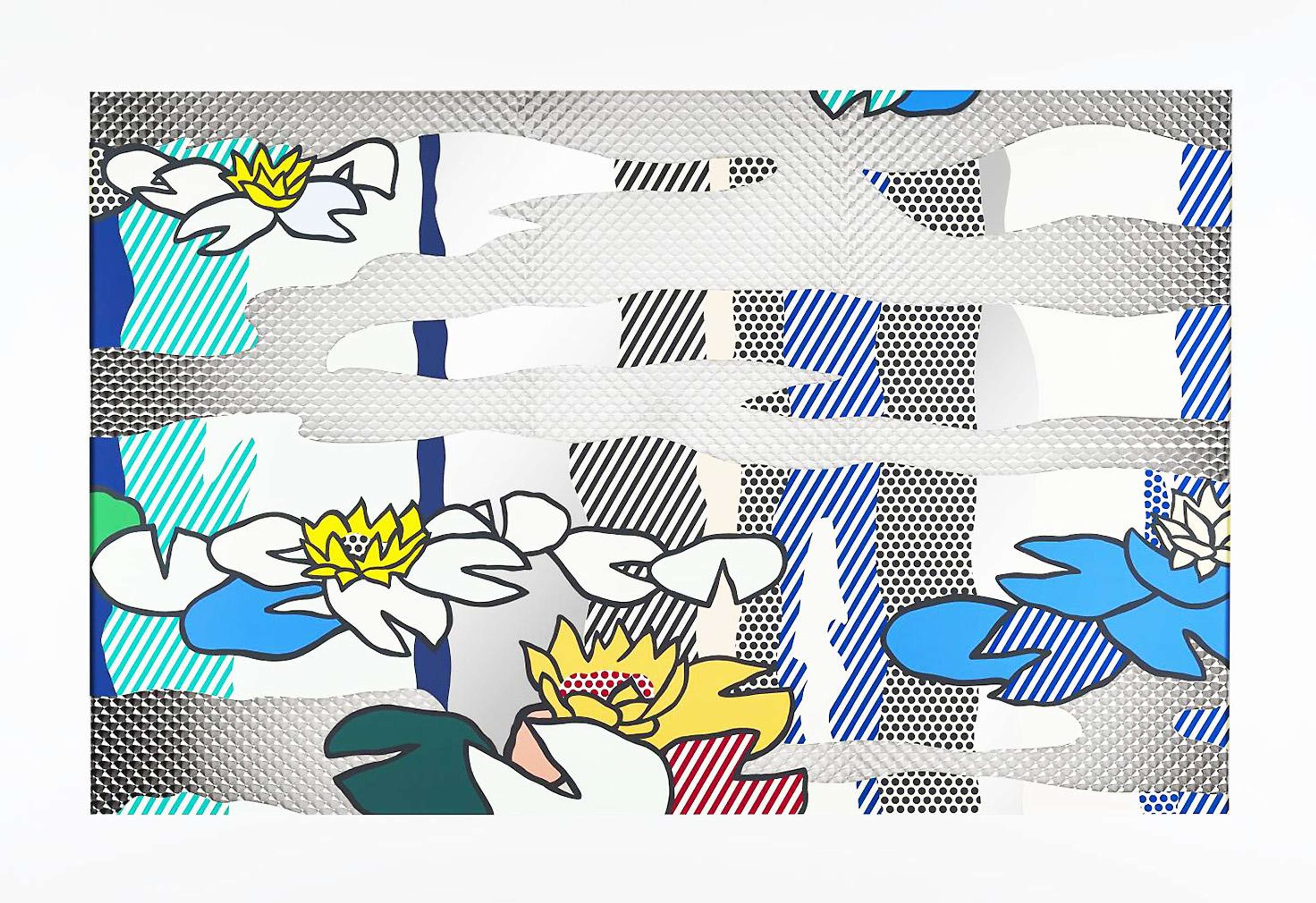


By the end of last year, Water Lilies had generated approximately £3.6 million at auction – overtaking the Nudes to become the highest-performing collection in Lichtenstein's print market – and individual prints had crossed £1 million for the first time. According to the 2026 Roy Lichtenstein Market Report, which analyses more than 2,000 auction results between 2017 and H1 2026, the transformation has been rapid and the drivers are specific. Understanding why helps explain where the series may be heading next.
Why Water Lilies Has Become Lichtenstein's Most Valuable Print Series
The short answer is rarity concentrated at the top. The core Water Lilies series comprises six screenprints on stainless steel, all produced in 1992, alongside a separate autonomous work, Water Lily (1993). Editions were limited to just 23 impressions – exceptionally small even by the standards of Lichtenstein's late-career printmaking. For context on how edition structure shapes value across his wider output, the Roy Lichtenstein Print Valuation Guide covers the key variables.
But edition size alone does not explain the market's response. Editions of comparable scale exist across a range of Lichtenstein's work without producing results anywhere close to what Water Lilies has achieved. What distinguishes the collection is that its rarity is concentrated in works of unusual physical and conceptual ambition – and that the market has recognised and priced that distinction.
The Influence of the Dorothy & Roy Lichtenstein Estate
The estate release, beginning at Sotheby's in November 2024, accelerated what was already underway. Water Lily Pond With Reflections realised $1.4 million (USD) against a $600,000 estimate, immediately establishing a new pricing benchmark for the series. Sotheby's released the works across multiple sales during 2024 and 2025, allowing each group of works to establish new pricing benchmarks as the market absorbed the collection.
What the estate release provided, beyond the results themselves, was an unprecedented opportunity for collectors to compare exceptional impressions side by side. The concentration of museum-quality material at auction – artist's proofs, printer's proofs, and rare variants – created a public record of value that had previously existed largely in private sales and specialist knowledge. That visibility reshaped how the market understood the collection's internal hierarchy. Across 2024 and 2025, estate works contributed £2.6 million to Water Lilies' total auction value, while non-estate impressions held firm rather than weakening in response.
Why Certain Images Outperform Others
Not all six works have benefited equally from the collection's re-rating. The market has developed a clear image hierarchy, and the gap between the strongest and weakest performers has widened significantly since 2022.
Water Lily Pond With Reflections and Water Lilies With Willows have emerged as the collection's two highest-value works, both approaching or exceeding £1 million at auction. Below them, Water Lilies With Cloud and Water Lilies With Japanese Bridge form a second tier. The four remaining works have generally continued to trade below £100,000, representing a very different market despite sharing the same edition size and production year. For collectors building a position in Lichtenstein's work, the Buyer's Guide to Roy Lichtenstein sets out what to look for when assessing individual works within a series.
Stainless Steel, Scale and Technical Ambition
The physical properties of the highest-value works account for much of the gap. Water Lily Pond With Reflections and Water Lilies With Willows are both horizontal panoramas exceeding two metres in width. At that scale, and printed on a swirled stainless steel ground, they operate less like prints and more like painting-scale objects with a reflective, almost environmental presence. Lichtenstein's use of stainless steel as a substrate – and what it means for market performance – is explored further in Roy Lichtenstein's Enamel-on-Steel Prints & Their Lasting Market Power.
Their horizontal format carries specific art historical weight, directly echoing Monet's Nymphéas panels at the Orangerie. Water Lilies With Willows combines that scale with exceptional technical complexity, requiring seventeen separate colour applications. Water Lily Pond With Reflections achieves a different kind of coherence, bringing together Lichtenstein's long-running investigation of light and reflection – explored across the Mirrors, Reflections, and Interiors series – with a substrate that is itself reflective. The thematic and material logic is deliberately ambitious, and the market has priced it accordingly.
Why Proofs Command Such Large Premiums
Where proof variants have appeared at auction, they have consistently outperformed standard editions by a substantial margin. Water Lilies With Japanese Bridge provides the clearest illustration: an artist's proof (AP) achieved £599,238 in 2025 against main edition results of £448,720 and £381,749 – a premium of between 34% and 57% at the hammer price. Blue Lily Pads shows a similarly consistent AP premium of around 60–70%. The same dynamic operates across the Nudes, where APs have nearly doubled main edition prices in recent years.
At the very top of the market, the only known printer's proof of Water Lily Pond With Reflections achieved £1.2 million ($1.5 million USD) at Sotheby's in 2023 – the highest hammer price recorded for any work in the series. For collectors, impression type is not simply a catalogue distinction – it has become one of the most important determinants of value within the series. An AP or PP of the same image, in equivalent condition, can command a very different price from a numbered edition.
What Collectors Should Watch Next
With the estate release now largely absorbed into private collections, opportunities to acquire museum-quality Water Lilies are likely to become increasingly infrequent. When exceptional impressions do appear, they will be judged against benchmarks established during one of the most concentrated periods of high-quality supply the series has ever seen. The Whitney Museum's forthcoming retrospective, opening in New York in October 2026, has the potential to broaden demand without adding supply – reinforcing the scarcity that already characterises the collection.
For collectors considering the series, the 2026 Roy Lichtenstein Market Report provides a full ten-year breakdown of how value has shifted across Water Lilies and the wider market. Those thinking about selling should consult the Seller's Guide to Roy Lichtenstein for an overview of current channels and timing considerations.
Download the 2026 Roy Lichtenstein Market Report · Request a free Lichtenstein valuation · Explore Roy Lichtenstein's market

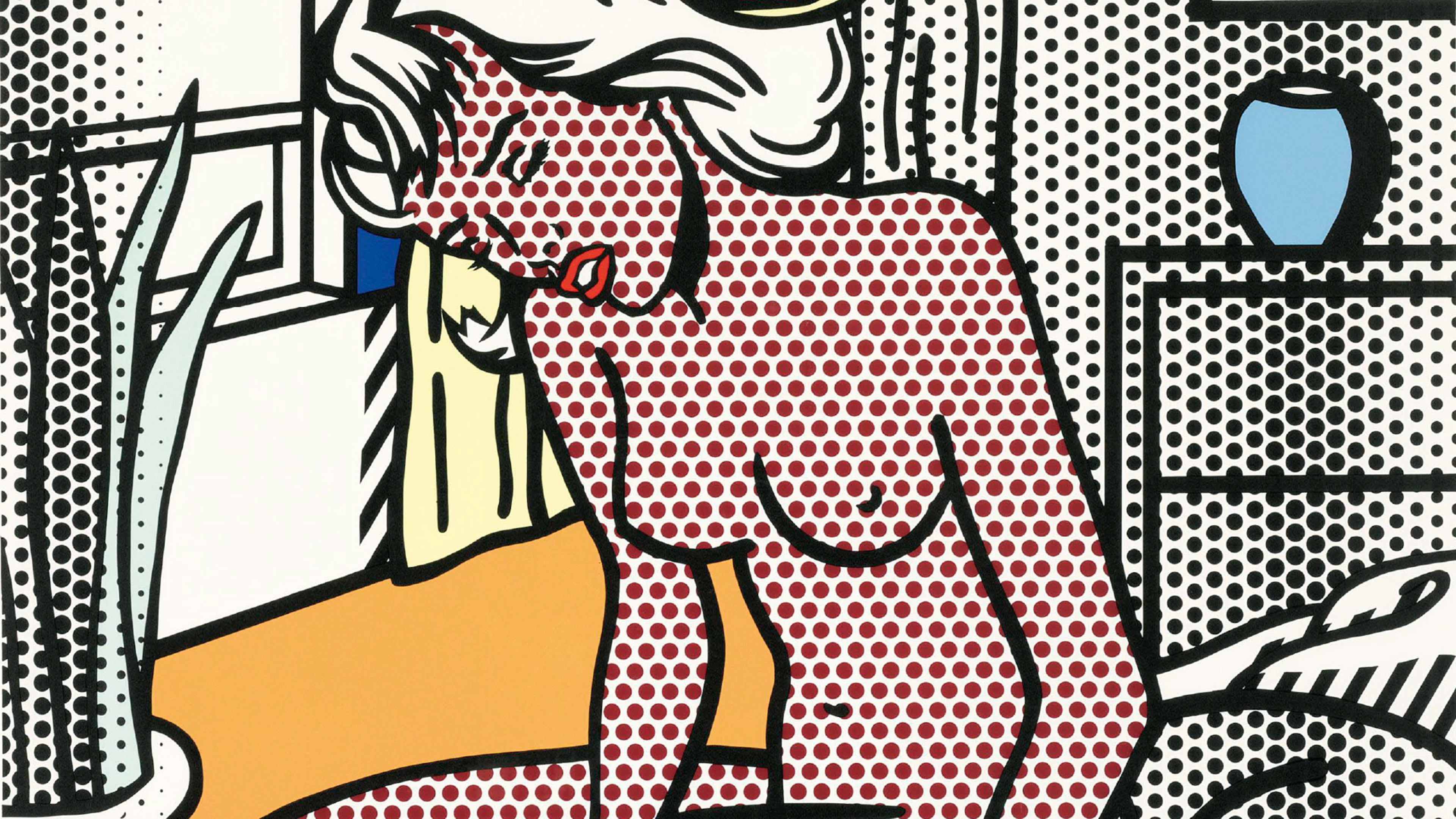
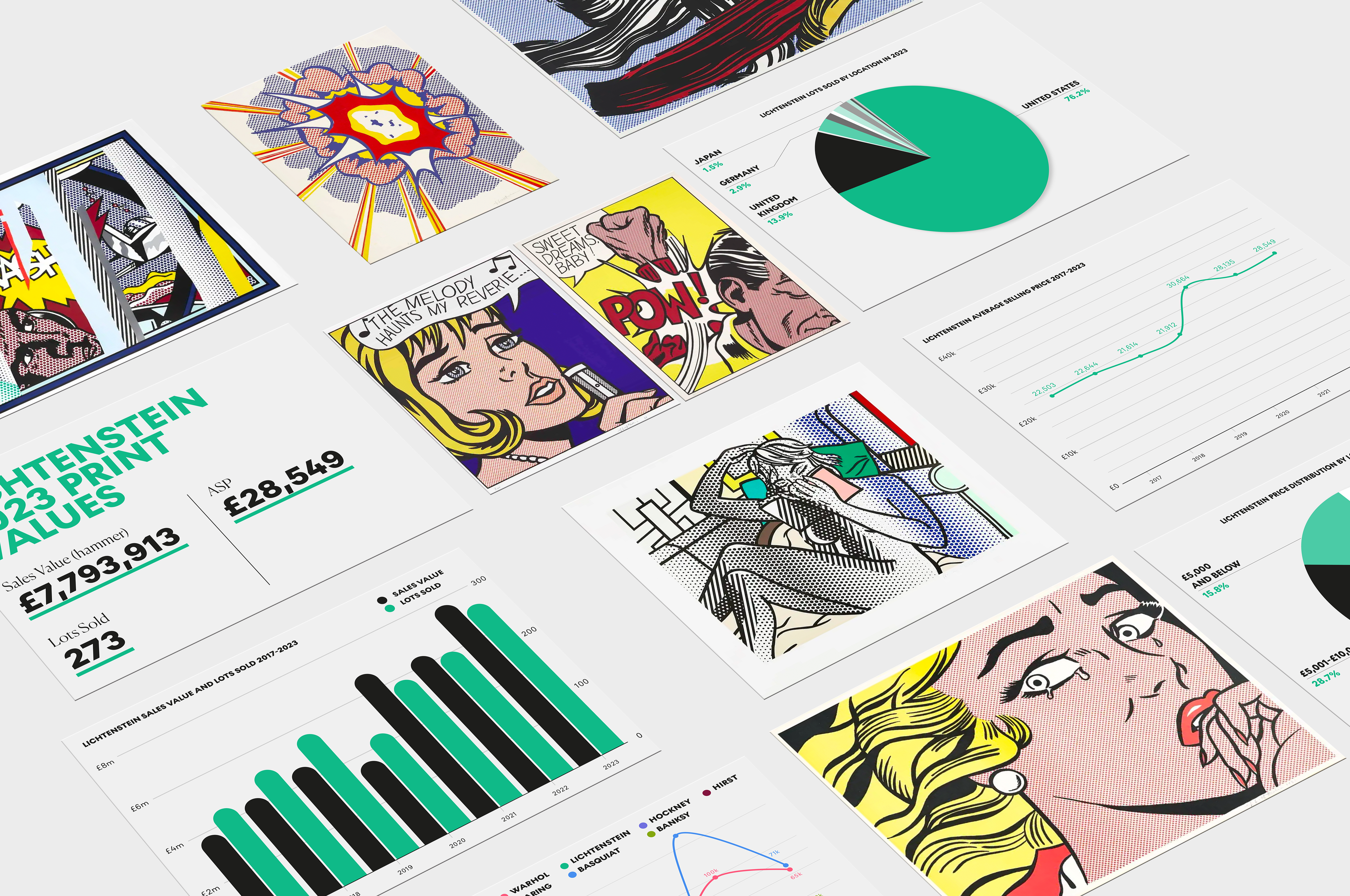


The Roy Lichtenstein Print Market Report 2026
How and Why the Market Has Changed: A 10-Year Analysis (2017–H1 2026)
This report analyses Roy Lichtenstein's print market over the past decade, examining auction performance, pricing trends, collector demand, the strongest-performing series, the growing premium for Artist's Proofs and the key developments shaping the market in H1 2026.