

How To Find Out What Your Roy Lichtenstein Artwork Is Worth
A valuation for a Lichtenstein print has to consider whether the work belongs to a major series such as Nudes, Reflections, Water Lilies, Brushstrokes or Haystacks; whether it carries the comic-book iconography most closely associated with his Pop Art breakthrough; whether it was published by a major print studio such as Gemini G.E.L.; whether the signature, numbering, paper and printing match known records; and whether the work has any condition issues that might affect value.
At MyArtBroker, a Lichtenstein valuation begins with a full identification and condition review. The specialist checks medium, dimensions, paper type, colour, printing quality, signature, numbering, date, publisher details, provenance and catalogue information. From there, the work is compared with auction results, private sales and current collector demand.
Lichtenstein’s market is not one single market. It contains early 1960s Pop images, art-historical reinterpretations, large-scale late editions, enamel works, proofs, studies, posters and more accessible prints. Each category behaves differently.
What Information Do You Need For A Roy Lichtenstein Valuation?
A strong Lichtenstein valuation begins with high-quality images and supporting documentation.
The most useful submission includes:
- A full image of the front of the work
- A full image of the reverse
- Close-ups of the signature
- Close-ups of the numbering
- Close-ups of any date or inscription
- Images of all four corners
- Images of the sheet edges
- Images of any publisher stamp or inscription
- Sheet dimensions
- Image dimensions
- Details of medium
- Any gallery labels or auction records
- Any Gemini G.E.L., Leo Castelli or publisher provenance
- Framing and storage history
- Any condition report
Lichtenstein’s prints can be highly technical, so photographs need to be sharp enough to review the printing, surface and inscriptions. In some cases, details on the reverse are especially important, particularly where the work was printed or published by a major studio.
Speak to Louisa about your Roy Lichtenstein print, and find out what it’s worth in today’s market.
Catalogue Raisonné Checks
Catalogue raisonné comparison is central to a Lichtenstein print valuation. The Mary Lee Corlett catalogue raisonné has long been the key print reference, and the Roy Lichtenstein Foundation’s online catalogue raisonné now provides extensive information across the artist’s work.
A specialist will check whether the work matches the catalogue entry in:
- Title
- Date
- Medium
- Dimensions
- Edition size
- Publisher
- Printer
- Paper type
- Signature placement
- Numbering format
- Inscriptions or stamps
- Known provenance
Anything that does not fit the catalogue record needs to be reviewed carefully. A mismatch does not automatically mean a work is inauthentic, but it is a red flag that requires explanation.
Lichtenstein’s print market has enough fakes and copies that catalogue comparison is not optional. It is one of the first lines of defence in building confidence.
Signature, Numbering And Inscriptions
Lichtenstein’s signature can be more difficult to assess than some other Pop artists. It is not perfectly consistent across all works, and there are strong copies in circulation. A specialist will compare the signature with known examples, but will also look at the work as a whole: printing, paper, dimensions, provenance and publisher details.
The edition numbering is equally important. Some Lichtenstein prints are signed and numbered; some are signed but not numbered; and some open or poster-like editions are unsigned. At MyArtBroker, the strongest focus is on signed limited editions rather than unsigned, unlimited or more poster-adjacent material.
Works such as Crak! require particular care because there are signed and numbered examples, but also unnumbered impressions from the original run. Those unnumbered works may be legitimate, but they require more specialist scrutiny because they are harder to trace through edition structure alone.
Get in touch with Louisa to discuss the authenticity of your Roy Lichtenstein print.
Provenance: Gemini G.E.L., Leo Castelli And Publisher History
Provenance is important in the Lichtenstein market. The strongest paper trail will often lead back to the original publisher, printer, gallery or early sale point.
Gemini G.E.L. is especially important because Lichtenstein worked closely with the Los Angeles print studio on major editions. Works printed by Gemini may include inscriptions, stamps or details on the reverse that help support authenticity and valuation.
Leo Castelli provenance can also be significant, reflecting Lichtenstein’s connection to one of the most important galleries in post-war American art. Auction history, gallery labels, publisher documentation and early invoices can all strengthen a valuation.
A clean provenance does not replace physical and catalogue review, but it gives buyers confidence and can support a stronger price.
Use our Instant Valuation tool to explore the value of your Roy Lichtenstein print at a glance.
The Lichtenstein Market Hierarchy
Lichtenstein’s print market is structured around a clear hierarchy. The strongest areas tend to be those that connect most directly to his best-known imagery, his mature technical production, or his most ambitious editioned objects.
Key high-value areas include:
- Enamel works
- Nudes
- Reflections
- Water Lilies
- Major comic-book images
- Brushstrokes
- 1960s Pop works
- Scarce works from desirable series
- Estate-provenance examples
- Major publisher-backed editions
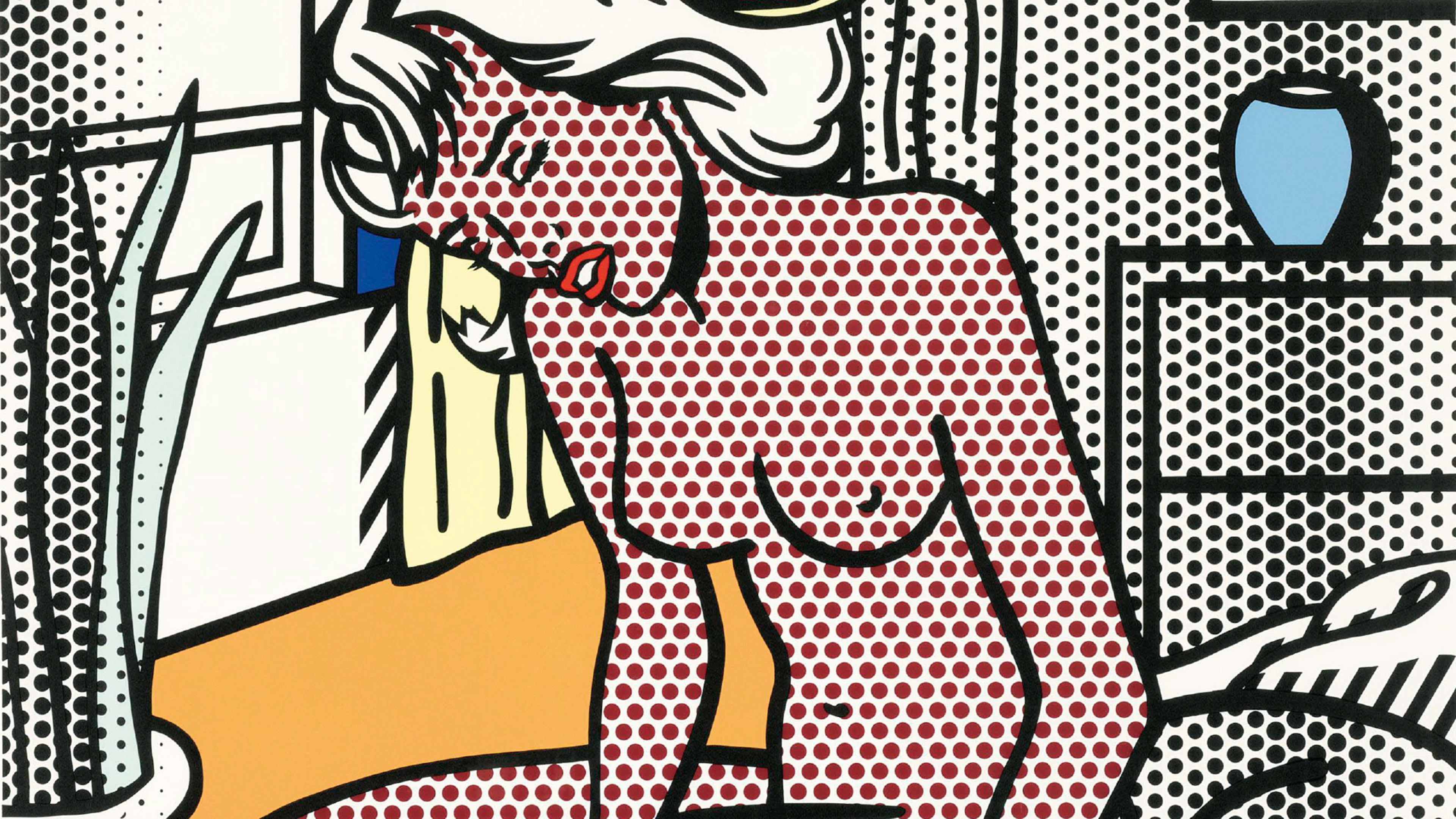
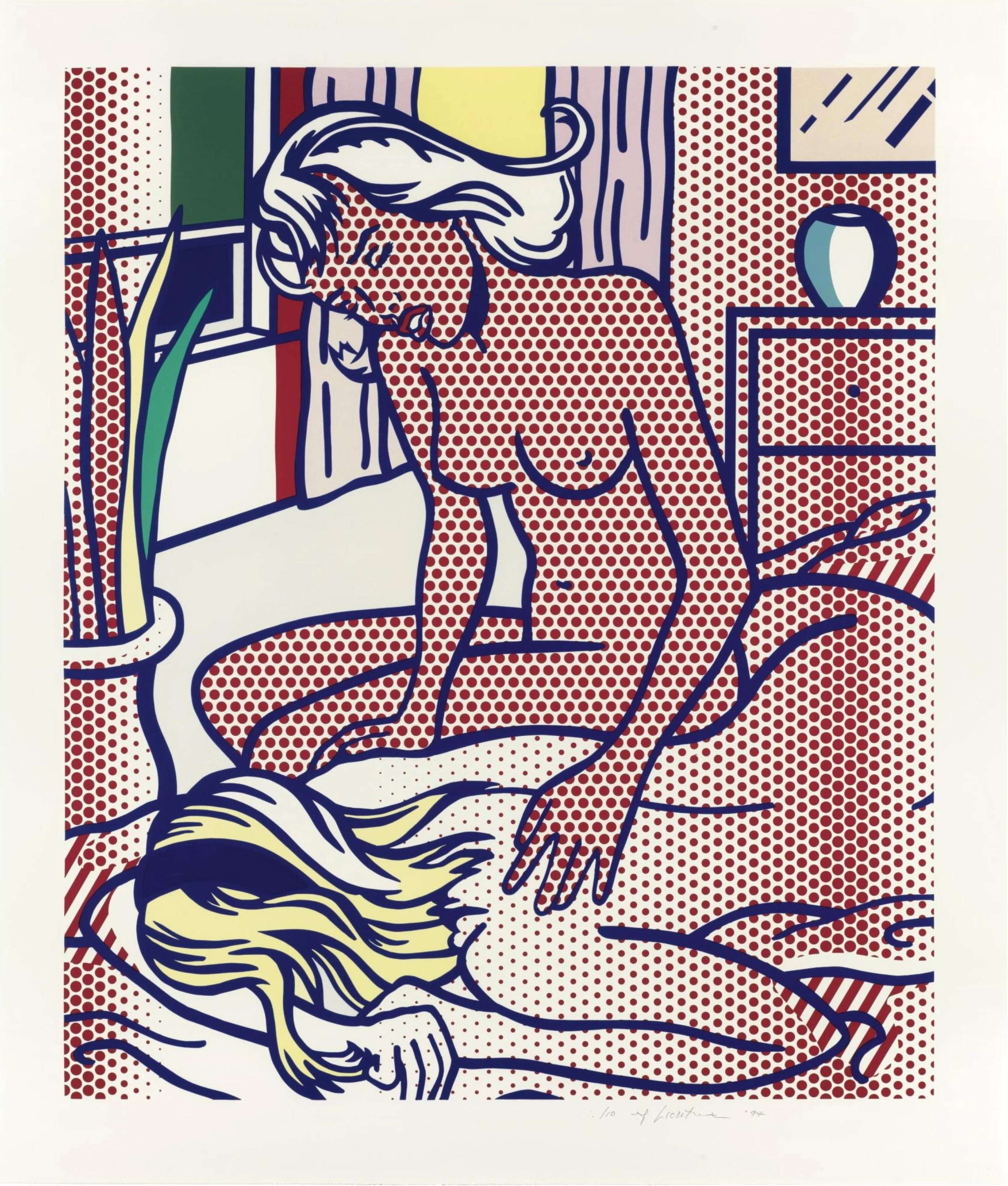
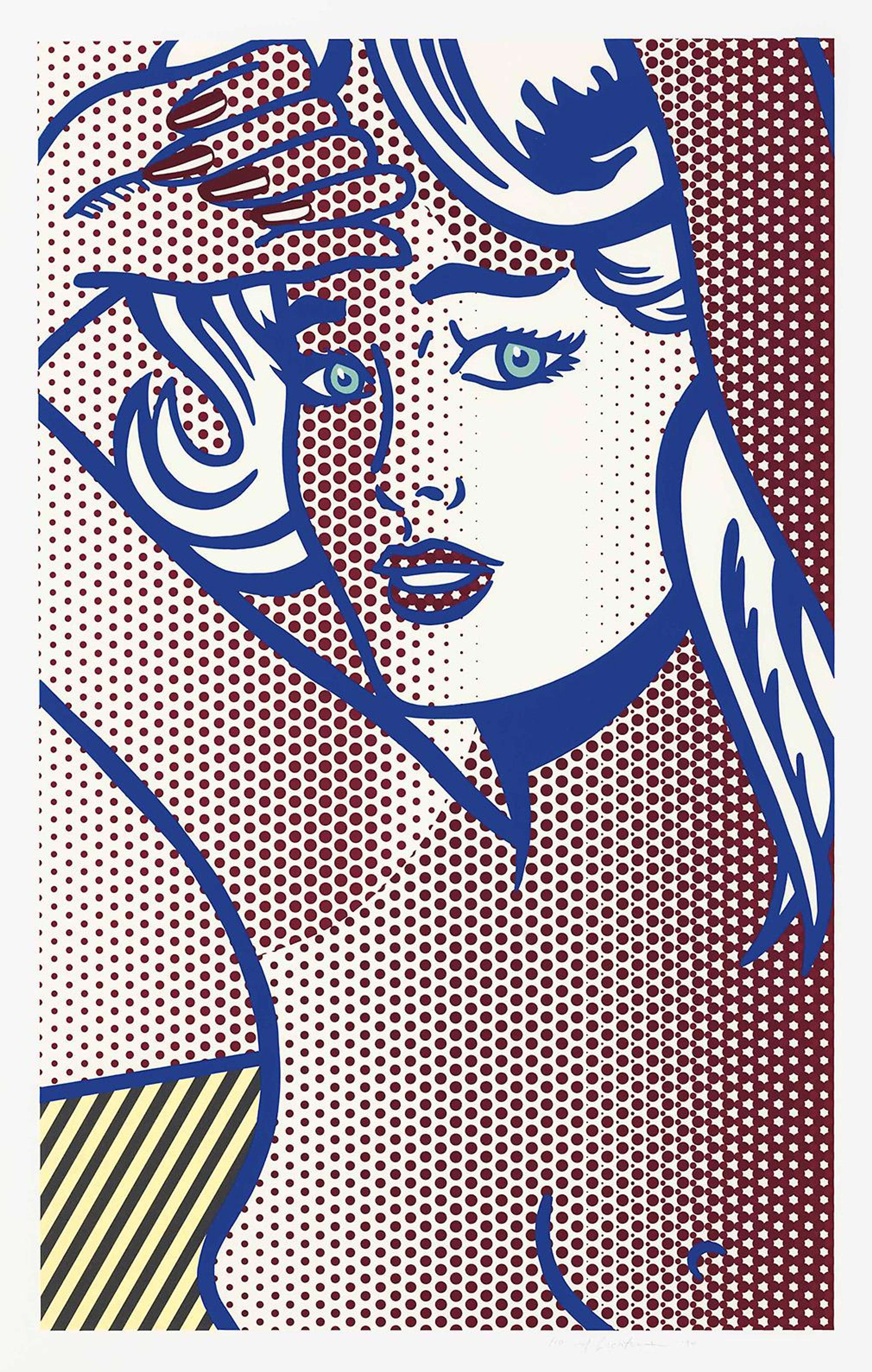
However, not every work within a valuable series performs equally. Within Nudes, for example, certain images are more desirable than others. A work such as Nude With Blue Hair may command stronger demand than other compositions in the same series because of its image strength, visual clarity and collector recognition.
The same is true across Reflections. Some images have stronger appeal because of the subject, composition, use of reflective material, or closeness to Lichtenstein’s most familiar Pop vocabulary.
Comic-Book Imagery And The Female Figure
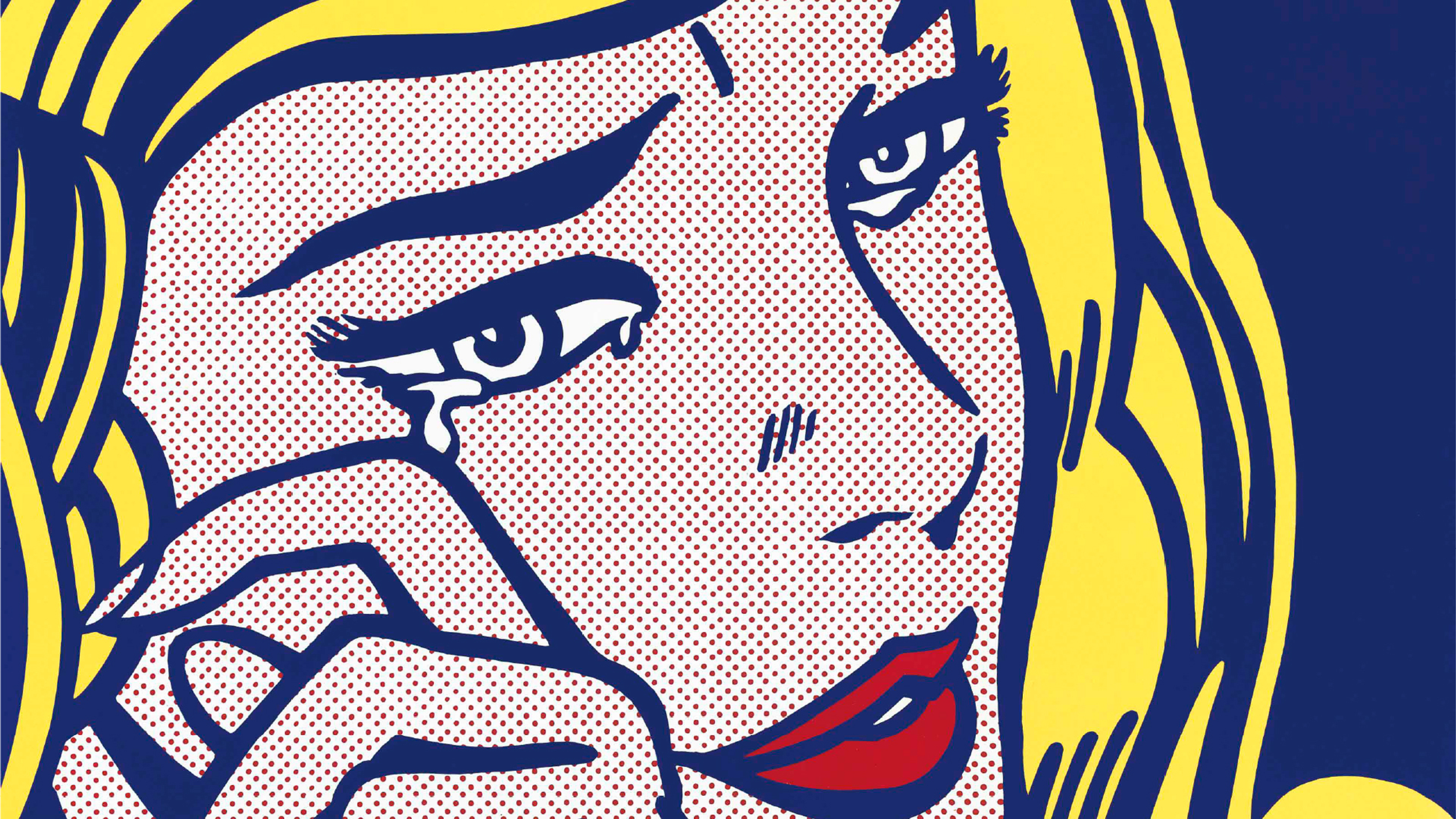
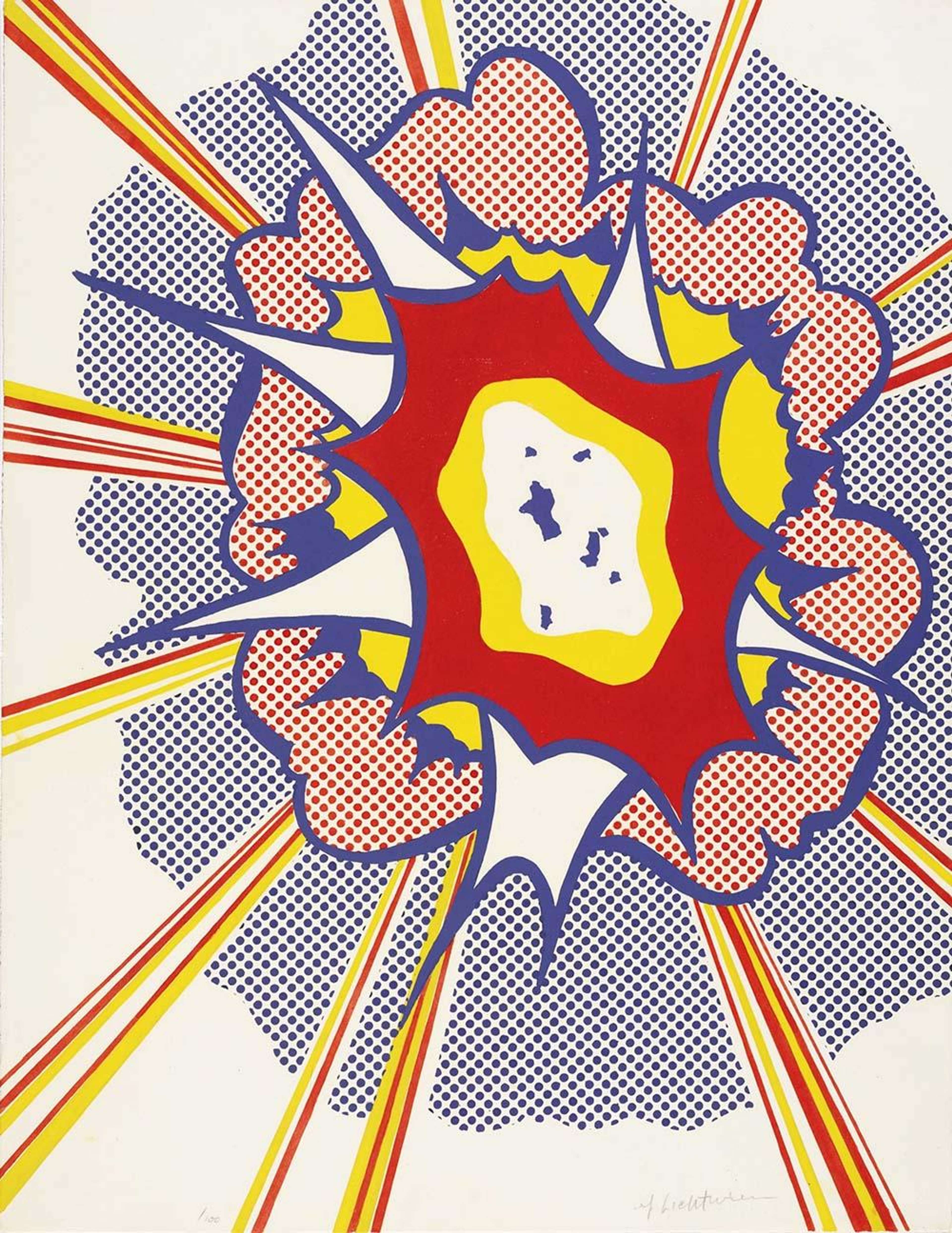
Lichtenstein’s comic-book imagery sits at the centre of his market. Works connected to crying girls, romance comics, explosions, speech bubbles and graphic female figures carry broad collector appeal because they are immediately recognisable as Lichtenstein.
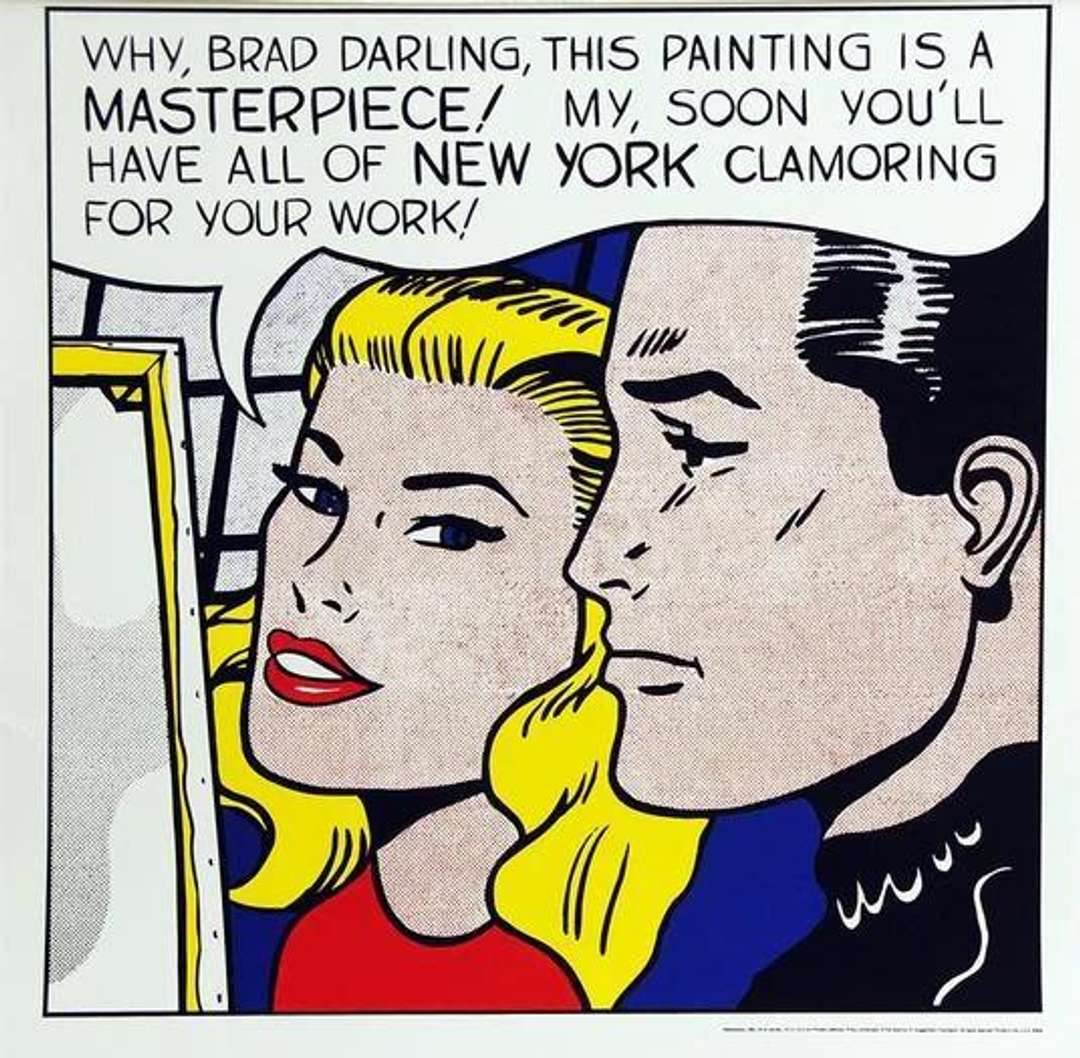
Early images such as Crying Girl, Shipboard Girl and Crak! remain important because they connect directly to the Pop breakthrough of the 1960s. The female figure, in particular, is one of the strongest value drivers across his print market.
This does not mean that other subjects lack value. Lichtenstein’s art-historical works can be extremely interesting and highly desirable to more academic collectors. But comic-book imagery has broader market recognition, and that breadth often supports stronger demand.
Art-Historical Series: Haystacks, Water Lilies, Bulls And Woodcuts
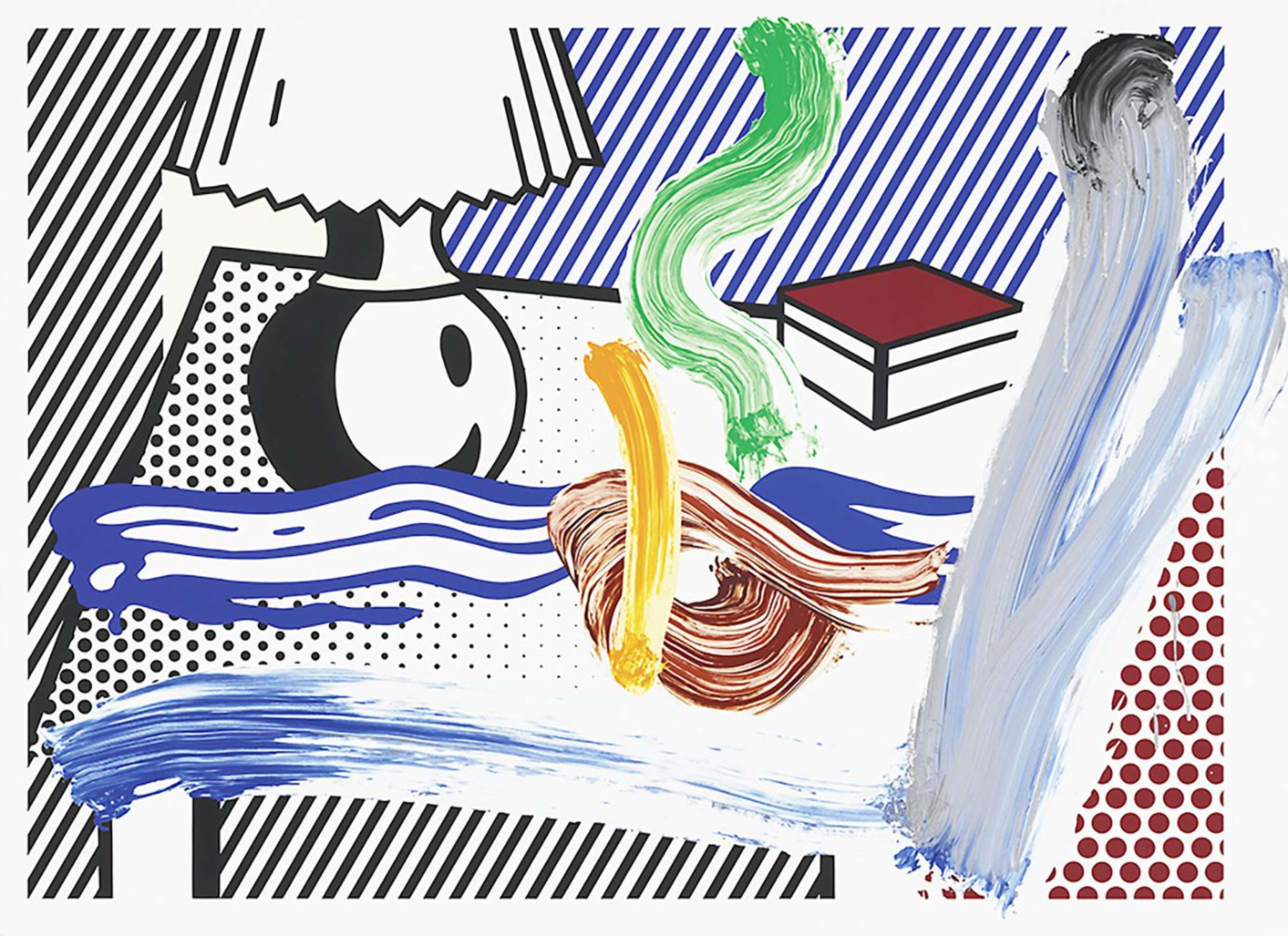
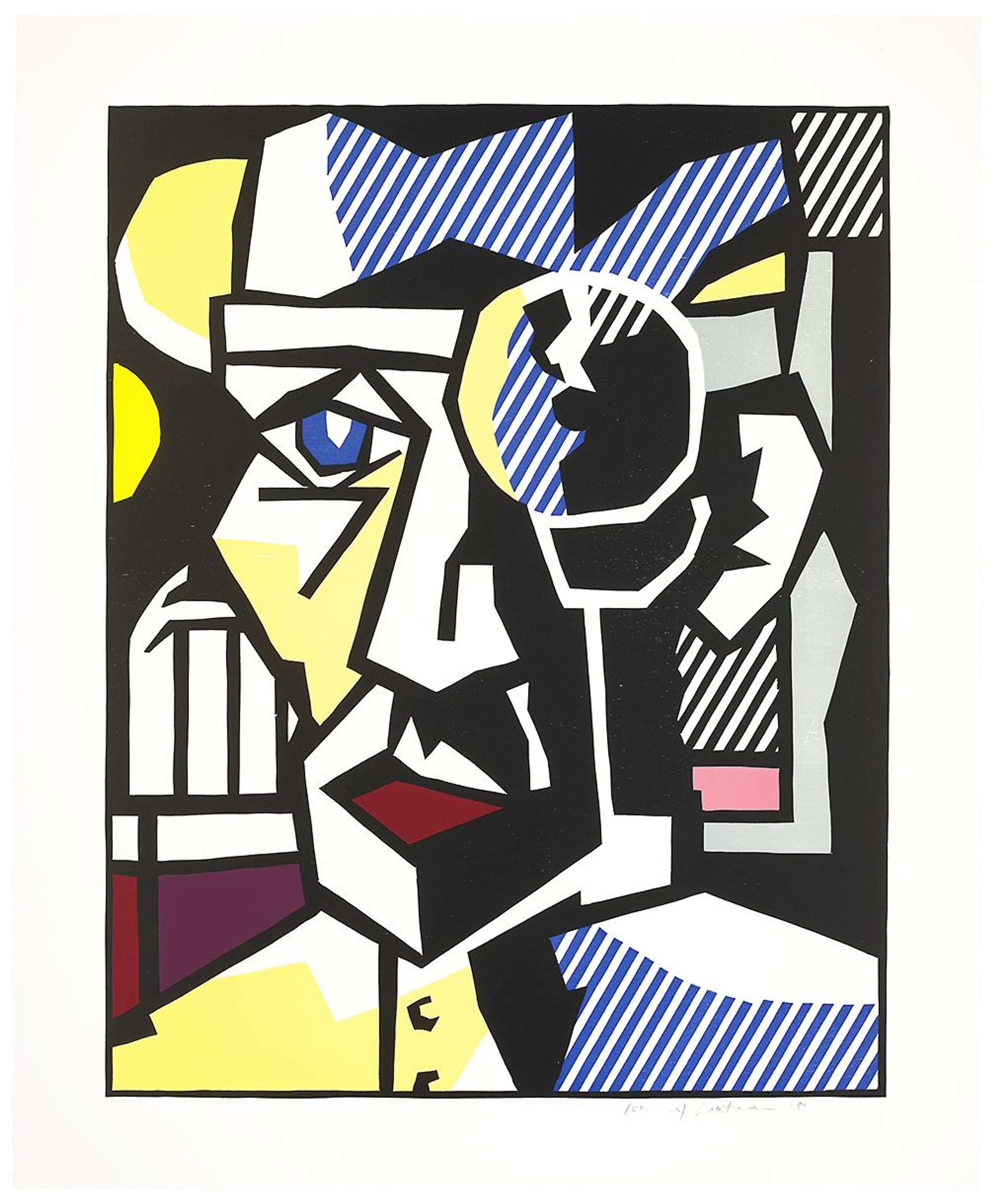
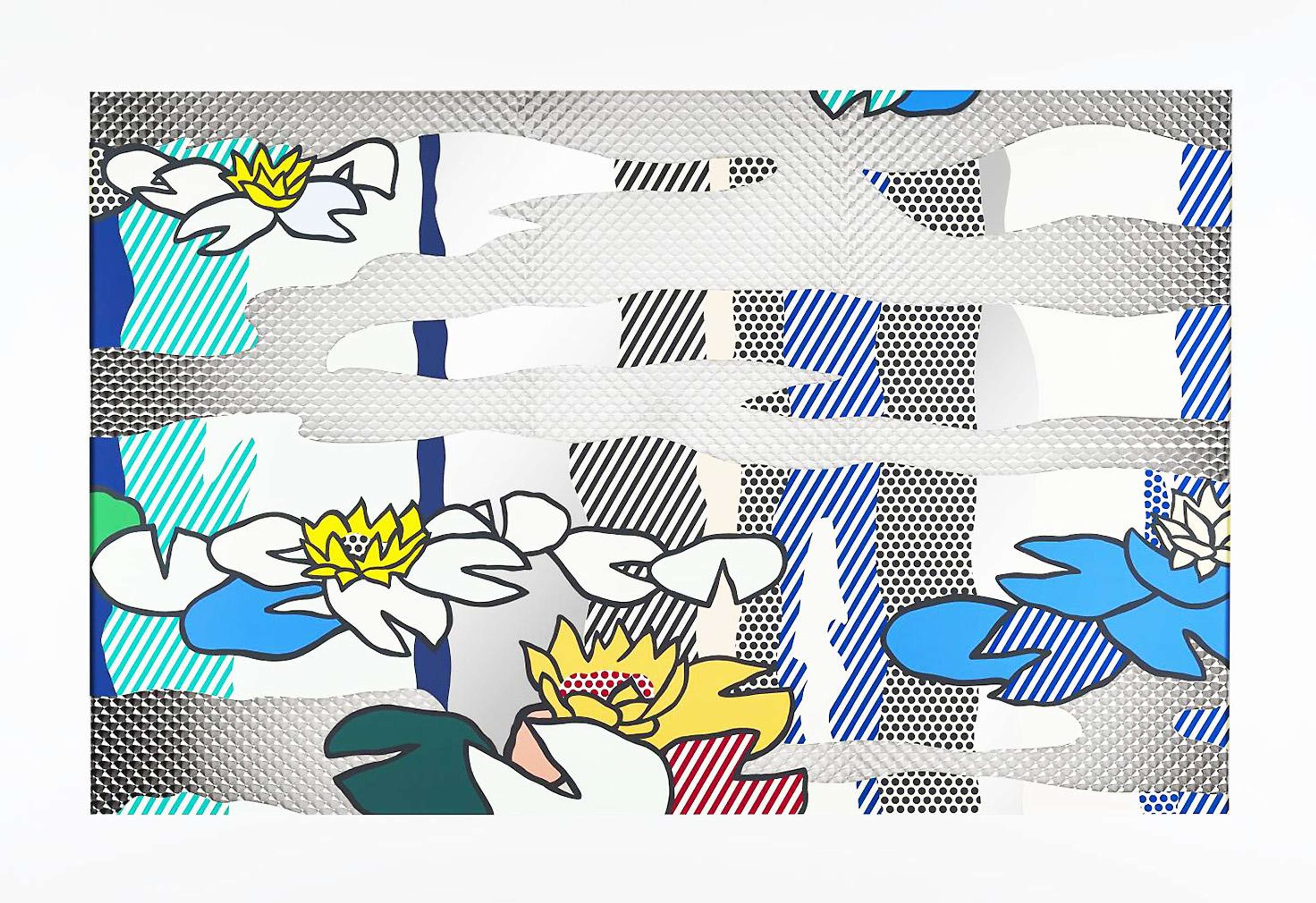
Lichtenstein repeatedly looked back through art history and reinterpreted it through his own visual language. His Haystacks and Water Lilies series respond to Monet. His Bulls engage with abstraction and Picasso-like reduction. His Expressionist Woodcuts reference early 20th-century German Expressionist printmaking. His Brushstrokes transform the language of painterly gesture into controlled Pop imagery.
These works appeal to collectors who understand the art-historical conversation. They may not always have the same instant mass appeal as the comic-book women, but they are central to understanding Lichtenstein’s intelligence as a printmaker.
This is important for valuation because the buyer pool may be different. A collector pursuing Haystacks may be motivated by Lichtenstein’s dialogue with Impressionism. A collector pursuing Brushstrokes may be interested in the artist’s critique of Abstract Expressionism. A collector pursuing Expressionist Woodcuts may be drawn to the historical printmaking reference.
Request an Instant Valuation for a fair market benchmark for your Roy Lichtenstein print.
Nudes
The Nudes are among the most valuable and desirable works in Lichtenstein’s print market. They combine large scale, strong visual impact, Pop figuration, polished production and late-career confidence.
Condition issues are generally less common in the Nudes than in earlier 1960s works because they were made later, with more robust materials and higher technical refinement. Colours tend to remain strong, paper issues are less frequent, and the scale gives the works significant wall presence.
However, the Nudes are not all valued equally. Image hierarchy matters. Some compositions are more desirable, more recognisable and more frequently requested. Recent auction performance can vary across the series, and a single strong result should not be applied evenly to every Nude.
A specialist valuation will consider the specific image, condition, edition number, provenance, recent comparable sales and current demand.
Reflections
The Reflections series is another major area of Lichtenstein’s print market. These works are technically sophisticated, visually layered and closely tied to the artist’s interest in mediation, reproduction and looking.
The series often incorporates reflective or collage-like elements that interrupt the image surface. These additions can make the works especially desirable, but they also create condition considerations. Where strips, reflective materials or added elements are present, a specialist will assess whether they are lifting, damaged, dulled, scratched or otherwise compromised.
Reflections On Girl is a strong example of the series’ appeal: it combines portrait imagery, reflective interruption and Lichtenstein’s signature graphic language. Works like this can attract collectors because they sit between classic Pop figuration and conceptual reflection on the image itself.
Enamel Works
Lichtenstein’s enamel works occupy the upper tier of his editioned market. Although they exist in small editions, they are often treated more like original works than standard prints.
Their value is driven by:
- Very small edition size
- Object quality
- Scale
- Material presence
- Scarcity
- Relationship to major Lichtenstein imagery
- Strong collector demand
These are not valued in the same way as a paper print. They are substantial objects, often large and physically imposing. Because of their rarity and price level, valuation depends heavily on provenance, condition, comparable sales and current private demand.
For MyArtBroker, enamel works sit within the broader prints and editions category, but they require a more bespoke approach, closer to the valuation of unique or near-unique works.
1960s Works vs Later Prints
The 1960s works carry major image desirability because they represent the period most closely associated with Lichtenstein’s Pop breakthrough. Works such as Crying Girl, Shipboard Girl and Crak! are among the first images collectors think of when they think of the artist.
However, these early works often come with more condition risk. Papers can be more delicate, colours may fade, and the works may have been framed or stored in ways that would not meet current conservation standards.
Later works, including the Nudes and Reflections, often benefit from stronger materials, more ambitious production, larger scale and fewer condition problems. This means value can be easier to retain because the work is not fighting the natural degradation of early paper or vulnerable colour.
The valuation therefore has to balance image desirability against condition reality. A 1960s image may be more iconic, but a later print may be materially stronger and more commercially straightforward.
Condition Issues In Lichtenstein Prints
Condition is a major factor in any Lichtenstein valuation. Common issues include:
- Fading
- Paper discolouration
- Foxing
- Mount burn
- Creasing
- Surface abrasions
- Poor framing history
- Damage to collage or reflective elements
- Yellow ink fading
- Paper deterioration in earlier works
Yellow ink can be particularly vulnerable to fading. Early works may also suffer from paper discolouration, especially where they have been exposed to light or framed with acidic materials.
For later works, condition issues are often less about the artist’s materials and more about how the work has been stored or framed. A poorly framed Lichtenstein print can still suffer damage, even if the materials were originally robust.
In Reflections and other works with additional surface elements, conservators may have limited ability to improve damage. That makes preventive care and careful condition review especially important.
Artist’s Proofs And Printer’s Proofs
Lichtenstein produced Artist’s Proofs and Printer’s Proofs, but they do not usually operate like Warhol’s unique trial proofs.
Warhol’s trial proofs can carry significant premiums because they may have unique colour combinations. Lichtenstein’s proofs are generally the same image and colourway as the standard edition. The premium, where it exists, is often more about perception and scarcity than material difference.
Printer’s Proofs may appeal to collectors because they suggest a closer relationship to the studio or production process. Artist’s Proofs may also be desirable because of their status outside the main edition. However, if the image itself is identical, the price discrepancy is not always substantial.
The more significant pre-edition material in Lichtenstein’s practice is often found in studies, drawings and works on paper. These are separate objects and should be valued as originals, not as proof impressions.
Studies And Works On Paper
Lichtenstein often made studies before executing an edition. These works can be recorded in catalogue raisonné material and may be directly related to later prints.
Unlike standard Artist’s Proofs or Printer’s Proofs, studies are usually unique works on paper. They can be much more valuable, but they require a different valuation process. Medium, date, relationship to the final edition, provenance, exhibition history and catalogue status all matter.
Sellers should not use print comparables to value a Lichtenstein study. It should be assessed separately as an original work.
Get in touch with Louisa to discuss a Roy Lichtenstein study or work on paper.
Scarcity And Demand
Scarcity matters in the Lichtenstein market, but only when combined with image desirability. A rare work that few collectors actively want will not necessarily command a strong premium. A scarce example from a highly desirable series, by contrast, can perform extremely well when it appears.
This is particularly true for Nudes and Reflections. Some works appear more frequently than others. When a rarer and more desirable image comes to market in strong condition, it can perform above previous comparables.
A specialist valuation will therefore assess both how often the work appears and how many collectors are likely to compete for it.
Estate Provenance And Market Anomalies
Estate provenance can have a major effect on Lichtenstein prices. When works from Dorothy Lichtenstein’s estate came to market, their provenance helped drive exceptional results. These sales are important market data, but they need careful interpretation.
An estate-backed result may not be directly comparable to a standard open-market example. Buyers may pay a premium for estate provenance because it offers exceptional freshness, direct connection and confidence.
For valuation, this means a specialist has to distinguish between ordinary comparables and provenance-driven anomalies. A record estate result should not automatically reprice every impression from the same edition.
Auction Results And Private Sales Data
Auction results provide a strong public benchmark in Lichtenstein’s market because the artist was a prolific printmaker and many editions have appeared publicly over time.
However, auction results still require interpretation. A work may exceed estimate because of provenance, rarity, condition or competition. Another may fail to sell because the estimate was too high, the timing was wrong, or the condition was weaker than expected.
At MyArtBroker, auction data is combined with private sales data. This can be especially useful where MyArtBroker has handled a comparable work more recently than the latest public auction result, or where a work has stronger private demand than auction data alone suggests.
Why A Specialist Valuation May Differ From An Auction Estimate
An auction estimate is designed to encourage bidding in a public sale. A gallery price may include a retail premium. A MyArtBroker valuation is designed to reflect fair market value: what a buyer is prepared to pay and what a seller can realistically expect to receive.
For Lichtenstein, this distinction matters because pricing can be affected by provenance, edition hierarchy and private demand. A specialist valuation can account for whether a work belongs to a high-demand series, whether the condition is strong, whether the provenance is exceptional, and whether recent auction results have been distorted by estate sales.
The aim is not to inflate the value, but to price accurately and strategically.
How To Prepare Your Roy Lichtenstein Print For Valuation
Before requesting a valuation, gather:
- High-resolution front and back images
- Close-ups of signature and numbering
- Close-ups of any publisher marks or reverse inscriptions
- Accurate sheet and image dimensions
- Details of medium
- Any gallery or publisher documentation
- Any auction history
- Any condition report
- Framing and storage history
- Images of any areas of damage, fading or surface change
Do not clean, restore or unframe the work without specialist advice. If the work is high value, a professional condition report can materially improve the accuracy of the valuation.