Still
Life
Reminiscent of 17th-century Dutch still life painting in its allusion to realism and starkly contrasted dark background, Julian Opie's Still Life prints bring the art historical genre sharply up to date through his bold, graphic style. Opie parallels the artificial nature of the items represented with his methods and style of working that defy the presence of the artist’s hand.
Julian Opie Still Life For sale
Still Life Value (5 Years)
With £5964 in the past 12 months, Julian Opie's Still Life series is one of the most actively traded in the market. Prices have varied significantly – from £400 to £3873 – driven by fluctuations in factors like condition, provenance, and market timing. Over the past 12 months, the average selling price was £596, with an average annual growth rate of -9.29% across the series.
Still Life Market value
Auction Results
| Artwork | Auction Date | Auction House | Return to Seller | Hammer Price | Buyer Paid |
|---|---|---|---|---|---|
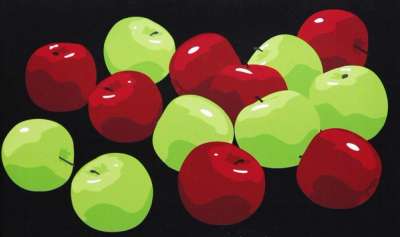
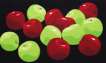 Still Life With Red And Green Apples Julian Opie Signed Print | 13 Feb 2025 | Tate Ward Auctions | £340 | £400 | £500 |
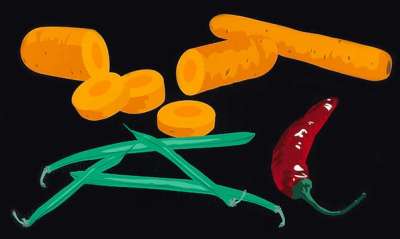
 Still Life With Green Beans Chilli Pepper And Carrots Julian Opie Signed Print | 30 Oct 2024 | Tate Ward Auctions | £340 | £400 | £500 |
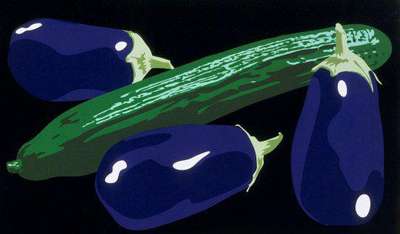
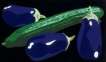 Still Life With Aubergines And Cucumber Julian Opie Signed Print | 24 Oct 2024 | Forum Auctions London | £553 | £650 | £800 |
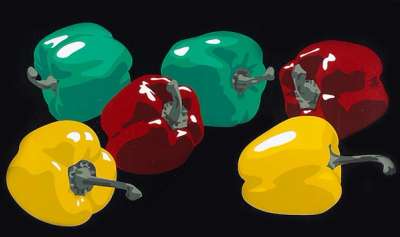
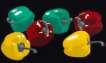 Still Life With Yellow Red And Green Peppers Julian Opie Signed Print | 18 Sept 2024 | Tate Ward Auctions | £425 | £500 | £700 |
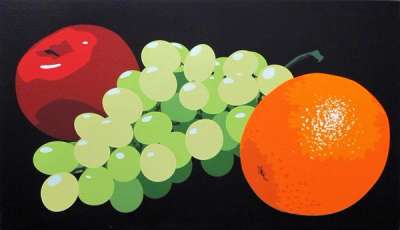
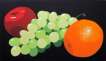 Still Life With Apple, Orange And Grapes Julian Opie Signed Print | 18 Sept 2024 | Tate Ward Auctions | £383 | £450 | £650 |
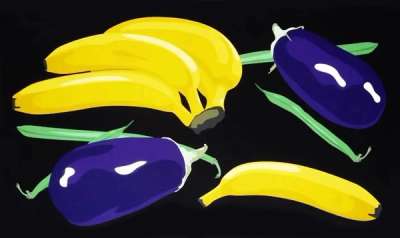
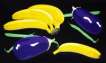 Still Life With Bananas, Aubergines And Green Beans Julian Opie Signed Print | 18 Sept 2024 | Tate Ward Auctions | £383 | £450 | £650 |
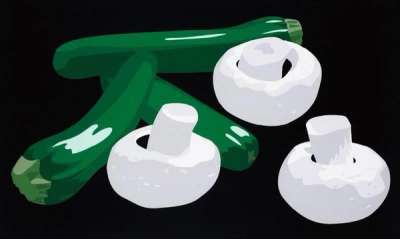
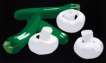 Still Life With Mushrooms And Courgettes Julian Opie Signed Print | 14 Aug 2024 | Tate Ward Auctions | £468 | £550 | £750 |
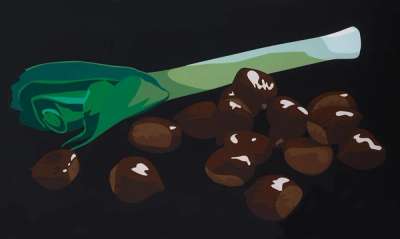
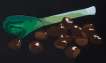 Still Life With Chestnuts And Leek Julian Opie Signed Print | 14 Aug 2024 | Tate Ward Auctions | £468 | £550 | £750 |
Sell Your Art
with Us
with Us
Join Our Network of Collectors. Buy, Sell and Track Demand
Meaning & Analysis
Julian Opie’s Still Life series from 2001 brings together eight still life compositions of fruit and vegetables, all depicted in bright, saturated colours and set against a black backdrop. Much like many of Opie’s works since the 2000s, this series uses very similar titles and compositions for every print.
Working within the established art historical tradition of still life painting, Opie takes the opportunity in his Still Life series to use this subject as a study of colour and tone and explore a more realistic artistic style. Reducing light and shadow into simplified shapes of block colour, this composition toes the line between tradition and contemporaneity in its clever blend of subject matter and style.
Reminiscent of 17th century Dutch still life painting in its allusion to realism and starkly contrasted dark background, Opie presents a twenty-first century version of the classic art historical genre through his use of computer technology, saturated colour and simplified form. Rather than use unusual and morally charged subjects in this series as traditional paintings of the genre would, Opie uses fruit and vegetables found in everyday life to create the subject of these prints.
Throughout his entire career Opie has been interested in engaging with the traditions of art history, notably in his works A Pile of Old Masters (1983) and Eat Dirt, Art History (1983). Engaging with canonical styles of art history, Opie demonstrates his interest not in representing reality but how reality is represented to the viewer. Still Life with Bananas, Aubergine and Green Beans is also indicative of Opie’s claim that the artist and viewers of art will always be constrained by the principles and traditions of art history. Of this in relation to his work, Opie has said, “It was an acknowledgement of the hopeless position of the art student in light of art history, but also a rally call not to feel overwhelmed by it.”