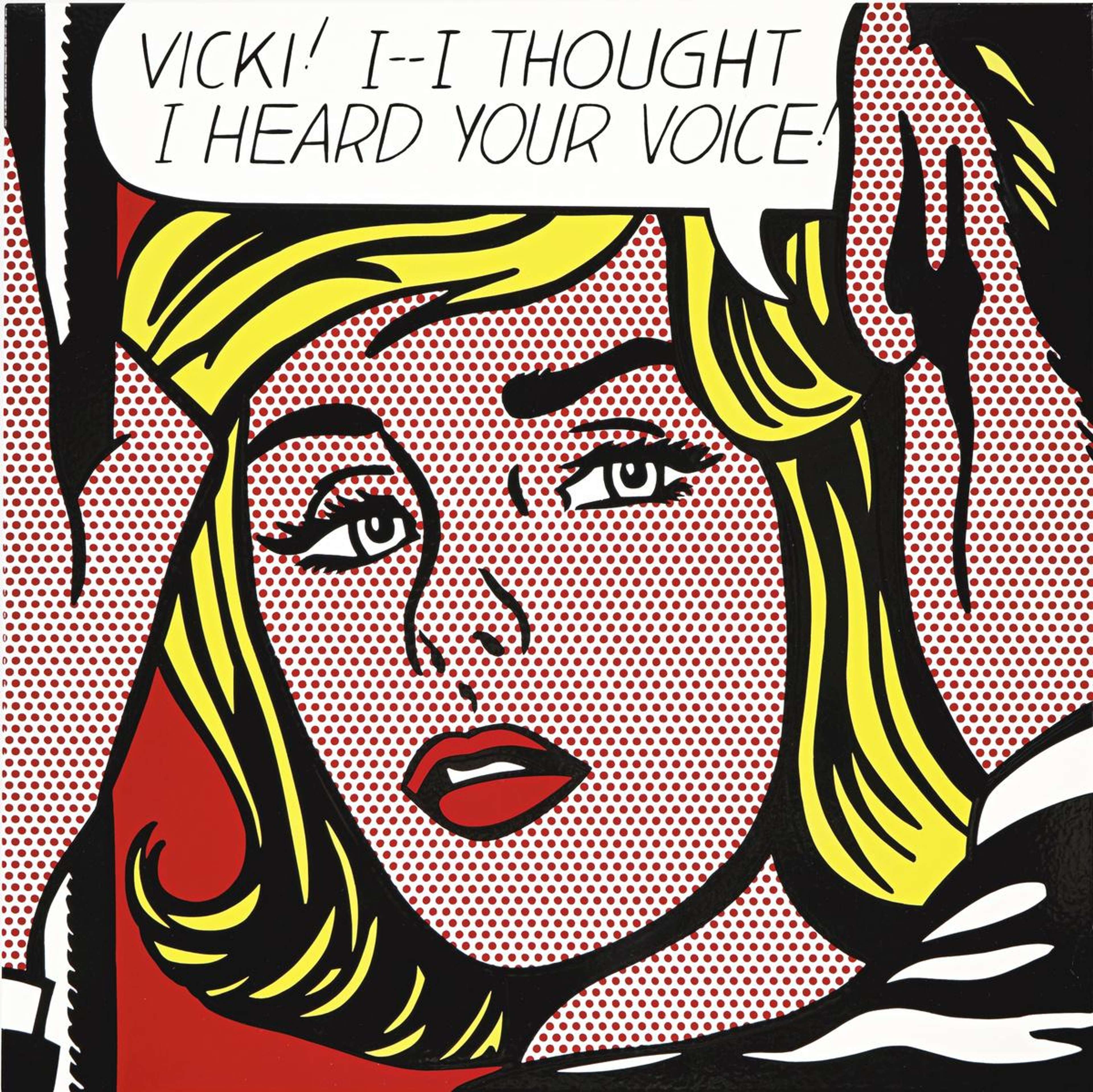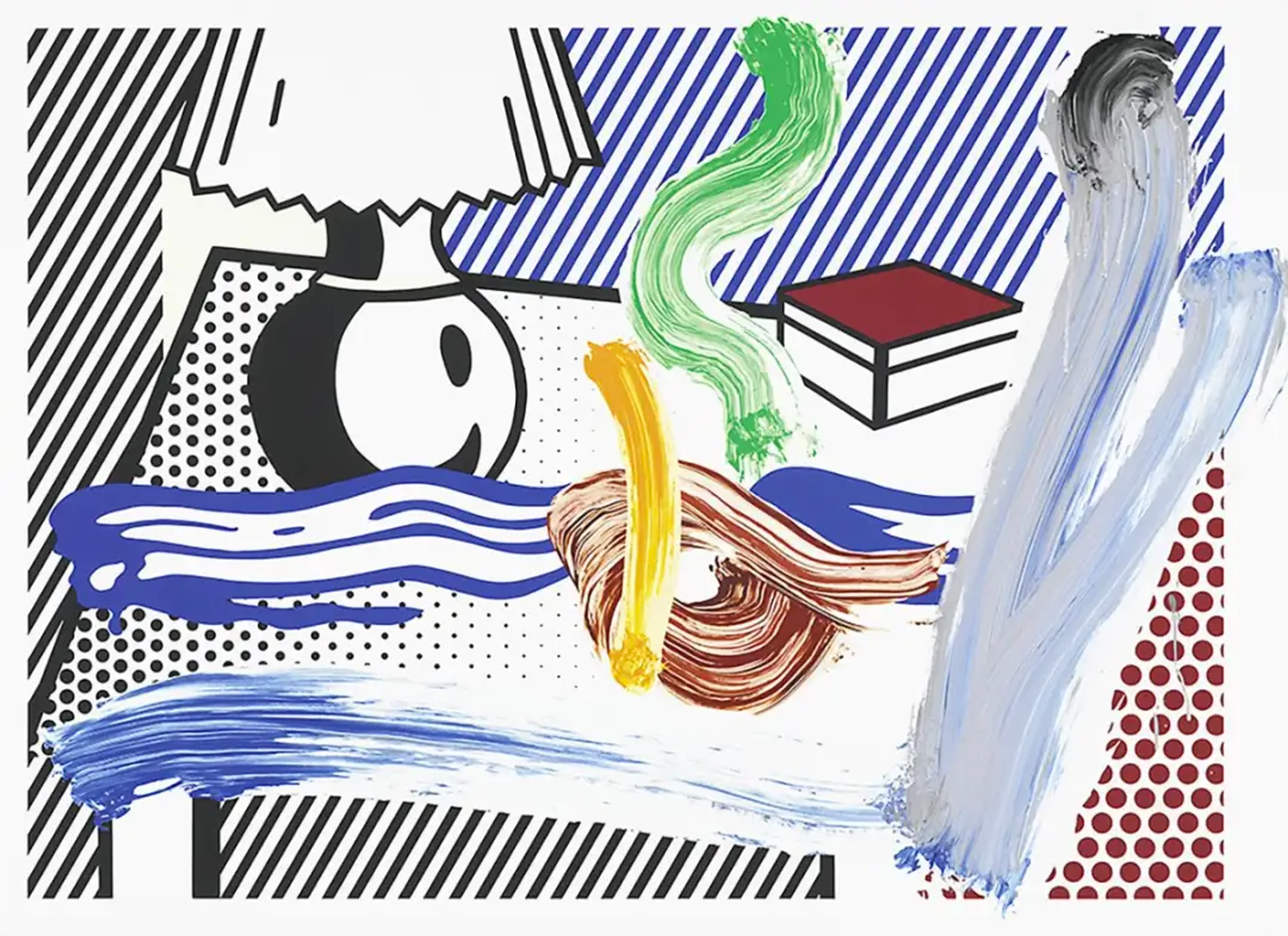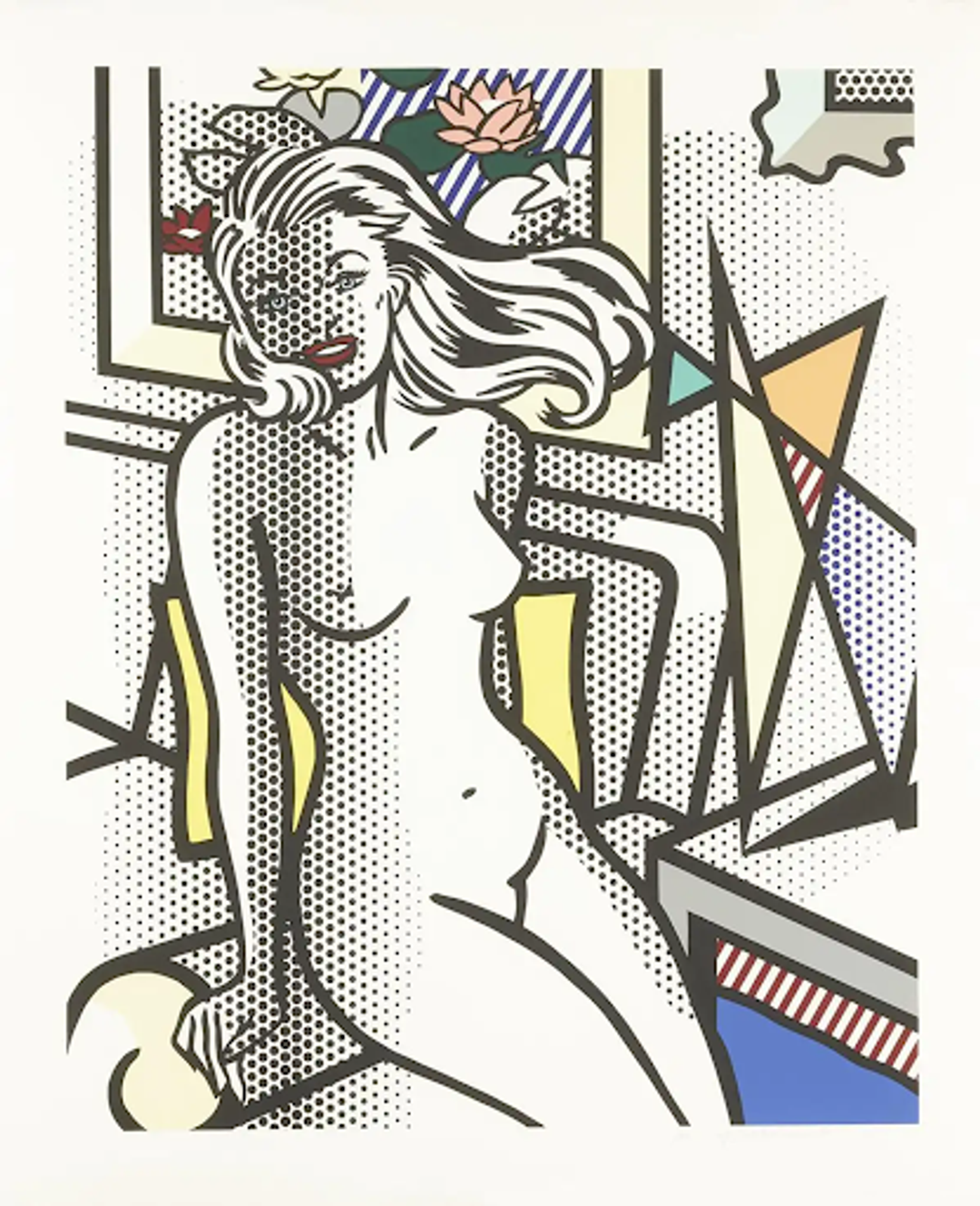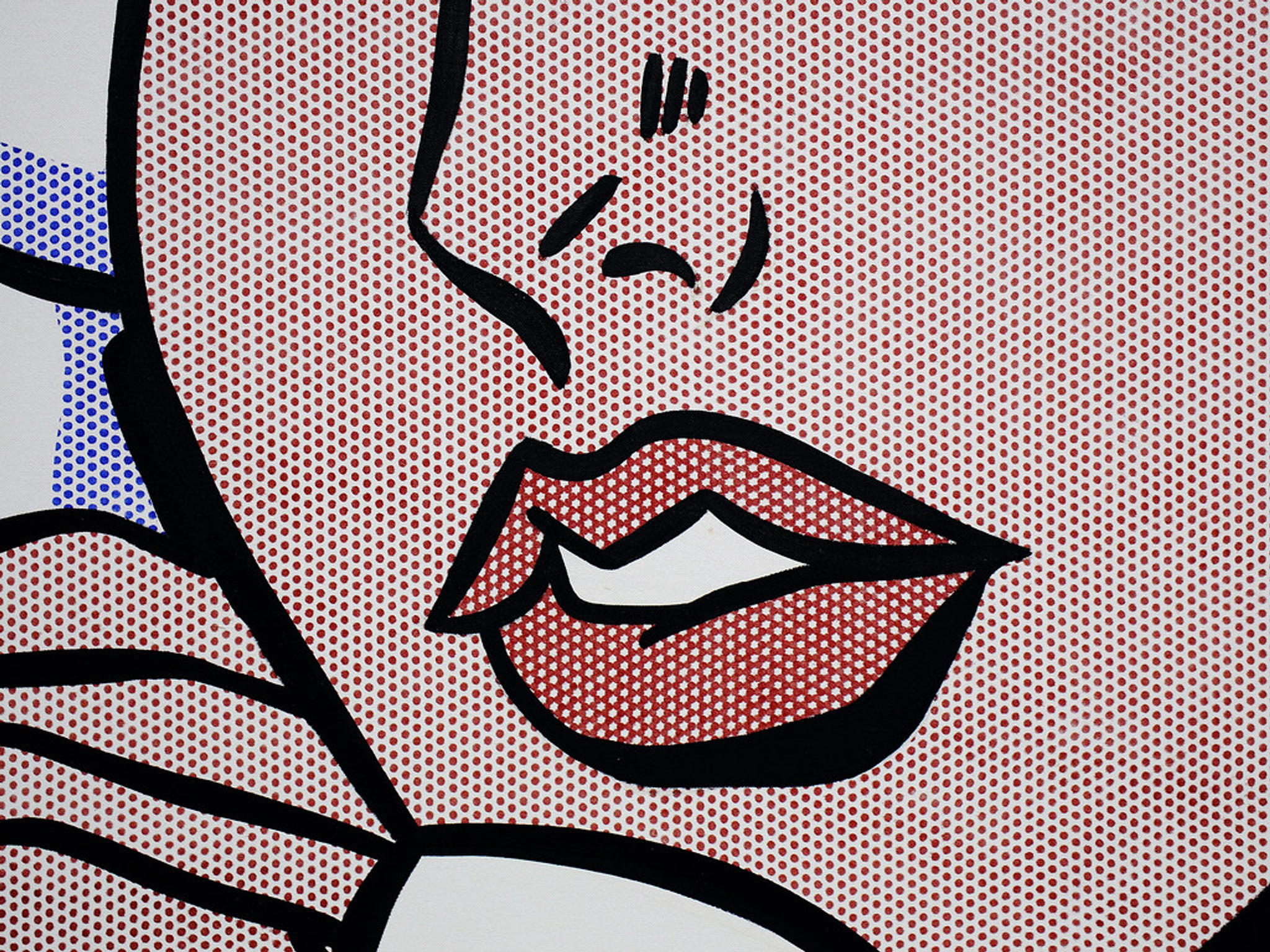


Completed in 1984, Roy Lichtenstein's Paintings series brings together eight prints that interrogate the traditional medium of “painting” and what that means in a mass-media age. The series utilises his Pop Art language to produce prints that are witty, self-aware, and function as an argument about authorship and replication.
Roy Lichtenstein’s Paintings (1984) Is an Eight-Part Print Series
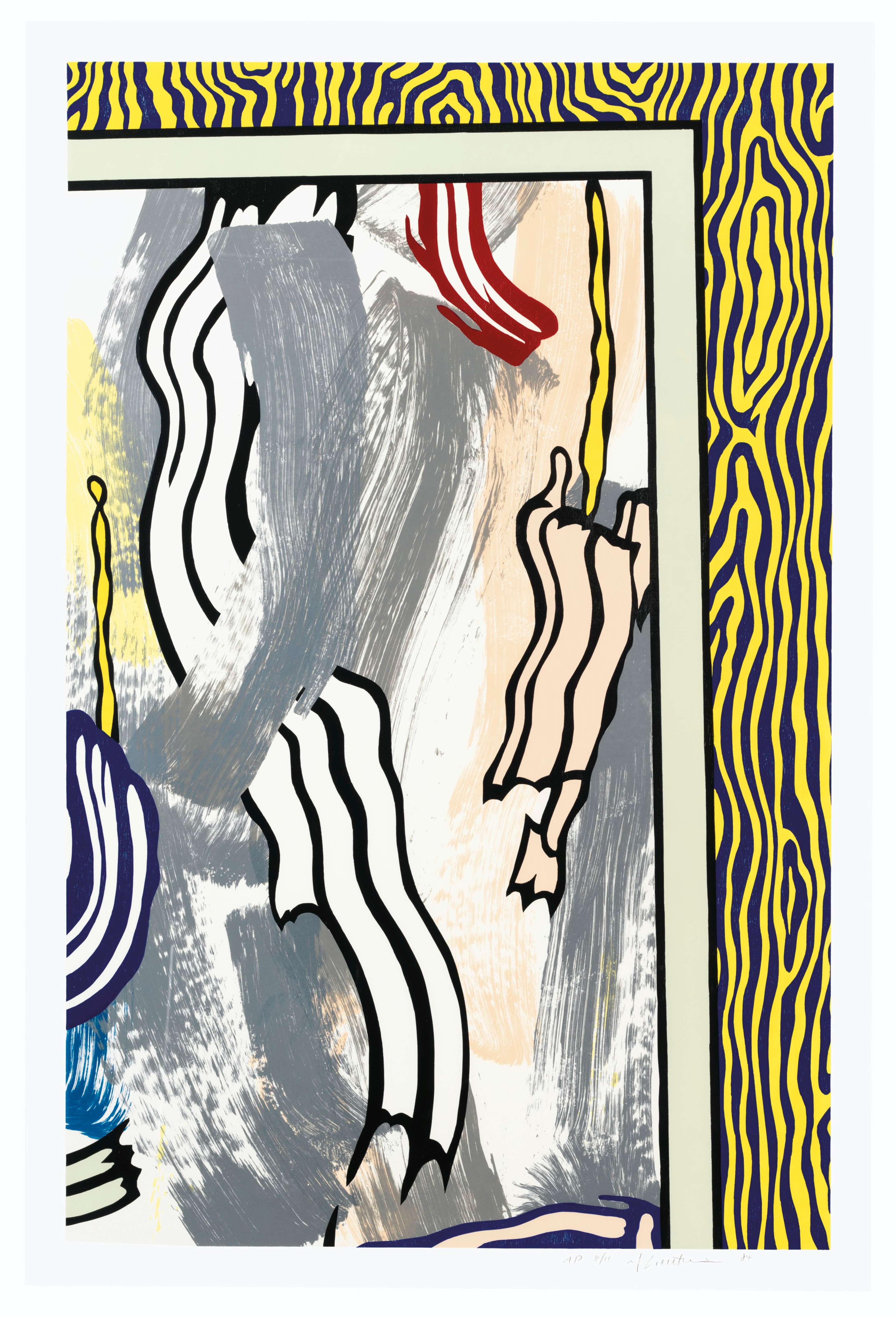
Lichtenstein’s Paintings series gathers eight prints using collage, woodcut, lithograph and screenprint to ask what painting means in a media-saturated world. His Pop Art techniques such as Ben-Day dots, flat colour, and bold outline appear in compositions that are engineered to be intentionally self-aware. Together, the prints showcase how Lichtenstein remains a printmaker who always thought like a painter.
Fictitious picture frames are the central motif of the series
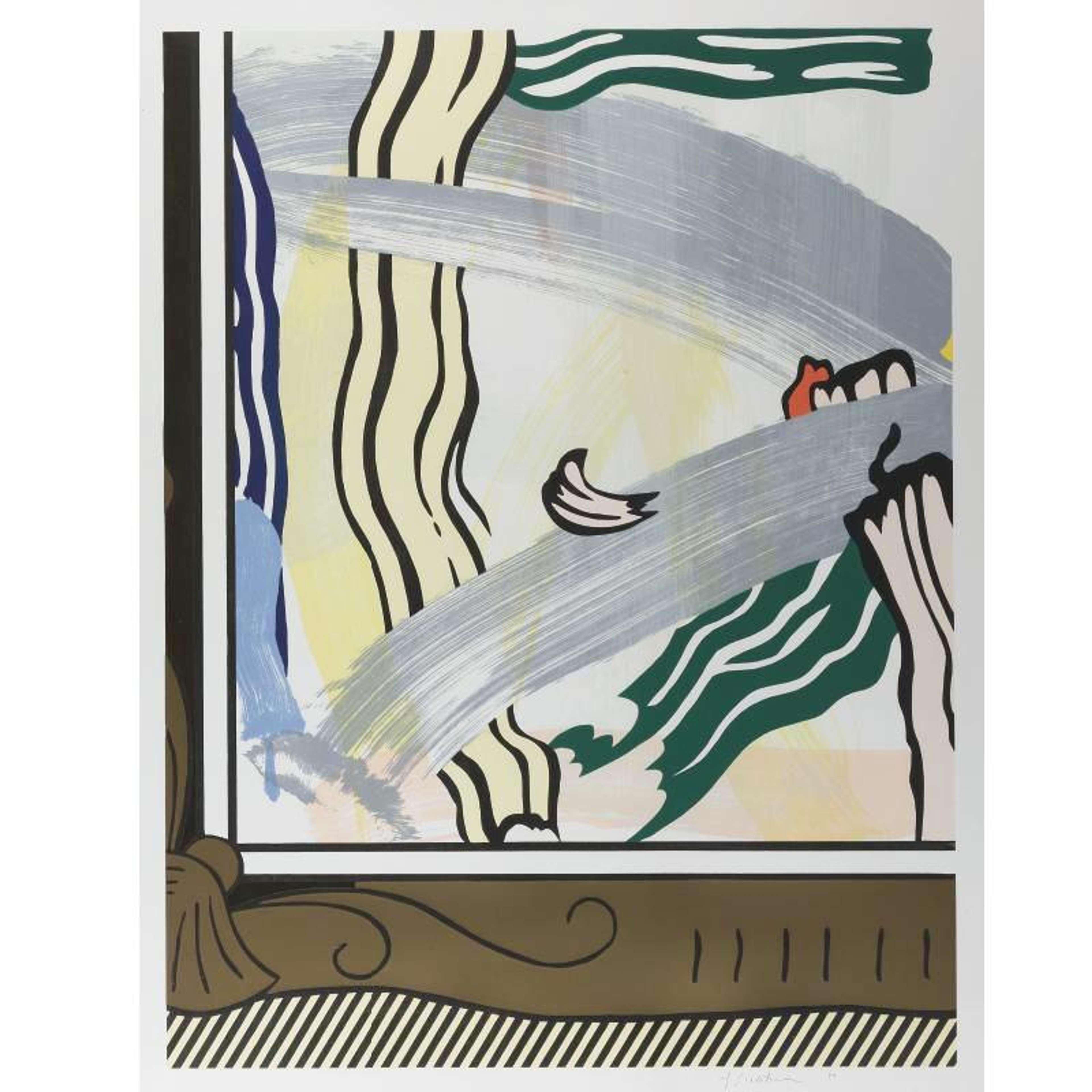
Each print is built around frames-within-frames: painted borders that appear as frames but are themselves printed illusions. This device stages pictures about pictures, inviting the viewer to question what counts as an “original” and where the artwork actually begins and ends. By stacking frames, Lichtenstein stages reproduction and appropriation so that the act of looking becomes part of the subject - making originality feel provisional, contingent and always up for renegotiation.
The series reimagines classical genres through Pop Art language
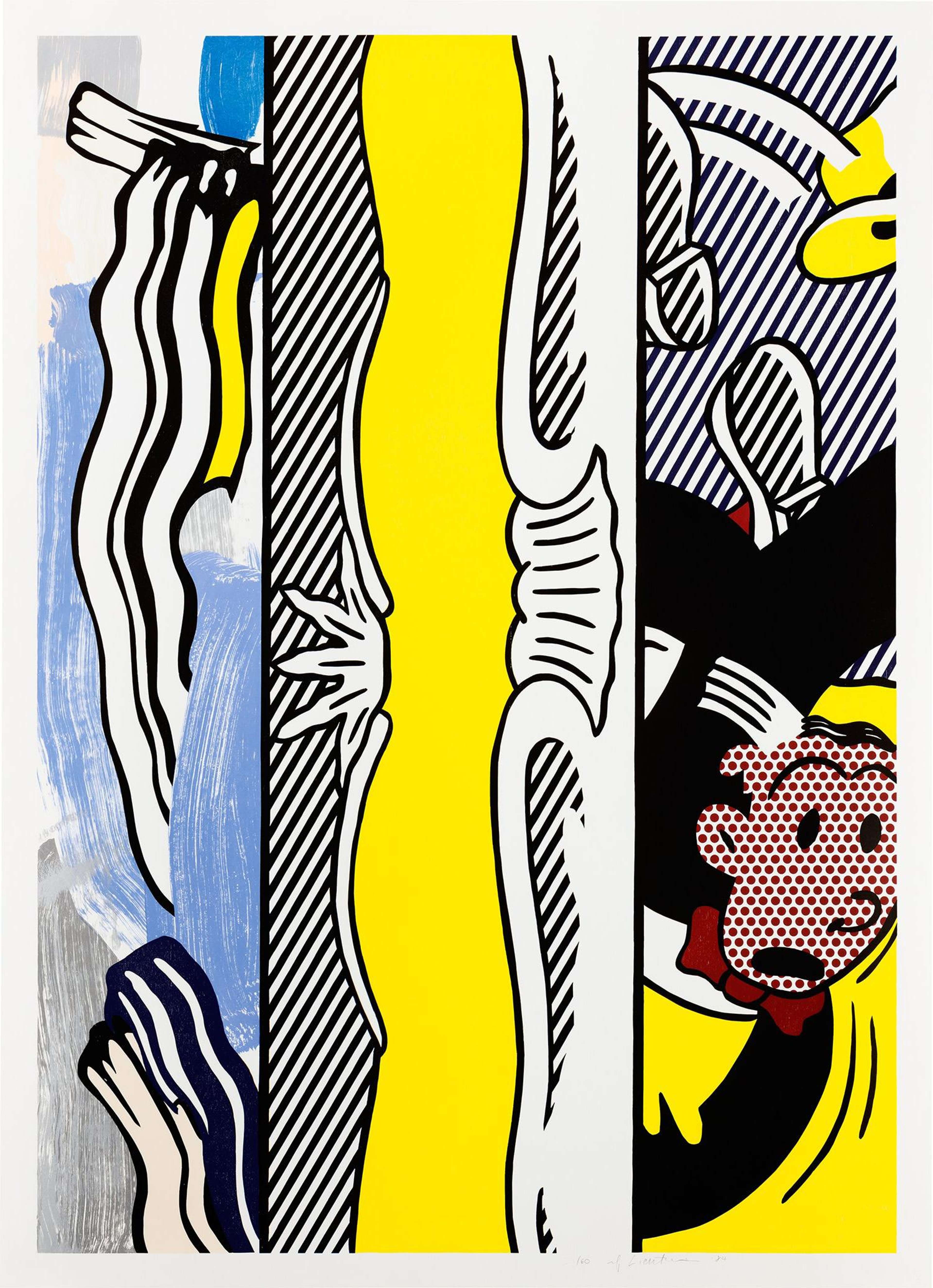
Paintings borrows from the canon of still life, landscape, and portrait and filters it through Pop Art Language. Lichtenstein replaces traditional representations with clean outlines and Ben-Day texture, flattening depth while preserving recognisable motifs. The result is a contemporary recasting of old-master tropes: tabletops, lamps, busts and vistas. By borrowing items from different genres and rephrasing them in Pop terms, the series treats art history as material: quotable, expandable, open to reinterpretation.
Hand-painted and machine-made patterns are combined across multiple print techniques
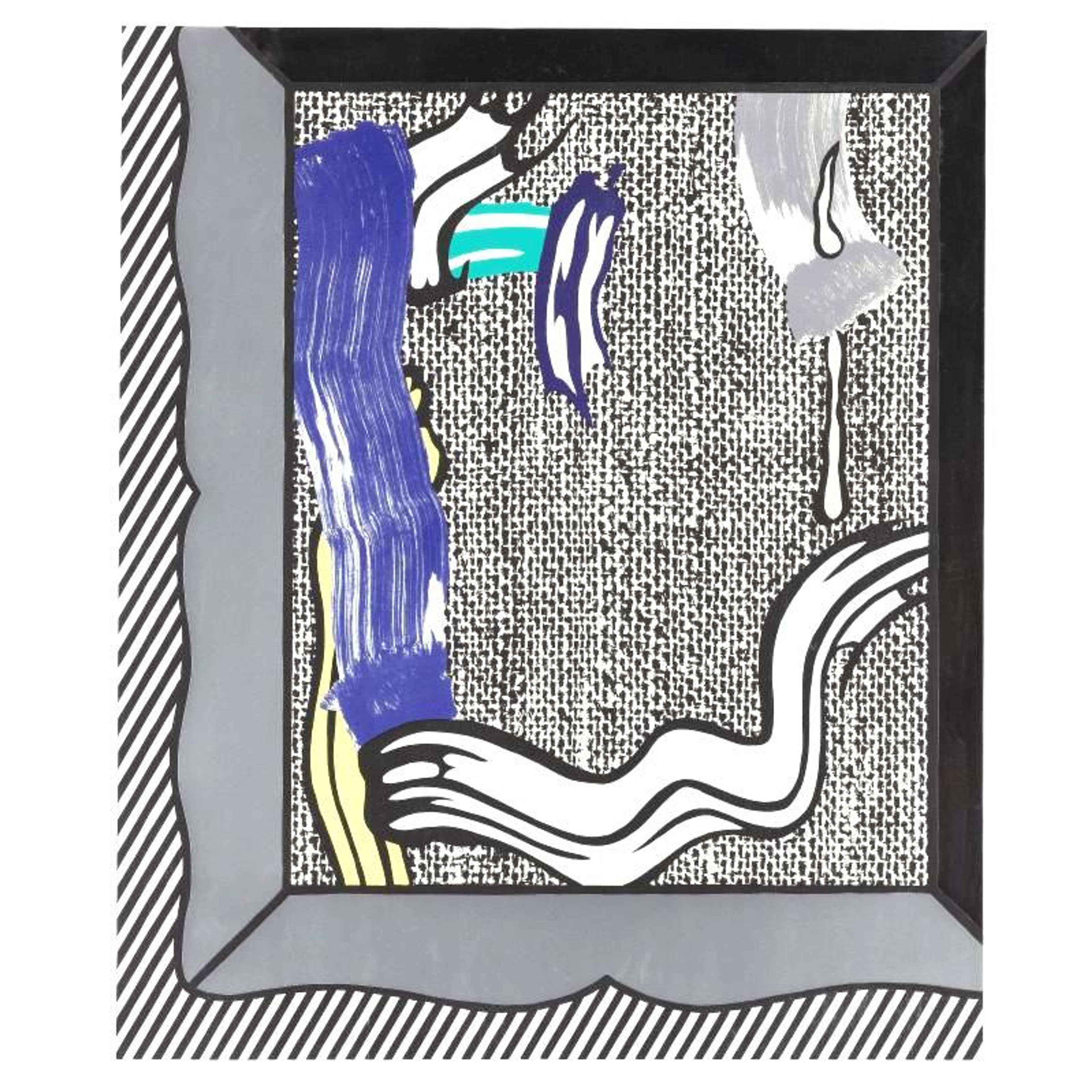
Lichtenstein uses collage, woodcut, lithograph and screen print to introduce the handmade with the industrial. Hand-drawn passages and painterly brushstrokes exist beside regular dot fields and cut stencils, producing friction between spontaneity and reliability. This layered production underscores the series’ thesis: the “artist’s hand” and mechanical reproduction are not opposites but collaborators.
Lichtenstein’s brushstroke motif parodies and celebrates Abstract Expressionism
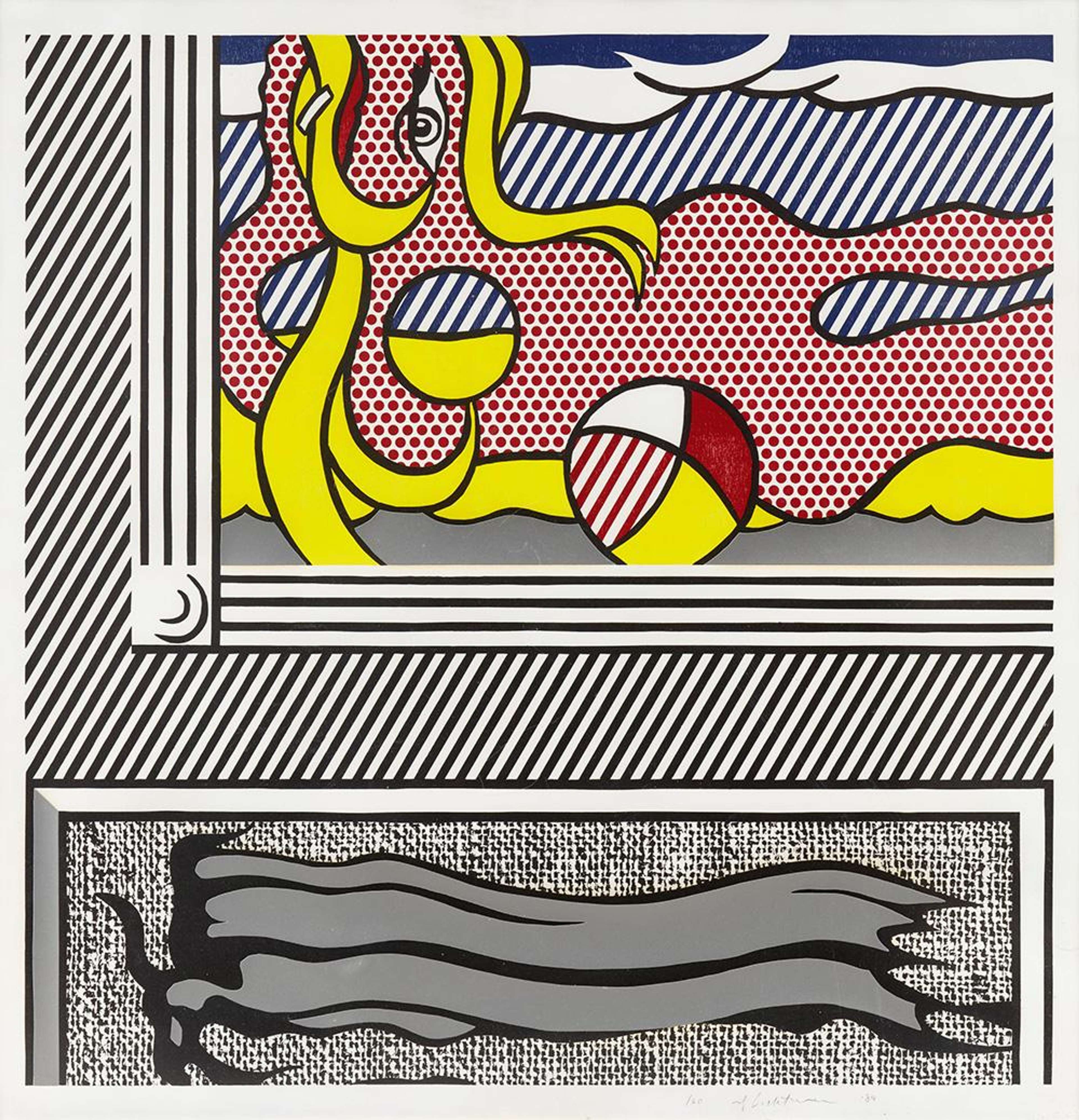
Across Paintings, the brushstroke appears as a stylised emblem. This both celebrates the style of Abstract Expressionism while teasing its cult of authenticity. By translating brushstrokes into perfect, repeatable motifs, Lichtenstein demonstrates how expression becomes image. The mark that once guaranteed presence now circulates as a reproducible motif. The series interrogates this paradox by asking whether meaning resides in the medium, the system, or the viewer’s recognition.
The series deliberately oscillates between representation and abstraction
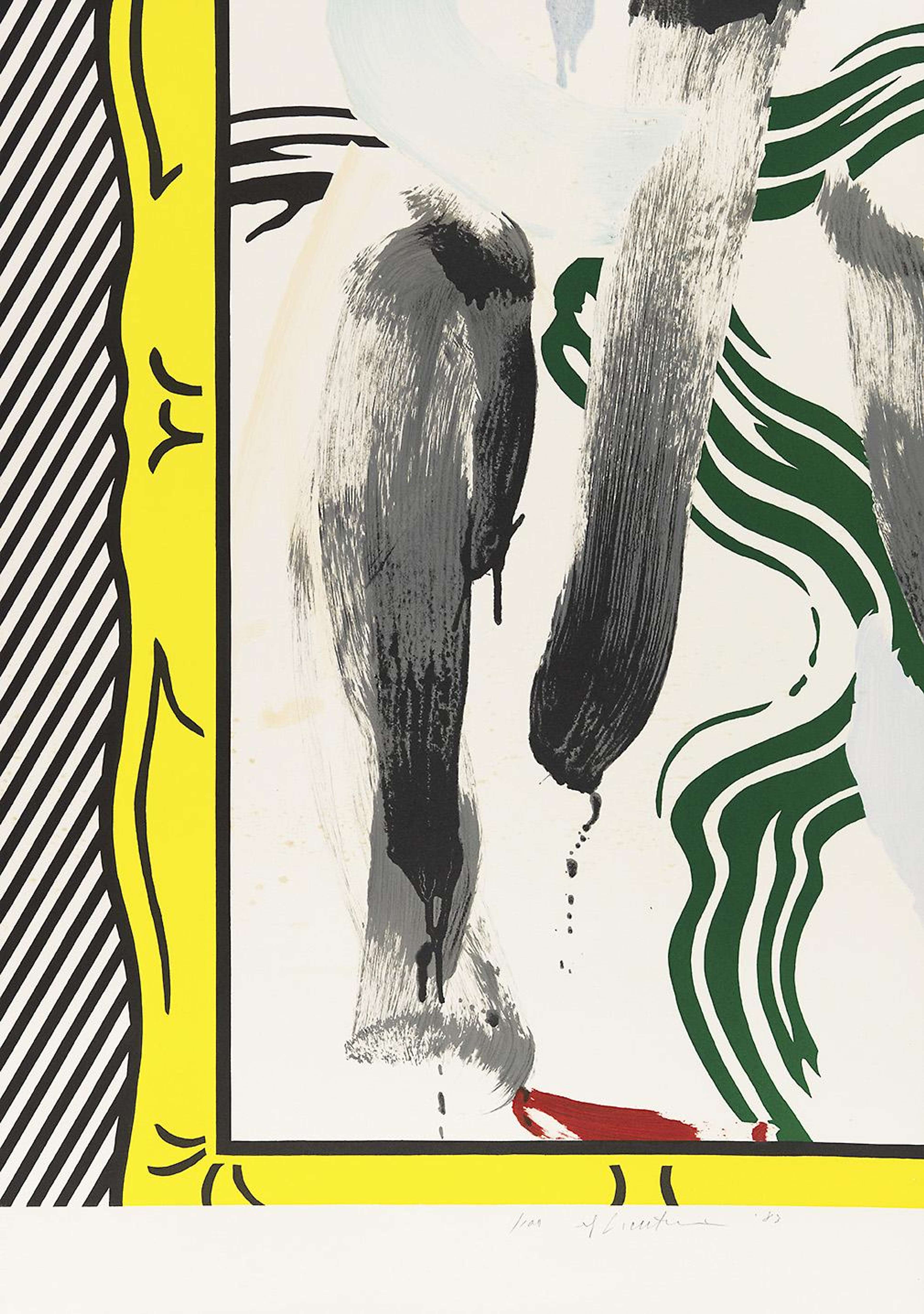
Prints in the series oscillate between figurative, minimalist and abstract modes. Mirrors, cast shadows, yet flat colour blocks and dot fields deny any real depth. Lichtenstein uses these feints to keep perception unstable: is that a room or a diagram, a sculpture or a silhouette? This optical ambiguity keeps attention trained on how images are built from conventions so the viewer notices the rules of seeing as much as the objects depicted.
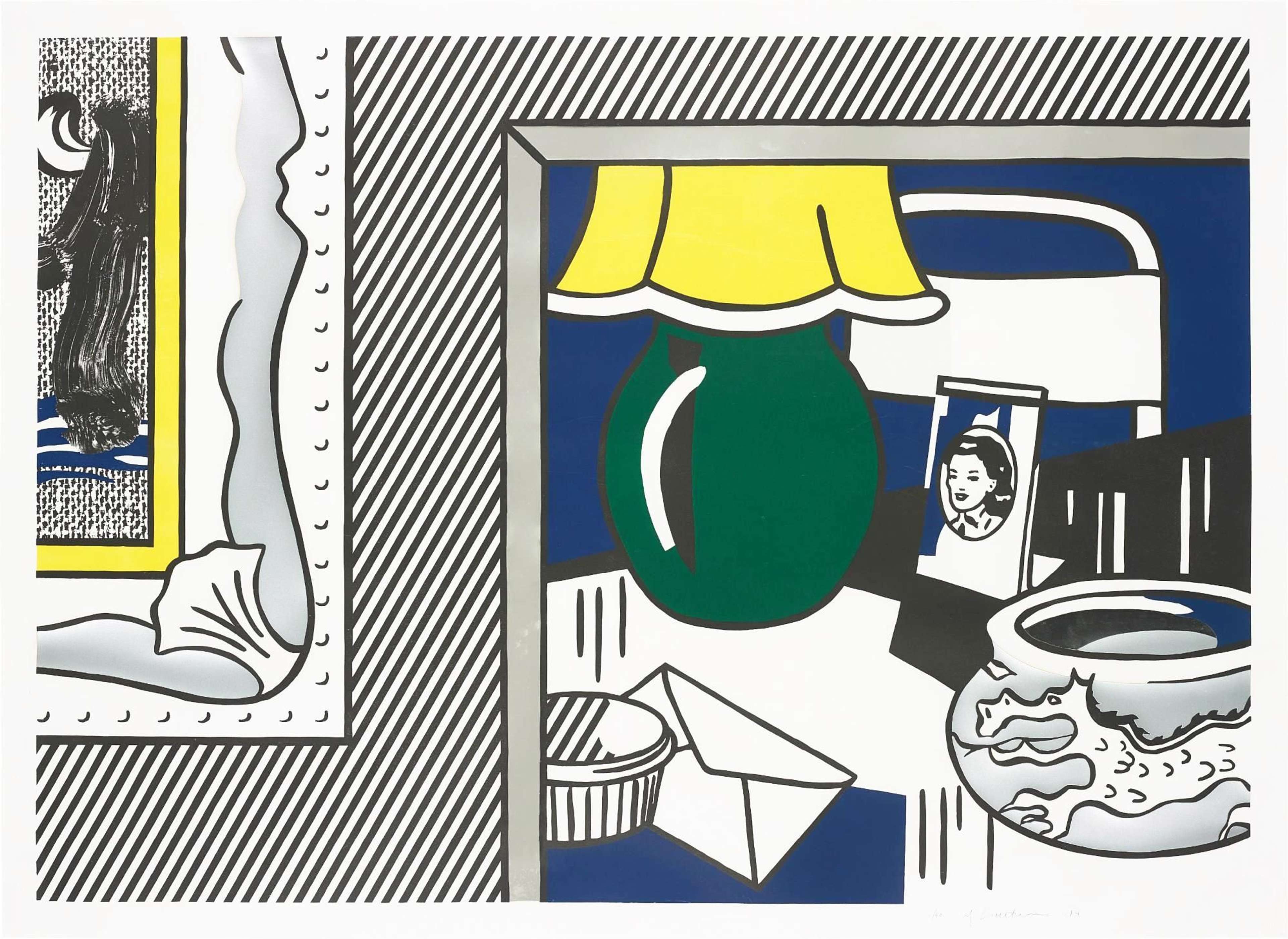
Two Paintings: Green Lamp (1984) satirises the divide between high and low art
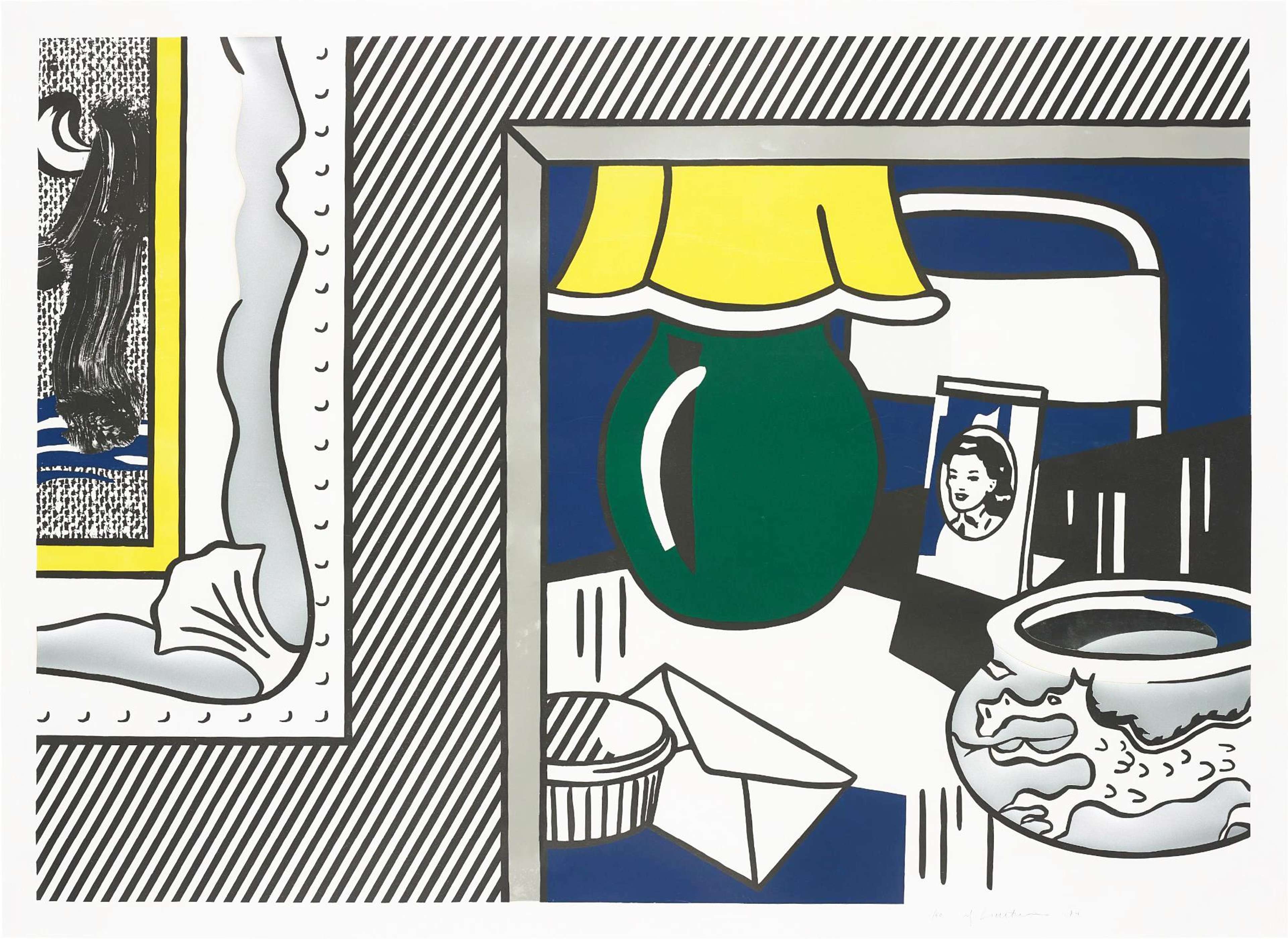
Two Paintings: Green Lamp stages a still life consisting of a lamp, tabletop, and interior that is clearly an homage to old-master domesticity. But the scene also doubles as an image of a painting, and then of another painting again. The title’s deadpan “Two Paintings” hints at the smuggling of Pop Art into a canonical set-up, and through this Lichtenstein collapses distinctions between “high” culture and mass imagery, showing how both are sustained by framing, style and repetition.
Two Paintings: Sleeping Muse explores the “Sleeping Beauty” archetype within a Pop interior
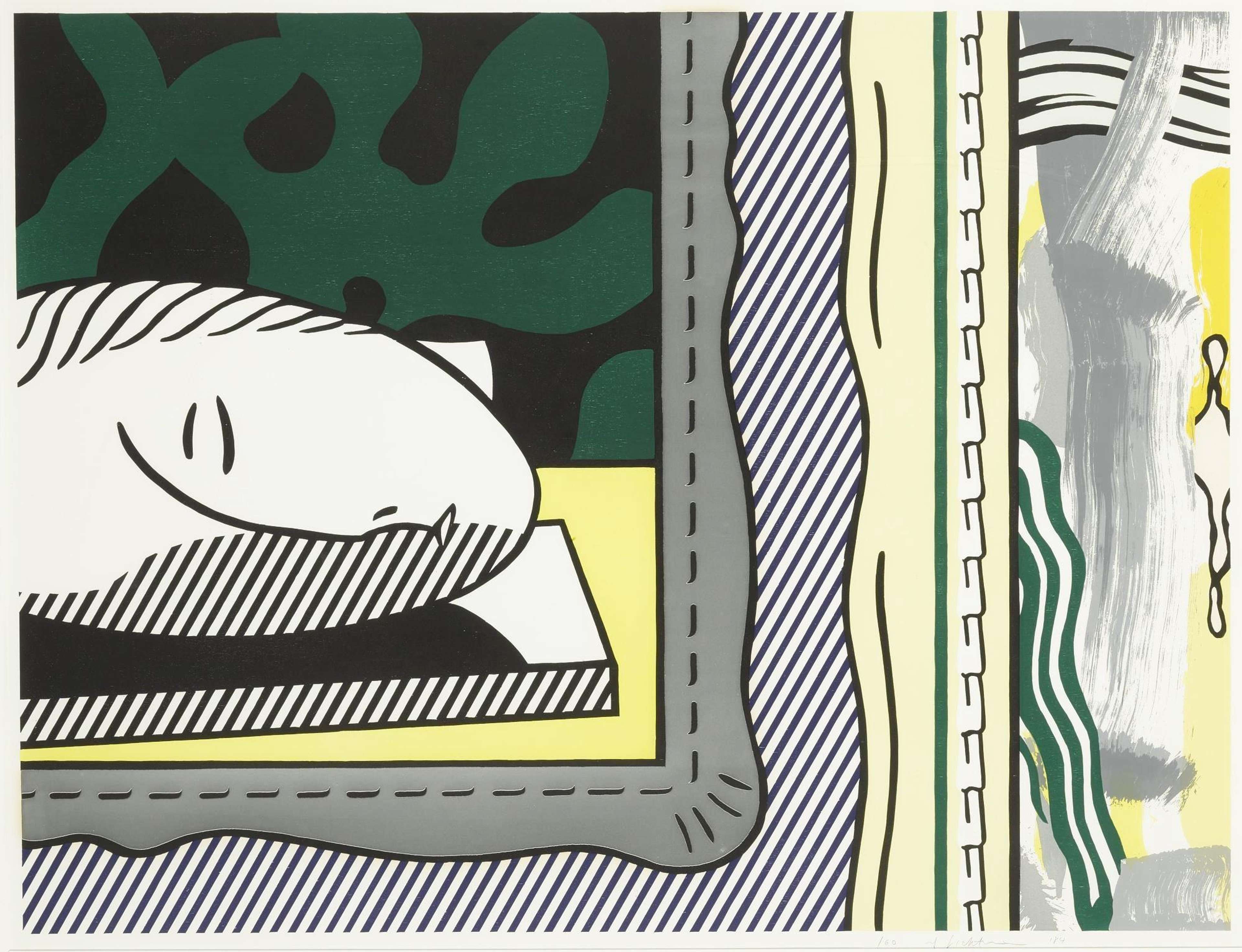
In Two Paintings: Sleeping Muse, the reclining muse appears as a beheaded statue nestled inside a Pop-modern interior, then re-pictured again within Lichtenstein’s mock frames. The timeless theme of the sleeping female figure refuses to offer access to a singular, original muse, but instead reframes the Sleeping Beauty trope as a contemporary image.
The title Paintings underscores a debate about originality and reproduction in print
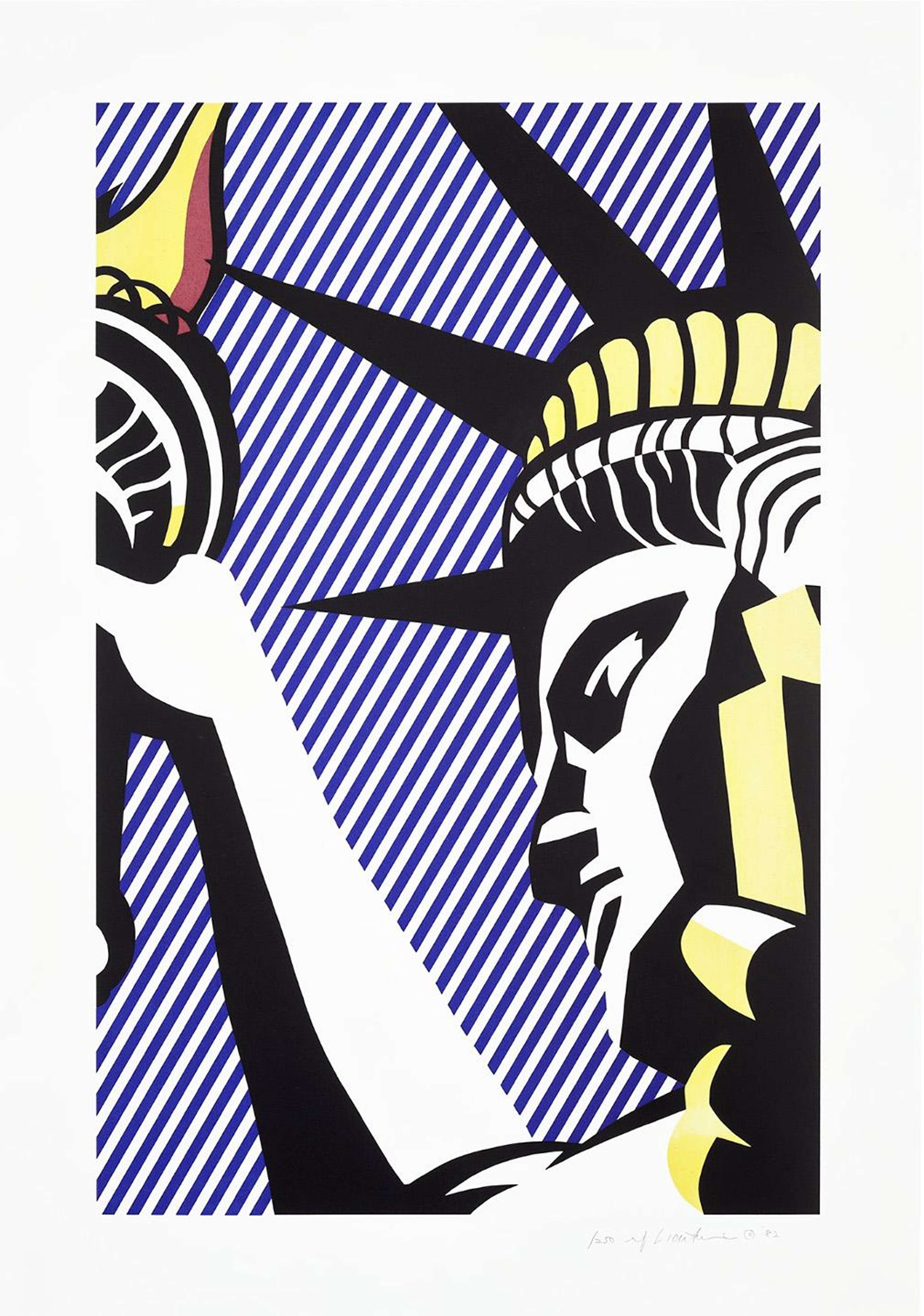
Calling a print suite “Paintings” is a pointed provocation. The title insists that medium may be a conceptual category rather than a single medium. By using prints to perform “painting”, Lichtenstein scrutinises the prestige of traditional paintings in an era of mechanical reproduction. If these prints act like paintings, cite painting, and analyse painting, why aren’t they paintings?
Two Paintings: Green Lamp (1984) contains a picture-within-a-picture that echoes Lichtenstein’s 1960s comic-book heroines
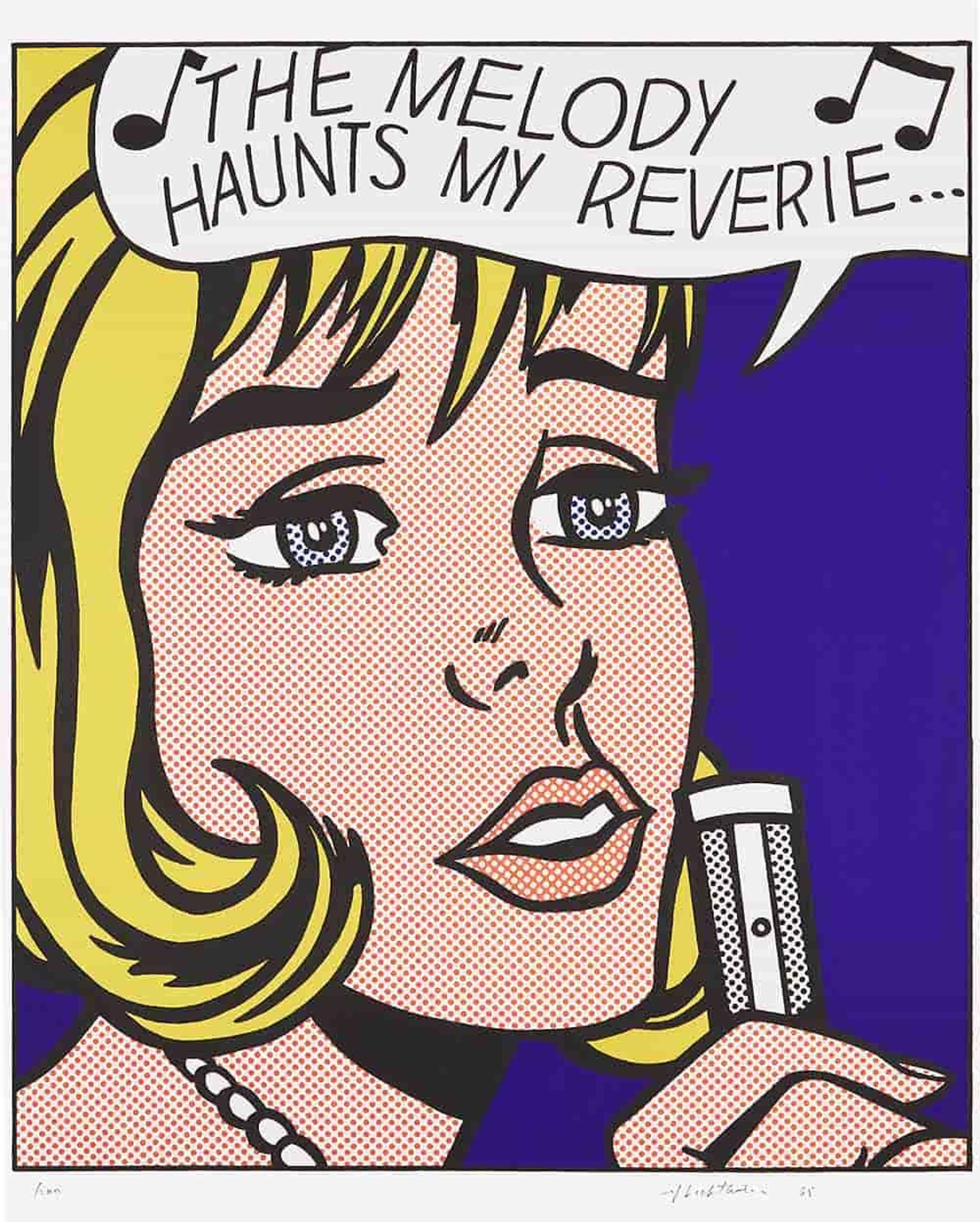
The still-life setup in Two Paintings: Green Lamp doubles as a meta-image: the desktop lamp and interior are framed inside another “painting”, and within that, a cameo figure recalls Lichtenstein’s earlier comic-strip women. Instead of working from live sitters, Lichtenstein built the women in his art himself, piecing together features from comic panels and film stills.