Seven
Apple Woodcuts
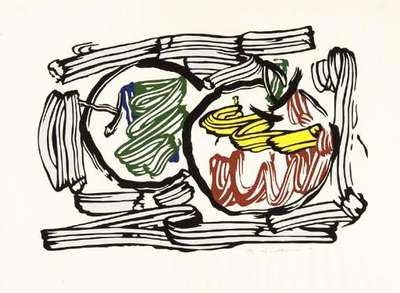
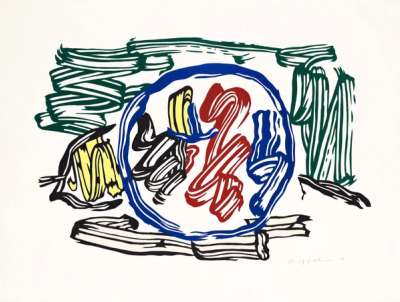
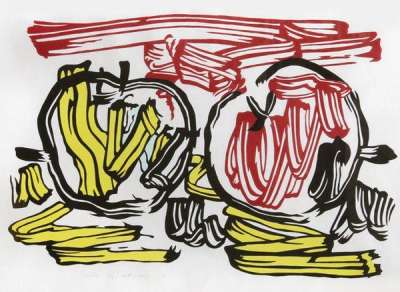
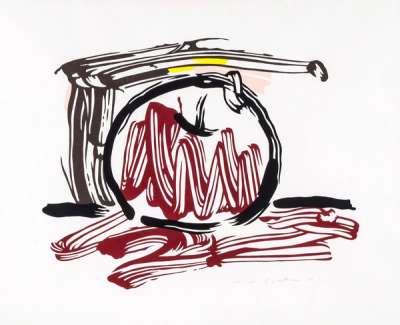
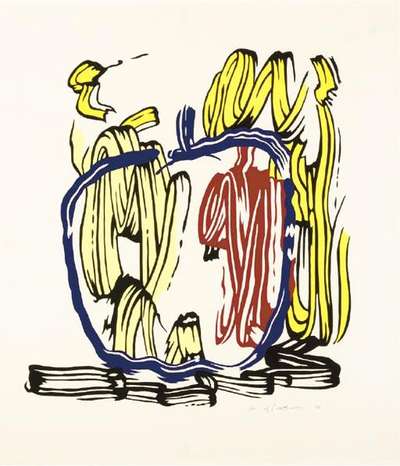
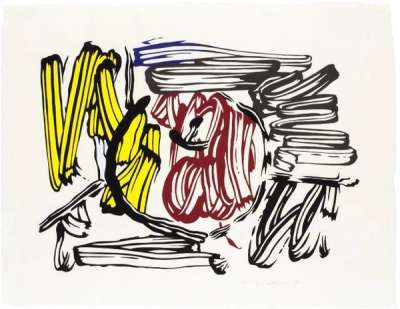
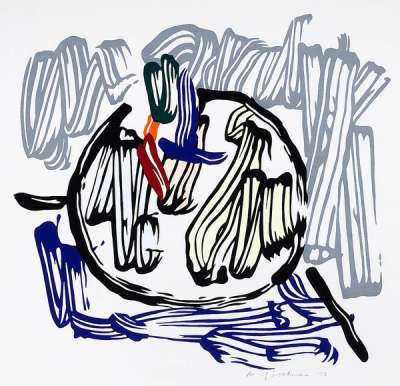
Roy Lichtenstein’s Seven Apple Woodcuts examine the long-standing tradition of still life painting, immortalised by renaissance and impressionist artists. The series shows apples on off-white backgrounds, depicted in loose, energetic sweeps, and elementary shapes. The painterly gestures are reminiscent of Lichtenstein’s Brushstroke Faces and the abstract expressionism that inspired it.
Roy Lichtenstein Seven Apple Woodcuts For sale
Seven Apple Woodcuts Value (5 Years)
With £77392 in the past 12 months, Roy Lichtenstein's Seven Apple Woodcuts series is one of the most actively traded in the market. Prices have varied significantly – from £2311 to £49264 – driven by fluctuations in factors like condition, provenance, and market timing. Over the past 12 months, the average selling price was £8599, with an average annual growth rate of 4.26% across the series.
Seven Apple Woodcuts Market value
Auction Results
| Artwork | Auction Date | Auction House | Return to Seller | Hammer Price | Buyer Paid |
|---|---|---|---|---|---|
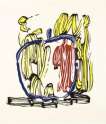 Vertical Apple Roy Lichtenstein Signed Print | 14 Apr 2026 | Christie's New York | £6,375 | £7,500 | £10,500 |
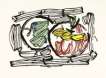 Two Apples Roy Lichtenstein Signed Print | 10 Dec 2025 | Forum Auctions London | £5,525 | £6,500 | £8,000 |
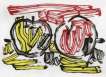 Red Apple And Yellow Apple Roy Lichtenstein Signed Print | 13 Nov 2025 | Swann Galleries | £5,525 | £6,500 | £8,500 |
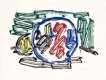 Apple And Lemon Roy Lichtenstein Signed Print | 23 Oct 2025 | Sotheby's New York | £2,465 | £2,900 | £4,000 |
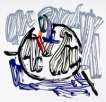 Apple With Gray Background Roy Lichtenstein Signed Print | 23 Oct 2025 | Sotheby's New York | £2,465 | £2,900 | £4,000 |
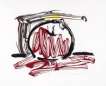 Red Apple Roy Lichtenstein Signed Print | 25 Mar 2023 | Dannenberg Auktion House | £7,650 | £9,000 | £11,000 |
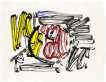 Red And Yellow Apple Roy Lichtenstein Signed Print | 18 Jan 2023 | K Auctions | £6,800 | £8,000 | £9,000 |
Sell Your Art
with Us
with Us
Join Our Network of Collectors. Buy, Sell and Track Demand
Meaning & Analysis
A departure from his typically graphic artistic tropes, Lichtenstein’s Seven Apple Woodcuts demonstrate an unusual visual and stylistic fusion. At the beginning of his career, the artist exclusively utilised elements of popular culture. Eventually, art history also proved a useful source of inspiration for him.
Lichtenstein adopted various modes of representation, ambitiously challenging the divide between highbrow and lowbrow art. Disrupting artistic conventions from the inside out, his appropriated topics and styles allowed the artist to resonate with a wider audience.
Lichtenstein’s main artistic purpose was to grant easy access to the realms of contemporary art. He therefore developed a notorious comic book aesthetic. The artist’s signature style consisted of block colours, geometric shapes, Ben Day dots and stripes.
These characteristics are entirely absent from his Seven Apple Woodcuts from 1983. In fact, the series demonstrates a period of unusual stylistic fusion in the artist’s creative output.
The Seven Apple Woodcuts firstly examine the long-standing tradition of still life painting, as immortalised by renaissance and impressionist artists. In many respects, the woodcuts in this series appear as abstracted versions of Lichtenstein’s previous Six Still Lifes of 1974.
The Seven Apple prints employ off-white backdrops, devoid of any patterns. The sequence offers primary colours as well as pastel tones, arranged into energetic sweeps and elementary shapes.
The expressive brushstrokes utilised by Lichtenstein in this series resemble the painterly gestures exercised by abstract expressionists. As such, the Seven Apple prints constitute the conceptual predecessors of the artist’s Brushstroke Faces of 1989.