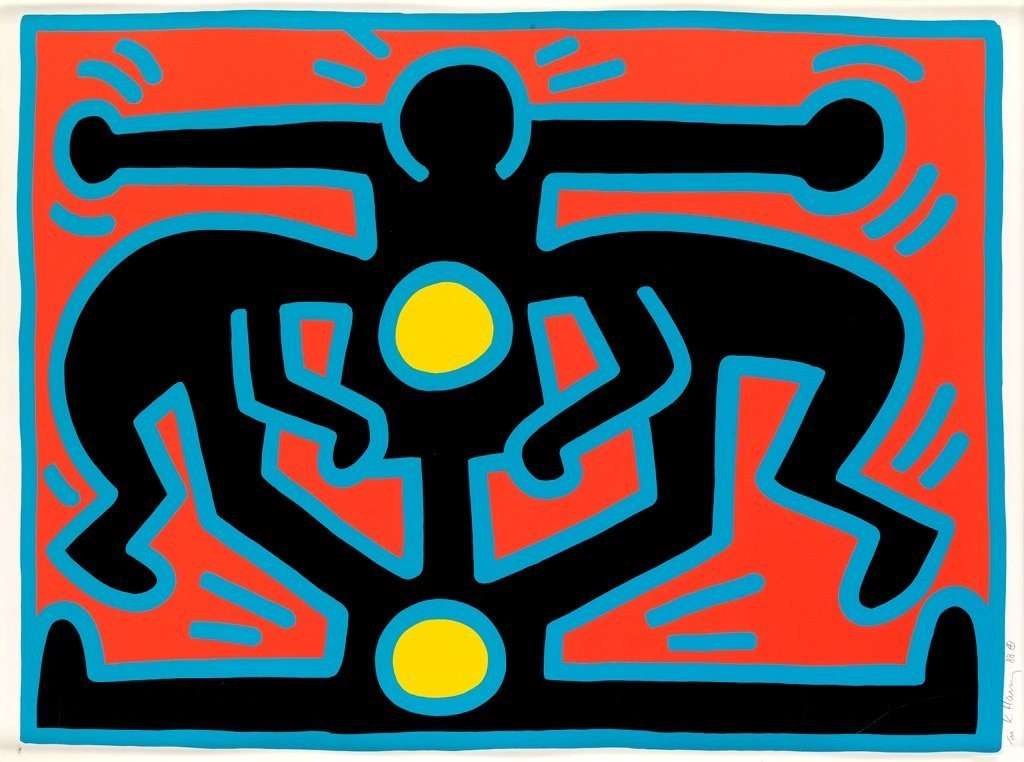


Created after his diagnosis with HIV, Keith Haring's Growing series pronounces the importance of unity and togetherness in a world of division. The series is distinctively optimistic, alluding to Haring's hopes for a world of socio-political harmony.
The series features Haring's iconic 'People Ladder'.
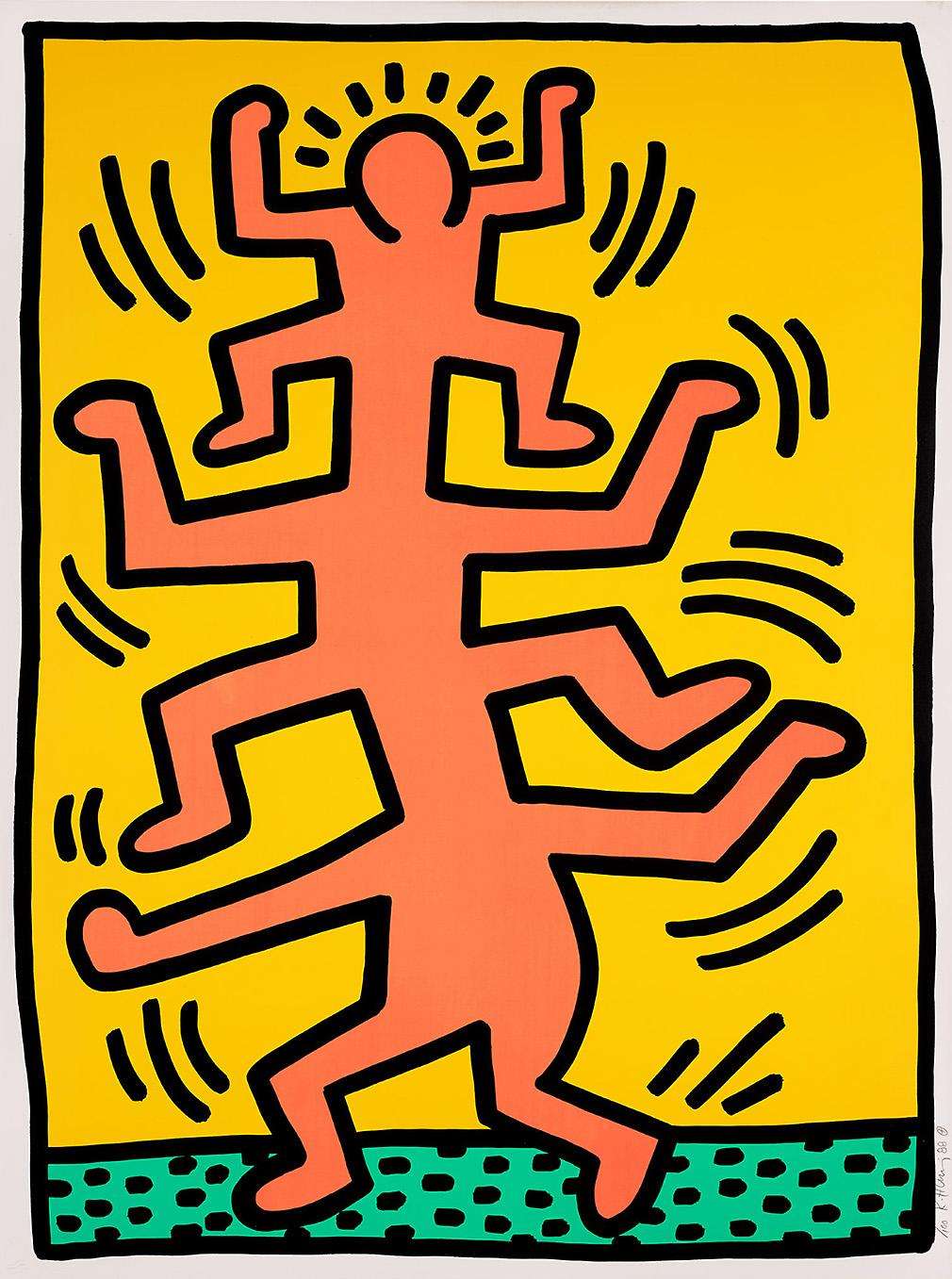
Themes of unity, democracy, and optimism underscore Haring's oeuvre. In the first print in the series, Haring reimagined one of his so-called 'People Ladders', a tower of dancing figures reaching towards the top of the composition. He had explored a related chain of linked figures on a much larger scale two years earlier, in his monumental mural on the Berlin Wall.
The title of the series alludes to Haring's hopes for a world without division.
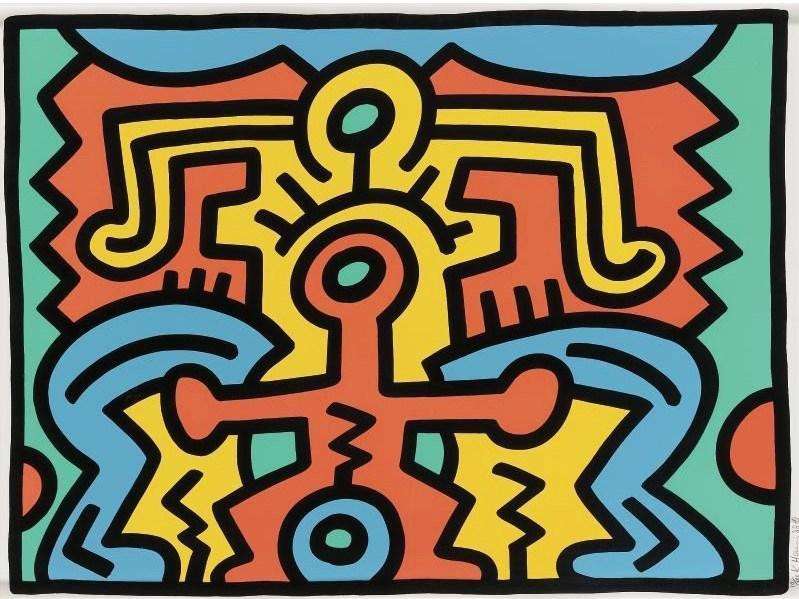
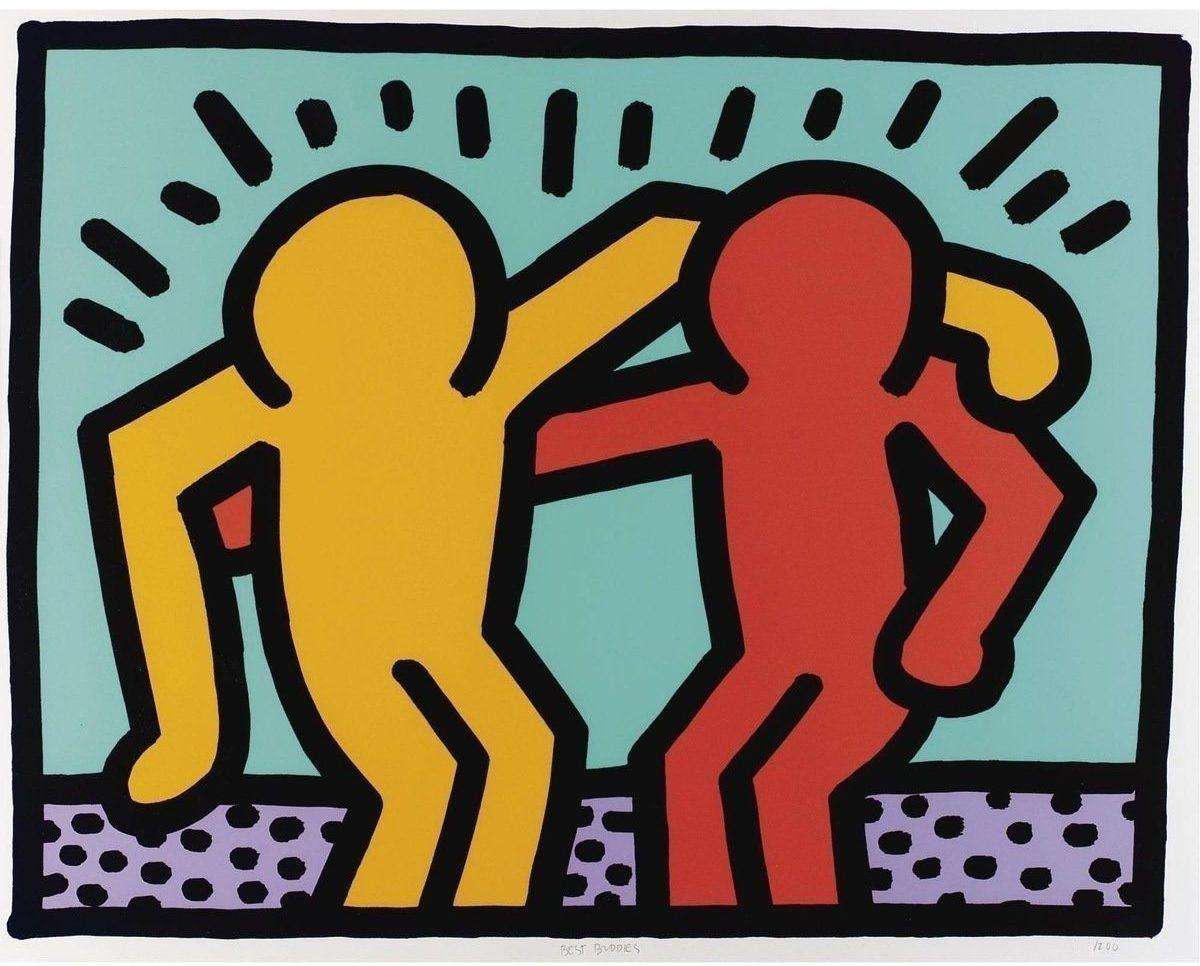
Within all of the prints in his Growing series, Haring represented his typical outlined figures morphing into one another. The interconnectedness of these figures alludes to unity, and removes any distinctions between sex, gender, race, or class.
The series is testament to Haring's democratic approach to art.
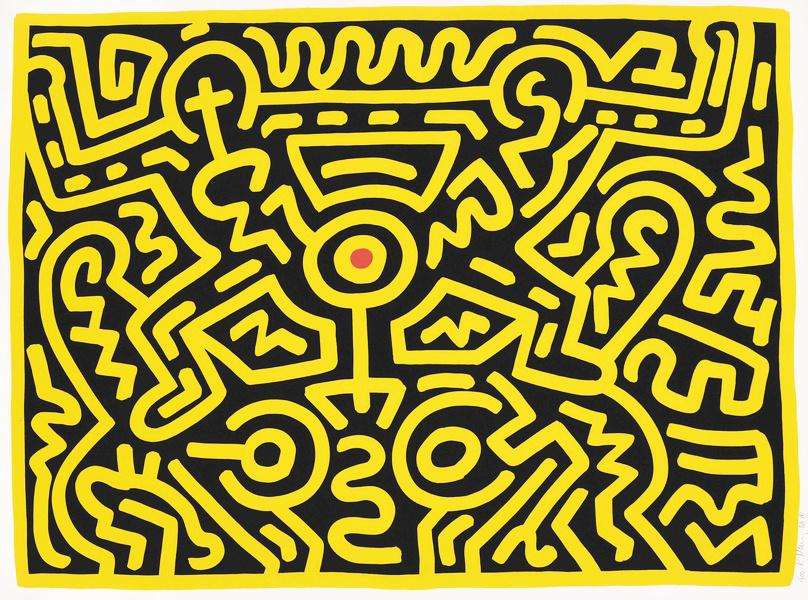
From his early graffiti and Subway Drawings, Haring always strove towards making art that was as accessible as possible. Projects like his Pop Shop were designed to bring art to a wider audience, while the subject of his work was always designed with universal legibility in mind. In the case of his Growing series, Haring's intertwined figures literally grow together, attesting to his rejection of capitalist individuality.
Growing champions joyousness, togetherness, and unity.
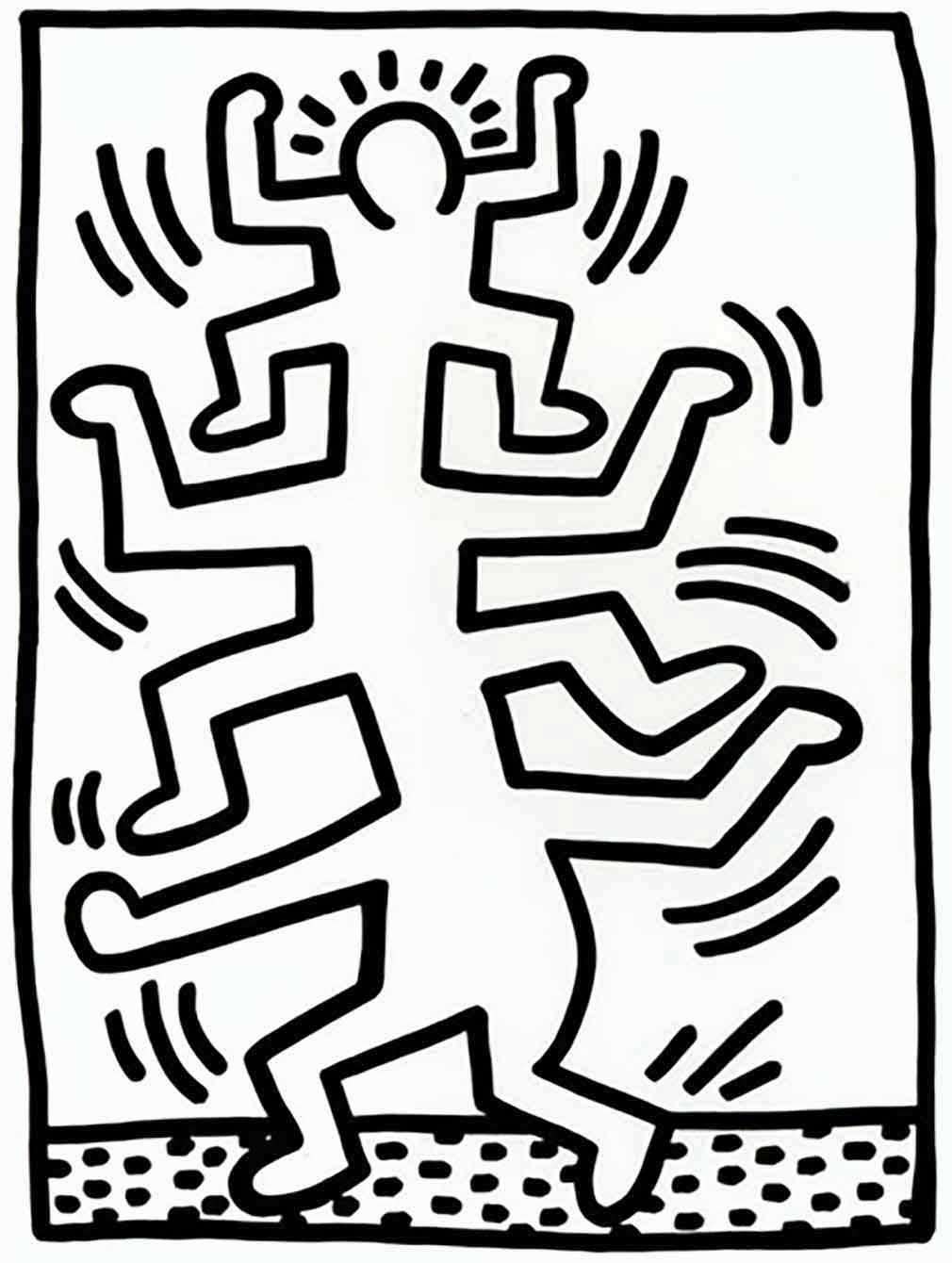
With his signature use of dots and dashes, Haring animated the figures that populate his Growing series with a carefree joy. As in Growing 1 (First State), many of the figures in the series appear to gleefully dance on one another's shoulders. In their sprawling state, the figures appear unified and reach towards new heights together, speaking to Haring's optimism for an undivided future.
The style of the series is reminiscent of Australian Aboriginal art.
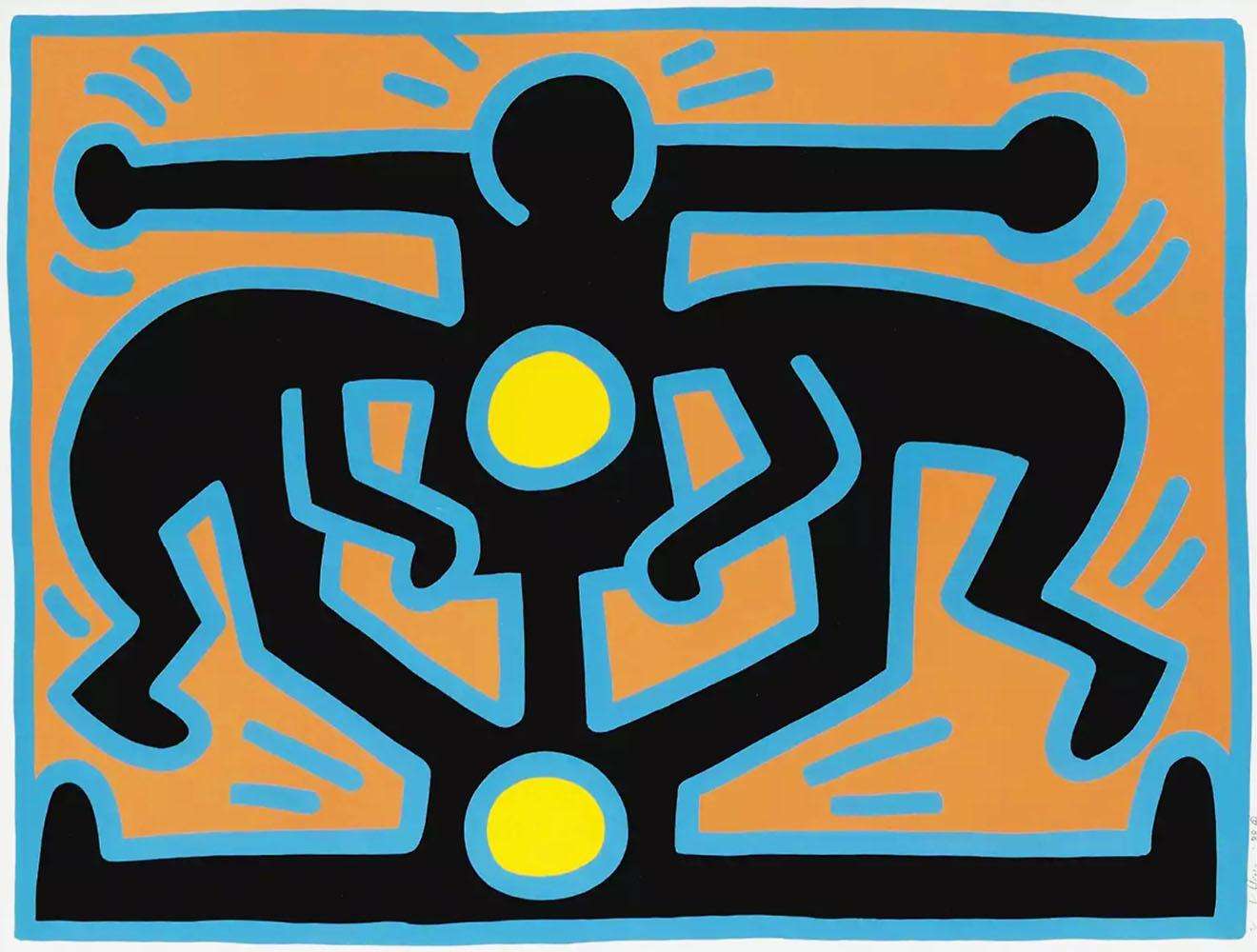
Throughout his artistic career, Haring expressed his interest in Australian Aboriginal art. Particularly in his Growing series, we see the influence of Aboriginal style in his focus on flat block colours and symmetrical figurative compositions. By referencing Aboriginal art, Haring also alludes to a community which champions togetherness, the salient message of the series.
The Growing series reveals the influence of Andy Warhol on Haring.
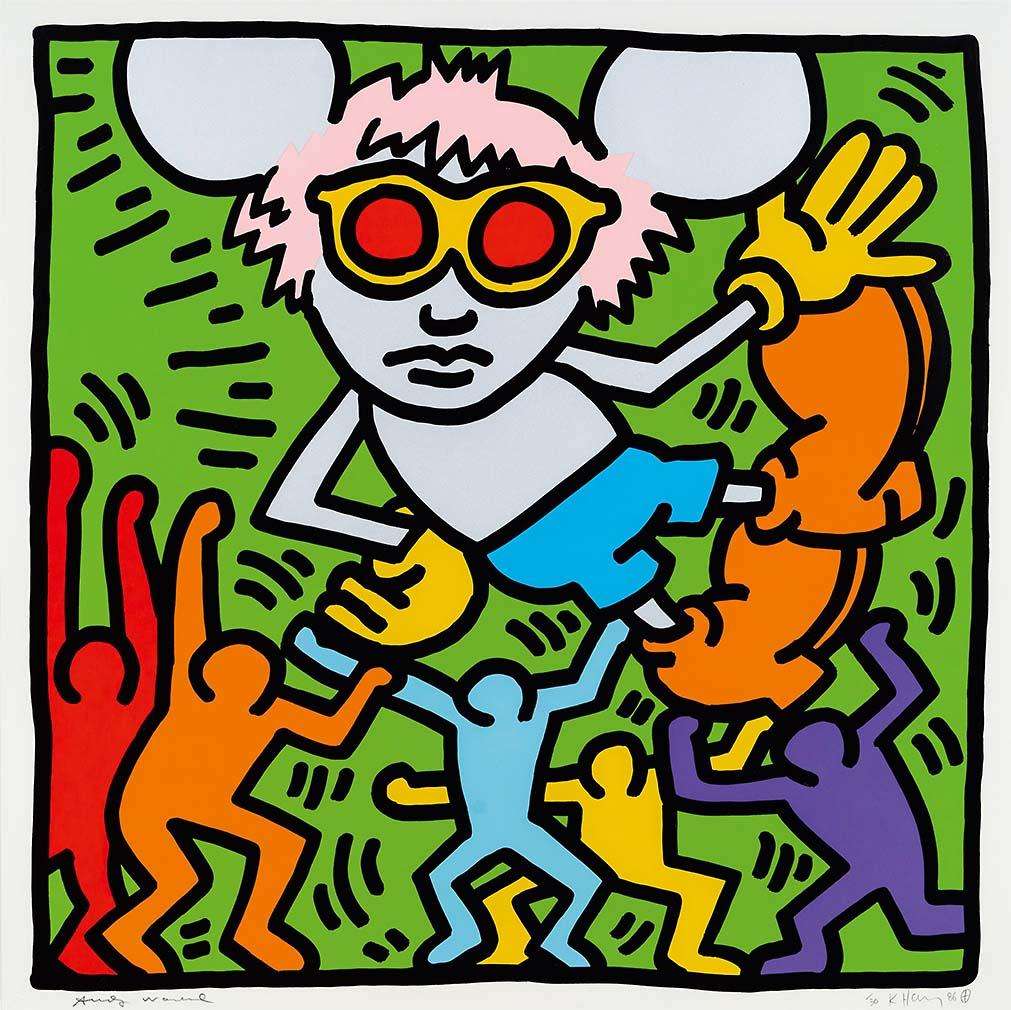
In his use of bold primary colours and the process of screen printing to produce this series, Growing displays the influence of Andy Warhol. The founding father of Pop Art, Warhol had developed his screen printing process since 1962, under the influence of mass media printing presses. As one of Warhol's successors in Pop, Haring had been making screenprints since the early 1980s, including his Fertility Suite in 1983 and Andy Mouse, his 1986 tribute to Warhol, and he continued the Warhol legacy after Warhol's death in 1987.
Haring used bold colour to suggest the ecstasy of togetherness.
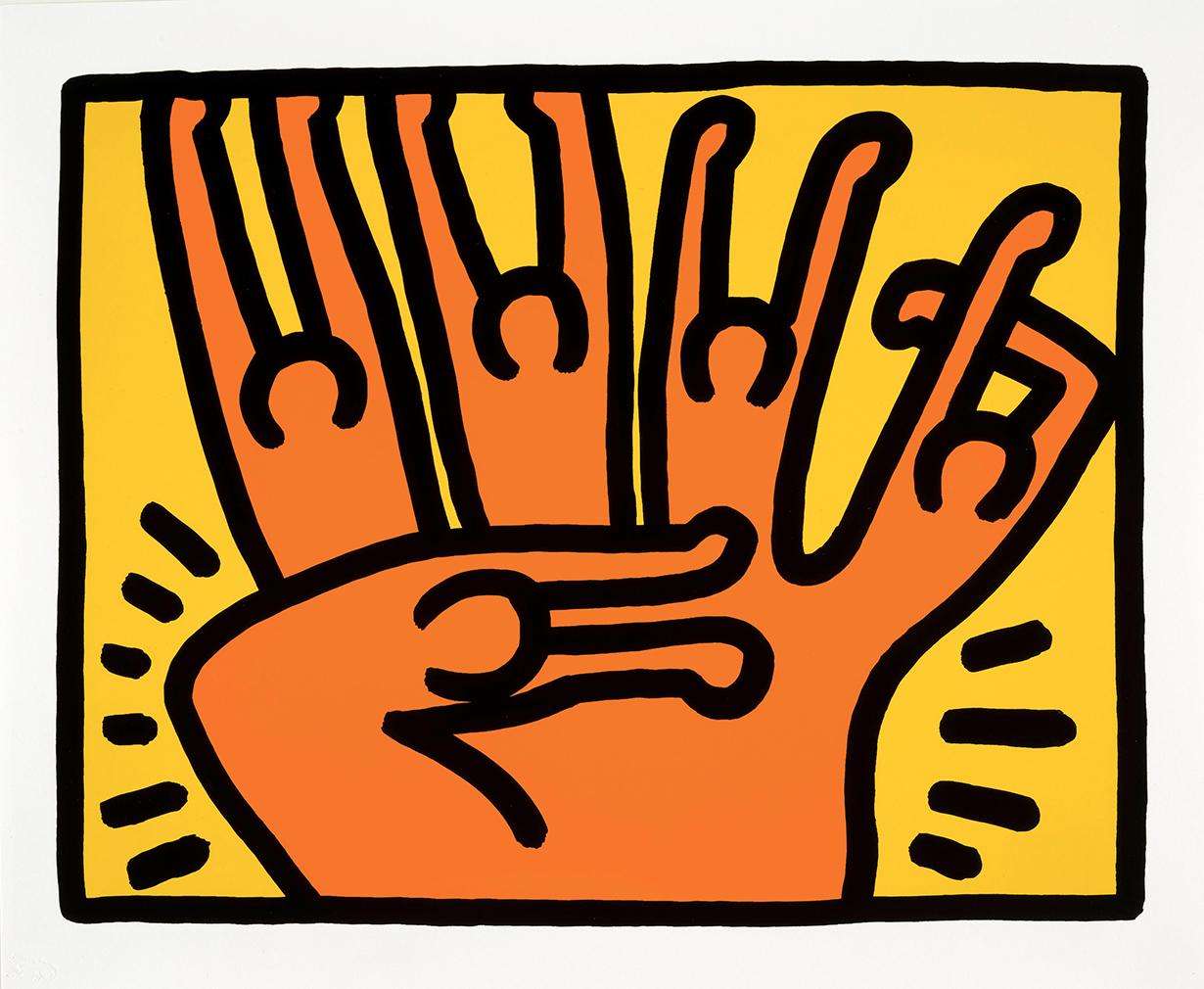
Vibrant colour is something which defines the work of Keith Haring, and makes it so eye-catching and joyous. The use of bold colour to suggest the delights of unity is not exclusive to his Growing series. Throughout his entire oeuvre, Haring used colour to draw the viewer's immediate attention and convey important messages in a fun and accessible way.
The series is an optimistic portrayal of mankind's potential.
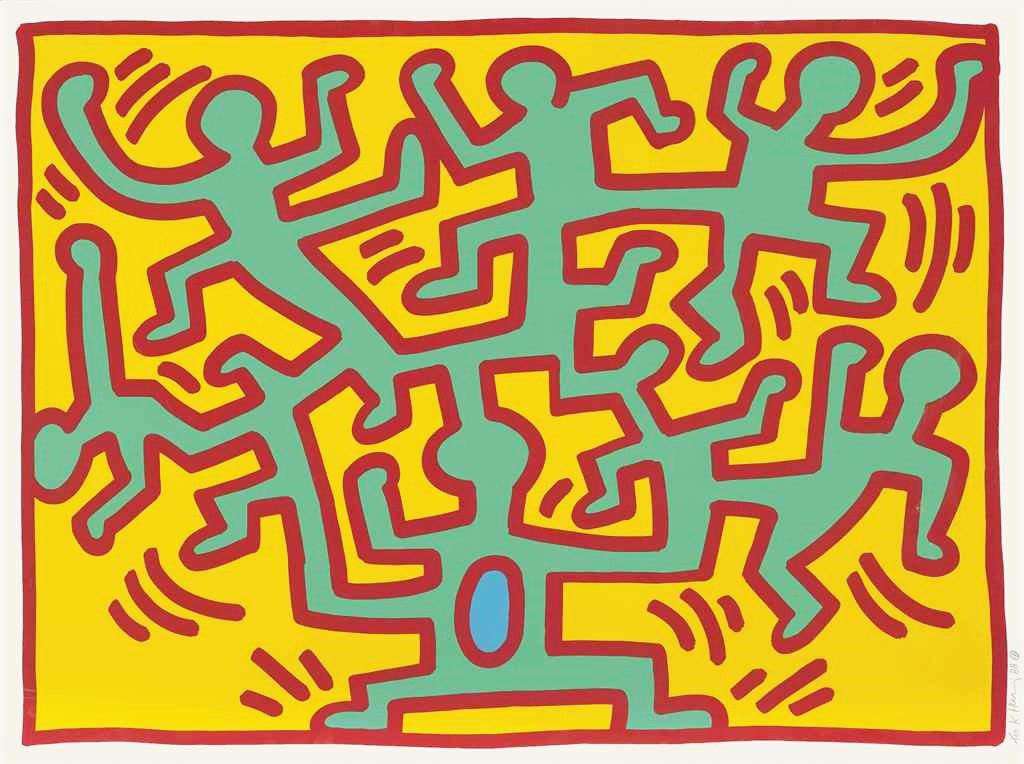
As with much of Haring's work, Growing is an encouraging display of mankind's virtues. In Growing 4, for example, Haring represents the focal figure at the centre of the composition like the trunk of a tree. From this central figure, other figures grow and flourish, suggesting the empowering effects of unity and togetherness.
The series supported togetherness and unity during a period of socio-political division.
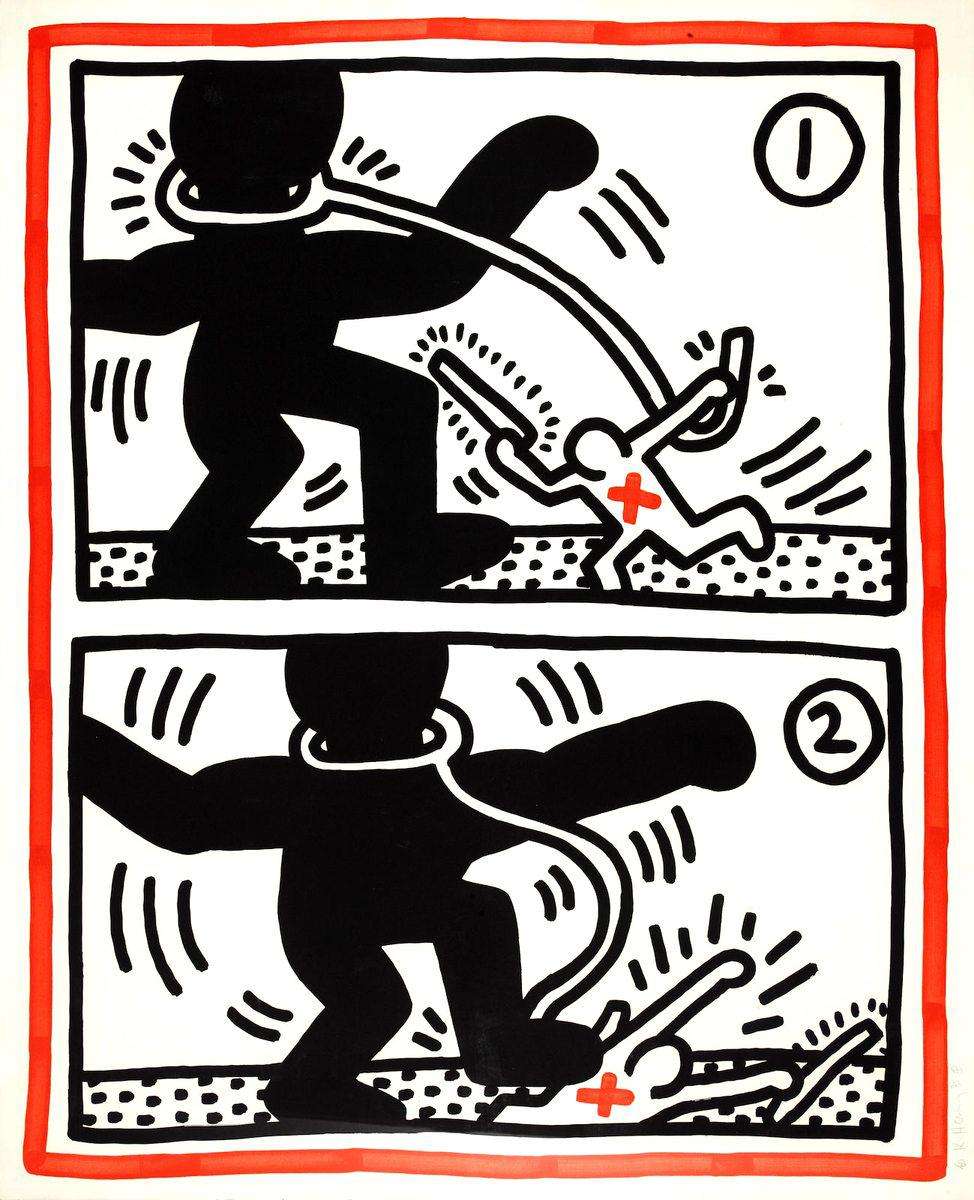
Haring reached the height of his artistic career in the 1980s, and always committed his art to reflecting the socio-political issues of his time. This was a decade underscored by the HIV/AIDS epidemic, the Cold War, the crack cocaine epidemic, and apartheid in South Africa - to name a few global issues. Haring was a staunch proponent of unity and justice, and used his art as activism and an appeal to global peace.
The Growing series was executed after Haring's diagnosis with HIV.
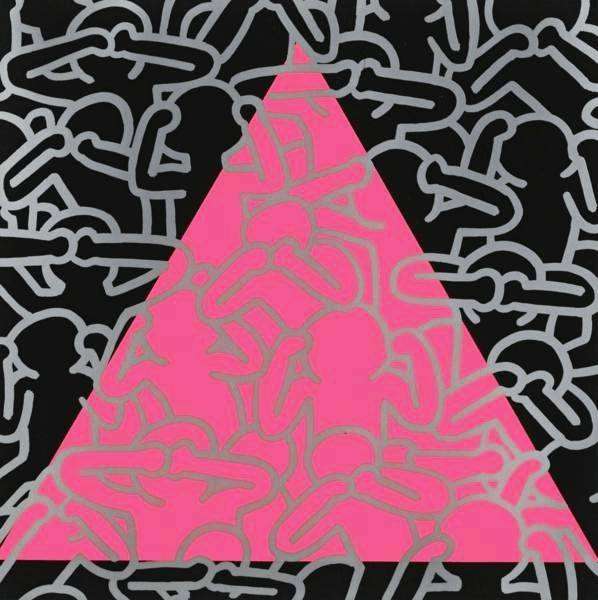
Two years before his untimely death from AIDS in 1990, Haring was diagnosed with AIDS, at a time when the epidemic was devastating gay communities across the world. Though Haring had always used his art to campaign for social justice, this became an even more salient theme after his diagnosis. As his Growing series attests, Haring used his art to advocate unity and togetherness until his death.
Growing at auction in 2026
Growing was published in 1988 as five screenprints in an edition of 100, with 15 artist's proof (AP) sets. In 2026 it had its busiest year at auction in a decade, with 12 individual prints sold to the end of October. One, a standard numbered edition Growing 3, hammered at $199,293 (£150,000) at Sotheby's London in March, far above its 27,000–40,000 (£20,000–£30,000) estimate. The other 11 sold between $27,520 (£20,527) and $42,900 (£31,923), the clearer guide to where the series trades today. Compared image by image, prices sit around 30% below their 2021–2023 levels. For more, read the Keith Haring Print Market Report 2026.


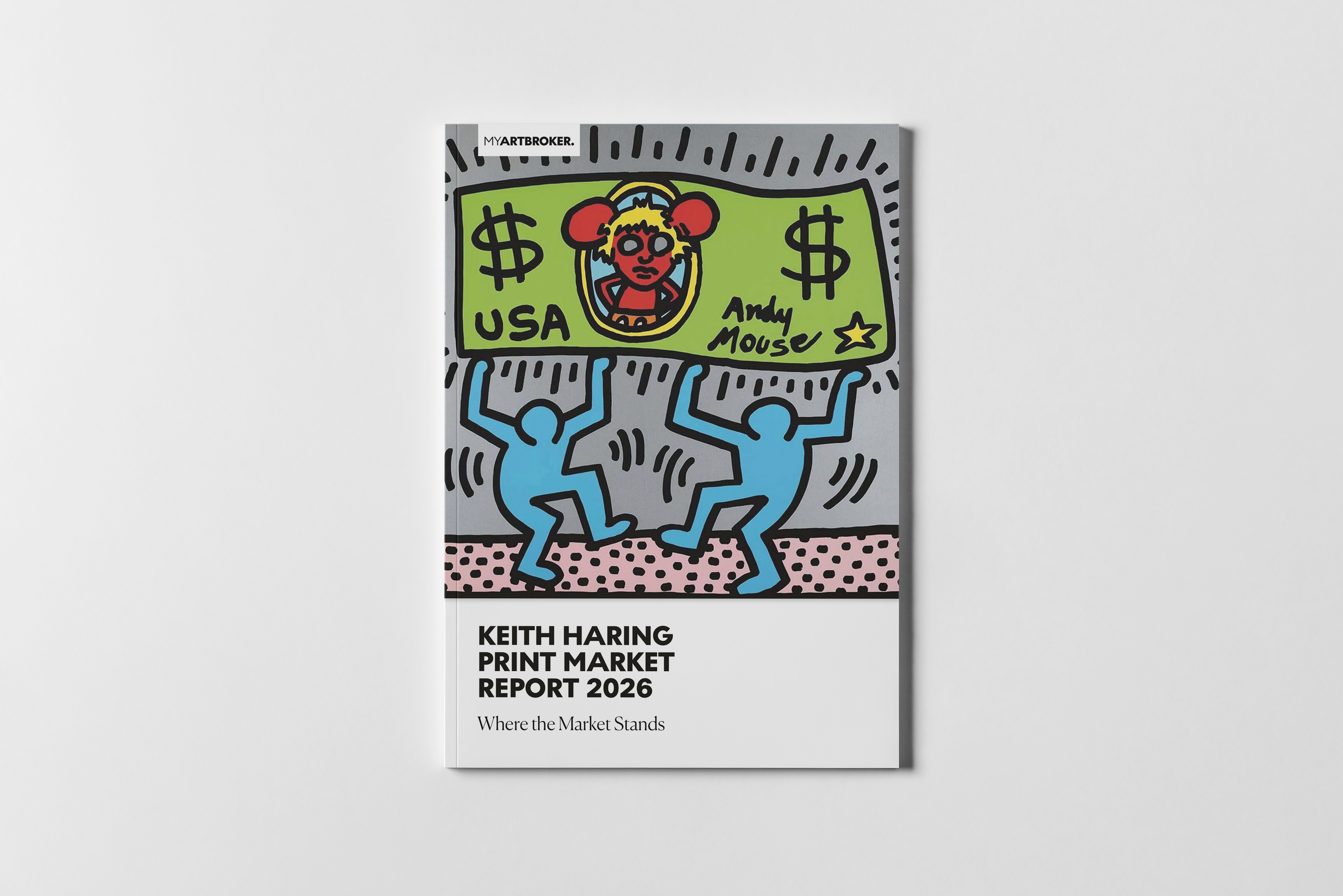
The Keith Haring Print Market Report 2026
Where the market stands, from a record Andy Mouse to steady Pop Shop prices
Keith Haring’s individual prints made £2.38 million at auction by end of October 2026, 72% more than the same period last year. Most of the rise came from a few rare works, and repeat sales rose a median of just 3%. Here’s what that means for buyers and sellers.