
Key Takeaways
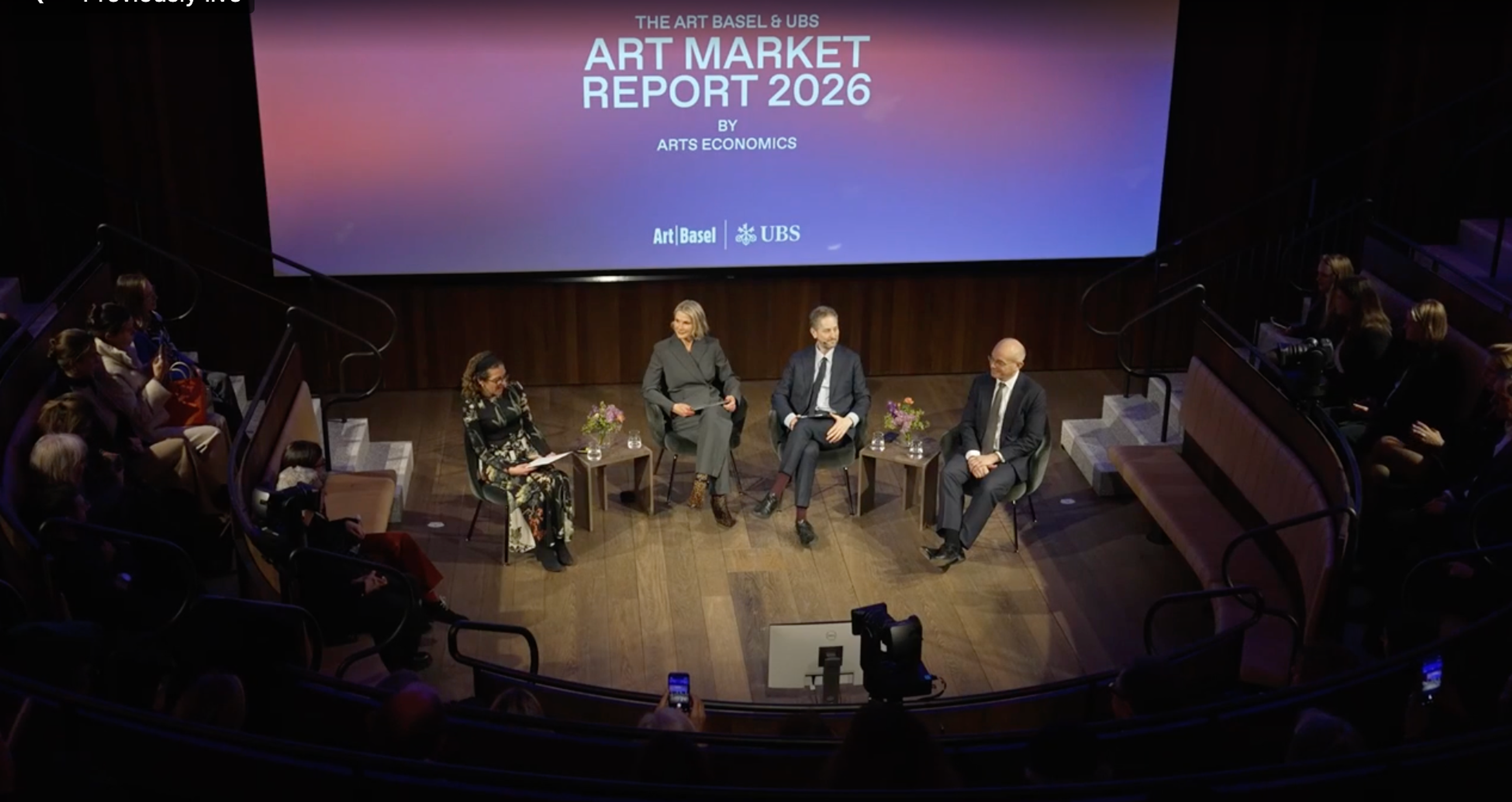
Q1 2026 brought the year's major art market reports in close succession – the Art Basel & UBS Global Art Market Report, Artnet's Intelligence Report, and Artprice's annual review. Individually, each tells a partial story. Together, they keep arriving at the same question: the segment most capable of growing the art market is the one under the most pressure. And if blue chip prints are supposed to be part of the answer, why is the middle market still struggling?
The Market Is Rebuilding – But Not In the Middle
One of the more telling signals in Artnet's Intelligence Report this quarter was not a price bracket or a sale total. It was a trend: at the top end of the market, private and invitation-only auctions are proliferating – off-calendar, off-grid, and deliberately outside the transparency of the traditional auction model. Houses and independent advisors alike are building new infrastructure to serve a buyer pool that is narrow, extraordinarily wealthy, and increasingly values discretion over public competition. The top end of the market is innovating. It is finding new mechanisms, new formats, new ways to transact. That is what a segment with structural confidence looks like.
At the entry level, the story is also one of momentum – widening participation, growing transaction volumes, younger collectors entering the market. Both ends have a narrative. The middle – the $50,000–$1 million segment that accounts for the majority of meaningful transactions by volume – has neither the innovation nor the momentum. And the data from this quarter's reports explains why.
A Recovery The Middle Market Did Not Share In
The Artnet Intelligence Report – which tracks global fine art auction results – recorded a 13% increase in global fine art auction sales to $11.7 billion in 2025. The Art Basel/UBS Global Art Market Report, drawing on art fair and auction data, and direct dealer surveys recorded 4% year-on-year growth across the total art market to $59.6 billion. The scope differs significantly, but the shape of the recovery both describe is consistent: it happened at the extremes, not the middle.
Artnet's price bracket data makes this precise. The $1 million–$10 million segment grew 21%. The $10 million-plus tier grew 36%. The $100,000–$1 million band – the upper middle market – grew just 6%. Below $100,000, growth was less than 1% year-on-year. The recovery was concentrated in the tier immediately above the middle market, powered by exceptional estate supply. The Lauder collection at Sotheby's alone generated $531 million – a scale of consignment that is neither predictable nor repeatable. As the high end recovered to 54% of total auction value (Art Basel/UBS Report), both the middle and lower ends lost share. The middle market did not participate in the recovery. It gave ground to make room for it.
At auction, works under $50,000 accounted for 95% of transactions at the major houses in 2025 (Art Basel/UBS Report), generating volume without value. The market is active at both ends for very different reasons. The middle sits between two kinds of momentum it cannot access – trophy supply above, transaction volume below – and benefits from neither.
Compressed Margins, Falling Confidence: The Middle Market's Structural Problem
The dealer data in the Art Basel/UBS Global Art Market Report makes the structural nature of this clearer. This is not a segment that had a bad year. It is a segment where the fundamentals are moving in the wrong direction despite rising sales. In the $250,000–$500,000 bracket, 45% of dealers reported declining margins in 2025 – the weakest profitability reading of any segment in the market. The $500,000–$1 million dealer segment was the only one to see confidence fall year-on-year, with the share predicting better sales in 2026 dropping from 51% to 34%. At the top and entry level, sentiment improved. In the middle, it went the other way.
What stops this from being a cyclical story is the volume data. The distribution of auction transactions by lot count has barely moved in two decades. The middle market's share of transactions has remained stable even as its share of value has declined. The buyers are still there. They are transacting. They are just spending less, being outpriced upward, or not finding sufficient reason to commit at the price points where they are looking. The middle market is being compressed rather than abandoned – which is a structurally harder problem to solve than simple demand weakness.
The Art Basel/UBS Report names the long-term cause directly: the market has become increasingly polarised, and inflation has effectively raised the floor of the high end, drawing works that once sat comfortably in the middle tier upward by price rather than by any shift in demand. The middle market is not shrinking because collectors have lost interest. It is shrinking because the market around it has restructured in ways that leave it with less room to operate.
Blue Chip Prints & The Middle Market: Where Does The Category Stand?
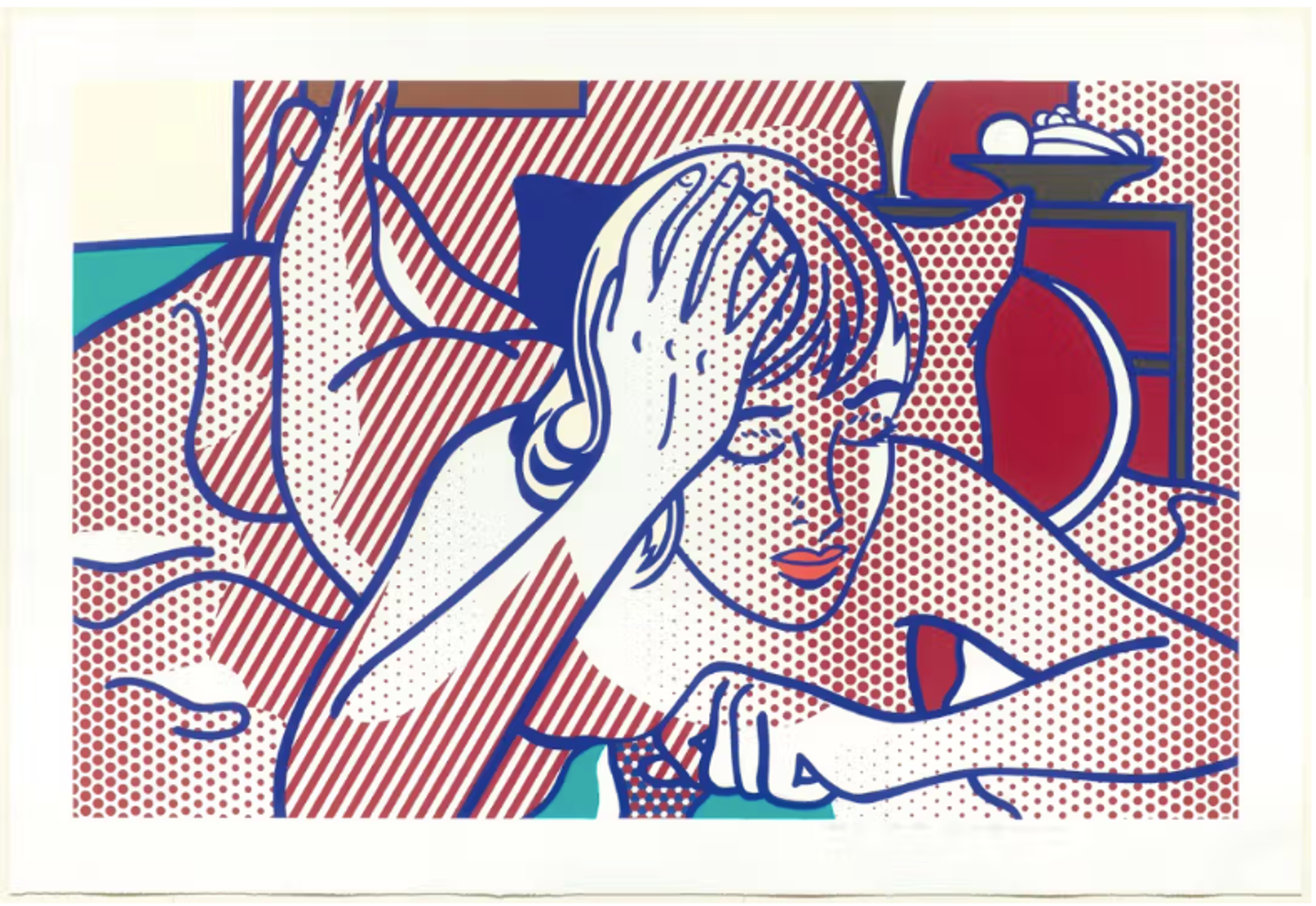
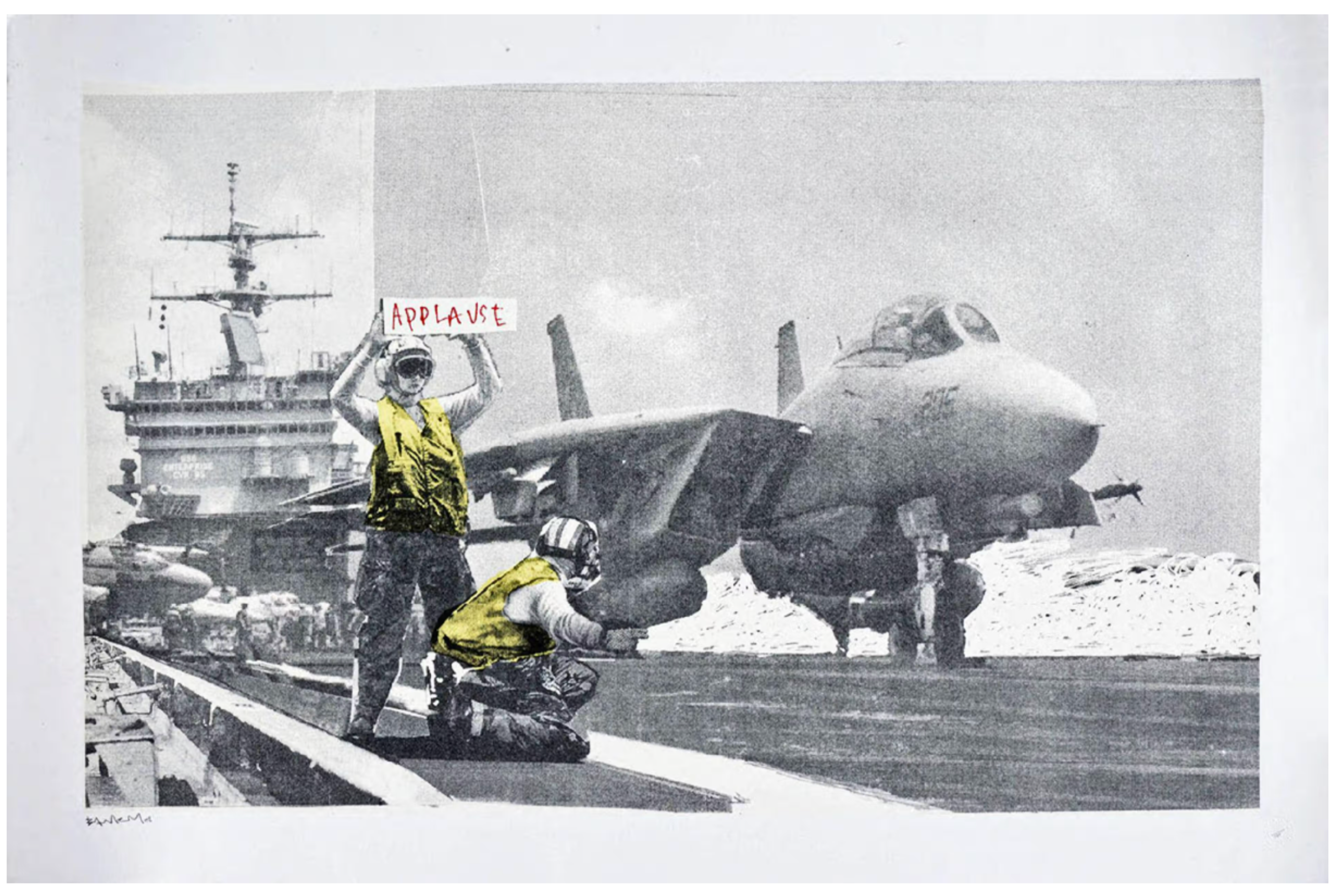
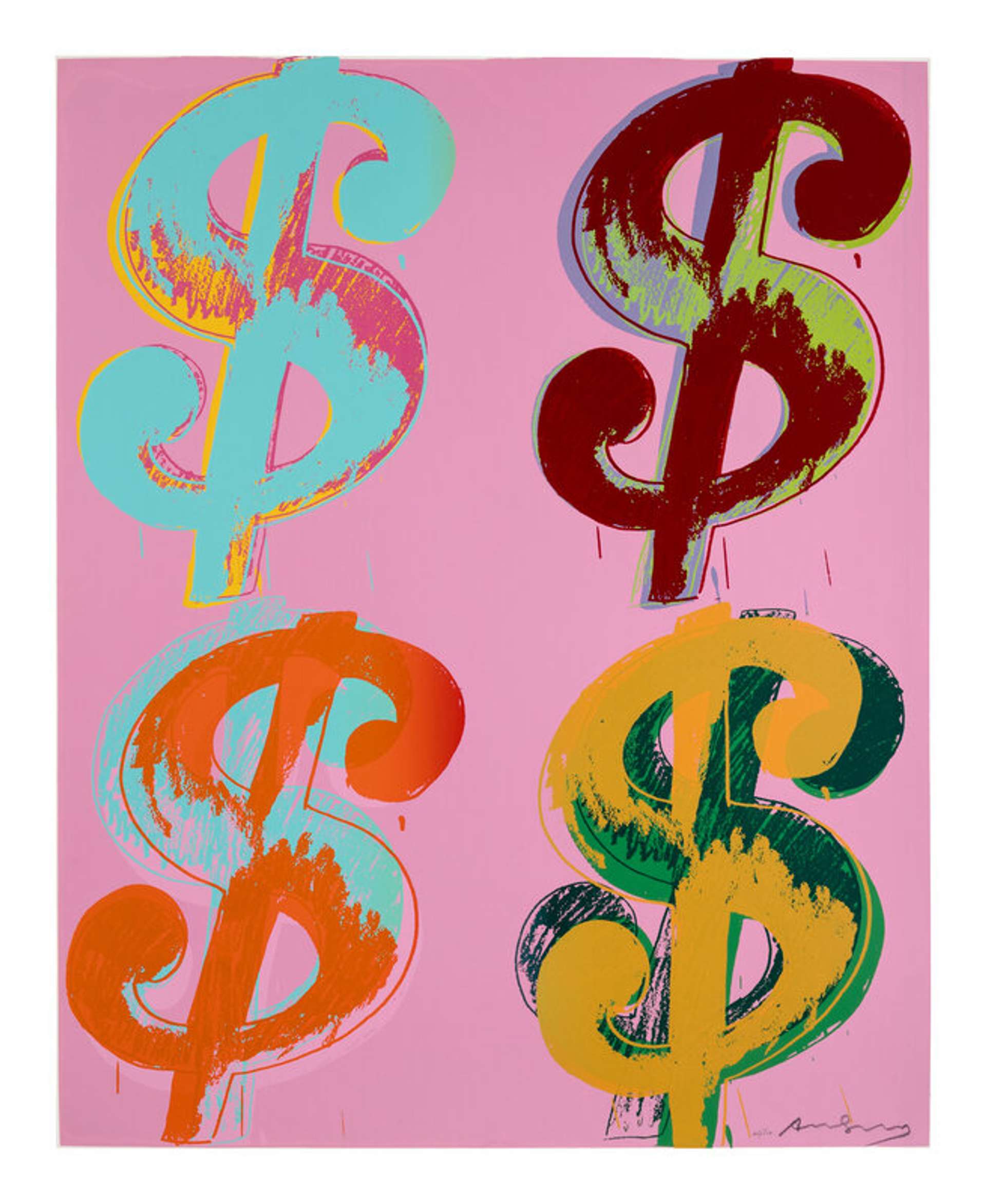
This is the question the Q1 reports, taken individually, don't answer – but taken together, they raise it clearly. Because prints and multiples are, by price, largely a middle market category – though not exclusively. Blue chip prints span a remarkable range: from accessible editions that sit well within the middle market band, to trophy-level works that command seven figures at auction. Thirty lots sold above $1 million in 2025, with the top result – a complete set of Andy Warhol's Marilyn Monroe screen prints – reaching $5.2 million at Ketterer in Munich. The category is not defined by any single price point. It is defined by the names behind it and the infrastructure those names have built.
And that infrastructure is performing. Artprice's 2025 data shows the prints and multiples market generated $526 million from 198,100 lots sold globally – 23% of all fine art auction transactions worldwide. Sales grew 11% year-on-year, reaching their highest level on record, with lot volumes up a further 2%. Artprice's long-term data shows lot volumes growing almost continuously since 2000, accelerating sharply from 2020 onward – and crucially, continuing to rise even through years when turnover softened. The category did not shed collectors during the 2023–2024 correction. It added them. Online sales now account for 24% of prints transactions (Artprice), slightly above the broader market average, building the kind of distribution infrastructure the wider middle market has never developed at scale.
So why isn't this translating into middle market health more broadly? A convincing answer is that prints have quietly resolved the problem that is holding the broader middle market back. The middle market's structural weakness is informational. It spans an enormous range of artists and works whose price histories are fragmented, whose provenance can be difficult to verify, and whose value is harder for buyers to assess with confidence. Without a reliable information layer, buyers default to caution – or retreat to names they already know – and the broader middle market loses them upward toward trophy works or downward toward lower-risk entry points.
Blue chip prints don't have that problem. Editions are numbered. Catalogue raisonnés exist. Auction histories are deep and traceable precisely because of the inherently editioned nature of the category, where the same or near-identical works recirculate. A collector buying a blue chip print is not navigating an information desert. They are working with one of the most transparent, most legible price records in the art market. That transparency is what generates the confidence to transact – and it is what the broader middle market, across categories, still largely lacks.
The Q1 reports collectively make the case that the middle market is the art market's most important growth frontier and its most consistently underperforming segment. The prints data suggests those two facts are connected. Where transparent pricing, documented provenance, and traceable auction histories exist – as they do across the prints market from accessible editions to seven-figure works – buyers stay, volumes grow, and the segment compounds through downturns rather than conceding ground. The broader middle market is still waiting for those conditions to develop at scale. Blue chip prints are evidence that they can.