
Ladies And Gentlemen (F. & S. II.126)
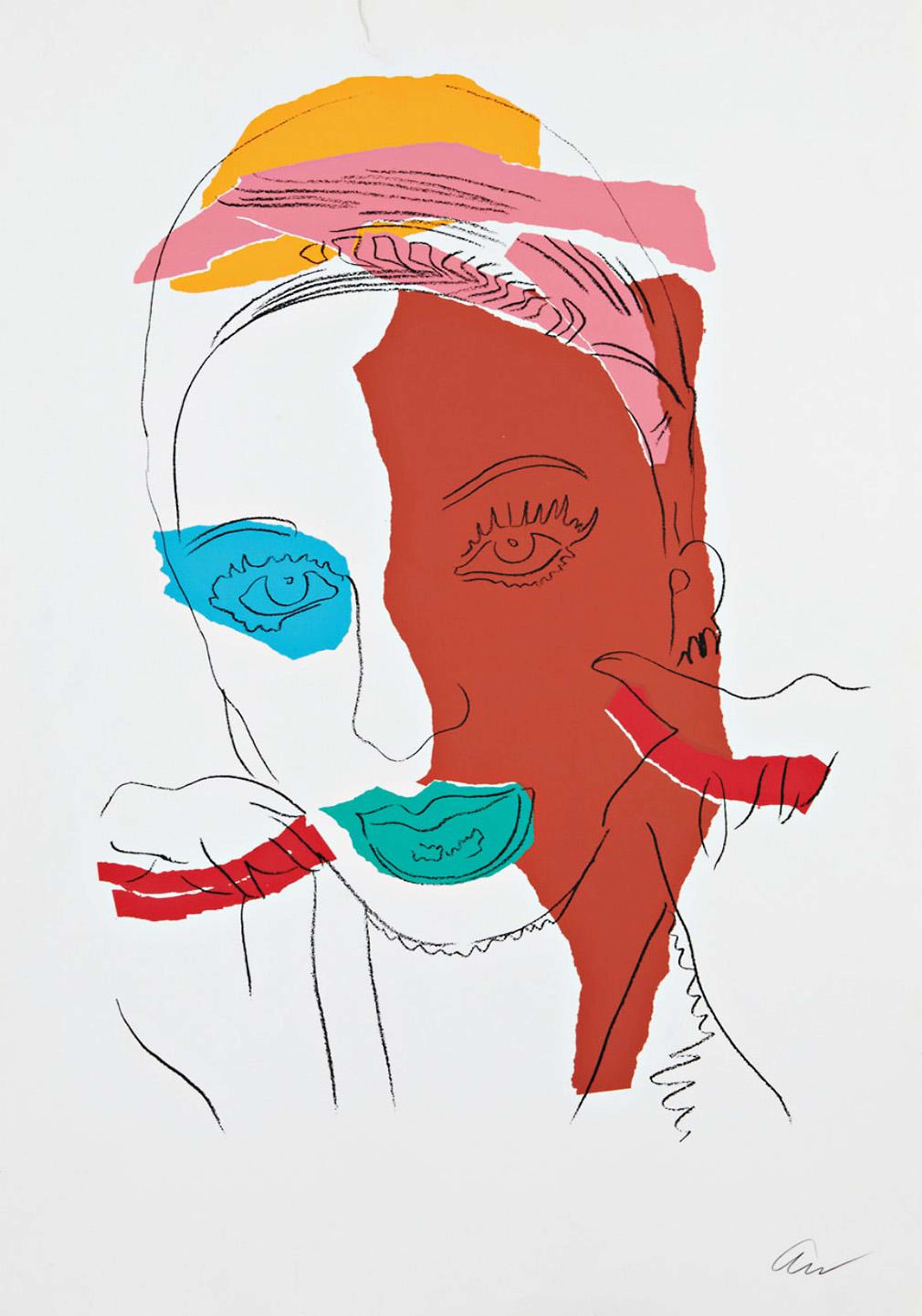
Ladies And Gentlemen (F. & S. II.126)
Signed Print
Andy Warhol
95 x 65cm, Edition of 150, Screenprint, 1975
£5,500-£8,000
$10,500-$15,000 Market Value Indicator
$10,500-$15,000 Market Value Indicator
¥50,000-¥70,000 Market Value Indicator
€6,500-€9,500 Market Value Indicator
$60,000-$80,000 Market Value Indicator
¥1,150,000-¥1,670,000 Market Value Indicator
$7,500-$10,500 Market Value Indicator
There aren't enough data points on this work for a comprehensive result. Please speak to a specialist by making an enquiry.
Track auction value trend
Meaning & Analysis
Ladies And Gentlemen (F. & S. II.126) is a 1975 screenprint by Andy Warhol from his Ladies and Gentlemen series, depicting a close-up fragmented portrait of a drag performer rendered in colour fields and fine ink line on a white ground. The face is built from terracotta, cyan, and teal shapes alongside loose black drawing, dissolving and reassembling the portrait simultaneously. The work is from a signed edition of 150.
Warhol produced the Ladies and Gentlemen series in 1975 following Polaroid portrait sessions with drag performers and trans women in New York. Around 250 paintings and a print series resulted, the subjects drawn primarily from the city's Black and Latino drag communities. Their names were not included in the original publication, a decision that has been the subject of sustained critical reconsideration in the decades since.
Ladies And Gentlemen (F. & S. II.126) applies Warhol's screenprint technique to a close-up, fragmentary view of the face. A large terracotta-red shape covers the right side of the composition, reading simultaneously as skin tone and as a flat graphic field that sits on the surface rather than receding into it. A cyan patch surrounds the left eye; a teal form marks the lips. Red gestural marks animate the lower face and neck, while fine black ink line describes features and moves independently of the photographic layer beneath.
The result reads as portraiture and formal experiment simultaneously, Warhol preserving the subject's specific presence while dissolving the face into colour and line. The series has grown considerably in critical standing since its initial reception and is now recognised as an early, if complicated, engagement with identity and visibility in his practice.