In The Bottom Of My Garden 16 (F. & S. IV.100)
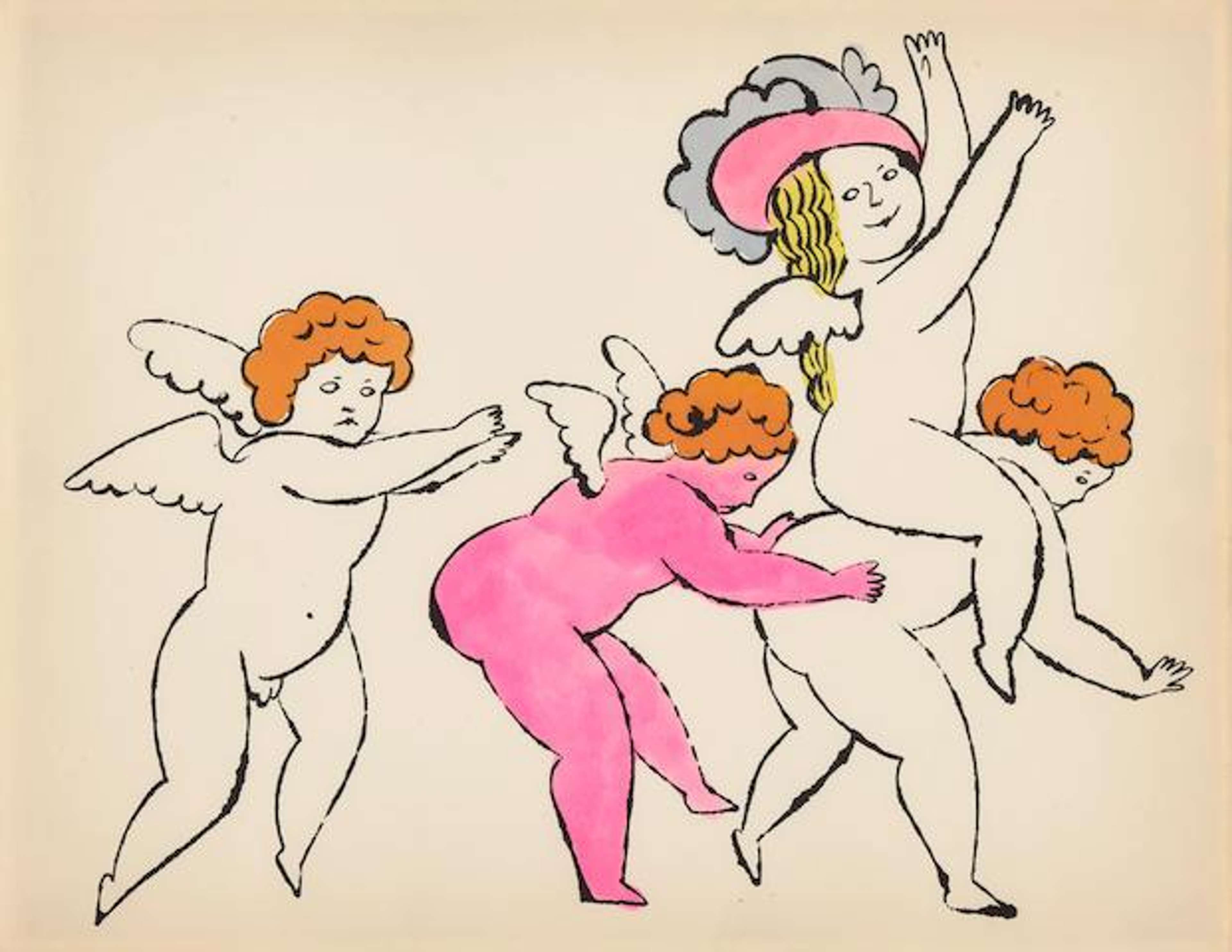
In The Bottom Of My Garden 16 (F. & S. IV.100)
Unsigned Print
Andy Warhol
28 x 22cm, Lithograph, 1956
Price data unavailable
There aren't enough data points on this work for a comprehensive result. Please speak to a specialist by making an enquiry.
Track auction value trend
Meaning & Analysis
Andy Warhol's In The Bottom Of My Garden 16 (F. & S. IV.100) from 1956 is an unsigned offset lithograph from his early illustrated book In The Bottom Of My Garden. Created during his career as a commercial illustrator in New York, the work belongs to a series of playful, fantastical compositions featuring cherubs, fairies and botanical imagery. Its expressive linework and decorative subject matter reflect Warhol's distinctive 1950s illustration style, offering an insight into his artistic development before the emergence of his celebrated Pop Art screenprints.
Created in 1956, Andy Warhol's In The Bottom Of My Garden 16 (F. & S. IV.100) belongs to his illustrated artist's book In The Bottom Of My Garden, a collection of whimsical images produced during his successful career as a commercial illustrator in New York. The In The Bottom Of My Garden series draws on the visual traditions of children's storybooks and fairy tales, combining decorative imagery with subtle references to adult themes.
The composition belongs to Warhol's imaginative world of winged figures, flowers and fantastical garden scenes. Its expressive black outlines reflect the blotted-line technique associated with his early commercial work, allowing the image to retain the spontaneous appearance of a drawing despite being mechanically reproduced. Some impressions from the publication were individually hand-coloured with watercolour, introducing variation between otherwise identical printed images.
The book also reflects Warhol's creative relationship with his mother, Julia Warhola, whose distinctive calligraphy accompanied his illustrations. Through its combination of fantasy, drawing and offset lithography, In The Bottom Of My Garden demonstrates Warhol's early interest in the relationship between original artwork and mechanical reproduction. These experiments anticipated the printmaking techniques that would become central to his Pop Art practice during the following decade.