
Queen Beatrix Of The Netherlands Royal Edition (F. & S. II.340A)
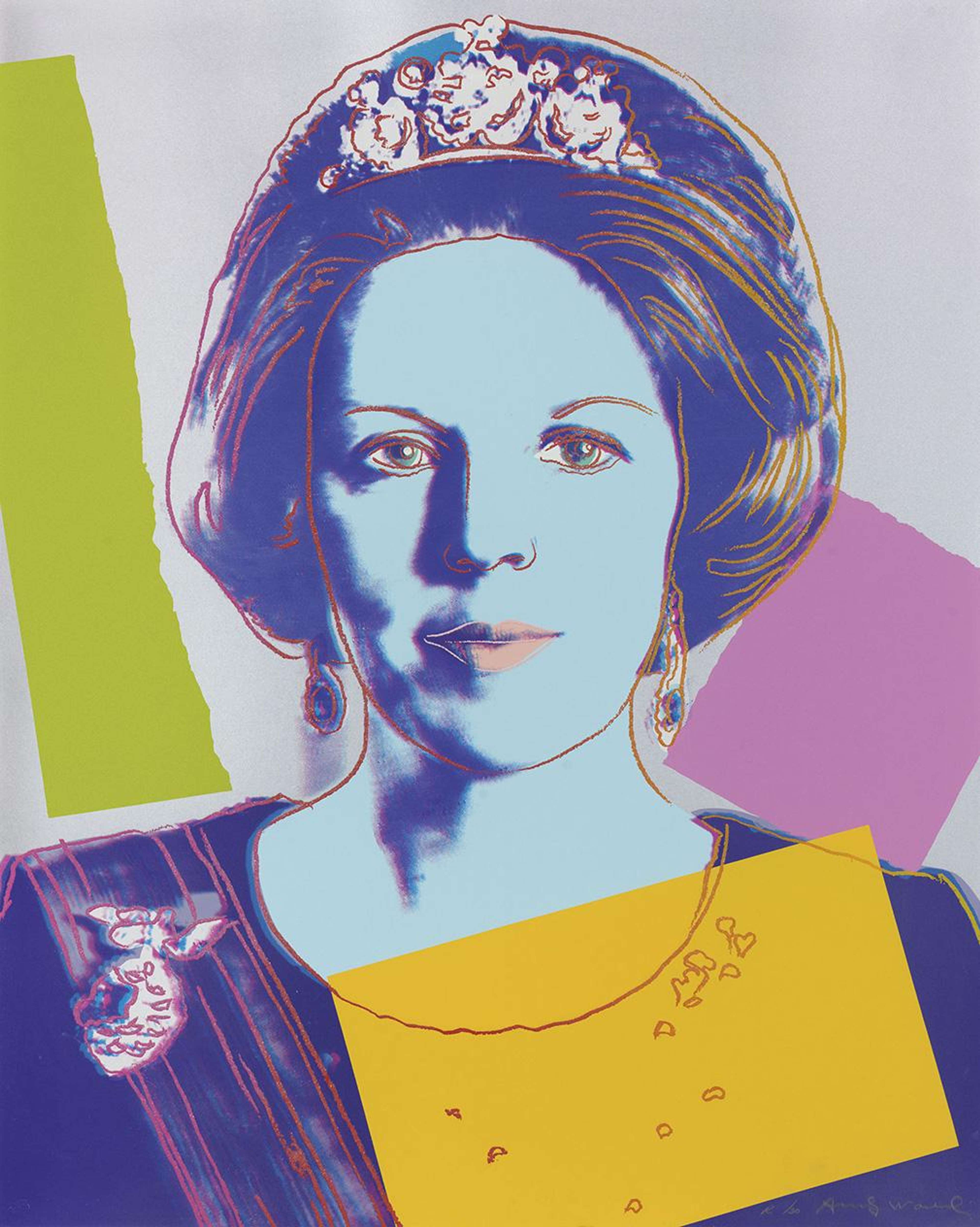
Queen Beatrix Of The Netherlands Royal Edition (F. & S. II.340A)
Signed Print
Andy Warhol
100 x 80cm, Edition of 30, Screenprint, 1985
£35,000-£50,000
$70,000-$100,000 Market Value Indicator
$70,000-$90,000 Market Value Indicator
¥310,000-¥440,000 Market Value Indicator
€40,000-€60,000 Market Value Indicator
$360,000-$520,000 Market Value Indicator
¥7,310,000-¥10,450,000 Market Value Indicator
$45,000-$70,000 Market Value Indicator
There aren't enough data points on this work for a comprehensive result. Please speak to a specialist by making an enquiry.
Track auction value trend
Meaning & Analysis
Andy Warhol's Queen Beatrix Of The Netherlands Royal Edition (F. & S. II.340A) from 1985 is a signed screenprint from his Reigning Queens series, produced in an edition of 30. Depicting the Dutch monarch wearing a tiara and elaborate jewellery, the portrait combines pale blue and lavender tones with vibrant blocks of yellow, green and pink. Warhol's bold graphic outlines and unconventional palette transform traditional royal portraiture through his distinctive Pop Art aesthetic, while the addition of diamond dust lends the composition a shimmering finish.
Created in 1985, Andy Warhol's Queen Beatrix Of The Netherlands Royal Edition (F. & S. II.340A) forms part of his Reigning Queens series, which depicts four female monarchs ruling in their own right. Queen Beatrix ascended to the Dutch throne in 1980, five years before Warhol produced the series.
Drawing on official royal portraiture, Warhol presents Beatrix wearing a tiara, earrings and a decorative brooch. Her face is rendered in pale blue with lavender shadows, while contrasting blocks of yellow, lime green and pink surround the figure. The composition retains the formality of the original royal image, but Warhol's saturated colours and simplified outlines give it the visual immediacy of commercial advertising.
The Royal Edition incorporates diamond dust, finely ground glass particles that create a reflective surface. Produced in an edition of 30, compared with the standard edition of 40, this variation emphasises the glamour and spectacle associated with monarchy. Through his characteristic use of colour and mechanical reproduction, Warhol places Beatrix within the same visual culture as his portraits of Hollywood celebrities, exploring the relationship between political authority, public image and fame.