
Ladies And Gentlemen (F. & S. II.127)
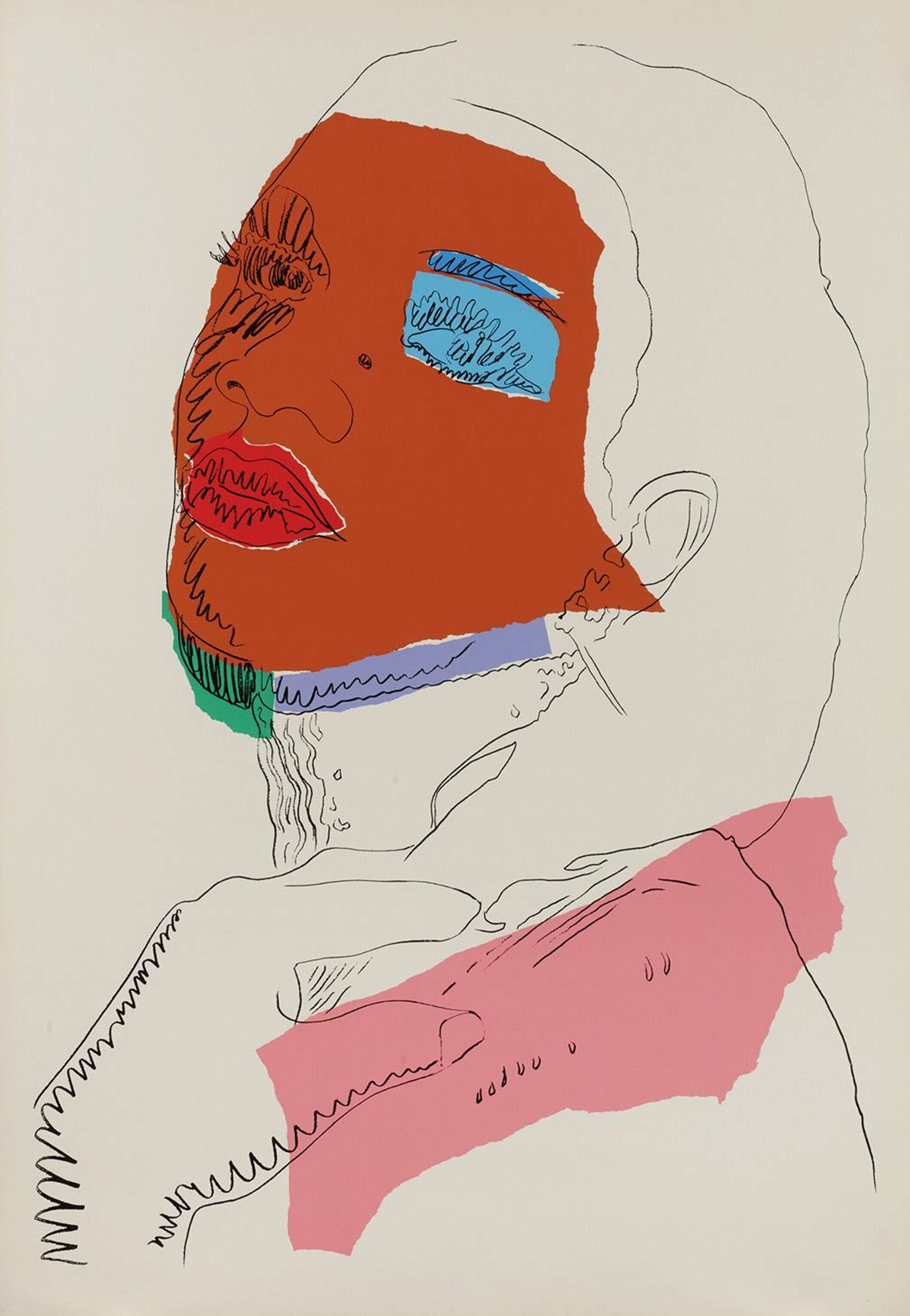
Ladies And Gentlemen (F. & S. II.127)
Signed Print
Andy Warhol
95 x 65cm, Edition of 250, Screenprint, 1975
£8,000-£12,000
$15,000-$23,000 Market Value Indicator
$15,000-$22,000 Market Value Indicator
¥70,000-¥110,000 Market Value Indicator
€9,500-€14,000 Market Value Indicator
$80,000-$130,000 Market Value Indicator
¥1,670,000-¥2,510,000 Market Value Indicator
$11,000-$16,000 Market Value Indicator
There aren't enough data points on this work for a comprehensive result. Please speak to a specialist by making an enquiry.
Track auction value trend
Meaning & Analysis
Ladies and Gentlemen (F. & S. II.127) is a screenprint depicting a single figure in profile, rendered through a combination of delicate line drawing and bold flat colour planes applied across the face and body. Produced in 1975 in a signed edition of 250, it is one of the individual prints drawn from Warhol's Ladies And Gentlemen portfolio – a series of portraits of Black and Latina drag queens and transgender women photographed in New York.
In F. & S. II.127, the subject is presented in three-quarter profile – head turned slightly, gaze directed away from the viewer. The compositional method here is particularly striking: Warhol separates the linear description of the figure from the application of colour almost entirely. The off-white ground carries a fine, attenuated line drawing of the head, neck and upper body, while a large terracotta-red colour field covers the face, a blue rectangle sits across the forehead and eye, a teal-green patch appears at the lower jaw and neck, a lavender band crosses the throat, and a broad pink sash sweeps diagonally across the chest. The line and the colour are not quite in register – they address the same face but occupy different pictorial systems.
This disjunction gives the print its particular quality. The colour blocks are assertive and almost heraldic, while the outline beneath them is delicate and continuous. The figure is simultaneously made vivid and made strange. Within the wider Ladies and Gentlemen series, F. & S. II.127 is distinguished by the restraint of its palette – warm earth tones interrupted by cool complements rather than brash primaries – and by the almost classical quality of the profile that survives, intact and quiet, beneath the overlaid colour.