
Why Series Often Matters More Than Edition Size
Edition size is frequently one of the first details collectors focus on when assessing value, but it rarely tells the whole story. A smaller edition does not automatically outperform a larger one, just as a rarer print is not always the most desirable. What consistently separates the strongest-performing series is sustained collector demand, often built through decades of institutional recognition, scholarship and collecting history.
Buyers rarely enter the market looking for any work by an artist. They’re usually searching for a specific image, a particular series or a defined period within an artist’s career. Over time, exhibitions, scholarship and collecting history establish certain bodies of work as the defining examples of an artist’s practice.
This is why the strongest series continue to command exceptional prices even when other works by the same artist remain comparatively accessible. Collectors are not responding to scarcity alone. They’re responding to cultural significance, familiarity and confidence that a particular series represents one of the defining moments in an artist’s career.
Andy Warhol’s Market Shows How Series Create Market Tiers
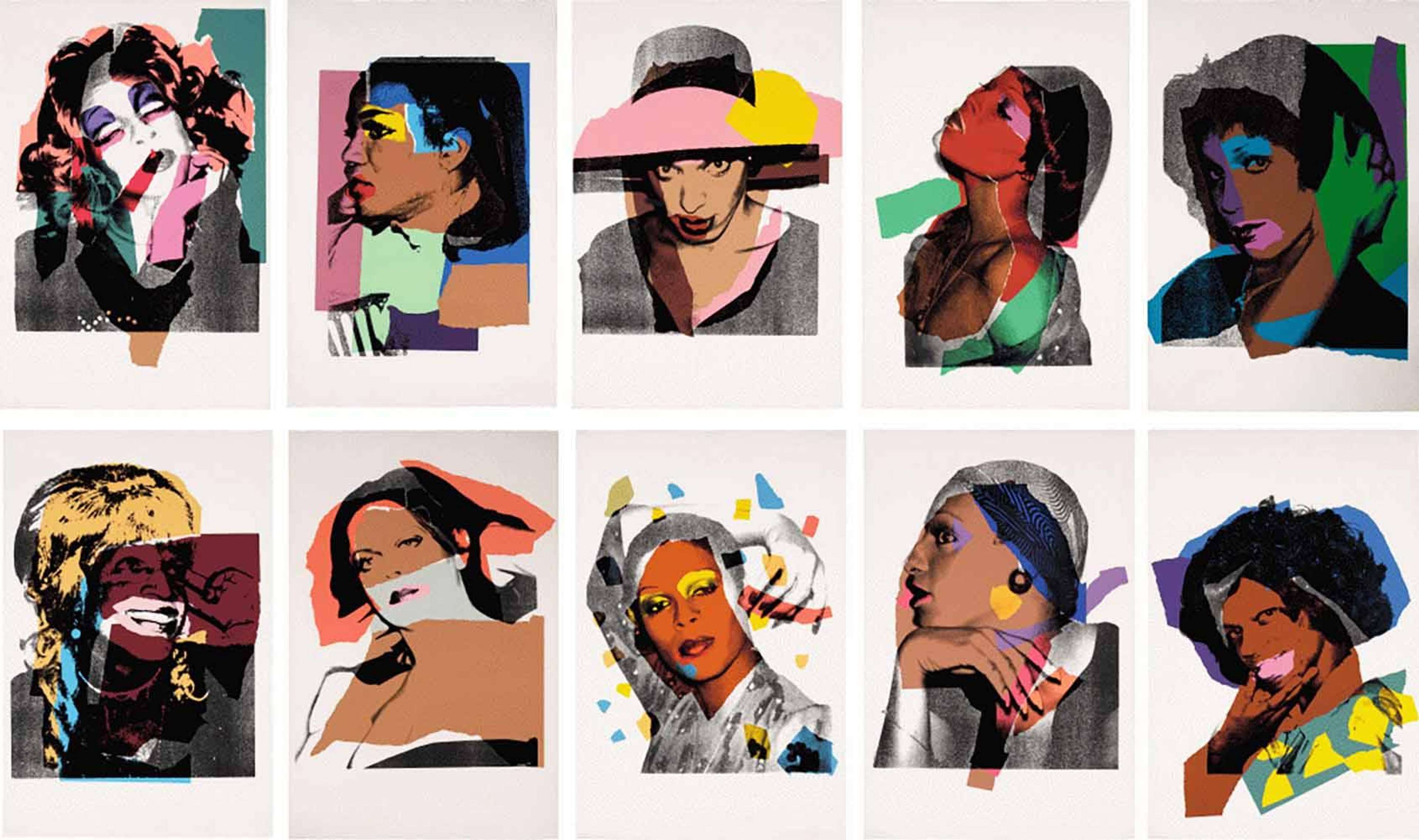
Andy Warhol’s print market illustrates this dynamic particularly well. Marilyn Monroe and Ladies and Gentlemen are both ten-print portfolios, yet they occupy entirely different positions within his market.
Marilyn Monroe has become one of Warhol’s defining series and one of the most recognisable bodies of work in twentieth-century printmaking. Its cultural prominence, institutional recognition and sustained collector demand are reflected in an average auction price of £110,921 during the period analysed, excluding complete portfolios.
By comparison, works from Ladies and Gentlemen averaged £6,954 – around 16 times lower than Marilyn Monroe. The difference is significant, but it is not arbitrary. While the series explores themes that resonate strongly with contemporary conversations around identity and representation, it has never achieved the same level of recognition as Marilyn Monroe. As a result, the two portfolios occupy very different positions within Warhol’s market despite sharing the same edition structure.
Institutional Recognition Can Reshape an Artist’s Market
David Hockney market demonstrates the same principle in a different way. Although his print market has strengthened considerably in recent years, that growth has not been shared evenly across every series.
Arrival of Spring has emerged as one of the defining print series of Hockney’s later career, averaging £235,146 during the period analysed. Moving Focus, by contrast, averaged £44,338 – around 5.3 times lower. Both are important series within Hockney’s print market, yet collector demand has increasingly concentrated around Arrival of Spring, which has become synonymous with his pioneering digital practice and return to Yorkshire.
Museum exhibitions have kept the series in public view, while renewed critical attention has reinforced its importance within Hockney’s later career. At the same time, a growing international collector base has continued to compete for the series. Arrival of Spring‘s position at the top of Hockney’s market reflects the cumulative effect of those forces rather than any single catalyst.
The Yosemite Suite offers another interesting perspective. Only one example, The Yosemite Suite 1, appeared at auction during the period covered, selling for £83,048 – too little data to draw meaningful conclusions. However, it remains a series many specialists continue to watch closely. As interest in Hockney’s digital practice continues to develop, series that have seen relatively little recent auction activity may warrant closer attention from collectors.

Every Artist’s Market Has Its Own Internal Hierarchy
The same pattern can be seen across every major blue chip print market. Collectors consistently gravitate towards an artist’s most recognised and sought-after series, but the factors that establish that hierarchy differ from one market to the next.
Keith Haring’s Andy Mouse (£141,262) and Growing (£55,658, excluding complete sets) sit at the top of his market, while The Story of Red and Blue averages just £1,795. Although subject matter and the period in which a work was created also influence demand, Haring’s most celebrated series consistently command the strongest prices.
Damien Hirst’s market follows a similar hierarchy, but it has been shaped by a different publishing strategy. His editions were intentionally released across multiple price points, creating distinct collecting tiers from the outset. The Virtues averaged £9,028 (excluding complete sets) and earlier Spot prints £12,774, while more recent demand-drop editions such as Fruitful and Forever averaged £626. The differences reflect not only collector demand, but also how these series were positioned within Hirst's wider print market.
Roy Lichtenstein’s Water Lilies occupies a dramatically different position from Entablature. Yayoi Kusama’s Pumpkins continue to outperform her Self-Portraits. Banksy demonstrates similar internal hierarchies, with signed editions of Girl With Balloon and Thrower commanding substantial premiums over less sought-after imagery.
Although the scale of the gap differs from artist to artist, the underlying pattern is remarkably consistent.
| Artist | Top Series | Average | Lower Series | Average | Gap |
|---|---|---|---|---|---|
| Warhol | Marilyn Monroe | £110,921 | Ladies and Gentlemen | £6,954 | 16x |
| Hockney | Arrival Of Spring | £235,146 | Moving Focus | £44,338 | 5.3x |
| Lichtenstein | Water Lilies | £424,757 | Entablature | £5,846 | 73x |
| Haring | Growing | £55,658 | Story of Red and Blue | £1,795 | 31x |
| Banksy | girl With Balloon (signed) | £132,567 | Girl With Balloon (unsigned) | £64,291 | 2x |
| Banksy | Thrower (signed) | £111,667 | TurfWar | £7,246 | 15x |
| Kusama | Pumpkins | £29,097 | Self-Portraits | £5,956 | 5x |
| Hirst | The Virtues | £9,028 | Fruitful and Forever | £626 | 14x |
These differences demonstrate that an artist’s market is not a single pricing ladder. It is made up of distinct series, each with its own collector base, level of demand and commercial position. Understanding where a print sits within that hierarchy provides a far more meaningful benchmark than comparing it with every work an artist has ever produced.
Understanding the Market for Your Print
One of the most common conversations MyArtBroker specialists have with collectors isn’t simply about the artist they own, but about the position their print occupies within that artist’s market. Two collectors may both own Warhols or Hockneys, yet their works can sit in entirely different value tiers because they belong to different series with very different levels of collector demand.
That’s why meaningful valuations begin with the individual print rather than the artist’s headline performance. Specialists assess how the series has been performing, how frequently comparable works appear at auction, how collectors are responding to it today, and how the work compares with its true market peers. Those comparisons provide a far more accurate picture than relying on an artist’s overall average or record price.
Methodology: Figures in this report are drawn from auction results recorded between January 2025 and April 2026 across major international and regional auction houses in the blue chip prints and editions market. This period was chosen to reflect the most current and relevant view of market conditions.
While every effort has been made to ensure accuracy, this report may contain errors or inconsistencies. It is intended for research and informational purposes only and should not be relied upon as financial or investment advice. MyArtBroker accepts no liability for any loss or damage arising from reliance on the information contained within this report.