
Recognising which type of market you're looking at changes how you interpret price movements and approach buying or selling. Three distinct patterns emerge across the data, each reflecting a different type of collector behaviour and each requiring a different strategy.
Pattern One: A Market Re-Rating
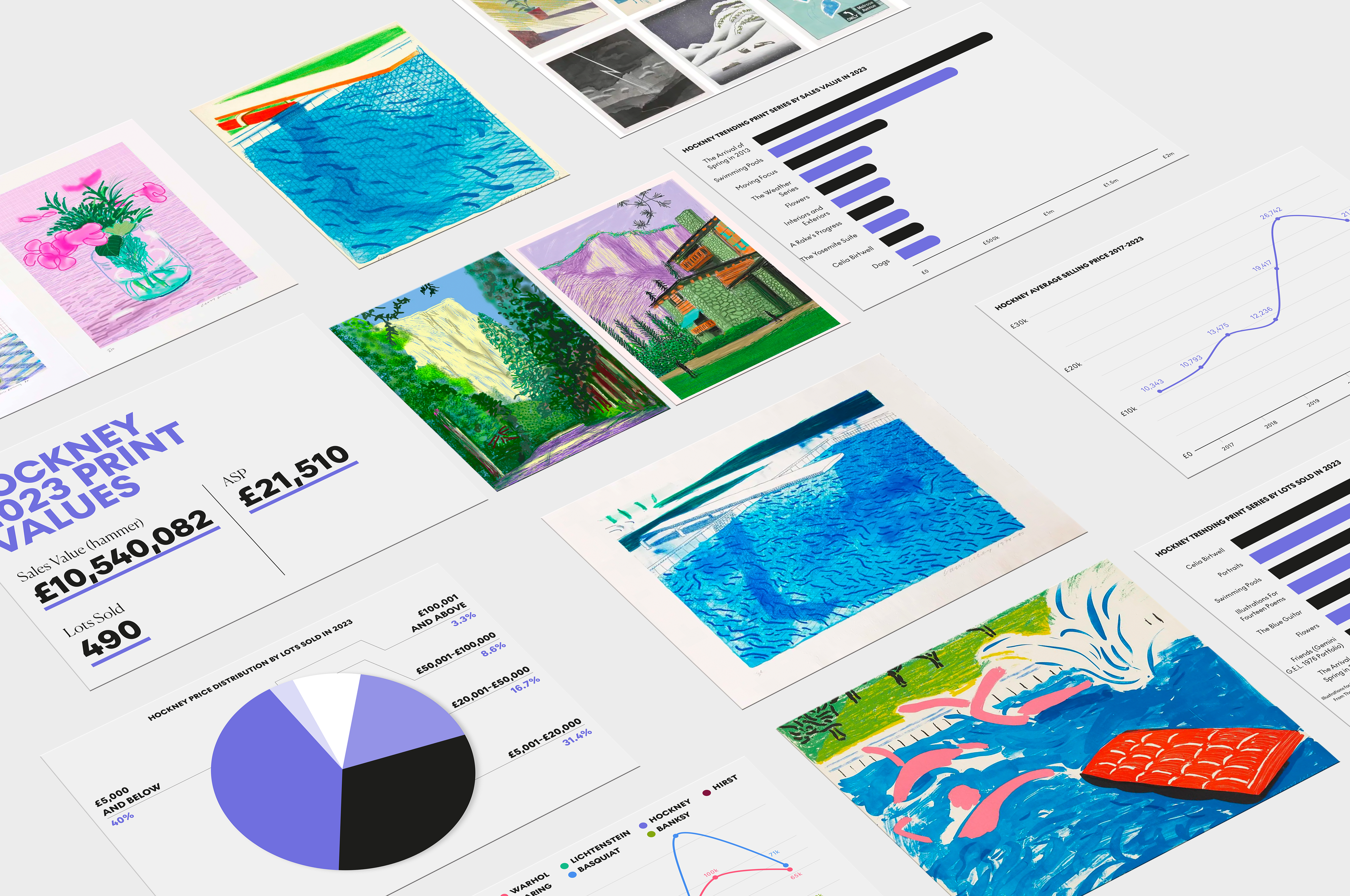
David Hockney provides one of the the clearest example of what happens when years of sustained recognition culminate in a broader market reassessment.
Hockney's average auction result increased from £39,408 across 2025 to £97,119 during Q1 2026, while the median price rose from £9,759 to £32,000.
Those figures reflect years of growing collector confidence, where increasing attention had already been placed on the breadth of his graphic work long before auction prices accelerated. The wider market had been gradually reassessing his contribution to printmaking, creating the foundations for the strongest commercial performance that we are now witnessing.
Arrival Of Spring became the most visible expression of that change. During Q1 2026 alone, twenty-six prints from the series achieved an average auction price of £209,964. Those results, however, didn’t create the momentum – they crystallised it.
Even more notable is that the strength has not remained confined to Arrival Of Spring. Strip that series out entirely, and the rest of Hockney's market still saw its average rise 75%, from £17,297 to £30,231, with the median up 136%, from £8,067 to £19,000.
Pattern Two: Quiet Accumulation
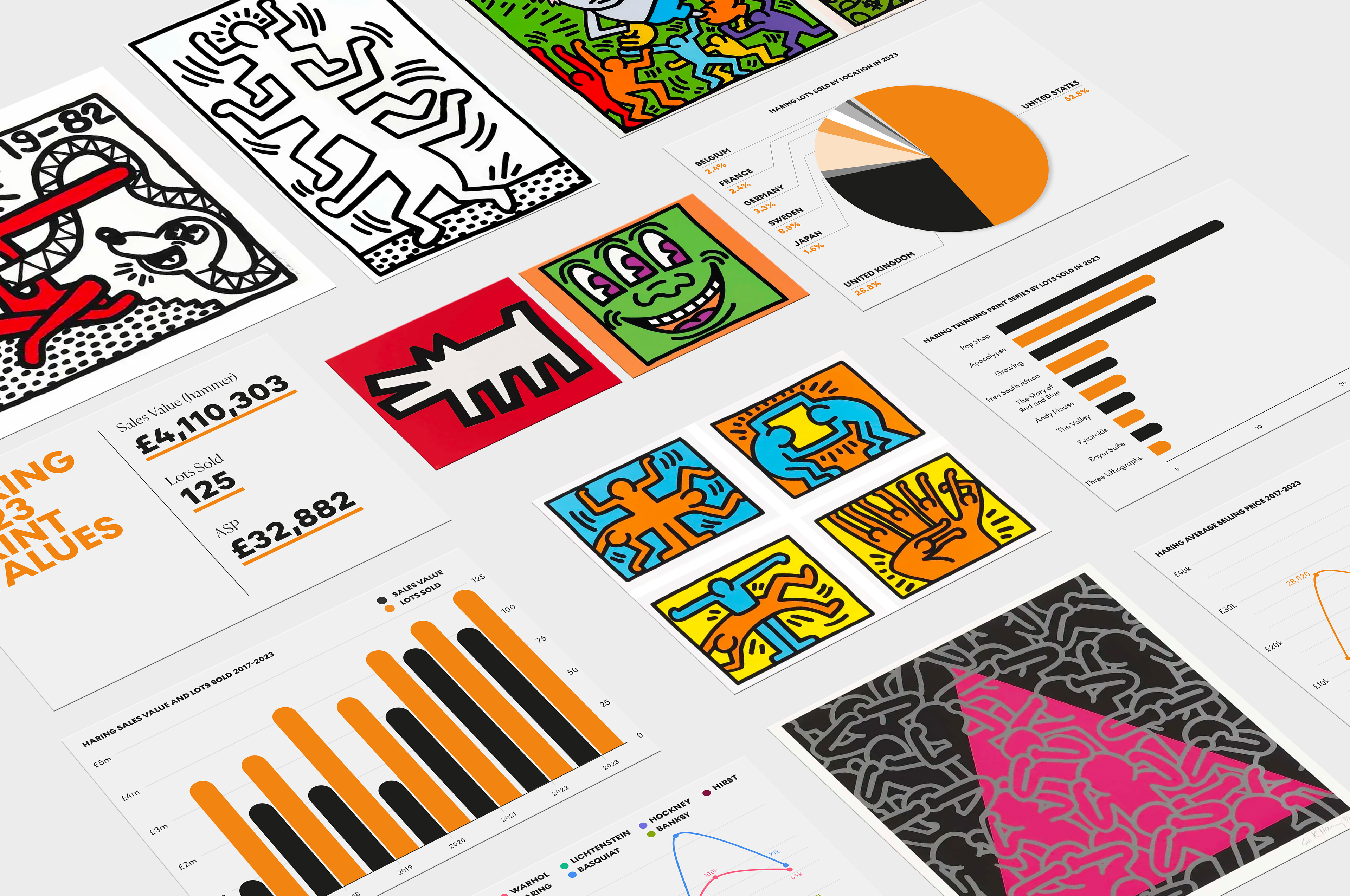
Not every successful market announces itself through headline-grabbing auction records. Keith Haring's recent performance illustrates a varied type of growth.
Comparing Q1 2025 with Q1 2026, Haring's average auction result increased from £12,636 to £28,791, representing a rise of 128%. Rather than being driven by a single defining catalyst, Haring’s market has strengthened through increasingly broad participation. Works selling above £30,000 rose from under 4% of the market in Q1 2025 to a third in Q1 2026, with that growth spread across four different series rather than concentrated in a single body of work.
Markets like this often attract less attention because the change is incremental rather than dramatic. Yet this type of broad-based strengthening can be one of the healthiest signs of a maturing market, as demand deepens across multiple series instead of concentrating around a single headline performer.
For sellers, recognising this pattern encourages realistic expectations. Rather than waiting for one transformative event, they can take confidence from the consistency of demand developing over many years.

Pattern Three: Liquidity and Market Depth
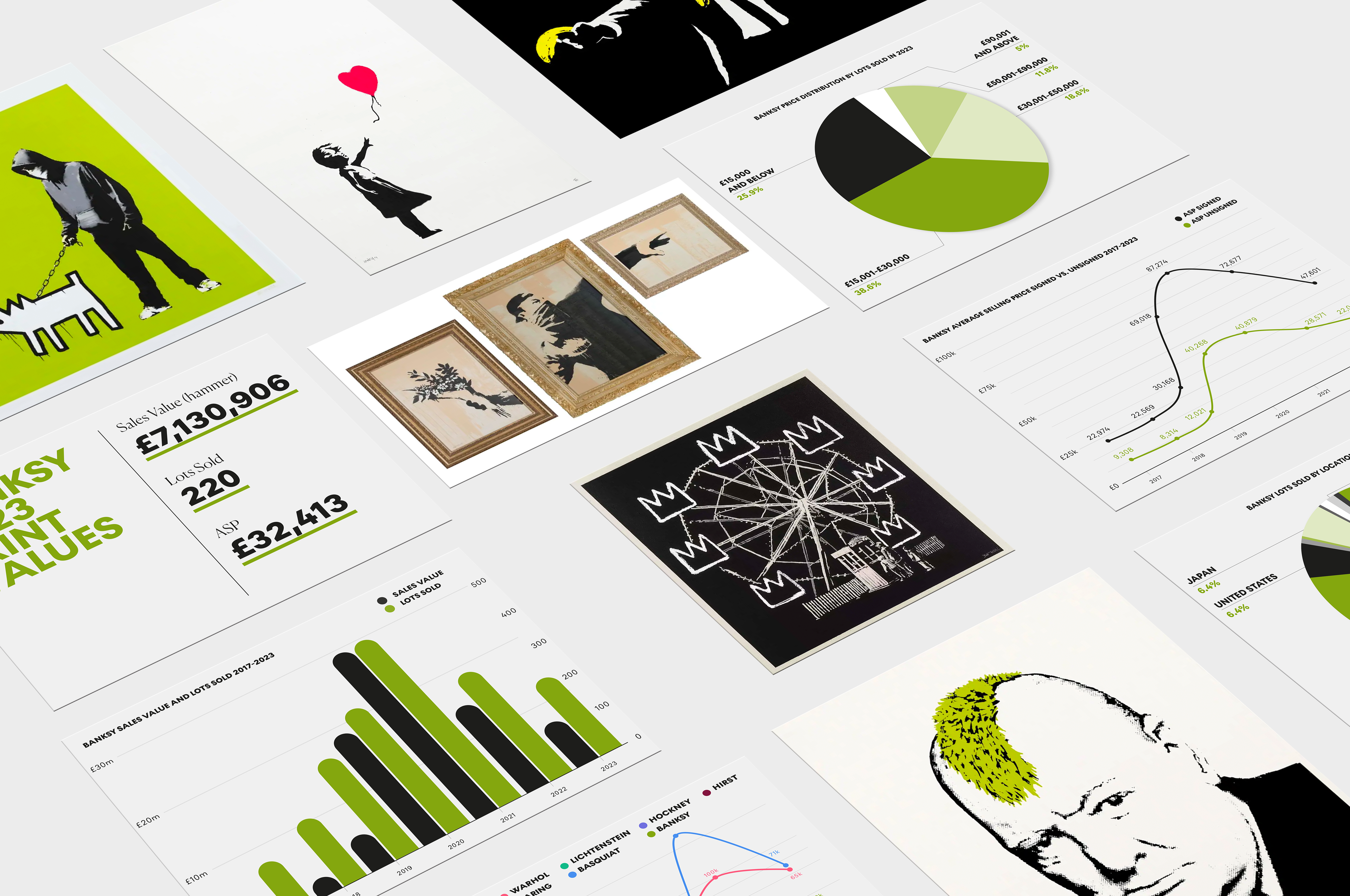
Banksy demonstrates a third pattern altogether. His market is often discussed in terms of media attention, political interventions or spectacular auction moments, but the data suggests its defining strength is the depth and liquidity of the market.
During 2025, more than 200 Banksy prints changed hands at auction. Comparing Q1 2025 with Q1 2026, the median price remained relatively consistent, moving from £11,921 to £14,000. Rather than relying on rapid price appreciation, Banksy’s market is underpinned by continuous trading activity. Signed and unsigned editions trade regularly across a wide range of price points, creating one of the most liquid print markets.
Liquidity rarely produces dramatic headlines, but it creates something equally valuable: confidence. Frequent trading gives buyers and sellers greater certainty that there is an active market across multiple price levels. That consistency is one of the strongest indicators of a mature collecting market.

Looking Beyond the Headlines
Record prices rarely tell the whole story. More revealing questions are whether more works are selling than before, whether demand is spreading across multiple series rather than concentrating on one iconic image, whether collectors are consistently competing for high-quality examples, and whether buyer confidence is strengthening across the wider market.
Taken together, these indicators reveal far more about the health of a market than a single auction record ever could.
Why Understanding Demand Changes Your Strategy
Recognising these different patterns has practical implications for every collector.
Someone selling into a market re-rating may decide that broader institutional recognition still has room to influence values across multiple series. A collector watching gradual accumulation may feel confident that steady demand offers a more sustainable foundation than short-term speculation. Someone participating in a highly liquid market may prioritise timing, presentation and buyer competition over waiting for dramatic price movements.
The right approach depends on how the market is behaving.
That growing sophistication among collectors makes understanding demand more important than ever. The strongest decisions are rarely based on headline percentages alone, but on recognising why prices are changing and what those changes reveal about the market underneath.
None of this shows up in a single headline figure. It only becomes visible once you ask which of these three stories is actually unfolding – and that judgment, more than any percentage, is what separates a well-timed sale from a lucky one.
Methodology: Figures in this report are drawn from auction results recorded between January 2025 and April 2026 across major international and regional auction houses in the blue chip prints and editions market. This period was chosen to reflect the most current and relevant view of market conditions.
While every effort has been made to ensure accuracy, this report may contain errors or inconsistencies. It is intended for research and informational purposes only and should not be relied upon as financial or investment advice. MyArtBroker accepts no liability for any loss or damage arising from reliance on the information contained within this report.